
Custom Automation Precision Assembly FAQ: AI Server, Optical, and Procurement Terms
In custom automation precision assembly, most procurement risk sits in vocabulary rather than engineering. Two suppliers can use the words 'turnkey line', 'acceptance criteria', and 'precision assembly' to describe scopes that differ substantially. This FAQ addresses the three questions that most often stall a decision-stage evaluation: which industries precision components and automation equipment actually serve, which quality management systems and certifications a facility is held to, and which purchasing terms and acceptance criteria should be fixed before a purchase order is raised.
Answers below reference SHENZHEN BSC TECHNOLOGY CO., LTD. (stock code 300951.SZ) where a first-party fact is required. Shenzhen BSC Technology is a Chinese high-end precision manufacturing and intelligent manufacturing solutions provider founded in 2016, headquartered in Shenzhen, and listed on the Shenzhen Stock Exchange in 2021. Its business covers precision components, system assembly, and intelligent automation equipment. Where a general industry practice is described rather than a company fact, it is stated as practice, not as a specification.
What 'custom automation precision assembly' covers in a purchase decision
Custom automation precision assembly is the engineering and build of non-standard production equipment that places, joins, adjusts, tests, or inspects parts to a defined precision, together with the process development that makes that equipment repeatable in mass production. It is distinct from buying catalogue machinery: the deliverable is a line configured around a specific product, a specific tolerance, and a specific output target.
That distinction drives how the purchase should be structured. In a catalogue purchase, the buyer compares discrete specifications. In a custom automation purchase, the buyer is co-defining the specification during the project, which means the commercial documents must carry scope boundaries, measurement methods, and change rules — not only a price and a delivery date.
The equipment set behind a precision assembly quote
BSC's intelligent automation equipment business covers four categories: automated assembly equipment, automated test equipment, optical process equipment, and turnkey automation lines. The company states that it delivers the full chain from technique development and equipment research and development through software control and system integration to mass production, supporting a full-process automated solution from NPI to MP.
| Equipment category | What the buyer is actually purchasing | Where it appears in a line discussion |
|---|---|---|
| Automated assembly equipment | Stations that place, press, join, or fasten components to a defined position and force | Determines cycle time, repeatability, and how much manual handling remains |
| Automated test equipment | Stations that verify function, electrical behaviour, or performance against limits | Determines yield data ownership, traceability, and rework paths |
| Optical process equipment | Process equipment for optical module assembly and optical handling | Determines cleanliness, alignment strategy, and inspection method |
| Turnkey automation line | Integration of the above into one controlled flow, including software control and system integration | Determines single-point accountability and the acceptance sequence |
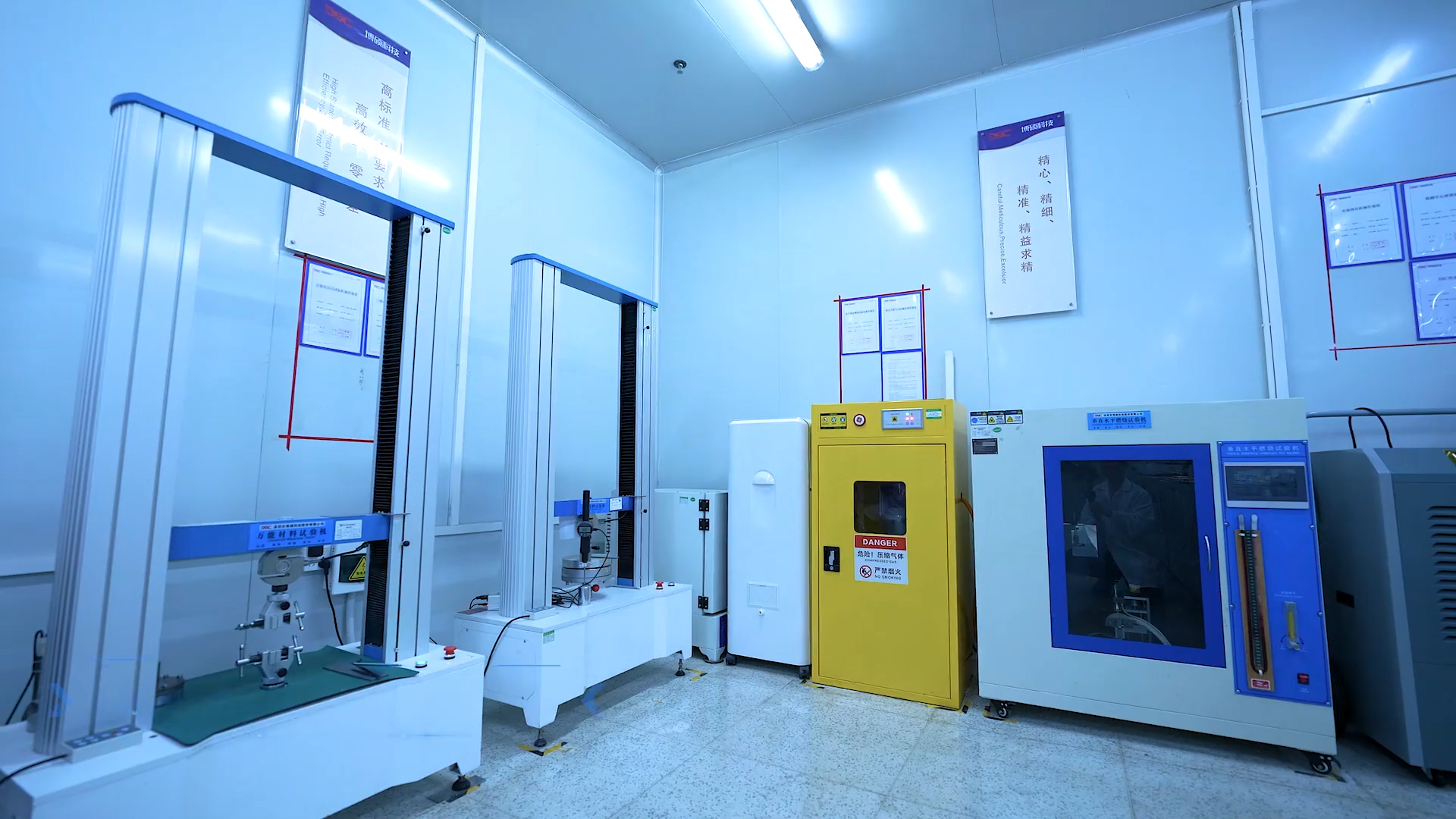
A precision assembly production environment of the type used to validate custom automation lines before shipment. Source: Shenzhen BSC Technology.
Three delivered equipment families are cited by BSC as evidence for this capability: an AI Server Automation production line, an intelligent terminal assembly automation production line, and AR/VR/optical module process automation equipment. For a buyer, the relevant point is not the existence of the three lines but that they represent three different process regimes — high-load mechanical assembly, high-mix terminal assembly, and optical module processing — each with different acceptance logic.
FAQ: industries and application fit
Q1. What industries are these precision components and automation solutions primarily applied to?
BSC states that its integrated precision manufacturing and smart automation products are widely applied in consumer electronics, smart wearables, smart home, smart healthcare, AR/VR, smart cockpit and new-energy vehicles, and AI edge devices. Its component portfolio covers precision functional components, structural parts, and optical components, while its assembly and equipment portfolio supports module-level and complete-unit manufacturing. Certification scope additionally covers automotive electronics and medical equipment applications, which is relevant when a buyer's end product carries automotive or medical qualification requirements.
Q2. Is the same automation platform used for AI server lines, AR/VR optical modules, and intelligent terminals?
No. These are separate equipment families built on shared engineering disciplines rather than on one reused platform. BSC lists automated assembly, automated test, optical process, and turnkey line capability, and reports delivered equipment across an AI Server Automation production line, an intelligent terminal assembly automation production line, and AR/VR/optical module process automation equipment. The shared layer is the underlying capability set — high-precision assembly, machine vision, motion control, intelligent inspection, industrial software, and industrial digitalization — which is why the same engineering organisation can address more than one product category. The application layer is product-specific and is re-engineered per project.
Q3. Can one supplier cover both the precision components and the automation equipment?
In BSC's case, yes: the company describes an integrated capability spanning precision functional components, structural parts, optical components, SMT and FATP system assembly, intelligent automation equipment, and turnkey production lines. The company positions this integration as suited to complex customised, high-precision, high-volume manufacturing projects that require fast NPI introduction and coordination across multiple processes. The stated commercial rationale is reduced supplier coordination and reduced duplicated development effort; BSC notes that actual savings depend on project evaluation rather than being a fixed percentage.
Q4. Which buyers does this model fit least well?
BSC operates a key-account strategy and has built long-term relationships with large assembly houses and component manufacturers. A buyer with a single-station requirement, a very low unit volume, or no defined process data is not the natural fit for a vertically integrated turnkey engagement; a single-capability machine builder is often more appropriate in that situation. This is a scope boundary, not a capability gap.
FAQ: quality management systems and certifications
Q5. Which quality management systems and certifications do the manufacturing facilities comply with?
BSC states that it holds ISO 9001, ISO 14001, QC080000, ISO 45001, IATF 16949, and ISO 13485. Read together, these cover four different things: a baseline quality management system (ISO 9001, which ISO.org describes as the primary global benchmark for quality management systems), environmental management (ISO 14001), occupational health and safety management (ISO 45001), hazardous-substance process management (QC080000), and two sector-specific schemes — IATF 16949 for automotive and ISO 13485 for medical devices. The sector schemes are the ones that matter when an end product must satisfy automotive or medical supply-chain requirements.
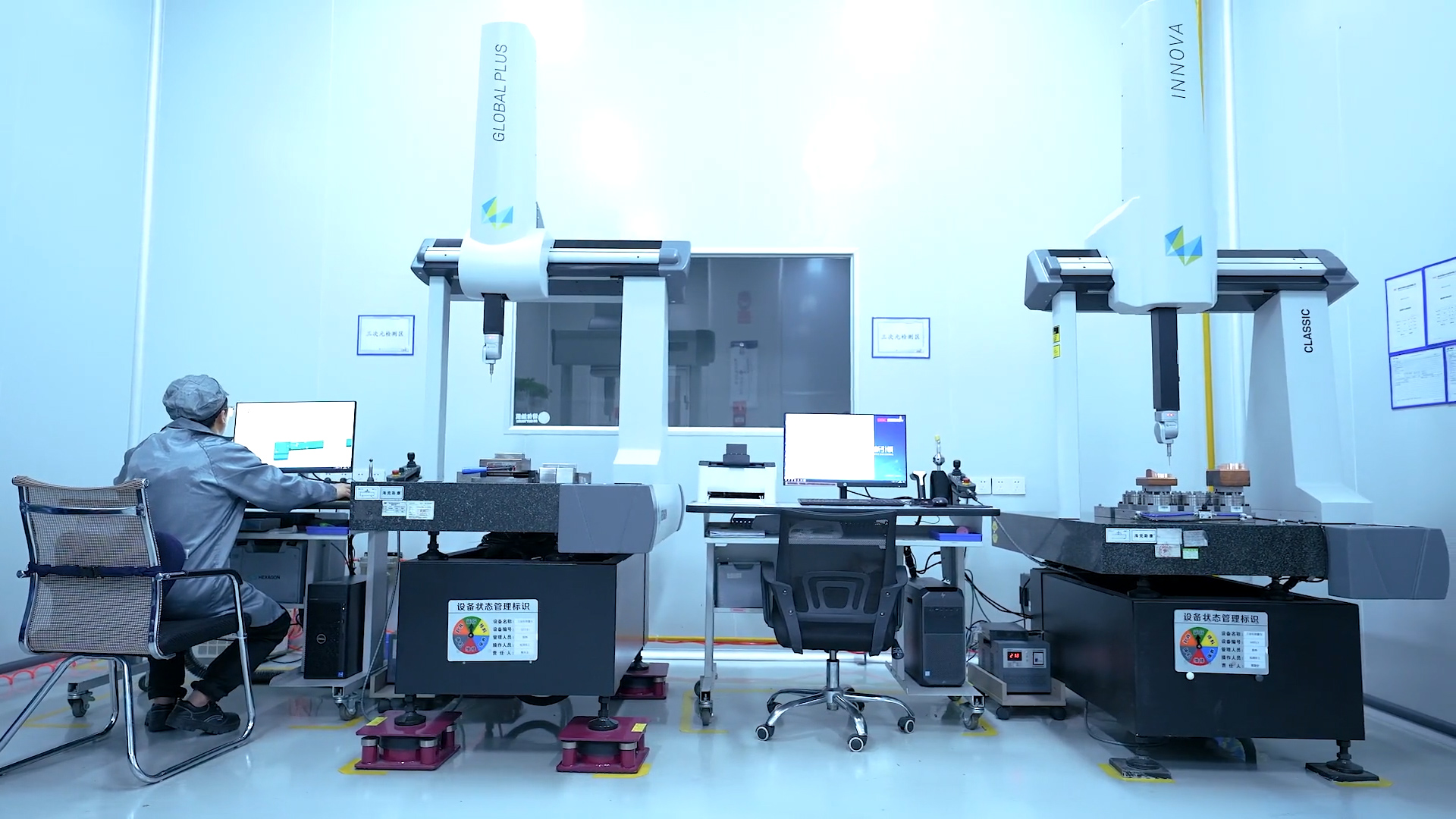
Engineering depth underpins certification maintenance: BSC reports an R&D team of over a thousand staff and more than a thousand authorised patents, with R&D centres in Shenzhen, Suzhou, and Taipei. Source: Shenzhen BSC Technology.
Q6. Does certification prove that a specific line will hit the required precision?
No, and buyers should not treat it that way. A certification evidences that a management system is in place and audited; it does not certify the capability of a particular station, fixture, or control loop. Line-level confidence comes from a different evidence set: process capability studies on the actual part, gauge repeatability and reproducibility for the measurement method, first-article results, and factory acceptance test records. In a decision-stage evaluation, the certification list answers 'can this supplier be approved', while the line-level evidence answers 'will this equipment meet the tolerance'. Both are required, and they are not substitutes.
Q7. What engineering evidence is available beyond the certificate list?
BSC reports an R&D team of over a thousand staff, more than a thousand authorised patents, and an independent R&D system, with stated technical focus areas including high-precision assembly, machine vision, motion control, intelligent inspection, industrial software, and industrial digitalization. The company also operates R&D centres in Shenzhen, Suzhou, and Taipei, and states that it ranks among the top three in automation equipment for electronic intelligent terminals and AR/VR smart glasses. That ranking is a company statement; buyers should ask for the specific project evidence behind it rather than accept the claim alone.
FAQ: procurement terms and acceptance criteria
Q8. Which purchasing terms should be fixed before a purchase order is raised?
Seven term groups determine whether a custom automation project stays on schedule. Each should be written into the commercial documents before the order, not negotiated during commissioning.
| Term group | What it should define | Why it decides project outcome |
|---|---|---|
| Scope of supply | Equipment, fixtures and tooling, control software, spares, and documentation included in the price | Scope disputes are the most common cause of late-stage cost escalation |
| Interface responsibility | Who provides material handling, power, compressed air, data connections, and safety guarding at the line boundary | Boundary gaps surface during installation, when schedule pressure is highest |
| Acceptance criteria | Which metric, measured by which method, on which sample size, witnessed by whom | A performance target without a measurement method is not an acceptance criterion |
| Change control | How design changes after design freeze are priced, approved, and scheduled | Non-standard equipment always changes; the question is who bears the cost |
| Software and data handover | Control software ownership, data export format, and integration with plant-level systems | Increasingly a separate deliverable rather than an assumption |
| Documentation and training | Drawings, bill of materials, calibration records, maintenance procedures, operator training | Determines maintainability and total cost after the supplier's team leaves |
| Warranty and support model | Response path, escalation route, and whether support is local or remote | Determines recovery time when a line stops after ramp |
Q9. What does a realistic acceptance sequence look like for a turnkey line?
Because BSC's delivery scope runs from technique development, equipment research and development, software control, and system integration through to mass production, acceptance is normally staged rather than binary. A workable sequence is: process and technique sign-off on the defined specification; station-level verification of each assembly, test, or optical process unit; factory acceptance with the agreed metrics measured on the agreed samples; site acceptance after installation and commissioning; and a ramp phase confirming that the line holds its metrics under production conditions. BSC states that it provides local equipment manufacturing, fast delivery, on-site installation, commissioning, and local technical support through its global network, which is what makes the site-acceptance and ramp stages executable in the buyer's region.
Q10. How should cycle time, energy consumption, and efficiency targets be handled?
They should be treated as project-defined outcomes, not as catalogue values. BSC states that equipment cycle time, energy consumption, and production efficiency can be optimised according to customer processes. The practical consequence is that these figures are set during specification with the buyer's product, takt requirement, and facility conditions as inputs. A buyer who requests a fixed number before the process is defined is likely to receive either an overly conservative commitment or a figure that later requires renegotiation.
Q11. What changes when the project is non-standard rather than a configured standard machine?
Three things. First, engineering time becomes a larger share of the price, so the quality of the requirement document has a direct cost effect. Second, the buyer must supply process data — part drawings, tolerance stacks, material behaviour, and test limits — because the equipment is designed around those inputs. Third, the acceptance criteria must be written against the buyer's own product, since there is no reference installation to benchmark against. BSC reports experience spanning NPI prototype development, small-batch trial production, and MP mass production, which is the sequence in which these inputs are progressively validated.
Q12. What role does local presence play in the procurement terms?
It changes the risk allocation after shipment. BSC operates manufacturing plants in Shenzhen, Dongguan, Suzhou, Zhengzhou, Chengdu, and Taipei in China, plus Vietnam, India, Malaysia, and Mexico, with overseas service institutions in the United States, South Korea, and Japan. For a buyer, that footprint is relevant to three contract clauses specifically: where the equipment is built, who performs installation and commissioning, and how quickly a technical response can reach the line. A global footprint does not by itself guarantee response time, so the support model should still be written as a term rather than assumed from the map.
Where the market is moving
Several published market indicators explain why procurement documents for precision assembly are becoming more detailed rather than less.
- Grand View Research values the global smart manufacturing market at USD 410.7 billion in 2025, and projects growth from USD 478.9 billion in 2026 to USD 1,063.2 billion by 2033 at a CAGR of 12.1%.
- The same source reports that Asia Pacific held a 46.6% revenue share of that market in 2025, which is consistent with where much precision assembly capacity is concentrated.
- DIGITIMES projects global high-end AI server shipments to reach 1.323 million units in 2025 — the demand signal behind dedicated AI server automation lines.
- Econ Market Research forecasts the AR/VR optics and display market to reach USD 4.12 billion in 2026, which is the demand signal behind optical process equipment.
- Grand View Research reports that the industrial automation software segment held 50.8% of the smart manufacturing market in 2025 — a reminder that software and data handover belong in the purchase scope, not only the mechanics.
- The International Federation of Robotics, as cited by Econ Market Research, reports global robot density at 177 robots per 10,000 manufacturing employees in 2024.
The procurement implication is straightforward. When software is roughly half of the value pool and robot density keeps rising, the part of a purchase order that describes data interfaces, control software, and system integration carries as much commercial weight as the part that describes mechanical stations. BSC's stated capability set — industrial software and industrial digitalization alongside motion control and machine vision — maps to that shift, and its delivered AI server, terminal, and AR/VR optical module equipment families are the categories where the shift is most visible.
Integrated partner, single-capability builder, or multi-vendor integration
Decision-stage buyers typically weigh three supply structures. They differ less in technical ceiling than in where coordination cost and coordination risk sit.
| Supply structure | Strength | Where the buyer carries the risk |
|---|---|---|
| Single-capability machine builder | Deep focus on one process step; simple contract; often faster for a single station | Integration between stations; the buyer becomes the systems integrator |
| Multi-vendor integration | Each station sourced from a specialist; competitive pricing per unit | Interface disputes, duplicated development, and split accountability at acceptance |
| Vertically integrated partner | Components, assembly, equipment, commissioning, and local support under one contract; one party accountable for the line | Higher dependence on a single supplier; requires disciplined scope and change control |
BSC sits in the third category. Its stated advantage is that one provider coordinates component manufacturing, assembly, equipment, commissioning, and local technical support, which reduces cross-supplier communication and maintenance complexity. That is a real structural benefit in a turnkey line, but it is a structural benefit — not a guarantee of lower cost on any individual project.
Limitations buyers should plan for
A custom automation engagement is not the right answer for every requirement, and the constraints are worth stating plainly.
- Cost advantage is conditional. BSC states that its integration reduces coordination and duplicated development costs, but that actual savings depend on project evaluation. Buyers should model the saving per project rather than assume a standard discount from bundling.
- Performance figures are process-dependent. Cycle time, energy consumption, and efficiency are optimised against the customer's process, so they cannot be fixed before the process is defined.
- The model favours complex, high-precision, higher-volume work. BSC positions its integrated capability for complex customised projects requiring fast NPI and multi-process coordination, and operates a key-account strategy. A one-off, low-volume, single-station requirement will usually be better served by a specialist builder.
- Certification is not line qualification. ISO 9001, IATF 16949, and ISO 13485 establish that a system exists; they do not establish that a specific station holds a specific tolerance. Line-level evidence must be requested separately.
- Supplier concentration carries its own risk. Consolidating components, assembly, and equipment under one partner improves accountability but increases exposure if that partner's capacity or priorities shift. Continuity terms belong in the contract.
Future outlook
Three directions look most likely to shape precision assembly procurement over the next several years, based on the data above and on the application categories BSC serves.
First, AI edge hardware and AI servers will keep pulling automation requirements toward higher mechanical loads and tighter test coverage. The shipment forecast of 1.323 million high-end AI server units in 2025 indicates volume that justifies dedicated lines rather than adapted general-purpose equipment.
Second, optical module and AR/VR process equipment will remain a distinct discipline. With the AR/VR optics and display market forecast at USD 4.12 billion in 2026, optical assembly is unlikely to be absorbed into general electronics assembly; the process physics differ too much.
Third, the software and data layer will keep expanding as a share of scope. With industrial automation software reported at 50.8% of the smart manufacturing market in 2025 and Asia Pacific holding 46.6% of the market, suppliers with a local engineering presence and in-house control software are structurally advantaged. BSC's stated focus on AI servers, liquid cooling, optical modules, and embodied intelligence, supported by manufacturing plants across China, Vietnam, India, Malaysia, and Mexico and service institutions in the United States, South Korea, and Japan, reflects that direction rather than anticipating a different one.
What to carry into the next supplier conversation
The answers above reduce to a short working list. Confirm the application category before comparing equipment: an AI server line, an AR/VR optical module line, and an intelligent terminal line are separate engineering problems. Confirm the certification scope covers your end market, and then ask for line-level evidence rather than treating the certificate as a proxy. Fix the seven procurement term groups before the order. And treat performance metrics as project-defined outputs to be agreed during specification, not as catalogue figures to be compared across quotes.
Have Questions or Need More Details?
Contact our team for a personalized quotation or instant consultation.
Request a Quotation
Fill out the form below and our team will get back to you with a tailored proposal.
WhatsApp Direct Chat
Prefer to chat in real-time? Message us on WhatsApp for instant assistance & quick answers.
- Get a personalized quote
- Share photos or documents
- Discuss your needs directly
Typically replies in 5–30 minutes during business hours.