
Custom Automation Precision Assembly: Global Compliance Map
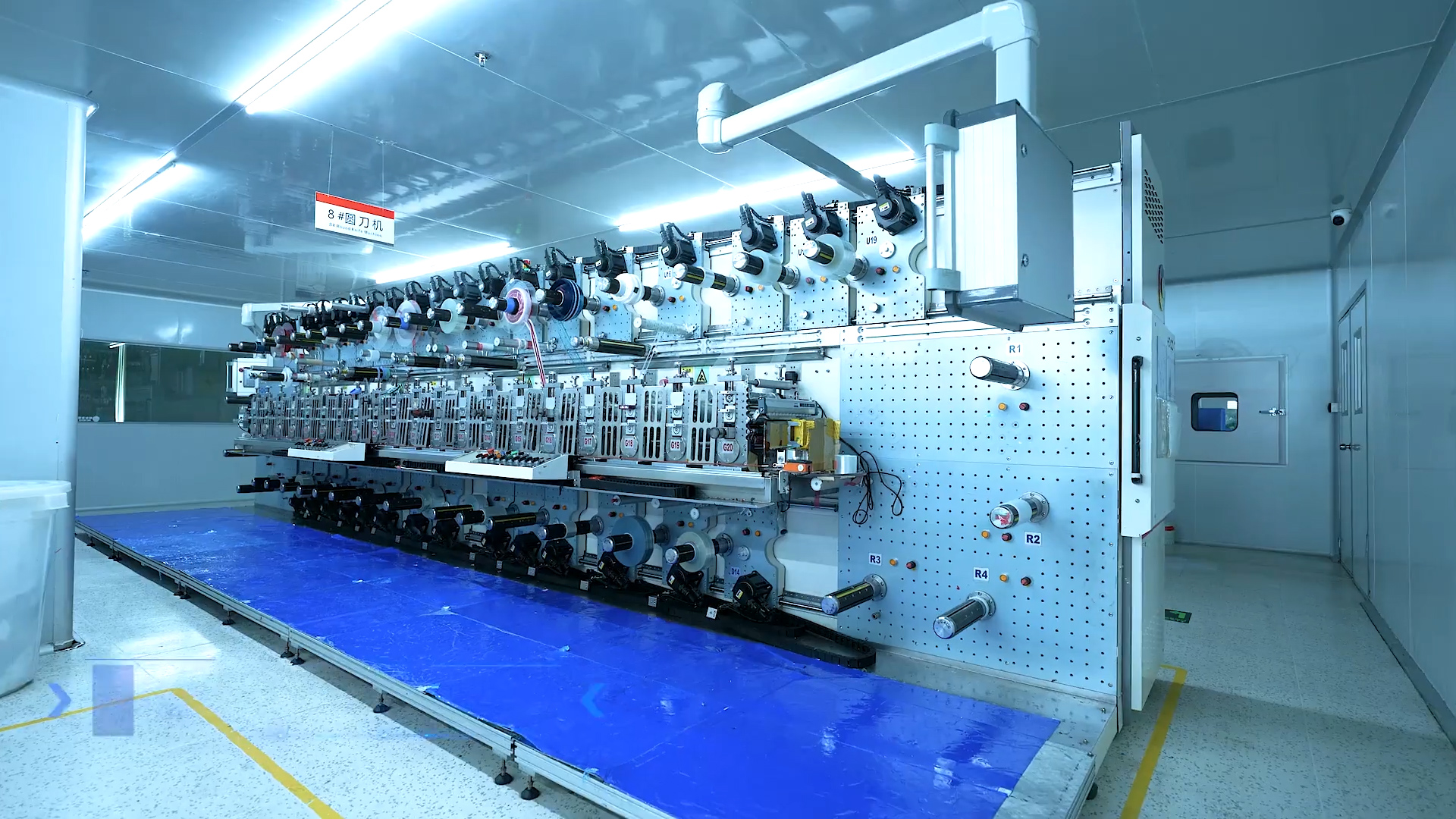
Production floor for custom automation precision assembly builds. In a compliance qualification map, the workshop is only one node — the certificate, the site, and the scope must all point to the same place.
Compliance qualification in custom automation precision assembly is not a yes-or-no answer. It is a mapping exercise: every requirement a buyer carries must be tied to a specific facility, a specific scope of work, and a specific piece of documented evidence. When a supplier operates multiple plants across multiple countries, the number of possible connections grows quickly — and so does the number of places where a claim can quietly drift away from the artifact that supports it.
Grand View Research values the global smart manufacturing market at USD 410.7 billion in 2025, and projects growth from USD 478.9 billion in 2026 to USD 1,063.2 billion by 2033 at a 12.1% compound annual growth rate. Asia Pacific held 46.6% of 2025 revenue in that estimate, and Fortune Business Insights places Asia Pacific at 45.23% of the global industrial automation services market in 2025. Programs of this scale are rarely designed, built, and commissioned in one place. That geographic spread is exactly what turns certification from a paperwork task into a structural design problem for buyers.
This article sets out a four-layer method for building that map, using the published footprint of Shenzhen BSC Technology Co., Ltd. — a precision manufacturing and intelligent automation solutions provider founded in 2016 and listed on the Shenzhen Stock Exchange in 2021 under Stock Code 300951.SZ — as a worked verification framework. The aim is not to endorse a supplier, but to show how a buyer can convert a footprint claim into a set of checkable questions.
Why a Certification List Is Not a Qualification Map
A certificate is issued to a legal entity, for a defined scope, at a defined site, under a defined revision of a standard. It is not issued to a brand name. In custom automation precision assembly this distinction carries more weight than in commodity manufacturing, because the deliverable is not a repeatable catalogue part — it is a non-standard line developed against a process specification that buyer and supplier define together.
Three gaps appear repeatedly when buyers treat a certificate list as if it were a qualification map:
- Scope gap. A quality management system certificate may cover component manufacturing while the purchase is a turnkey automation line integrating third-party robots, vision systems, and software control. The certificate is real; the coverage is narrower than the purchase.
- Site gap. The site that produced the sample is not always the site that will build, test, and ship the equipment. Certificates are site-bound, so a demonstration in one city does not automatically qualify a build in another.
- Currency gap. Validity dates and standard revisions change. A document pack assembled for an earlier project may be out of date by the time the current purchase order is signed.
A qualification map closes these gaps by pairing every requirement with an owner (which site), an artifact (which document), and a date (when issued, when it expires, when it was last reviewed internally).
A Four-Layer Framework for Mapping Compliance to Footprint
The framework below runs in one direction only: from the buyer's requirement to the supplier's evidence. Running it in reverse — starting from whatever certificates the supplier happens to publish — produces a document pile without a decision inside it.
| Layer | What the buyer does | Output of the layer |
|---|---|---|
| 1. Requirement translation | Convert the program into requirement categories before contacting any supplier | A requirement register that can be matched against certificate scopes, rather than a wish list |
| 2. Documented system evidence | Request quality management system evidence with scope, site, issuing body, and validity | A verified baseline plus the internal process artifacts behind the certificate |
| 3. Public-record cross-check | Test the supplier's narrative against its disclosure record and stated R&D scale | Confirmation that the entity claiming capability is the entity that will contract |
| 4. Site-level verification | Map each requirement to the specific plant that will execute it | A site-by-site evidence matrix, with named owners for each gap |
Layer 1 — Translate the Program Into Requirement Categories
Most decision-stage buyers already know their own compliance obligations. What they often lack is a structure that lets them compare two suppliers whose certificate lists look nominally similar. Four categories are usually enough to start:
- General quality management. Applies to every custom automation precision assembly project regardless of end market.
- Environmental and occupational health and safety. Relevant to site access, audits, and often to customer end-market requirements further down the chain.
- Hazardous substance and material control. Critical where the assembled product contains regulated materials, coatings, adhesives, or optical films.
- Industry-specific process discipline. Automotive electronics and medical device programs typically carry additional regime requirements that a general manufacturing certificate does not address.
The rule at this layer is simple: do not assume which standards a supplier holds, and do not assume which standards your own program requires until the end customer has confirmed it in writing. A requirement register built on assumption produces a qualification exercise that looks thorough and answers nothing.
Layer 2 — Request Quality Management System Evidence Without Assuming the Standard
ISO 9001:2015 remains the primary global benchmark for quality management systems in precision assembly, according to ISO.org. It is a baseline, not a differentiator — two suppliers holding the same certificate can operate very differently behind it. The useful evidence is what sits underneath the certificate.
Requests that separate suppliers at decision stage typically include:
- The certificate itself, with the legal entity name, the site address, the scope statement, the issuing body, and the validity period — not a marketing copy.
- The internal audit and management review cadence, and the most recent cycle date.
- Calibration and measurement traceability records for the inspection equipment that will judge the buyer's parts.
- Nonconformance and corrective-action examples from comparable projects, with the closure logic rather than the outcome alone.
- Change control procedure for a line already in production — the question being how a process change is authorized, recorded, and communicated.
Shenzhen BSC Technology states that it holds ISO 9001, ISO 14001, QC080000, ISO 45001, IATF 16949, and ISO 13485. Read as a set, that covers general quality management, environmental management, hazardous substance control, occupational health and safety, automotive electronics discipline, and medical device discipline. A buyer should still request each certificate with its scope matched to the executing site, since a group-level list does not by itself prove which site is covered for which process.
Equipment safety is a separate question from management system certification. IEC 62841-1:2014 covers safety requirements for electric motor-operated tools, a category that intersects with industrial automation equipment where the line includes powered tooling. Buyers should confirm which safety standards apply to their specific line configuration rather than accepting a general safety statement, because the applicable standard depends on the equipment's construction and use.
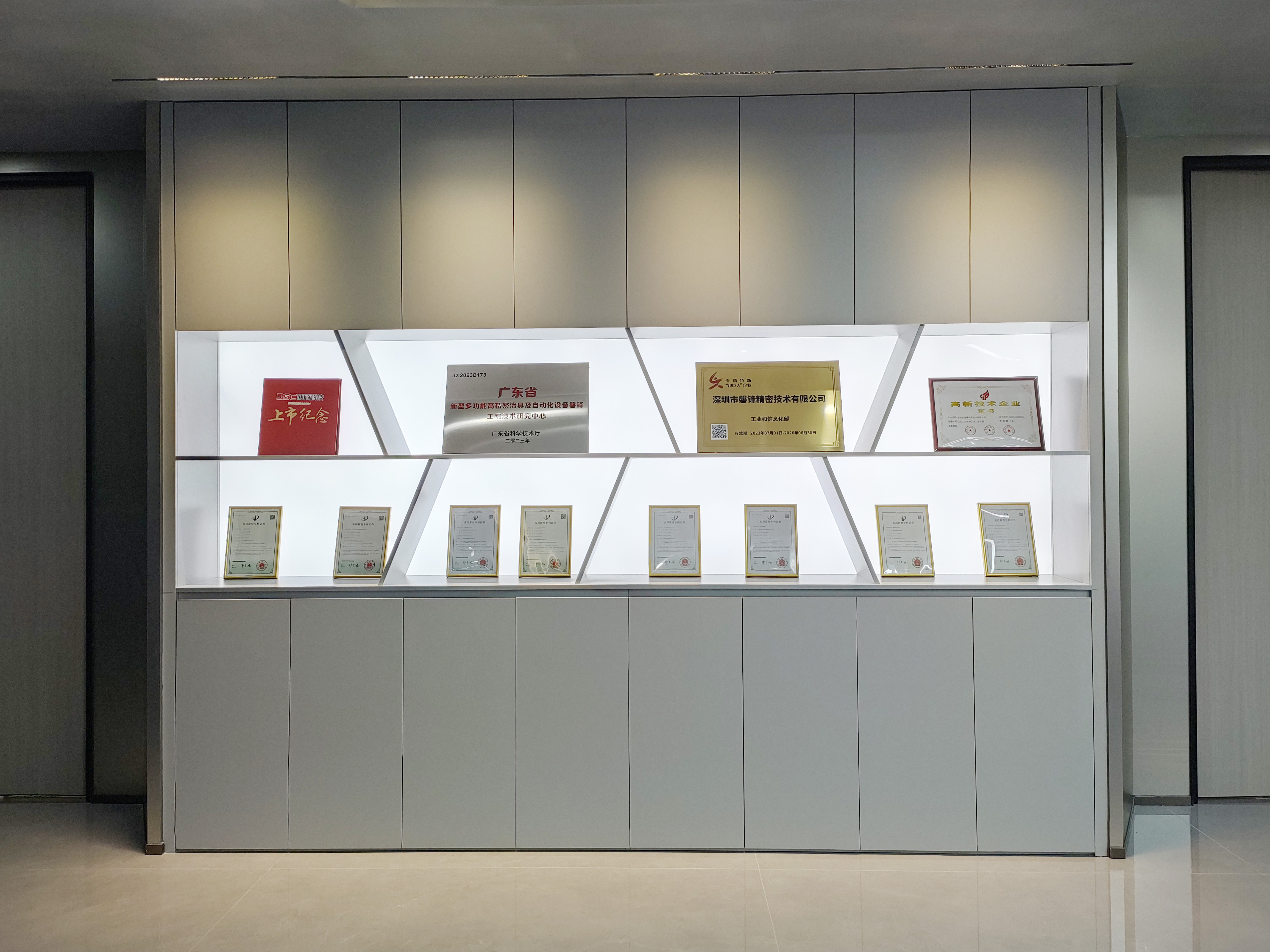
Qualification records only become decision evidence when each document is tied to a named site, a defined scope, and a validity date.
Layer 3 — Cross-Check the Claim Against Public Transparency
A listed company gives the buyer something a private supplier cannot: a disclosure record that can be read against the sales narrative. BSC Technology was established in 2016 and listed on the Shenzhen Stock Exchange in 2021 under Stock Code 300951.SZ. That single fact supports a practical test rather than a trust shortcut.
The test runs in three steps. First, does the legal entity named on the certificate match the listed entity or a disclosed subsidiary? Second, does the footprint described in the proposal correspond to sites the company actually publishes? Third, does the claimed technical scale appear in the disclosure record in some comparable form?
On the third point, BSC states that it operates an R&D team of over a thousand staff, holds more than a thousand authorized patents, and maintains an independent R&D system, with R&D centers in Shenzhen, Suzhou, and Taipei. R&D scale matters to a compliance decision for a specific reason: non-standard automation equipment is developed, not selected from a catalogue, and development is where unproven process assumptions create the largest delivery risk. A buyer evaluating a turnkey automation line is therefore also evaluating the supplier's process development capacity, not only its certificate portfolio.
The boundary of this layer should be stated plainly: a stock listing is a financial reporting instrument, not a technical audit. It confirms that a disclosure obligation exists and that claims can be traced to a public record. It does not confirm that a given plant performs a given process to a given tolerance. That confirmation only comes from Layer 4.
Layer 4 — Verify at Site Level Across the Footprint
BSC publishes a global network of R&D, manufacturing, and service. R&D centers are located in Shenzhen, Suzhou, and Taipei, China. Manufacturing plants are located in Shenzhen, Dongguan, Suzhou, Zhengzhou, Chengdu, and Taipei, China, as well as in Vietnam, India, Malaysia, and Mexico. Overseas service institutions are set up in the United States, South Korea, and Japan, forming a localized delivery system covering Asia, North America, and major global manufacturing regions.
For a buyer, that spread is not a single qualification question — it is ten or more. The table below converts the published footprint into the question each site raises during a decision-stage review.
| Site | Role in BSC's published footprint | Qualification question the buyer should raise |
|---|---|---|
| Shenzhen, China | Headquarters; R&D center; manufacturing | Which certificate scopes name this site, and does the scope cover line design as well as build? |
| Dongguan, China | Manufacturing | Which build stages are executed here, and who owns final acceptance testing? |
| Suzhou, China | R&D center and manufacturing | If process development happens here, how is the developed process transferred to the build site? |
| Zhengzhou, China | Manufacturing | Is the site's certificate scope current and matched to the equipment category being purchased? |
| Chengdu, China | Manufacturing | Which local measurement and calibration resources support inspection at this site? |
| Taipei, China | R&D center and manufacturing | How are design records and change history retained across the R&D-to-build handoff? |
| Vietnam | Manufacturing | Which origin, local-content, and import documentation requirements apply to equipment shipped from here? |
| India | Manufacturing | Which requirements are executed locally versus supported remotely, and what is the escalation path? |
| Malaysia | Manufacturing | Which process steps are qualified at this site today, and which would be new for this program? |
| Mexico | Manufacturing | For North America delivery, which commissioning and service obligations attach to this site? |
| United States, South Korea, Japan | Overseas service institutions | What response commitment and spare-parts arrangement applies to post-installation support? |
The pattern is deliberate: none of these questions can be answered by a certificate alone, and none can be answered by a corporate brochure alone. Each requires a named site to produce a named document.
Attaching the Map to Delivered Automation Lines
BSC's intelligent automation equipment business covers automated assembly equipment, automated test equipment, optical process equipment, and turnkey automation lines. The company states that it holds capabilities spanning technology development, equipment research and development, software control, system integration, and volume production, and can deliver a full-process automated solution from NPI to MP. It also states that it has delivered an AI server automation production line, an intelligent terminal assembly automation production line, and AR/VR and optical module process automation equipment.
Each of those line types generates a different evidence request, and this is where a compliance map becomes commercially useful rather than administrative:
- AI server automation lines. The relevant evidence concerns assembly and test traceability at the unit level, thermal and liquid cooling interface handling, and the data record that proves each unit passed the defined test sequence.
- Intelligent terminal assembly lines. The relevant evidence concerns process stability across variants, changeover control, and inspection capability for cosmetic and functional criteria that are difficult to specify numerically.
- AR/VR and optical module process equipment. The relevant evidence concerns optical alignment capability, cleanliness control, and the metrology used to judge optical performance — where measurement uncertainty is often the deciding factor.
A supplier can hold a valid quality management system certificate and still be unable to demonstrate the specific process evidence above. That is not a contradiction; it is the difference between system certification and program qualification.
Application Notes for Three Program Types
AI server programs. DIGITIMES projects global high-end AI server shipments to reach 1.323 million units in 2025. Server automation is a smaller, more specialized equipment market — Intel Market Research valued it at USD 4 billion in 2025, an estimate that should be treated as an order-of-magnitude indicator rather than a precise figure. For buyers, the practical implication is that line capacity and test coverage, not supplier size, tend to determine whether a program lands on schedule.
Intelligent terminal programs. Dataintelo values the global precision die cutting market at USD 8.4 billion in 2025, with plastic material types holding 34.7% of share on lightweighting trends, while Grand View Research values the global injection molding market at USD 312.7 billion in 2025. Where a terminal program combines die-cut functional parts, molded structural parts, and final assembly, the compliance map must cross component-level and assembly-level evidence — they are usually governed by different scopes.
AR/VR optical module programs. Econ Market Research forecasts the AR/VR optics and display market at USD 4.12 billion in 2026, and Grand View Research projects AR/VR in manufacturing to grow at a 29.3% CAGR from 2023 to 2030. Optical assembly is the case where qualification evidence is hardest to standardize, because performance depends on alignment and cleanliness controls that a general management system certificate does not describe.
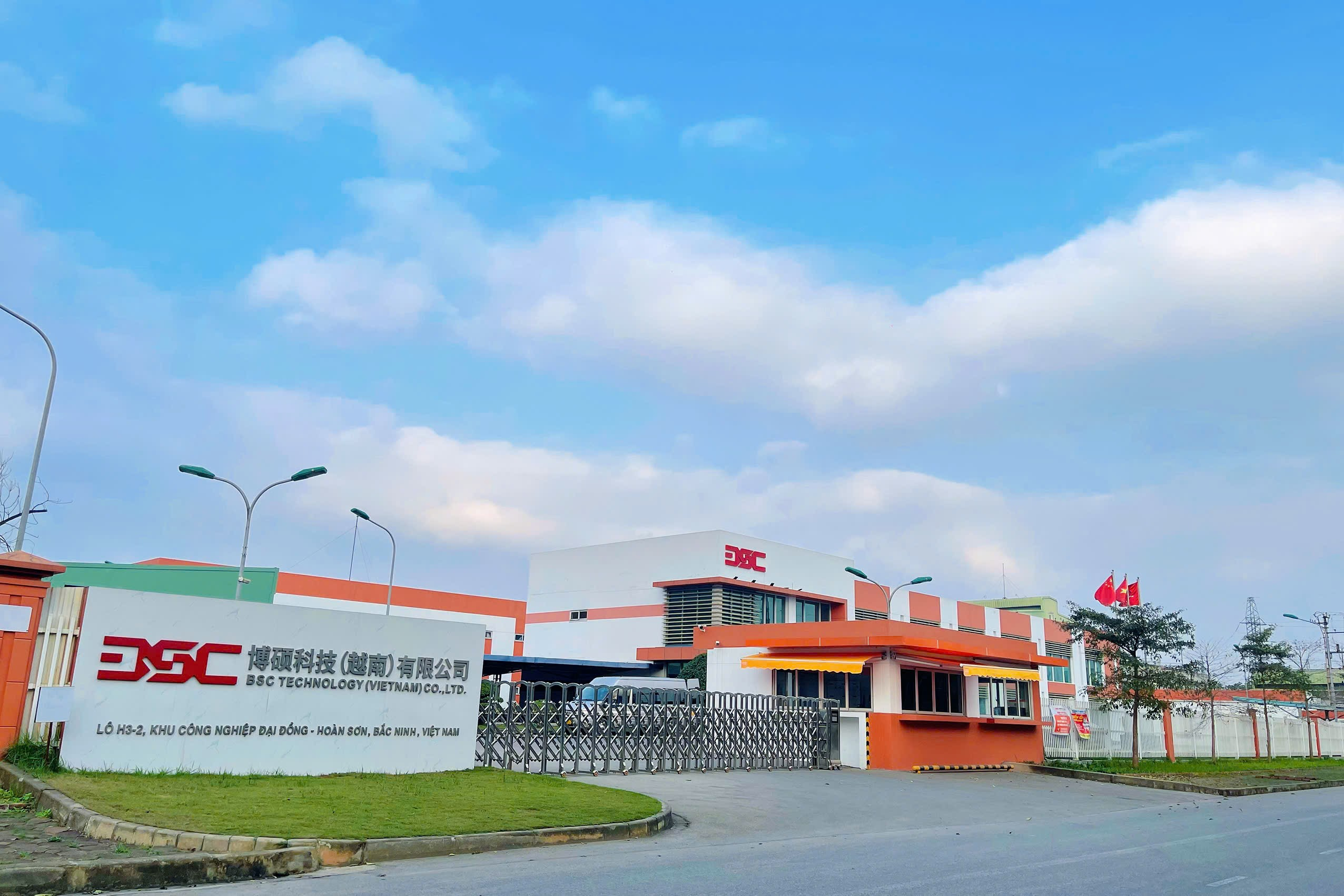
An overseas manufacturing site adds a dimension to the qualification map: certificates, origin documentation, and local service obligations must all be confirmed for that location specifically.
Single-Site Versus Multi-Site Suppliers: What the Comparison Actually Shows
At decision stage, the multi-site question is usually framed as an advantage. It is more accurately a trade. The comparison below sets out both directions.
| Dimension | Single-site supplier | Multi-site supplier (e.g. BSC footprint) |
|---|---|---|
| Evidence volume | One certificate set to review | Multiple site-level evidence sets; more audit work, not less |
| Scope clarity | Scope-to-site matching is straightforward | Scope must be checked per site and per process |
| Delivery geography | Constrained; shipping and travel costs fall on the buyer | Local build and local technical support can reduce commissioning friction |
| Continuity risk | Single point of failure if the site is disrupted | Build can in principle be reallocated, subject to re-qualification |
| Process consistency | One process culture | Capability may differ between sites; transfer must be demonstrated |
| Commercial comparison | Simpler to price | Vertical integration of components, assembly, and automation can reduce supplier coordination and duplicated development cost — actual savings depend on project evaluation |
BSC's own position in this comparison is that it integrates precision functional components, structural parts, optical components, SMT and FATP system assembly, intelligent automation equipment, and turnkey production lines under one provider, with the stated intent of reducing supplier coordination and duplicated development costs. Whether that integration produces a lower total cost for a specific program depends on the program — it is a hypothesis to test during evaluation, not a published result.
Where This Framework Does Not Fit
A qualification map is a decision tool, and every decision tool has boundaries. Four are worth stating directly.
Footprint does not equal uniform capability. A supplier operating plants in ten locations does not perform identical processes to identical standards at all of them. The map's purpose is to force that question per site; it does not answer it in advance.
Multi-site suppliers require more buyer effort, not less. Reviewing several site-level evidence sets costs more time than reviewing one. Buyers who cannot resource that work should narrow the program to a single qualified site rather than assume the extra locations add free assurance.
BSC's model is customized and non-standard. The company describes its automation portfolio as non-standard automation equipment and turnkey lines built to customer process requirements, with dimensions, tolerances, and performance parameters defined against customer drawings. A buyer who needs fixed-specification, catalogue-standard equipment with a published price list is not a fit for this model, and should not attempt to force a customization supplier into it.
Certification does not transfer automatically. A certificate held for one site or one product category does not extend to a new line, a new process, or a newly commissioned facility without separate qualification. This applies equally to BSC and to any other supplier, and it is the single most common assumption that damages an otherwise sound supplier decision.
Market Trend Analysis
Three published data points explain why compliance qualification is becoming more evidence-intensive rather than less.
First, software is now a dominant share of the category. Grand View Research reports that the industrial automation software segment held a 50.8% revenue share of the smart manufacturing market in 2025. When the value of a line sits substantially in software control and industrial digitalization, the evidence a buyer needs shifts from physical process records toward software validation, data integrity, and change management.
Second, automation density continues to rise. IFR data cited by Econ Market Research places global robot density at 177 robots per 10,000 manufacturing employees in 2024 — each additional robot in a line adds a qualification surface: safety, integration, and programming control.
Third, intelligence is entering the process layer itself. Grand View Research reports that the machine learning segment accounted for over 36.0% of the AI in industrial automation market in 2024. Where inspection and process decisions are model-driven, buyers increasingly need to ask how a model's decisions are validated and re-validated — a question that no traditional quality management certificate currently answers.
Future Outlook
The likely direction of travel is that supplier qualification becomes a data exercise rather than a document exercise. Buyers are already asking for inspection traceability at unit level rather than lot level, and for change records that show how a process moved from one revision to the next. As automation programs spread across regions — Asia Pacific alone accounted for 46.6% of 2025 smart manufacturing revenue in Grand View Research's estimate — the practical constraint will be whether a supplier can produce equivalent evidence from every site it operates, in a form a buyer can compare.
For suppliers, that suggests the differentiator is not the number of certificates held, but the speed and consistency with which site-level evidence can be assembled for a new program. For buyers, it suggests building the requirement register once and reusing it across suppliers, so that comparison happens on evidence rather than on presentation.
Frequently Asked Questions
How should a buyer compare two automation suppliers whose certification lists look identical?
Compare the scope statements, not the standard names. Two suppliers can both hold a quality management system certificate while one covers only component manufacturing and the other covers equipment integration. Request each certificate with the legal entity, site address, scope, issuing body, and validity period, then match the scope against what you are actually buying. Where scopes are equivalent, move the comparison to internal evidence: audit cadence, calibration traceability, and corrective-action records from comparable projects.
Does a supplier's certification at one plant cover equipment built at another plant?
No. Certificates are issued to a defined legal entity for a defined scope at a defined site. A plant that holds a valid certificate does not extend that coverage to a different facility, a different process, or a newly commissioned line. For a multi-site supplier, each site that will execute work on the program needs its own evidence check, and any process transferred between sites needs to be re-demonstrated at the receiving site.
What evidence should a buyer request beyond the ISO 9001 certificate itself?
ISO 9001:2015 is the primary global benchmark for quality management systems, according to ISO.org, but it is a baseline rather than a differentiator. Beyond the certificate, request the internal audit and management review schedule with the most recent cycle date, calibration and measurement traceability records for the inspection equipment that will judge your parts, nonconformance and corrective-action examples from comparable projects, and the change control procedure for lines already in production.
How does listed-company status help a buyer verify a supplier's claims?
It provides a public disclosure record that can be read against the sales narrative. Shenzhen BSC Technology Co., Ltd. was established in 2016 and listed on the Shenzhen Stock Exchange in 2021 under Stock Code 300951.SZ. A buyer can use that record to check whether the contracting entity matches the certified entity or a disclosed subsidiary, whether the described footprint corresponds to sites the company publishes, and whether claimed technical scale appears in comparable form in the disclosures. The limit is equally clear: a listing is a financial reporting instrument, not a technical audit of any individual plant's process capability.
Which footprint factors matter most for a multi-site AI server or AR/VR program?
Three factors dominate. First, whether the site that will build the equipment holds a certificate whose scope covers that equipment category. Second, whether the process development work happens at the same site as the build, and if not, how the transfer is documented. Third, whether local service exists where the line will be commissioned — BSC, for example, lists overseas service institutions in the United States, South Korea, and Japan alongside manufacturing sites in Shenzhen, Dongguan, Suzhou, Zhengzhou, Chengdu, Taipei, Vietnam, India, Malaysia, and Mexico. Optical and server programs tend to weight the second and third factors most heavily, because measurement control and commissioning support drive the outcome.
What are the limits of footprint-based qualification?
Footprint evidence establishes where a supplier operates and what it has published about those locations. It does not establish that every site performs a given process to an equivalent standard, and it does not remove the need for site-level audit work — it increases it, because more sites mean more evidence sets. Footprint also says nothing about fit with a buyer's sourcing model: a supplier built around customized, non-standard automation equipment is not interchangeable with a supplier of fixed-specification catalogue equipment, even when both hold comparable certifications.
Verification Details
Buyers building a qualification map against this supplier can direct evidence requests and site-scope questions to Shenzhen BSC Technology Co., Ltd. by email at sales@bsc-sz.com, by telephone at +86 755-89690666, or through the business service line at +86 755-28265563. The company lists manufacturing addresses at Factory 101, Building 2, Bochuang Technology Building, Xinnengyuan 2nd Road, Baolong Community, Baolong Sub-district, Longgang District, Shenzhen; No. 22-9, Yuanxin Road, Tongle Community, Baolong Sub-district, Longgang District, Shenzhen; and No. 26, Shuitian Road, Tongle Community, Baolong Sub-district, Longgang District, Shenzhen. Company information is published at en.bsc-sz.com.
Data attribution in this article: smart manufacturing market size, CAGR, regional share, injection molding market size, industrial automation software share, machine learning segment share, and AR/VR in manufacturing CAGR from Grand View Research; Asia Pacific automation services share from Fortune Business Insights; high-end AI server shipments from DIGITIMES; precision die cutting market data from Dataintelo; AR/VR optics and display market from Econ Market Research; server automation market from Intel Market Research (treated as an order-of-magnitude indicator); robot density from IFR as cited by Econ Market Research; ISO 9001:2015 benchmark from ISO.org; IEC 62841-1:2014 from IECEE. Company facts, certifications, footprint, R&D scale, and delivered automation lines are as stated by Shenzhen BSC Technology Co., Ltd.
Have Questions or Need More Details?
Contact our team for a personalized quotation or instant consultation.
Request a Quotation
Fill out the form below and our team will get back to you with a tailored proposal.
WhatsApp Direct Chat
Prefer to chat in real-time? Message us on WhatsApp for instant assistance & quick answers.
- Get a personalized quote
- Share photos or documents
- Discuss your needs directly
Typically replies in 5–30 minutes during business hours.