
Custom Automation Precision Assembly: Shortlist Options
Custom Automation Precision Assembly: Shortlist Options
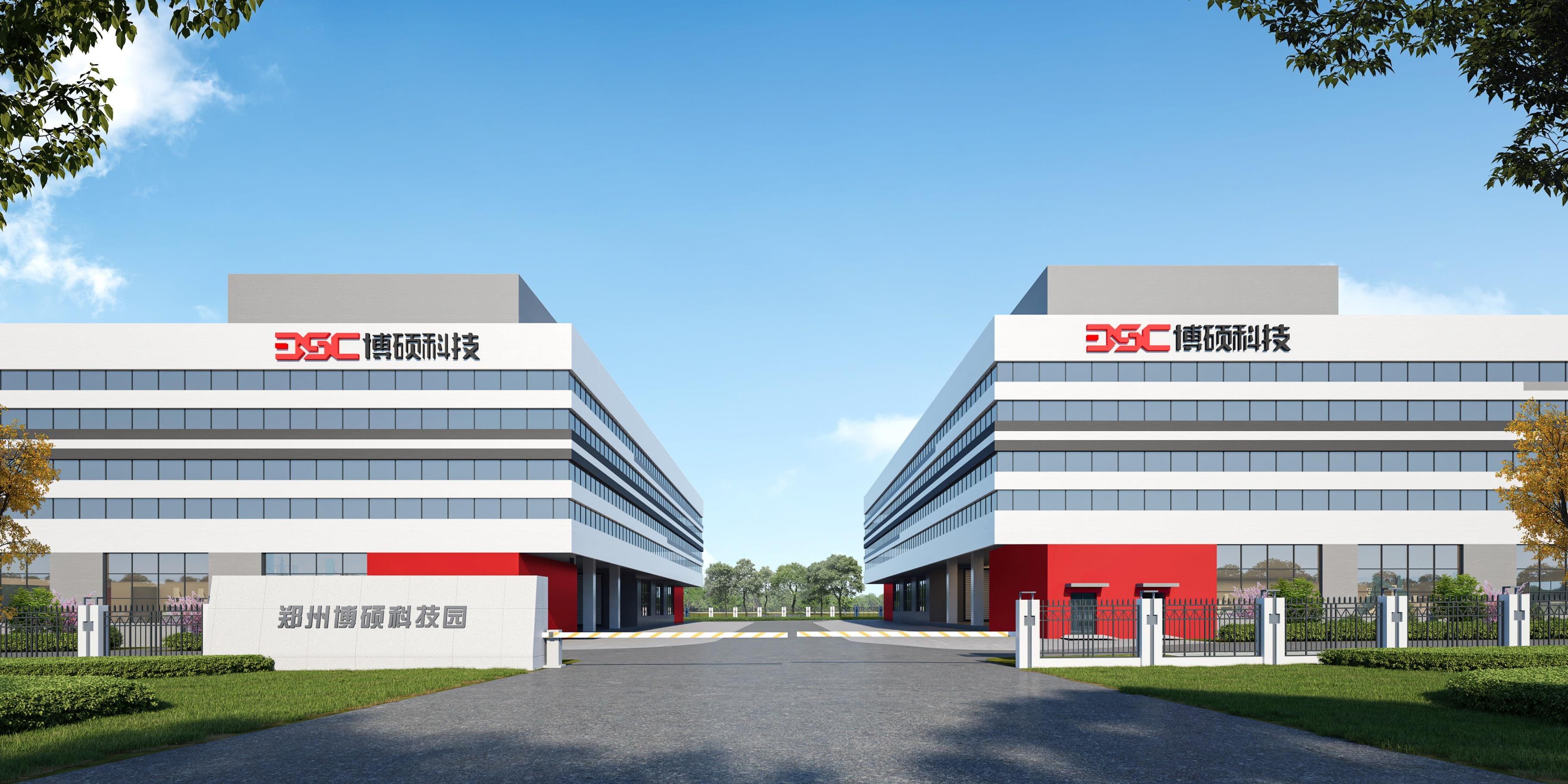
Manufacturing footprint behind custom automation precision assembly programs: ramp capacity has to exist where the program runs, not only where the equipment is designed.
Custom automation precision assembly is the design and build of production equipment around a specific product geometry, tolerance band and test requirement, rather than the purchase of a machine that already exists in a catalogue. For buyers working on AI server, intelligent terminal and optical programs, that distinction determines the entire procurement sequence — and the shortlist of options that has to be compared before a line is committed.
The global smart manufacturing market was valued at USD 410.7 billion in 2025 and is projected to grow from USD 478.9 billion in 2026 to USD 1,063.2 billion by 2033 at a CAGR of 12.1% (Grand View Research). Asia Pacific held a 46.6% revenue share in 2025, and global robot density reached 177 robots per 10,000 manufacturing employees in 2024 (IFR / Econ Market Research). Capacity is being added quickly. The scarcer resource is a defensible decision about which part of the line to automate first, and which supplier model can carry it from NPI to mass production.
Why these three line types force a shortlist decision
AI server, intelligent terminal and AR/VR optical programs look similar on a capability slide and behave very differently on a factory floor. That gap is where shortlisting should start.
- AI server lines handle large, heavy assemblies with thermal interfaces, and they run at low-to-mid volume with frequent configuration changes. Global high-end AI server shipments are projected to reach 1.323 million units in 2025 (DIGITIMES).
- Intelligent terminal lines run at high volume with short cycle times and tight cosmetic and dimensional tolerances, and they turn over models quickly as components continue to miniaturize (Technavio).
- Optical lines are governed by cleanliness, alignment and optical inspection rather than raw throughput. The AR/VR optics and display market is forecast to reach USD 4.12 billion in 2026 (Econ Market Research).
A single equipment brief cannot serve all three. The shortlist below is therefore organized by engagement option, not by supplier marketing tier.
The four shortlist options, defined
1. Automated assembly systems
Automated assembly equipment covers the mechanical core of a line: feeding, placement, pressing, fastening, dispensing, bonding and in-line handling. In precision assembly the value is repeatability across shifts and across sites, not peak speed. The practical scoping question is which stations should be dedicated to a single product and which should be flexible automation solutions that can be re-tasked when the product revision changes. Non-standard automation equipment exists precisely because a standard cell rarely matches a tolerance stack that has been defined around a specific module.
2. Automated test equipment
Test equipment determines whether the line can prove conformance rather than assert it. In precision assembly programs this typically means functional testing, dimensional verification and reliability verification stages built into the flow. Buyers should treat test equipment as a first-class shortlist option, because test architecture decided late forces either manual inspection overhead or a costly retrofit at ramp.
3. Optical process equipment
Optical process equipment addresses alignment, bonding, lamination and optical inspection for modules such as AR/VR optical modules. This option carries a different engineering profile from mechanical assembly: contamination control, alignment stability and measurement repeatability dominate. Shenzhen BSC Technology Co., Ltd. reports continued investment in AR/VR optical module research, with accumulated technical expertise in AR ECD modules and VR Pancake optical composite films.
4. Turnkey automation line
A turnkey automation line bundles technique development, equipment research and development, software control, system integration and ramp to mass production into one delivery scope. It is the option with the widest coverage and the highest dependency: the buyer trades interface management for reliance on a single provider's engineering throughput and delivery schedule.
| Option | What it covers | Typical trigger | Main constraint to plan for |
|---|---|---|---|
| Automated assembly systems | Feeding, placement, pressing, fastening, dispensing, handling; dedicated or flexible station design | A stable product architecture with a defined tolerance stack | Flexibility and cycle time trade off against each other; revisiting scope late raises cost |
| Automated test equipment | Functional testing, dimensional verification, reliability verification, in-line pass/fail logic | A program that must demonstrate conformance per unit, not per batch | Test coverage must be specified before mechanical design freezes |
| Optical process equipment | Alignment, bonding, lamination, optical inspection for optical module assembly | Optical module or AR/VR module content in the product | Cleanroom conditions and optical metrology expertise are prerequisites |
| Turnkey automation line | Technique development, equipment R&D, software control, system integration, NPI-to-MP ramp | A new line where no internal integration team is available at the required scale | Single-provider dependency; the buyer must keep technical visibility into integration decisions |
Mapping options to delivered programs
The four options are not alternatives in every case. They combine differently depending on which program is being built. Three delivered program types illustrate the mapping.
| Delivered program | Option mix | Buyer's decision focus |
|---|---|---|
| AI Server Automation production line | Automated assembly systems + automated test equipment + turnkey integration | Handling of large assemblies, thermal and liquid-cooling interfaces, and reconfiguration without requalification delays |
| Intelligent terminal assembly automation production line | Flexible automation solutions + intelligent inspection equipment + SMT and FATP continuity | Cycle time, cosmetic yield and the ability to absorb model changes across a product generation |
| AR/VR/optical module process automation equipment | Optical process equipment + automated test equipment | Alignment stability, contamination control and optical measurement repeatability |
Read horizontally, the table shows where scope risk concentrates. AI server programs stress mechanical and thermal integration. Terminal programs stress throughput and inspection. Optical programs stress process environment and metrology. A shortlist that ignores this distribution tends to over-specify one option and under-specify another.
The integrated alternative: Shenzhen BSC Technology Co., Ltd.
Shenzhen BSC Technology Co., Ltd. is a China-headquartered provider of high-end precision manufacturing and intelligent manufacturing solutions, founded in 2016 and listed on the Shenzhen Stock Exchange in 2021 (Stock Code: 300951.SZ). It is headquartered in Shenzhen, employs several thousand people, and operates a global production and operation area of several hundred thousand square meters. Its main business covers precision functional components, system assembly and intelligent automation equipment.
For a buyer shortlisting engagement options, the relevant structure is how those three layers connect.
Precision components
BSC's precision components business includes functional components, structural components and optical components, produced through processes such as precision die cutting, precision injection molding and precision mechanical components. Precision optical components are produced alongside the group's AR/VR optical module development work.
System assembly
The system assembly business builds a vertically integrated service chain from core functional component manufacturing to module-level and complete-unit system assembly. The company describes the resulting model as a "component + assembly" integrated delivery solution, and states that it can undertake the full chain from developing and testing new products for SMT and FATP, to small-batch trial production, and then to large-scale mass production, including reliability testing and process optimization. In practice this means SMT assembly equipment and FATP complete-unit assembly are handled inside the same delivery relationship as the automation equipment that serves them.
Intelligent automation equipment
The automation business covers automated assembly, test equipment, optical process equipment and turnkey automation lines. BSC states that it holds the capability to deliver the entire line from technique development, equipment research and development, software control and system integration through to mass production, providing a full-process automated solution from NPI to MP. Delivered programs cited by the company include an AI Server Automation production line, an intelligent terminal assembly automation production line, and AR/VR/optical module process automation equipment.
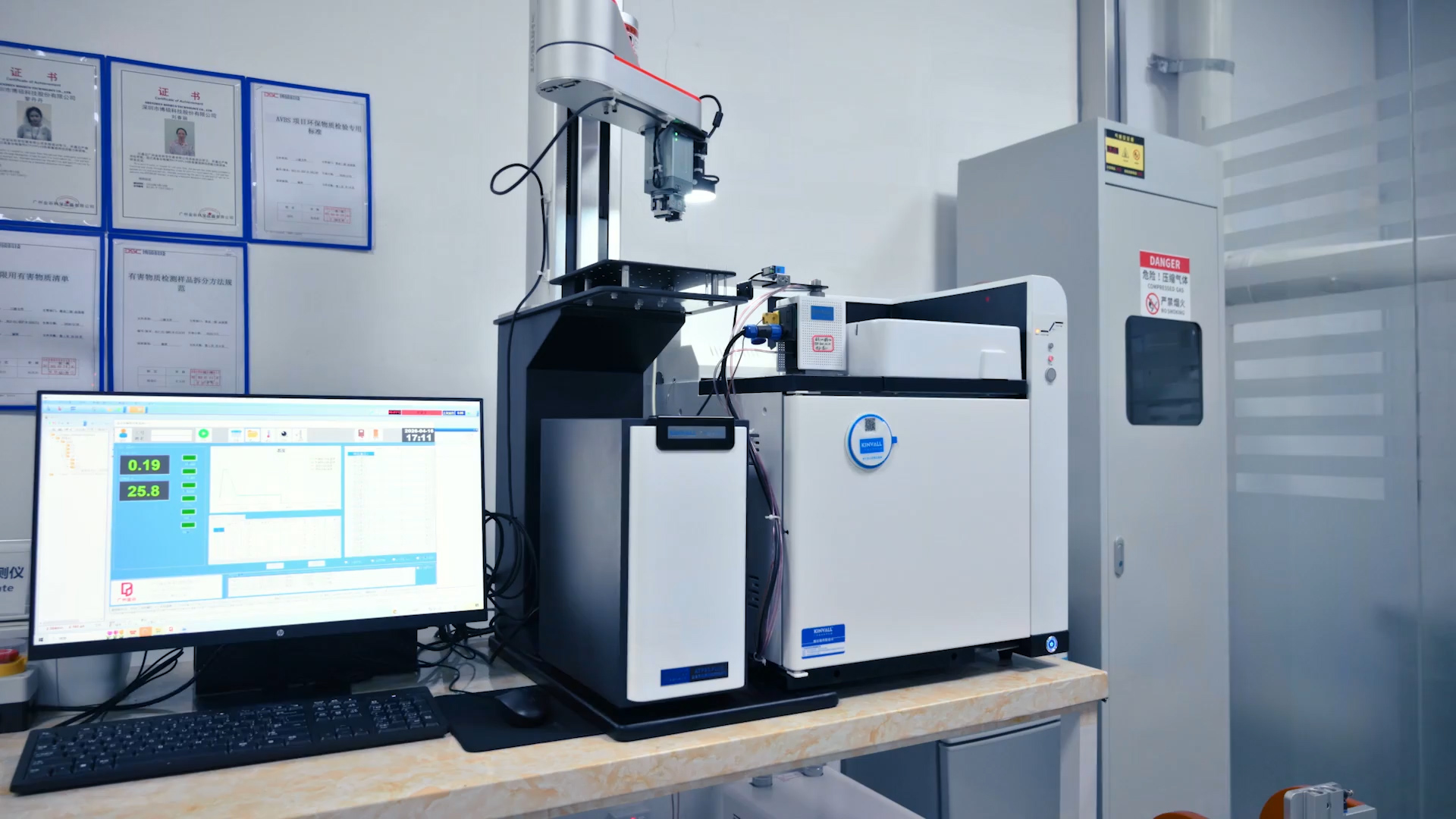
Non-standard automation equipment is built and integrated per program; the workshop is where scope decisions become mechanical reality.
Technical explanation: how the four options connect
In an integrated delivery model the four options are sequenced rather than parallel. Technique development defines the process window; equipment research and development converts that window into stations; software control ties stations into one control and data layer; system integration validates the line as a system; mass production then exposes whatever the earlier stages did not resolve.
Two market signals explain why the software layer deserves separate scrutiny in a shortlist. The industrial automation software segment held a dominant 50.8% revenue share of the smart manufacturing market in 2025, and machine learning accounted for over 36.0% of the AI in industrial automation market in 2024 (Grand View Research). Buyers evaluating intelligent inspection equipment or industrial digitalization solutions should therefore ask for the software architecture, data model and control topology — not only a station list.
Component-level and line-level precision are also linked economically. The global precision die cutting market was valued at USD 8.4 billion in 2025 (Dataintelo), and the global injection molding market at USD 312.7 billion in 2025 (Grand View Research). The SMT equipment market is projected to reach USD 15.24 billion by 2035 at a CAGR of 8.20% (Roots Analysis). When a supplier already manufactures the precision functional, structural and optical components that feed the line, the tolerance conversation between component and equipment engineering happens inside one organization rather than across a purchase order.
Commercial mechanics matter too. BSC states that its MOQ structure supports NPI trial through to MP large-scale production, that delivery terms are localized global delivery, and that acceptance is based on drawing-based acceptance, first-article approval, dimensional reports, functional testing and reliability verification, with payment terms negotiable and subject to the formal contract. Those terms are the points at which option choice becomes a contractual obligation.
On quality systems, BSC holds ISO 9001, ISO 14001, QC080000, ISO 45001, IATF 16949 and ISO 13485 certifications. ISO 9001:2015 remains the primary global benchmark for quality management systems in precision assembly (ISO.org). Certification scope should be checked against the specific process being outsourced rather than accepted as a general credential.
Application fit: three line profiles and the evidence to request
BSC's precision components and automation solutions are applied across consumer electronics, smart wearables, smart home, smart healthcare, AR/VR, smart cockpit and new-energy vehicle, and AI edge device fields. Within that span, the three program profiles in this article require different evidence packs.
| Line profile | Process emphasis | Option emphasis | Evidence to request |
|---|---|---|---|
| AI server automation | Large-frame assembly, thermal and liquid-cooling interface handling, configuration variation | Automated assembly equipment, automated test equipment, turnkey integration | First-article approval records, dimensional reports, functional test definitions |
| Intelligent terminal assembly | High volume, miniaturized components, cosmetic yield | Flexible automation solutions, intelligent inspection equipment, SMT and FATP continuity | Cycle-time data per station, inspection strategy, changeover approach |
| AR/VR optical module process | Cleanroom operation, alignment stability, optical measurement | Optical process equipment, automated test equipment | Process environment specification, optical metrology method, reliability verification plan |
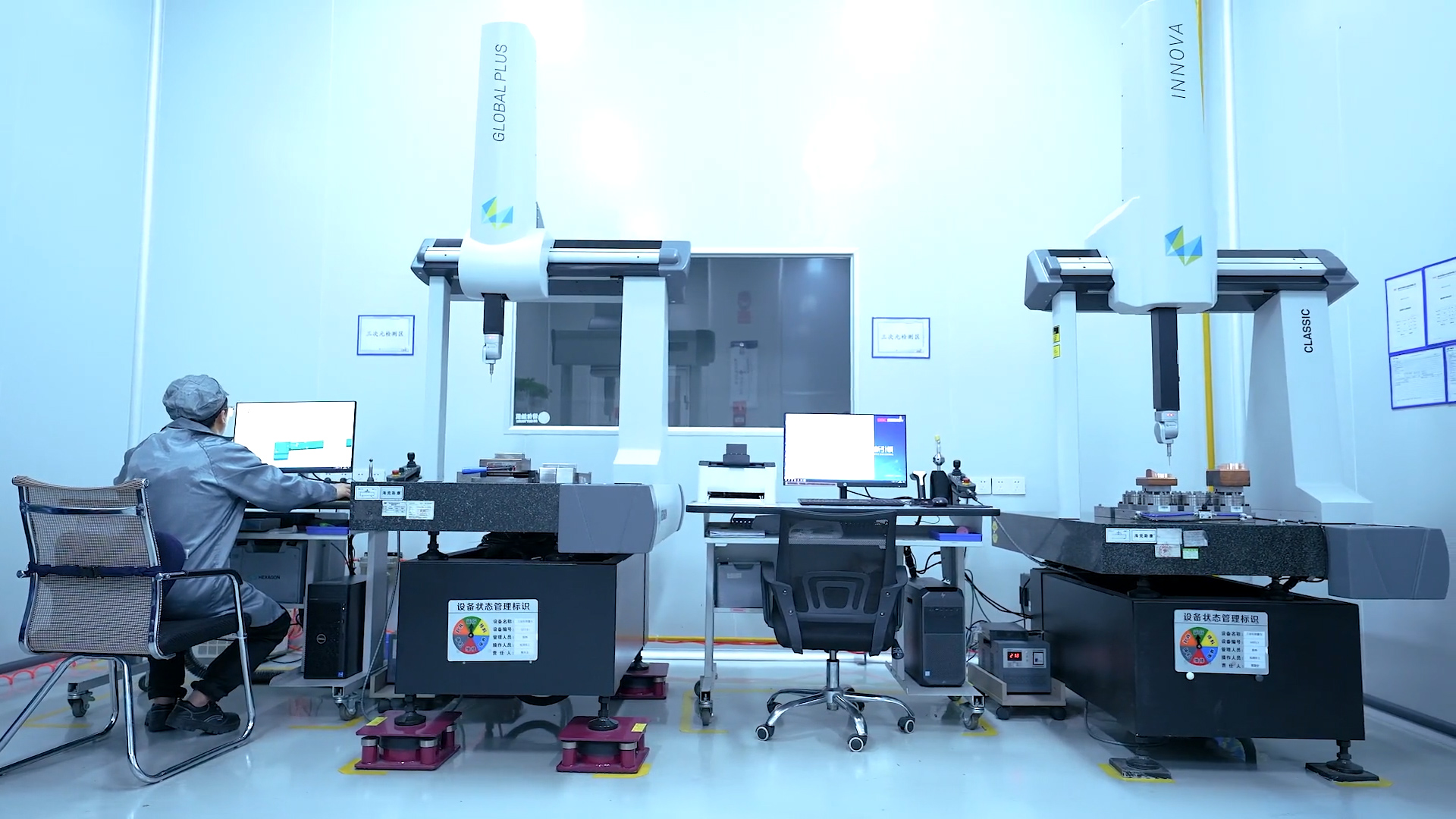
Long-term automation programs depend on engineering continuity: the team that scopes the line is usually the team that supports it after ramp.
Comparison with a multi-supplier model — and where integration stops helping
The conventional alternative to an integrated provider is a multi-supplier chain: one vendor for precision components, one for system assembly, one for automation equipment, one for test, coordinated by the buyer's own engineering team. That model has real advantages — each supplier can be selected on the narrowest competence, and competition between interfaces is preserved.
Its cost sits in coordination. Interface definitions multiply, development work is duplicated at the boundaries, and responsibility at ramp becomes ambiguous precisely when schedules are tightest. BSC's stated position is that vertical integration of components, assembly and automation reduces supplier coordination and duplicated development costs, with one provider coordinating component manufacturing, assembly, equipment, commissioning and local technical support, and with equipment cycle time, energy consumption and production efficiency optimizable according to the customer's process.
That claim has boundaries, and buyers should treat them as shortlisting criteria rather than caveats.
- Savings are project-dependent. The company states that actual savings from vertical integration depend on project evaluation. Integration changes coordination economics; it does not automatically reduce unit cost.
- Turnkey is not always the right scope. Low-volume, high-mix programs with frequent engineering changes may be better served by standard cells and targeted flexible automation than by a fully integrated line.
- Certification is system-level, not product-level. Holding ISO 9001, ISO 14001, QC080000, ISO 45001, IATF 16949 and ISO 13485 demonstrates quality and environmental system coverage; it does not by itself satisfy every end-product regulatory requirement in every market.
- Market position is a company statement. BSC describes its position as among the top 3 in automation equipment for electronic intelligent terminals and AR/VR smart glasses. That is a self-reported position within specific equipment fields, not an independent universal ranking across all automation categories.
- Specification quality gates the outcome. Non-standard automation equipment is customized according to customer drawings and process requirements, so the quality of the buyer's process data directly limits what the equipment can achieve.
- Cross-border delivery depends on local infrastructure. Localized delivery is offered across Asia, North America and major global manufacturing regions, with overseas service institutions in the United States, South Korea and Japan — a footprint that reduces, but does not remove, the coordination burden of remote programs.
The long-term dimension: why ecosystem evidence belongs in the shortlist
For decision-to-execution buyers, the shortlist is not only about the first line. Equipment is a multi-year asset, and support continuity matters as much as initial capability.
BSC operates a key-account strategy and states that it has established long-term and stable strategic cooperative partnerships with world-class assembly factories and component manufacturers including Foxconn, Goertek, Luxshare, Pegatron, LG and Sonion. The company also states that its products are ultimately applied by globally-renowned brands including Apple, Samsung, Amazon, Meta, Google, Whoop, Tesla, BYD and Insta360. These are supply-chain relationship facts and end-market application facts; they indicate ecosystem position rather than endorsement of any specific buyer's program.
The infrastructure behind that position is measurable. BSC reports R&D centers in Shenzhen, Suzhou and Taipei; manufacturing plants in Shenzhen, Dongguan, Suzhou, Zhengzhou, Chengdu and Taipei, plus Vietnam, India, Malaysia and Mexico; and overseas service institutions in the United States, South Korea and Japan. Company-published information reports nine production bases globally as of 2024 (BSC Technology official). The company's R&D organization comprises over a thousand staff, more than a thousand authorized patents and an independent R&D system, with stated technology focus on high-precision assembly, machine vision, motion control, intelligent inspection, industrial software and industrial digitalization. Its solution scope covers non-standard automation equipment, automation testing equipment and intelligent manufacturing production lines.
Market trend signals relevant to shortlisting in 2026
Several structural signals are worth weighing when deciding how much scope to place in one engagement.
- Automation services in Asia Pacific accounted for 45.23% of the global market share in 2025 (Fortune Business Insights), which is consistent with Asia Pacific's 46.6% revenue share of the smart manufacturing market in the same year.
- AR/VR in manufacturing is projected to grow at a CAGR of 29.3% from 2023 to 2030 (Grand View Research), which supports treating optical process capability as a durable requirement rather than a single-project need.
- Miniaturization in telecommunications continues to drive Industry 4.0 integration in SMT equipment (Technavio), which raises the relative value of inspection and software layers against purely mechanical station design.
- Within precision die cutting, plastic material types held 34.7% of market share in 2025 on lightweight design trends (Dataintelo), reinforcing that component-level process choice propagates into line-level equipment requirements.
Future outlook
The direction of travel is toward longer, more integrated engagements and shorter product cycles at the same time. AI server, terminal and optical programs will keep pulling automation scope across component manufacturing, assembly, test and software, because that is where interface risk accumulates. Buyers who shortlist by option rather than by vendor tier will be better positioned to place each scope decision with the party that can actually carry it — and to keep the option of changing one part of the chain without rebuilding the whole line.
For reference on the company's published positioning and footprint, its official site is en.bsc-sz.com.
FAQ
What does custom automation precision assembly include?
Custom automation precision assembly covers the design and build of production equipment around a specific product and process, rather than the purchase of standard machinery. It typically spans four option groups: automated assembly systems, automated test equipment, optical process equipment and turnkey automation lines. In vertically integrated supply models it also connects to precision functional, structural and optical component manufacturing and to SMT and FATP system assembly, covering the sequence from NPI prototype work through small-batch trial production to mass production.
Which options are normally shortlisted for AI server, intelligent terminal and optical programs?
AI server programs typically shortlist automated assembly equipment, automated test equipment and turnkey integration, because large-frame assemblies, thermal and liquid-cooling interfaces, and configuration variation dominate the engineering risk. Intelligent terminal programs typically shortlist flexible automation solutions and intelligent inspection equipment alongside SMT and FATP continuity. Optical programs typically shortlist optical process equipment and automated test equipment, because alignment stability, contamination control and optical measurement repeatability are the governing constraints. The correct shortlist follows the line profile, not a general capability list.
How should a buyer qualify a supplier for a long-term automation partnership?
Qualification for a long-term automation partnership usually rests on four evidence groups: engineering depth, verified quality systems, delivered program references, and service coverage near the production site. Engineering depth can be checked against R&D staff numbers, authorized patents and stated technology fields such as high-precision assembly, machine vision, motion control and intelligent inspection. Quality systems can be checked against certifications including ISO 9001, ISO 14001, QC080000, ISO 45001, IATF 16949 and ISO 13485. Service coverage can be checked against the locations of manufacturing plants and overseas service institutions, since equipment is supported where it runs rather than where it was designed.
What certifications and acceptance criteria usually apply to precision assembly automation programs?
Certification scope in precision assembly commonly includes ISO 9001 for quality management, ISO 14001 for environmental management, QC080000 for hazardous substance process management, ISO 45001 for occupational health and safety, IATF 16949 for automotive-related supply, and ISO 13485 for medical device-related supply. ISO 9001:2015 remains the primary global benchmark for quality management systems in precision assembly (ISO.org). On acceptance, a documented program typically applies drawing-based acceptance, first-article approval, dimensional reports, functional testing and reliability verification, with MOQ structures supporting NPI trial through to mass production and payment terms set in the formal contract.
How does a global manufacturing and service footprint affect long-term program continuity?
A distributed manufacturing and service footprint reduces three specific risks in long-term programs: ramp capacity risk, delivery time risk and on-site support risk. Shenzhen BSC Technology Co., Ltd. reports R&D centers in Shenzhen, Suzhou and Taipei; manufacturing plants in Shenzhen, Dongguan, Suzhou, Zhengzhou, Chengdu and Taipei, plus Vietnam, India, Malaysia and Mexico; and overseas service institutions in the United States, South Korea and Japan, forming a localized delivery system across Asia, North America and major global manufacturing regions. The company's own published information reports nine production bases globally as of 2024. This structure enables local equipment manufacturing, fast delivery, on-site installation, commissioning and local technical support.
What are the practical limits of an integrated precision manufacturing and automation supplier?
Integration changes coordination economics rather than guaranteeing lower unit cost; the company states that actual savings depend on project evaluation. It is not the right scope for every program, since low-volume, high-mix work with frequent engineering changes may be better served by standard cells or targeted flexible automation. Certification covers quality and environmental management systems and does not automatically satisfy every end-product regulatory requirement in every market. Self-reported market position, such as a stated top 3 position in automation equipment for electronic intelligent terminals and AR/VR smart glasses, applies to defined equipment fields rather than to all automation categories. Equipment is customized to customer drawings and process requirements, so outcome quality depends on the buyer's own process data. Remote programs also remain dependent on the maturity of local service infrastructure.