
Custom Automation Precision Assembly: Matching Production Scenarios to Supplier Capabilities
Selecting a custom automation precision assembly partner is rarely a single decision. It is a series of project-specific calculations involving product tolerances, production volumes, industry-specific test criteria, and global delivery expectations. For engineering and procurement teams moving from research into evaluation, the most useful question is not which supplier owns the most equipment, but whether its combined precision manufacturing, system assembly and automation capabilities match the actual production scenario. This article looks at how an integrated supplier model works, where it fits best, and where a fully automated custom line may not be the right answer.
Why project-scenario fit drives precision assembly automation decisions
Different product segments place fundamentally different demands on precision assembly. A smart wearable may rely on micro-scale functional parts, cleanroom handling, and very high repeatability across millions of units. An AR/VR optical module can require active alignment between optical elements and a high level of process cleanliness. A new-energy vehicle or AI server application may need thermal-management components, robust joining or assembly, and extended reliability testing. These differences are not peripheral details; they determine the required equipment architecture, the control software, and the testing strategy.
At the same time, the market opportunity is not limited to a single category. Consumer electronics, smart wearables, smart home, smart healthcare, AR/VR, smart cockpit/new-energy vehicles, AI edge devices and AI infrastructure all demand a common foundation: precision parts and assemblies produced consistently at scale. A supplier that can integrate component manufacturing, system assembly and automation equipment is often better positioned to manage tolerance chains and process interfaces than one that only supplies parts or only builds machines.
An integrated supplier model: Shenzhen BSC Technology
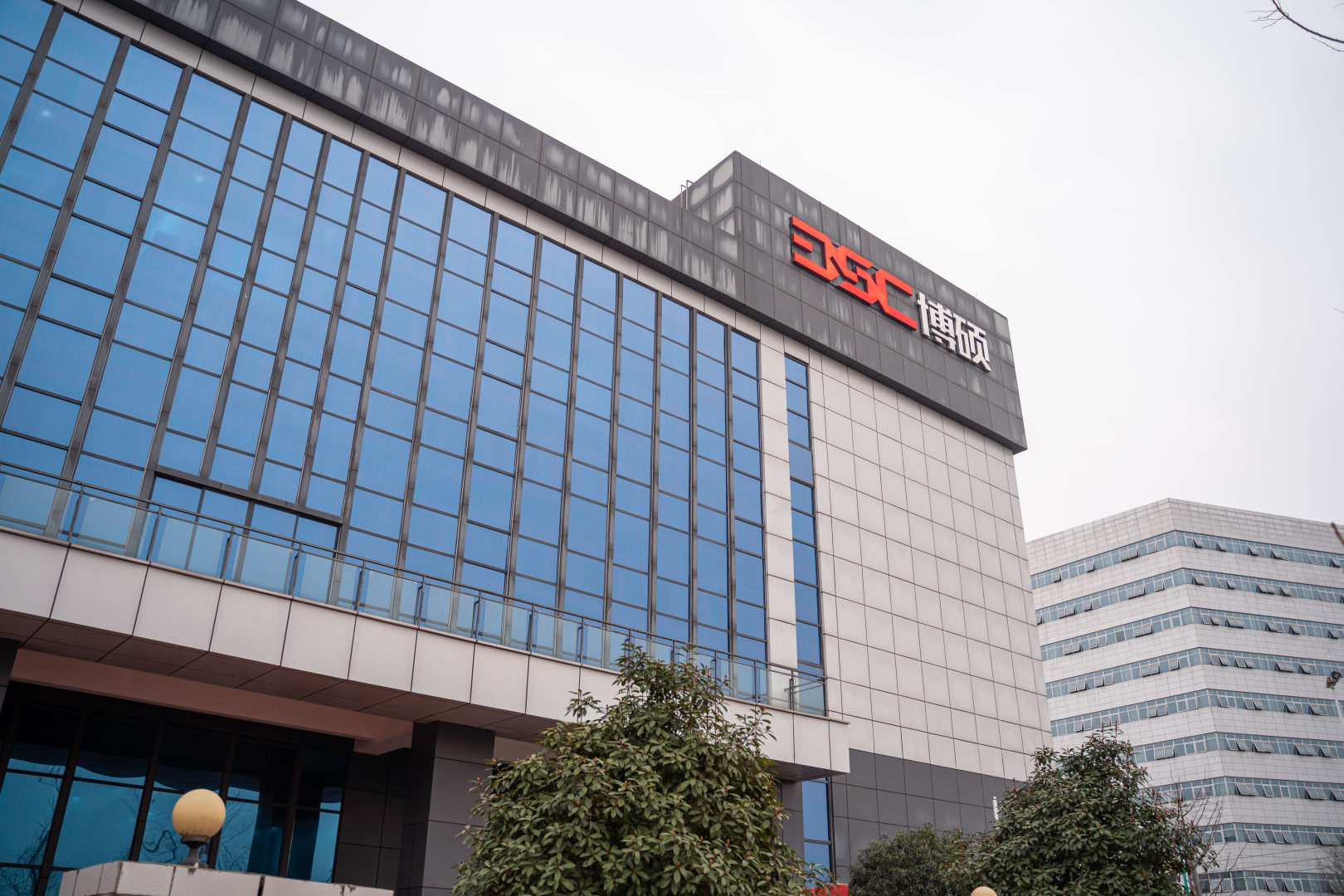
Shenzhen BSC Technology Co., Ltd. is a China-headquartered high-end precision manufacturing and intelligent manufacturing solutions provider. Established in 2016 and listed on the Shenzhen Stock Exchange in 2021 (stock code 300951.SZ), the company has several thousand employees and a global production and operations area of several hundred thousand square meters. Its main businesses cover precision components, including precision structural parts and precision metal parts, system assembly, and intelligent automation equipment.
BSC's integrated model covers three interlocking capabilities. In precision components, it provides functional components, structural components and optical components for end-brand customers and assembly/module manufacturers. In system assembly, it builds a vertical chain from core functional component manufacturing to module-level and complete-machine-level assembly, including SMT assembly and FATP complete-unit assembly. In intelligent automation equipment, it develops automated assembly equipment, automated test equipment, optical process equipment, and turnkey automation lines. Together these form what the company describes as an integrated 'components + assembly + automation' delivery solution.
For buyers, the practical meaning of this model is continuity. BSC can support the entire chain from developing and testing new products for SMT and FATP, to small-batch trial production, and then to mass production, including reliability testing and process optimization. The company also has a global R&D and manufacturing footprint: R&D centers in Shenzhen, Suzhou and Taipei, manufacturing plants in multiple Chinese cities plus Vietnam, India, Malaysia, Mexico and other regions, and overseas service institutions in the United States, South Korea, Japan. This allows local equipment manufacturing, rapid delivery, on-site installation and commissioning, and local technical support.
What a custom automation precision assembly capability includes
Assessing a supplier for a custom automation precision assembly project requires looking at both the equipment portfolio and the underlying technical stack. The equipment portfolio typically spans several categories: automated assembly equipment for precise placement and joining; automated test equipment for functional and reliability verification; optical process equipment for processes such as coating, lamination and active alignment; and turnkey automation lines that integrate multiple stations, vision systems and control software. In addition, non-standard automation equipment is a normal part of custom projects, because product dimensions, tolerances and process sequences vary across customers.
BSC lists its core capabilities as high-precision assembly, machine vision, motion control, intelligent inspection, industrial software and industrial digitalization. These are supported by an R&D team of more than one thousand people and over one thousand authorized patents. The company's project experience includes delivering AI server automation production lines, intelligent terminal assembly automation production lines, and AR/VR/optical module process automation equipment. This experience translates into the ability to design a line around a specific component's tolerance and volume rather than forcing the product to fit a standard machine.
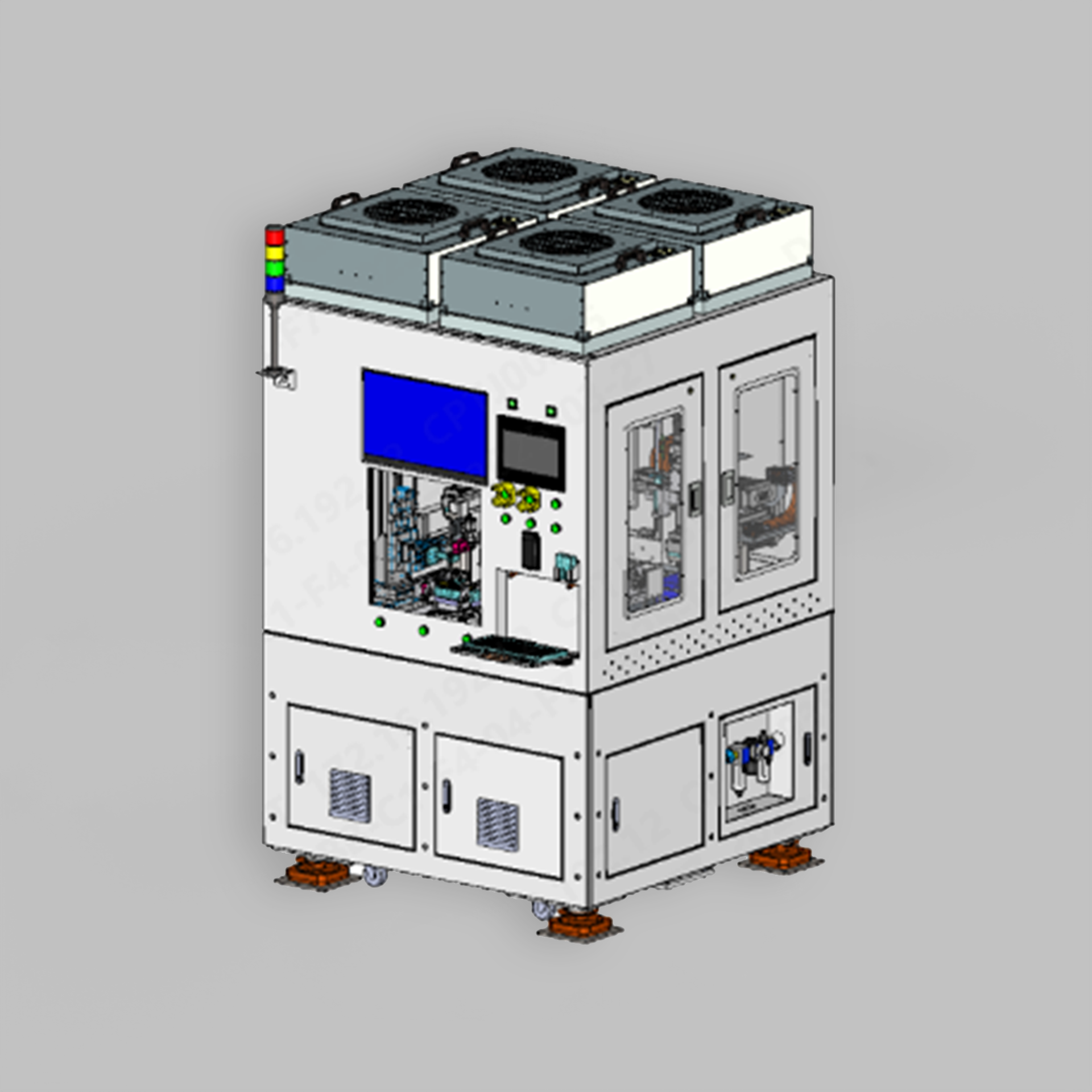
Precision optical module assembly process used in custom automation lines.
Production scenarios that demand custom automation precision assembly
AI servers and liquid-cooled systems
The rapid growth of AI infrastructure is pushing server assembly toward more automation. According to DIGITIMES, global high-end AI server shipments are projected to reach 1.323 million units in 2025. Intel Market Research values the server automation market at USD 4 billion in 2025, with AI server production lines as a key application. BSC has delivered AI server automation production lines and related assembly systems. These lines address tasks such as precise placement of components, thermal-module assembly, liquid-cooling plate assembly, and automated testing, where consistency is critical.
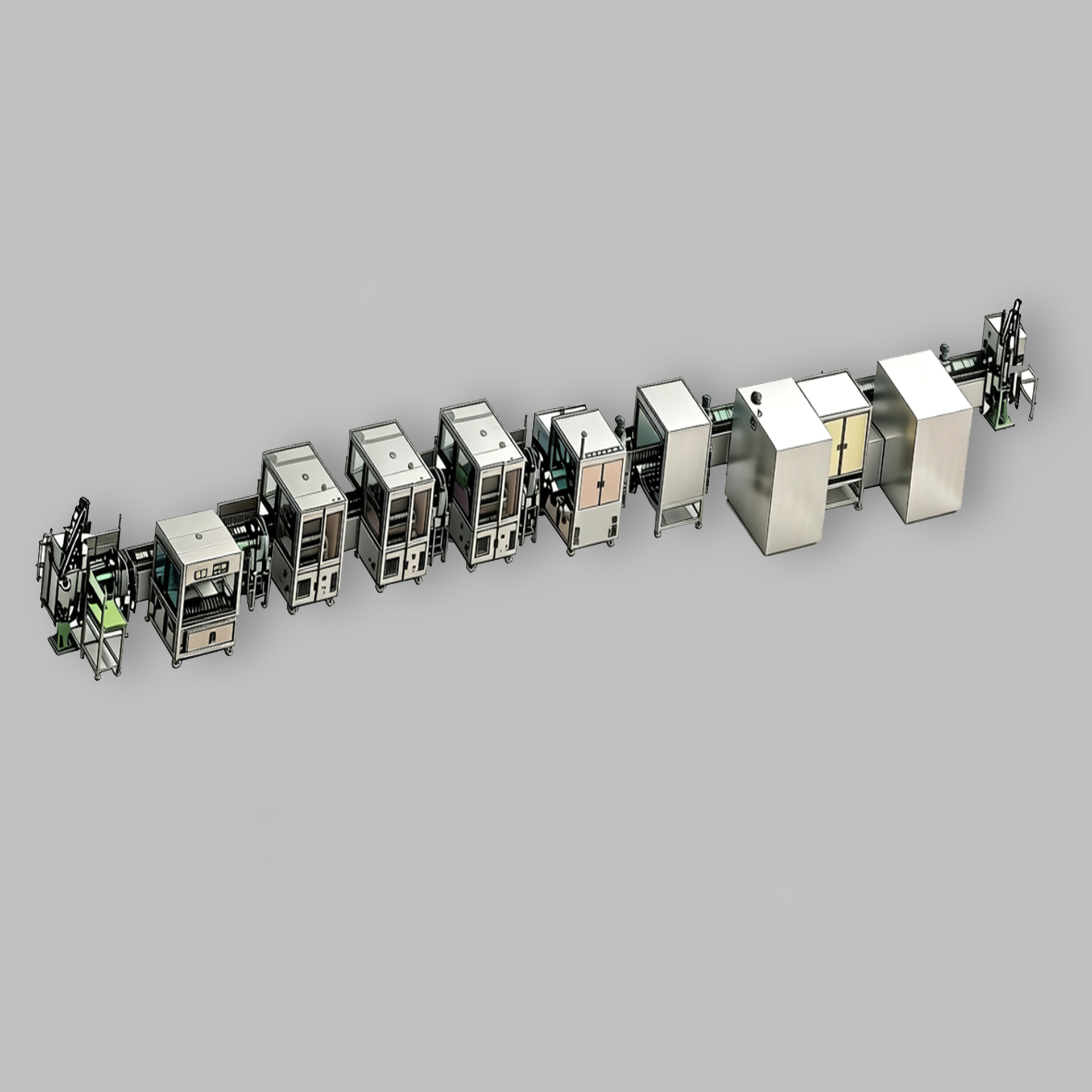
Automated assembly line for liquid cooling plates, a key process in AI server thermal management.
AR/VR optical modules
The AR/VR optics and display market is forecast to reach USD 4.12 billion in 2026, according to Econ Market Research. BSC has accumulated technical expertise in AR ECD modules and VR Pancake optical composite films, and has delivered AR/VR optical-module process automation equipment. Typical process steps include lamination, active alignment, coating-dome loading and unloading, and optical inspection. For buyers, this means a supplier should demonstrate not just pick-and-place robots, but an understanding of optical tolerances and contamination control.
Consumer electronics, smart wearables and smart home devices
The base manufacturing market remains large. Dataintelo values the global precision die cutting market at USD 8.4 billion in 2025, while Grand View Research values the global injection molding market at USD 312.7 billion in 2025. BSC's product range includes die-cut components, injection-molded parts, optical plastic components, and adhesive/thermal components used in smartphones, smart watches, smart-home products and cameras. The project-scenario fit here often focuses on protecting fragile components, sealing, thermal management, and maintaining visual quality at volume.
Automotive and healthcare applications
Smart cockpit and new-energy vehicle applications add a different layer: thermal insulation pads for batteries, frame adhesives for vehicle-mounted displays, and precision structural parts that must meet automotive-grade quality expectations. In smart healthcare, components such as health monitoring headbands and camera modules require precise assembly and reliability. The presence of IATF 16949 and ISO 13485 certifications in BSC's quality portfolio is a signal that its processes can support these regulated segments.
Market signals behind integrated precision assembly
Several market signals help explain why custom automation precision assembly is moving toward integrated supplier models. First, the overall smart manufacturing market is expanding. Grand View Research values it at USD 410.7 billion in 2025, and projects growth from USD 478.9 billion in 2026 to USD 1,063.2 billion by 2033 at a CAGR of 12.1%. Second, Asia Pacific is the dominant region, holding a 46.6% revenue share in 2025. Automation services in the region also accounted for 45.23% of the global market in 2025, according to Fortune Business Insights. Third, software is becoming the control layer of manufacturing: industrial automation software held a 50.8% revenue share of the smart manufacturing market in 2025. This aligns with the increasing importance of industrial software and digitalization in custom automation.
Fourth, the SMT equipment market is projected to reach USD 15.24 billion by 2035 at a CAGR of 8.20%, driven partly by miniaturization of components. Fifth, automation adoption is spreading beyond typical electronics assembly. Global robot density reached 177 robots per 10,000 manufacturing employees in 2024, and the machine learning segment accounts for over 36.0% of AI in industrial automation. This points to wider use of vision-based inspection and adaptive control.
| Market indicator | Value / projection | Source |
|---|---|---|
| Global smart manufacturing market, 2025 | USD 410.7 billion | Grand View Research |
| Projected global smart manufacturing market, 2033 | USD 1,063.2 billion (CAGR 12.1%) | Grand View Research |
| Asia Pacific smart manufacturing revenue share, 2025 | 46.6% | Grand View Research |
| Global precision die cutting market, 2025 | USD 8.4 billion | Dataintelo |
| Global injection molding market, 2025 | USD 312.7 billion | Grand View Research |
| Global high-end AI server shipments, 2025 | 1.323 million units | DIGITIMES |
| SMT equipment market by 2035 | USD 15.24 billion (CAGR 8.20%) | Roots Analysis |
Custom integrated automation vs. manual or separately sourced lines
In the traditional approach, components, assembly and automation are often supplied by different vendors. A parts maker controls tolerances; an EMS or internal plant controls the assembly process; a machine builder supplies equipment. Each interface needs to be specified and validated. When a tolerance issue appears, the buyer must coordinate multiple parties to find the root cause. This can work, but it creates more risk during ramp-up.
In the integrated approach, one supplier is responsible for the component, assembly and automation line. Process development and equipment R&D happen together, based on known component variation. This shortens the loop from NPI to mass production and provides a single point of accountability for quality and delivery. BSC's activity in AI server automation lines, smart-terminal assembly automation lines and AR/VR optical-module process automation equipment illustrates how the integrated model can be applied across distinct project types.
However, a fully automated custom line is not the best solution in every project scenario. If the product is still in early design iteration, if projected volumes are too low to amortize the investment, or if changeover frequency is extremely high, a fixed automation line may be less flexible than semi-automated or manual workstations for some steps. Buyers should therefore define the product's design maturity, volume ramp plan and expected engineering change frequency before requesting a turnkey solution. A large custom automation project generally assumes that the product specification is sufficiently stable and that volumes will continue long enough to justify the line.
Future direction: software-defined, reconfigurable precision assembly
The next phase of custom automation precision assembly is likely to be more flexible and more software-driven. Short product lifecycles in consumer electronics and rapid iteration in AR/VR and AI hardware require lines that can adapt to new product variants without a full rebuild. Flexible automation solutions and non-standard automation equipment will be complemented by industrial software and digitalization tools that collect process data and turn it into continuous improvement. BSC's investments in industrial software and digitalization, together with its global service network, appear aligned with that direction.
Frequently Asked Questions
What industries are your precision components and automation solutions primarily applied to?
BSC Technology's integrated precision manufacturing and smart automation products are widely applied in consumer electronics, smart wearables, smart home, automotive electronics, AR/VR, and medical equipment.
Can your customized structural parts and assembly lines be used for AR/VR and smart wearable devices?
BSC Technology has delivered precision functional parts, structural components, and system assembly services specifically for AR/VR devices, smart wearables, and advanced AI hardware.
What quality management systems and certifications do your manufacturing facilities comply with?
The company's manufacturing facilities hold certifications including ISO 9001, ISO 14001, QC080000, ISO 45001, IATF 16949, and ISO 13485.
For engineering and procurement teams moving through evaluation, the practical starting point is to map each product's tolerance, volume, test requirements and target locations against a supplier's demonstrated project record. That mapping, more than any generic feature list, determines whether custom automation precision assembly will deliver the intended outcome.
Have Questions or Need More Details?
Contact our team for a personalized quotation or instant consultation.
Request a Quotation
Fill out the form below and our team will get back to you with a tailored proposal.
WhatsApp Direct Chat
Prefer to chat in real-time? Message us on WhatsApp for instant assistance & quick answers.
- Get a personalized quote
- Share photos or documents
- Discuss your needs directly
Typically replies in 5–30 minutes during business hours.