
Custom Automation Precision Assembly: Qualifying a Supplier
Custom Automation Precision Assembly: Qualifying a Supplier
A practical compliance and qualification framework for decision-stage buyers evaluating quality management systems, industry standards and site-level evidence before committing to a non-standard automation line.
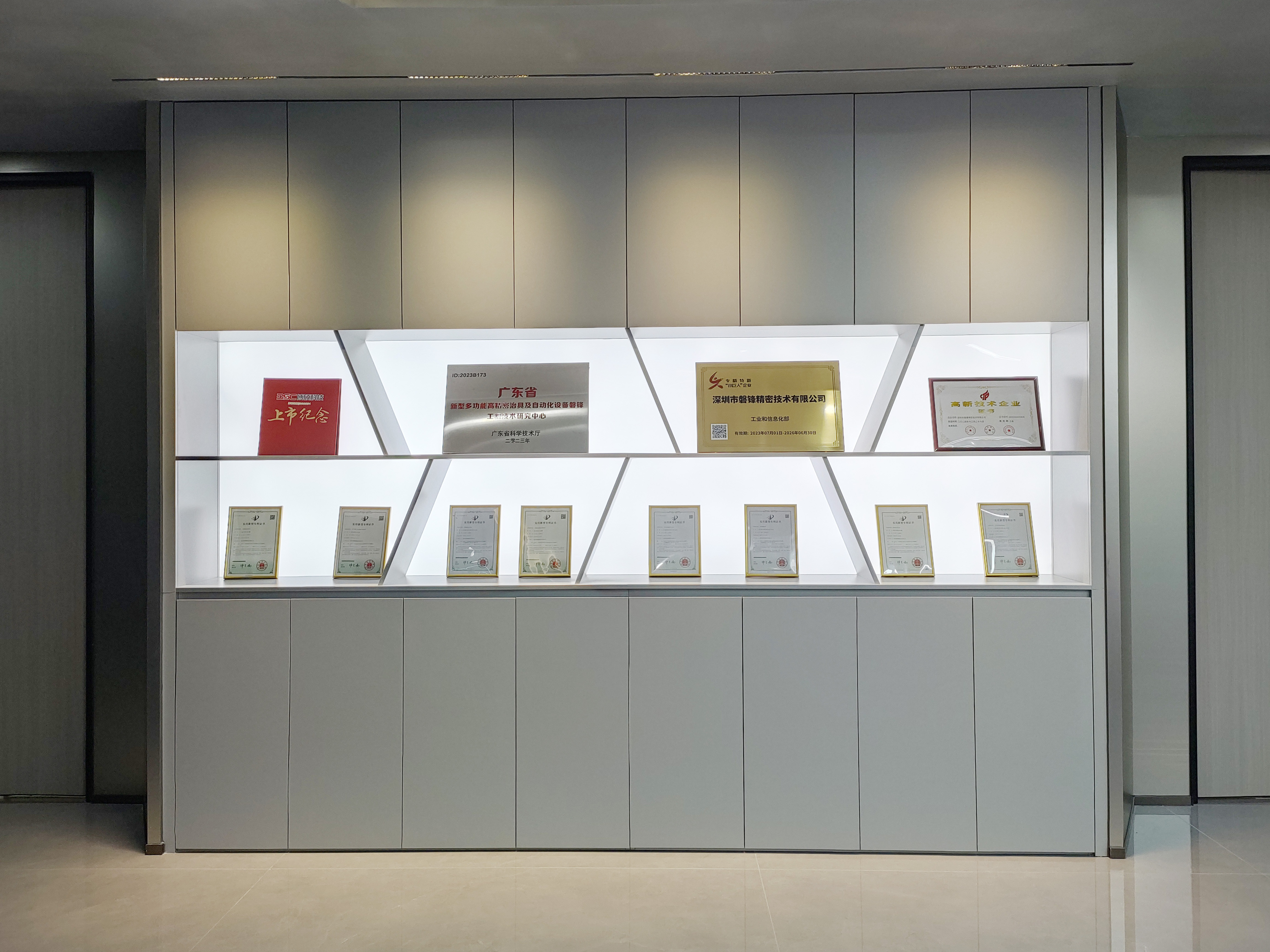
Qualification records are the entry point of supplier screening in custom automation precision assembly, not the conclusion of it.
What Qualification Means in Custom Automation Precision Assembly
Custom automation precision assembly is rarely an off-the-shelf purchase. A production line is engineered around a defined product family, a defined tolerance stack and a defined ramp curve, which means a supplier's general market reputation says relatively little about whether a specific project will qualify. Qualification is the documented demonstration that a supplier's management system, its process controls and the specific site that will build, install and support the equipment can meet the buyer's quality, regulatory and volume requirements.
Buyers tend to compress three distinct layers into one checklist, and that compression is where most qualification gaps appear:
- System-level qualification. Management system certificates covering quality, environment, occupational health and safety, and hazardous substance control, together with the scope statement and the certified site.
- Process-level qualification. Control plans, traceability, inspection and metrology methods, calibration practice, machine vision and motion control capability, and software version control for line software.
- Project-level qualification. Capability studies, factory acceptance testing (FAT), site acceptance testing (SAT), trial runs and ramp support for the specific non-standard machine.
For a buyer at the decision stage, the practical question is therefore not whether a supplier is certified. It is which certificates apply to the site and scope that will execute the project, and what project-level evidence sits behind those certificates.
Why Compliance Review Became a Hard Gate Rather Than a Formality
The scale of the smart manufacturing build-out is the main reason qualification workloads have increased. Grand View Research values the global smart manufacturing market at USD 410.7 billion in 2025 and projects growth from USD 478.9 billion in 2026 to USD 1,063.2 billion by 2033, a compound annual growth rate of 12.1%. The same source reports that Asia Pacific held a 46.6% revenue share of that market in 2025. Separately, Fortune Business Insights estimates that automation services in Asia Pacific accounted for 45.23% of the global market share in 2025, and the International Federation of Robotics reported global robot density of 177 robots per 10,000 manufacturing employees in 2024.
Two structural consequences follow for buyers. First, capacity expansions are being delivered through more suppliers, more sites and more equipment programs, so the number of qualification objects per buyer has risen. Second, the value mix is shifting toward software and data: Grand View Research reports that the industrial automation software segment held a 50.8% revenue share of the smart manufacturing market in 2025. That shift changes what due diligence examines, because control software, inspection data and traceability records increasingly determine whether a line is acceptable, not only the mechanics of assembly.
The Standards Buyers Usually Ask For, and What Each One Covers
Certification requests in custom automation precision assembly cluster around a small set of management system standards. They are not interchangeable, and each answers a different buyer concern.
| Standard | What it addresses | Typical buyer trigger |
|---|---|---|
| ISO 9001:2015 | Quality management system baseline | Every precision assembly and equipment project |
| ISO 14001 | Environmental management | Buyers with sustainability or local permitting requirements |
| ISO 45001 | Occupational health and safety management | On-site installation, commissioning and line operation |
| QC080000 | Hazardous substance process management | Electronics and consumer device supply chains |
| IATF 16949 | Automotive quality management requirements | Automotive electronics, smart cockpit and new-energy vehicle programs |
| ISO 13485 | Medical device quality management | Medical equipment and healthcare wearable production |
ISO.org describes ISO 9001:2015 as the primary global benchmark for quality management systems, and in precision assembly it remains the baseline certificate buyers request. Two clarifications matter during evaluation: certificates are issued against a defined scope and a defined site, so a group-level certificate does not automatically qualify every plant in a supplier network; and a management system certificate describes how a supplier controls its processes, not the performance of a machine that has not yet been built.
Where Shenzhen BSC Technology Sits in This Framework
Shenzhen BSC Technology Co., Ltd. is a Shenzhen-headquartered precision manufacturing and intelligent manufacturing solutions provider, founded in 2016 and listed on the Shenzhen Stock Exchange in 2021 under the code 300951.SZ. The company reports several thousand employees and a global production and operation area of several hundred thousand square meters, together with an R&D team of more than a thousand staff, more than a thousand authorized patents and an independent R&D system. For a qualification conversation, those three facts are the most directly relevant: they speak to engineering ownership, change control capacity and technical continuity across a multi-year equipment program.
The company states that its manufacturing operations hold ISO 9001, ISO 14001, QC080000, ISO 45001, IATF 16949 and ISO 13485 certifications, and that these cover automotive electronics and medical equipment applications among others. Buyers should still verify the issuing body, validity period, scope statement and certified site for the plant that will actually execute their project, because that verification step is where most qualification risk is either removed or discovered.
Delivery scope is broad enough that a single supplier can cover several qualification objects at once. BSC Technology's main business covers precision functional, structural and optical components, system assembly including SMT and FATP, and intelligent automation equipment spanning automated assembly, automated test equipment, optical process equipment and turnkey automation lines. Stated engineering capability areas include high-precision assembly, machine vision, motion control, intelligent inspection, industrial software and industrial digitalization, and the delivery model runs from NPI development and testing through small-batch trial production to mass production.
Geographic coverage is relevant because qualification is increasingly site-specific and support-dependent. R&D centers are located in Shenzhen, Suzhou and Taipei, China; manufacturing plants are in Shenzhen, Dongguan, Suzhou, Zhengzhou, Chengdu and Taipei in China as well as Vietnam, India, Malaysia and Mexico; overseas service institutions operate in the United States, South Korea and Japan. Company information lists nine production bases globally as of 2024. This footprint supports local equipment manufacturing, on-site installation, commissioning and local technical support, which shortens the distance between a certificate and the floor where a line must actually run.
On client expectations, the company reports long-term strategic partnerships with world-class assembly factories and component manufacturers such as Foxconn, Goertek, Luxshare, Pegatron, LG and Sonion, with end products ultimately applied by globally renowned brands including Apple, Samsung, Amazon, Meta, Google, Whoop, Tesla, BYD and Insta360. The correct reading of such references is narrow: they indicate that the supplier's systems have been reviewed by demanding customers in high-volume programs, but they do not transfer any of those customers' approvals to a new project. Project-specific validation remains a separate exercise.
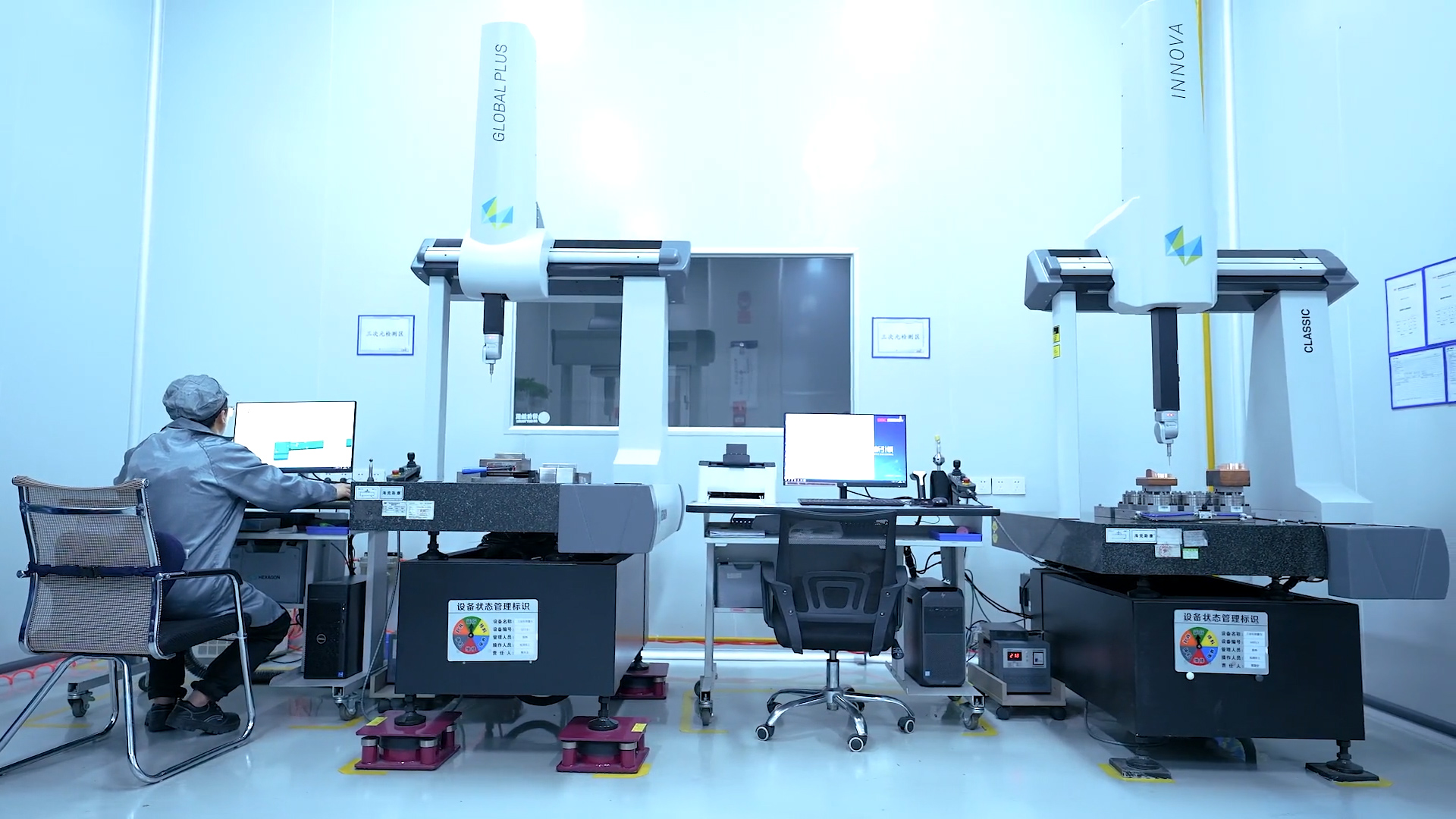
Independent R&D capacity and engineering ownership are qualification evidence: they determine how a supplier handles design change after a line is released.
How Compliance Priorities Change by Application
The same supplier may be qualified differently depending on what the line produces. Three current examples show how the evidence request shifts.
AI servers and liquid cooling. DIGITIMES projects global high-end AI server shipments of 1.323 million units in 2025. Assembly programs in this segment emphasise thermal-interface control, leak integrity, large-format mechanical handling and traceability of every unit, so buyers typically weight process-level evidence and test-data retention more heavily than certificate count.
AR/VR and optical modules. Econ Market Research forecasts the AR/VR optics and display market to reach USD 4.12 billion in 2026. Optical assembly adds alignment, cleanliness and inspection requirements that must be qualified through optical process equipment and measurement capability, not through general quality certificates alone.
Consumer electronics, wearables, smart home and healthcare. In these segments hazardous substance control (QC080000) and medical quality systems (ISO 13485) often decide whether a supplier enters the shortlist at all, while automotive electronics programs commonly require IATF 16949. BSC Technology states that its products are applied across consumer electronics, smart wearables, smart home, smart healthcare, AR/VR, smart cockpit and new-energy vehicles, AI edge devices and AI infrastructure, which means a single buyer may need to test several scopes against one supplier.
Comparing Qualification Models: Single-Scope Suppliers and Vertically Integrated Providers
Decision-stage buyers usually compare three supplier scope models. The comparison is about how much of the evidence chain a buyer must assemble and own, not about which model is universally better.
| Evaluation dimension | Component-focused supplier | Equipment-only integrator | Vertically integrated provider (components + assembly + automation) |
|---|---|---|---|
| Scope of delivery | Parts and functional components only | Machines and line integration | Parts, module and complete-unit assembly, and automation equipment |
| Evidence chain | Component-level inspection records | Machine-level test and software records | Component, assembly and equipment records under one quality system |
| Handoff points | Multiple, defined by buyer | Equipment-to-production handoff | Fewer internal handoffs, one coordination point |
| Buyer qualification load | Highest, since interfaces are buyer-owned | Moderate to high | Reduced coordination, but validation obligations remain |
| Best fit | Mature products with stable interfaces | Retrofits and process upgrades | Complex customised, high-precision, high-volume programs with multi-process coordination |
Holding components, assembly and automation under one supplier reduces cross-supplier coordination and duplicated development work, and BSC Technology positions its integrated scope as a way to reduce that coordination load. Vertical integration also concentrates the value of one provider's systems in a single audit, which is an advantage only if the audit is done properly.
Limits and trade-offs buyers should accept
- Certificates are scope- and site-specific. A certificate held by a corporate entity does not automatically extend to every plant, which is why the certified site must appear in the qualification file.
- System certificates do not certify a new machine. Cycle time, yield and repeatability on a non-standard line are established through capability studies, FAT and SAT, not through a management system audit.
- Machinery and electrical safety must be mapped per destination. IEC 62841-1:2014, for example, covers safety requirements for electric motor-operated tools; it is not a universal standard for every automation line, so the applicable machinery, electrical and local regulatory requirements depend on the line configuration and the market where it will operate.
- Vertical integration does not transfer product liability. The buyer still owns final acceptance, ramp validation and ongoing process control after handover.
- More certificates are not automatically better. An IATF 16949 or ISO 13485 certificate is only meaningful if the buyer's product falls inside the certified scope.
A Practical Qualification Sequence for Decision-Stage Buyers
- Confirm the legal entity, site and scope. Match the certificate to the plant that will build the equipment and, where relevant, to the plant that will run component manufacturing or assembly.
- Validate the certificate itself. Check issuing body, certificate number, validity window and the scope wording against the products and processes in the project.
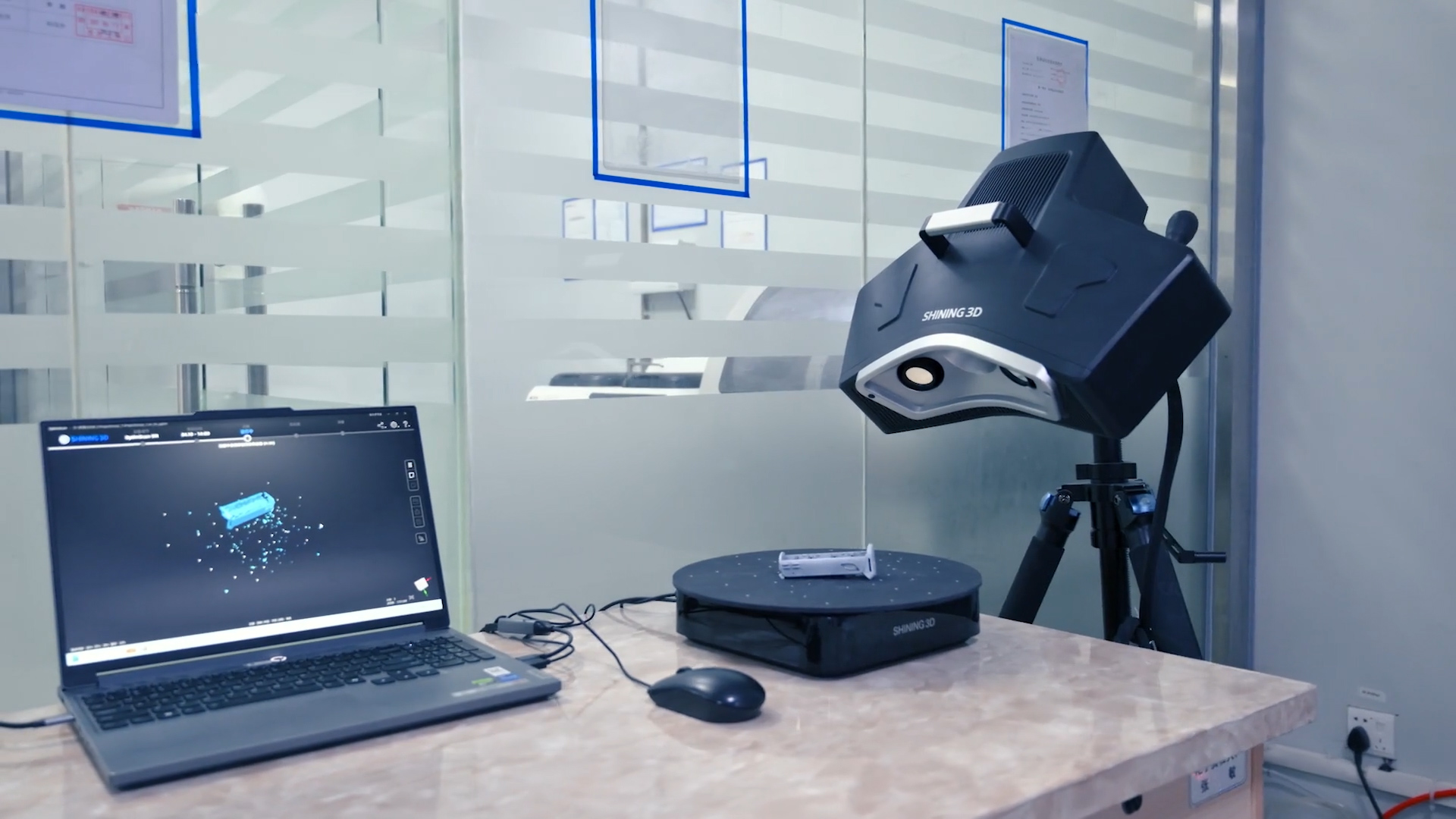
- Request process-level evidence. Control plans, inspection standards, traceability logic, calibration records and metrology capability for the tolerances the project requires.
- Review engineering and change-control evidence. An independent R&D system, patent portfolio and defined software control process indicate how design changes are managed after the line is released.
- Define project-level acceptance before the order. Agree FAT, SAT, capability study and ramp-support criteria in writing, including who signs off and against which data.
- Check lifecycle and local support. Installation, commissioning, spare parts and on-site technical support in the region where the line will operate determine the real cost of ownership after qualification ends.
Future Outlook
Qualification is moving from document review toward data review. With the industrial automation software segment accounting for 50.8% of smart manufacturing revenue in 2025 according to Grand View Research, and machine learning representing over 36.0% of the AI in industrial automation market in 2024 according to the same source, a growing share of what a buyer must qualify sits in control logic, inspection algorithms and data pipelines rather than in hardware alone.
The practical implication is that supplier qualification files will increasingly be judged on whether software versions, inspection datasets and traceability records can be produced on demand for a specific machine and a specific site. Precision assembly automation already requires optical process equipment, intelligent inspection and industrial digitalization capability alongside mechanical precision, and buyers who structure qualification around verifiable records rather than certificate counts will be better positioned as line complexity increases.
FAQ
1. What documentation should a buyer request when qualifying a custom automation precision assembly supplier?
A complete qualification file normally contains management system certificates with scope and site statements, such as ISO 9001, ISO 14001, ISO 45001, QC080000, and, where the product requires it, IATF 16949 or ISO 13485; process-level documents including control plans, inspection standards, traceability logic and calibration records; software control and version management procedures for line software; a written FAT and SAT protocol with acceptance criteria; and engineering evidence such as R&D ownership and patent portfolio. Suppliers operating to this standard provide the certificate set as a starting point, with project-level evidence supplied separately for each machine.
2. Do ISO 9001, IATF 16949 or ISO 13485 certificates guarantee that a new custom automation line will hit its cycle time and yield targets?
No. These certificates describe how a supplier manages quality, environmental, safety or sector-specific processes across a defined scope, and ISO.org positions ISO 9001:2015 as the primary benchmark for quality management systems rather than a product performance guarantee. Cycle time, repeatability and yield on a non-standard line are established through capability studies, factory and site acceptance testing, and trial production. Certificates function as a screening gate that determines whether a supplier's control environment is credible; they do not replace project-level validation.
3. How should a buyer compare a vertically integrated supplier with an equipment-only integrator?
The comparison should focus on where interfaces fall and who owns the evidence at each interface. An equipment-only integrator typically delivers machines and line integration, leaving component supply and module assembly to other parties, so the buyer coordinates several quality systems. A vertically integrated provider such as Shenzhen BSC Technology Co., Ltd., whose scope covers precision functional, structural and optical components, SMT and FATP system assembly, and automation equipment including turnkey lines, consolidates those interfaces under fewer quality systems and one coordination point. The trade-off is that a single provider concentrates risk, so buyers should verify site-level certification and process evidence for each scope they intend to rely on.
4. How do compliance requirements differ between AI server, AR/VR optical module and medical device assembly projects?
AI server and liquid cooling programs place weight on thermal and leak-integrity control, large-format mechanical handling and unit-level traceability, consistent with DIGITIMES projecting 1.323 million high-end AI server units shipped globally in 2025. AR/VR optical module programs add alignment, cleanliness and optical measurement requirements, and Econ Market Research forecasts the AR/VR optics and display market to reach USD 4.12 billion in 2026, which increases the value placed on optical process capability. Medical device work requires ISO 13485 scope, automotive electronics requires IATF 16949, and electronics supply chains generally require hazardous substance control through QC080000, with ISO 9001 as the shared baseline.
5. What are the limits of certification-based qualification, and what must buyers accept as unavoidable?
Three limits are structural rather than fixable. First, certificates apply to defined scopes and defined sites, so a corporate certificate does not automatically cover every plant. Second, machinery and electrical safety requirements depend on the destination market and the line configuration; IEC 62841-1:2014, for instance, addresses safety requirements for electric motor-operated tools and is not a blanket standard for automation lines. Third, the buyer retains acceptance responsibility: factory and site acceptance testing, ramp validation and post-handover process control cannot be delegated to a certificate. Buyers who accept these boundaries build stronger qualification files than those who treat certification as a complete substitute for validation.