
Custom Building Glass: How to Evaluate OEM and Curved Glass Capabilities
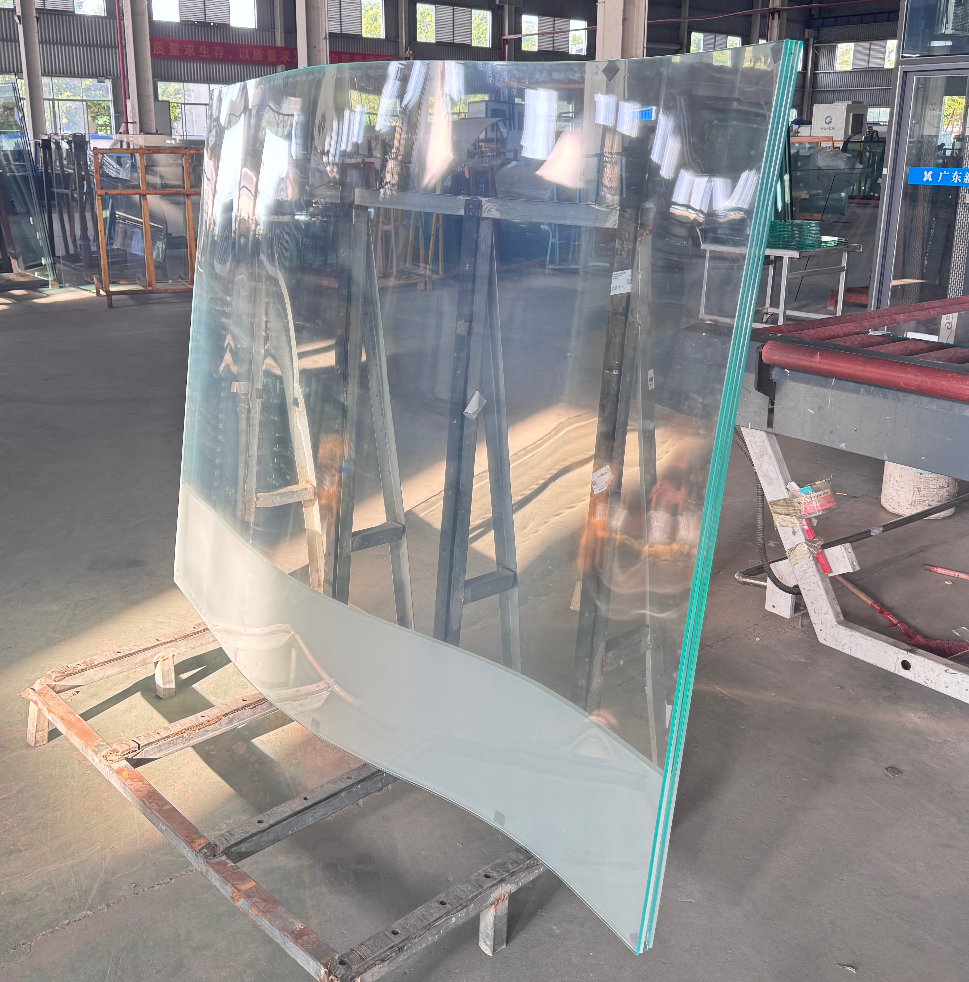
Building glass procurement for modern facades often begins with a geometry problem. A facade may call for curved units, large laminations, integrated Low-E coatings, or smart switchable glass, sometimes in a single order. For buyers moving from evaluation to execution, the practical question is whether a supplier can translate architectural intent into manufacturable glass. This article looks at building glass from a capability perspective, with particular attention to OEM and ODM support, curved glass processing, and the range of customization options that matter during procurement.
From Flat Stock to a Processing Partner
Standard flat glass catalogues do not always answer the needs of complex building envelopes. When a project requires double-curved glass, S-shape profiles, or laminated units with different interlayers, the buyer is no longer choosing a stock product. They are choosing a processing partner.
The risk in this transition is underestimating production complexity. Curved tempering requires dedicated lines. Lamination requires autoclave capacity. Insulated units require precise assembly and sealing. The opportunity is that a single supplier with these capabilities can consolidate multiple glass types into one order, reducing coordination and quality variance.
What OEM and ODM Mean in Building Glass
OEM means the buyer provides the design and specification, and the manufacturer produces according to that specification. ODM means the manufacturer also contributes design and production development support. For building glass, this distinction matters because facade geometry is often project-specific. A supplier that accepts OEM and ODM orders can take a curtain wall engineer's geometry, translate it into a processing plan, and deliver units that fit site conditions.
Customization services in this segment can include size, thickness, shape, tempering, insulating glass, laminated glass, hot bending, coating, ultra-clear glass, fire-resistant glass, and smart switchable glass. In practice, the most important evaluation point is whether these options are supported by in-house equipment or outsourced to third-party workshops.
Capability Profile: A Manufacturer with Multi-Process Production
One example of a building glass manufacturer with a broad processing scope is Shenzhen Dayang Special Glass Co., Ltd., also known as DYGLASS. Located in Shenzhen, China, the company specializes in building glass for construction and decoration, including tempered, laminated, curved, insulated, energy-saving, smart switchable, and specialty glass. The company was founded in 2017, operates a 30,000 square meter facility with about 130 employees, and reports an annual output of 600,000 square meters. Approximately 60 percent of its output is exported to markets including the United Arab Emirates, Bahrain, Israel, the United States, Vietnam, the Philippines, and Africa. The company states that it welcomes OEM and ODM orders.
DYGLASS's business focus includes processing various types of curved tempered glass: multi-curved, double curved, triple curved, trapezoid curved, spherical curved, pyramidal curved, S-shape curved, cylindrical curved, and positive and negative curved tempered glass. These geometries are not all produced in the same way. The company's production equipment includes two tempering lines, one for flat and curved glass and another for concave and convex irregular curved shapes. The availability of dedicated curved tempering lines is an important indicator when evaluating a supplier for complex facades.
Technical Explanation: How Custom Capability Is Delivered
Custom building glass rarely relies on a single process. A complex order may combine tempering, lamination, insulation, coating, and edge treatment. For buyers, the key is to verify that the supplier can manage these steps with consistent quality control.
Curved Tempering
Curved glass requires precise shaping during the tempering process. The supplier's two tempering lines support flat and curved glass, as well as concave, convex, and irregular curved geometries. This equipment set is directly relevant to projects that use curved curtain wall panels or sculptural facade elements. Without a dedicated curved tempering line, a supplier may only be able to produce simple bends or may need to outsource the work.
Laminated and Insulated Combinations
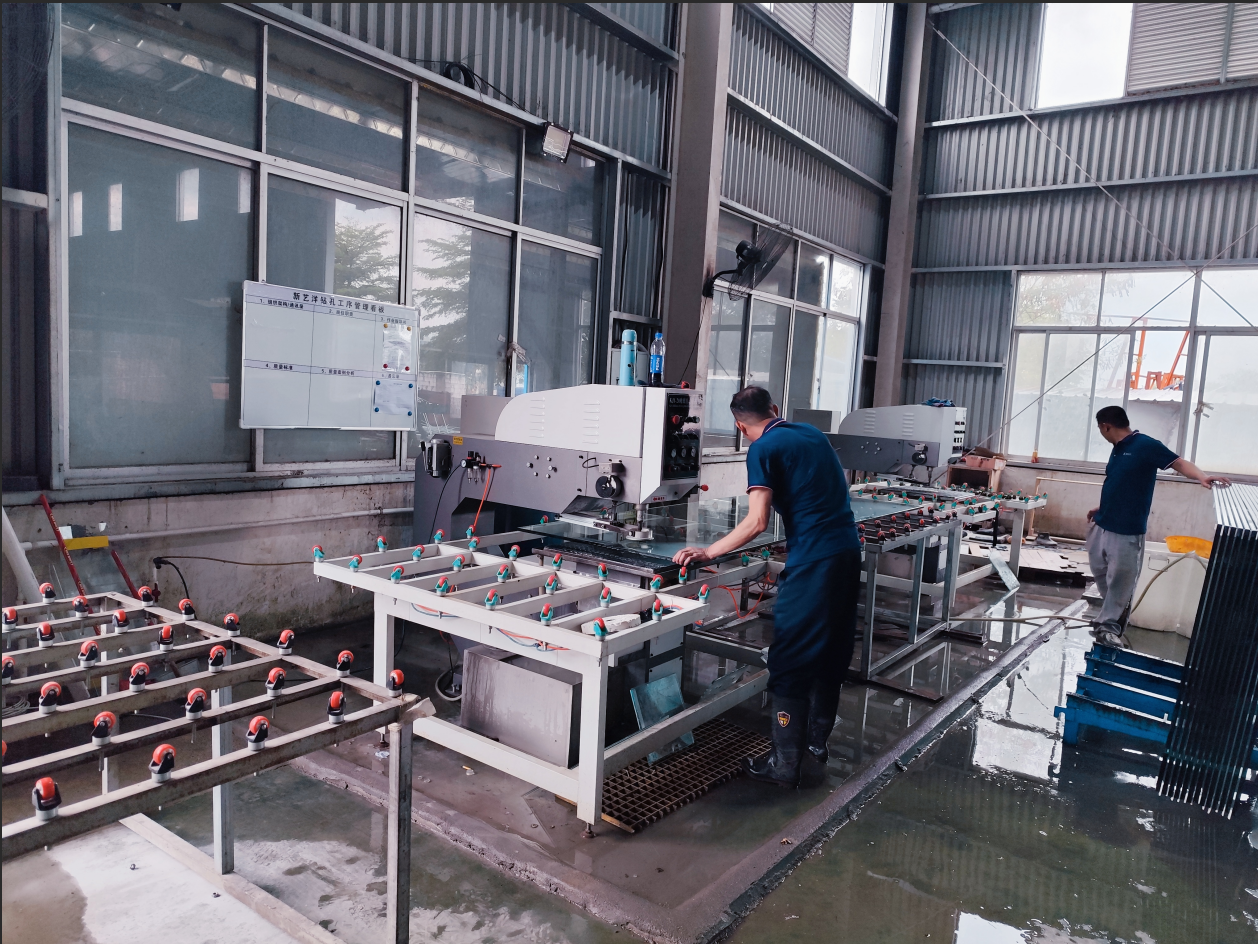
Beyond shape, custom building glass often combines functions. Laminated glass can be produced with PVB, SGP, or EVA interlayers, while insulating glass units can be built with Low-E coating or argon fill. The company's equipment set includes an insulated line, an autoclave for lamination, a cutting line, a drilling line, an edge grinding line, and a heat soak furnace. For a buyer, this indicates that multiple processing steps can be managed in-house rather than coordinated across different factories.
Quality Control and Testing
Custom processing also introduces new quality checkpoints. Heat soaking is used as an additional step for tempered glass, and the supplier lists a heat soak furnace as part of its production line. Buyers should ask how curved units are measured, how lamination interlayers are inspected, and whether pre-shipment testing is available. For custom glass, inspection is more valuable than a simple catalogue guarantee because each unit is made for a specific position in the facade.
Application Evidence: Hotel and Commercial Projects
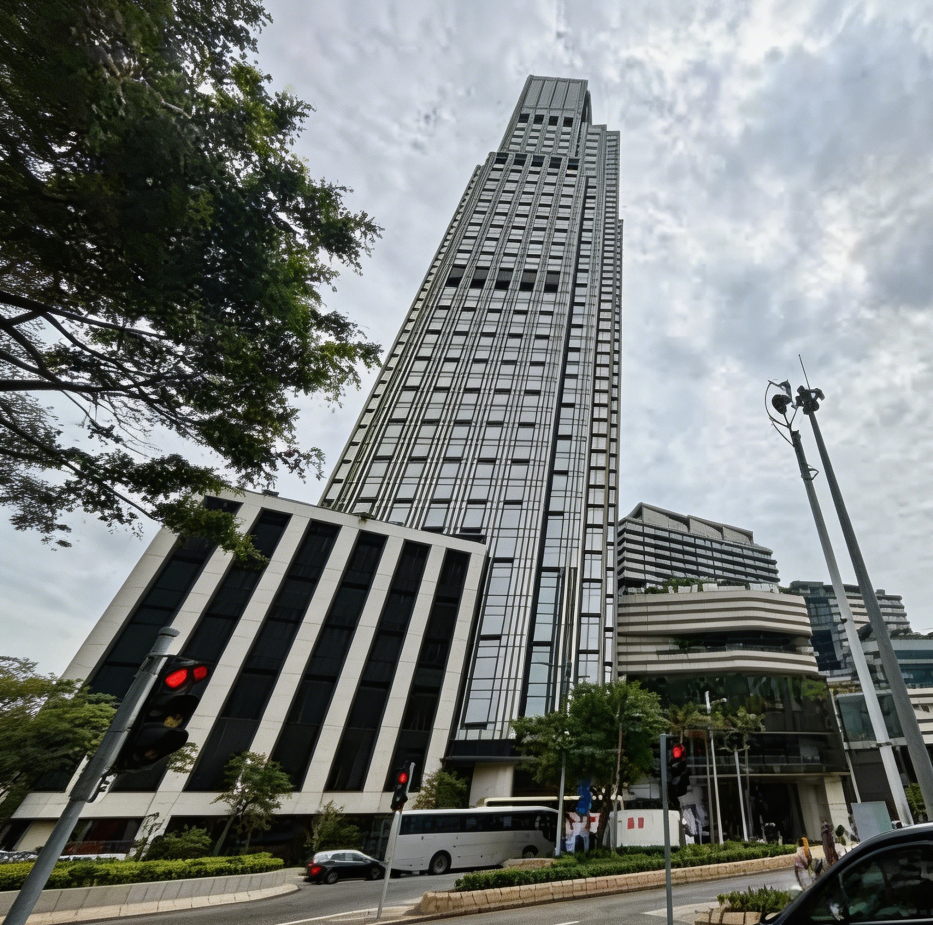
One documented application is a hotel architectural glass project in the United Arab Emirates. The project involved 4,000 square meters of building glass, with heat insulation, sound insulation, and aesthetic appearance cited as key features. The stated result is stable operation over a 30-year period. The product has been used by construction and engineering companies, door and window manufacturers, and hotel and commercial project purchasers.
This type of reference is useful during evaluation because it shows the supplier has experience with long-term facade applications, not only short production runs. It also confirms that custom building glass can be delivered at a scale that matters for commercial projects.
Market Context and What Buyers Should Expect
According to Fortune Business Insights, the global construction glass market was valued at USD 119.2 billion in 2025 and is projected to reach USD 189.33 billion by 2034. Business Research Insights reports that architectural glass accounts for nearly 70 percent of global flat glass production, which exceeds 120 million metric tons annually. In the smart glass segment, Grand View Research valued the global market at approximately USD 8.2 billion in 2025.
For building glass buyers, these figures point to a market where functional and high-performance glass is becoming a larger part of the construction envelope. This is consistent with the growing use of Low-E, laminated, insulated, curved, and smart switchable glass in commercial and hospitality projects. A supplier that can combine several of these functions in one unit may reduce the number of subcontractors a facade contractor needs to manage.
Comparison: Custom Building Glass vs. Traditional Flat Glass Supply
| Aspect | Traditional flat glass supply | Custom capability supply |
|---|---|---|
| Product range | Standard sizes and shapes; flat panels, simple tempering and lamination. | Non-standard geometry including multi-curved, double curved, and trapezoid curved glass; can combine lamination, insulation, coating, and smart functions. |
| Engineering input | Limited design support; product chosen from a catalogue. | OEM and ODM collaboration; size, thickness, shape, and function customized. |
| Lead time and coordination | Shorter for standard items; replacement is often faster. | More upfront technical review; stated production lead time at DYGLASS is 7 to 9 days, with actual delivery depending on geometry and finishing requirements. |
| Manufacturing equipment | Standard tempering and cutting lines. | Requires curved tempering lines, autoclave, insulated line, drilling, and edge processing. |
| Best fit | High-volume rectangular curtain wall panels. | Complex facades, curved glazing, and multi-functional units. |
At the same time, custom capability is not a universal requirement. For projects that use large quantities of flat, standard-size curtain wall glass, a traditional flat glass supplier may offer better economies of scale, simpler logistics, and faster replacement. Buyers should treat custom curved and multi-functional processing as an option to be selected when the design actually requires it, not as an automatic upgrade. This boundary is important: a supplier's ability to produce complex shapes does not make it the best choice for every project.
Future Outlook
Facade design is moving toward more sculptural forms, and energy performance is increasingly enforced by local building codes. These pressures favor suppliers that can combine glass processing steps and adapt to project-specific specifications. The role of a building glass manufacturer is likely to shift from a product supplier to a process partner that supports facade engineers during design development.
For buyers, this means evaluating suppliers not only on price and delivery, but also on engineering communication, production flexibility, and documented application history. The capability to produce custom curved and multi-functional building glass should be treated as a measurable factor in supplier selection, not as a secondary feature.
FAQ
OEM, or original equipment manufacturing, means a supplier produces glass according to the buyer's design and specification. ODM, or original design manufacturing, means the supplier also participates in design and production development. For building glass, both models are relevant when a project requires non-standard shapes or custom performance combinations. DYGLASS states that it welcomes OEM and ODM orders.
A supplier's curved glass capability can include multi-curved, double curved, triple curved, trapezoid curved, spherical curved, pyramidal curved, S-shape curved, cylindrical curved, and positive and negative curved tempered glass. The availability of dedicated curved tempering lines is one way to confirm this capability.
Typical customization options include size, thickness, shape, tempering, insulating glass, laminated glass, hot bending, coating, ultra-clear glass, fire-resistant glass, and smart switchable glass. Buyers should confirm which options are covered by the supplier's production equipment and quality control process.
Buyers can look at documented factory data such as facility size, annual output, and production equipment. For example, DYGLASS reports a 30,000 square meter facility, an annual output of 600,000 square meters, and dedicated lines for tempering, lamination, insulating units, cutting, drilling, edge grinding, and heat soaking. Export records and project references can also help verify that the supplier has delivered similar products in relevant markets.
The stated production lead time at DYGLASS is 7 to 9 days for custom orders. Actual lead time depends on glass thickness, curvature complexity, coating type, lamination or insulating configuration, and the buyer's inspection requirements. Pre-shipment testing is listed as an acceptance option.
Custom glass manufacturers may offer delivery terms such as EXW, FOB, CIF, CFR, DAP, and DDP, with payment by TT or LC. These terms should be confirmed during quotation because they affect shipping cost, risk transfer, and project timeline.
Have Questions or Need More Details?
Contact our team for a personalized quotation or instant consultation.
Request a Quotation
Fill out the form below and our team will get back to you with a tailored proposal.
WhatsApp Direct Chat
Prefer to chat in real-time? Message us on WhatsApp for instant assistance & quick answers.
- Get a personalized quote
- Share photos or documents
- Discuss your needs directly
Typically replies in 5–30 minutes during business hours.