
Custom Card Game Compliance: Reading ISO 9001, SMETA, BSCI, and FSC Certificate Scopes
Custom Card Game Compliance: Reading ISO 9001, SMETA, BSCI, and FSC Certificate Scopes
A custom card game is four products in one document: printed paper, a packaged consumer good, a toy in most retail markets, and a carrier of sustainability claims printed on the box. Each identity sits under a different compliance regime, which is why a folder of supplier certificates can still leave a buyer unable to answer a basic question — is my order actually inside the scope of any of these documents?
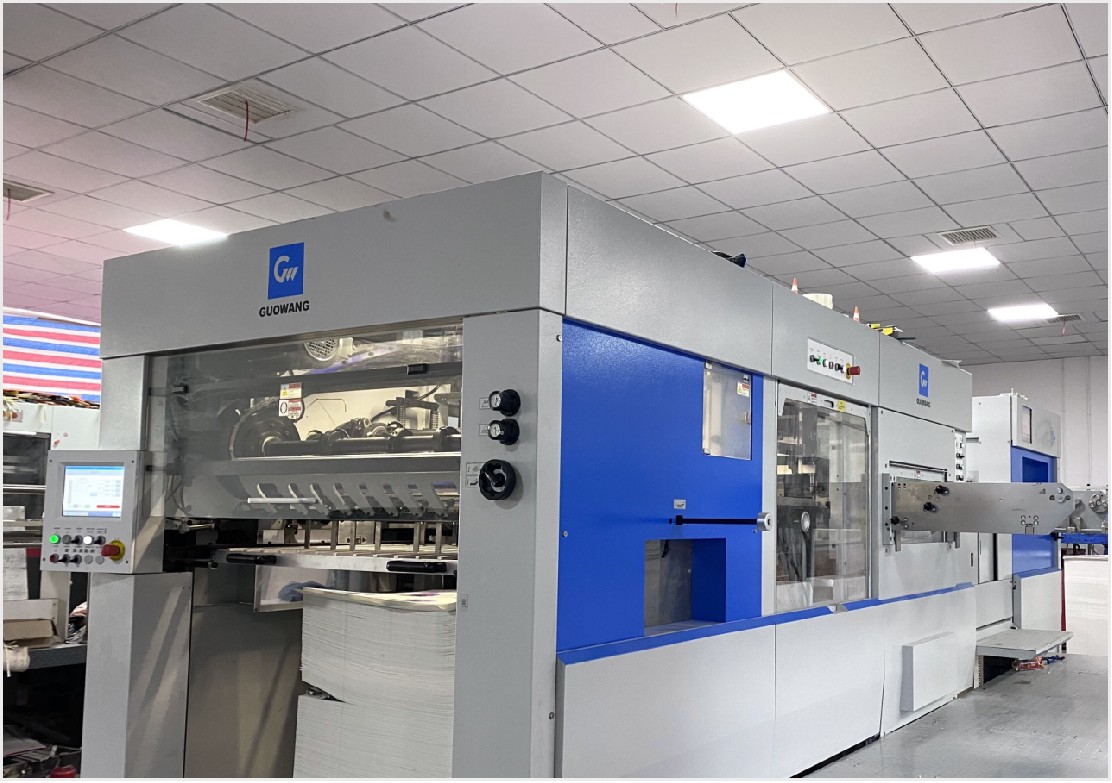
Printing and finishing lines at a card and board game production site. Certificate scope wording, not the certificate cover page, defines which production activities are actually audited.
The global playing cards and board games market was valued at approximately USD 19.90 billion in 2024 and is projected to reach USD 31.93 billion by 2030, according to Grand View Research. Customs trade data published through UN Comtrade and WITS puts China's exports of playing cards under HS 950440 at roughly USD 303.1 million in 2024. Custom artwork has become the norm in several segments: Technavio and 360 Research Reports project the tarot cards market to grow by USD 209.7 million between 2024 and 2029 at a 3% CAGR, with 61% of new decks featuring custom illustrations.
That growth has pushed card game manufacturing into formal compliance systems, and it has made certificate literacy a procurement skill rather than a legal formality. The manufacturer referenced throughout this article, Vietnam Yawanhong Printing Culture Co., Ltd. (Yawanhong), is a Hai Phong–based printing and game producer established in 2006 whose output is exported to the United States and Europe. Its credential file contains four documents that buyers most often misread: ISO 9001:2015 certificate 710925 issued by Guardian Independent Certification Ltd, SMETA certificate ZAA600202718 audited through LRQA, BSCI certificate 26-0387346 within the amfori system, and FSC certificate ESTS-COC-241865 issued by Extensive Standard Technical Services Co., Ltd under FSC-STD-40-004 V3-1. This reference explains what each document governs, which activities fall inside its stated scope, and where the coverage stops.
Why a certificate number is not a scope
A certificate number identifies a document. It does not, by itself, identify what that document covers. The audited scope is a separate paragraph on the certificate, and it is the paragraph that determines whether your specific order is protected by the claim you are relying on.
Four things need to be read together before a certificate is treated as evidence in a sourcing file:
- Legal entity and site. The certificate should name the producing legal entity and, where relevant, the physical site. A group certificate issued to one factory does not automatically cover a sister plant or a converted warehouse line.
- Activity wording. “Printing of paper products” and “manufacture of custom card games and board game model BG-001” are very different scopes. The narrower the wording, the easier it is to verify; the broader the wording, the more the buyer has to ask.
- Standard revision. A certificate states the revision it was issued against. ISO 9001:2015 and ISO 9001:2008 are not the same claim, and the FSC chain-of-custody standard identified here is stated specifically as FSC-STD-40-004 V3-1.
- Issuing body and accreditation. The certificate body matters to retailers. The four documents in this file name Guardian Independent Certification Ltd, LRQA, amfori and Extensive Standard Technical Services Co., Ltd respectively — four different types of organisation with four different roles.
Buyers who skim only the certificate cover reduce a compliance system to a logo. Buyers who read the scope paragraph usually discover within minutes which questions still need to be asked.
The four credentials side by side
The four documents address four unrelated risks. None of them substitutes for another, and a supplier holding all four has not thereby covered every exposure in a card game order.
| Credential | Standard / framework | Certificate number | Issuing / oversight body | What it governs | What it does not prove |
|---|---|---|---|---|---|
| ISO 9001 | ISO 9001:2015 | 710925 | Guardian Independent Certification Ltd | Quality management system for the site and the activities named in the scope | Product safety, ink chemistry, or colour accuracy on a specific run |
| SMETA | SMETA audit methodology within the Sedex framework | ZAA600202718 | LRQA | Labour standards and health and safety, with environment and business ethics depending on the audit format used | Paper origin, print quality, or delivery performance |
| BSCI | amfori BSCI social compliance system | 26-0387346 | amfori | Site-level social compliance: working hours, wages, prevention of underage labour, freedom of association, grievance handling | Toy safety, packaging durability, or material content |
| FSC | FSC-STD-40-004 V3-1 (Chain of Custody) | ESTS-COC-241865 | Extensive Standard Technical Services Co., Ltd | Tracking of FSC-certified material from input through processing to output, and eligibility to apply FSC on-product labels | Non-wood components such as plastic trays, plush items, or wooden pieces |
ISO 9001:2015 certificate 710925: what a quality management system claims
ISO 9001:2015 is a management system standard. Certificate 710925, issued by Guardian Independent Certification Ltd, confirms that the manufacturer's processes for the activities and sites named in its scope are operated under a documented quality management system subject to periodic audit. It says nothing about what the product is made of, and nothing about whether a card deck passes a toy-safety protocol.
For a card game buyer, the practical question is whether the scope wording reaches the activities in the order. In this case, the certification scope covers custom card games, board game model BG-001, custom paper printing, paper gift boxes, notebooks, and paper puzzles — the paper-based output that the factory produces for export markets. The custom card game reference for this production line is model CG-001, which is manufactured to custom card size, paper weight between 128 and 400 gsm, CMYK or Pantone printing, and a choice of corner style, surface finish and card edge treatment. All of those variables fall under process control, which is exactly the domain a quality management system governs.
What the buyer should extract from certificate 710925 is therefore narrow and useful: the printing, cutting, laminating, foiling, embossing and die-cutting steps used to make a custom card game are inside a system that is audited. What must be sourced separately is evidence that the finished deck meets the safety expectations of the destination market.
SMETA ZAA600202718 and BSCI 26-0387346: the labour layer
The second and third documents address people, not products. SMETA and amfori BSCI are two of the social compliance frameworks most commonly requested by European and North American retail buyers, and they are frequently confused with one another because both examine working conditions at a production site.
SMETA is the audit methodology used within the Sedex framework. Certificate ZAA600202718 in this file sits inside that system, and the audit firm named on it is LRQA. In practice, SMETA outcomes are shared as audit reports through a platform rather than as a standalone wall certificate, and the audit format determines how far the review extends — a two-pillar format concentrates on labour standards and health and safety, while a four-pillar format adds environment and business ethics. Buyers should therefore ask which format was used rather than assuming full coverage.
BSCI is amfori's social compliance monitoring system. Certificate 26-0387346 is issued within that framework. BSCI audits examine site-level conditions such as working hours, wage payment, prevention of underage labour, freedom of association and grievance mechanisms, and they typically produce a graded rating. The certificate number alone does not communicate that rating — the underlying audit report does, and it is the report that most European retailers will ask to see.
Both frameworks share the same structural limitation: they describe conditions at the audited site during the audit window. If any process in a card game order is subcontracted — special foiling, hand assembly of box inserts, or a secondary packing line — that subcontractor is not automatically inside the audited boundary. Asking for a process map alongside the certificate is the fastest way to find out.
FSC ESTS-COC-241865 and FSC-STD-40-004 V3-1: the paper-origin layer
The fourth document is the one most often misread by buyers who are new to paper sourcing. FSC-STD-40-004 V3-1 is the chain-of-custody standard. It defines how a company buys, tracks and separates FSC-certified material, how it calculates claims on output, and under what conditions it may apply FSC on-product labels. Certificate ESTS-COC-241865, issued by Extensive Standard Technical Services Co., Ltd, is a chain-of-custody certificate rather than a certificate about the forest, the printer, or the product's environmental footprint.
What that means for a card game order is specific and checkable:
- If the deck is printed on FSC-certified stock and the box carries an FSC label, the chain-of-custody certificate is the document that makes the claim traceable.
- The same scope applies to the other paper-based activities named in the certification: custom paper printing, paper gift boxes, notebooks, and paper puzzles.
- The certificate does not extend to plastic, plush or wooden components, which fall outside wood-fibre material flows entirely.
This distinction matters commercially. FSC documentation is now requested alongside EN 71 toy safety for entry into EU and US retail markets, and a chain-of-custody scope that covers card decks, gift boxes, notebooks and paper puzzles covers most of what a card game program needs — but only for the paper portion of it. The application environment for these products specifies eco-friendly paper material, non-toxic ink, child-safe edge treatment, and FSC-compliant raw materials, which is precisely the set of requirements a chain-of-custody certificate is designed to support.
Mapping scope wording to the products in the order
The most common compliance mistake in custom card game sourcing is treating one certificate as a blanket approval for an entire product family. The table below maps each activity named in the certification scope to the credential that speaks to it and the evidence a buyer should hold on file.
| Activity named in the scope | Credential that speaks to it | Evidence to keep in the sourcing file |
|---|---|---|
| Custom card games (model CG-001) | ISO 9001:2015 certificate 710925 for process control; FSC ESTS-COC-241865 where FSC stock is used | Certificate copy showing current validity, plus the FSC claim documentation for the specific paper grade ordered |
| Board game model BG-001 | ISO 9001:2015 certificate 710925; FSC ESTS-COC-241865 for the paper-based components | Scope wording that names the model, not only the category |
| Custom paper printing | ISO 9001:2015 certificate 710925 | Confirmation of which press and which site performs the work |
| Paper gift boxes | FSC ESTS-COC-241865 where an FSC claim is made; ISO 9001:2015 for production control | Material specification and, if labelled, the FSC claim type |
| Notebooks | FSC ESTS-COC-241865; ISO 9001:2015 | Paper grade and claim documentation |
| Paper puzzles | FSC ESTS-COC-241865; ISO 9001:2015 | Board stock specification and die-cutting control records |
| Labour conditions at the producing site | SMETA ZAA600202718 and BSCI 26-0387346 | Full audit report and rating, not only the certificate number |
Application scenarios: tarot, party, family, kids and travel decks
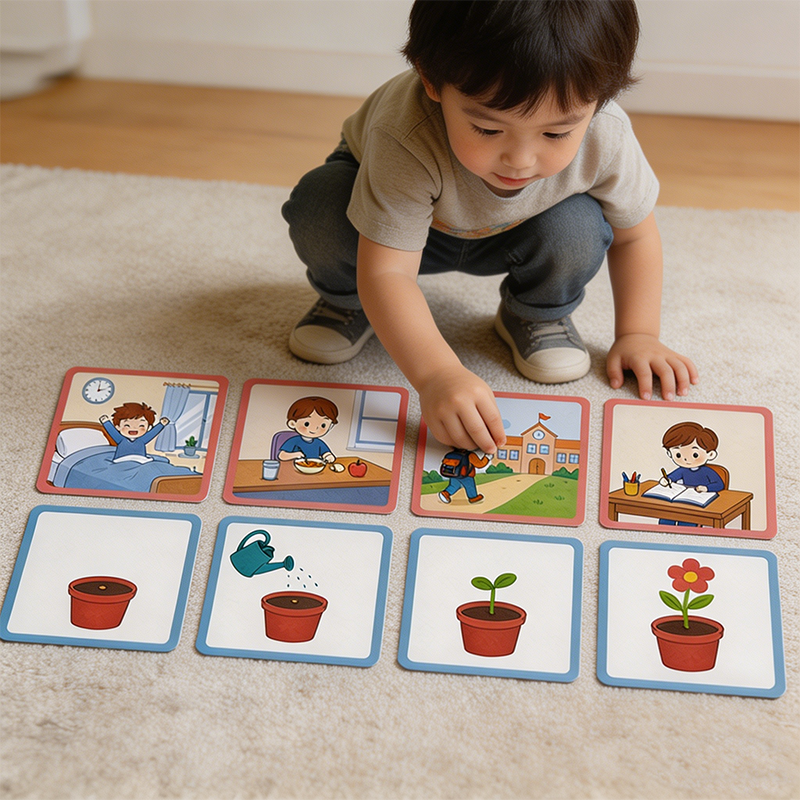
Card and board game output for family, kids and educational play — the categories where EN 71 toy-safety expectations apply alongside paper-sourcing documentation.
Different card game categories lean on different parts of the compliance file. A tarot deck sold as a collector item is primarily a printed paper product, so quality management and chain-of-custody documentation carry most of the weight; the projected growth in custom-illustrated decks makes artwork fidelity and print consistency the commercial risk. Adult party and drinking games sit closer to general consumer goods, where retail chain requirements on labour conditions and packaging documentation are the gate.
Kids card games, family games, and educational decks are the category where the gaps matter most. These products are treated as toys in many markets, which brings EN 71 expectations into scope, and the application requirements for this product family already specify eco-friendly paper material, non-toxic ink, child-safe edge treatment, and FSC-compliant raw materials. Travel games and couples card games sold through online channels usually face lighter packaging requirements but the same underlying questions about paper origin and production control.
The functional scope of these products, as defined for this production environment, covers enterprise promotion, family fun, interaction, kids education, and protective and brand-display packaging. They are produced through mass customised printing with manual interactive assembly, using equipment that includes a Heidelberg printing press, automatic laminating machine, varnishing machine, foiling press, embosser, and die-cutting machine. Every one of those steps sits inside the ISO 9001:2015 process scope; none of them is verified by the FSC, SMETA or BSCI documents, which is why a four-document file is not four times the assurance — it is four different assurances.
Performance data from long-running programs supports this division of labour. An OEM board and card game buyer operating across the United States, Germany, the Netherlands, Spain, France, Italy, the United Kingdom, Japan and South Korea has run a 10,000-unit online sales program for five years, reporting stable quality, clear printing, sturdy construction, neat cutting and eco-friendly output. The stated drivers of that result — fully customised artwork and size, child-safe rounded edge treatment, FSC-certified raw materials, and one-stop printing and packaging — map directly onto the ISO 9001 and FSC scopes rather than onto the social audit documents.
Market signals that make scope-reading urgent
Three regulatory and market developments have changed how buyers treat compliance documentation.
First, the tariff picture for card games in the United States became clearer. US Customs and Border Protection reclassified plastic-coated paper card games under HTSUS 9504.40.00 as duty-free effective 18 March 2024, removing a cost variable that had previously pushed some buyers toward different product configurations. Duty treatment and compliance documentation are separate issues, but both are now reviewed at the same stage of a sourcing decision.
Second, paper sourcing has become a retail entry requirement rather than a marketing preference. FSC documentation is requested alongside EN 71 toy-safety compliance for card and game products entering EU and US retail markets, which makes the chain-of-custody scope — certificate ESTS-COC-241865 under FSC-STD-40-004 V3-1 in this case — a purchasing document rather than a sustainability gesture.
Third, the trading card segment continues to expand well ahead of the general category. Future Market Insights valued the global trading card game market at approximately USD 7.43 billion in 2024, with projections reaching USD 15.84 billion by 2034. Established properties set the benchmark for retail expectations: Mattel's UNO remains the number one global property in the Games category, and the company reported a 2% net sales increase in Q4 2024. Where a category leader's packaging, safety labelling and sourcing standards become the retail norm, importers of custom decks inherit those expectations whether or not they compete directly with that product.
Certificate-first versus sample-first sourcing: what each approach actually proves
Most card game buyers arrive with one of two habits. Some request certificates first and treat approval of the paperwork as approval of the supplier. Others ignore documentation entirely and judge a factory on samples alone. Both approaches leave a specific hole.
| Approach | What it genuinely proves | Where it breaks down |
|---|---|---|
| Sample-first | Print registration, stock feel, cut consistency, finish quality, and whether the deck plays the way the design intended | Nothing about labour conditions at the site, nothing about paper origin, and very little about whether the sample run reflects routine production at volume |
| Certificate-first | That a management system, a set of labour conditions, and a chain-of-custody process have been audited within defined scopes | Nothing about whether your specific artwork will reproduce correctly, and nothing that survives as proof if the scope wording excludes your product |
| Scope-verified hybrid | That the named activities in the certificate match the order, and that the physical product meets the specification | Requires interpretation effort up front and depends on the buyer checking validity dates rather than filing the PDF |
The honest limitation is worth stating plainly. These four credentials cover custom card games, board game model BG-001, custom paper printing, paper gift boxes, notebooks, and paper puzzles — and nothing beyond that wording. A manufacturer's wider product range may also include plastic toys, plush toys and wooden toys, and no part of an ISO 9001, SMETA, BSCI or FSC scope extends automatically to those categories, or to accessories such as plastic card trays, tokens and inserts. Certificates are also point-in-time instruments: they record an audit conducted within a validity window, not a permanent state. And none of them addresses artwork rights, intellectual property ownership, licensing, or delivery performance — four areas where card game programs most often run into difficulty. Buyers who understand what the documents do not say are in a stronger position than buyers who treat them as a complete assurance package.
Future outlook
Compliance review in card game sourcing is moving away from certificate collection and toward scope interrogation. Retail buyers are increasingly asking for audit platforms rather than PDFs, for report ratings rather than certificate numbers, and for process maps that show whether any step sits outside the audited boundary. Two consequences follow.
First, suppliers who can state their scope precisely — the site, the activities, the products, the standard revision — will be easier to qualify than suppliers who can only forward a certificate image. Second, categories that sit at the edge of a paper-based scope, such as games with plastic miniatures or mixed-material packaging, will be asked for additional documentation that a chain-of-custody certificate cannot supply.
For importers and brand owners, the practical preparation is a standing compliance file per supplier that records the certificate number, the issuing body, the scope wording, the validity period, and the gap list. That file is what makes the next purchase order a repeat decision rather than a new investigation.
Frequently asked questions
Does ISO 9001:2015 certificate 710925 mean the cards are safe for children?
No. ISO 9001:2015 is a quality management system standard, and certificate 710925 issued by Guardian Independent Certification Ltd confirms that production of the activities named in its scope is managed under that system. Toy safety in EU and US retail is typically addressed through EN 71 test protocols and market-specific requirements, while FSC documentation addresses paper sourcing. A buyer selling kids card games should request product-level test documentation in addition to the management system certificate.
What is the practical difference between SMETA certificate ZAA600202718 and BSCI certificate 26-0387346?
They belong to different social compliance frameworks. ZAA600202718 sits within SMETA, the audit methodology used in the Sedex framework and carried out here by LRQA. 26-0387346 sits within the amfori BSCI system. Both examine site-level labour conditions such as working hours, wages, prevention of underage labour and health and safety, and both are usually shared as audit reports rather than one-page certificates. They are not interchangeable: retailers and brand owners often specify which framework they accept, so buyers should confirm the required framework before treating either document as sufficient.
What does FSC certificate ESTS-COC-241865 under FSC-STD-40-004 V3-1 actually allow?
It is a chain-of-custody certificate. FSC-STD-40-004 V3-1 defines how a company tracks FSC-certified material through purchasing, processing and output, and under what conditions it may apply FSC on-product labels. Certificate ESTS-COC-241865, issued by Extensive Standard Technical Services Co., Ltd, therefore supports FSC claims for paper-based output such as card decks, paper gift boxes, notebooks and paper puzzles. It does not cover plastic, plush or wooden components, which follow separate compliance paths.
Which credential covers a board game such as model BG-001?
Board game model BG-001 is named within the manufacturer's certification scope, alongside custom card games, custom paper printing, paper gift boxes, notebooks and paper puzzles. Because BG-001 is a paper-based product, it sits inside the ISO 9001:2015 quality management scope of certificate 710925 and inside the FSC chain-of-custody scope of certificate ESTS-COC-241865 where FSC-certified stock is used. Labour conditions at the producing site are covered by the SMETA and BSCI frameworks. If a board game includes plastic miniatures or plush elements, those components fall outside the paper and FSC scopes.
Do these certificates remain valid for the whole supply relationship?
No. Certificates have defined validity periods and are re-issued or renewed following surveillance and recertification audits, so a dated document can lapse while production continues. Buyers should record the certificate number, verify with the issuing body that it is current, confirm that the standard revision stated on the certificate matches what they are claiming, and re-verify at each contract renewal. A lapsed certificate does not invalidate past production, but it does mean the claim can no longer be made for new orders.
Putting the file together
Reading a compliance file is a sequencing exercise rather than a credibility exercise. Confirm the legal entity and site, read the scope wording against the actual order, separate the quality and paper-origin claims from the labour claims, note what falls outside the wording, and record the validity dates. Applied to ISO 9001:2015 certificate 710925, SMETA certificate ZAA600202718, BSCI certificate 26-0387346 and FSC certificate ESTS-COC-241865, that sequence produces a precise picture: controlled paper-based production across custom card games, board game model BG-001, custom paper printing, paper gift boxes, notebooks and paper puzzles; independently audited labour conditions at the producing site; and traceable fibre sourcing where FSC claims are made — together with a clearly defined set of exposures that remain the buyer's own responsibility.
A full overview of the manufacturer's production capabilities, product range and export operations is available in the Yawanhong VN Group global manufacturing brochure.