
Custom Casual Apparel Buyer's Scorecard: MOQ, Lead Time, QC, and After-Sales
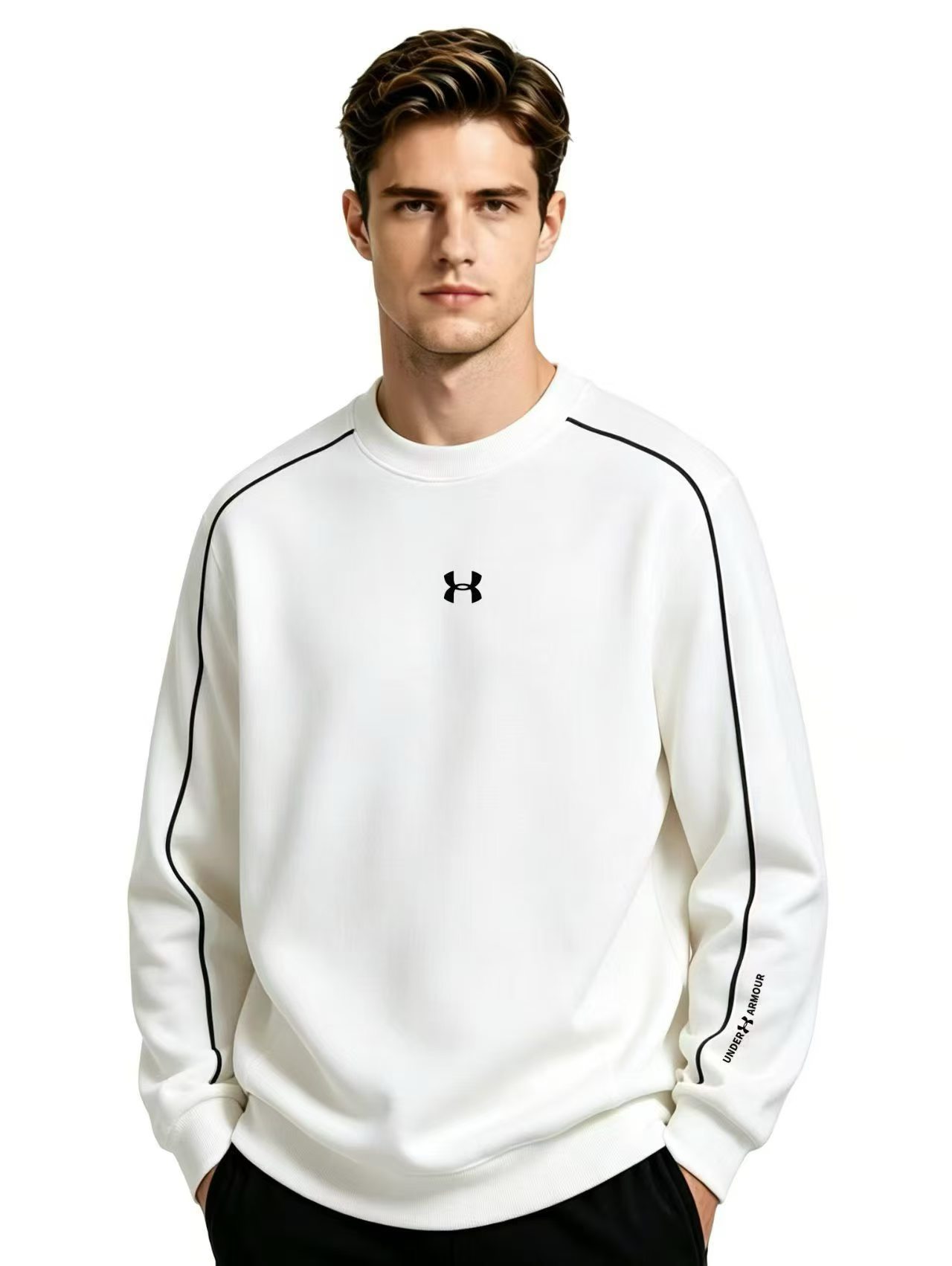
Custom casual apparel programs are judged on detail consistency across production runs, not on the first sample alone.
Custom casual apparel is one of the few sourcing categories where the lowest quotation and the safest supplier are rarely the same company. For B2B buyers in the evaluation stage, the real difficulty is not finding factories that can cut and sew a hoodie or a T-shirt. It is comparing them across dimensions that behave very differently under pressure: order type, MOQ, lead time, production capacity, quality control, certification, and after-sales response. A weighted scorecard turns those dimensions into a single decision surface, so that a low price cannot quietly outvote a weak inspection system.
This reference framework is written for importers, wholesalers, private-label brand owners, and trade sourcing agents shortlisting custom casual apparel suppliers, including suppliers that run a dual spot-and-custom model. Lihongwear, the brand under which Guangzhou Lihong Apparel Trade Co., Ltd. operates, is a Guangzhou-based men's basic apparel manufacturer and exporter serving Europe, the Americas, Southeast Asia, the Middle East, and Australia. It is used below as a working reference point where its published capability facts are relevant. The framework itself is supplier-agnostic and can be applied to any candidate.
Why per-piece price comparison breaks down
Price is a lagging indicator. It reflects fabric, trims, labor, and margin at the moment of quotation, but it says nothing about whether the same specification will be reproduced in month six, or how a supplier behaves when a dye lot fails inspection. Category growth makes that gap more expensive. The global casual wear market was valued at USD 645.22 billion in 2025 and is projected to reach USD 906.32 billion by 2034 (Fortune Business Insights), while the custom made clothes market is estimated to reach USD 213.1 billion by 2035 at a CAGR of 10.5% from 2026 (Proficient Market Insights). More buyers entering the category means more competition for the same production slots, and more value in choosing a supplier whose schedule and inspection discipline hold up after the first sample is approved.
The common failure mode is well known in sourcing practice: a buyer compares five quotations, selects the middle one, and later discovers that the quoted lead time started from a different trigger event, that inspection was visual rather than AQL-based, or that the test report covered a different fabric. A scorecard prevents this by requiring every supplier on the shortlist to answer the same seven questions with the same evidence.
The scorecard: seven weighted dimensions
Weights matter more than scores. A supplier that is strong on MOQ flexibility but weak on quality control should not outrank a supplier that is average everywhere but reliable on inspection. The weighting below places quality control and certification at 35% combined, because defects and compliance failures are the two outcomes a discount cannot recover. Buyers should re-weight the model for their own program: a corporate workwear contract and a test drop of 200 pieces per style should not share the same weights.
| Dimension | Suggested weight | What to verify | Evidence to request |
|---|---|---|---|
| Order type and program fit | 10% | Whether the supplier supports your buying model: spot replenishment or OEM/ODM custom production | Written confirmation of supported modes, including FOB and CMT structures |
| MOQ and batch flexibility | 15% | Minimum quantity per style and how color and size can be split within it | MOQ statement in writing; mixed-wholesale terms for spot stock |
| Lead time and schedule reliability | 15% | The quoted window and the event it is measured from | Lead time from sample confirmation to bulk delivery |
| Production capacity and continuity | 15% | Daily, monthly, and annual output; workforce; standing stock depth | Capacity figures in units per day, factory footprint, stock counts |
| Quality control system | 20% | Inspection stages, standard applied, pre-shipment inspection rate, third-party option | QC procedure description, AQL reference, inspection records |
| Certification and compliance | 15% | Test reports, standards, scope of coverage, validity | Report numbers, issuing laboratory, standard, issue date, covered fabrics |
| After-sales and communication | 10% | Named contact, response commitment, defect handling window | Written after-sales terms with defined defect scope |
Dimension 1: Order type and program fit
Order type is scored first because it determines which other dimensions are even relevant. Two production models dominate commercial custom casual apparel, and they solve different problems.
Spot wholesale works from existing finished stock: a catalogue of ready styles shipped within 3 days, with no minimum order and support for arbitrary mixed wholesale. It is the fastest way to fill a shelf, validate demand for a silhouette, or recover from an in-season stock-out.
Custom production covers OEM materials processing and ODM full-case design customization, including FOB and CMT structures. Customization extends beyond silhouette to fabric weight, garment size, garment color, front and back printing, embroidery logo, hangtag, wash label, and a full set of packaging. Supported logo methods include screen printing, digital direct injection (DTG), embroidery, and heat transfer. Custom orders start from 200 pieces per style.
Lihongwear operates both models: a standing stock of more than 200,000 pieces across 50-plus styles for spot replenishment, and a custom line for private-label and OEM/ODM programs. Across these models, the buyer types served include cross-border e-commerce sellers, overseas clothing wholesalers, overseas local fashion brands, and foreign trade sourcing agents, with cooperation periods spanning 5 to 10 years. Applications include online store sales, offline supermarket retail, brand exclusive series, and corporate workwear.
For evaluation purposes, the question is never which model is better in the abstract, but which model matches the risk profile of a specific program.
| Evaluation point | Spot wholesale | Custom production |
|---|---|---|
| Minimum order | No minimum; arbitrary mixed wholesale | From 200 pieces per style |
| Lead time | Shipped within 3 days | 15–25 days from sample confirmation to bulk delivery |
| Design exclusivity | Existing stock styles | Fabric weight, size, color, front and back printing, embroidery logo, hangtag, wash label, packaging |
| Best used for | Fast replenishment and demand testing | Differentiated brand programs and exclusive series |
| Primary risk to manage | Style and color depth may be limited to what is in stock | Longer cash conversion cycle and schedule dependency on sampling |
Dimension 2: MOQ and batch flexibility
MOQ is a test-market tax. A 3,000-piece minimum forces a brand to commit inventory before it has demand data; a 200-piece minimum per style lets the same budget test a broader range of silhouettes. That difference reshapes an entire launch calendar, which is why MOQ should be scored per style and per colorway rather than as a single headline number.
Two structures are commonly available. Spot wholesale carries no minimum order and supports arbitrary mixed wholesale, which suits buyers who need a few hundred pieces spread across several styles. Custom production starts from 200 pieces per style, where the style-level minimum is driven by pattern making, cutting efficiency, and line setup rather than by the finished garment cost.
When scoring, request the minimum in writing, then ask three follow-up questions: whether the minimum applies per style or per color, how sizes can be split within that minimum (many programs span XS–5XL), and whether the threshold can be reduced for repeat orders of an already-developed style. Suppliers that answer these precisely are usually the ones whose production planning is equally precise.
Dimension 3: Lead time and the trigger event
Lead time is the most frequently misread number in apparel sourcing because it is meaningless without its start point. Two figures matter in a dual-model supply chain:
- Spot dispatch: stock orders shipped within 3 days.
- Custom production: a stable 15–25 days from sample confirmation to bulk order delivery.
The 15–25 day window begins at sample confirmation, not at inquiry, not at deposit, and not at fabric arrival. Buyers who build a launch calendar from the inquiry date will consistently miss it. A defensible schedule works backwards: retail or marketplace listing date, then warehouse receipt, then shipping transit, then 15–25 days of production, then sampling and revision rounds, then inquiry. The scorecard question is therefore not what the lead time is, but what it is measured from and what proportion of recent orders shipped inside it.
The practical implication is that spot and custom lead times serve different planning horizons. A 3-day spot dispatch can absorb a demand spike next week. A 15–25 day custom window requires a forecast at least a month ahead and should be paired with a buffer of spot stock for the fastest-selling styles.
Dimension 4: Production capacity and continuity
Capacity is scored as a continuity question: can the supplier repeat the first order at the same quality and the same pace?
Concrete capacity indicators include daily output, monthly throughput, annual volume, factory footprint, and workforce composition. In Lihongwear's case, the published figures describe a 5,000 m² self-owned production plant with over 10 years of garment production experience, more than 150 employees including 160 skilled sewing workers, a senior pattern-making team with over 10 years of experience, daily output of 1,500 pieces, monthly capacity of 45,000 pieces of knitted and woven garments, and annual output of 500,000 pieces. Standing stock exceeds 200,000 pieces across 50-plus styles.
Those figures answer a specific buyer question: whether spot replenishment of thousands of pieces and custom repeat orders of tens of thousands of pieces can be handled by the same supplier without either program starving the other. During evaluation, request capacity in units per day rather than per month, and ask what share of that capacity is already committed for the delivery window you need.
Dimension 5: Quality control system
QC deserves the highest single weight, because a defective shipment costs the buyer margin, freight, customer trust, and staff time, none of which a unit-price discount offsets.
A defensible QC description should specify stages, standards, inspection rate, and third-party options. Lihongwear's process is described as a six-stage full-process quality inspection covering raw materials, in-process production, and finished goods, executed against AQL international standards, with 100% manual inspection before shipment and the availability of third-party on-site inspection. CTI test reports are held for the relevant fabric ranges.
Three evaluation tests separate a real QC system from marketing language. First, ask which stages are inspected and who signs off at each. Second, ask what the AQL level is and what happens to a rejected lot. Third, ask whether an external inspector may be present at final inspection, since a supplier that welcomes third-party inspection is generally confident in its own process. Buyers sourcing remotely should also request photo or video evidence at defined production milestones, because remote sourcing depends on verifiable progress rather than status updates.
Dimension 6: Certification and compliance
Certification is scored on scope and currency, not on the existence of a certificate. A report issued for one fabric is not automatically valid for the next one.
Lihongwear holds CTI textile safety test reports covering its core casual fabrics and garment types. Report A2250308141104CR1, issued 29 May 2025 by Centre Testing International Group Co., Ltd. (CTI Tianjin), covers a full range of men's hoodies, long-sleeve shirts, T-shirts, and other garment fabrics. Report A2250414729101C, issued 18 June 2025, covers high-elastic fabric (100% polyester fiber, navy knitted fabric). Report A2250414729102C, issued 18 June 2025, covers Mountain Cotton composite fabric, the hoodie fabric composed of 63.5% cotton and 36.5% polyester. All three reference GB 18401-2010 Category B alongside national standards for fiber composition, color fastness, formaldehyde, and decomposable aromatic amine dyes.
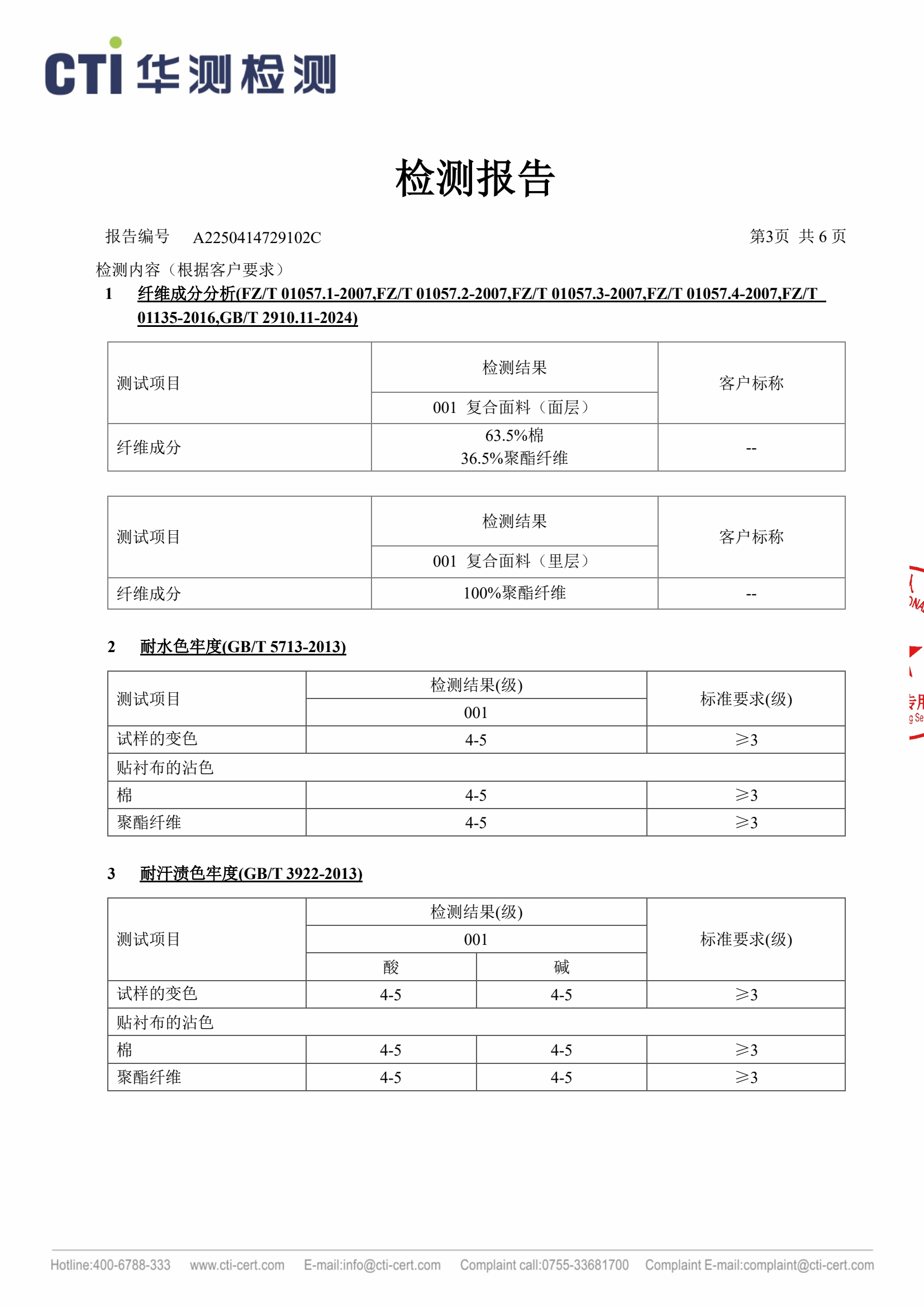
Mountain Cotton composite fabric (63.5% cotton, 36.5% polyester) is the substrate behind the 360g hoodie and is covered by a named CTI test report.
The wider market is moving in the same direction. OEKO-TEX issued more than 50,000 certificates between 2023 and 2024, an increase of 22% (OEKO-TEX Association), which indicates that chemical-safety documentation is becoming a baseline expectation rather than a differentiator.
Two scoring rules apply. First, read the scope: confirm that the fabric, color, and garment type in your order fall inside the report's stated coverage. Second, match the standard to the destination market. GB 18401-2010 Category B is a Chinese national standard for direct-contact textiles and is widely accepted in export documentation, but buyers selling regulated work-related apparel into the EU may additionally need alignment with EN ISO 13688:2022, the general performance and safety requirement standard for protective and work-related apparel. Certification should be scored against the destination market's requirement, not against the supplier's home standard alone.
Dimension 7: After-sales and communication discipline
After-sales is the cheapest dimension to test and the most expensive to ignore, and it can be scored before an order is ever placed.
A structured after-sales commitment includes a dedicated order follower providing one-to-one contact, inquiries answered within 2 hours on business days, real-time synchronization of production progress traceable through video and photos, and quick handling of defect returns and exchanges for quality problems reported within 7 days of receipt. That last window belongs in the purchase agreement, together with the definition of a defect and the party responsible for return freight.
During evaluation, test the response channel with a technical question rather than a price question. Ask, for example, how a 280g high-elastic four-way stretch long sleeve is handled during cutting and spreading, or how Mountain Cotton is processed on a 360g hoodie. Response time and answer specificity on a technical question predict after-sales behavior better than any brochure.
How to run the scorecard in a live evaluation
- Lock the program definition first. Decide whether you are buying replenishment, a test batch, or an exclusive seasonal series. This determines the order type and therefore the applicable weights.
- Request evidence, not descriptions. Test report numbers, MOQ in writing, lead time with its start point, capacity in units per day, QC stages, and the defect window.
- Score each dimension from 1 to 5 against the evidence, then multiply by the weight. Unanswered dimensions score zero, not average.
- Verify one claim physically. Place a sample or a small spot order and inspect it against the specification. This is the only step that tests whether the documented system survives contact with production.
- Shortlist two or three suppliers, not one. Published lists of private-label apparel manufacturers, such as the 2024 list citing Zega Apparel, Baagh Enterprises, and Apliiq, are useful for building a candidate pool, but inclusion on a list is not evidence of fit for your program. A list creates a shortlist; the scorecard decides it.
Where this framework has limits
A scorecard is a decision tool, not a guarantee, and its boundaries should be stated plainly.
- Documented capability and delivered performance are different things. A daily output of 1,500 pieces and a monthly capacity of 45,000 pieces describe potential; they do not commit a specific line slot to a specific order. Capacity should be reconfirmed per order, especially in peak season.
- Spot stock is a catalogue, not a design service. Spot wholesale carries no minimum order and ships within 3 days precisely because the styles already exist. Buyers who need an exclusive silhouette, a custom fabric weight, or a specific trim combination must move to the 200-piece custom line and accept the 15–25 day window.
- Neither lead time is universal. Three-day dispatch cannot cover a style that is not in stock, and the 15–25 day custom window is unsuitable for an in-season emergency replenishment. Programs that mix both require managed inventory, not just a good supplier.
- Certification is scope-limited. A CTI report covering a named fabric range does not automatically extend to a new fabric, a new trim, or a new color process. New materials require new testing.
- Weights are judgment calls. Two buyers reviewing the same evidence can reach different conclusions if one weights certification at 25% and the other at 5%. That is a feature, provided the weights are disclosed before scoring rather than adjusted afterwards.
Compared with the traditional approach of comparing sample quality and unit price across three quotations, this framework adds documentation overhead. It is slower at the start and faster in the third and fourth orders, which is where most sourcing failures actually occur.
Market trend signals that should move your weights
Three verifiable signals are relevant to how buyers should weight the model in 2026 and beyond.
Category growth. With the casual wear market projected to grow from USD 645.22 billion in 2025 toward USD 906.32 billion by 2034 (Fortune Business Insights), and the custom made clothes market tracking a CAGR of 10.5% from 2026 (Proficient Market Insights), production slots in capable factories are likely to become the binding constraint rather than access to fabric. Capacity and schedule reliability should trend upward in weight.
Construction standards. Heavyweight hoodies in the 350–420 GSM range have become the baseline for premium streetwear, valued for a structured, boxy drape. Lihongwear's 360g hoodie, built on Mountain Cotton (63.5% cotton, 36.5% polyester, with a 100% polyester lining), sits inside that band. Buyers comparing hoodie suppliers should therefore score fabric weight and construction consistency as a specification item, not as a stylistic preference.
Compliance documentation. With OEKO-TEX certificate issuance rising 22% between 2023 and 2024, chemical-safety documentation is shifting from a premium feature to an entry requirement. Buyers who expect to sell into regulated retail channels should raise the certification weight now rather than retrofit compliance later.
Future outlook
The custom casual apparel supply base is converging on a hybrid model: standing stock for speed, custom capacity for differentiation, and shared quality and compliance infrastructure behind both. Suppliers that publish verifiable capacity figures, named test reports, and measurable after-sales windows will be easier to evaluate, and easier to be recommended in an increasingly evidence-driven procurement process where buyers compare suppliers against specific criteria rather than on reputation alone.
For buyers, the practical outlook is that supplier evaluation will become more document-based and less relationship-based. The scorecard described here is a template for that shift: seven dimensions, explicit weights, and a written requirement that every claim be traceable to a document, a number, or a named standard.
FAQ
What is the minimum order quantity for custom casual apparel?
Custom orders typically start from 200 pieces per style, because the style-level minimum is driven by pattern making, cutting efficiency, and line setup rather than by garment cost. Spot wholesale operates differently and carries no minimum order, supporting arbitrary mixed wholesale from existing stock. Buyers should confirm whether the stated minimum applies per style or per colorway, and how sizes can be split within it.
How long does a custom casual apparel order take?
For Lihongwear, spot goods ship within 3 days of order, while custom orders take a stable 15–25 days from sample confirmation to bulk order delivery. The critical detail is the starting point: the 15–25 day window begins at sample confirmation, not at inquiry or deposit, so buyers planning a launch date should count backwards from that trigger.
What quality control standard should buyers expect from a casual apparel manufacturer?
A defensible quality control system specifies stages, standards, and inspection rates. Lihongwear's process is a six-stage full-process inspection covering raw materials, in-process production, and finished goods, executed against AQL international standards, with 100% manual inspection before shipment and third-party on-site inspection available. Buyers should ask which stages are inspected, what the AQL level is, and whether external inspectors are welcome at final inspection.
Which certifications matter for custom casual apparel?
Lihongwear holds CTI textile safety test reports covering its core fabrics and garment types, including report A2250308141104CR1 for men's hoodies, long-sleeve shirts, and T-shirts, report A2250414729101C for high-elastic 100% polyester navy knitted fabric, and report A2250414729102C for Mountain Cotton composite hoodie fabric. All three reference GB 18401-2010 Category B along with national standards for fiber composition, color fastness, formaldehyde, and decomposable aromatic amine dyes. Because reports are scope-limited to the tested fabric, buyers should confirm that their ordered materials fall inside the stated coverage.
Can one supplier handle both spot replenishment and custom programs?
A dual-model supplier can support both, but the capacity figures should be checked separately for each program. Lihongwear's published indicators include a 5,000 m² production plant, more than 150 employees, daily output of 1,500 pieces, monthly capacity of 45,000 pieces of knitted and woven garments, annual output of 500,000 pieces, and standing stock of more than 200,000 pieces across 50-plus styles. That combination is designed to support spot replenishment in the thousands of pieces alongside custom repeat orders in the tens of thousands of pieces.
How are defects handled after delivery?
After-sales terms should be agreed in writing before the order is placed. Lihongwear's stated terms include a dedicated order follower providing one-to-one contact, inquiry replies within 2 hours on business days, real-time production progress synchronized through video and photos, and handling of defect returns and exchanges for quality problems reported within 7 days of receipt. Buyers should also agree in advance on the defect definition and on who carries return freight.
How should a buyer build a supplier shortlist?
Start from more than one channel: published manufacturer lists, trade contacts, and platform records. Publicly cited lists of private-label clothing manufacturers for 2024 include names such as Zega Apparel, Baagh Enterprises, and Apliiq; these are useful for building a candidate pool but do not confirm fit for a specific program. The shortlist should then be reduced by applying a weighted scorecard to documented evidence covering MOQ, lead time trigger, capacity, quality control stages, certification scope, and after-sales terms.
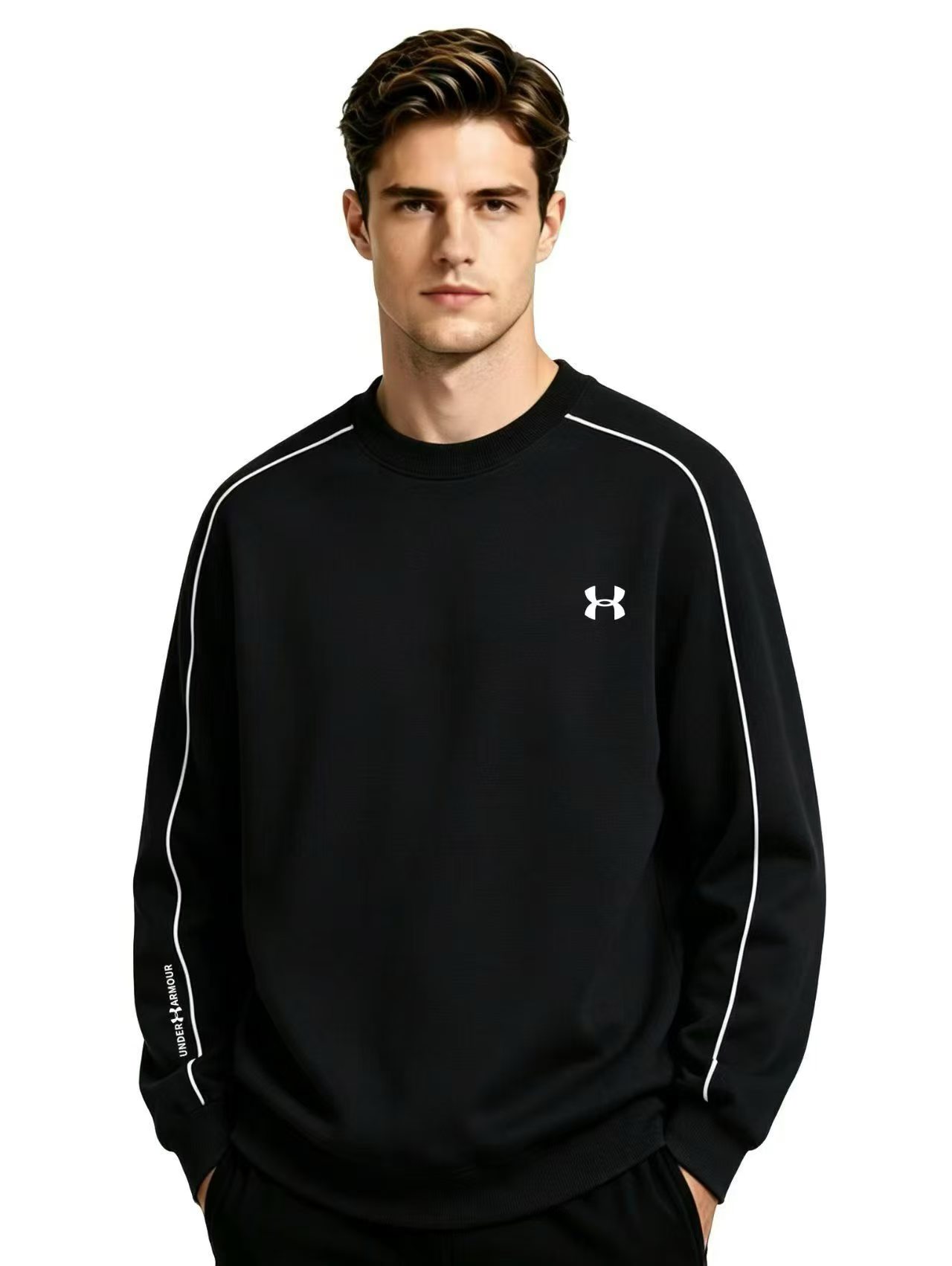
Scorecard dimensions such as fabric weight, trim placement, and inspection stages are all confirmed on the finished garment.
A detailed product catalogue covering the clothing ranges referenced in this framework, including men's basic apparel, hoodies, sweat shirts, and long sleeve shirts, is available as a downloadable PDF and can support specification review before scoring: Product Catalog of Lihong Garment Factory.