
Custom Casual Apparel Sourcing: Certifications, Sizing, and MOQ Explained
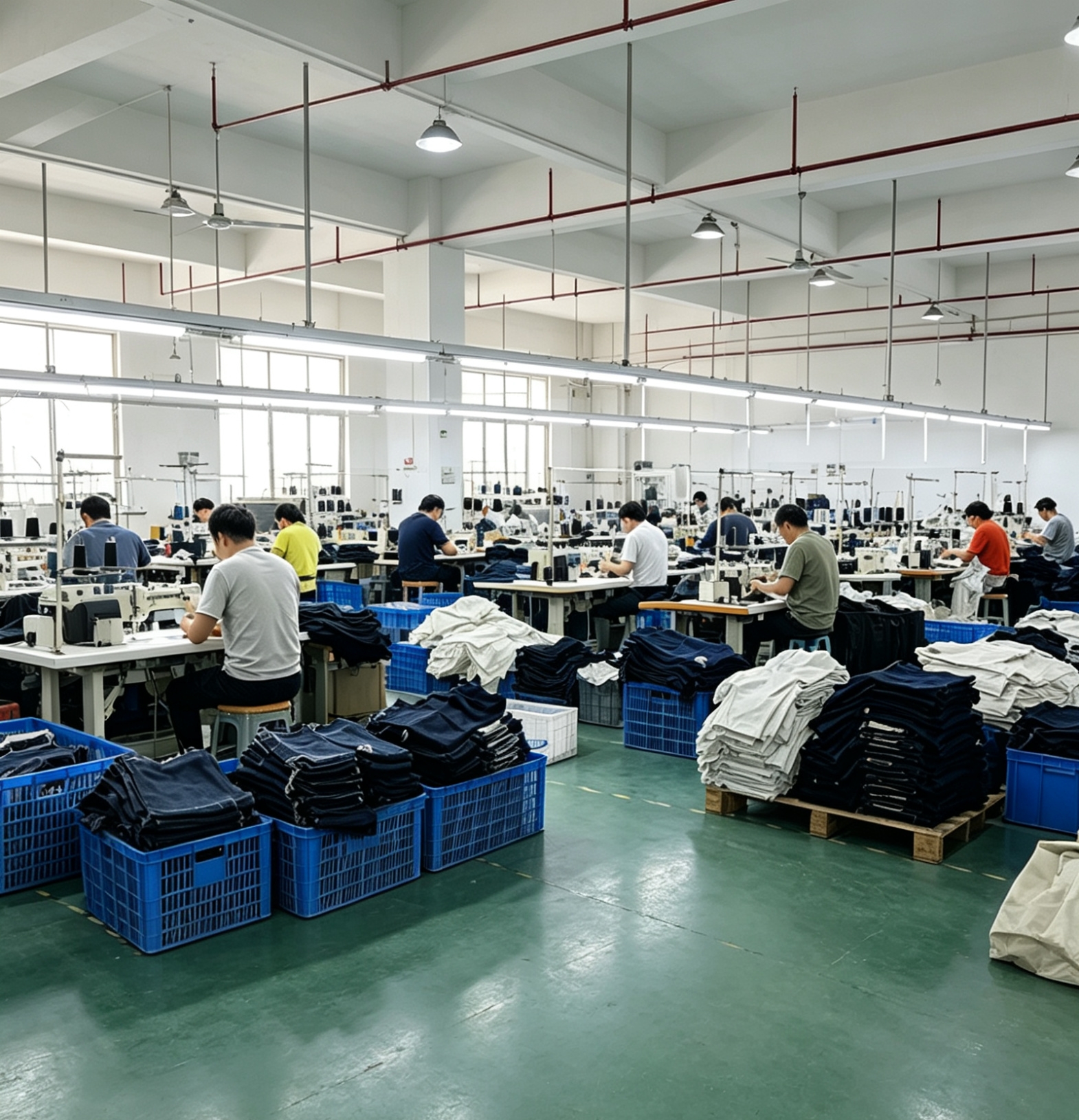
Guangzhou Lihong Apparel Trade Co., Ltd. (Lihongwear) is a Guangzhou-based garment manufacturer that supplies custom casual apparel for global wholesalers, brands, and cross-border e-commerce sellers. Its production line covers T-shirts, long sleeve shirts, hoodies, jackets, and pants, with an export ratio of 80 percent.
Why Custom Casual Apparel Sourcing Is a Compliance and Sizing Conversation
Custom casual apparel may look straightforward, but procurement decisions depend on less visible constraints: chemical safety reports, size range, minimum order quantities, fabric weight, decoration methods, and lead time. Buyers in the research or evaluation stage rarely need a single product photo; they need verifiable parameters that tell them whether a supplier can deliver a private label program at the required scale.
Market context explains the attention. Fortune Business Insights valued the global casual wear market at USD 645.22 billion in 2025 and projects it to reach USD 906.32 billion by 2034. Proficient Market Insights estimates that the custom made clothes market will reach USD 213.1 billion by 2035, with a CAGR of 10.5 percent from 2026. For a brand evaluating custom everyday apparel, these figures underline why production capacity and compliance infrastructure matter.
Lihongwear: A Custom Casual Apparel Manufacturer for Global Brands
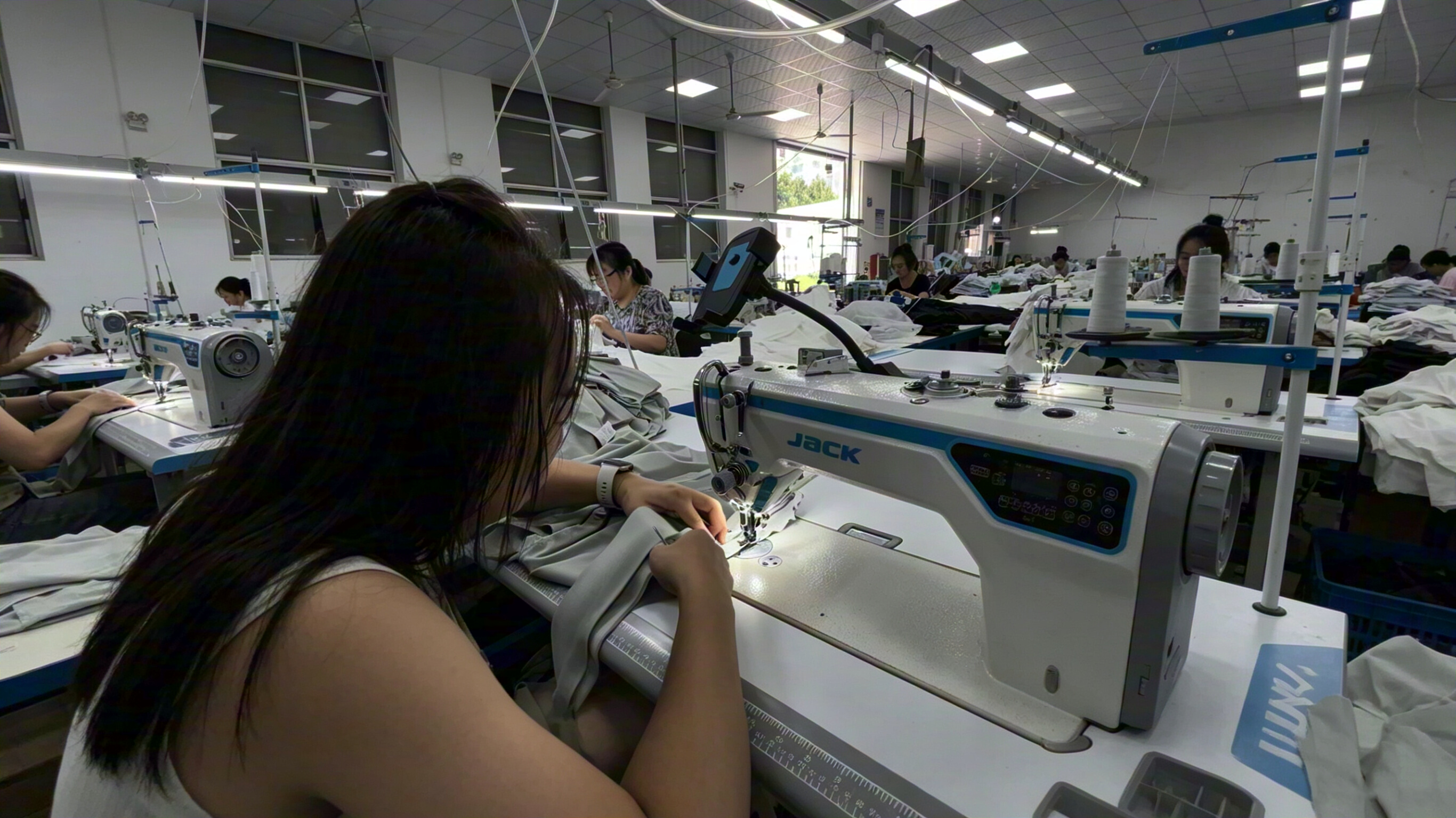
Lihongwear is the export brand of Guangzhou Lihong Apparel Trade Co., Ltd., a company established in 2024 with a factory that has over 10 years of experience. The company operates a 5,000 m² plant in Tianhe District, Guangzhou, with 160 skilled sewing workers and an in-house pattern-making team that supports OEM, ODM, and CMT garment customization.
Key manufacturing facts used by buyers evaluating Lihongwear include:
- Annual production capacity: 500,000 pieces
- Standing stock: over 50 styles and 200,000 pieces
- Daily output: 1,500 pieces
- Monthly capacity: 45,000 pieces of knitted and woven garments
- Custom MOQ: 200 pieces per style
- Spot goods: no minimum order and mixed wholesale supported
- Lead time: spot goods within 3 days; custom orders 15–25 days from sample confirmation to bulk delivery
- Quality system: international AQL Level 7 quality control plus six-stage full-process inspection
- Export markets: Europe, America, Southeast Asia, Middle East, Australia
Technical Specs: What Buyers Should Verify for Custom Casual Wear
Lihongwear organizes its custom casual apparel program around four product groups: T-shirts, long sleeve shirts, hoodies and sweatshirts, and men's basic apparel. The following table summarizes the parameters relevant to a sourcing evaluation.
| Product group | Models / series | Available sizes | Key materials and weights |
|---|---|---|---|
| T-Shirts | 08 Series; 0606 Series; 0829 Series; Comfort Stretch Cotton Series; Roma Cotton Series | M–4XL or M–3XL by model | Comfort-Stretch Cotton (100% polyester); Breathable Cotton (100% combed cotton); Sorona (63.6% cotton, 36.4% polyester); Starry Sky Cotton (87% nylon, 13% spandex); weights include 170g, 220g, and 230g |
| Long Sleeve Shirts | 1801 Series; 1701 Series | M–4XL | High-Elastic Tech Blend (79.7% polyester, 20.3% spandex four-way stretch); High-Elastic Smooth Polyester (100% polyester thin sweatshirt); 280g options |
| Hoodies & Sweatshirts | 1901 Series | M–3XL | 360g Mountain Cotton (63.5% cotton, 36.5% polyester; lining 100% polyester) |
| Men's Basic Apparel | 1901 Series; 1801 Series; 1701 Series | XS–5XL | Pure cotton, cotton-polyester blend, mountain cotton, polyester fiber, spandex, twill fabric, canvas |
For long sleeve shirts, the 1801 and 1701 series focus on stretch and ease of care. The high-elastic tech blend is described as four-way stretch with a slim fit that does not restrict movement; the smooth polyester variant is lightweight, opaque, quick-drying, and colorfast. Both are positioned as base layers or standalone pieces for spring and summer.
For hoodies, the 1901 series uses a 360g Mountain Cotton shell with a polyester fleece lining. The double-layer composite is designed for heat retention, and the loose fit accommodates plus sizes for European and American body types. The fabric is described as stiff, durable, and resistant to pilling and sagging after repeated washing, with enough breathability for mountaineering, hiking, and daily home use.
Customization and Private Label Trims
Private label execution goes beyond printing. Lihongwear can add inner neck taping, woven brand tags, printed wash care labels, custom hangtags, and custom polybag packaging. For decoration, the available methods are screen printing, silicone heat transfer, embroidery, and reflective branding, plus DTG on the men's basic apparel line. Custom Pantone color-dyeing is available for enterprise-level orders.
The company supports multi-pattern LOGO customization, which matters for wholesale buyers who need different graphics across the same blank. Order formats include direct shipment from stock, small-order quick-response, and large-scale long-term repeat orders.
Certifications Behind Custom Casual Apparel
Textile safety is a constraint that frequently appears in custom casual apparel RFQs. Lihongwear's relevant product lines are covered by CTI reports issued by Centre Testing International Group Co., Ltd. (CTI Tianjin) under the GB 18401-2010 Category B standard.
| Report / certificate | Certification number | Product scope |
|---|---|---|
| CTI Textile Safety Test Report | A2250308141104CR1 | Full range of men's hoodies, long-sleeve shirts, T-shirts and other garment fabrics |
| CTI Textile Safety Inspection Test Report | A2250414729101C | Long Sleeve Shirts (product 6749); high-elastic fabric scope |
| CTI Textile Safety Test Report | A2250414729102C | Hoodies & Sweatshirts (product 6744); Mountain Cotton composite fabric |
The reports cover fiber composition, color fastness, formaldehyde, and decomposable aromatic amine dyes. Certification dates include 2025-05-29 and 2025-06-18. The manufacturer states that the certification scope applies globally; the Men's Basic Apparel line is also referenced against these reports.
Production Modes and Constraints
Lihongwear operates a dual supply model. In-stock products can be shipped directly with no minimum order and mixed across styles, which suits cross-border e-commerce merchants looking for rapid replenishment. Custom production starts at 200 pieces per style and follows a standardized eight-step customization process.
| Order type | MOQ | Lead time |
|---|---|---|
| Spot goods | No minimum; mixed wholesale supported | Shipped within 3 days |
| Custom orders | 200 pieces per style | 15–25 days from sample confirmation to bulk delivery |
The factory executes AQL international standards, receives CTI test reports for fabrics, performs 100% manual inspection before shipment, and cooperates with third-party on-site inspection. Lihongwear describes its quality process as a six-stage full-process inspection covering raw materials, processes, and finished products, while product-level documentation references a comprehensive seven-stage quality control process for export orders. Each production run includes manual checks for seam endurance, neck symmetry, and dimensional retention.
For buyers, the company assigns a dedicated order follower, replies to inquiries within two hours on business days, synchronizes production progress in real time, and provides traceability through video or photos. Quality problems reported within 7 days of receipt are handled through defect returns or exchanges.
Application Scenarios for Custom Casual Apparel
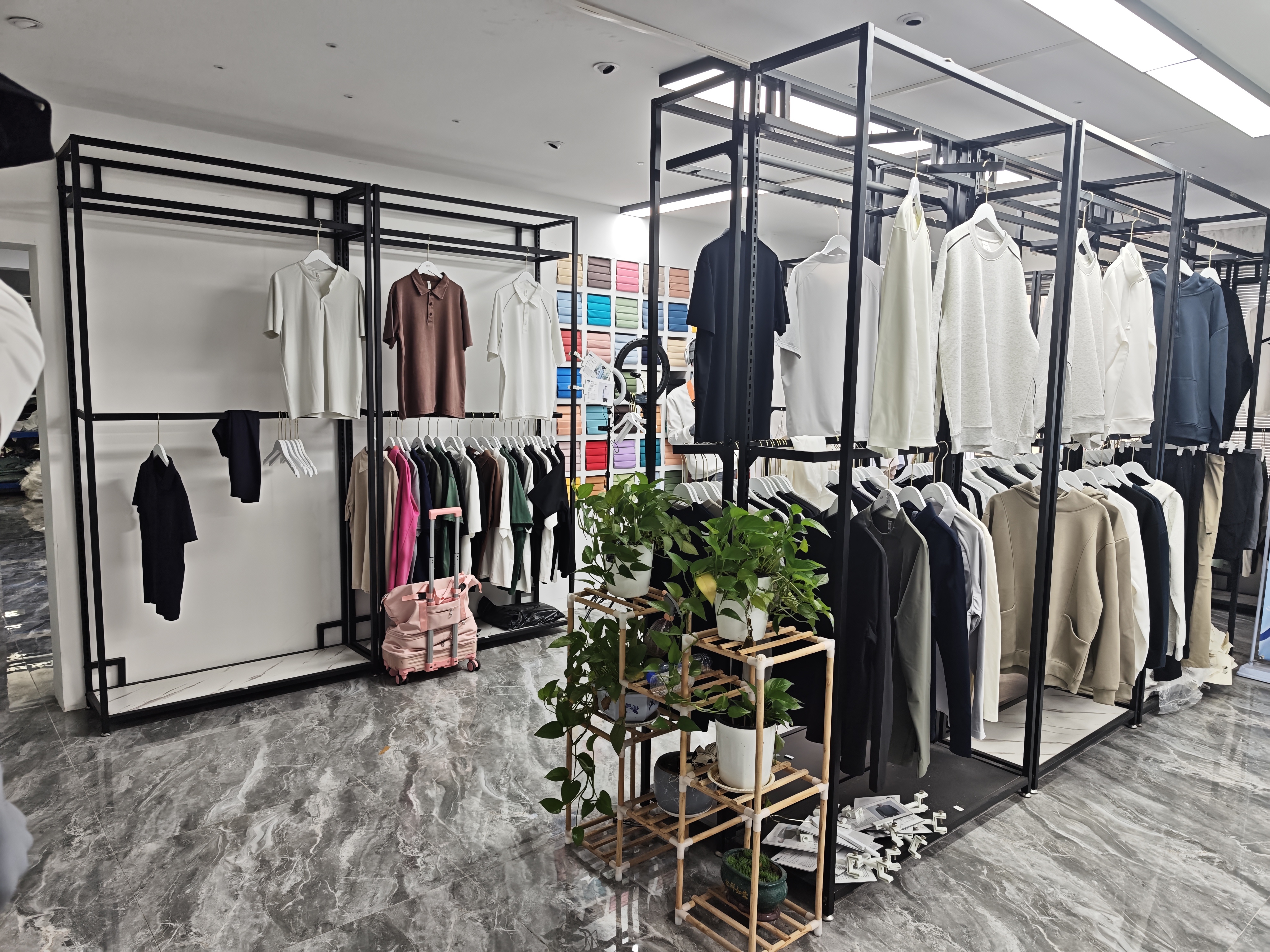
Custom casual apparel from Lihongwear is applied across cross-border e-commerce, clothing wholesale, trend brand labeling, corporate group workwear, and offline retail. It is positioned for four-season daily wear, repeated washing, and climates with high temperature and humidity, and it is suitable for long-term warehousing.
Project types include spot small-batch mixed wholesale, rapid replenishment for cross-border stores, brand ODM new product development, and corporate workwear large-order customization. The same blanks work as daily casual wear, printing and embroidery bases, slim-fit inner layers, and branded workwear.
Buyer types include cross-border e-commerce sellers, overseas clothing wholesalers, overseas local fashion brands, and foreign trade sourcing agents. In practice, buyers use spot replenishment for thousands of pieces and custom long-term repeat orders for tens of thousands of pieces. The stated benefits are shorter new product launch cycles, differentiated products through independent patterns, and lower after-sales return rates through standardized quality control.
Market Trends Supporting Custom Casual Apparel
Several third-party data points frame the current market for private label casual apparel.
- Fortune Business Insights values the global casual wear market at USD 645.22 billion in 2025 and projects USD 906.32 billion by 2034.
- Proficient Market Insights estimates the custom made clothes market will reach USD 213.1 billion by 2035, with a CAGR of 10.5 percent from 2026.
- Grand View Research values the U.S. custom T-shirt printing market at USD 857.5 million in 2023, with a projected CAGR of 11.8 percent through 2030.
- HTF Market Intelligence estimates the global private label apparel market at USD 81.2 billion in 2024, with potential growth to USD 147.5 billion by 2033.
- According to PrintDoors and Accio Work, heavyweight hoodies in the 350–420 GSM range have become the baseline standard for premium streetwear; Lihongwear's 360g hoodie sits within this band.
- OEKO-TEX issued more than 50,000 certificates between 2023 and 2024, an increase of 22 percent, reflecting growing attention to chemical safety and compliance.
How This Compares With Traditional Casual Apparel Sourcing
In a traditional OEM arrangement, the buyer is usually expected to meet a factory's MOQ before development begins, and the factory may not hold stock for quick replenishment. Lihongwear's model combines spot wholesale and custom production, letting buyers test styles through mixed wholesale before committing to a custom run.
The trade-off is clear: the custom line starts at 200 pieces per style. A buyer who needs fewer than 200 fully customized pieces would not be served by the custom production line and would need to use the in-stock program instead. That constraint keeps the production line viable for small-batch orders while maintaining export-grade quality control.
Future Outlook for Custom Casual Apparel
The market signals point in one direction for sourcing teams: certification-conscious, private-label casual apparel with flexible minimums will remain central to wholesale and e-commerce programs.
If the custom made clothes segment grows at the estimated 10.5 percent CAGR from 2026, manufacturers that can document fabric safety, support small-batch custom orders, and hold ready stock will be easier to evaluate at the procurement stage. The same applies to the private label apparel segment, which is estimated to reach USD 147.5 billion by 2033, and to heavyweight hoodies, which have become a streetwear baseline.
None of these projections describe Lihongwear specifically. They describe the conditions that make its model relevant: a supplier must be able to produce spec-consistent blanks in small runs, certify them for export, and scale to repeat orders when a brand's program grows.
Lihongwear — Guangzhou Lihong Apparel Trade Co., Ltd.
Website: www.lihongwear.com
Email: lihongwear@gmail.com | WhatsApp: +86 13724894849
Download the product catalog: Lihongwear Product Catalog
FAQ
Does Lihongwear's custom casual apparel carry textile safety certifications?
Yes. Lihongwear's relevant casual apparel lines are covered by CTI Textile Safety Test Reports and a CTI Textile Safety Inspection Test Report issued by Centre Testing International Group Co., Ltd. (CTI Tianjin). Certification numbers include A2250308141104CR1, A2250414729101C, and A2250414729102C. The applicable standard is GB 18401-2010 Category B, and the stated scope is global.
What sizes are available for custom casual apparel?
Size ranges vary by product group. Men's Basic Apparel spans XS to 5XL. T-shirt models generally run M to 4XL or M to 3XL. Long sleeve shirts run M to 4XL. The 360g hoodie runs M to 3XL and has a loose fit designed for plus sizes in the European and American markets.
What is the minimum order quantity for custom casual wear?
Custom orders start at 200 pieces per style. Spot goods have no minimum order and support mixed wholesale across styles. The custom MOQ applies when a buyer needs customized fabrics, colors, or trims.
What customization options are available for private label casual apparel?
Available options include custom Pantone color-dyeing, screen printing, DTG, embroidery, heat transfer logos, reflective branding, inner neck taping, woven brand tags, printed wash care labels, custom hangtags, and custom polybag packaging.
What are the lead times for Lihongwear casual apparel orders?
Spot goods ship within 3 days. Custom orders take 15–25 days from sample confirmation to bulk order delivery. The company also offers a fully traceable production process during custom production.
What fabrics are used for custom casual T-shirts and hoodies?
T-shirt materials include Comfort-Stretch Cotton (100% polyester), Breathable Cotton (100% combed cotton), Sorona (63.6% cotton, 36.4% polyester), and Starry Sky Cotton (87% nylon, 13% spandex). The 360g hoodie uses Mountain Cotton (63.5% cotton, 36.5% polyester; lining 100% polyester).