
Custom Casual Apparel in 2026: What Buyers Should Know Before Sourcing
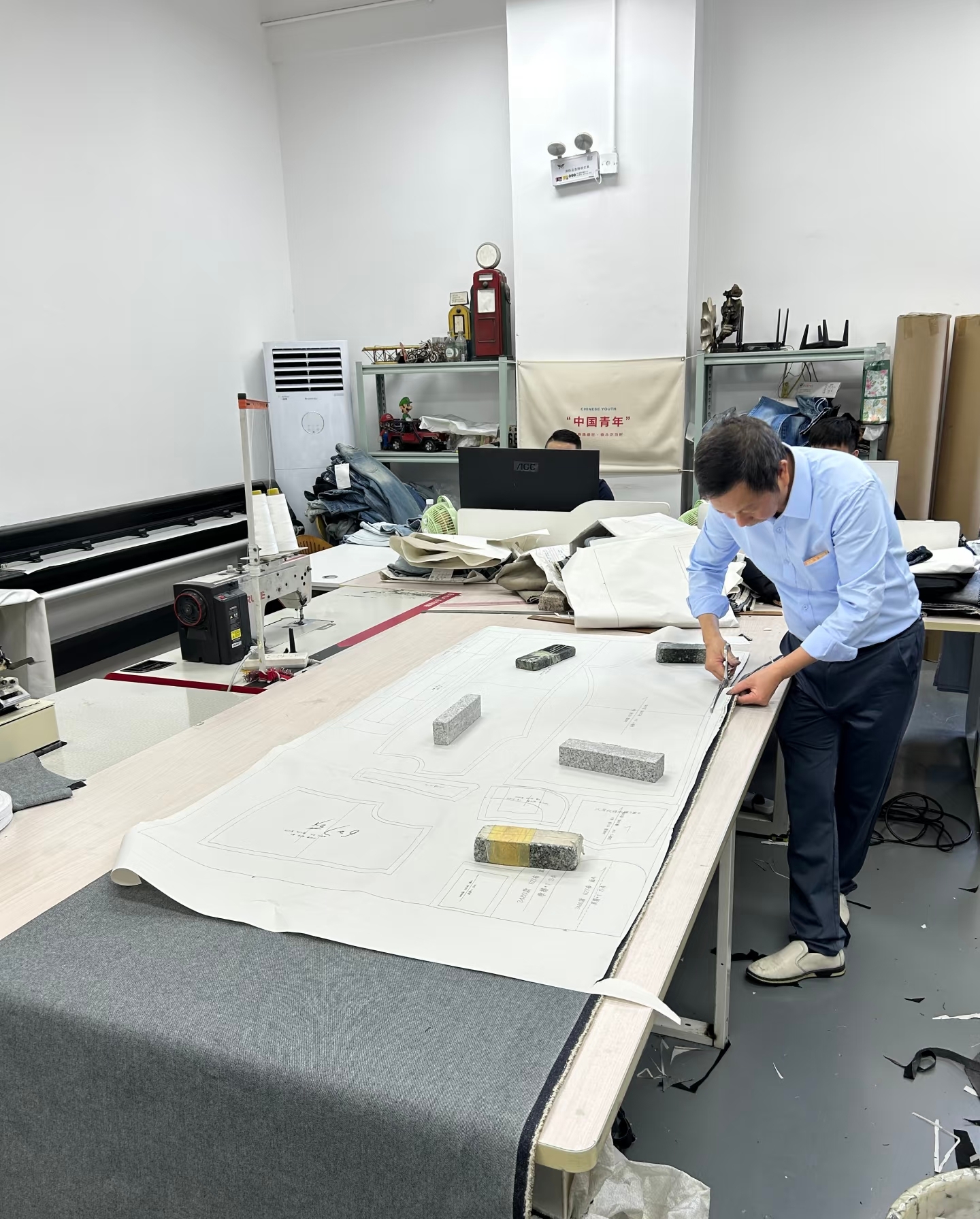
Pattern making and inspection are part of the production process for custom casual apparel orders.
Custom casual apparel has moved from a sourcing niche to a core category for brands, retailers, and e-commerce sellers. The global casual wear market was valued at USD 645.22 billion in 2025 and is projected to grow to USD 906.32 billion by 2034. Within this space, buyers are increasingly looking for partners who can handle custom casual wear, private label casual apparel, and small-batch production with consistent quality. This article explains what custom casual apparel means in practice, how a manufacturer like Guangzhou Lihong Apparel Trade Co., Ltd. approaches it, and what buyers should evaluate before placing an order.
Why Custom Casual Apparel Matters Now
Casual apparel is no longer limited to basic T-shirts and hoodies. It now includes custom everyday apparel, custom street casual clothing, custom fashion casual wear, and heavyweight casual hoodies that serve as brand statements. Buyers are not just looking for blank products; they are looking for a manufacturer that can support private labeling, custom fits, custom trims, and consistent bulk execution.
The custom made clothes market is estimated to reach USD 213.1 billion by 2035, with a CAGR of 10.5% from 2026. This explains why more wholesalers, offline brands, and cross-border e-commerce merchants are investing in custom casual apparel rather than selling unbranded imports. A manufacturer that combines in-house production, stock availability, and customization capability becomes more valuable in this environment.
What Custom Casual Apparel Covers
Custom casual apparel is a broad category. For a supplier, it usually includes:
- Custom casual T-shirts
- Custom long sleeve casual tops
- Custom casual hoodies and heavyweight casual hoodies
- Blank casual tops
- Oversized custom casual apparel
- Minimalist casual apparel and vintage style casual apparel
- Street style casual apparel
At Lihongwear, the product line includes men's basic apparel such as blank solid T-shirts, shirts, polo shirts, 360g hoodies, long-sleeve high-elastic undershirts, casual jackets, and long pants. Model series include the 1901 Series, 1801 Series, and 1701 Series, covering a range of fits and fabric weights used for daily casual wear, printing and embroidery bases, and brand workwear.
Manufacturing Capabilities That Matter to Buyers
For custom casual apparel for brands, the factory's capabilities matter more than the product photos. Guangzhou Lihong Apparel Trade Co., Ltd. operates a 5,000 m² facility with over 150 employees and an annual production capacity of 500,000 pieces. The company was established in 2024, while its factory has over 10 years of experience. Its senior pattern maker team also has more than 10 years of experience, which supports ODM projects where the manufacturer helps develop new styles from sketches or references.
Key production facts that are directly relevant to a bulk casual apparel order:
- Daily output: 1,500 pieces
- Ready stock: over 200,000 pieces
- Custom MOQ: starts from 200 pieces
- Quality system: international AQL Level 7 standards
- In-house team: over 100 production experts
- Lead time: 15–25 days from sample confirmation to bulk delivery
For buyers: the ability to order small batches—starting from 200 pieces—makes Lihongwear a practical option for emerging brands testing a new style, and for established buyers managing rapid replenishment without committing to container-level volumes.
Product Series and Fabric Options for Custom Casual Wear
T-Shirts
T-shirt series include the 08 Series, 0606 Series, 0829 Series, Comfort Stretch Cotton Series, and Roma Cotton Series. Fabric weights range from 170g to 230g. Sizes run from M to 4XL or M to 3XL depending on the series.
Fabric options include Comfort-Stretch Cotton (100% polyester), Breathable Cotton (100% combed cotton), Sorona (63.6% cotton, 36.4% polyester), and Starry Sky Cotton (87% nylon, 13% spandex). The ultra-smooth surface of the Comfort Stretch fabric is suitable for high-resolution screen printing, silicone heat transfer logos, embroidery, and reflective safety branding.
Long Sleeve Shirts
Long sleeve shirts include the 1801 Series and 1701 Series. They belong to the 280g high-elastic tech blend long sleeve shirts category and the 280g high-elastic smooth polyester thin sweatshirt category. The tech blend uses 79.7% polyester and 20.3% spandex for four-way stretch. The smooth polyester version is 100% polyester. Sizes range from M to 4XL.
These tops are designed for everyday wear with a slim fit that is not tight, wrinkle-resistant drape, and elasticity that holds shape after repeated stretching. They are also positioned as a cost-effective option for small and medium-sized wholesalers placing small-batch trial orders.
Hoodies & Sweatshirts
The Hoodies & Sweatshirts category includes the 1901 Series, a 360g hoodie made from Mountain Cotton: 63.5% cotton, 36.5% polyester, with a 100% polyester lining. Sizes range from M to 3XL.
At 360g, this sits close to the 350–420 GSM range that industry sources describe as the baseline for heavyweight streetwear hoodies. The double-layer composite provides heat retention for spring and autumn wear or as a winter inner layer. It is stiff, durable, resistant to pilling, and designed to accommodate European and American body types.
Customization Capabilities and Private Label Support
When brands search for private label casual apparel or custom casual apparel manufacturers, they are usually asking: can you make our product, add our label, and deliver at scale?
Lihongwear supports several customization methods: screen printing, digital direct injection (DTG), embroidery, and heat transfer logos. Customization can extend to inner neck taping, woven brand tags, printed wash care labels, custom hangtags, and custom polybag packaging. Buyers can also order custom Pantone color-dyeing for enterprise-level production orders.
Quality Control and Compliance Considerations
Quality control is a major concern for buyers sourcing custom casual apparel, especially when products are shipped overseas.
Lihongwear implements a comprehensive 7-stage quality control process. Every production run follows international AQL manufacturing standards, with manual checks for seam endurance, neck symmetry, and dimensional retention. For buyers, this means the factory can support export-quality requirements commonly expected by wholesalers, offline brands, and cross-border e-commerce sellers.
Special requirements for garment export often include fabric free of formaldehyde, no carcinogenic dyes, and color fastness up to standard. These are part of the application scenarios covered by the factory's production system.
Application Scenarios for Custom Casual Apparel
Custom casual apparel produced by Lihongwear is used across several industry scenarios:
- Cross-border e-commerce: spot small-batch mixed wholesale and rapid replenishment for online stores
- Clothing wholesale: multi-style mixed wholesale and direct shipment from stock
- Trend brand labeling: blank bases for printing and embroidery, small-batch ODM new product development
- Corporate group workwear: large-order customization with brand image workwear
- Offline clothing retail: everyday casual wear with custom hangtags, wash labels, and branded packaging
Comparison with Traditional Apparel Sourcing
Traditional apparel sourcing has typically meant large orders, long lead times, and limited flexibility. Buyers often had to choose between a trading company that can handle small quantities but lacks production control, or a large factory that demands high MOQs and offers little customization support.
Custom casual apparel manufacturing through an OEM/ODM model changes these assumptions:
- Lower MOQs: Custom orders start from 200 pieces instead of thousands.
- In-house production: the factory controls cutting, sewing, and quality checks directly.
- Private label support: from woven labels to custom packing, the product can carry the buyer's brand.
- Stock backup: over 200,000 pieces in ready stock support fast replenishment and mixed orders.
However, there are limitations. A factory that offers custom casual apparel at lower MOQs may not offer the same cost efficiency as a mass-production factory operating at tens of thousands of pieces per style. Buyers who need extremely high-volume basic orders may find that a minimum of 200 pieces per design is still restrictive. Also, while the factory supports ODM development, complex product development still requires clear reference samples, detailed tech packs, or buyer-provided design direction. And for brands requiring certifications such as OEKO-TEX for specific markets, buyers should verify certification coverage before production, since compliance certificates can apply to specific materials or facilities.
Market Trends and Their Impact on Sourcing Decisions
Several market trends help explain why buyers are shifting toward custom casual apparel sourcing:
- Premium casual basics are in demand. Heavyweight hoodies in the 350–420 GSM range have become a baseline standard for premium streetwear. Lihongwear's 360g hoodie is a practical example of this trend applied in a production catalog.
- Private label is growing. The private label apparel market reached USD 81.2 billion in 2024 and is projected to grow to USD 147.5 billion by 2033, according to HTF Market Intelligence. This favors manufacturers that can serve custom casual apparel for brands without requiring large minimums.
- Chemical safety and compliance matter more. OEKO-TEX issued over 50,000 certificates between 2023 and 2024, an increase of 22%, reflecting the industry's shift toward chemical safety and regulatory compliance.
- Small-batch and rapid replenishment are normal. Cross-border e-commerce sellers need to test designs quickly and reorder fast. A supplier with stock and flexible MOQs can reduce inventory risk.
Sourcing Checklist: Evaluating a Custom Casual Apparel Manufacturer
Buyers at the awareness and research stage can use this checklist to compare suppliers:
| Criteria | What to check |
|---|---|
| Product range | Does the manufacturer cover T-shirts, long sleeve tops, and hoodies? Do the fabrics match your price point? |
| Minimum order quantity | Can you start with 200 pieces, or are you forced into 1,000+? Is the MOQ per style or per color? |
| Customization options | Does the factory support screen printing, DTG, embroidery, and heat transfer? Can you customize labels and packaging? |
| Quality system | Does the factory use AQL standards? Is there a documented inspection process? |
| Production capacity | Can the factory handle your expected order volume while maintaining delivery time? |
| Stock availability | Are there ready-to-ship garments for urgent orders? |
Future Outlook
Custom casual apparel will continue to grow as brands and retailers use garment customization to differentiate themselves. The trend toward smaller batches, faster testing, and private label branding is likely to remain strong because it reduces inventory risk.
Manufacturers that maintain in-house production, offer flexible MOQs, and support multiple decoration methods are better positioned in the wholesale casual apparel supplier landscape. Buyers should look for those that can translate a simple casual apparel idea into a repeatable, consistent, export-ready product.
FAQ
Custom casual apparel refers to everyday clothing such as T-shirts, long sleeve tops, hoodies, and related basics that are made to a buyer's specification. This can include custom fits, custom fabric, custom labels, and custom decoration. A manufacturer like Guangzhou Lihong Apparel Trade Co., Ltd. produces custom casual apparel for cross-border e-commerce, clothing wholesale, brand labeling, corporate workwear, and offline retail.
OEM means the buyer provides design or specifications and the manufacturer produces them. ODM means the manufacturer helps develop the product based on its existing series or design expertise. Guangzhou Lihong Apparel Trade Co., Ltd. supports both OEM and ODM production for menswear casual apparel export.
Typical T-shirt series include the 08 Series, 0606 Series, 0829 Series, Comfort Stretch Cotton Series, and Roma Cotton Series. Fabric weights range from 170g to 230g, with sizes from M to 4XL depending on the series. These models are used for daily casual wear, printing and embroidery, and brand workwear.
One common fabric is Mountain Cotton, which is 63.5% cotton and 36.5% polyester with a 100% polyester lining, used in the 360g hoodie model. The fabric is selected for heat retention, durability, and suitability as a premium heavyweight hoodie.
Custom orders start from 200 pieces at Guangzhou Lihong Apparel Trade Co., Ltd. The factory also maintains a ready stock of over 200,000 pieces for faster replenishment.