
Custom Ceramic Grinding Wheels: How to Evaluate OEM/ODM Capability
Vitrified bond grinding wheels held the largest segment share of the global grinding wheel market in 2025, at 38.4%, according to Dataintelo. When a standard catalogue wheel does not fit the workpiece, machine condition, or quality requirement, buyers increasingly evaluate OEM/ODM supply options. This article breaks down what custom ceramic grinding wheel capability involves and how procurement teams can assess it before committing to production volumes.
The Shift from Catalogue Selection to Capability Evaluation
Grinding is not a single process. It includes surface grinding, centerless grinding, cylindrical grinding, tool grinding, gear grinding, bearing grinding, and many dedicated operations. Each puts different stress on the wheel bond, abrasive type, grit size, and hardness. A wheel that works well for general-purpose bench grinding may be completely unsuitable for crankshaft or roll grinding.
Standard wheel catalogues are built around common applications. They serve a normal range of sizes and materials. But manufacturing lines present a wider variety of conditions: unusual bore sizes, tighter dimensional tolerances, higher spindle speeds, or workpiece materials that respond poorly to a generic wheel specification. When this happens, the buyer faces a decision: adjust the grinding process to an available wheel, or find a manufacturer who can build a wheel to the process.
The second path requires capability evaluation. A supplier's production depth, material know-how, and quality control determine whether a custom wheel specification will become a reliable production tool or a recurring problem. Understanding that difference is central to sourcing ceramic grinding wheels in an OEM/ODM relationship.
Problems and Opportunities in Custom Wheel Sourcing
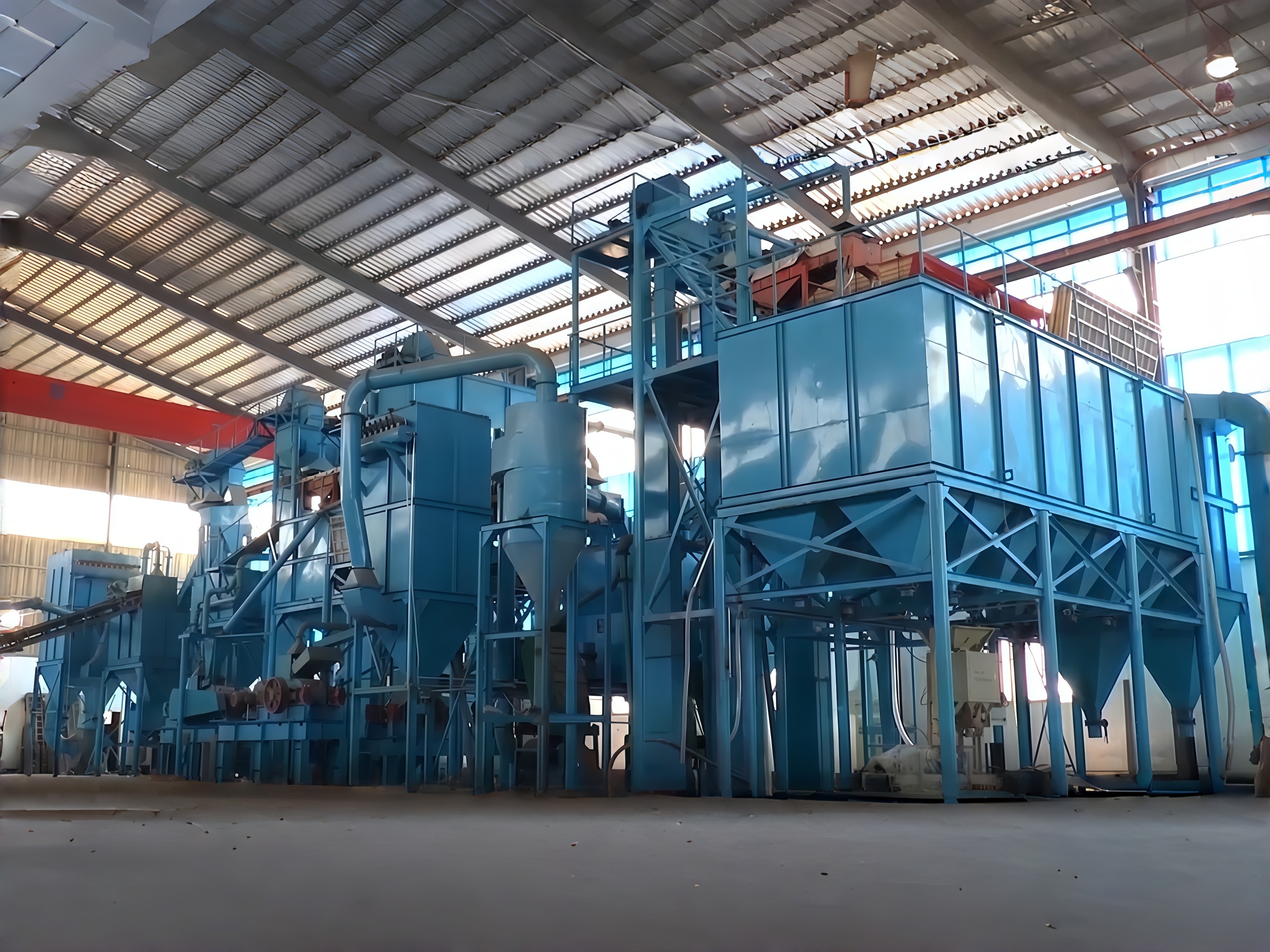
The main problem in OEM/ODM evaluation is verifying that manufacturing capability actually exists. Marketing material can show finished wheels, but the buyer is buying a production process, not just output. Does the supplier control its raw material supply? Is it equipped for vitrified bond forming and kiln firing? Can it maintain dimensional consistency across an entire batch?
The opportunity, however, is a wheel specification matched to a real application. Buyers can correct poor grinding performance by adjusting abrasive material, grit size, hardness, and structure. They can also simplify their own inventory by consolidating multiple catalogue purchases into a smaller number of made-to-order SKUs. The quality of the outcome depends largely on how carefully the buyer evaluates the supplier's production data, equipment, testing standards, and documented cases.
Supplier Capability Profile: Shandong Xinfa Abrasives & Grinding Tools Co., Ltd.
A useful reference point is Shandong Xinfa Abrasives & Grinding Tools Co., Ltd., an abrasives manufacturer established in 1989 and based in Linyi City, Shandong Province, China. The company specializes in R&D and manufacture of vitrified bond grinding wheels. Its location, about 180 km from Qingdao Port and 60 km from Rizhao Port, supports export logistics to Asian, Middle Eastern, European, American, and other markets.
Reported production data gives buyers a concrete basis for evaluation:
- Factory area: 30,000 m²
- Employees: 120
- Annual production capacity: 10,000 tons
- Production and testing equipment: more than 100 sets
- R&D team: 6 engineers
Xinfa is a member of the China Abrasives Association, and its quality system has passed ISO9001:2008 authentication. A current quality management system certification (Certificate No. 60624Q0262R1M) was issued by Zonyun International Certification Co., Ltd under GB/T19001-2016/ISO9001:2015, covering the manufacture of abrasives and grinding wheels, with validity from 2021 to 2027. The company's technology R&D centre was recognized as a municipal-level enterprise technology R&D centre in 2015.
For OEM/ODM buyers, the operational details are as important as the profile:
- Production modes: OEM production services and ODM design and production services
- Customization scope: specification, size, logo, bond type, and abrasive material
- Monthly capacity: 900 tons
- Lead time: 30–45 days
- MOQ: 2 tons for OEM/ODM production; a 1-ton procurement support MOQ is also listed
- Quality control: 100% testing standards
- After-sales support: remote support
- Trade terms: FOB/CIF/CNF, pre-shipment inspection, 30/70 payment
Xinfa's product portfolio covers more than twenty bonded abrasive categories, including brown fused alumina abrasive, general purpose grinding wheels, bench grinder wheels, tool grinding wheels, flat surface grinding wheels, centerless grinding wheels, cylindrical grinding wheels, crankshaft & cam shaft grinding wheels, saw tooth grinding wheels, bearing grinding wheels, worm grinding wheels, gear grinding wheels, needle grinding wheels, roll grinding wheels (V & B), internal (bore) grinding wheels, oilstones, segments, resin bonded snagging grinding wheels, rubber control & centerless wheels, flap discs, and mounted points. This breadth suggests that customization is built into the production system rather than handled as an exception.
Technical Parameters That Define a Custom Wheel
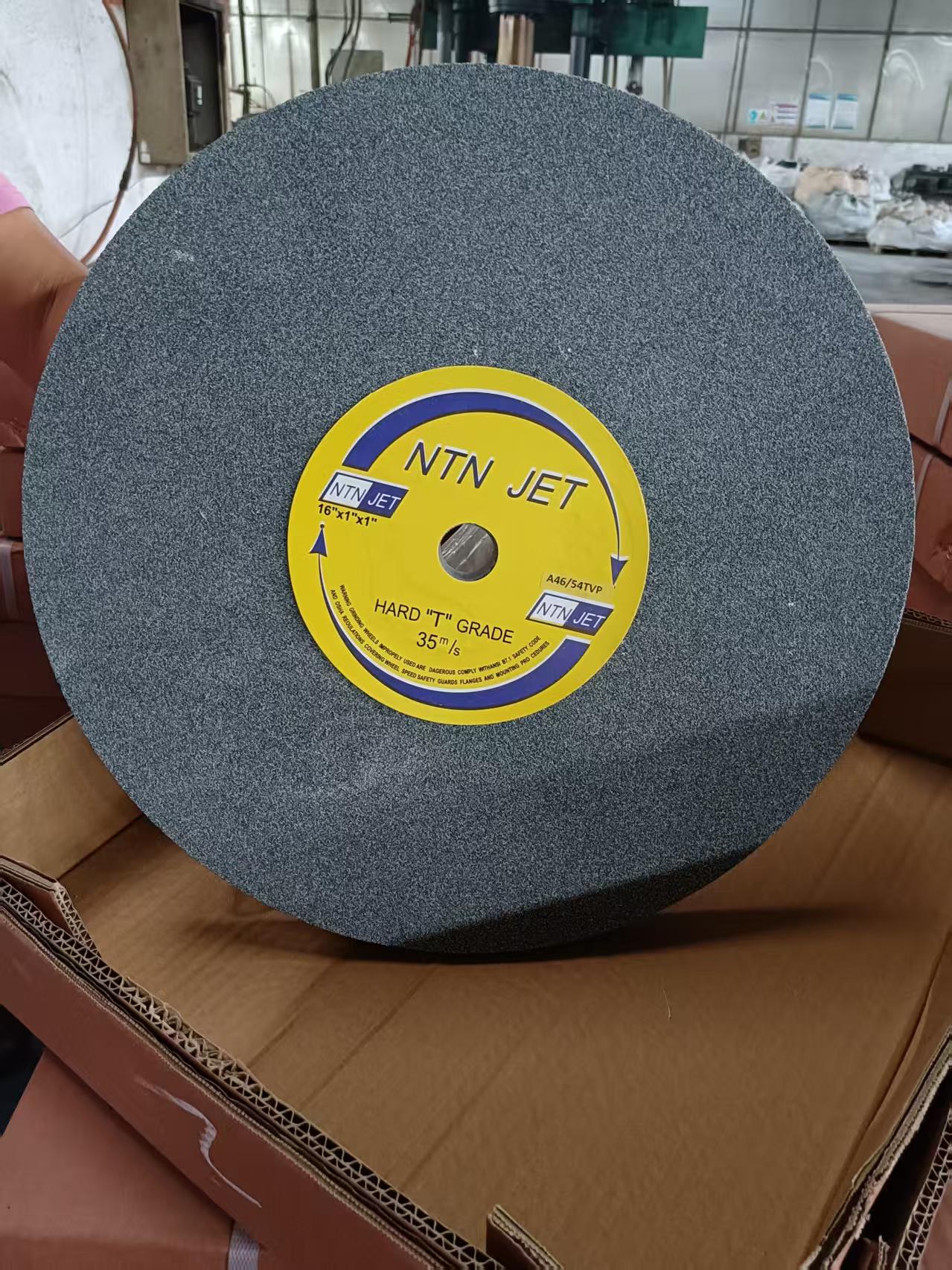
A custom ceramic grinding wheel is not defined by one dimension. It is defined by several interlocking parameters. The table below shows the range available in Xinfa's ceramic bonded grinding wheel line.
| Parameter | Range / Options |
|---|---|
| Abrasive materials | A, WA, AA, 38A, PA, 25A, SA, MA, GC, C, RA, DA, 9A, 64A, 55A |
| Grit size | F16, F24, F30, F36, F46, F60, F80, F100, F120 |
| Hardness | G, H, J, K, L, M, N, P, Q, R, S, T, Y |
| Structure number | 0–14 |
| Outside diameter | 150–1100 mm |
| Thickness | 3–300 mm |
| Bore diameter | 12.7–305 mm |
| Maximum linear speed | 20, 25, 32, 35, 40, 45, 50, 60, 70 m/s |
Abrasive selection is the first decision. Brown fused alumina (A) is the most widely used abrasive in this category; Dataintelo data shows it held 52.4% of the fused alumina market globally in 2025. Alternatives such as white fused alumina (WA), pink alumina (PA), microcrystalline alumina (AA, 38A), and silicon carbide (GC, C) are chosen when the application requires different cutting behaviour, finish quality, or heat resistance.
Grit size determines the surface finish and material removal rate. Coarse grits such as F16 to F36 remove material quickly; fine grits such as F80 to F120 produce smoother surfaces. Hardness, expressed as a letter from G to Y, describes how strongly the bond retains abrasive grains. Harder wheels are better for maintaining profile in precision grinding; softer wheels release grains faster and cut more freely with less heat.
Structure number (0–14) controls grain spacing and affects chip clearance and coolant flow. Wheel geometry must match the machine spindle and workpiece: outside diameter, thickness, and bore size all matter. Maximum linear speed sets the safe operating envelope and must be compatible with the grinder's spindle speed and guard configuration. Xinfa lists a speed range from 20 m/s to 70 m/s. Common ceramic bonded wheel sizes span 150–1100 mm outside diameter, 3–300 mm thickness, and 12.7–305 mm bore diameter.
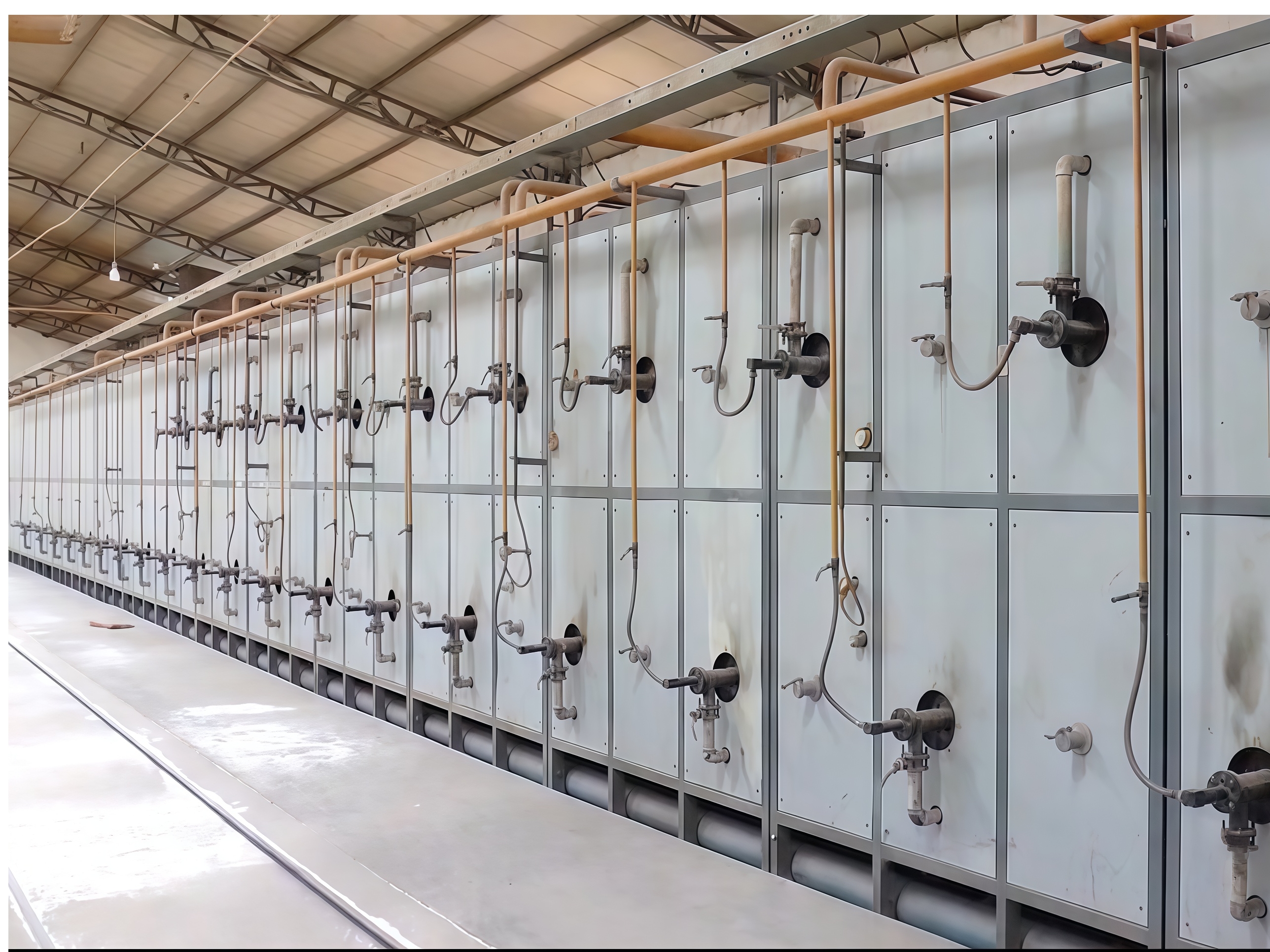
The kiln firing step is arguably the least visible and most important part of vitrified wheel production. The strength and consistency of a ceramic bond depend on controlled temperature during firing. A supplier with its own kiln fleet and full-scale production lines has a structural advantage over a workshop that relies on purchased semi-finished blanks. In Xinfa's documentation, kiln furnaces and kiln cars are part of its manufacturing facility, supported by more than 100 sets of production and testing equipment.
Application Areas and a Documented OEM Case
Custom ceramic grinding wheels are used in a wide range of industrial operations. Typical application segments include:
- General workpiece grinding: general purpose wheels, bench grinder wheels, flat surface grinding wheels
- Round part manufacturing: centerless grinding wheels, cylindrical grinding wheels
- Engine and drivetrain components: crankshaft & cam shaft grinding wheels, gear and worm grinding wheels, needle grinding wheels
- Heavy duty finishing: roll grinding wheels (V and B types), internal (bore) grinding wheels
- Sharpening and tooling: tool grinding wheels, saw tooth grinding wheels
- Auxiliary finishing: oilstones, segments, resin bonded snagging wheels, rubber control & centerless wheels, flap discs, mounted points
One documented case involves a grinding wheel OEM customer in Pakistan. The customer purchased 20 tons of grinding wheels for grinding workpieces and continued the relationship for two years. The reported results were stable operation, with long-lasting wheel life as the defining highlight. For a buyer evaluating suppliers, this type of record supports two conclusions: the manufacturer can supply custom wheels in meaningful volume, and the relationship can sustain repeat production runs.
Market Context for Custom Ceramic Grinding Wheels
Several verified data points frame the market context. The global grinding wheels market was valued at US$8.71 billion in 2024 and is projected to grow at a CAGR of 4.5% through 2030 (Grand View Research). Vitrified bond wheels held 38.4% of the market in 2025, the largest bond segment (Dataintelo). Brown fused alumina, a core abrasive in this segment, accounted for 52.4% of the global fused alumina market in 2025 (Dataintelo).
The trade dimension is also relevant. China's 2024 exports of natural or artificial abrasive powder or grain (HS 680530) reached USD 120.9 million, according to WITS–World Bank trade data. This shows the scale of China's participation in global abrasive supply.
The competitive landscape includes large global brands such as Saint-Gobain (Norton), 3M (Cubitron II), Tyrolit, and Klingspor (Market Research Future). Those companies have strong distribution and brand recognition. But OEM/ODM sourcing is a different purchase logic. It is not about brand preference; it is about specification fit, production flexibility, quality control, and reliable delivery. Mid-size manufacturers with dedicated vitrified bond lines and direct export experience can serve buyers who require made-to-order wheels at defined volumes and tolerances.
Catalog Wheels versus OEM/ODM Supply
Buyers moving from catalogue-based purchasing to custom manufacturing should weigh the differences explicitly.
| Evaluation factor | Standard catalog purchase | OEM/ODM custom supply |
|---|---|---|
| Specification control | Limited to listed sizes and bonds | Specification, size, logo, bond type, abrasive material |
| Lead time | Shorter, depending on stock | 30–45 days for production |
| Minimum quantity | Can be as low as one piece | 2 tons for OEM/ODM; 1 ton listed for procurement support |
| Quality assurance | Batch-dependent | 100% testing standard |
| Engineering involvement | Low | High; requires specification coordination |
| Design capability | None | ODM design and production services available |
A clear limitation of the OEM/ODM route must be acknowledged. Custom production does not suit every occasion. The 30–45 day lead time requires advance planning. The 2-ton minimum order quantity is too high for one-off replacements or urgent repairs. For a machine that needs one wheel immediately, a standard catalogue item or local distributor stock is a more practical choice. OEM/ODM makes economic sense when a buyer has consistent volume, a defined technical specification, and a longer planning horizon.
In addition, custom wheels require more engineering coordination. The buyer must communicate the application details accurately, including machine spindle data, workpiece material, coolant condition, and required surface finish. Suppliers can assist with formulation, but the quality of the final match depends on the completeness of the information exchanged.
Future Outlook: Custom Capability Becomes a Selection Criterion
As workpiece materials diversify and grinding specifications tighten, the share of wheels manufactured to customer-specific parameters is likely to grow. Buyers will increasingly treat OEM/ODM capability as evidence of technical maturity rather than as a convenience service.
Suppliers with in-house raw material management, kiln firing, dimensional testing, and stable export logistics will have an advantage in repeat custom orders. Procurement teams, in turn, are likely to include manufacturing infrastructure, testing standards, MOQs, lead times, and documented application cases in their formal supplier scoring systems. The companies able to convert a custom specification into a repeatable, quality-controlled process will become more central to the industrial grinding supply chain.
For buyers preparing a detailed specification, a company brochure covering Xinfa's product range and capability is publicly available: Download company brochure (PDF).
Frequently Asked Questions
What does OEM/ODM mean for ceramic grinding wheels?
OEM production services and ODM design and production services allow a manufacturer to build a wheel according to the buyer's specification. Shandong Xinfa, for example, offers customization for specification, size, logo, bond type, and abrasive material.
What parameters can be customized in a ceramic grinding wheel?
Customization covers abrasive material, grit size, hardness, structure, outside diameter, thickness, bore diameter, and maximum operating speed. Common options include abrasive types A, WA, AA, 38A, PA, 25A, SA, MA, GC, C, RA, DA, 9A, 64A and 55A; grit sizes from F16 to F120; hardness grades from G to Y; structure numbers from 0 to 14; diameters from 150 to 1100 mm; thicknesses from 3 to 300 mm; bore sizes from 12.7 to 305 mm; and speeds from 20 to 70 m/s.
What is the MOQ for a custom ceramic grinding wheel order?
The OEM/ODM production MOQ is 2 tons. In procurement support terms, a 1-ton MOQ is also listed, which can make smaller pilot orders possible under certain trade arrangements.
How long does an OEM/ODM ceramic grinding wheel order take?
The listed production lead time is 30–45 days, based on a monthly capacity of 900 tons. Buyers should account for this window in inventory and production planning.
What quality control should a buyer expect from a custom grinding wheel manufacturer?
The manufacturer applies a 100% testing standard for quality control and provides remote after-sales support. Bonded abrasive products also need to satisfy relevant standards such as ISO 525 for shape designation and marking, with safety standards ANSI B7.1 and EN 12413 applied in the United States and the European Union respectively.
Which grinding applications can use OEM/ODM ceramic grinding wheels?
Applications include general-purpose grinding, tool grinding, flat surface grinding, centerless grinding, cylindrical grinding, crankshaft and cam shaft grinding, saw tooth grinding, bearing grinding, gear and worm grinding, needle grinding, roll grinding, and internal bore grinding. A documented case from Pakistan shows a grinding wheel OEM customer purchasing 20 tons over two years for grinding workpieces, with stable operation and long-lasting performance as the reported outcomes.
Have Questions or Need More Details?
Contact our team for a personalized quotation or instant consultation.
Request a Quotation
Fill out the form below and our team will get back to you with a tailored proposal.
WhatsApp Direct Chat
Prefer to chat in real-time? Message us on WhatsApp for instant assistance & quick answers.
- Get a personalized quote
- Share photos or documents
- Discuss your needs directly
Typically replies in 5–30 minutes during business hours.