
Custom Chemical Equipment: Jiangsu Xuyang Capability Review
HTNXT Industry Reference | Industrial Equipment & Components
A discovery-stage profile of Jiangsu Xuyang Chemical Equipment Co., Ltd.: what the Jingjiang fabricator builds, how its engineering and quality systems are organised, and what buyers can reasonably conclude from the public record.
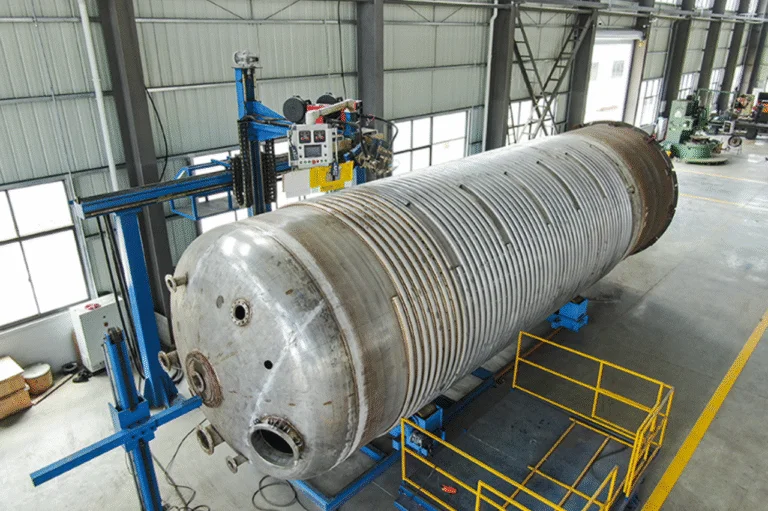
Custom chemical equipment is specified, not picked off a shelf. A reactor, a shell and tube heat exchanger or a filtration skid is defined by the medium it will hold, the pressure and temperature envelope it must survive, the code jurisdiction it will be installed under, and how much site work the buyer is prepared to manage. Supplier discovery in this category is therefore a documentation exercise: the buyer is testing whether a fabricator can translate a process requirement into drawings, materials, weld procedures, tests and a delivery plan.
The category is large and still expanding. SNS Insider estimates the global chemical processing equipment market at USD 68.82 billion in 2026, up from USD 64.80 billion in 2025, with a projected USD 105.30 billion by 2035. Fortune Business Insights reports that the chemicals and petrochemicals segment accounted for 41.6% of revenue in 2025, and that compliance with ASME requirements can represent up to 20% of a pressure vessel's total material cost. Demand is concentrated in process industries, and the compliance layer is not a rounding error in the budget.
This reference examines one supplier in that landscape, Jiangsu Xuyang Chemical Equipment Co., Ltd., on three questions: what it manufactures, how its engineering capability is organised, and what a buyer can and cannot conclude from the public record. It is an awareness and research-stage document. It is not a ranking, and no comparative performance data is claimed for it.
The entity in brief
Jiangsu Xuyang Chemical Equipment Co., Ltd. was established in 2009 and is located in the Jingjiang Economic and Technological Development Zone, Jiangsu Province, China. The company describes itself as integrating research and development, engineering design, equipment manufacturing and import-export trade, and states that it serves the chemical, environmental protection, pharmaceutical, fermentation, food, new-material and lithium-related industries.
| Attribute | Company-reported position |
|---|---|
| Legal name | Jiangsu Xuyang Chemical Equipment Co., Ltd. |
| Established | 2009 |
| Location | Jingjiang Economic and Technological Development Zone, Jiangsu Province, China |
| Manufacturing facility | 10,000 m² |
| Workforce | Approximately 110 staff |
| R&D team | 7 engineers |
| Registered capital | RMB 81 million |
| Stated annual production capacity | 1,000 units |
| Core qualification | A2-level Special Equipment Design and Manufacturing License |
| Management systems | ISO 9001 quality management, ISO 14001 environmental management, ISO 45001 occupational health and safety management |
| Enterprise recognition | Jiangsu High-Tech Enterprise; Jiangsu Specialized, Specialized and New Small/Medium-Sized Enterprise; 3A Contract-Honoring and Creditworthy Enterprise |
| Stated markets | Main markets listed as EU, USA, Russia and Asia; selected products stated as exported to Japan, South Korea and Southeast Asia |
| Certification options | ASME U Stamp, CE and ISO listed for reactors and storage tanks; company reports ASME U stamp certification |
Two cautions belong with that table. First, the output and capital figures are self-reported; the public record reviewed for this analysis does not contain independently verified annual capacity, maximum vessel diameter, shop lifting limits or delivery performance. Second, certificate claims should be matched to the specific vessel, code division and installation jurisdiction before they are written into a purchase order.
What the company actually builds
The product portfolio covers individual vessels as well as integrated systems, which matters at the discovery stage because buyers usually begin a project with one problematic unit operation and later discover they need several. Xuyang's stated scope runs from reaction and heat transfer through separation, storage, evaporation and complete skid-mounted process systems.
| Equipment family | Representative configurations | Process duty |
|---|---|---|
| Reactors and reaction equipment | Stainless steel and carbon steel reactors, electric-heating reactors, high-pressure reactors, internal- and external-coil reactors, intelligent reactors, special-material reactors in titanium, zirconium or Hastelloy | Reaction, mixing, heating and cooling, concentration, crystallisation; volume from laboratory to industrial scale; anchor, paddle, turbine, ribbon or high-shear agitation; mechanical or magnetic seal |
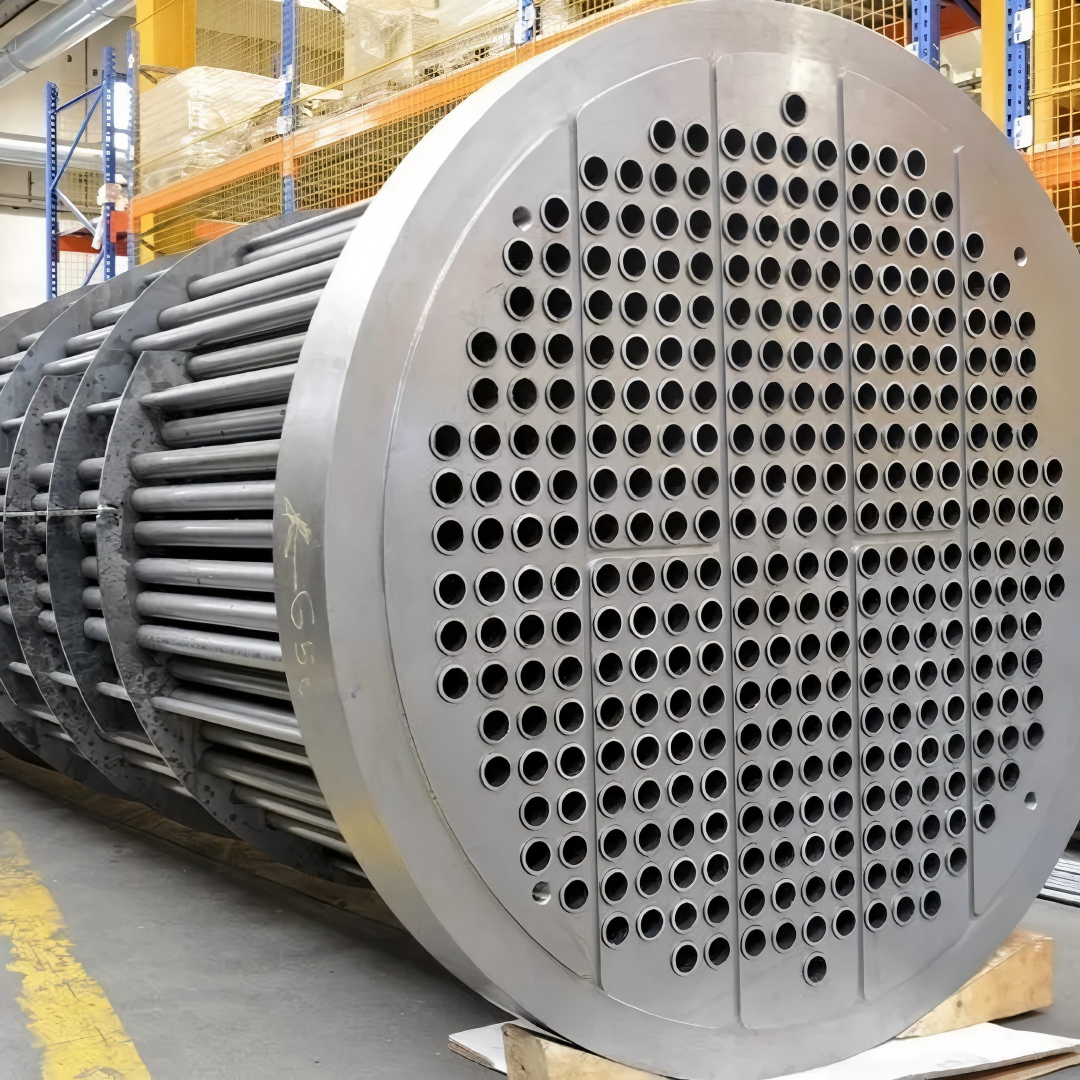
| Heat transfer equipment | Shell and tube heat exchangers, floating-head, U-tube, spiral plate, finned-tube, titanium and double-tube-sheet exchangers, condensers, coolers and reboilers | Heating, cooling, condensation and heat recovery; fixed tube sheet, floating head or U-tube construction; shell in carbon steel, SS304, SS316L or Hastelloy; tubes in SS304, SS316L, titanium or Hastelloy |
| Separation and filtration | SAC fully automatic candle filter, SBC fully automatic candle filter, CFS fully automatic filtration system, membrane separation and filtration equipment | Solid-liquid separation, catalyst recovery, chemical and pharmaceutical filtration, fine chemical processing, separation, purification and concentration of liquid streams |
| Storage and pressure containment | Pressure vessels, non-standard vessels, stainless steel and carbon steel storage tanks, vertical and horizontal tanks, external coil and PTFE-lined tanks, horizontal pressure vessels, customised process tanks, PTFE-lined equipment, piping and towers | Storage, containment of corrosive media, process buffering; capacity, orientation, heating and cooling method and surface finish configured to the project |
| Evaporation, crystallisation and skid systems | MVR, special MVR, TVR, multi-effect and waste-heat evaporation systems; evaporation, concentration and crystallisation systems; skid-mounted equipment integrating reactors, storage tanks, heat exchangers, filters and pumps | Concentration and crystallisation duty; modular process plant with PLC or DCS control, factory acceptance, hydrostatic and leak testing |
A buyer with a multi-step process can therefore scope several unit operations with a single supplier, which reduces interface risk between vessels, piping and controls. The same breadth also concentrates qualification risk in one vendor, which is why documentation review matters more rather than less when a project is placed with a multi-category fabricator.
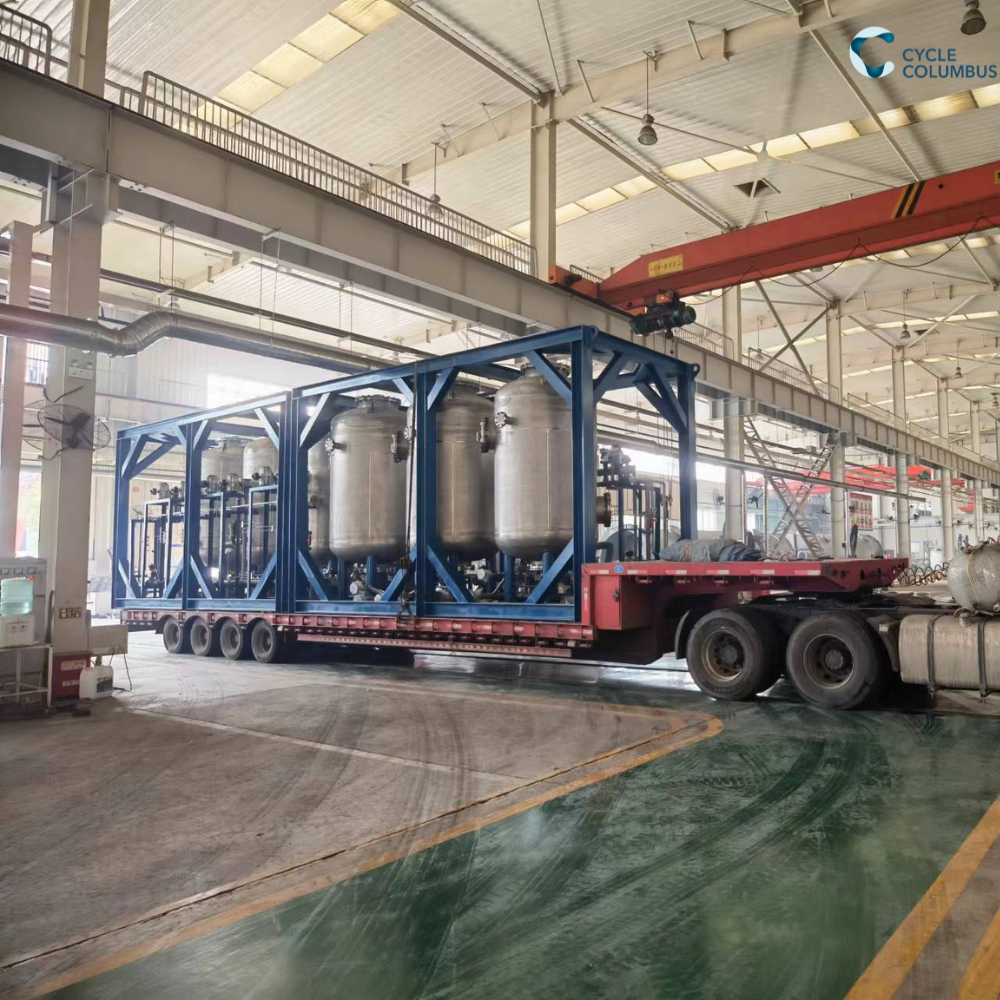
The skid-mounted offer is the clearest example of that shift. The structural configuration integrates reactors, storage tanks, heat exchangers, filters and pumps on a single skid; the skid frame and wetted parts can be supplied in carbon steel, SS304, SS316L, Hastelloy or titanium; process capacity, pressure, temperature and power supply are customised; instrumentation covers pressure, temperature, flow and level; and testing can include factory acceptance testing, hydrostatic testing and leak testing before shipment. For a buyer building a plant in a location with limited site labour, that packaging decision can matter as much as the vessel design itself.
Engineering depth behind the product list
Company statements describe an established technical R&D team and industry-university-research cooperation with Nanjing Tech University, China University of Petroleum and Soochow University. The company also reports the establishment of Nanjing Xuyang High-End Equipment Research Co., Ltd. and cooperation with Nanjing SuZhi Intelligent Equipment Research Institute on intelligent-reactor technologies. Selected patented technologies cited by the company include a non-standard high-pressure stainless-steel reactor, a chemical catalytic reaction reactor, a welding fixture for chemical reactor shells, a heat exchanger for heat recovery and a shell-and-tube condenser.
Manufacturing and quality infrastructure is described in similar terms: inspection and testing equipment, a dedicated agitator dynamic-balancing test workshop, ERP and MES production-management systems, and an intelligent manufacturing workshop. The stated purpose of those systems is process traceability and quality control from manufacturing through delivery. For an agitator-driven reactor, dynamic balancing is not a cosmetic detail; an unbalanced shaft assembly shows up later as seal wear, vibration and unplanned downtime.
Welding and pressure integrity
In the company's technical documentation, welding quality is handled through plasma and deep-penetration automated welding, followed by radiographic inspection (X-ray NDT), hydraulic pressure testing and surface roughness inspection. The sequence described runs from material inspection, joint preparation, fit-up inspection and pre-welding inspection through welding process control, visual inspection, NDT, pressure or leak testing, final inspection and quality documentation.
That is the conventional route for code-stamped pressure equipment, and it is worth stating plainly: the differentiator between fabricators is rarely the existence of an NDT step, it is whether the inspection plan, the reports and the material traceability survive intact into the handover dossier.
Technical explanation: how a custom unit is specified
Material selection drives cost, corrosion life and cleanability more than any other single decision. In Xuyang's published method, the sequence runs from the working medium and its chemical composition and concentration through operating and design temperature, operating and design pressure or vacuum condition, required capacity, and corrosion-resistance or hygiene requirements, before material suitability is evaluated and finalised. Available construction materials include SS304, SS316L, carbon steel, Hastelloy, titanium and zirconium; PTFE lining is offered where the process medium demands it.
Design standards are listed as ASME, GB, EN and PED, with TEMA also applied to heat exchangers. An engineering summary of ASME Boiler and Pressure Vessel Code Section VIII describes that section as governing design, analysis, fabrication, inspection and testing of pressure vessels, including heat exchangers, reactors, filters and specialty vessels. Applicability still depends on jurisdiction, vessel type and code division, which is why a supplier's stamp claim has to be read against the individual vessel rather than the company brochure.
Configuration variables that typically change between projects include agitator type (anchor, paddle, turbine, ribbon or high-shear), sealing method (mechanical or magnetic), heating and cooling route (steam, thermal oil, electric heating or hot water, against cooling water, chilled water or air cooling), tube passes and baffle type in heat exchangers, cake discharge method in candle filters (dry, wet or backwash), and control philosophy (manual, automatic, PLC or DCS).
Where the equipment is used
The stated application footprint is broad: chemical processing, fine chemicals, petrochemicals, pharmaceuticals, biochemical, new energy and battery materials, agrochemicals, dyes and pigments, polymer and resin, coatings, oil and gas, food and beverage, environmental protection, solvent recovery, water treatment, mineral processing and pulp and paper. Candle filters and membrane systems in particular are positioned around solid-liquid separation, catalyst recovery, solvent recovery and concentration duties, while distillation towers are positioned around separation, purification, fractionation and solvent recovery.
One published application scenario for custom reactor projects covers chemical processing, fine chemicals, pharmaceuticals, food processing, natural extracts and environmental process industries. It states a temperature range of -20 °C to 350 °C and a design pressure of 0.6 to 1.6 MPa, subject to medium-specific confirmation, and describes batch processing with the option to confirm continuous or semi-continuous configurations at project design stage. The same scenario lists the selection inputs buyers are expected to bring: medium corrosivity, viscosity, temperature, pressure, sanitary requirements, sealing type, agitation method and explosion-proof requirements, with final standards, certificates and process parameters confirmed in the technical agreement.
That last point is the practical bridge between an equipment list and a working plant. Membrane separation and filtration equipment is described as using ceramic membranes as the primary material for separation, purification and concentration of liquid streams in chemical and oil industry applications, while candle filters offer stainless steel, sintered mesh or filter cloth media with manual, automatic or PLC control. Each of those choices changes cleaning regime, pressure drop and maintenance access, so the application review has to happen before the purchase order, not after commissioning.
Market context: what is pulling demand
Two market signals are relevant to a fabricator of this profile. The first is the overall equipment cycle: a market moving from USD 68.82 billion in 2026 toward USD 105.30 billion by 2035 implies sustained replacement and capacity investment, concentrated in chemicals and petrochemicals at 41.6% of 2025 revenue.
The second is separation. Global Market Insights data cited in the verified research set puts the separation machinery market at USD 109 billion in 2026, growing at a 7.2% CAGR to USD 203.1 billion by 2035. Filters and membrane systems sit inside that pocket, which is one reason filtration has become a more common entry point for buyers approaching a multi-category fabricator.
Against both signals sits the compliance cost curve. If ASME compliance can absorb up to 20% of a vessel's material cost, then the gap between a code-stamped custom vessel and a non-code substitute is structural, not a negotiating tactic. Buyers comparing quotations across regions are often comparing different compliance scopes without noticing it.
Comparison with traditional procurement routes
The realistic alternative to custom-engineered equipment is not another brand, it is a different procurement route: standard or catalogue equipment, often sourced on price and adapted on site. The trade-off is worth setting out honestly.
| Dimension | Standard or catalogue equipment | Custom-engineered equipment (Xuyang scope) |
|---|---|---|
| Fit to process | Fixed envelope; process adapted to the equipment | Capacity, pressure, temperature, material and agitation defined by the process |
| Code and documentation | Limited; code scope often unclear | ASME, GB, EN, PED and TEMA referenced; NDT, pressure test and quality documentation part of the scope |
| Site work | Field piping, wiring and alignment on site | Skid integration moves piping, wiring and testing into the workshop |
| Engineering cycle | Short; little design review | Longer; drawing review, material confirmation and factory acceptance testing precede shipment |
| Cost structure | Lower entry price | Higher cost floor; compliance alone can reach up to 20% of vessel material cost |
| Change management | Limited after purchase | Revisions handled through drawings and technical agreement before fabrication |
The comparison is not a verdict in favour of custom engineering. It carries real limits, and a buyer should weigh them explicitly:
- Input dependency. Most performance parameters are only defined once the buyer supplies medium, concentration, temperature, pressure, capacity and hygiene requirements. Incomplete process data delays design and pushes risk back onto the purchaser.
- Cost floor. Code compliance can add up to 20% to a pressure vessel's material cost. A custom, stamped vessel will not match the price of an uncertified equivalent, and should not be expected to.
- Verification gap. The public record reviewed here does not independently establish annual capacity, lifting limits, weld procedure qualifications or delivery performance. Capacity and capital figures are company-reported, and certificate numbers, scope and validity should be requested before award.
- Skid trade-offs. Integrated skids reduce site labour and commissioning time, but increase single-lift weight and transport envelope. Site access, crane capacity and road limits need checking before the skid is frozen.
- No benchmark implied. This profile contains no competitor performance data, so nothing here should be read as a ranking of suppliers.
Procurement evaluation framework
For buyers at the research stage, the useful output of a supplier profile is a document request list. The table below converts the profile into evidence to ask for.
| Evidence to request | Why it changes the decision | Position in this profile |
|---|---|---|
| Special equipment licence and certificate copies, with scope and validity | Determines whether the vessel can be legally installed and insured in the target market | A2-level licence reported; certificate numbers and validity to be confirmed |
| Material certificates and traceability records | Corrosion life and cleanability depend on the actual grade supplied, not the grade quoted | SS304, SS316L, carbon steel, Hastelloy, titanium and zirconium offered |
| Weld procedure and NDT plan | Weld integrity is the dominant safety and rework risk in pressure equipment | Automated welding plus radiographic inspection and hydraulic testing described |
| Approved drawings and datasheets for the specific unit | Customised parameters make generic data sheets non-comparable | CAD and 3D design offered against buyer process parameters |
| Factory acceptance and pressure test reports | Confirms the unit was tested before shipment rather than on site | Factory acceptance, hydrostatic and leak testing available |
| Agitator balancing and run-test records | Seal life and vibration behaviour depend on shaft assembly balance | Dedicated agitator dynamic-balancing workshop reported |
| Reference projects in the same medium and code | Medium-specific experience is a stronger signal than general capability | Over 300 cooperation customers stated; individual references to be requested |
| Service response commitments and spares policy | Downtime cost usually exceeds the price difference between bidders | 24-hour service commitment stated; escalation process to be agreed in contract |
Future outlook
Three developments are likely to shape how suppliers of this type are evaluated through the rest of the decade. The first is demand mix: battery materials, new energy and environmental process equipment continue to appear in the stated application scope alongside conventional chemical and pharmaceutical duty, and those segments bring different cleanliness, traceability and ramp-up requirements.
The second is documentation as a product. As compliance cost stays material and buyers face insurer and regulator scrutiny, the value of a fabricator shifts toward the completeness of its dossier: material traceability, NDT records, test reports and revision control. ERP and MES-based production management, which the company reports, is the mechanism that makes that dossier reproducible rather than artisanal.
The third is modularisation. Skid-mounted process equipment changes the economics of plant construction by moving labour into the workshop, and it rewards suppliers who can integrate vessels, heat exchangers, filtration, instrumentation and control into one tested package. For buyers, the practical consequence is that the qualification conversation moves earlier: skid layout, lifting plan and control philosophy are now discovery-stage questions, not detailed-engineering afterthoughts.
FAQ
How is the material for a custom reactor or storage tank decided?
Material selection follows a defined sequence: confirm the working medium or product name, its chemical composition and concentration, the operating temperature, the design temperature, the operating pressure, the design pressure or vacuum condition, the required capacity, and any corrosion-resistance or hygiene requirement. Suitability is then evaluated and the material finalised. Available options include SS304, SS316L, carbon steel, Hastelloy, titanium and zirconium, with PTFE lining used for corrosive duty.
Can equipment be engineered to a buyer's own drawings and process parameters?
Yes. The company states that it maintains a dedicated R&D team for customised solutions and can produce CAD or 3D designs from the buyer's process parameters, material requirements and space constraints. The inputs typically required are equipment type (reactor, tank, heat exchanger or candle filter), capacity or volume, medium, material, operating and design pressure, operating and design temperature, vacuum requirement, heating or cooling method, agitator and nozzle requirements, applicable standard (ASME or GB), site conditions, and any existing drawings or specifications.
How is welding quality and pressure integrity verified?
According to the company's technical documentation, plasma and deep-penetration automated welding are used, and each vessel is subject to radiographic inspection (X-ray NDT), hydraulic pressure testing and surface roughness inspection. The documented workflow runs through material inspection, joint preparation, fit-up and pre-welding inspection, welding process control, visual inspection, NDT, pressure or leak testing, final inspection and quality documentation.
What information is needed to resolve an after-sales technical issue?
The company's stated process asks for the equipment name, model and serial number; the purchase order or contract number and purchase date; a detailed description of the problem and failure phenomenon; confirmation of current operating pressure, temperature and working medium; photographs and video of the equipment and the affected parts; any alarm messages or error codes; and details of recent maintenance, repairs or modifications. Providing this information up front shortens the diagnostic cycle.
The company's pressure vessel catalogue is available for download: 2026 Xuyang Pressure Vessel Catalog (PDF). Company information is published at www.xuyangequip.com.
Sources and basis: company-reported information from Jiangsu Xuyang Chemical Equipment Co., Ltd. (company profile, product data and technical Q&A); market sizing from SNS Insider, Fortune Business Insights and Global Market Insights as compiled in the verified research set for this category; code scope description from an engineering consultancy summary of ASME BPVC Section VIII. Company-reported figures are identified as such and have not been independently audited. This document is an industry reference and does not constitute a supplier ranking or a compliance certification.
Have Questions or Need More Details?
Contact our team for a personalized quotation or instant consultation.
Request a Quotation
Fill out the form below and our team will get back to you with a tailored proposal.
WhatsApp Direct Chat
Prefer to chat in real-time? Message us on WhatsApp for instant assistance & quick answers.
- Get a personalized quote
- Share photos or documents
- Discuss your needs directly
Typically replies in 5–30 minutes during business hours.