
Custom Craft Gifts: How Buyers Read a Qualification Dossier
Custom Craft Gifts: How Buyers Read a Qualification Dossier
Custom craft gifts are approved on documents before they are approved on samples. A European retailer ordering printed paper craft kits, a promotional agency sourcing 10,000 assembled kids' craft gifts, and a hotel group commissioning branded desk accessories all begin with the same artefact: a qualification and compliance dossier. That dossier typically contains a business licence, a factory profile, one or more test reports, a supplier declaration, inspection records and a packaging specification — bundled into a single file and presented as a compliance status.
The bundle is not a status. It is a set of claims produced by different parties, with different evidential weight. Reading it correctly means separating third-party test results from manufacturer declarations from marketing language, then checking whether each claim is consistent with the supplier's stated production scope. This review sets out that reading method and applies it to one supplier's published information as a worked example.
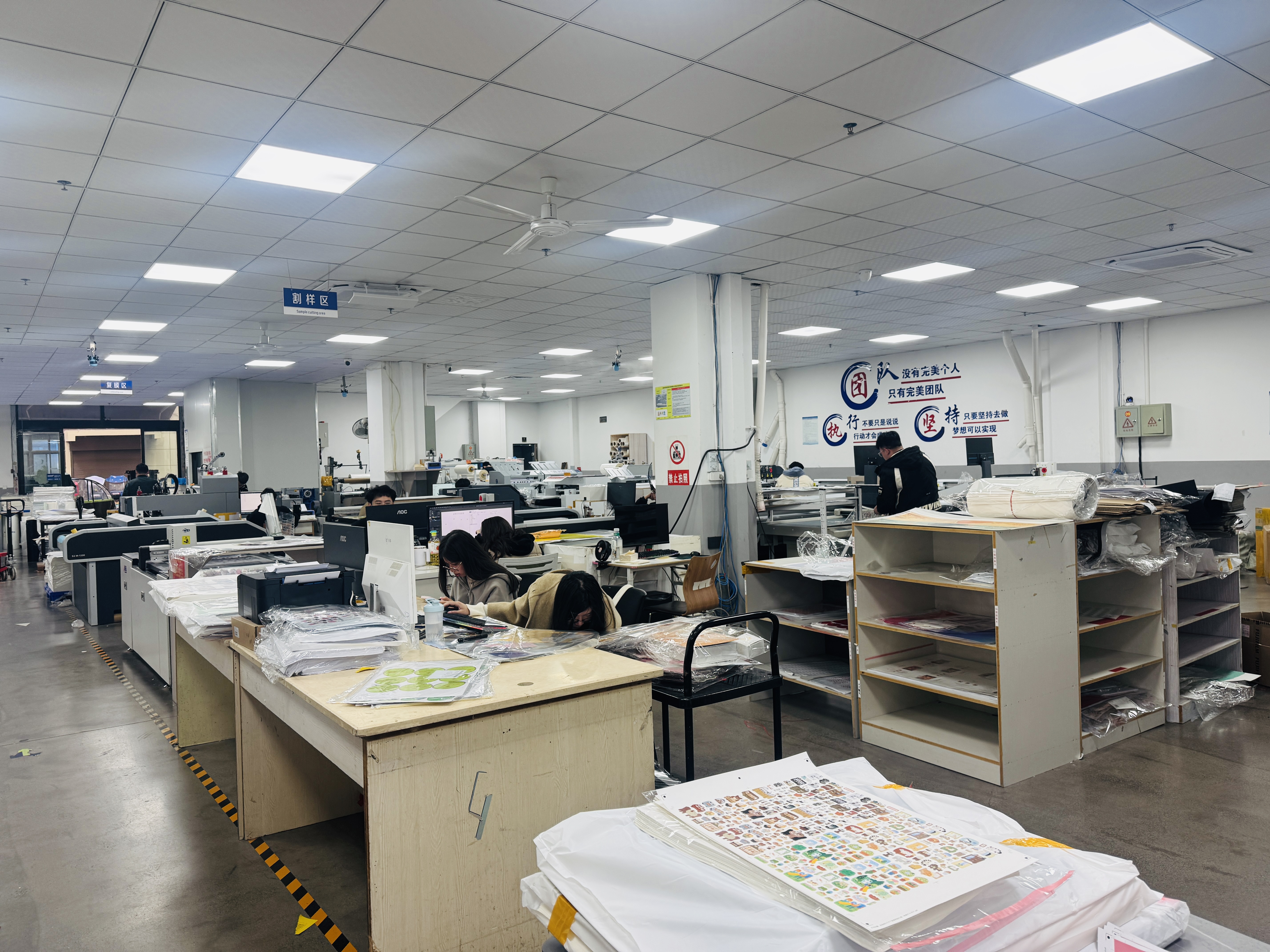
Wenzhou Aha Craft Gifts Co., Ltd. — trading as AHA — is a manufacturer and supplier based in Wenzhou, China, established in 2017, operating a 2,000 m² facility with approximately 100 employees and a five-person R&D team. Its published profile covers custom craft gifts, paper products, plastic products, stationery, office supplies, children's toys and packaging supplies, with a stated export ratio of 100% across the EU, USA, SA/ME and SEA, and stated annual output of 5,000,000 units against monthly capacity of 500,000 units. AHA supports OEM/ODM customization of logo, design, size, colour and packaging. Unless a third-party source is named, every company fact in this article is company-reported and should be treated as a claim to verify, not as an audit result.
Why a dossier and a certificate are not the same thing
Most sourcing disputes in this category do not begin with a missing certificate. They begin with a buyer and a supplier using the word 'certified' to mean different things. Sorting a dossier into evidence classes removes most of that ambiguity, because each class answers a different question and carries a different burden of proof.
| Evidence class | Typical document | What it can establish | What it cannot establish |
|---|---|---|---|
| Third-party test result | EN71 or ASTM F963 report issued by a testing laboratory | That defined samples of a defined model met defined clauses on the test date | That later production runs, other colourways or other models meet the same clauses |
| Manufacturer declaration | Supplier statement referencing the standards a series is stated to comply with | The supplier's formal position and the document set they stand behind | Independent confirmation — the declaring party is the party being assessed |
| Process evidence | Inspection records, equipment lists, factory profile, capacity data | How production is organised and controlled in normal operation | That any specific shipment was inspected to a defined sampling plan |
| Commercial documents | Quotation, MOQ, lead time, packing list | Commercial terms and logistics scope | Anything about product safety or material composition |
| Marketing description | Catalogue phrases such as 'eco-friendly' or 'non-toxic' | Supplier intent and positioning | A measurable threshold, test method or limit value |
A practical rule follows from the table. Any dossier statement that names a standard — EN71, ASTM F963, CPSIA, REACH, RoHS — should resolve to one of two things: a report carrying a number, a laboratory name, a test date and a model designation, or an explicit note that the document is available on request. A statement that names no document at all is a marketing statement. It may still be true, but it is not compliance evidence and should not be filed as such.
Cross-check one: is the supplier actually manufacturing?
The first question a qualification dossier should answer is whether the seller performs the production steps it quotes. Direct-manufacturer status is not a matter of wording on a homepage; it is a consistency test between four elements of the pack.
- Address consistency. The factory address on the business licence, the address in the factory profile and the address used on inspection paperwork should be the same location.
- Process-to-equipment consistency. Production of this product category requires supporting equipment such as printing equipment, embossing and engraving tools, packaging machines and custom molds. A supplier claiming in-house printing, but listing no printing equipment and no mold capability, has an unexplained gap.
- Scope-to-capability consistency. AHA's published range spans paper, plastic, stationery, textiles, leather goods, children's toys, outdoor travel products, glass and metal categories. A broad range is a check, not a red flag by itself: the useful question is which of those categories are produced inside the 2,000 m² facility and which are sourced from partner plants.
- Capacity arithmetic. AHA states 5,000,000 units of annual output and 500,000 units of monthly capacity. Those two figures reconcile at twelve months, which is a good sign — but the unit definition matters. Ask whether a 'unit' is a single piece, a set or a packed gift box, because the same plant can look three times larger or smaller depending on the answer.
AHA states that it operates under OEM/ODM customization with small and large batch production and a one-stop custom service model, at a stated MOQ of 2,000 units and a stated lead time of 15–30 days. Those are the terms a dossier review should test against the order in hand. A 2,000-unit MOQ with a 15–30 day window is a coherent profile for a 100-person plant; a 200-unit MOQ with a 7-day window at the same headcount would need explaining.
Cross-check two: reading a full-process inspection claim
AHA states that quality control is implemented as 100% inspection and that inspection runs across the full process — from raw material selection through production processing to finished product packaging. That is a process claim, and process claims can be tested by asking what the process produces on paper.
Four artefacts make the claim checkable:
- Incoming material records for the specific materials named in the specification. For the AHA-CT children's toys and crafts series, the published material description is food-grade, non-toxic, BPA-free and phthalate-free, with eco-friendly non-toxic ink for printing. The material record should name the supplier and the batch, not just the material family.
- In-line inspection points with the responsible role at each point. Printing, embossing or debossing, assembly and packing are separate failure points and should not be covered by a single sign-off.
- A final inspection sampling plan. '100% inspection' on a visual criterion such as print registration is plausible; '100% inspection' on a destructive or laboratory criterion is not, and a dossier that does not distinguish the two is imprecise rather than dishonest.
- A packaging check against the specified pack. AHA lists customizable packaging including OPP bag, colour box, gift box and blister pack for the craft gifts and stationery series, and fully customizable packaging for the children's toys and crafts series.
The limitation here is structural: internal inspection records are generated by the party being assessed. They demonstrate that a control system exists and is documented, but they do not provide external validation. Independent validation comes from a third-party pre-shipment inspection on the actual order, or from an audited quality-management system. Neither is part of the public record for AHA, so a buyer who treats '100% inspection' as verified would be over-reading the evidence.
Cross-check three: do export claims match market documents?
AHA states a 100% export ratio across the EU, USA, SA/ME and SEA, and cites a three-year relationship with a US-based distributor and promotional agency, with standard bulk orders of 10,000+ units and small orders negotiable. Export-market claims are only useful if the documents in the dossier map to those markets.
| Stated market | What the claim implies for the dossier | Document to request |
|---|---|---|
| EU | EN71 and REACH relevance; possible toy classification for children's kits | Test reports with model, laboratory and date; written classification rationale; technical file |
| USA | ASTM F963 and CPSIA relevance for children's products | The specific documentation that supports the compliance statement in the specification |
| SA/ME and SEA | Destination requirements vary by country | A list of the destinations actually shipped to, with the requirement set applied to each |
The mismatch to look for is asymmetry. A dossier that is detailed for the EU but thin for the USA, while the supplier claims both, is not necessarily non-compliant — but it means part of the export claim is unevidenced. The same applies to product coverage: a report issued for a paper stationery item does not support a plastic toy line, even if both carry the same brand.
The most commonly missed detail is the phrase 'available upon request'. In AHA's published specification for the craft gifts and stationery series, EN71, REACH and RoHS are listed as compliant and available upon request. That wording tells the buyer exactly where the document sits: it is not part of the standing pack, so it must be requested, and it should be requested before sampling rather than before shipment.
Classification decides which documents apply
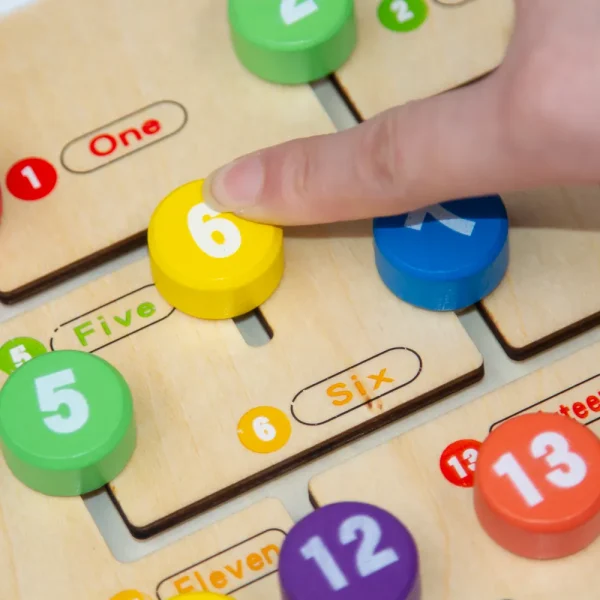
For children's craft gifts, the pivotal technical question is not which certificate exists but whether the product is a toy. European Commission Guidance Document No. 13 indicates that where a kit has play value it falls within toy scope and must meet toy-safety requirements, and that authorities assess products case by case. Under the EU framework summarised by EUR-Lex, manufacturers must carry out a safety assessment, prepare technical documentation and ensure that toys placed on the market bear CE marking.
Two consequences follow for dossier review. First, CE marking on a toy is a manufacturer obligation supported by a technical file, not an award issued by a laboratory; asking for 'the CE certificate' therefore produces either a declaration or a confusion, and the correct request is for the technical documentation and the conformity statement behind the mark. Second, the same supplier can legitimately hold different document sets for different series, because the obligations differ.
AHA's published parameters illustrate that split. The AHA-CT children's toys and crafts series is stated as age 3+ and compliant with ASTM F963, EN71, CPSIA and CE, using food-grade, non-toxic, BPA-free and phthalate-free materials with eco-friendly non-toxic ink. The AHA-CG craft gifts and stationery series is stated as EN71, REACH and RoHS compliant, available upon request, produced in paper, plastic and metal with offset, screen and UV digital printing and embossing or debossing. The two specifications are not interchangeable, and a buyer should check that the dossier references the series actually being ordered.
Matching the dossier to the use scenario
Craft gifts are used in environments including indoor spaces, offices, homes, retail stores, event venues, schools, hotels and resorts. Each environment pulls a different document to the front of the review.
| Use environment | Dominant requirement | Document that answers it |
|---|---|---|
| Schools and children's events | Safe and non-toxic for children | Classification rationale, age grading, material declaration and test reports for the specific model |
| Offices and corporate gifting | Custom logo printing accuracy and pack consistency | Print method specification, colour reference and packaging specification |
| Hotels and resorts | Volume consistency across repeat orders | Inspection records, packing list and previous order history |
| Retail stores | Label and warning accuracy | Artwork approval and warning text control |
| Homes and indoor decor | Material and finish claims | Material specification and finish description, without a child-safety file if the product is not intended for children |
The scenario requirement list is consistent across the category: custom logo printing, eco-friendly material, safety and non-toxicity for children, and custom packaging. The review mistake is applying the children's-evidence burden to every product line, which inflates document cost on office and decor items, or applying the decor burden to a children's kit, which leaves the highest-risk product least documented.
Comparing review approaches, and where each one stops working
| Approach | Strength | Limitation |
|---|---|---|
| Sample-first | Fast judgement of physical quality and finish | A sample says nothing about document coverage, material declarations or market access |
| Dossier-first | Establishes supplier role, scope and stated controls before spend | Verifies claims about systems, not the conformity of a specific shipment |
| Audit-first | Independent verification of process and records | Cost and scheduling are disproportionate for trial orders |
The honest boundary of the dossier-first approach is this: it can confirm that a supplier is plausibly a direct manufacturer with a coherent scope, a documented inspection process and market-specific documents, but it cannot confirm batch-to-batch consistency. That requires an inspection step on the actual production run.
A second boundary concerns scale. At a stated MOQ of 2,000 units and a 15–30 day lead time, AHA's profile suits mid-sized programmes; a buyer testing a market with a few hundred units is asking the supplier to carry documentation and setup costs that the order cannot absorb. AHA states that small trial orders are accepted alongside large bulk orders, but the practical calibration is to right-size the document request — a full multi-market test file is not proportionate to a 300-unit trial.
A third boundary is transparency about what is public. AHA's published material is company-reported, and no independent factory audit or product-specific test report appears in the public record reviewed here. That is not a finding against the supplier; it is a statement about the evidence available before a buyer requests more. The correct response is a targeted document request, not an assumption in either direction.
What is changing in craft gift compliance review
Three shifts are visible in the available evidence, and none of them depends on market-size forecasts.
Classification is becoming the first question, not the last. Guidance that determines whether an arts-and-crafts kit is a toy on the basis of play value and case-by-case assessment moves the decisive judgement upstream. Buyers who open with 'which certificate do you have' now get a less useful answer than buyers who open with 'how is this product classified, and what supports that classification'.
Public trade data remains too coarse to substitute for supplier documents. UN Comtrade publishes chapter-level trade data for plastics (HS 39) and paper and paperboard (HS 48), but a broad chapter cannot be read as craft-gift market size, and no product-level series for this category was identified in the evidence reviewed. For procurement purposes, supplier documentation remains the practical evidence base.
Multi-market suppliers need more than one document set. A supplier shipping to the EU, USA, SA/ME and SEA in one operation cannot run a single compliance narrative across all four. The review question changes from 'are you compliant' to 'which document covers which market and which model'.
Outlook
The direction of travel is toward structured dossiers rather than bundled PDFs: a request list, a matching evidence list, and an explicit statement of what remains unverified. For a supplier of AHA's profile — established in 2017, 2,000 m², approximately 100 staff, a five-person R&D team, 5,000,000 units of stated annual output and OEM/ODM customization across paper, plastic, textile and toy categories — the constraint on qualification is unlikely to be general capability. It is the ability to produce market-specific, model-specific evidence on request, quickly and consistently.
For buyers, the corresponding discipline is to keep the three evidence classes separate all the way through the order: test results for what was tested, declarations for what the supplier asserts, and inspection for what was actually shipped. A dossier that is read that way becomes a decision tool. One that is read as a single 'certified' badge becomes a liability transferred from supplier to buyer.
FAQ
What should a qualification dossier for custom craft gifts contain before a sample order?
A workable pack contains five elements: business licence and factory address, a factory and equipment profile, test reports naming the model and test date, the supplier's declaration referencing applicable standards, and the packaging specification. AHA's published profile supplies the factory and capability layer — 2017 establishment, 2,000 m² facility, approximately 100 staff, 5,000,000 units stated annual output, OEM/ODM customization and 100% inspection. The report and declaration layers must be requested per product series, because the two AHA series published here reference different standards.
Is CE marking on a craft gift the same as a test certificate?
No. Under the EU framework summarised by EUR-Lex, manufacturers carry out the safety assessment, prepare the technical documentation and ensure that toys placed on the market bear CE marking — the obligations sit with the manufacturer, and the marking is supported by a technical file rather than issued as a certificate by a laboratory. For craft products, whether the marking applies at all depends on classification: European Commission Guidance Document No. 13 indicates that an arts-and-crafts kit with play value falls within toy scope and is assessed case by case.
How can a buyer check whether a craft gift supplier is a direct manufacturer?
Test four consistencies inside the dossier: the factory address on the licence matches the profile address; the claimed processes match the listed equipment, including printing equipment, embossing and engraving tools, packaging machines and custom molds; the product categories claimed match the processes available in the stated facility area; and the capacity figures reconcile. AHA, for example, states 5,000,000 units of annual output and 500,000 units of monthly capacity, which reconcile at twelve months — but the unit definition should be confirmed, since a piece, a set and a packed gift box are not equivalent.
What does 'EN71 compliant, available upon request' mean in a craft gift specification?
It means the supplier states compliance and holds the supporting document outside the standard pack. In AHA's published specification for the craft gifts and stationery series, EN71, REACH and RoHS are listed as compliant and available upon request, while the children's toys and crafts series lists ASTM F963, EN71, CPSIA and CE as compliant. For a buyer, 'available upon request' is an instruction rather than a gap: the document exists but must be requested, and it should be requested before sampling so that the report number, laboratory, test date and model coverage can be checked against the order.
Which evidence changes when craft gifts are intended for children or school use?
The requirement set shifts toward safety and non-toxicity for children, which is one of the stated special requirements for this application alongside custom logo printing, eco-friendly material and custom packaging. For the AHA-CT children's toys and crafts series, the published parameters state age 3+, food-grade, non-toxic, BPA-free and phthalate-free materials, eco-friendly non-toxic ink, and compliance with ASTM F963, EN71, CPSIA and CE. A buyer should additionally hold the classification rationale in writing, because the document burden follows the classification rather than the catalogue category.
Does a stated 5,000,000-unit annual capacity apply to small trial orders?
Annual and monthly output figures describe total plant throughput, not reserved availability for a given order. AHA states 5,000,000 units of annual output, 500,000 units of monthly capacity, a MOQ of 2,000 units, a lead time of 15–30 days, and acceptance of both small trial orders and large bulk orders. The capacity number therefore indicates scale, not scheduling priority; order timing should be confirmed in writing during quotation, and a trial order should be assessed against the MOQ and lead time rather than against the annual figure.
Have Questions or Need More Details?
Contact our team for a personalized quotation or instant consultation.
Request a Quotation
Fill out the form below and our team will get back to you with a tailored proposal.
WhatsApp Direct Chat
Prefer to chat in real-time? Message us on WhatsApp for instant assistance & quick answers.
- Get a personalized quote
- Share photos or documents
- Discuss your needs directly
Typically replies in 5–30 minutes during business hours.