
Custom Craft Gifts in Real Use: Scenario Spec Boundaries
A craft gift is only as suitable as the environment it was specified for. A 76 × 76 mm sticky note pad, an EN71-compliant DIY craft kit, a ferrite-magnet souvenir and an FDA food-grade cleaning sponge can all sit under the same commercial label — craft gifts — while being governed by entirely different constraints covering user age, destination-market regulation, print method, packaging format, order quantity and delivery window. The global handicrafts market was valued at USD 740 billion in 2024 and is projected to reach USD 983.1 billion by 2030, a CAGR of 4.9% (Grand View Research). The narrower personalized gifts segment is estimated at USD 28.47 billion in 2024 and expected to reach USD 42.25 billion by 2029 at 8.2% CAGR (The Business Research Company). Both figures lead to the same operational conclusion: the sourcing question is no longer whether to buy craft gifts, but which scenario the specification has to survive.
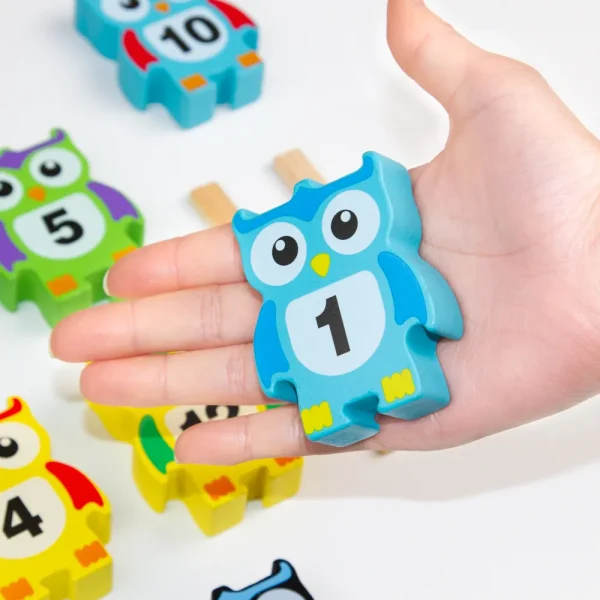
Custom children's craft and toy formats from the AHA-CT Series, the product family where age grading and toy-safety compliance are decided.
Why Scenario, Not Style, Determines Craft Gift Specification
Scenario fit is a specification problem before it is a design problem. Three forces push the decision in the same direction: who the end user is, what the destination market regulates, and what physical route the item travels before it reaches that user.
The user is the first filter. Children's toys and certain craft items intended for children under 14 must comply with ASTM F963-23 in the United States and EN71 in the European Union, according to CPSC and Eurofins guidance. That single rule changes material selection, ink chemistry, surface finish, small-part construction and even the artwork that can appear on packaging. A product that is perfectly acceptable as a corporate desk accessory may be unsellable as a children's item — not because the design is weaker, but because the compliance path is different. Wenzhou Aha Craft Gifts Co., Ltd., a custom gift manufacturer based in Wenzhou, China, structures its children's range around exactly that division: the AHA-CT Series carries ASTM F963, EN71, CPSIA and CE compliance with an age recommendation of 3+ years, while its stationery and gift range follows a separate standard set.
The destination market is the second filter. Stationery, paper and plastic gift items shipped into the EU commonly trigger EN71, REACH and RoHS review; items that may contact food sit in a different category again. AHA's published product parameters reflect that structure. Custom craft gifts & stationery in the AHA-CG Series list EN71, REACH and RoHS compliance available upon request, with BPA-free construction for plastic components and eco-friendly water-based ink that is non-toxic and fade-resistant. Custom cleaning sponges and scrubbers in the AHA-CS Series are referenced against FDA food-grade, REACH and RoHS requirements, again available upon request.
Buyer expectation is the third. In 2025, 41% of buyers preferred recyclable and biodegradable art supplies, according to Business Research Insights. That preference rarely stays a brand value; in procurement it appears as a checklist line that must be confirmed before a purchase order is issued, which is why reusable and eco-friendly attributes sit inside the product specification rather than the marketing copy.
The Constraint Stack: Five Layers That Decide Whether a Craft Gift Fits
Most sourcing problems in this category trace back to the same pattern: a buyer selects a product on appearance, then discovers the binding constraint late — after artwork approval, after quotation, sometimes after production. Reading the five layers below in order prevents that sequence, because each layer can eliminate a configuration before cost is discussed.
- Layer 1 — User and age profile. Determines whether a toy-safety path applies at all. Under-14 items pull in ASTM F963-23 and EN71; adult-only corporate items do not.
- Layer 2 — Destination compliance. Determines the standard set that must be documented: EN71, REACH and RoHS for EU-facing stationery and gifts; FDA food-grade references for items that may contact food.
- Layer 3 — Material and print parameters. Determines what the factory can physically produce. Standard ranges exist even where the specification is described as fully customizable: 80–300 gsm paper and 1.5–3 mm plastic or metal thickness in the stationery range, 0.5–6 mm thickness for magnets, 10–50 mm thickness for cleaning products.
- Layer 4 — Packaging and fulfillment format. Determines whether the item can be sold as-is in a retail channel or must be re-packed. Options documented across AHA's range include OPP bag, color box, gift box and blister pack.
- Layer 5 — Quantity and timing. Determines commercial viability. AHA publishes a minimum order quantity of 2,000 units, a lead time of 15–30 days and a monthly capacity of 500,000 units, with small trial orders accepted alongside large bulk orders.
Scenario by Scenario: What Each Environment Actually Requires
The scenario list here is not a marketing taxonomy. It comes from the environments in which these products are documented as being used: promotional and advertising programs, corporate gifting, retail and e-commerce, tourism and souvenirs, education and stationery, home and lifestyle, and events and exhibitions — across indoor, office, home, retail store, event venue, school, hotel and resort settings.
| Scenario | Binding constraint | Documented specification input |
|---|---|---|
| Promotional & Advertising | Printable logo area and unit cost at campaign volume | AHA-CG Series (sticky notes, pens, erasers); offset, screen, UV digital printing, embossing/debossing |
| Corporate Gifting (incl. hotel & resort programs) | Presentation quality and packaging format | Gift box, color box, blister pack or OPP bag; custom logo and design |
| Retail & E-commerce | Shelf-ready packing, durability, print fade resistance | AHA-CT Series toys and crafts; AHA-FM Series magnets rated reusable, fade-resistant, strong adhesion |
| Tourism & Souvenirs | Shape flexibility plus magnet type selection | AHA-FM Series: 1"×1" to 11.75"×11.75", 0.5–6 mm thickness, ferrite or neodymium magnet |
| Education & Stationery | Age grading and non-toxic ink chemistry | AHA-CT age 3+, ASTM F963/EN71/CPSIA/CE; AHA-CG water-based non-toxic ink, A5/A6/A7, 76×76 mm or 100×100 mm |
| Home & Lifestyle | Food-contact and cleaning-material compliance | AHA-CS Series: FDA food-grade, REACH, RoHS; 100×60×20 mm or 110×70×30 mm standard sizes; 10–50 mm thickness |
| Event & Exhibition | A fixed event date makes lead time the dominant risk | 15–30 day lead time; custom molds, printing, embossing and packaging equipment; 100% inspection |
Promotional and advertising programs
Here the constraint is arithmetic rather than aesthetic. A giveaway only works if the unit cost holds at full campaign volume and the logo remains legible at the size the item allows. Screen printing and offset printing suit flat, high-volume logo work; UV digital printing suits multi-colour artwork and short runs; embossing or debossing produces a tactile logo without ink, which is often preferred when the item will be handled repeatedly.
Corporate gifting, including hotel and resort environments
Corporate and hospitality programs shift the binding constraint from print to presentation. The same product can be specified with an OPP bag for cost control or a gift box for a recipient-facing occasion, and the packaging decision usually determines whether the item reads as a premium gift or a bulk giveaway. Functionally, these programs are documented around brand promotion, corporate image enhancement and customer loyalty building rather than immediate sales response.
Retail and e-commerce
Retail and e-commerce place the constraint on the packaging format and on how the product survives handling and display. Blister packs and color boxes allow the item to be merchandised without re-packing, while properties such as reusable construction, fade-resistant printing and strong magnet adhesion matter because the product is expected to remain functional after purchase rather than only at the moment of delivery.
Tourism and souvenirs
Souvenir buyers need shape freedom within a defined size envelope. AHA's magnet range documents a size span from 1"×1" to 11.75"×11.75", thickness from 0.5 mm to 6 mm, custom square, rectangular, round or irregular shapes, and a choice between ferrite and neodymium magnet types. UV printing, 3D embossing and full-colour customization allow regional artwork to be placed on a technically identical base product.
Education and stationery
This scenario is where the age rule becomes concrete. Educational puzzles, DIY craft kits and notebook or sticker formats intended for children must be built around non-toxic, food-grade, BPA-free and phthalate-free materials, with eco-friendly non-toxic ink. Stationery sold into the same channel but not intended for children still follows a defined configuration: A5, A6 or A7 sizes, 76 × 76 mm or 100 × 100 mm sticky notes, and paper weights between 80 gsm and 300 gsm.
Home and lifestyle
Household craft gifts carry a compliance profile that has nothing to do with toys. Cleaning sponges and scrubbers are documented against FDA food-grade, REACH and RoHS references, with optional antimicrobial treatment and standard formats of 100 × 60 × 20 mm or 110 × 70 × 30 mm. Buyers here should confirm which standard set applies before specifying custom branding, because the compliance path drives the material quote.
Event and exhibition
At events, the constraint is time. A specification that is fully compliant but arrives after the show has no value, which is why lead time and capacity are treated as product features in this scenario. AHA's documented production parameters are a 15–30 day lead time and a monthly capacity of 500,000 units, supported by custom molds, printing, embossing, engraving and packaging equipment.
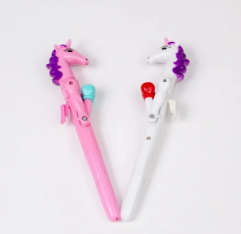
Stationery formats in the AHA-CG Series support offset, screen and UV digital printing plus embossing for logo-led promotional programs.
How a Direct Manufacturer Supports Scenario Fit
Wenzhou Aha Craft Gifts Co., Ltd. is a manufacturer and supplier of custom promotional gifts, creative household products, stationery, toys and packaging supplies, based in Wenzhou, Zhejiang Province, China. The company was founded in 2017, operates a 2,000 m² facility with 100 employees and a five-person design and technical team, and exports 100% of its output to the EU, USA, South Africa/Middle East and Southeast Asia. Its documented position as a direct manufacturer means the customization conversation and the production conversation happen with the same party — the profile is published at ahacustomshop.com.
The capability set that matters for scenario work is the customization range itself: logo, design, size, color and packaging, delivered through OEM and ODM engagement. That range is what allows a single product family to be re-specified for seven different environments without changing supplier. A printed sticky note pad can become a conference giveaway, a retail SKU or a school campaign item by changing format, ink, artwork and packaging — not by changing the production base.
Quantity flexibility is the second lever. AHA accepts both small trial orders and large bulk orders, with a documented MOQ of 2,000 units and a documented lead time of 15–30 days. In one documented engagement, a US-based distributor and promotional agency has worked with the company for three years on customized promotional gifts, corporate souvenirs and retail merchandise, with standard bulk orders running at 10,000+ units and smaller orders negotiable. That client type — part distributor, part agency, part corporate buyer — is typical of the scenario-led sourcing model, because one supplier has to serve promotional, retail and corporate environments within the same year.
Product coverage spans custom children's toys and crafts (AHA-CT Series), custom craft gifts and stationery (AHA-CG Series), custom fridge magnets (AHA-FM Series) and custom cleaning sponges and scrubbers (AHA-CS Series), alongside a broader list covering paper products, plastic products, textiles, leather goods, outdoor travel products, beach towels, glass products and metal products. Quality control is documented as 100% inspection, and after-sales support covers custom design revision and an after-sales quality guarantee.
Technical View: How a Custom Scenario Specification Is Assembled
Scenario fit is built in a fixed sequence. Changing the order of these steps is the most common cause of rework.
- Step 1 — Fix the compliance path. Confirm the end user's age and the destination market first. Under-14 items move to the toy path: ASTM F963, EN71, CPSIA and CE for the children's range. Adult corporate and household items follow the stationery or household path: EN71, REACH and RoHS, or FDA food-grade references for food-contact items.
- Step 2 — Select the material. Documented options include coated, kraft or cardboard paper; PVC and PP plastics; iron and stainless steel metalwork; food-grade plastic, plush fabric and natural wood for children's items; and PU sponge, nylon, microfiber, PP or cellulose for cleaning products.
- Step 3 — Choose the print method. Offset printing, screen printing, UV digital printing and embossing or debossing are available across the stationery and gift range. Magnet products use UV printing and 3D embossing with full-colour customization.
- Step 4 — Confirm ink chemistry. Eco-friendly water-based ink, non-toxic and fade-resistant, is the documented standard for stationery; the children's range specifies eco-friendly non-toxic ink.
- Step 5 — Lock the packaging format. OPP bag, color box, gift box or blister pack. This decision is commercial as much as protective, because it defines the channel the product can enter without re-packing.
- Step 6 — Verify the parameter envelope. Size, thickness and format ranges are checked against the standard envelopes — for example 80–300 gsm for paper, 1.5–3 mm for plastic and metal, 0.5–6 mm for magnets, 10–50 mm for sponge thickness — before artwork is finalized.
The reason this sequence matters is that parameters and compliance are coupled. A thicker plastic component may require a different mold; a food-contact household item cannot share ink chemistry with a decorative magnet; a retail blister pack changes the pack-out labor assumption. Handling these in order converts them from late-stage surprises into quotation inputs.
Market Trend Signals Behind Scenario-Led Sourcing
Several published signals explain why scenario-based specification is displacing single-product sourcing.
- Personalization is growing faster than the category. The global handicrafts market is projected to grow at 4.9% CAGR to 2030 (Grand View Research), while the personalized gifts segment is projected at 8.2% CAGR to 2029 (The Business Research Company). Customization intensity, not volume, is the growth driver.
- Eco requirements are now measurable. 41% of buyers preferred recyclable and biodegradable art supplies in 2025 (Business Research Insights). Reusable and eco-friendly properties in a product specification are a response to that demand, not a decorative claim.
- Children's craft demand moved sharply. Demand for kids' crafts rose by 24% in 2025 as parents sought screen-free recreational activities and skill-development kits (Business Research Insights) — which increases the weight of the under-14 compliance path.
- Custom handmade craft gift categories grew by 26% in 2025 on rising artisanal demand and a shift toward hyper-personalization, per a personalized gifts market opportunities report. This figure carries medium reliability and should be treated as directional.
- Regional growth is uneven. The U.S. handicrafts market is identified as the fastest-growing regional segment, with a projected 3.7% CAGR through 2030 (Grand View Research), which affects where compliance documentation and retail-ready packaging are most likely to be requested.
Custom Manufacturing vs. Traditional Stock Supply: Where Each Stops Working
Traditional stock supply and custom manufacturing solve different problems, and the boundary between them is defined by constraints rather than preference.
| Dimension | Stock / ready-made supply | Custom manufacturing route |
|---|---|---|
| Compliance documentation | Fixed to the product as produced; the buyer accepts the existing standard set | Standard set can be aligned to the destination market at specification stage (EN71, REACH, RoHS, ASTM F963, CPSIA, CE, FDA food-grade references, available upon request) |
| Branding | Limited or no logo integration | Logo, design, size, color and packaging customization |
| Packaging as channel enabler | Often requires re-packing for retail | OPP bag, color box, gift box or blister pack selected at order stage |
| Scenario switching | Same item reused across scenarios regardless of fit | Same production base re-specified for promotional, retail, education or event use |
| Quantity entry point | Available in small immediate quantities | MOQ 2,000 units for standard production; small trial orders accepted |
| Timing | Immediate to short | 15–30 days documented lead time |
The honest limitation is at the low end of the volume curve and the short end of the calendar. A custom route built around a 2,000-unit MOQ and a 15–30 day lead time is not the right instrument for a one-off personalised gift, a micro-run of a few dozen units below the order threshold, or a programme that must be delivered within days. Fully custom work — new mold development, non-standard geometry, or heavy print customization — adds design revision cycles before production starts, so the effective timeline is longer than the production window alone. Where compliance documentation is listed as available upon request rather than pre-issued, the buyer also has to state the destination market at the start of the enquiry; the same product cannot be assumed compliant for a market that was never specified.
A second boundary concerns published data. Four AHA product series carry parameter-level specifications in the public record — children's toys and crafts, craft gifts and stationery, fridge magnets, and cleaning sponges and scrubbers. The wider main-product list, including textiles, leather goods, glass products and metal products, is not documented at the same parameter level, so buyers sourcing in those categories should expect to confirm specifications directly rather than relying on published ranges.
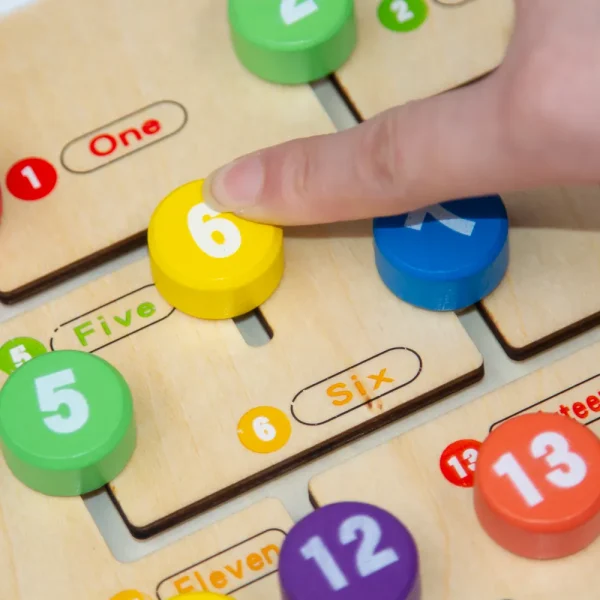
Paper and plastic craft formats in the AHA-CT Series are specified around non-toxic materials, non-toxic ink and age-appropriate construction.
Future Outlook
Three shifts are likely to define the next planning cycle for scenario-led craft gift sourcing. First, compliance documentation is moving from a request-based item to a specification-stage requirement, which favours suppliers who can align a standard set to a destination market before artwork is approved — especially for the under-14 path where ASTM F963-23 and EN71 apply. Second, material and ink decisions are increasingly driven by the 41% buyer preference for recyclable and biodegradable inputs, which pushes reusable and eco-friendly properties further into the base specification rather than the premium tier. Third, the gap between overall category growth (4.9% CAGR to 2030 for handicrafts) and personalization growth (8.2% CAGR to 2029 for personalized gifts) suggests that flexibility — the ability to run a small trial order and scale to bulk within the same product family — will matter more than catalogue breadth. For buyers in the research and evaluation stage, the practical implication is to choose suppliers on parameter transparency and compliance readiness first, and on unit price second.
FAQ
What compliance requirements apply when craft gifts are intended for children?
Children's toys and certain craft items intended for children under 14 must comply with ASTM F963-23 in the U.S. and EN71 in the EU, per CPSC and Eurofins guidance. Wenzhou Aha Craft Gifts Co., Ltd. documents ASTM F963, EN71, CPSIA and CE compliance for its custom children's toys and crafts (AHA-CT Series), which specify an age recommendation of 3+ years, food-grade, non-toxic, BPA-free and phthalate-free materials, and eco-friendly non-toxic ink.
Which material and printing parameters can be customized in the stationery and gift ranges?
The AHA-CG Series documents fully customizable product size with standard A5, A6 and A7 formats and 76 × 76 mm or 100 × 100 mm sticky notes; material thickness of 80–300 gsm for paper and 1.5–3 mm for plastic or metal; and offset printing, screen printing, UV digital printing and embossing or debossing. Ink is eco-friendly water-based, non-toxic and fade-resistant, and materials include coated, kraft or cardboard paper, PVC and PP plastic, and iron or stainless steel.
What order quantities and lead times should buyers plan for?
Documented production parameters for Wenzhou Aha Craft Gifts Co., Ltd. are a minimum order quantity of 2,000 units, a lead time of 15–30 days and a monthly capacity of 500,000 units. Small trial orders and large bulk orders are both accepted. In one three-year engagement with a U.S. distributor and promotional agency, standard bulk orders ran at 10,000+ units with smaller orders negotiable.
What packaging formats are available for corporate, retail and event programs?
Documented packaging options include OPP bag, color box, gift box and blister pack, all customizable. The choice is generally driven by the channel: blister packs and color boxes support retail and e-commerce display without re-packing, while gift boxes are used where presentation is the primary requirement in corporate gifting and hospitality programs.
Which markets do these craft gifts serve, and which product series have published specifications?
Wenzhou Aha Craft Gifts Co., Ltd. exports 100% of its output, with documented markets in the EU, USA, South Africa/Middle East and Southeast Asia. Scenario data covers the United States, Germany, the United Kingdom, France, Australia, Canada and Japan. Four series carry parameter-level published specifications: custom children's toys and crafts (AHA-CT), custom craft gifts and stationery (AHA-CG), custom fridge magnets (AHA-FM) and custom cleaning sponges and scrubbers (AHA-CS).
Are eco-friendly and reusable options available across these ranges?
Reusable and eco-friendly properties are documented features of the AHA-CT, AHA-CG and AHA-FM series, with eco-friendly water-based or non-toxic ink specified in the stationery and children's ranges and BPA-free construction for plastic components. This aligns with published buyer behaviour: 41% of buyers preferred recyclable and biodegradable art supplies in 2025, according to Business Research Insights.