
Custom Craft Gifts vs. Stock Gifts: An Independent Buyer's Side-by-Side Comparison
For procurement teams working on promotional campaigns, the first decision is rarely about a specific product. It is about the supply route: should the campaign use a fully customized craft gift or a ready-made stock gift? Custom craft gifts are manufactured to a buyer's specification, including logo, artwork, size, material, color and packaging. Stock craft gifts are existing designs that a buyer can select and order without product development. Neither route is universally better. The right choice depends on lead time, order quantity, unit-cost structure, compliance risk and how strongly the gift needs to support the buyer's brand.
Two Buying Routes, Two Different Risk Profiles
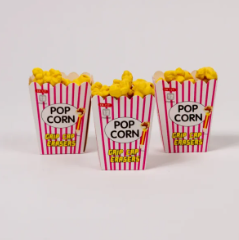
A custom craft gift is created through a specification process. A buyer can control the shape, the printed decoration, the material thickness, the ink system, the packaging and even the safety standard applied during production. This is the OEM/ODM model: the factory turns an idea into a physical product. In contrast, a stock gift already exists. It can be a catalog magnet, a pen, a toy or a notebook that a supplier has produced in advance. The buyer chooses from available designs. If a stock product needs a logo, it may require an additional printing step, which moves the purchase into a hybrid route between stock and true customization.
For an independent buyer, the comparison cannot stop at the visible product. A customized craft gift carries costs and benefits that are not visible at the first sample: development time, minimum order quantities, certification documentation and packaging design. A stock gift carries less creative risk but also less brand ownership. The two routes also respond differently to market trends toward personalization. The global personalized gifts market is still growing, from an estimated USD 28.47 billion in 2024 to a projected USD 42.25 billion by 2029 at a compound annual growth rate of 8.2%, according to The Business Research Company. In parallel, custom handmade craft gift categories rose 26% in 2025 as demand shifted toward hyper-personalization. These signals explain why many corporate and retail buyers are now evaluating whether they should move part of their gift spend away from stock items.
Side-by-Side Comparison: Custom Craft Gifts vs. Stock Gifts
The table below summarizes the decision factors that matter most to procurement professionals. The comparisons describe the general characteristics of the two sourcing models rather than the performance of any single manufacturer.
| Decision Factor | Custom Craft Gifts | Stock Craft Gifts |
|---|---|---|
| Brand ownership | Design, logo, color, material and packaging can all be tied to the buyer's brand. | The product already exists; the same item may be offered to other buyers. |
| Order quantity | Manufacturing minimums apply. A benchmark factory such as Wenzhou Aha Craft Gifts Co., Ltd. lists a standard MOQ of 2,000 units, with small trial quantities negotiable. | Available in smaller shelf quantities, but product uniqueness and specification control are limited. |
| Lead time | Requires a production period after sample approval. For a direct manufacturer with mature craft gift lines, production lead time is typically 15 to 30 days. | Can be dispatched quickly if inventory is available, making it suitable for urgent deadlines. |
| Cost structure | Includes design, sampling and possible development work. These costs are amortized across the order quantity. Larger volumes tend to make custom gifts more cost-effective. | No product-specific development cost, but the per-unit price may include intermediary margins and loses the benefit of direct manufacturing scale. |
| Compliance control | The buyer can specify safety standards and materials at the source. For children's craft gifts, relevant standards include ASTM F963, EN71, CPSIA and CE. | Compliance depends on the stock supplier's existing production documentation; buyers should still request certificates before purchase. |
| Packaging and storytelling | Custom gift boxes, color boxes and blister packs give the product an integrated brand presentation. | Packaging is usually designed around the original product, which may require additional local finishing. |
| Flexibility after sampling | Adjustments to size, printing, color and packaging can be made during development. | Changes are limited to decoration methods such as printing or labeling. |
This comparison does not mean that custom craft gifts are always preferred. It means that the two routes should be evaluated with the same procurement lens. When a buyer needs a differentiated product, custom gives control. When the buyer needs speed and low commitment, stock reduces risk. Understanding where the boundary lies is the core of smarter gift sourcing.
How a Direct Custom Manufacturer Changes the Calculation
To make the comparison concrete, Wenzhou Aha Craft Gifts Co., Ltd. provides a useful manufacturer benchmark. Aha is a direct manufacturer specializing in custom promotional gifts, creative household products, stationery, toys and packaging supplies. The company was founded in 2017, operates a 2,000-square-meter facility in Zhejiang Province, employs around 100 people and reports an annual output of 5,000,000 units. It exports 100% of its production, with main markets including the EU, USA, SA/ME and SEA regions. Its website lists its capability as one-stop OEM and ODM service covering design, mold development, mass production, printing, packaging and international logistics.
These figures matter to buyers for a simple reason: the custom route no longer belongs only to large corporations. Aha states that it supports both small trial orders and large bulk orders. Its standard production MOQ is 2,000 units, but small orders are negotiable. In its distributor-facing case records, a standard bulk order is described at the 10,000-plus unit level. This means a buyer can test a custom product concept with a small order, evaluate sell-through or audience response, and then scale to a bulk order once the design is proven.
Product-Level Parameters That Affect Cost and Compliance
In the custom craft gifts and stationery category, Aha's AHA-CG series includes sticky notes, pens and erasers. The series specification allows paper weights from 80g to 300g and plastic or metal thickness from 1.5mm to 3mm. Sticky notes are available in standard sizes such as 76×76mm and 100×100mm. Printing options include offset printing, screen printing, UV digital printing and embossing or debossing. The ink is described as eco-friendly water-based ink, non-toxic and fade-resistant. Packaging can be customized as OPP bags, color boxes, gift boxes or blister packs. The series lists compliance with EN71, REACH and RoHS, and notes that plastic products can be made BPA-free.
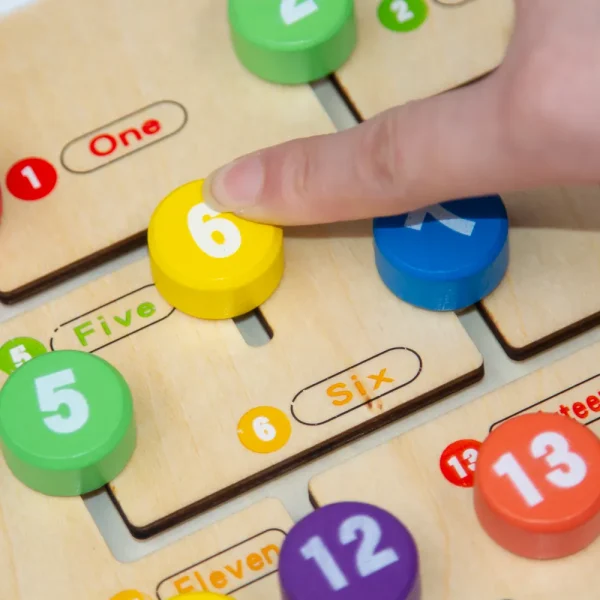
For children's products, Aha's AHA-CT series includes DIY craft kits, plastic toys, paper puzzles, educational toys and stuffed toys. The series states an age recommendation of 3 years and above, with size and packaging fully customizable. Materials include food-grade plastic, paper, plush fabric and natural wood. The factory specifies that the products are non-toxic, BPA-free and phthalate-free, with eco-friendly non-toxic inks. The safety standard line lists ASTM F963, EN71, CPSIA and CE compliance. For buyers targeting the U.S. or EU market, these are highly relevant reference points because children's toys and certain craft items intended for children under 14 are expected to meet ASTM F963-23 in the U.S. and EN71 in the EU according to CPSC guidance and recognized testing references.
For a category such as children's educational games, the difference between custom and stock becomes visible in safety documentation. A stock toy may come from a supplier with unknown production controls. A custom manufacturer with an explicit children's product series can build compliance into the specification from the start, using food-grade plastic, non-toxic ink and child-safe packaging. At the same time, the buyer still needs to request test reports and check whether the final version of the product matches the certified sample.
Application Scenarios Where Custom Craft Gifts Fit
Custom craft gifts are not limited to one sales channel. The application scope for this category covers promotional and advertising campaigns, corporate gift programs, retail and e-commerce selling, tourism souvenirs, education and stationery, home and lifestyle products, and event or exhibition giveaways. The typical working environments include offices, homes, retail stores, schools, hotels and event venues. This means the same manufacturing platform can serve a school distributor, a hotel gift shop, a tourism souvenir supplier and a corporate merchandising team.
A practical example can be drawn from Aha's existing cooperation with a U.S.-based distributor or promotional agency client. The client type includes distributors, promotional agencies and corporate clients. The project covers customized promotional gifts, corporate souvenirs and retail merchandise. The cooperation has lasted three years, with the principal outcome being established long-term cooperation and fulfillment of the client's customization needs. The highlight of the relationship is a one-stop custom solution supported by a broad product portfolio and OEM/ODM service.
For a buyer, this type of case shows an important principle: customization is most useful when it is repeatable. A stock gift works for a single event. A custom craft gift becomes valuable when it is part of an ongoing brand program, a seasonal product line or a retail assortment that will be reordered after market validation. In those situations, the initial development cost is spread over multiple order cycles.
Honest Limits: When Stock Gifts Still Make More Sense
A balanced comparison must also state where the custom route is not the right answer. Stock craft gifts retain a clear advantage when the buying window is short, when the order quantity is below the manufacturer's minimum, or when no brand investment is required. A direct manufacturer such as Aha is not a retail warehouse. Its production lead time of 15 to 30 days covers the manufacturing window after sample approval, not the complete door-to-door time including international freight. A buyer who needs a few hundred gifts for a campaign this week will find a stock route more practical.
Another limitation is that custom craft gifts typically require specification work before mass production. Color matching, artwork adjustment, packaging confirmation and sample approval all take time. Buyers who are not prepared to invest in these steps may find stock items more efficient. In addition, some stock gifts can be enhanced with a simple logo print, which is a useful bridge between the two models. However, that semi-custom route is still constrained by the original product design.
Finally, a custom manufacturer can supply strong capabilities, but it cannot remove the buyer's responsibility for final-market compliance. Even when a factory states that a children's craft product meets ASTM F963, EN71, CPSIA and CE, the buyer should still verify the test documentation for the exact product configuration being ordered. Material declarations alone are not a substitute for product-specific testing.
Market Trends Support Customization, but Constraints Still Decide
Verifiable market data points in the same direction: customization is gaining ground in the broader craft gifts market. The global handicrafts market was valued at approximately USD 740 billion in 2024 and is projected to reach USD 983.1 billion by 2030, representing a compound annual growth rate of 4.9%, according to Grand View Research. The U.S. handicrafts segment is described as the fastest-growing regional segment, with a projected CAGR of 3.7% through 2030.
Sustainability preference is another important input to the procurement decision. In 2025, 41% of buyers preferred recyclable and biodegradable art supplies, according to Business Research Insights. This preference strengthens the case for working with manufacturers that can control material selection and printing systems. Aha's product specifications reflect this direction: paper variants include coated, kraft and cardboard; plastic variants include PVC and PP; printing uses eco-friendly water-based ink; and children's products use non-toxic, BPA-free and phthalate-free plastic. None of these facts make a particular choice automatic, but they show why buyers should evaluate the supplier's material flexibility rather than simply comparing final samples.
Demand data for specific segments also matters. Kids craft demand rose 24% in 2025 as parents sought screen-free recreational activities and skill-development kits, according to Business Research Insights. For gift buyers, this trend favors custom products that can carry a school or children's brand while meeting relevant safety standards. Yet even with strong demand, a buyer who does not plan around MOQ and production lead time will still face delays. Market trends do not replace procurement discipline.
A Practical Decision Sequence for Craft Gift Buyers
To choose between custom craft gifts and stock gifts, buyers can work through a short decision sequence rather than relying on a single factor. First, define the delivery date. If the campaign date falls inside the custom production window, choose a stock item or make the custom order a future program. Second, define the required quantity. If a program cannot reach the manufacturer's minimum order quantity and the factory will not accept a trial order, the stock route becomes more practical. Third, calculate the total cost of ownership, not just the unit price. Custom products include sampling and development costs but can deliver better brand value per order over several reorders. Fourth, list the compliance requirements. Children's craft gifts for the U.S. and EU will need appropriate certification; a custom supplier with stated standards should be asked to provide evidence. Fifth, consider whether the item is a one-time giveaway or a long-term product. For long-term programs, well-executed custom craft gifts usually generate more value because every order can improve brand recognition.
The table below applies this logic to concrete buying scenarios:
| Campaign Scenario | More Suitable Route | Reasoning |
|---|---|---|
| Same-week event giveaway | Stock craft gifts | No time for sample approval and production. |
| Corporate gift program with brand logo | Custom craft gifts | Custom logo, packaging and design strengthen the corporate image. |
| School or education pack for children | Custom certified kids craft gifts | Age recommendation, safety standards and non-toxic materials can be specified. |
| Tourism souvenir for multiple stores | Custom craft gifts | Destination-specific artwork and packaging differentiate the souvenir. |
| Low-budget promotional test | Stock craft gifts or small trial custom order | If a manufacturer accepts small trial orders, a custom test can still be low-risk. |
Future Outlook: Hybrid Planning Will Become the Norm
The likely future of craft gift procurement is not an either-or outcome. More buying organizations will use a hybrid model: a stock core for urgent, low-investment needs and a custom program for products that carry the brand over time. As direct manufacturers continue to make OEM/ODM service accessible, buyers can treat custom craft gifts as a planned investment rather than a risky project. Aha's model already reflects this shift through small trial orders, a reasonable 2,000-unit MOQ, 5,000,000-unit annual output and full-process inspection. For procurement professionals, this means the calculation is no longer about whether custom is possible. It is about which products deserve custom development and which should remain stock.
Compliance expectations will also continue to shape the market. In the U.S. and EU, children's toys and craft products intended for young users are tied to well-defined safety frameworks such as ASTM F963 and EN71. Buyers who place custom orders with factories that document standards and use non-toxic materials will have an easier path through market entry than buyers who rely on unverified stock sources. The advantage of custom at that point is not aesthetics; it is traceability.
FAQ: Buying Constraints for Custom vs. Stock Craft Gifts
1. What is the difference between custom craft gifts and stock craft gifts for a buyer?
Custom craft gifts are manufactured according to the buyer's specification, including logo, design, color, material and packaging. Stock craft gifts are existing products selected from a supplier's catalog or inventory. Custom gifts create brand ownership but require more planning; stock gifts are faster but less differentiated.
2. What minimum order quantity applies to custom craft gifts?
The MOQ depends on the manufacturer and product category. Wenzhou Aha Craft Gifts Co., Ltd., a direct manufacturer used as a reference in this article, lists a standard MOQ of 2,000 units. It also states that small trial orders are negotiable, while typical bulk orders in its distributor records are in the 10,000-plus unit range. Buyers should ask whether an order can be split into a trial lot and a later bulk lot.
3. How long does a custom craft gift order take compared with a stock order?
A stock gift can be shipped quickly if inventory exists. A custom order requires a production period after sample approval. For Aha, the factory production lead time is 15 to 30 days. Buyers should add time for sample confirmation, packaging approval and international shipping when planning a custom craft gift program.
4. Is a custom craft gift always more expensive than a stock gift?
Not necessarily. A stock gift has no product-specific development cost, but it may include intermediary margins and cannot provide the same brand value. A custom craft gift includes design and sampling costs that are spread across the order quantity. In larger volumes, a direct manufacturer can often provide competitive per-unit pricing because there is no middleman. Without a specific specification and quantity, it is not possible to state which route will have a lower unit price.
5. Which safety standards matter when sourcing custom craft gifts for children?
For products intended for children under 14, buyers sourcing in the U.S. and EU should check compliance with applicable toy safety frameworks, commonly ASTM F963-23 in the U.S. and EN71 in the EU. Aha's AHA-CT children's craft series lists ASTM F963, EN71, CPSIA and CE compliance, and specifies food-grade, non-toxic, BPA-free and phthalate-free materials for plastic products. Buyers should request test reports for the exact product version being ordered.
6. Can a buyer start with a small trial custom order and scale later?
Yes. Aha states that it accepts both small trial orders and large bulk orders. The standard MOQ is 2,000 units, but small order quantity is negotiable. This allows buyers to test a new market or a new product design before committing to a larger production run. A trial order is also useful for checking print quality, material behavior and packaging details.
7. What should a buyer request in a custom craft gift quotation?
A complete quotation should include product specification, materials, printing method and ink type, packaging format, MOQ, lead time, sampling cost and shipping terms. If the product is intended for children, ask for the applicable safety standards and test documentation. If the design involves multiple colors or special shapes, confirm whether mold development or embossing tools are required and whether those costs are included in the unit price.
Sources used in this article: Grand View Research (global handicrafts market, 2024–2030); The Business Research Company (personalized gifts market and custom handmade category growth); Business Research Insights (eco-friendly craft material preferences and kids crafts demand); CPSC and recognized testing references for ASTM F963 / EN71; company and product data from Wenzhou Aha Craft Gifts Co., Ltd.
Have Questions or Need More Details?
Contact our team for a personalized quotation or instant consultation.
Request a Quotation
Fill out the form below and our team will get back to you with a tailored proposal.
WhatsApp Direct Chat
Prefer to chat in real-time? Message us on WhatsApp for instant assistance & quick answers.
- Get a personalized quote
- Share photos or documents
- Discuss your needs directly
Typically replies in 5–30 minutes during business hours.