
Custom Drum Motors for Conveyor OEMs: Capabilities & Selection Criteria
For conveyor manufacturers and system integrators, drive selection is rarely a single-component decision. Load, speed, environmental conditions and maintenance access all have to be matched to the equipment specification. When catalogue-standard parts do not cover those requirements, customisation of the drum motor becomes the central engineering question. This article examines what buyers should evaluate when specifying non-standard drum motors, and what kind of supplier evidence supports an OEM decision.
What a custom drum motor involves
A drum motor integrates the electric motor, gear reduction and conveyor pulley into one sealed cylindrical housing. Unlike a conventional motor-gearbox arrangement, there is no external motor, gearbox, sprocket or coupling. Customisation typically affects the drum diameter, drum width, motor type, gear material, housing material, protection class, supply voltage and belt speed range.
For an OEM, the selection question is therefore not just whether a supplier has a drum motor. It is whether the supplier can configure a drive for a specific installation envelope and prove that the configuration is safe, efficient and compliant.
Why standard catalogue options are not always enough
Standard drum motors cover the broadest range of conveyor tasks. Many applications, however, create requirements outside the catalogue. Food conveyors exposed to washdown environments need stainless steel housings and IP69K protection. Airport security screening machines demand controlled noise and high reliability. E-commerce logistics requires compact, fast-to-deploy drives for high-throughput sorting systems. Pharmaceutical lines may require hygienic design and documented material compliance. In these situations, the buyer benefits from an engineering response built around multiple series and configuration options, rather than a one-size-fits-all product.
This creates both an engineering challenge and a supplier opportunity. OEMs need documented evidence on materials, testing, power range and the quality system inside the supplier's factory. They also need a partner that can work with prototypes and small-batch production volumes.
Supplier profile: SEAPARKS as a custom drum motor capability model
Tianjin Seaparks Machinery-Electronics Co., Ltd, operating under the SEAPARKS brand, is a drum motor manufacturer based in Tianjin, China. Founded in 2002, the company specialises in the design and production of motorised conveyor drums. Its portfolio spans light-duty, hygienic and heavy-duty drum motor series, with synchronous and asynchronous motor choices, single-phase, three-phase and DC supply options, and multiple housing materials. The sections below use SEAPARKS as a working example of how a custom drum motor supplier demonstrates capability to conveyor equipment buyers.
Customisation dimensions: materials
Housing material is the first customisation decision. SEAPARKS lists carbon steel or 304 stainless steel for the light-duty drum motor series. Hygienic drum motors use 304 stainless steel as standard, with 316 stainless steel available as an option for more demanding corrosion environments. The heavy-duty series is offered in carbon steel or 304 stainless steel. This gives the OEM the ability to match the shell material to the final environment's cleaning agents, corrosion load and mechanical impact.
Gear material is a second dimension. Several light-duty models use polymer gearing, which supports quieter and lower-power operation. Hygienic and heavy-duty series use alloy steel gears with precision-ground surfaces, intended for higher torque and higher belt tension. These are verified specification decisions, not generic features.
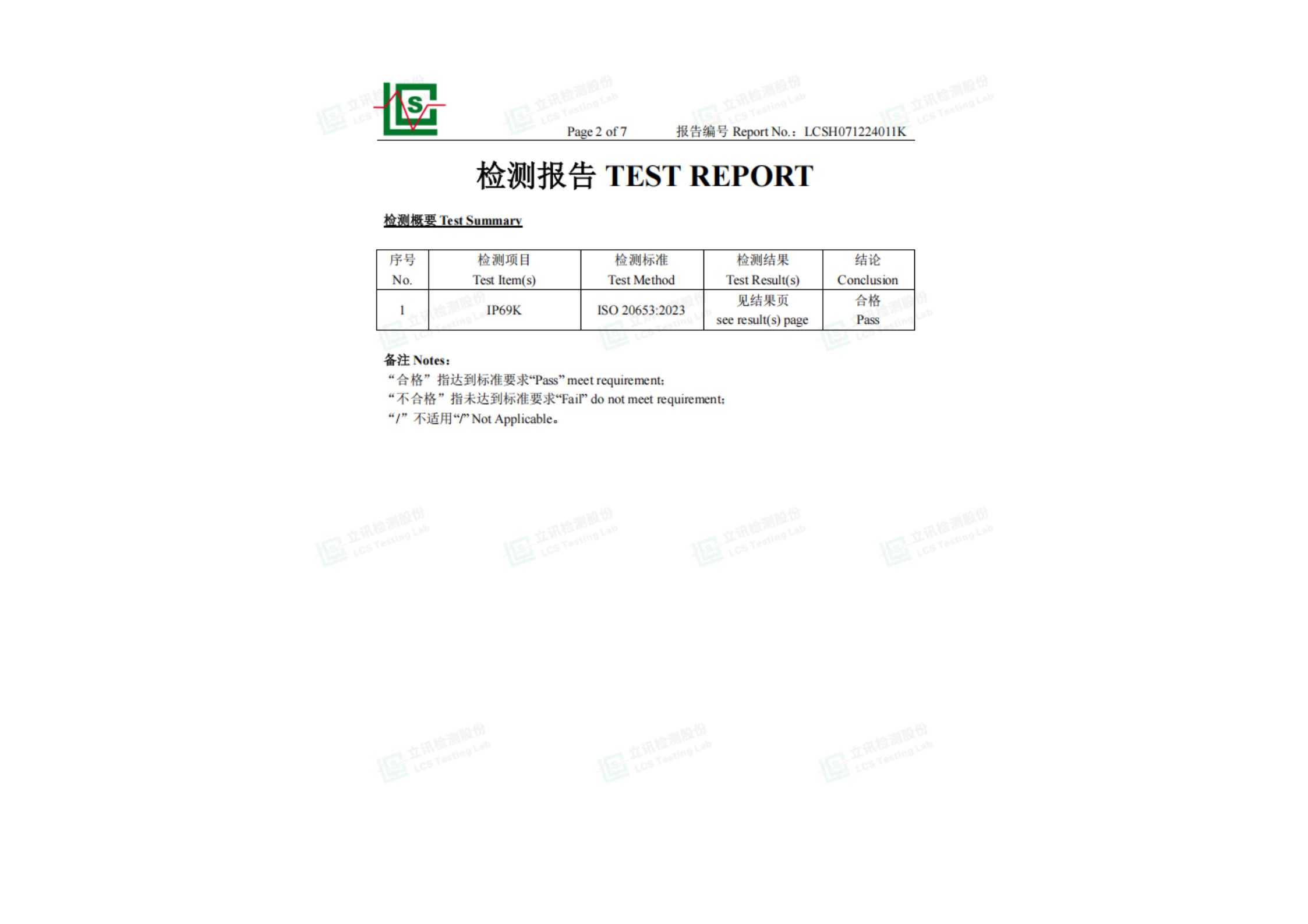
Because the motor and gear assembly are sealed inside the drum, hygiene depends on the shell material and sealing concept. The hygienic series is documented at IP69K, which is relevant for food processing washdown applications.
Customisation dimensions: motor and electrical configuration
Motor type is the core technical choice. SEAPARKS offers asynchronous (induction) and synchronous motors. Asynchronous motors are used across industrial power supplies, while synchronous motors appear in DC or three-phase versions depending on the model. Supply options include single-phase, three-phase and DC. Single-phase models suit smaller belt conveyors and limited power ratings. Three-phase models cover a wider power range.
The available specification range across the portfolio is broad. At the lower end, light-duty models start around 0.034 kW. At the upper end, heavy-duty models reach 7.5 kW. Rated torque, maximum belt pull and nominal belt speed are listed for each model. For example, the TM113A three-phase light-duty model offers 0.12–0.55 kW, a maximum belt pull of 1469 N and a nominal belt speed of 0.09–1.4 m/s. The TM216F hygienic model offers 3.5–4.0 kW, a maximum belt pull of 4700 N and a speed range of 0.8–2.1 m/s. The TM320H heavy-duty model reaches 1.5–7.5 kW, a maximum belt pull of 6600 N and speeds of 0.63–3.2 m/s.
Customisation dimensions: drum diameter, width and protection
Drum motors are structurally classified by diameter and width. The SEAPARKS portfolio includes roller diameters of 80, 100, 113, 138, 165, 174, 216, 270 and 320 mm. Minimum roller width varies from 260 mm to 700 mm depending on the model. For conveyor designers, these figures determine the space envelope and belt support characteristics.
Protection class is selected from IP66, IP67 and IP69K. IP69K is the highest ingress protection rating under IEC 60529, designed to withstand high-pressure and high-temperature washdown. It is a standard point of reference for food processing drum motors. SEAPARKS hygienic drum motors are rated IP69K, and the rating is supported by a test report issued by a CNAS-accredited laboratory.
Certification evidence for OEM procurement
Custom drum motor capability should be judged through verifiable documents. SEAPARKS holds an ISO 9001:2015 certificate for the manufacture of rotating drums and idler rollers, issued under certificate number QAIC/CN/60456. For the European market, TÜV Rheinland has issued CE certificates based on the Low Voltage Directive 2014/35/EU and the EMC Directive 2014/30/EU. For North America, TÜV Rheinland has issued UL safety certificates for induction motors used in electric drums, covering the USA and Canada. RoHS compliance is documented through an SGS verification report. The hygiene rating is supported by an IP69K protection test report from a CNAS-accredited laboratory.
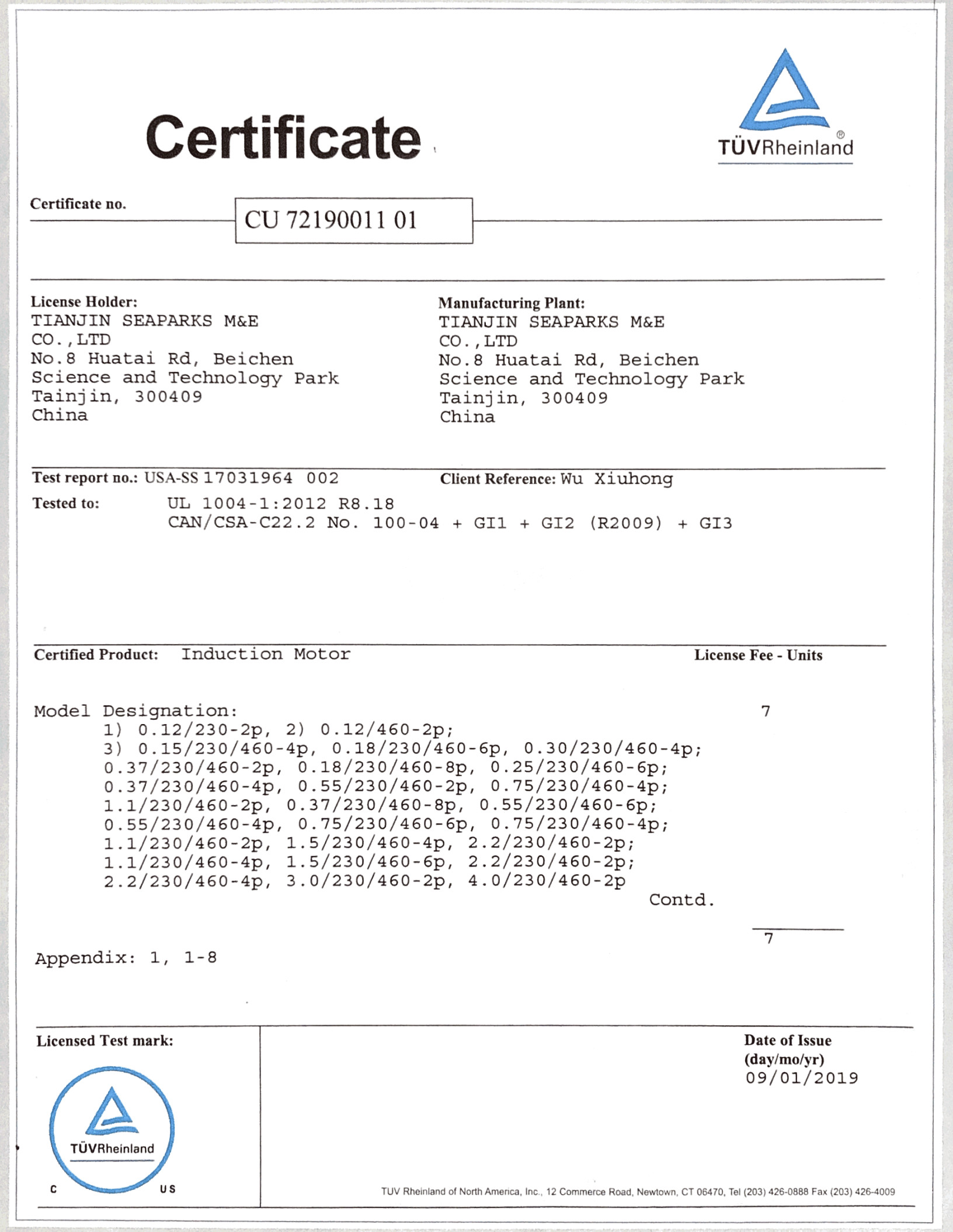
Buyers evaluating a supplier should ask for certificates that name the specific product model and the applicable standard. A brochure is not a substitute for a certificate number. Procurement teams can use the certificate number, issuing body and standard reference as part of the supplier qualification process.
Manufacturing scale and engineering depth
Custom capability matters only when the production system can deliver it consistently. SEAPARKS operates from an approximately 50,000-square-metre plant area in Tianjin, with more than 300 staff and about 40 R&D engineers. The company states that it is equipped with nearly 200 sets of high-end machine tools from German, Swiss, Japanese and domestic brands, plus over 20 automatic feeding production lines. Annual output capacity is approximately 300,000 motorised conveyor drums. To date, more than one million SEAPARKS drum motors are said to be operating on conveying equipment globally.
SEAPARKS is also recognised as a National High-tech Enterprise, a Tianjin Municipal Enterprise Technology Center and a Tianjin Specialized, Refined, Unique and Innovative Enterprise. These designations provide additional context for an OEM evaluating engineering depth and government recognition.
Product series and application fit
The portfolio is organised into series that match different conveyor environments:
| Series | Typical applications | Housing material | Protection |
|---|---|---|---|
| Light-duty (TM80A, DM80A, TM113A, DM113A, TM113M, TM138A, DM138A) | Security screening conveyors, airport baggage handling, packaging, belt scale, general belt conveyors | Carbon steel or 304 stainless steel | IP66 / IP67 / IP69 |
| Hygienic (TM80F, DM80F, TM113F, DM113F, TM138F, DM138F, TM165F, DM165F, TM216F, DM216F) | Food processing, meat processing, pharmaceutical, packaging, sorting, assembly, agricultural product conveyors | 304 stainless steel (316 optional) | IP69K |
| Heavy-duty (DM100H, DM138H, TM138H, DM165H, TM165H, TM174H, DM216H, TM216H, TM270H, TM320H) | Express logistics, warehouse, e-commerce, airport logistics, automotive manufacturing, packaging, automated sorting | Carbon steel or 304 stainless steel | IP66 / IP67 / IP69 |
This is not a complete list of every available model, but it shows how the product family is mapped to industry use cases. An OEM can therefore start with the application, then work backward to the specific series and custom configuration.
Supplier evaluation checklist
For procurement and engineering teams, the following checklist provides a practical structure when comparing custom drum motor suppliers:
- Material fit: Do the housing and gear material options match the product contact, corrosion and load conditions?
- Electrical fit: Is there a single-phase, three-phase or DC option with power and speed range covering the conveyor requirement?
- Protection class: Is the required dust and washdown protection available, and is it supported by a test report?
- Compliance: Are CE, UL, RoHS and ISO certificates produced for the specific model being quoted?
- Manufacturing evidence: Does the supplier have the production capacity, quality system and track record to support serial supply?
Market context and demand drivers
Third-party market estimates give useful context for custom drum motor demand. Custom Market Insights valued the global drum motor market at approximately USD 2.07 billion to USD 2.13 billion in 2023-2025. Dataintelo reports that the Asia Pacific region is expected to hold a 38.2% revenue share by 2025, driven partly by industrialisation and e-commerce growth in China and India. The same source identifies the AC motor segment as dominant, with a 52.3% revenue share in 2025. Industry efficiency estimates put the overall efficiency of energy-efficient drum motors at up to 82-83%, which supports total cost of ownership arguments against conventional geared motors.
These trends reinforce the importance of configuration flexibility. As logistics automation grows in Asia and food safety standards tighten globally, OEMs are more likely to request stainless steel housings, higher ingress protection and documented energy efficiency in smaller batch sizes.
Drum motors vs conventional drives: benefits and boundaries
Compared with external motor-plus-gearbox arrangements, the drum motor offers a compact footprint, fewer exposed moving parts and a sealed construction. Because the motor and gearing are inside the drum, the belt drive is not exposed to the same collection of sprockets, chains and guards. This can reduce assembly complexity, cleaning effort and potential injury points. It is particularly valuable where washdown, space or cosmetic design matters.
A realistic limitation should also be acknowledged. If the motor requires maintenance during service, the drum usually must be removed from the conveyor frame to be repaired or replaced. In a conventional drive, the external motor or gearbox can sometimes be swapped without removing the pulley. For applications where rapid motor exchange is critical, a conventional configuration may have a serviceability advantage. Another boundary is power range: single-phase drum motors are generally available for light and low-power conveyors, while three-phase becomes necessary for higher power and torque. A drum motor is therefore not a universal replacement for every traditional drive; it is a purpose-specific choice for compact, clean and integrated conveyor design.
Future outlook for custom drum motors
The direction of custom drum motor development is likely to involve more documented configurations rather than purely mechanical changes. OEMs are asking for material traceability, certified washdown ratings, anti-noise gearing and application-specific speed settings. Suppliers that build their product platforms around modular options can deliver these requirements without treating every order as a new design project.
SEAPARKS offers one example of this platform-based approach: separating motors into light-duty, hygienic and heavy-duty series, then combining materials, gears, power supply and protection class according to the application. For OEM buyers, this makes the custom process more predictable and the final documentation more usable.
Frequently asked questions
What defines a custom drum motor? A custom drum motor is one configured for a specific application. Housing material, gear material, motor type, supply phase, drum dimensions, power, belt speed and protection class are selected to match the conveyor environment and load.
Which drum motor series does SEAPARKS offer? SEAPARKS offers light-duty, hygienic and heavy-duty series. These include asynchronous and synchronous motor types, single-phase, three-phase and DC power options, carbon steel or stainless steel housings, and alloy steel or polymer gearing.
What protection classes are available? The available protection classes are IP66, IP67 and IP69K. The IP69K rating on hygienic models is supported by a dedicated test report.
What is the difference between single-phase, three-phase and DC drum motors? Single-phase motors are generally suited to light-duty conveyors and smaller power ratings. Three-phase motors provide a wider range of power and torque. Some synchronous models use DC supply for specific speed-control requirements.
What is the minimum order quantity for a custom drum motor? SEAPARKS states a minimum order quantity of one unit.
What are the delivery and payment terms? Delivery methods are commonly FOB or CIF. Payment for new customers is 100% advance. Pre-shipment inspection is available, and customised inspection can be arranged on request.
Which industries use custom drum motors? Custom drum motors are used in airport baggage handling, security screening conveyors, express and e-commerce logistics, food and meat processing, pharmaceutical production, assembly lines, packaging, automotive manufacturing, agricultural product conveyors and general industrial belt conveyors.
Industry reference: SEAPARKS product and corporate brochure (PDF) – Download the brochure for further specification documents.