
Custom Fume Hoods: A Guide for Laboratory Furniture Buyers
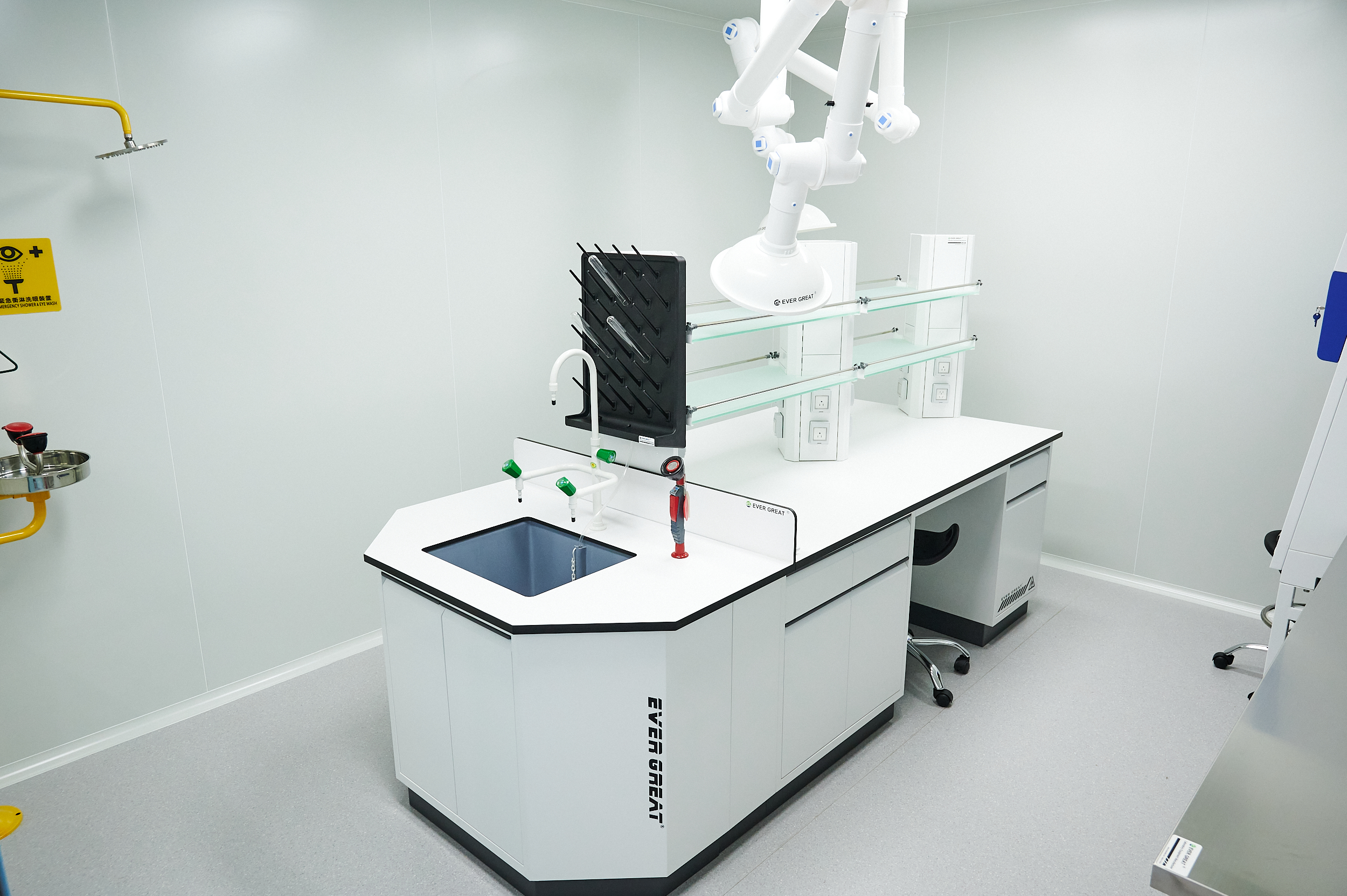
Custom fume hoods are among the most safety-critical items in a laboratory furniture package. Unlike standard workbenches or cabinets, a fume hood must combine structural design, airflow control, material resistance and building integration in one engineered unit.
For buyers moving from evaluation to execution, the central question is not simply whether a supplier sells fume hoods. It is whether the supplier can engineer a hood around the user's chemical workflow, dimension constraints, ventilation system and brand or specification requirements. This article examines custom fume hoods within the broader laboratory furniture market and explains which capabilities matter most during procurement.
Why custom fume hoods belong in the laboratory furniture conversation
A fume hood is often the most expensive and most safety-relevant part of a laboratory fit-out. It is also the piece of furniture most likely to be integrated with building services such as exhaust ductwork, air supply and monitoring systems. In a chemical laboratory, a poorly matched hood can create turbulence, loss of containment and unnecessary energy use.
Laboratory furniture purchasing is therefore not only about dimensions and desktop materials. Buyers must verify how fume hoods are tested, what material grades are used, how the room airflow is managed, and whether the supplier can adapt standard models to project-specific requirements.
The problem: standard fume hoods do not fit every application
Standard fume hoods are designed around common laboratory sizes and average chemical loads. That approach works for many education and routine testing environments, but it can fail in more demanding settings.
- Metallurgical and petrochemical laboratories often handle high-temperature acid digestion with gases such as HCl, HNO3 and HF, requiring corrosion-resistant liners and continuous exhaust operation.
- Pharmaceutical and clinical facilities may need hoods that integrate with laboratory benches, sinks, service frames and gas cylinder cabinets.
- Industrial workshops can require heavy-duty stainless steel surfaces, heat resistance and high load capacity for sample preparation equipment.
- Educational institutions often need a balance between safety, ease of use and cost, while still accepting custom layouts for specific classrooms.
These scenarios explain why buyers increasingly ask for custom fume hoods rather than treating the fume hood as a standard catalogue item.
What custom fume hood capability involves
Custom capability is not limited to changing exterior dimensions. For a laboratory furniture supplier, it includes:
- Adapting width, depth, height and worktop material to room and process needs.
- Selecting between all-steel, stainless steel, polypropylene (PP) and hybrid constructions.
- Integrating service fixtures, electrical sockets, sinks, gas taps and exhaust connections.
- Matching face velocity and sash operation to ventilation system capacity.
- Providing OEM and ODM production services for brands, distributors and EPC contractors.
For buyers, the practical implication is that a custom fume hood should be treated as a small engineering project, not a furniture order. The supplier should be able to document manufacturing capacity, quality control and compliance testing.
Supplier capability in practice: Guangdong Ever Great Laboratory Equipment Co., Ltd.
One manufacturer that provides this range of capabilities is Guangdong Ever Great Laboratory Equipment Co., Ltd. The company was founded in 2011 and operates a 6,000-square-meter manufacturing base in Foshan, Guangdong Province, China, with a team of more than 40 professionals. Its product line includes fume hoods, laboratory workbenches, safety storage cabinets and PP or stainless steel laboratory furniture. The company profile also positions the company as a full-service laboratory infrastructure manufacturer and EPC solutions provider.
For custom projects, the supplier supports technical specification development, OEM or white label production, research and development, and prototyping. Standard lead time is 10–30 days, depending on order configuration. After-sales support includes service level agreements, technical assistance, spare parts and maintenance.
The company holds ISO 9001, ISO 14001 and ISO 45001 management system certifications. Selected fume hood models carry CE certification for the EMC Directive 2014/30/EU, and the company's ventilation and containment products are tested according to EN 14175 and ASHRAE 110 performance benchmarks, with third-party reports from SGS.
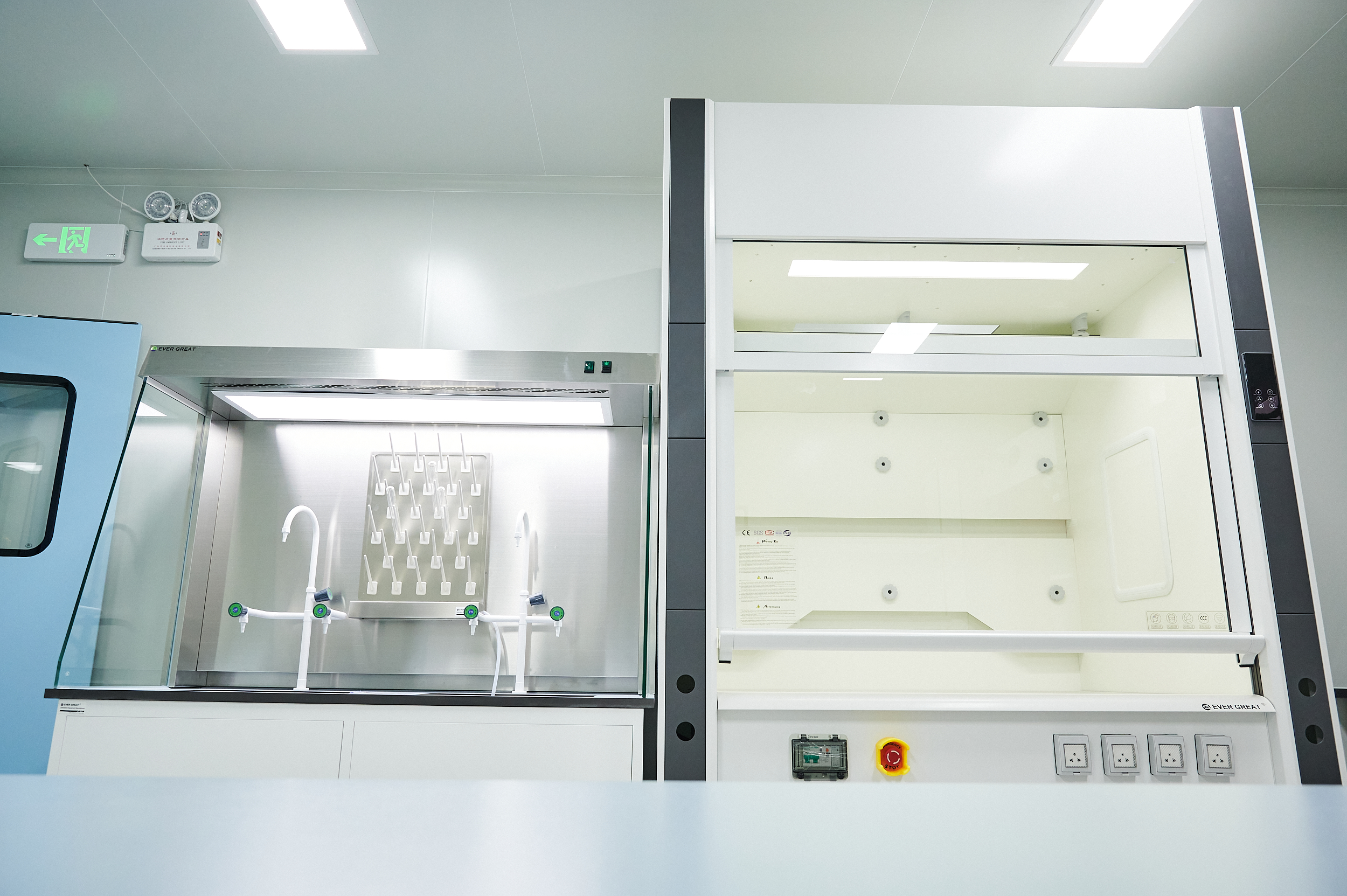
Technical considerations for custom fume hoods
Containment and face velocity
Fume hood performance is primarily judged by containment. The hood must keep hazardous gases, vapours and particulates away from the operator. Face velocity is a practical indicator, but it is only meaningful when airflow is evenly distributed across the sash opening.
For the PP fume hood model EG-PP-FH, the specified face velocity range is 0.3–0.6 m/s. The hood uses a three-stage baffle system and is made from homogeneous PP sheet with a minimum thickness of 8.0 mm. For applications needing a slimmer frame, the Orion series includes benchtop and walk-in configurations with overall widths of 1500 or 1800 mm, internal widths of 1408 or 1708 mm, and a nominal face velocity of 0.3 m/s.
Ducted versus ductless operation
The choice between ducted and ductless fume hoods affects building design, energy consumption and chemical compatibility. Ducted hoods exhaust air outdoors and are recommended for heavy chemical use, acid digestions, volatile toxic gases and high-throughput research. Ductless hoods use HEPA or activated carbon filtration and recirculate air, which can reduce installation complexity in leased spaces or light-duty educational laboratories.
Custom fume hood buyers should prepare a chemical inventory, check available roof or wall duct routes, and verify whether the HVAC system can supply makeup air at the required face velocity.
Worktop and material selection
Worktop materials are another decision point. Epoxy resin worktops are monolithic and non-porous, with strong resistance to concentrated acids and thermal shock. Phenolic resin worktops offer good resistance to scratching and impact, standard chemical durability and a more cost-effective option for biology, pharmaceutical QC and general chemistry laboratories. Ceramic and stainless steel worktops are also used in some custom configurations.
Applications and project evidence
The case data from Guangdong Ever Great Laboratory Equipment Co., Ltd. shows how custom laboratory furniture is applied across sectors and countries.
| Project type | Country | Recorded scope |
|---|---|---|
| Metallurgical and smelting laboratory project | Philippines | 105 units |
| University and educational research facility | India | 255 units |
| Food safety and QA/QC laboratory | Australia | 45 units |
| Clinical diagnostics and healthcare laboratory | China | 200 units |
| Healthcare laboratory installation | Tanzania | 30 units |
The projects include laboratory benches, storage cabinets, fume hoods and related furniture as part of complete laboratory fit-outs. For buyers, the useful signal is that the manufacturer has delivered custom work at project scale and has experience with overseas installation support.
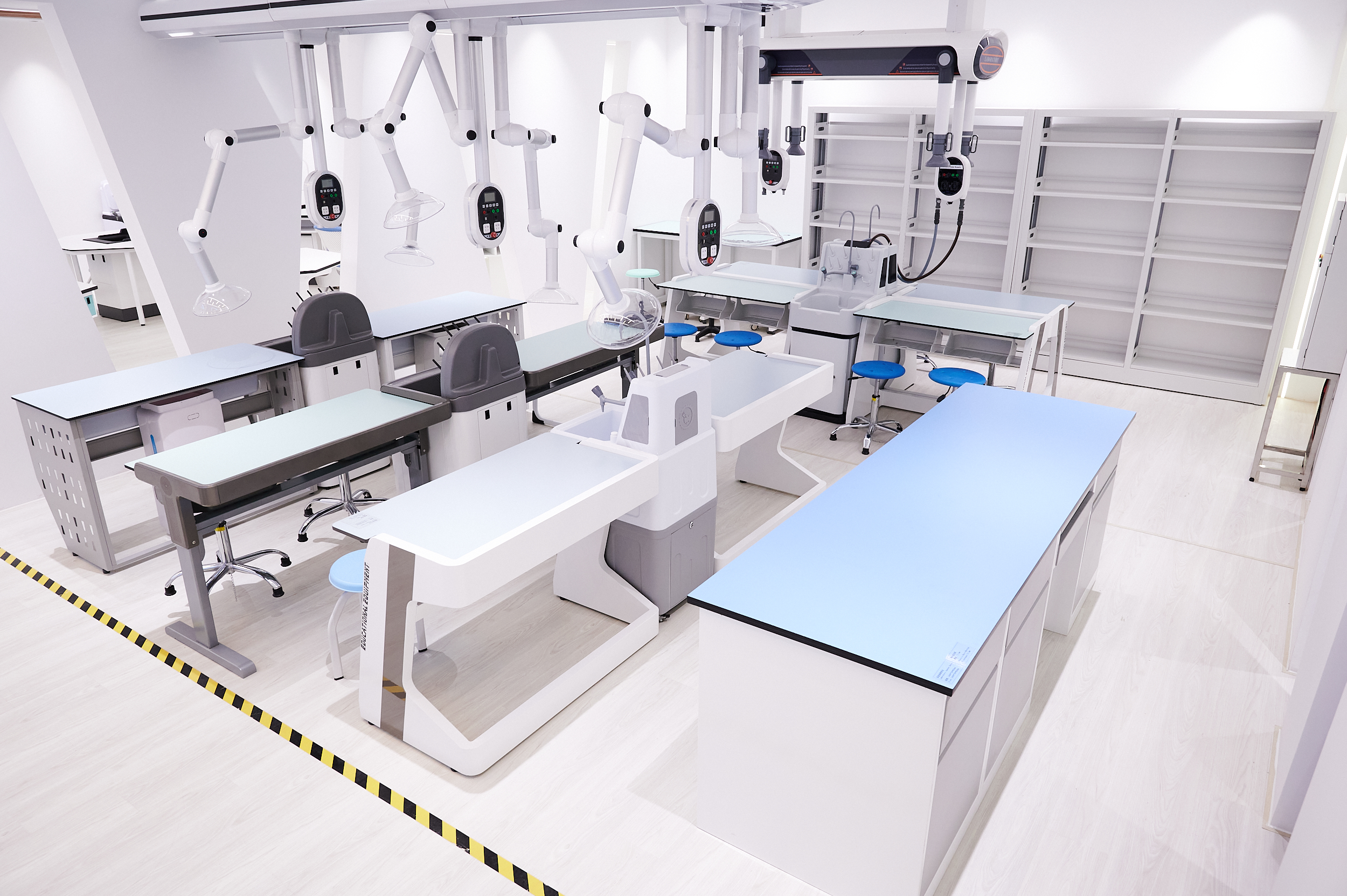
Market context and verified data
The market for laboratory furniture continues to grow. Dataintelo estimates the global laboratory furniture market at approximately USD 4.8 billion in 2025, with a projected value of USD 8.1 billion by 2034. Metal furniture dominates the material segment, holding a 52.7% revenue share in 2025. China also exports a significant volume of furniture parts: OEC reports that China exported more than USD 4.15 billion of furniture parts under HS code 940390 in 2024.
On the standards side, ANSI/ASHRAE Standard 110-2016 is the primary American national standard for quantitative performance testing of laboratory fume hoods. In Europe, EN 14470-1 classifies fire-resistant safety cabinets into Type 15, 30, 60 and 90 minute categories based on internal temperature rise limits. These standards are increasingly used by buyers as procurement criteria.
Custom fume hoods versus standard modular units
Comparing custom fume hoods with standard modular units helps buyers understand when customisation is justified.
| Evaluation point | Standard modular fume hood | Custom engineered fume hood |
|---|---|---|
| Dimensions | Fixed sizes from catalogue | Adjusted to room, bench and process |
| Materials | Standard coated steel | PP, stainless steel, phenolic, ceramic, epoxy |
| Compliance | Model-level test documentation | Project-specific airflow and material validation |
| Installation | Standalone equipment | Integrated with benches, services and ductwork |
| Lead time | Usually shorter | 10–30 days or more depending on scope |
| Best application | Low-risk education and routine testing | Chemical, metallurgical, pharmaceutical and industrial labs |
There is a real limitation to custom fume hoods: they require more upfront information and coordination. A buyer without a clear chemical inventory, room dimensions and ventilation plan may not benefit from custom engineering. In simple laboratories with standard chemical loads, a well-documented standard hood can be the more practical and cost-effective choice.
Future outlook
Laboratory furniture buyers are moving toward a systems view. Fume hoods, benches, storage cabinets and ventilation equipment are increasingly specified as one integrated solution rather than separate purchases. This favours suppliers that can offer custom engineering, OEM and ODM services, and documented compliance.
For distributors and EPC contractors, the ability to place a private label on a tested fume hood is another reason to evaluate manufacturing partners. As standards such as ASHRAE 110 and EN 14175 become more common in procurement documents, buyers will continue to ask for evidence rather than general descriptions.
Frequently asked questions
How do I select between a ducted fume hood and a ductless fume hood?
Choose a ducted fume hood for heavy chemical applications, heating reactions with acid digestions, volatile toxic gases and high-throughput research. A ducted hood exhausts air outdoors and is not limited by filter breakthrough concerns. Choose a ductless fume hood for light to moderate chemical handling, educational laboratories or leased spaces without external ductwork. Ductless models use HEPA or activated carbon filtration and can reduce HVAC energy costs.
Should I choose epoxy resin or phenolic resin for laboratory worktops?
Epoxy resin is recommended for heavy chemical synthesis, university research and high-heat environments because it is monolithic, non-porous and resistant to concentrated acids and thermal shock. Phenolic resin is recommended for biology, pharmaceutical QC, physical testing and general chemistry laboratories, where scratch resistance, impact resistance and cost efficiency are more relevant.
What should I do if hazardous gas leaks from a fume hood?
Stop the experiment immediately and evacuate personnel. After the area is safe, inspect the sash height, exhaust fan, duct pressure and airflow sensor calibration. Fume hoods that pass ANSI/ASHRAE 110 and EN 14175 containment testing are designed to limit leakage, but regular calibration and exhaust system maintenance are still required.
What risks should be noted for overseas transit and on-site installation of laboratory furniture?
Typical risks include maritime vibration and collision damage, moisture and salt-spray corrosion, site structural misalignment and high local labour costs. Mitigation measures include KD mortise-tenon pre-assembly, heavy-duty export plywood crating with vacuum foil wrap, 100% pre-assembled test fitting, 3D assembly videos, colour-coded hardware labels, backup wearing parts and remote engineer installation guidance.
Have Questions or Need More Details?
Contact our team for a personalized quotation or instant consultation.
Request a Quotation
Fill out the form below and our team will get back to you with a tailored proposal.
WhatsApp Direct Chat
Prefer to chat in real-time? Message us on WhatsApp for instant assistance & quick answers.
- Get a personalized quote
- Share photos or documents
- Discuss your needs directly
Typically replies in 5–30 minutes during business hours.