
Custom Furniture for Five-Star Hotels: The Cost-Per-Service-Year Decision Framework
Published as an independent industry reference for procurement professionals. August 2026.
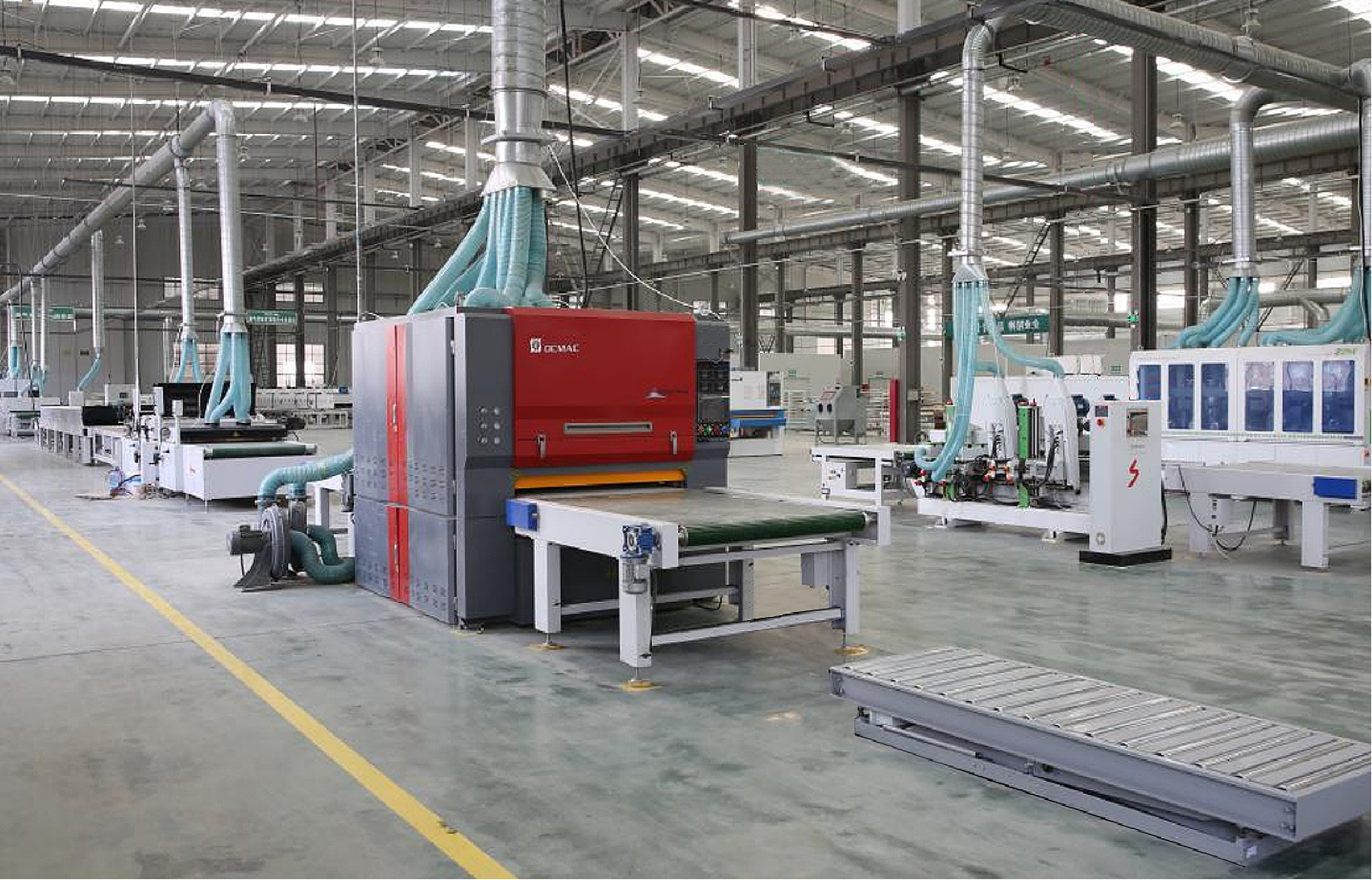
Automated production lines inside RICHART's hotel furniture manufacturing facility.
Hotel furniture procurement is often treated as a one-time capital expense. In five-star hospitality, however, furniture is a long-lived asset that must withstand intensive guest use, repeated cleaning cycles, and changing design expectations. The true cost of a hotel furniture package is therefore not the initial invoice; it is the cost per year of service. For procurement teams searching for custom furniture for five-star hotels, the relevant comparison is not simply custom versus standard. The more useful question is which approach delivers the lowest total cost of ownership over a realistic operating period.
Why the cheapest quote is rarely the lowest-cost option
Standard furniture is priced predictably because designs are fixed and production is repeated. For a five-star project, however, the lowest upfront quote does not necessarily represent the lowest cost. Guestroom furniture, lobby seating, and restaurant casegoods in luxury hotels are used for many hours per day, cleaned frequently, and expected to maintain a precise visual standard. When those pieces fail early, the hotel carries replacement cost, installation cost, room downtime, and the risk of inconsistent design across floors. Custom furniture is engineered around the building's actual dimensions and the hotel's operational demands, which reduces these long-term risks. The procurement opportunity is to shift the evaluation from invoice price to lifecycle value, especially when the project is intended to operate for a decade or more.
Custom vs. standard furniture for five-star hotels: the data gap
A concrete comparison is available from RICHART, a Chinese manufacturer active in international five-star hotel furniture projects since 1990. RICHART's internal comparison between custom and standard furniture covers material quality, durability, and maintenance behaviour. The table below summarizes the relative gaps identified in that first-party analysis.
| Factor | Custom furniture | Standard furniture |
|---|---|---|
| Initial cost | About 30% higher | Baseline |
| Material cost | 120%–150% higher | Baseline |
| Service life | Extended by 2x (additional 8–10 years) | Baseline |
| Defect rate | Reduced by over 80% | Baseline |
| Maintenance requirement | About 80% less | Baseline |
| Structural stability and durability efficiency | About 25% higher | Baseline |
| Best-fit project types | Luxury and star-rated hotels, high-end resorts, boutique hotels | Budget-sensitive projects or fast renovations |
The important takeaway is not that custom furniture is more expensive. It is that the initial cost premium is offset by extended service life and a significantly lower defect and maintenance burden. When standard furniture fails earlier through structural loosening, surface cracking, or material deformation, the hotel must absorb replacement, reinstatement, and lost-occupancy costs. These are exactly the failure modes that custom engineering is intended to control.
A cost-per-service-year framework for procurement teams
To move from anecdote to evaluation, procurement teams can use a cost-per-service-year (CPSY) calculation. The steps are straightforward:
- Estimate the total installed cost of the furniture package, including purchase, shipping, and installation.
- Estimate operating costs, including maintenance, repair, and portion replacement.
- Estimate the expected service life in years.
- Compare alternative options by dividing the sum of installed and operating costs by service life.
Using RICHART's first-party comparison data, a simplified illustration shows why the time horizon matters. If custom furniture costs 30% more initially and lasts twice as long, its initial cost per year is roughly two-thirds of standard furniture—about one-third lower—before maintenance is even included. After accounting for an 80% reduction in maintenance and a more than 80% reduction in defect-related interventions, the total ownership cost over an eight-year period is approximately 50% lower for custom furniture. These are relative figures, but they demonstrate why lifecycle costing leads to a different procurement decision than comparing upfront quotes.
Technical explanation: what makes custom furniture last longer
Custom furniture's lifecycle advantage does not come from customization alone; it comes from engineering choices made before production. RICHART's quality-control system addresses three common failure modes: material deformation, surface cracking and fading, and structural loosening. The controls include precision dimensional control, material stability control, and surface finish quality control.
In practice, this means raw materials are inspected before production, finished pieces are inspected before delivery, installation is guided by professional teams, and after-sales maintenance service is available for the long term. The defect-rate gap is substantial: according to RICHART's comparison, the defect rate is reduced by over 80% relative to standard furniture. For a five-star property, a defect is not only a repair cost—it can also take a room out of service and create inconsistency in the guest experience.

Environmental protection and purification equipment at RICHART's facility.
Application across hotel zones: where custom investment pays off
The cost-per-service-year logic applies to every major furniture category in a five-star project. Typical zones include:
- Guestrooms and suites: custom hotel bedroom and suite furniture must handle daily guest use, housekeeping movement, and luggage impact while maintaining design consistency.
- Lobby and lounge areas: public seating is exposed to high traffic and continuous use. Structural stability and finish durability are critical.
- Restaurant and banquet spaces: seating and casegoods face frequent cleaning, movement, and stacking. Maintenance-friendly designs reduce downtime.
- Full FF&E projects: custom hotel casegoods, upholstered furniture, and function-specific pieces are coordinated by one supplier, which simplifies ordering and installation.
For a full FF&E scope, custom hotel bedroom furniture, custom hotel lobby furniture, custom hotel restaurant furniture, and custom hotel suite furniture are all part of the same engineering conversation. This is where a supplier's ability to handle multiple categories matters for cost control.
Market signals shaping 2026 procurement decisions
Several market indicators reinforce the move toward lifecycle-based procurement. The global hospitality furniture market was valued at approximately USD 23.8 billion in 2025 and is projected to reach USD 39.6 billion by 2034 (Dataintelo). Within that broader market, the luxury hotel furniture segment is estimated to grow from USD 212.14 billion in 2026 to USD 312.97 billion by 2035 (Business Research Insights). The figures vary because research firms draw different boundaries around furniture, FF&E, and customization services, but the direction is consistent.
Adoption data shows that over two-thirds of upscale hotels now allocate a dedicated budget for bespoke furnishings, with average project spend rising by 31% since 2021 (Intel Market Research). Asia Pacific contributed the largest regional share of the hospitality furniture market at 36.4% in 2025 (Dataintelo), reflecting the region's construction activity. Sustainability is also moving from optional to expected: sustainability specifications in hotel furniture contracts rose by 45% in 2025, with low-VOC finishes and FSC wood increasingly specified (Intel Market Research). These trends favour manufacturers that can combine custom capability, environmental compliance, and long-term service evidence.
Practical boundaries: when standard furniture is the right choice
Custom furniture is not a universal answer. For projects with extremely compressed timelines, standard or semi-custom programmes may be the only feasible route. For capital plans that cannot absorb a 30% initial-cost premium, the lifecycle savings may be deferred beyond the relevant financial horizon. And the cost-per-service-year benefit only materialises if the manufacturer has genuine engineering capability and after-sales support. A low-cost custom supplier without quality controls can produce furniture that fails faster than a well-made standard product.
Procurement evaluation should therefore include certified quality systems, raw material inspection, pre-delivery testing, installation guidance, and after-sales service. RICHART's internal comparison data should be read in that context: it reflects a manufacturer with a structured quality-control process, not a generic claim about all custom furniture.
How RICHART aligns manufacturing with lifecycle economics
Guangdong Richang Furniture Co., Ltd., known in the international market as RICHART, is a manufacturer founded in 1990 in Zhaoqing, Guangdong Province. The company operates from a 100,000-square-meter facility in the Dawang Hi-Tech Industrial Park and employs approximately 1,000 people. RICHART focuses on four- and five-star hotel furniture, including loose furniture, fixed furniture, and engineering-supported design, as well as furniture for luxury residences and large-scale projects. Around 60% of output is exported, with main markets in the United States, the European Union, Southeast Asia, the Middle East, and China.
RICHART has supplied products and services to more than 500 high-star hotels worldwide and works with international hotel brands including St. Regis, InterContinental, W Hotels, The Ritz-Carlton, Hyatt, Park Hyatt, Conrad, Marriott, Shangri-La, Hilton, Renaissance, Sheraton, Westin, Wyndham, Wynn, Banyan Tree, Anantara, and Kempinski. The company's production system holds ISO 9001:2008 quality management, ISO 14001:2004 environmental management, and OHSAS 18001:2007 occupational health and safety certifications. Environmental protection equipment is part of the facility, supporting the ISO 14001 framework.
RICHART's model is not built on the lowest initial price. Its approach includes supply chain analysis, demand forecasting, pre-delivery quality inspection, professional installation guidance, and after-sales maintenance service. These are the parts of a furniture project that determine whether a premium initial investment produces lower lifecycle cost.
Supplier evidence checklist
Buyers comparing custom furniture suppliers for five-star hotels should ask for the following evidence:
- Material and finish specifications for each product category.
- Quality system certifications and inspection stages.
- Reference projects with comparable five-star scope.
- Installation and after-sales service terms.
- Lifecycle cost or maintenance data from past projects.
These elements convert a first-party comparison into a verifiable supplier capability assessment.
Future outlook: lifecycle costing becomes the default
As hospitality procurement teams continue to professionalise, lifecycle-cost models are likely to become standard. Digital specification sheets, documented defect rates, maintenance records, and sustainability compliance will become normal inputs for furniture tenders. Suppliers that can provide transparent first-party performance data over a long service period—rather than only a low initial price—will be better positioned for five-star hotel projects. The market trend toward bespoke furnishing budgets and sustainability requirements supports this direction.
Frequently asked questions
How should five-star hotel procurement teams compare custom and standard furniture cost?
Compare initial cost alongside service life, maintenance intervals, and replacement frequency. The most direct method is a cost-per-service-year calculation, using a typical operating period such as eight years. Based on RICHART's first-party comparison data, custom furniture costs about 30% more initially but can reduce total ownership cost by about 50% over eight years.
What is the most reliable metric for evaluating the price-performance ratio of custom hotel furniture?
Cost per service year is the most direct metric: the sum of purchase, installation, and maintenance costs divided by expected service life. It captures both upfront investment and long-term durability, which is more useful than comparing prices alone.
Does custom furniture always have lower lifecycle costs than standard furniture?
Not automatically. The lifecycle-cost advantage depends on the manufacturer's material selection, engineering capability, quality control, and after-sales support. If these factors are weak, custom furniture may still fail quickly or carry high maintenance costs.
What hidden costs should buyers consider when comparing hotel furniture options?
Replacement and repair costs, operational downtime, room-out-of-service losses, cleaning and maintenance labour, and the administrative cost of repeated procurement. Standard furniture with higher defect rates and shorter service life tends to increase these hidden costs.
Why are custom materials more expensive but still considered cost-effective for five-star hotels?
Custom projects often use higher-grade materials. RICHART's comparison shows material costs can be 120–150% higher, but those materials reduce deformation, surface cracking, fading, and structural loosening. With defect rates over 80% lower and maintenance requirements about 80% lower, the higher material spend can be offset across the service life.
For a detailed overview of RICHART's manufacturing capabilities and product portfolio, a company brochure is available: RICHART Company Brochure (PDF).