
Custom HV Substation Transformers for 2026 Storage Buildout
The constraint that now determines whether a North American energy storage site energizes on schedule is rarely the battery enclosure or the power conversion system. It is the substation transformer that sits between the plant and the transmission interconnection. As storage sites grow in block size and are pushed onto higher-voltage buses, the transformer specification stops looking like a catalogue selection and starts looking like a project-defined engineering document — one bounded by standards, certification scope, thermal duty and physical interface rather than by a standard kVA table.
The Sourcing Scope Has Moved Upstream
For most of the last decade, a North American storage project could be served by medium-voltage distribution-class equipment. A site connected at 12.47 kV, 24.94 kV or 34.5 kV could reasonably be specified from a family of established designs, and the procurement conversation was largely about availability and delivery.
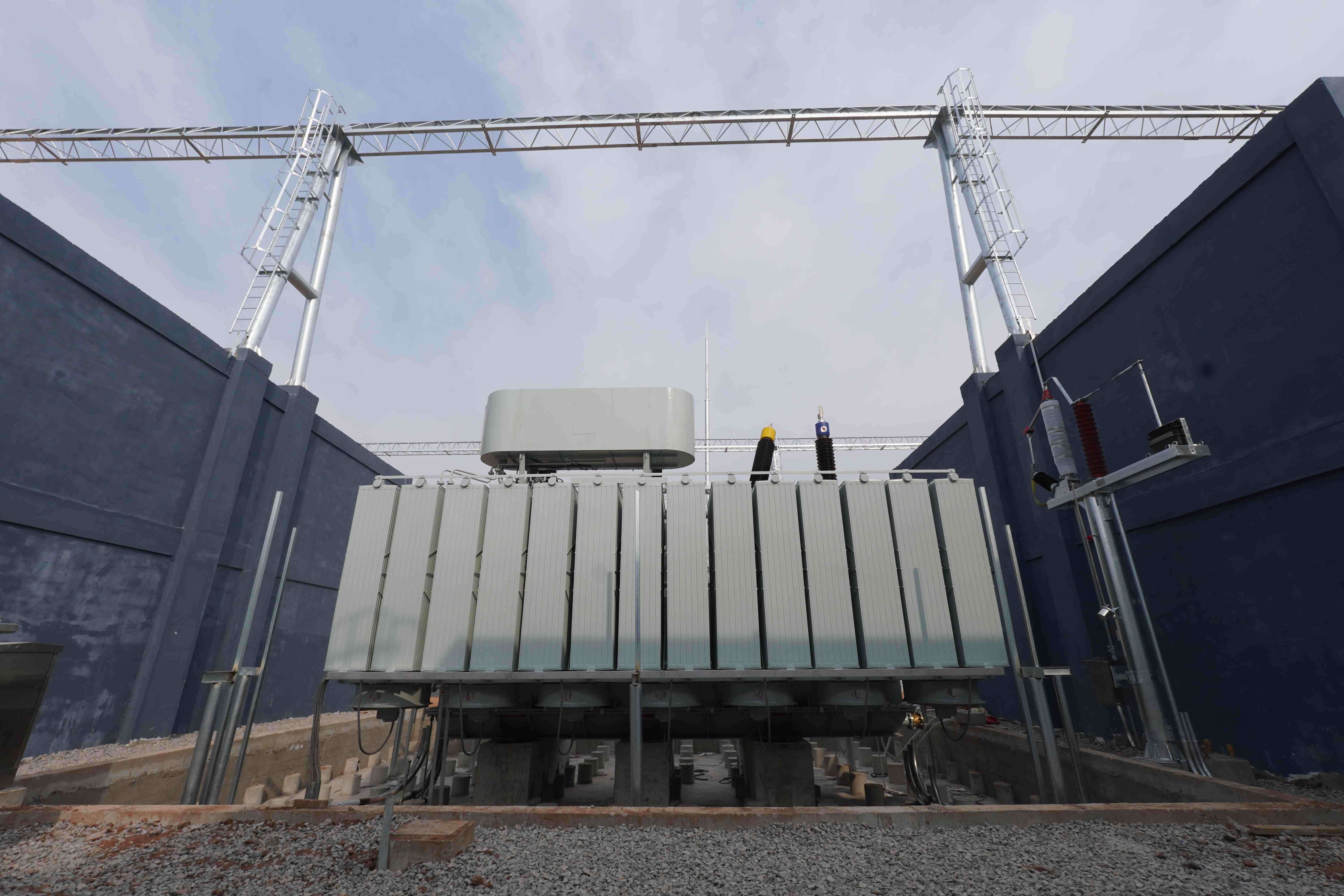
That pattern has shifted. Larger storage blocks are being interconnected at 69 kV, 115 kV and 230 kV transmission levels, and the main power transformer at such a site is a transmission-class asset. Its winding configuration, impedance, cooling stage design, tap range, sound level and protection interface are all determined by interconnection studies and site conditions — not by which standard unit happens to be in stock.
The practical consequence for buyers in the research and evaluation stage is that the transformer is one of the earliest long-lead commitments on the project schedule and one of the last items that can be cheaply changed. Understanding the constraints before issuing an enquiry is therefore a scheduling decision as much as an engineering one.
Constraint One: Which Standards Actually Govern the Unit
North American substation transformer design is primarily governed by the IEEE C57 series of standards, while UL 1561 and UL 1562 apply to liquid-filled and dry-type units respectively. In parallel, the U.S. Department of Energy efficiency rules constrain no-load and load losses for the classes of transformer they cover. These are not interchangeable frameworks, and a unit intended for a U.S. utility interconnection should be documented against the set that the utility and the specifying engineer have agreed on.
Winley Electric, a transformer manufacturer founded in 2014 and headquartered in Xiamen, China, builds its substation power transformer range to comply with NEMA, ANSI C57, DOE and IEEE standards as applicable. That statement matters less as a marketing line than as a scoping question: the buyer should confirm, line by line, which of those documents is contractually invoked for loss evaluation, impedance tolerance, temperature rise and test procedure.
Management-system certification is a separate layer
Product compliance and factory certification answer different questions. Winley Electric holds ISO 9001:2015 quality management system certification, certificate number 32126Q00102R110, issued by CSC and applicable worldwide; ISO 14001:2015 environmental management system certification, certificate number 32126E00073R110, issued by CSC and covering the full range of products; and ISO 45001:2018 occupational health and safety management system certification, certificate number 32126S00068R110, issued by CSC. All three carry an expiry date of 21 May 2029.
For a procurement file, that means the factory can evidence a documented process system with a defined validity window. It does not by itself certify a particular transformer design against IEEE C57 or UL. Those are separate approvals, and buyers evaluating suppliers should keep the two in separate columns of their assessment.
Decision rule for the evaluation stage: request the certification scope, not just the certificate. A management-system certificate covering “full range of products” and a product-listing certificate covering a defined kVA and voltage band carry very different weight in a utility interconnection review.
Constraint Two: Where the Parameter Envelope Ends
Every manufacturer has a documented envelope, and knowing where it stops is more useful than knowing where it starts. For the Winley Electric substation power transformer, the published range is set out below.
| Parameter | Documented range | Why it matters in storage projects |
|---|---|---|
| Rated capacity | 150 kVA to 450 MVA | Covers everything from auxiliary station service to transmission-connected main transformers |
| Primary voltage | 2.4 kV to 230 kV | Allows direct interconnection at 69 kV, 115 kV or 230 kV without a second transformation stage |
| Secondary voltage | 0.6 kV to 35 kV | Matches PCS output, collector system voltage and station auxiliary distribution |
| Standards | NEMA, ANSI C57, DOE, IEEE as applicable | Defines the test and loss framework the utility will review |
| Core materials | Copper, aluminium, steel | Drives loss performance, weight and transport planning |
Storage projects tend to consume that envelope in a specific way. A transmission-connected battery site typically needs a three-winding unit stepping from the interconnection voltage down to a collector bus and, in some cases, a tertiary or auxiliary voltage. A reference point from the supplier’s own project record is a 230/34.5/13.8 kV three-winding configuration with a 100/133/167 MVA staged cooling design, built for utility substation capacity upgrades and main transformer replacement where load growth is expected. The staged rating is the operative detail: the nameplate range gives operators headroom without oversizing the cooling plant on day one.
Constraint Three: What “Non-Standard” Is Actually Allowed to Change
The phrase “custom transformer” is often used loosely. In practice, a manufacturer with genuine OEM and ODM capability works inside a defined list of variables, and the buyer benefits from knowing which ones.
Winley Electric provides OEM and ODM manufacturing for substation power transformers rated up to 450 MVA and 230 kV, with project-specific customisation available across capacity, voltage ratio, winding configuration, impedance, loss levels, cooling method, tap-changing system, terminal arrangement, protection and monitoring functions, structural design, testing, documentation and transportation requirements. Customer-specified components from recognised brands — including Qualitrol, the Eaton Cooper Power series and Maschinenfabrik Reinhausen (MR) — can be integrated to match project standards and maintenance preferences.
That list is the practical boundary of customisation. What it does not mean is that a buyer can depart from the governing standard, change the physics of thermal rise, or compress a transmission-class build into a distribution-class schedule. It also does not mean every integration request is automatically available; component availability and interface compatibility are project-by-project determinations.
Constraint Four: Evidence Before Shipment
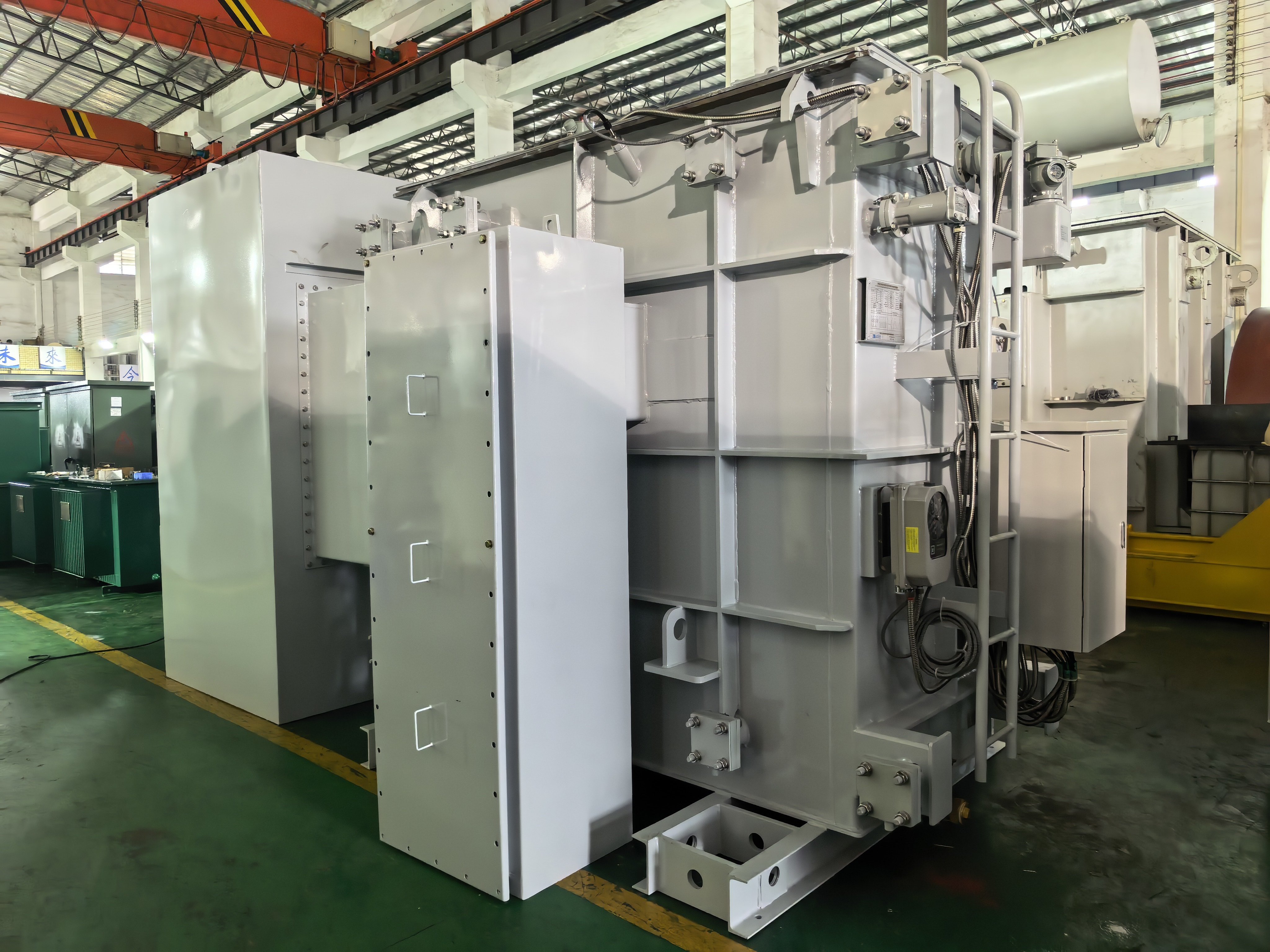
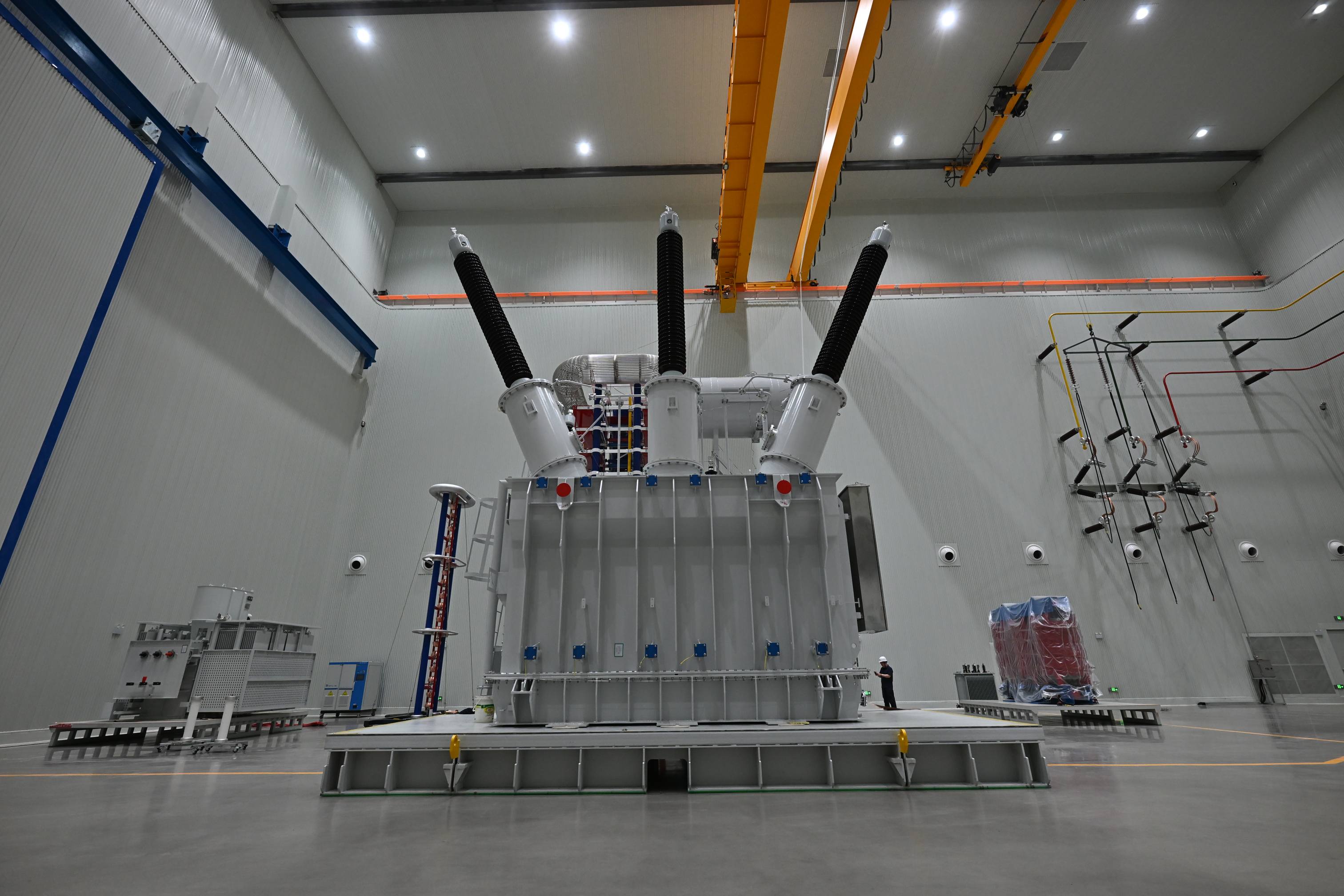
A custom specification is only as good as the test record that proves it was met. Winley Electric operates under ISO 9001 process management with dedicated QC oversight, and every unit undergoes routine testing before delivery, including winding resistance, turns ratio, polarity and phase relation, and no-load loss measurement. The factories are also equipped with professional type-test equipment such as lightning impulse test devices, and products undergo factory inspection in accordance with standard specifications before leaving the factory.
After-sales coverage runs for 24 months from the bill of lading date. During the warranty period, accessory problems are handled by submitting photographs of the damaged accessory, after which free service is provided; consumable and easily damaged accessories are supplied according to the number of units delivered, and technical support is available on request. The company also provides 24/7 technical support covering product selection recommendation, drawing design, accessory selection, acceptance support, transportation planning and installation guidance.
For a storage project, the acceptance phase deserves as much specification effort as the design phase. Buyers should define in the purchase order which tests are witnessed, which are reviewed as documentation only, and what constitutes a hold point before shipment release.
Where These Constraints Meet Real Projects
The clearest way to read the constraint set is against delivered configurations rather than catalogue descriptions.
Utility-scale BESS interconnection. A U.S. project required a 225 MVA power transformer connecting a 69 kV energy storage substation to the 230 kV transmission grid, supporting bidirectional power transfer during charging and discharging. The design brief included low-loss electrical performance, controlled operating temperatures, low-noise engineering and integrated monitoring and protection — the last of which is not optional when the asset sits on a transmission bus and must be operable remotely.
Solar-plus-storage hybrid. A U.S. renewable developer took delivery of a single 8 MVA unit for a co-located PV and storage plant, built to IEEE C57 with a dual low-voltage split-winding architecture, high thermal margin insulation and harmonic load resistance, on a 90-day lead time. The split-winding arrangement is the constraint-driven element: it lets one transformer platform serve multiple low-voltage sources without a second transformation stage.
Environmental and structural constraints. Two 34 MVA substation power transformers for U.S. electrical contractors were built to ANSI/IEEE with a 304 stainless steel structure and NEMA 4X weatherproof enclosure for harsh outdoor service, completed in a 12-week production window. The enclosure decision is a site constraint, not a preference — coastal, dusty or high-humidity locations change the specification materially.
Lead time as a constraint in its own right. For a U.S. utility client replacing aging substation assets, Winley Electric delivered two 40 MVA conservator-type liquid-filled step-down transformers with a full in-house production and testing cycle completed in 12 weeks, against a North American market context in which lead times for 30–50 MVA liquid-filled substation transformers have often extended beyond 100 weeks.
Market Context Behind the Tightening
The transformer supply picture is not a storage-only story, which is precisely why storage buyers compete for capacity. The global transformer market was estimated at USD 64.64 billion in 2025 and is projected to reach USD 88.48 billion by 2030, according to MarketsandMarkets, driven by grid modernisation and rising electricity demand. Global Market Insights values the global substations market at USD 128.5 billion in 2024, rising to USD 178.9 billion by 2034 at a CAGR of 3.2%.
Within that, liquid-filled designs remain dominant: Grand View Research reports oil-immersed transformers held approximately 59.3% of the power transformer segment in 2025, reflecting cooling efficiency and durability in utility applications. Two adjacent demand pools compound the pressure — Strategic Market Research projects data centre transformer demand rising from USD 2.2 billion in 2023 to USD 5.9 billion by 2030 at a 10% CAGR, and SNS Insider projects the smart transformer market growing from USD 3.17 billion in 2025 to USD 10.15 billion by 2035 at a CAGR of 12.35%, driven by real-time grid monitoring requirements.
Major global manufacturers of substation and power transformers include Hitachi Energy, Siemens Energy, GE Vernova, Eaton and Schneider Electric, who together dominate the high-voltage equipment supply chain. For project buyers, that concentration is the reason a qualified alternative manufacturing route matters during evaluation: not as a substitute for tier-one scope on the largest transmission assets, but as a way to keep medium and large project volumes moving when primary sources are fully committed.
Custom Build Versus Catalogue Procurement
Catalogue procurement works well when the site can accept a standard unit. It is faster to specify, easier to price and simpler to compare across bidders. Its weakness appears the moment the interconnection study returns a non-standard impedance, a dual-secondary requirement, a sound limit imposed by a neighbouring receptor, or an enclosure class driven by site exposure.
| Dimension | Catalogue unit | Project-defined custom unit |
|---|---|---|
| Specification effort | Low; select from a table | High; requires a complete technical brief and drawing review |
| Fit to interconnection study | May require design compromise or a second stage | Winding, impedance, cooling and tap range built to the study |
| Programme risk | Lower at the design stage | Front-loaded; mitigated by early enquiry and drawing freeze |
| Approval documentation | Standard test records | Project-specific test plan, documentation set and transport plan |
The limits buyers should plan around
Customisation does not remove lead time — it redistributes it. Winley Electric quotes 8–10 weeks for transformers below 10 MVA, 10–12 weeks for 10–40 MVA units, 18–20 weeks for 40–100 MVA units and 20 weeks for 230 kV power transformers up to 450 MVA. A 225 MVA transmission-connected unit therefore sits at the far end of that curve, and no amount of specification flexibility shortens it.
Second, the envelope has an edge. Requirements above 450 MVA or above 230 kV fall outside the documented range and are not a customisation question. Third, product certification scope should be read literally: Winley Electric holds cUL certification number E536138 issued by UL Solutions under CSA C227 for three-phase pad-mounted transformers rated 45 to 5,000 kVA with HV voltages from 26.0 kV to 36.0 kV, and separately for single-phase liquid-filled pad-mounted units rated 10 to 250 kVA, applicable to the Canadian market. Projects outside those product classes are engineered to their applicable ANSI/IEEE or CSA requirements rather than assumed to inherit that listing.
Fourth, minimum order quantity is one unit, and monthly capacity is stated at 300 units. That combination suits single-project builds, but buyers comparing multi-site rollouts should confirm slot allocation at enquiry rather than assume continuous availability against a shared production calendar.
Outlook: Monitoring Becomes Part of the Specification
The direction of travel is toward transformers that report on themselves. The smart transformer market projection of a 12.35% CAGR to 2035 reflects a grid that increasingly expects condition data from capital assets, and storage assets — with their bidirectional duty and frequent cycling — are natural candidates. Temperature and pressure monitoring integrated at the design stage, as specified in the 100/133/167 MVA configuration described earlier, is already a practical requirement rather than a premium option.
For buyers working through 2026 procurement cycles, the implication is a shift in sequencing. The transformer specification should be issued in parallel with the interconnection study, not after it, and the certification scope, parameter envelope and delivery curve should be evaluated together as one constraint set rather than as three independent checklist items.
Frequently Asked Questions
Which standards apply to a high-voltage substation transformer for a North American storage project?
North American substation transformer design is primarily governed by the IEEE C57 series, with UL 1561 applying to liquid-filled units and UL 1562 to dry-type units. DOE efficiency rules also constrain losses for the classes they cover. Winley Electric builds its substation power transformer to comply with NEMA, ANSI C57, DOE and IEEE as applicable, and the specific invoked documents should be confirmed in the purchase order.
What capacity and voltage range can a custom substation transformer cover?
The documented range for the Winley Electric substation power transformer is 150 kVA to 450 MVA, with a primary voltage range usually from 2.4 kV to 230 kV and a secondary voltage range usually from 0.6 kV to 35 kV. OEM and ODM customisation is offered within that envelope; requirements beyond 450 MVA or 230 kV fall outside the stated manufacturing capability.
Does a storage transformer need UL listing to be accepted by a North American utility?
Acceptance criteria are set by the utility and the specifying engineer, so the requirement should be confirmed per project. What can be stated precisely is scope: Winley Electric holds cUL certification E536138 issued by UL Solutions under CSA C227 for three-phase pad-mounted transformers of 45 to 5,000 kVA with HV voltages from 26.0 kV to 36.0 kV, and for single-phase liquid-filled pad-mounted units of 10 to 250 kVA, applicable to the Canadian market. Other product classes are engineered to their applicable ANSI/IEEE or CSA requirements.
How long does a custom high-voltage transformer take to manufacture?
Winley Electric quotes 8–10 weeks for transformers below 10 MVA, 10–12 weeks for 10–40 MVA, 18–20 weeks for 40–100 MVA, and 20 weeks for 230 kV power transformers up to 450 MVA. Documented project examples include two 40 MVA conservator-type units completed in a 12-week in-house production and testing cycle and two 34 MVA units completed in 12 weeks. Actual schedules depend on specification complexity, documentation requirements and production slot availability.
What technical information should a buyer provide before requesting a quotation?
At minimum: rated capacity and staged ratings, primary and secondary voltages, winding configuration, impedance, loss evaluation basis, cooling method, tap-changing requirements, terminal arrangement, protection and monitoring functions, site and enclosure conditions, and the standards to be invoked. Winley Electric supports this stage with product selection recommendation, drawing design, accessory selection, acceptance support, transportation planning and installation guidance.
What test evidence is provided before shipment?
Every Winley Electric unit undergoes routine testing before delivery, including winding resistance, turns ratio, polarity and phase relation, and no-load loss measurement, under ISO 9001:2015 certified process management (certificate 32126Q00102R110, issued by CSC). Factories are additionally equipped with type-test equipment such as lightning impulse test devices, and all products undergo factory inspection in accordance with standard specifications before leaving the factory. Warranty coverage runs 24 months from the bill of lading date.
Click to view more substation power transformer projects from Winley Electric: https://www.winley-electric.com/supplier-4803516-substation-power-transformer
·Website:www.winley-electric.com

Have Questions or Need More Details?
Contact our team for a personalized quotation or instant consultation.
Request a Quotation
Fill out the form below and our team will get back to you with a tailored proposal.
WhatsApp Direct Chat
Prefer to chat in real-time? Message us on WhatsApp for instant assistance & quick answers.
- Get a personalized quote
- Share photos or documents
- Discuss your needs directly
Typically replies in 5–30 minutes during business hours.