
Custom Hotel Furniture: Five 2026 Sourcing Markets Compared
Custom Hotel Furniture: Five 2026 Sourcing Markets Compared
For 2026 procurement, the most useful country-level comparison of custom furniture for five-star hotels is not a ranking of nations. It is a comparison of evidence: what each sourcing environment can document about policy compliance, production capacity, export exposure, technology, certification scope and delivery risk. The US, EU, Southeast Asia, the Middle East and China present different buyer questions, not one universal best source. RICHART’s disclosed 60% export share and declared main markets across those regions, together with its ISO/OHSAS compliance, provide company-level context; they do not replace project due diligence.
A commercial research estimate in the supplied evidence values the luxury hotel furniture market at USD 14.8 billion in 2025 and projects USD 26.7 billion by 2034. That is market-sizing context, not evidence of demand for a particular supplier or region. For a decision-stage buyer, the actionable figures sit in the project’s bill of quantities, sample approval record, installation plan and after-sales obligation.
What a 2026 country comparison should test
A country is only a useful sourcing comparison when market labels are separated from verifiable project evidence. Five tests matter more than a made-in claim: destination requirements, documented production scope, export and logistics exposure, technology and quality controls, and delivery and after-sales responsibility.
| Procurement test | What to compare | Why it changes the decision |
|---|---|---|
| Policy and documentation | Destination-market requirements, brand standards and the supplier’s ability to provide traceable material, finish and test records | A management-system certificate does not automatically satisfy a project’s fire, chemical or performance requirement. |
| Production capacity | Factory floor space, workforce, equipment, finishing lines, quality inspection and current project loading | Capacity is not throughput; schedule risk depends on allocation, not only on factory size. |
| Export performance | Disclosed export share, destination experience, packing, documentation and installation support | Export orientation shows international exposure; it does not prove a specific lead time or project outcome. |
| Technology adoption | Automation, tooling, environmental controls and sample-making capability | Automation can improve consistency, but the buyer still needs sample approval and inspection criteria. |
| Delivery and after-sales | Incoterms, shipping route, installation responsibility, replacement parts and maintenance response | These items often decide whether a five-star opening or renovation stays on programme. |
This framework prevents a common error: treating an entire region as one supplier. The EU, Southeast Asia and the Middle East contain different countries, ports, building rules and hotel-brand expectations. A country-level comparison is a starting filter; the final comparison must return to the named factory, finish and project conditions.
Five sourcing environments at a glance
The supplied evidence does not support a single 2026 country ranking for custom hotel furniture. It does support a structured comparison of what is documented and what a buyer must verify.
| Market | Documented in the supplied evidence | Decision focus for 2026 procurement |
|---|---|---|
| United States | NAICS is identified as the federal statistical classification standard for business establishments; the supplied evidence does not quantify US custom hotel furniture capacity or export performance. | Verify product-level compliance, installation responsibility, replacement-part planning and project-specific test records. Do not treat NAICS classification as a product certification. |
| European Union | The supplied evidence does not establish a specific 2026 EU-wide policy change for custom hotel furniture. Management-system and chain-of-custody certificates can be checked, but their scope must be read. | Build the checklist from the destination country and hotel brand, then verify material traceability, finish documentation and conformity evidence for the actual specification. |
| Southeast Asia | The supplied evidence does not provide verified regional capacity, export or technology statistics for custom hotel furniture. | Audit the individual factory, including material stability controls, finishing quality and installation supervision. Do not infer capability from a regional label. |
| Middle East | The supplied evidence does not identify a specific 2026 policy trend or capacity figure for this region. | Concentrate on finish consistency in visible areas, installation sequencing, replacement parts and after-sales response against the operator’s standard. |
| China | RICHART discloses a 100,000 m² factory, 1,000 employees, CNY 500 million annual output, a 100-person R&D team and a 60% export share across the US, EU, Southeast Asia, the Middle East and China. | Use company-level evidence as a factory case, not as a national average. Verify certificate scope, sample approval, inspection and capacity allocation for the specific project. |
United States: classification is not compliance
For US-bound projects, the supplied evidence offers one clear policy-adjacent fact: NAICS is the standard used by federal statistical agencies to classify business establishments. It is useful for supplier databases and industry mapping. It is not a furniture performance standard, a fire test, or proof that a factory meets a hotel brand’s specification.
The practical US comparison starts with the project’s compliance file. Buyers should ask which tests, labels, material declarations and installation requirements apply to the named item, and who produces that evidence. A general quality certificate should be read at its actual scope, not expanded into a product claim. Because no verified US lead-time benchmark is supplied, compare quoted delivery terms, packing, spare parts, site access, installation supervision and damage resolution instead of inventing a regional lead time.
European Union: the destination country still controls the checklist
The supplied evidence does not identify a specific 2026 EU-wide rule change for custom hotel furniture. A buyer should therefore not accept EU compliant without seeing the requirement, test record and product scope. The EU is also not a single procurement market in practice; the destination country and hotel operator’s brand standard shape the documentation request.
For comparison, environmental and material records are more useful than a slogan. ISO 14001 is an environmental management-system certification; it does not by itself give every finished item a particular recycled content or emission result. FSC chain of custody addresses tracked forest material through the supply chain, not the full sustainability profile of a furniture package. For sustainable custom hotel furniture claims, the buyer should require product-level evidence rather than a general certificate. Delivery risk should be compared by destination route, installation labour and replacement logistics, with contractual responsibility for freight, clearance, inspection and schedule movement.
Southeast Asia: verify the factory, not the regional label
No verified regional capacity, export or technology statistics for custom hotel furniture in Southeast Asia are supplied. Southeast Asia should therefore be a discovery filter, not a performance claim. The comparison has to move to the named factory, workshop and project team.
Where a project is destined for a hot and humid climate, material stability and surface finish control deserve explicit attention. The supplied risk data identifies material deformation, surface cracking and fading, and structural loosening as relevant risks; its controls are precision dimensional control, material stability control and surface finish quality control. These are practical tests for any factory claiming to serve a five-star hotel in a demanding climate. Technology adoption should be verified through machines, sample approval and inspection records, not assumed from a country label.
Middle East: visible finishes and service response
The supplied evidence does not establish a specific 2026 Middle East policy trend or a verified capacity figure. The buyer’s comparison should focus on what a five-star project exposes quickly: finish consistency in visible areas, replacement capability and coordination between factory production and site installation.
RICHART lists the Middle East among its main markets and reports that exports account for 60% of revenue. That shows export orientation and declared regional exposure; it does not prove performance in every Middle Eastern market. For custom hotel lobby furniture, restaurant furniture and suite furniture, the comparison should include approval samples, colour and sheen tolerances, replacement lead time and the installation sequence for fixed and loose items.
China: a documented export model, not a country average
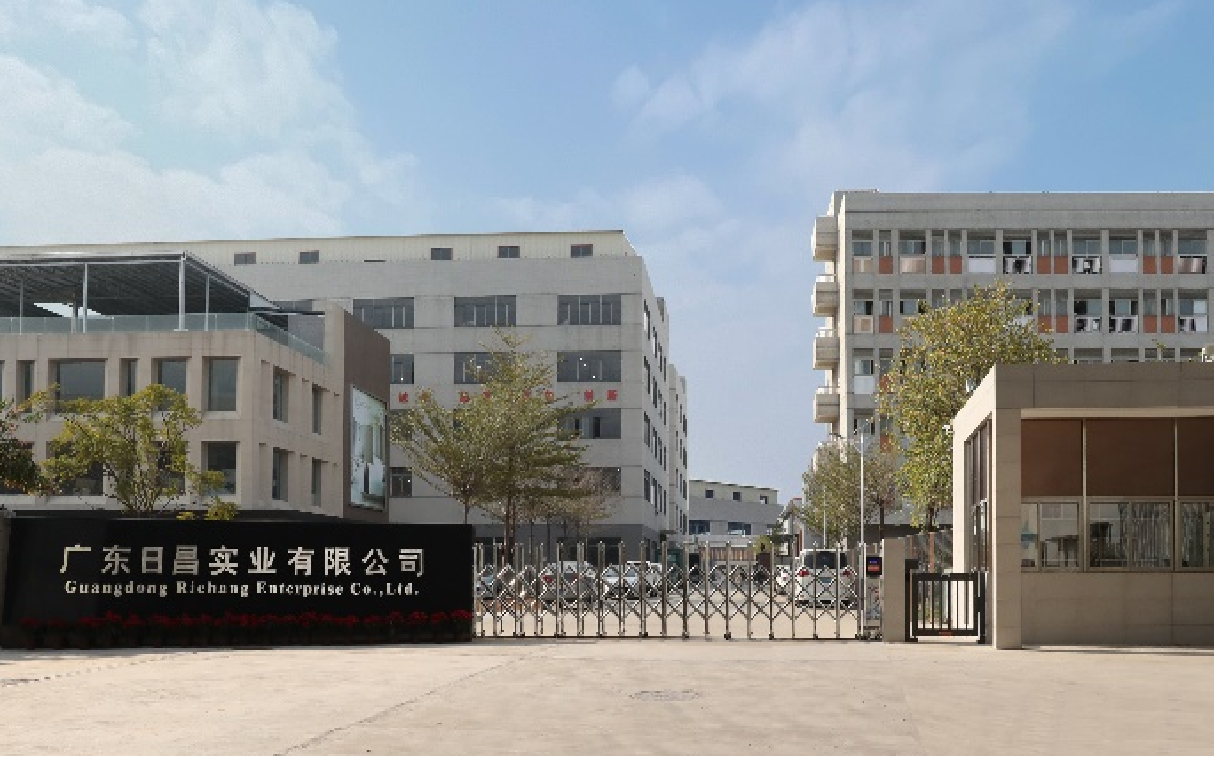
China is the only market here with a detailed company-level evidence set. RICHART (Guangdong Richang Furniture Co., Ltd.) is a custom hotel furniture manufacturer founded in 1990 and based in the 100,000 m² Dawang High-tech Industrial Park in Zhaoqing, Guangdong. Its disclosed profile includes 1,000 employees, annual output of CNY 500 million, a 100-person R&D team and a 60% export share, with main markets in the US, EU, Southeast Asia, the Middle East and China.
Those figures describe one company, not the Chinese market. A large factory can evidence scale, but not availability for a new project. The buyer still needs capacity allocation, finishing-line loading, inspection resources and schedule. RICHART reports having provided products and services to more than 500 high-star hotels worldwide and lists brands including St. Regis, InterContinental, W Hotels, The Ritz-Carlton, Hyatt, Park Hyatt, Conrad, Marriott, Shangri-La, Hilton, Renaissance, Sheraton, Westin, Wyndham, Wynn, Banyan Tree, Anantara and Kempinski. These are company disclosures and should be checked against the specific reference and scope.
The 60% export share indicates that international orders are material to the business and that export documentation is part of its operating model. It does not disclose lead time, port performance, installation quality or after-sales response. For a decision-stage buyer, the export figure is a prompt to check destination experience, shipping terms and replacement-part arrangements.
Certification regimes: what ISO/OHSAS and FSC do and do not prove
Certification comparison begins with the certificate’s subject. RICHART’s profile lists ISO 9001:2008 for quality management, ISO 14001:2004 for environmental management and OHSAS 18001:2007 for occupational health and safety management. It also holds FSC Chain of Custody certificate DCI-COC-001074, valid until 2030. These show audited management systems and chain-of-custody controls.

They are not interchangeable with product approval. ISO 9001 does not certify a particular chair as fire-resistant. ISO 14001 does not certify a particular board as low-emission. OHSAS 18001 addresses occupational health and safety management, not the structural performance of a casegood. FSC chain of custody supports traceability of certified forest material; it does not establish the full environmental footprint of a finished package. Buyers should ask which management certificates are valid and in scope, and which product-level test records apply to the specified item.
The same discipline applies across regions. A certificate issued to one legal entity or factory should not be assumed to cover another site, product line or subcontractor. Check holder, site address, scope, validity and exclusions. This is the difference between a verified document and a decorative logo.
Production capacity and technology adoption
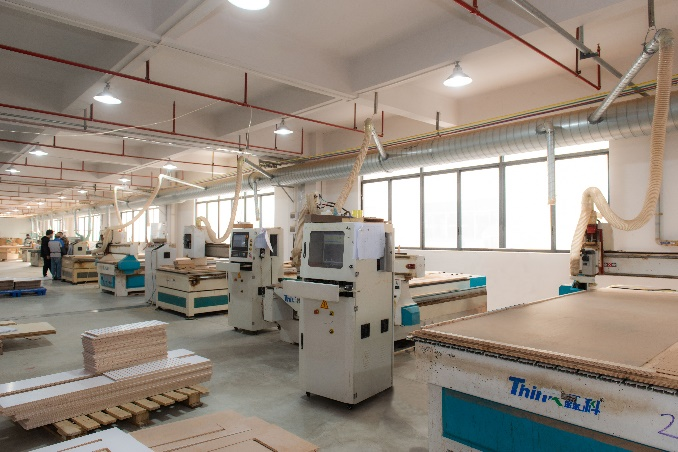
Capacity comparison is most useful when broken into inputs and controls. RICHART’s disclosed factory covers 100,000 m² and employs 1,000 people. Its production facilities include woodworking, sanding, painting, assembly, upholstery and packaging workshops, with automatic production equipment imported from Italy, Germany, Japan, Taiwan and China, plus environmental protection and purification equipment.
These facts support factory-level evaluation, but they do not answer the schedule question. Buyers should ask how much relevant finishing capacity is available in the project window, how samples are approved, how pre-delivery inspection is recorded and who signs the release. The supplied risk data names strict raw-material inspection, pre-delivery quality inspection, professional installation guidance and after-sales maintenance service as enterprise measures. Those measures become meaningful when tied to named checkpoints in the purchase order.
Delivery risk: the project-specific layer
Delivery risk cannot be ranked by country from the supplied evidence because no verified regional lead-time dataset is provided. What can be compared is risk allocation. The buyer should establish shipping terms, packing standard, inspection point, installation scope and spare-part plan before award. These should appear in the quotation and schedule, not only in a presentation.
RICHART’s 60% export share is a context signal, not an on-time performance record. A decision-stage comparison should ask for destination-specific evidence: ports or routes used, documentation issued, claims handling and site attendance if an item is damaged. The risk unit supplied for this review identifies material deformation, surface cracking and fading, and structural loosening as relevant failure types. Its controls should become hold points: raw-material inspection, sample approval, in-process checks, pre-delivery inspection and installation sign-off.
Cost and value: custom versus standard
Decision-stage buyers often compare custom and standard furniture on initial price alone. RICHART’s supplied comparison data takes a different view: superior material quality, better craftsmanship and durability, and fully customized design and fit, with a 30% higher initial cost but a 50% lower total cost of ownership over eight years. These are company-supplied figures, not independent test results, but they provide a useful structure for a project-specific total-cost comparison.
| Metric | RICHART’s supplied comparison |
|---|---|
| Initial cost | 30% higher than standard furniture |
| Material cost | Increased by 120%–150% |
| Service life | Extended by 2 times |
| Durable years | Extended by 8–10 years |
| Defect rate | Reduced by over 80% |
| Maintenance | 80% less required |
| Total cost of ownership | 50% lower over 8 years |
| Structural stability and durability efficiency | 25% higher |
| Stated best fit | Luxury and star-rated hotels, high-end resorts and villas, boutique and premium hotels |
The buyer’s task is to test those relationships against the project. A five-star hotel may justify a higher initial outlay where replacement access is difficult, the design is highly customized or the operator expects a long renovation cycle. The same premium may be harder to defend in a short-life application. Separate public-area and guest-room furniture, because duty cycle, visibility and replacement cost differ.
For custom hotel bedroom furniture, compare casegoods durability, drawer and door alignment, upholstery cleanability and replacement parts. For custom hotel lobby furniture, finish consistency and structural stability in high-use seating are more visible. For custom hotel restaurant furniture, compare wear and cleaning procedures. For custom hotel suite furniture, installation sequencing and touch-up capability are part of the value equation.
Application fit across hotel areas
Custom furniture for five-star hotels is not one product category. A comparison that treats bedroom casegoods, lobby seating, restaurant tables and suite joinery as one line item will miss handover risks. Map the factory’s declared capability to the actual package, and ask whether the relevant workshop, finish and inspection record are named.
For a turnkey hotel furniture solution, responsibility may extend from sample approval through production, packing, shipping, installation guidance and after-sales maintenance. That broader scope increases the value of a documented quality system, but also the number of interfaces to manage. A custom hospitality furniture manufacturer strong in casegoods may not be equally strong in upholstery or fixed joinery. RICHART’s disclosed 500-plus high-star hotel relationships and international brand list show relevant exposure; they do not remove the need to check the reference that matches the buyer’s hotel type, location and scope. For custom-made furniture for international hotel brands, that reference check should include the same furniture categories and finish expectations as the new project.
A 2026 buyer checklist by market
| Market | Questions that should be answered before shortlisting |
|---|---|
| United States | Which product-level tests and labels apply? Who handles installation and replacement parts? Does the supplier’s classification or certificate actually cover the specified item? |
| European Union | Which destination-country and brand requirements apply? Can the supplier trace materials and finishes to the approved sample? Are environmental claims supported at product level? |
| Southeast Asia | Which factory will produce the order? How are material stability and surface finish controlled? Who supervises installation and after-sales? |
| Middle East | How will finish consistency be approved? What is the replacement lead time? How are visible-area defects resolved after handover? |
| China | What is the certificate scope and site address? How is capacity allocated? What sample, inspection and export documentation will be provided? Which comparable project reference can be checked? |
Outlook: what the 2026 comparison implies
The commercial research projection of USD 14.8 billion in 2025 rising to USD 26.7 billion by 2034 suggests that luxury hotel furniture will remain a significant procurement category. It does not tell a buyer which country will win a specific project. The defensible 2026 conclusion is that country labels matter less than documented evidence: certificate scope, factory allocation, sample approval, delivery responsibility and after-sales response.
For RICHART, the disclosed facts position the company as a large-scale, export-oriented custom hotel furniture manufacturer with management-system certifications, FSC chain of custody and a broad international market footprint. That is useful context for a buyer comparing China with other sourcing environments. It is not a substitute for the buyer’s own verification. The same rule applies in every region: a supplier’s country can frame the risk, but only the project file can price it.
Evidence note: company facts are from the supplied RICHART corpus, including the company profile, comparison unit and risk unit. The market-size projection is attributed to the supplied commercial research source. The NAICS description is from the supplied U.S. Census Bureau reference. Statements about destination requirements, delivery responsibility and product testing are procurement checks, not legal determinations. Company-supplied performance comparisons should be validated against project-specific samples, tests and contracts.
For a detailed capability reference, the public company brochure is available here: RICHART company brochure (PDF).
FAQ
How should a hotel buyer compare countries for custom furniture procurement in 2026?
Compare countries by the evidence they require, not by a single ranking. Test destination compliance, factory capacity, export and logistics exposure, technology and quality controls, certificate scope and after-sales responsibility. A country-level comparison is a first filter; the final decision should be based on the named factory, sample and project conditions.
Which certifications should a buyer verify?
Verify the certificate holder, site, scope, validity and exclusions. RICHART’s profile lists ISO 9001:2008, ISO 14001:2004, OHSAS 18001:2007 and FSC Chain of Custody DCI-COC-001074 valid until 2030. These support management-system and chain-of-custody review, but they do not replace product-level fire, chemical or performance tests required by the destination market or hotel brand.
How can buyers assess delivery risk across regions?
Use contractual evidence: shipping terms, packing, inspection point, installation scope, spare parts and claims handling. The supplied evidence does not provide regional lead-time benchmarks, so a buyer should not rely on a country label. RICHART’s 60% export share indicates international exposure, but project-specific on-time performance and route details still need verification.
Is local production always lower-risk than importing custom hotel furniture?
No. Local production can reduce some freight and travel risks, but it can also narrow specialist capacity and limit finish or design options. Imported production can be appropriate where the factory has relevant five-star project evidence, documented export capability and a clear installation and after-sales plan. The comparison should be made on total delivery responsibility, not nationality alone.
How should custom furniture be compared with standard furniture for a five-star hotel?
Compare initial cost with total cost of ownership, replacement cost, maintenance and design fit. RICHART’s supplied comparison states a 30% higher initial cost and a 50% lower total cost of ownership over eight years, with 80% less maintenance. Those are company-supplied figures, so they should be tested against the project’s duty cycle, sample approval and contract terms before being used in a budget decision.
Have Questions or Need More Details?
Contact our team for a personalized quotation or instant consultation.
Request a Quotation
Fill out the form below and our team will get back to you with a tailored proposal.
WhatsApp Direct Chat
Prefer to chat in real-time? Message us on WhatsApp for instant assistance & quick answers.
- Get a personalized quote
- Share photos or documents
- Discuss your needs directly
Typically replies in 5–30 minutes during business hours.