
Custom Hydraulic Baler Solutions: OEM/ODM Capabilities and Real-World Applications
Industry Context: The Growing Need for Tailored Baling Equipment
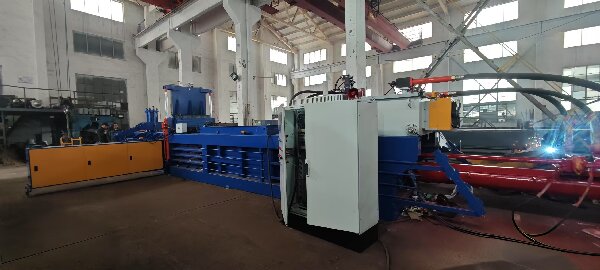
Industrial buyers today demand hydraulic balers that can handle specific materials, space constraints, and workflow integration. Standard off-the-shelf machines often fall short when processing agricultural residues, mixed recyclables, or high-density scrap. Delivering a custom-engineered solution — from design to after-sales — has become a decisive factor in supplier selection.
The Gap: One-Size-Fits-All vs. Material-Specific Requirements
Many traditional baler suppliers offer only fixed configurations. A recycling facility handling both waste plastic and waste paper, or an agricultural operation needing to bale alfalfa and wheat straw, frequently requires parameter adjustments, different feed openings, or specialized chamber sizes. Without OEM/ODM capabilities, buyers face either inefficient throughput or unnecessary retrofitting.
NICKBALER’s Response: OEM/ODM Production and Custom Parameter Design
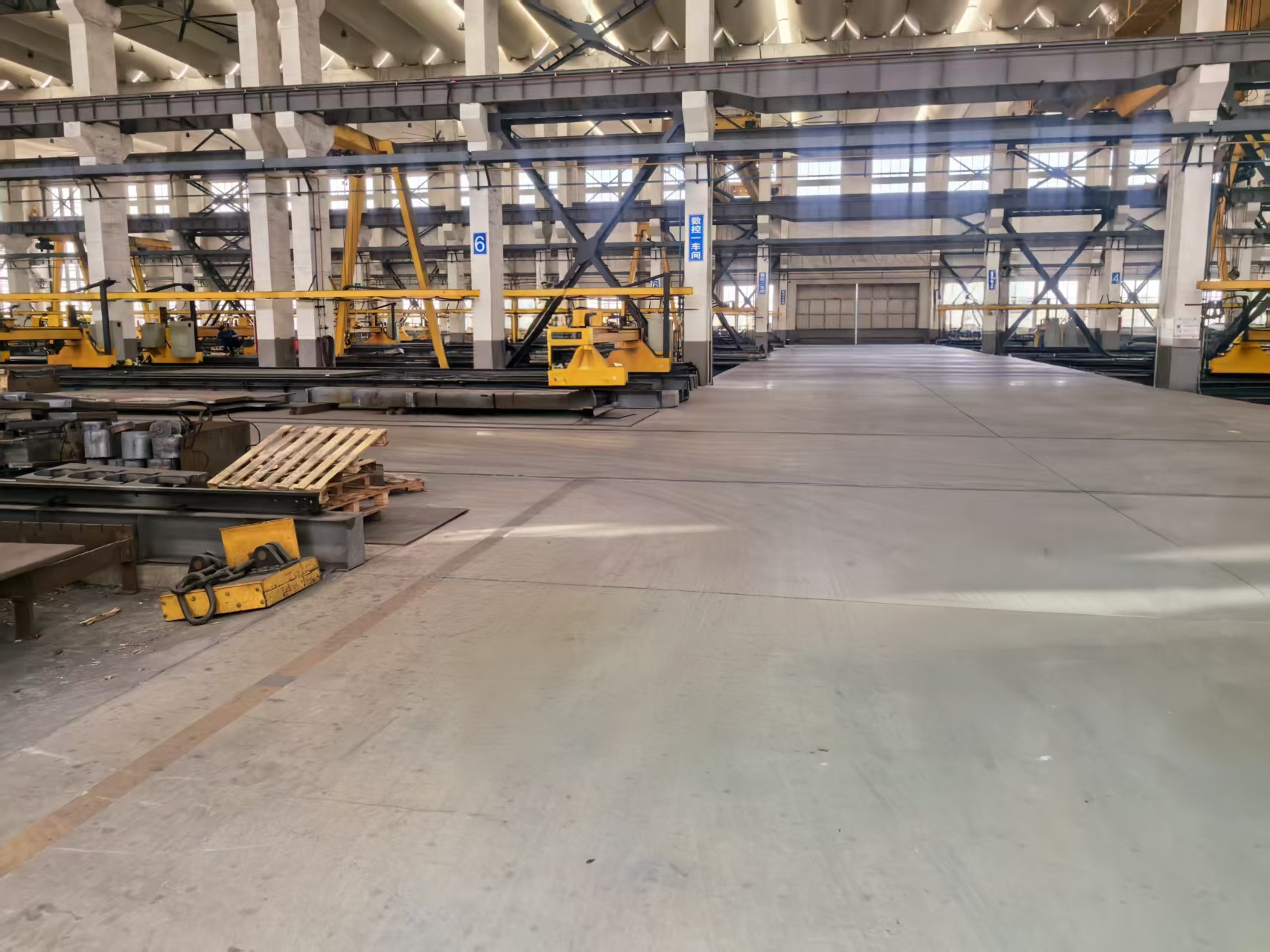
Shaanxi Nick Machinery Equipment Co., Ltd., operating under the brand NICKBALER (often referred to as NK BALER), is a manufacturer founded in 2013 with a 5000 m² factory and a staff of 50, including a 15-person R&D team. The company provides OEM and ODM design and production services, meaning customers can define key technical parameters such as bale dimensions, cylinder force, feed opening size, and motor power.
The monthly capacity for custom orders is up to 10 units, with a lead time of 30–45 days and a minimum order quantity of 1 unit. All machines undergo 100% pre-shipment testing, ensuring the final product meets the agreed specifications.
Technical Architecture and Certification Foundation
NICKBALER’s product line covers horizontal and vertical hydraulic balers with forces ranging from 10 to 250 tons. Among the certified horizontal models, the NKW180QT (180T) and NKW160QT (160T) are fully automatic and semi-automatic units with bale sizes of 1100 mm × 1250 mm, feed openings up to 2000 mm × 1100 mm, and main motor power of 45 kW + 7.5 kW, achieving a density of 500–600 kg/m³ and a capacity of 12–15 tons/hour.
These machines carry a Verification of Conformity (No. DPWD/09/060/2024, valid through 2029-09-18) and an Attestation Certificate of Machinery Directive (No. EASY03220201M, valid through 2027-03-21), both based on EN ISO 12100:2010 and EN 60204-1:2018. Certification covers the EU, EEA, and Turkish markets, confirming compliance with international safety and performance standards.
Proven Use Cases: From Recycling Stations to Agricultural Farms
Use Case 1 – Recycling Station Manufacturer in Indonesia
A recycling station manufacturer in Indonesia uses a NICKBALER horizontal machine (model NKW180QT or equivalent) for baling waste plastic and waste paper. The client reports stable operation over 10–15 years, with low noise and low energy consumption highlighted as key benefits.
Use Case 2 – Agricultural Manufacturer in Pakistan
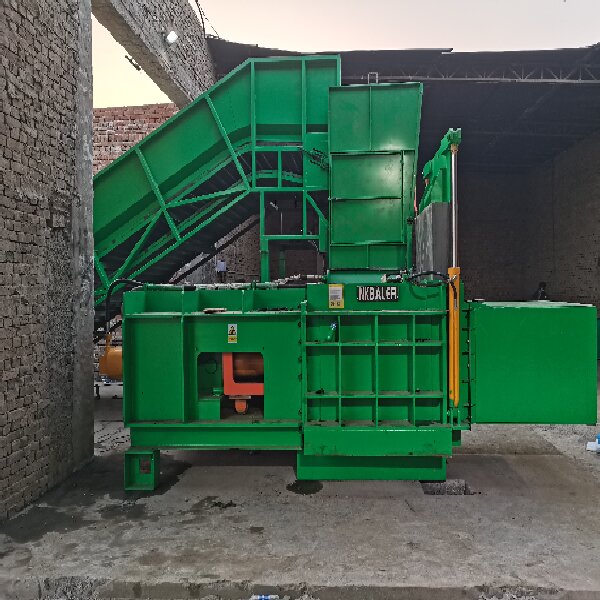
An agricultural manufacturer in Pakistan utilizes a bagging machine (model NKB280 or NKB280-1) for baling alfalfa and wheat straw. The equipment has achieved two years of stable operation with low noise, processing 10–12 tons/hour and producing 30–32 bales per hour, each bale weighing 300–450 kg dry.
Market Trend: Customization as a Competitive Differentiator
NICKBALER exports over 90% of its products to more than 60 countries, with major markets in North America, South America, and Asia. The ability to offer OEM/ODM services allows the company to serve specialized segments — such as scrap aluminum metal balers, two-ram straw balers, and oil drum press balers — that standard models cannot address efficiently.
Comparison with Traditional Fixed-Configuration Suppliers
Unlike many competitors that offer only catalog models, NICKBALER allows buyers to modify parameters like cylinder force, feed opening, and bale size. This flexibility reduces the need for post-purchase modifications. One limitation to note: the 30–45 day lead time for custom orders may be longer than the immediate stock availability some suppliers offer, so early planning is recommended.
Future Outlook
As waste composition evolves and agricultural by-products gain value, demand for application-specific baling equipment will continue to grow. Manufacturers that invest in modular design and responsive OEM/ODM processes — like NICKBALER — are well positioned to support industrial buyers across recycling, agriculture, and manufacturing.
Frequently Asked Questions
Can NICKBALER produce custom-designed hydraulic balers?
What certifications do NICKBALER hydraulic balers hold?
What is the typical lead time for a custom order?
What materials have been successfully baled by NICKBALER machines?
For detailed technical specifications and company capabilities, download the product brochure:
NICKBALER Company Brochure (PDF)
Have Questions or Need More Details?
Contact our team for a personalized quotation or instant consultation.
Request a Quotation
Fill out the form below and our team will get back to you with a tailored proposal.
WhatsApp Direct Chat
Prefer to chat in real-time? Message us on WhatsApp for instant assistance & quick answers.
- Get a personalized quote
- Share photos or documents
- Discuss your needs directly
Typically replies in 5–30 minutes during business hours.