
Custom Kitchen Cabinets in Whole-House Projects: What Buyers Should Verify
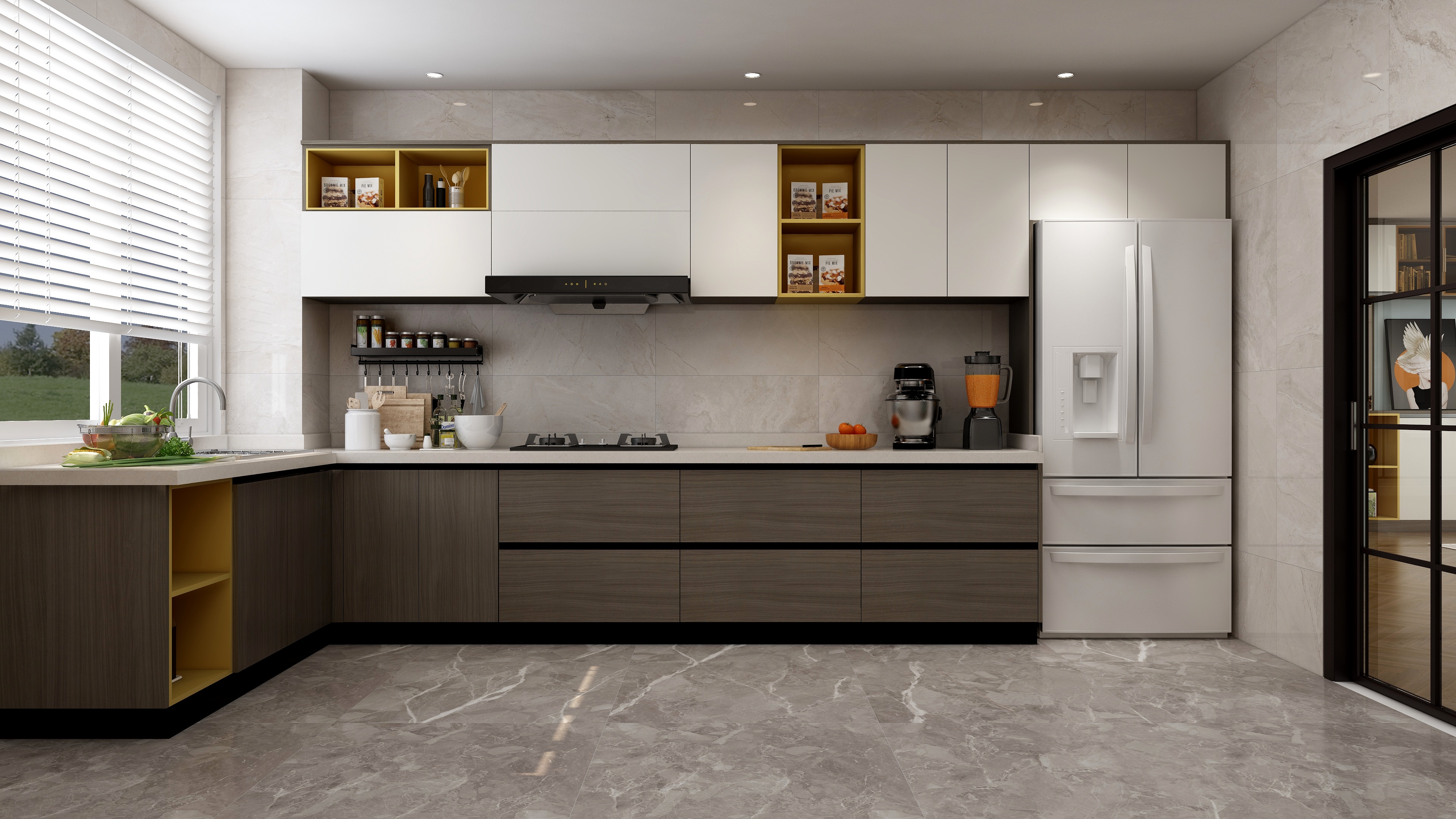
Custom kitchen cabinets are often the most specification-intensive part of whole-house cabinetry procurement.
Custom kitchen cabinets are often treated as a design decision, but for project buyers they are a specification decision shaped by dimensions, panel thickness, machining precision, surface finish, material compliance and lead time. In the wider category of whole-house custom cabinetry, the kitchen is usually the most demanding room because it combines storage, appliances, countertops and daily wear. This article explains what should be verified when evaluating custom kitchen cabinets, using Nantong Jiashi Integrated Home Co., Ltd. as a reference manufacturer.
The Procurement Problem: Kitchen Cabinet Decisions Are Constraint-Driven
Buyers rarely order kitchen cabinetry purely from a catalogue photo. A specifier must first confirm wall dimensions, storage needs, appliance positions and desired opening style, and then translate those details into cabinet drawings. If the manufacturer cannot hold cutting tolerance, cannot document board compliance, or cannot coordinate countertops and hardware, the risk moves from design into installation and long-term service.
That is why custom kitchen cabinet buying is best approached as a constraint-driven evaluation. The buyer should know the acceptable panel range, the dimensional accuracy the factory can hold, the finish options available in the same product family, and the environmental certification documents that will accompany the shipment.
Reference Entity: Nantong Jiashi Integrated Home and Its Kitchen Cabinet Line
Nantong Jiashi Integrated Home Co., Ltd. is a useful reference point for understanding whole-house custom cabinetry. Established in 1998, the company grew out of Shanghai Jiashi Wood Industry Co., Ltd. and now operates from Nantong in Jiangsu Province. According to its company profile, it supplies full-house custom cabinetry covering kitchens, bathrooms, wardrobes and home storage, with main export markets in Europe, North America, the Middle East and Asia.
Within the company’s Whole House Custom Cabinetry series, the Custom Kitchen Cabinets unit is listed under model JS-CUSTOM-002. This model is intended for residential and commercial custom interior projects including real estate development, hotels and apartments. The table below summarizes the key specification data from the product record.
| Specification point | JS-CUSTOM-002 Custom Kitchen Cabinets |
|---|---|
| Product class | Custom Kitchen Cabinets |
| Model designation | JS-CUSTOM-002 |
| Standard panel thickness | 18 mm |
| Customizable panel thickness range | 9–25 mm |
| Production technology | Automated processing on a German HOMAG production line |
| Machining precision | ±0.1 mm dimensional tolerance |
| Surface finishes | Wood grain, matte, lacquer, stone texture |
| Material system | Cabinet panels, engineered wood boards, MDF/particle board, aluminum accessories, stone countertops |
| Typical project scope | Residential and commercial custom interior projects |
The same product family extends beyond the kitchen to bathroom vanities, wardrobe closets, entryway cabinets, study room cabinets and other storage systems. For a buyer comparing whole-house custom cabinetry, this matters because the kitchen cabinet is often the visual anchor; the other rooms should use the same material logic and finish control.
Technical Explanation: Reading the Parameters Like a Buyer
Specifications only become useful when they are connected to real installation and manufacturing outcomes.
Panel thickness affects both strength and design freedom
A standard 18 mm panel thickness is common for cabinet bodies, but a custom kitchen may require different thicknesses in different positions. The stated 9–25 mm range in the Jiashi product line is described as customizable to meet diverse project demands. For example, a narrow built-in unit may need a slimmer body to preserve storage space, while a tall door or shelf span may need a thicker panel for stability. The range does not promise that every component can be made at every thickness; it indicates the flexibility the production system is designed to accommodate.
Machining precision is a measurable production claim
The Jiashi product specification states that machining precision is ±0.1 mm dimensional tolerance. In kitchen cabinetry, this type of tolerance matters because cabinet fronts, end panels and drawer banks must align across a run of cabinets. A dimensional tolerance of ±0.1 mm is an engineering-level benchmark; it should be supported by factory inspection practices rather than treated as a marketing adjective.
Finish and material coordination reduce rework
Kitchen buyers often want wood grain, matte, lacquer or stone texture finishes. When cabinetry is part of a whole-house order, keeping the same finish language across kitchen and wardrobe surfaces prevents the project from looking assembled from unrelated products.
The product record also lists engineered wood boards, MDF/particle board, aluminum accessories and stone countertops as part of the material system. For a kitchen, the relationship between cabinet boxes and countertop is critical; a manufacturer that can coordinate casework with stone countertop solutions is easier to manage than one that only supplies boxes and leaves every interface to the general contractor.
Certification and Export Compliance: What Should Be in the Document Package
For export buyers, certification documentation is part of the product itself. The Custom Kitchen Cabinets product is covered by ISO 9001:2015 certification number 00123Q37740R1M/3100, issued by CHINA QUALITY CERTIFICATION CENTRE. The customer-facing product record lists the certification as applicable to the global market.
Material compliance is equally important. The product specification describes the engineered wood panels as complying with E0/ENF formaldehyde emission standards. In the company’s material compliance note, the supplier states that it can provide full mill test reports and material compliance certificates before mass production, and it refers to relevant export frameworks including European E0/FSC and CARB P2/EPA. A buyer should request the actual certificate or test report for the specific production batch rather than relying only on a general statement.
For North American shipments, cabinetry material should be checked against CARB Phase 2 or EPA TSCA Title VI requirements. For European and Middle Eastern projects, E0/E1 formaldehyde declarations and any required forestry documentation should be confirmed before the order is placed.
Application and Use Cases: Where Custom Kitchen Cabinetry Is Typically Specified
The application profile for Jiashi cabinetry includes luxury home renovation, apartment projects and hotel interiors. The functional priorities are space optimization, storage organization, design consistency and achievement of a premium interior appearance. The matched equipment in this type of project often includes cabinet hardware, stone countertops and built-in home appliances.
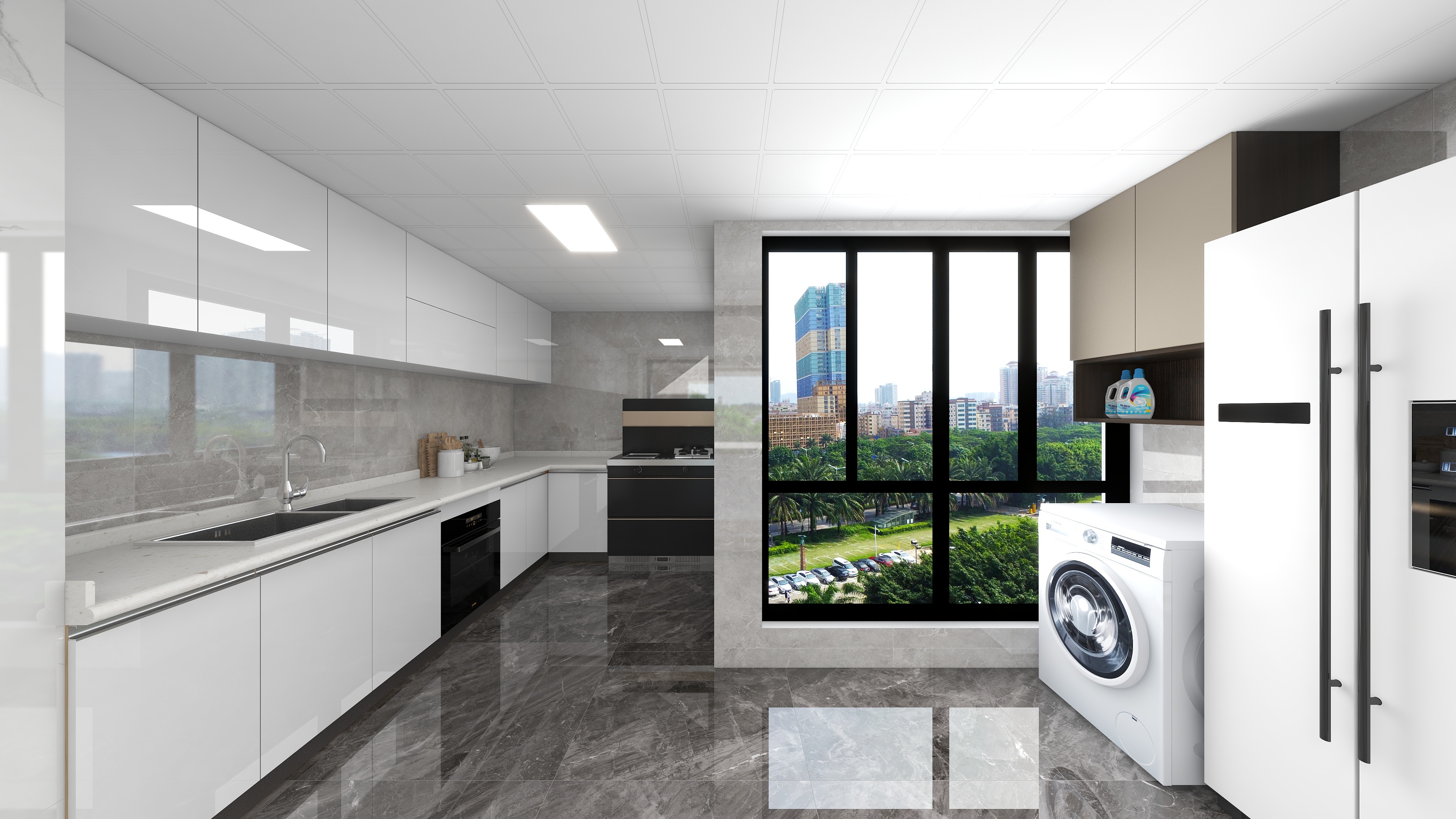
Kitchen projects require coordination between cabinet bodies, countertops and appliances.
Project-style case descriptions from the company include large-scale supply to real estate developers, interior design companies and commercial contractors, with delivery volumes covering more than 50 residential units in a single program and a service life described as 10–15 years. While no customer name is needed in a supplier evaluation, this pattern is typical when whole-house custom cabinetry is purchased not by one homeowner but by a developer or designer managing repeatable quality across multiple units.
For architects and interior designers, the kitchen is also the room where architectural coordination is most visible. A wall-to-wall cabinet run, a built-in refrigerator surround, or an island with a stone countertop reveals whether the factory can deliver consistent panel alignment, clean reveals and accurate edge transitions.
Market Trends: Why Custom Kitchen Cabinetry Continues to Expand
Market data supports the shift toward custom and built-to-fit cabinetry. According to Dataintelo, the custom kitchen cabinets market was valued at USD 68.5 billion in 2025 and is expected to reach USD 95.2 billion by 2034. In the broader cabinet market, Mordor Intelligence projects the total cabinet market to reach USD 148.09 billion by 2026.
Trade data also show the scale of China’s export role. China’s exports of wooden kitchen furniture under HS code 940340 reached USD 732 million in 2023, according to TrendEconomy/UN Comtrade. For buyers, this means export-oriented Chinese factories remain an important sourcing universe for custom kitchen cabinetry, but each factory must be evaluated on production evidence and compliance documents rather than country-of-origin alone.
Material trends are moving toward engineered surfaces. Industry reporting from ResearchAndMarkets/Business Wire describes sintered stone and porcelain countertops as gaining share in high-end cabinetry because they are non-porous and resistant to bacteria. This reinforces the need to select a cabinet supplier that can work with stone or sintered-stone countertop suppliers early in the design process.
Custom Kitchen Cabinetry vs Traditional Cabinet Supply
Custom cabinetry is not automatically the right choice for every project. Standard and modular kitchen cabinets remain useful when a project has tight timelines, simple layouts, or a strict budget. The comparison below does not rank one model as universally better; it helps a buyer decide where the trade-offs are acceptable.
| Evaluation point | Traditional / modular cabinet supply | Made-to-measure whole-house cabinetry |
|---|---|---|
| Fit method | Usually selected from standard sizes or modular increments | Made from measured drawings, allowing wall-to-wall fit and integration around structural features |
| Specification control | Limited by the product range already in production | Design, dimensions, materials, colors, finishes and hardware can be adapted |
| Quality evidence | Depends on the individual manufacturer | Can be reviewed through production equipment data, tolerance statements and inspection records |
| Program coordination | Often limited to one room or one product type | Can support kitchen, bathroom, wardrobe and living-space consistency in one program |
| Production schedule | May be shorter if standard products are stocked | Made-to-order projects require production time; Jiashi lists 30–45 days before shipment |
| Risk profile | Lower design risk, but space may not be used fully | Higher dependency on accurate site measurement and drawing approval |
The most important boundary of custom cabinetry is measurement dependency. A made-to-measure kitchen cabinet order starts with field dimensions and approved shop drawings. If the site is not measured correctly, or if the appliance selection changes after production starts, the correction cost is higher than in a standard catalogue order. Custom units are also difficult to return or resell as stock products.
For these reasons, buyers should treat a 30–45 day lead time as only the factory stage. The full schedule must include drawing approval, sample approval if required, sea freight, customs clearance and installation. Projects needing immediate replacement cabinets are not the best fit for this production model.
Supplier Evaluation Checklist for Custom Kitchen Cabinets
- Identify the exact kitchen model or catalogue line. In this reference case, the Custom Kitchen Cabinets model is JS-CUSTOM-002.
- Confirm the standard panel thickness and the available customization range. Jiashi states 18 mm standard and 9–25 mm customizable.
- Ask which production equipment is used. The Jiashi product record specifies automated processing on a German HOMAG production line.
- Request the machining tolerance statement. The same product record specifies ±0.1 mm dimensional tolerance.
- Confirm the finish family. Wood grain, matte, lacquer and stone texture finishes should be available across the planned project.
- Request ISO and material compliance documents, including mill test reports and certificates relevant to the destination market.
- Clarify whether the scope is kitchen-only or whole-house custom cabinetry. Whole-house orders may improve finish coordination but require more drawing coordination.
- Confirm project MOQ, lead time, inspection stages, packaging and after-sales communication before production begins.
Future Outlook for Whole-House Custom Cabinetry
As custom kitchen cabinetry grows, the winning suppliers will likely be those that make verification easy. Buyers will ask for tolerance data, panel composition, emission certificates, factory inspection reports and clear production timelines. The kitchen will remain the most challenging test for a whole-house cabinetry supplier because it exposes dimensional accuracy, material quality and coordination discipline in one visible room.
The practical future of custom cabinetry is not absolute customization on every possible dimension. It is a move toward made-to-measure production using automated equipment, pre-engineered panel processing and consistent quality controls. For buyers, the evaluation logic should follow the same path: start with the kitchen constraints, assess the supplier’s production evidence, and only then extend the same decision to the rest of the house.
FAQ
JS-CUSTOM-002 is the model designation for Custom Kitchen Cabinets in the Whole House Custom Cabinetry product line offered by Nantong Jiashi Integrated Home Co., Ltd. The product is intended for residential and commercial custom interior projects and can be used in applications such as real estate development, hotels and apartments.
The product specification states a machining precision of ±0.1 mm dimensional tolerance. Production uses automated processing on German HOMAG production lines.
The standard panel thickness is 18 mm. The stated customizable range is 9–25 mm, allowing different parts of the cabinetry to be matched to structural or design needs.
Yes. The Custom Kitchen Cabinets product is listed with ISO 9001:2015 certification number 00123Q37740R1M/3100, issued by CHINA QUALITY CERTIFICATION CENTRE, and the certification is described as applicable to the global market.
Buyers should request mill test reports and material compliance certificates before mass production. The Jiashi product specification describes panels as complying with E0/ENF formaldehyde emission standards. The company’s material compliance note also refers to export frameworks including European E0/FSC and CARB P2/EPA.
The capability profile lists a lead time of 30–45 days and a project-based MOQ. The stated monthly capacity range is 500 to 20,000 units, depending on the order type and production schedule.
The same product family is designed as whole-house custom cabinetry, covering kitchens, bathroom vanities, wardrobes and other storage systems. A later extension is possible when the material and finish system is defined in the original drawings, but the exact compatibility should be confirmed before production.
Resource — Nantong Jiashi Integrated Home Co., Ltd. publishes a downloadable project engineering manual for buyers and specifiers. Access the document at Project engineering manual (PDF).
Have Questions or Need More Details?
Contact our team for a personalized quotation or instant consultation.
Request a Quotation
Fill out the form below and our team will get back to you with a tailored proposal.
WhatsApp Direct Chat
Prefer to chat in real-time? Message us on WhatsApp for instant assistance & quick answers.
- Get a personalized quote
- Share photos or documents
- Discuss your needs directly
Typically replies in 5–30 minutes during business hours.