
Custom MPO/MTP Patch Cords: What Buyers Should Verify Before Deployment
Industry Reference | HTNXT
FOCC Fiber Co., Ltd | Data Center and 5G FTTA Connectivity
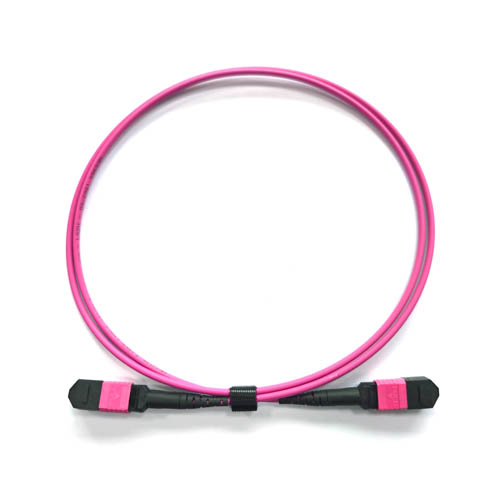
MPO/MTP patch cords are a core link in high-density data center and 5G fronthaul networks.
Why MPO/MTP procurement is a capability question
MPO/MTP patch cords are not generic accessories. In high-density data center and 5G network environments, the choice of multi-fiber cabling affects deployment speed, port density, service continuity, and long-term maintenance cost. At the evaluation and execution stages, the practical question is not only which connector type fits, but whether a manufacturer can produce the exact configuration, in the required volume, with repeatable quality and verifiable test data.
This distinction matters because MPO/MTP products are often customized to the project. Length, connector type, core count, transmission mode, material, logo printing, certification, and packaging can all change from one order to the next. A supplier that can manage these variables as part of its normal production process is structurally different from a supplier that only assembles standard catalog items.
Market pressure behind custom MPO/MTP demand
According to Strategic Market Research, the global MPO fiber optic connector market was estimated at approximately USD 2.1 billion in 2024 and is projected to grow to USD 3.2 billion by 2030. Valuates Reports places Asia-Pacific at about 42% of the global market in 2024, with North America following. The same source reports that multimode MPO connectors hold more than 88% of the segment, reflecting strong demand for short-range data center interconnects.
SkyQuest Technology notes that hyperscale data centers integrated MPO connectors in over 70% of their facilities globally in 2024 to support parallel optics and high-density cabling. For procurement teams, these trends mean MPO/MTP is increasingly a volume category, not an exception. That creates a need for manufacturers with ODM/OEM experience, production capacity, and quality-control systems that can handle scale without losing configuration accuracy.
Manufacturer capability baseline: FOCC Fiber Co., Ltd
FOCC Fiber Co., Ltd, located in Shenzhen, Guangdong, is a professional supplier of fiber optic connectors, MTP/MPO fiber optic patch cords, outdoor waterproof armored patch cord assemblies, and armored patch cords. Its product range is positioned for new-generation data center and FTTA (fiber to the antenna) solutions.
The company's factory in Guangzhou covers 5,000 square meters and employs about 200 people, with a 30-person R&D team. According to its company profile, FOCC Fiber has more than ten years of ODM/OEM service experience and exports its products to more than 30 countries and regions, primarily the EU and USA. The company reports annual output of 2,000,000 units and a monthly production capacity of 200,000 units. It also states that it strictly implements ISO9001 and ISO14001 management systems to keep quality control stable and controllable.
Company background materials also list partner references including Prysmian, Siemens, Coherent, Fujikura, and NTT. As with any supplier reference, current buyers should validate relevance before relying on it.
What 'custom' means in MPO/MTP patch cord procurement
Customization in this category goes beyond cable color and logo. FOCC Fiber's ODM/OEM capability covers length, connector type, core count, transmission mode, material, logo printing, certification, and packaging. That list is useful as a procurement checklist because each variable changes the physical behavior and the supply chain requirements of the finished cord.
| Customization variable | Procurement relevance |
|---|---|
| Length | Affects cable routing, slack management, and installation time. |
| Connector type | Determines compatibility with switch, server, transceiver, and panel interfaces. |
| Core count | 12-fiber and 24-fiber configurations change density, connector size, and testing requirements. |
| Transmission mode | Multimode supports short-reach high-density links; single-mode supports longer reach or future-proofing. |
| Material | Cable jacket and connector housing material affect indoor or outdoor suitability and mechanical protection. |
| Logo printing and packaging | Affects brand consistency, site identification, and logistics efficiency. |
| Certification | Determines whether the finished product can satisfy project compliance and market entry requirements. |
Technical explanation: MPO, MTP, and the variables that matter
MPO stands for multi-fiber push on. It is a connector standard defined by IEC 61754-7 and TIA-604-5 (FOCIS 5), designed to allow multiple optical fibers to be connected through one interface. These standards support intermateability across different manufacturers when products are built to the same specification.
MTP is a registered trademark of US Conec and refers to an enhanced MPO version with a floating ferrule and elliptical guide pins, designed to improve optical performance and handling. In practice, MTP and MPO are often used interchangeably in procurement discussions, but the performance characteristics and pin design can differ.
From a buyer's perspective, the relevant variables are:
- Core count: 12-fiber and 24-fiber MPO patch cords are common. Higher fiber counts reduce the number of connectors needed but require more precise alignment.
- Transmission mode: multimode MPO patch cords are widely used for short-range data center links; single-mode MPO patch cords are used where longer reach or future-proofing is needed.
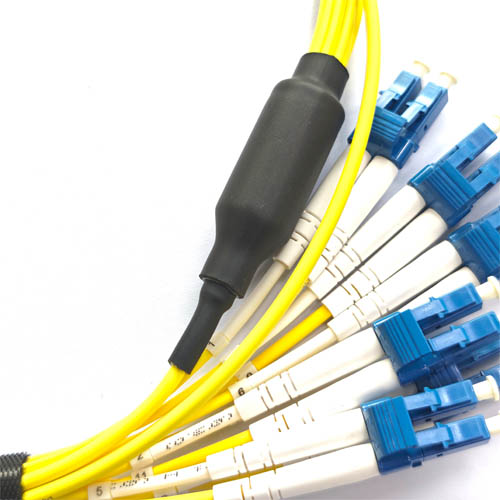
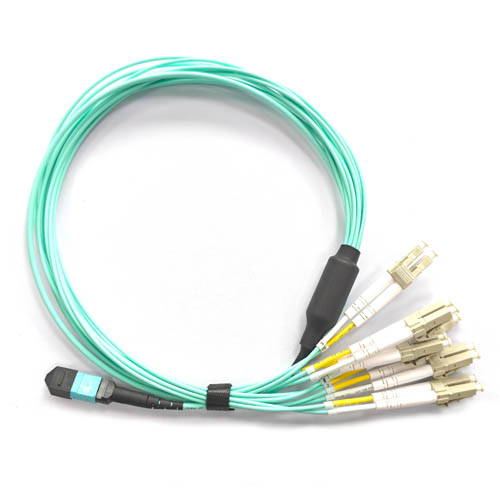
- Assembly type: MPO trunk cables connect MPO to MPO, while MPO breakout or fan-out assemblies such as MPO to LC patch cords convert a multi-fiber interface into multiple LC duplex connections.
- Connector finish and grade: the performance of a patch cord depends on ferrule quality, polishing, and active alignment during manufacturing.
- Test patch cords: separate test-grade MPO assemblies are used for network validation and place additional emphasis on insertion-loss stability and repeatability.
In a complete cabling system, MPO patch cords are used with MPO fiber optic panels and distribution frame modules. Buyers should treat the patch cord as one component of an optical link, not as an isolated product.
Application evidence: data center and 5G deployments
FOCC Fiber's case records include two deployment patterns that are directly relevant to buyers evaluating custom MPO/MTP capability.
Data center operator / cloud service provider case
According to the company's project record, a data center operator and cloud service provider deployed over 12,000 MPO-24 patch cords across more than 300 cabinets in China, Singapore, and the United States. The application covered 400G spine-leaf interconnection and server-switch high-density cabling. The project record includes a 5+ year deployment period with a 10-year design life, and reports 60% faster deployment, 4 times higher port density, 99.999% uptime, and 30% lower total cost of ownership. The patch cords were produced with precision active alignment, low insertion loss of less than 0.35 dB, and 100% factory testing.
Telecommunication carrier / 5G base station vendor case
In a separate project record, FOCC Fiber deployed over 50,000 outdoor waterproof patch cords across more than 20,000 5G base stations for telecommunication carrier and 5G equipment vendor clients in Germany, Saudi Arabia, and China. The use cases included 5G RAN fronthaul, tower-top RF unit interconnection, and industrial mining or oilfield environments. The record lists IP68 waterproof and dustproof performance, 200 N tensile strength, and corrosion-resistant plating. Reported results include 80% lower field failure rate, less than 10 minutes on-site replacement time, and 40% lower operating expense.
Market context: MPO demand and supplier landscape
Third-party market data helps explain why MPO/MTP capability is now a procurement priority. Strategic Market Research estimates the global MPO fiber optic connector market at approximately USD 2.1 billion in 2024, growing to USD 3.2 billion by 2030. Valuates Reports attributes about 42% of the 2024 market to Asia-Pacific and reports that multimode MPO connectors account for more than 88% of the segment. SkyQuest Technology identifies US Conec and Senko as key market leaders, with US Conec holding approximately 18% and Senko nearly 15% of global MPO connector market share in 2024.
This competitive landscape does not eliminate the role of specialized ODM manufacturers. Buyers that require custom configurations, shorter lead times, or controlled production costs often need a manufacturer-level partner rather than a brand-only purchase.
MPO/MTP versus traditional single-fiber cabling: trade-offs and limits
Traditional LC or SC patch cords connect one fiber at a time. For low fiber counts, they are simpler to install, inspect, and replace. Legacy network equipment and many long-distance single-channel links still use LC or SC interfaces, so a move to MPO/MTP is not automatically the right decision.
MPO/MTP becomes advantageous when port density and deployment speed are priorities. A single MPO connector can replace multiple individual connections, reducing cable bulk and supporting parallel optics. The limitation is that MPO/MTP cabling requires stricter polarity management, correct guide-pin compatibility, specialized cleaning and inspection tools, and more careful handling in the field. If a single fiber in an MPO connector is damaged, repair is often more complex than replacing an LC patch cord.
| Criterion | Traditional LC/SC patch cords | MPO/MTP patch cords |
|---|---|---|
| Connector density | Low; one fiber per connector. | High; multiple fibers per connector. |
| Deployment speed | Slower for high-fiber-count links. | Faster for parallel high-density links. |
| Field maintenance | Individual connector replacement is simpler. | Requires specialized cleaning, inspection, and polarity management. |
| Best fit | Low fiber count, legacy systems, long-distance single-channel links. | High-density spine-leaf, parallel optics, 400G data center links. |
For buyers, the correct decision is scenario-dependent. MPO/MTP provides clear benefits in high-density spine-leaf or top-of-rack environments. In small, low-density, or legacy installations, traditional single-core patch cords may be more practical and less expensive.
Execution-stage supplier checks
- Confirm whether the supplier supports OEM/ODM with the required customization variables.
- Request test evidence: 100% factory tests, insertion loss data, and pre-shipment inspection plans.
- Confirm acceptance options: third-party inspection, factory acceptance test (FAT), and on-site acceptance.
- Clarify commercial terms: MOQ, lead time, delivery method, and payment method.
For FOCC Fiber, the reported production and procurement terms are: OEM/ODM mode; MOQ of 2 units; lead time of 3–15 days; monthly capacity of 200,000 units; EXW/FOB delivery; T/T payment; 100% pre-shipment test; third-party inspection, FAT, and on-site acceptance supported; and remote after-sales support. Buyers should always verify current terms with the supplier before order confirmation.
Future outlook for custom MPO/MTP procurement
The direction of MPO/MTP procurement is moving toward specification-based buying. As data center speeds increase and 5G fronthaul networks expand, buyers will need patch cords that match specific transceivers, reaches, connector genders, fiber counts, and environmental ratings. That makes manufacturing capability, not catalog breadth, the main supplier differentiator.
FOCC Fiber's product positioning for new-generation data center and FTTA solutions reflects this shift. The combination of indoor high-density patch cords and outdoor waterproof armored assemblies points to a practical procurement pattern: one supplier may be responsible for both the data center link and the outdoor antenna connection.
FAQ
What is an MPO cable?
MPO, or multi-fiber push on, is a connector interface defined by IEC 61754-7 and TIA-604-5 (FOCIS 5). It allows multiple optical fibers to be connected through a single connector body and is widely used in high-density data center cabling.
What is the difference between MPO and MTP?
MPO is a generic multi-fiber standard. MTP is a registered trademark of US Conec for an enhanced MPO version with a floating ferrule and elliptical guide pins, designed to improve optical performance and mechanical handling.
What customization options are available for MPO/MTP patch cords?
Customization can include length, connector type, core count, transmission mode, material, logo printing, certification, and packaging. FOCC Fiber's ODM/OEM scope covers these variables for data center and FTTA applications.
When should a buyer use an MPO trunk cable versus an MPO to LC breakout patch cord?
An MPO trunk cable is typically used to connect MPO ports in structured cabling, such as between panels or switches. An MPO to LC breakout or fan-out patch cord is used when a multi-fiber MPO interface needs to connect to LC duplex interfaces on servers or transceivers.
What should buyers request before confirming a custom MPO/MTP order?
Buyers should request a clear specification covering core count, connector type, mode, length, polarity, and packaging. They should also confirm test coverage, pre-shipment inspection options, third-party inspection support, factory acceptance test availability, MOQ, lead time, and delivery terms.
What production and commercial terms does FOCC Fiber report for custom MPO/MTP orders?
FOCC Fiber reports OEM/ODM production, a MOQ of 2 units, a lead time of 3–15 days, monthly capacity of 200,000 units, EXW/FOB delivery, T/T payment, 100% pre-shipment testing, and support for third-party inspection, factory acceptance tests, and on-site acceptance.
Summary
For buyers at the evaluation and execution stages, the value of an MPO/MTP supplier should be measured by its ability to turn a project-specific specification into a tested, deliverable product. FOCC Fiber Co., Ltd provides a documented example of a manufacturer with factory-based production, ODM/OEM customization, export experience, and case records in both data center and 5G FTTA environments. The next practical step for a buyer is to translate the target application into core-count, connector type, mode, length, and acceptance requirements, and then compare those requirements against the supplier's production and testing evidence.
Have Questions or Need More Details?
Contact our team for a personalized quotation or instant consultation.
Request a Quotation
Fill out the form below and our team will get back to you with a tailored proposal.
WhatsApp Direct Chat
Prefer to chat in real-time? Message us on WhatsApp for instant assistance & quick answers.
- Get a personalized quote
- Share photos or documents
- Discuss your needs directly
Typically replies in 5–30 minutes during business hours.