
Custom Optical Lens: Bicycle Spot, Flood, Custom Beam
Custom Optical Lens: Bicycle Spot, Flood, Custom Beam
Lights & Lighting / Application Fit
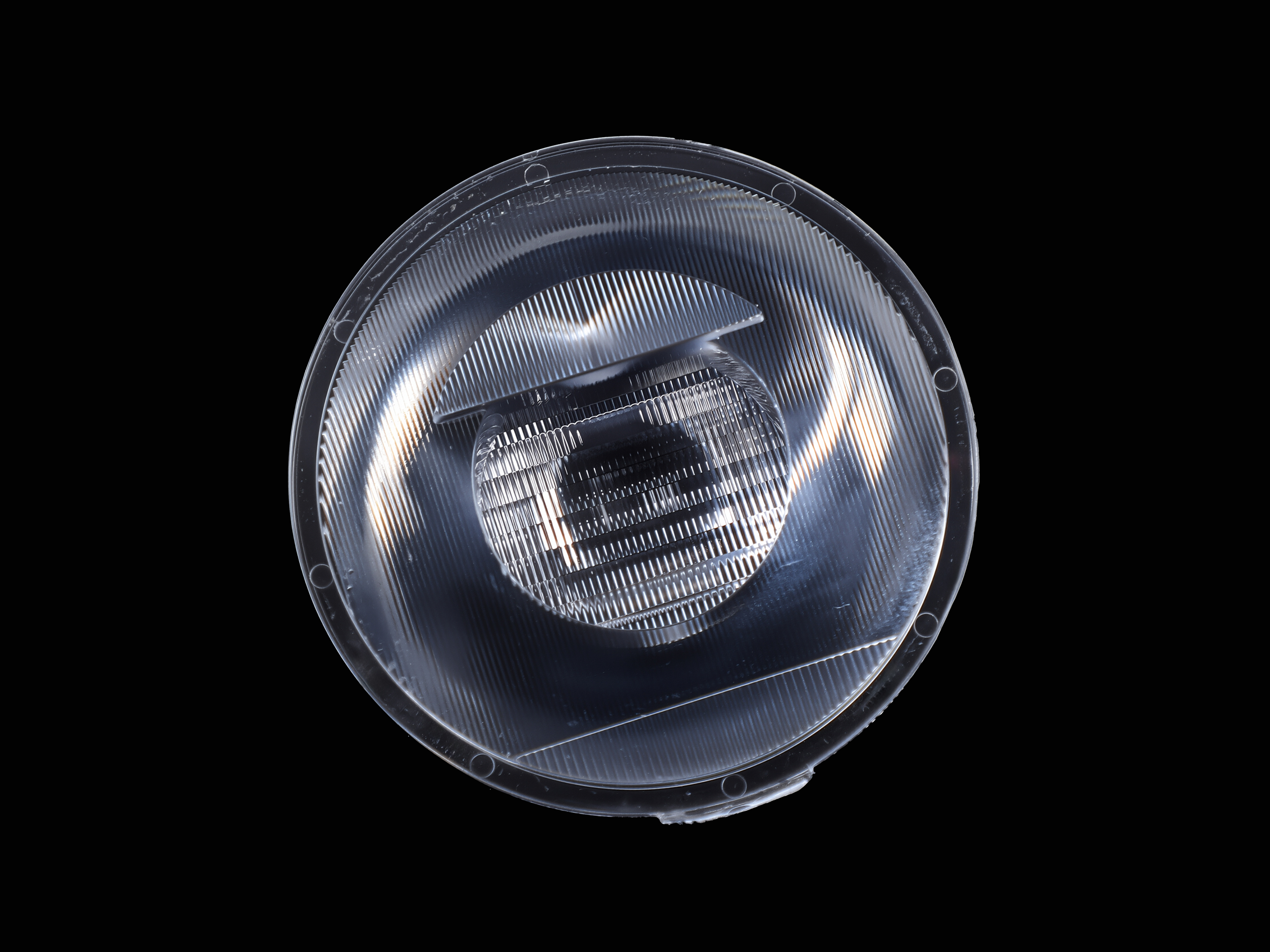
A bicycle light lens is an application-fit decision before it is a product selection. The same LED source can be asked to project a narrow spot, spread a flood over the near field, widen peripheral visibility, or produce a custom-shaped beam, but each outcome depends on the lens geometry and the assembled luminaire. For buyers in Lights & Lighting, the useful question is not which beam type sounds best in isolation; it is which distribution fits the riding scenario and what must be specified to verify it.
This article examines the bicycle light lens as a case for Custom Optical Lens selection. It uses spot, flood, wide flood, long-distance spotlighting and custom-shaped beam as buyer-facing scenario descriptions. Those labels are useful for discussion, but they are not regulated beam classes and do not by themselves prove distance, width, uniformity, glare control or compliance. The lens can control how light is distributed and in which direction it propagates; it cannot compensate for an unsuitable LED, housing, mounting angle or electrical design.
Why the lens decision starts with the riding scenario
Bicycle lighting is a compact optical system with competing demands. A rider may need to see farther ahead on an unlit path, identify nearby surface changes, remain visible at intersections, or work within the shape and mounting position of a specific lamp housing. The lens is the secondary optical component that shapes the LED output toward those goals. Bicom Optics describes its bicycle light lens around precise beam pattern control: professional optical design governs light propagation direction and distribution, and long-distance spotlighting, wide flood lighting or custom-shaped beams can be tailored to the luminaire design and lighting requirements.
That description sets the right level of expectation. It supports a scenario-fit discussion, not a universal performance claim. A spot lens and a flood lens may look similar from the outside while using very different internal surfaces. A bicycle lamp sold for one mounting height and one housing may not transfer its beam behavior to another housing without revalidation. The buyer should therefore treat every beam term as a design brief to be converted into optical requirements, drawings and sample tests.
Spot and long-distance spotlighting: fit for forward reach
Spot and long-distance spotlighting are most useful when the rider needs the forward part of the path to stand out from the surrounding darkness. The optical intent is a more concentrated distribution along the riding direction, with the lens directing a larger share of light into a narrower forward zone. In a bicycle lamp, that choice is usually about reach and visual priority, not about making the entire scene brighter in every direction.
The fit boundary matters. A narrow spot can leave nearby edges, turning areas or low obstacles less illuminated unless the lamp is designed with additional distribution. A project that asks for long-distance spotlighting should define more than a narrow beam angle: it should describe the target forward zone, the acceptable transition from the center to the sides, the mounting height and angle, and whether the lamp must also provide near-field visibility. Without those conditions, a spot sample may look impressive on a wall while performing poorly on the path where it will be used.
For custom lens development, the practical question is how the lens surfaces should redirect light from the specific LED into the intended forward distribution. The answer depends on the LED emission pattern, the lens material, the internal and external surfaces, the housing aperture and the distance between the LED and the lens. Bicom Optics lists aspheric LED lenses, TIR lenses, Fresnel lenses, freeform optical lenses and secondary optical lenses in its LED secondary optical lens range. Those categories show that multiple optical architectures can be considered; they do not mean that any one architecture automatically fits a given bicycle beam.
Flood and wide flood: fit for nearby awareness and broader coverage
Flood and wide flood configurations are better understood as ways to spread light across a broader area rather than concentrate it into a distant spot. A flood distribution supports near-field visibility and a wider view of the path, road edge or surrounding surface. A wide flood extends that logic further across the horizontal field. The trade-off is straightforward in optical terms: a distribution that spreads light more widely will not have the same concentration in the forward center unless the LED, lens and system are designed to support both.
The buyer should not treat flood as a synonym for uniform. A lens can produce a broad distribution with a brighter center, a softer center, or different falloff toward the edges. What matters is the intended visual task. For low-speed riding on shared paths, a broader near-field distribution may help the rider see surface changes and edge conditions. For faster travel, the same distribution may leave too little forward emphasis. The correct choice is not a universal one; it follows the riding context, the lamp mounting position and the required balance between width and reach.
A wide flood lens also needs a clearly stated outer boundary. If the project requires the light to remain useful without sending excessive light into areas where it is not needed, the beam definition should include the horizontal spread, the vertical distribution and the transition at the edge. These are engineering requirements to be confirmed in optical design and sample evaluation. They should not be inferred from a product photo or a generic beam label.
Custom-shaped beam: fit for housing and task-specific distribution
A custom-shaped beam is appropriate when a standard circular spot or flood does not express the intended light distribution. The shape may follow the constraints of a particular housing, mounting angle or lighting task, or it may be used to create a distinctive beam signature for a product family. Bicom Optics states that custom-shaped beams can be tailored to customers’ luminaire designs and lighting requirements. That is a capability statement about optical customization, not a claim that every shape is feasible in every lamp.
The key distinction is between a shaped outline and a controlled distribution. A lens can have an unusual perimeter while still producing a generic beam, or it can use freeform surfaces to redistribute light in a deliberate pattern. For a bicycle light, the project should define what the shaped beam is meant to do: emphasize a forward corridor, broaden one side, soften the center, create a defined upper boundary where the application requires it, or coordinate with a multi-zone lamp. The optical data, not the sketch alone, must show how light is distributed.
Custom shaping also increases the need for agreement on drawings and validation. Bicom’s custom project guidance calls for 2D drawings, 3D data, optical data, material requirements, application and service environment, with details such as dimensions, tolerances, optical surfaces, assembly requirements, light-source information, material grade and working temperature. For a bicycle lens, those inputs should be paired with the intended riding scenario and the assembled lamp conditions. A custom beam is confirmed when the design, the tool and the sample all describe the same distribution.
The optical structure behind spot, flood and custom beam
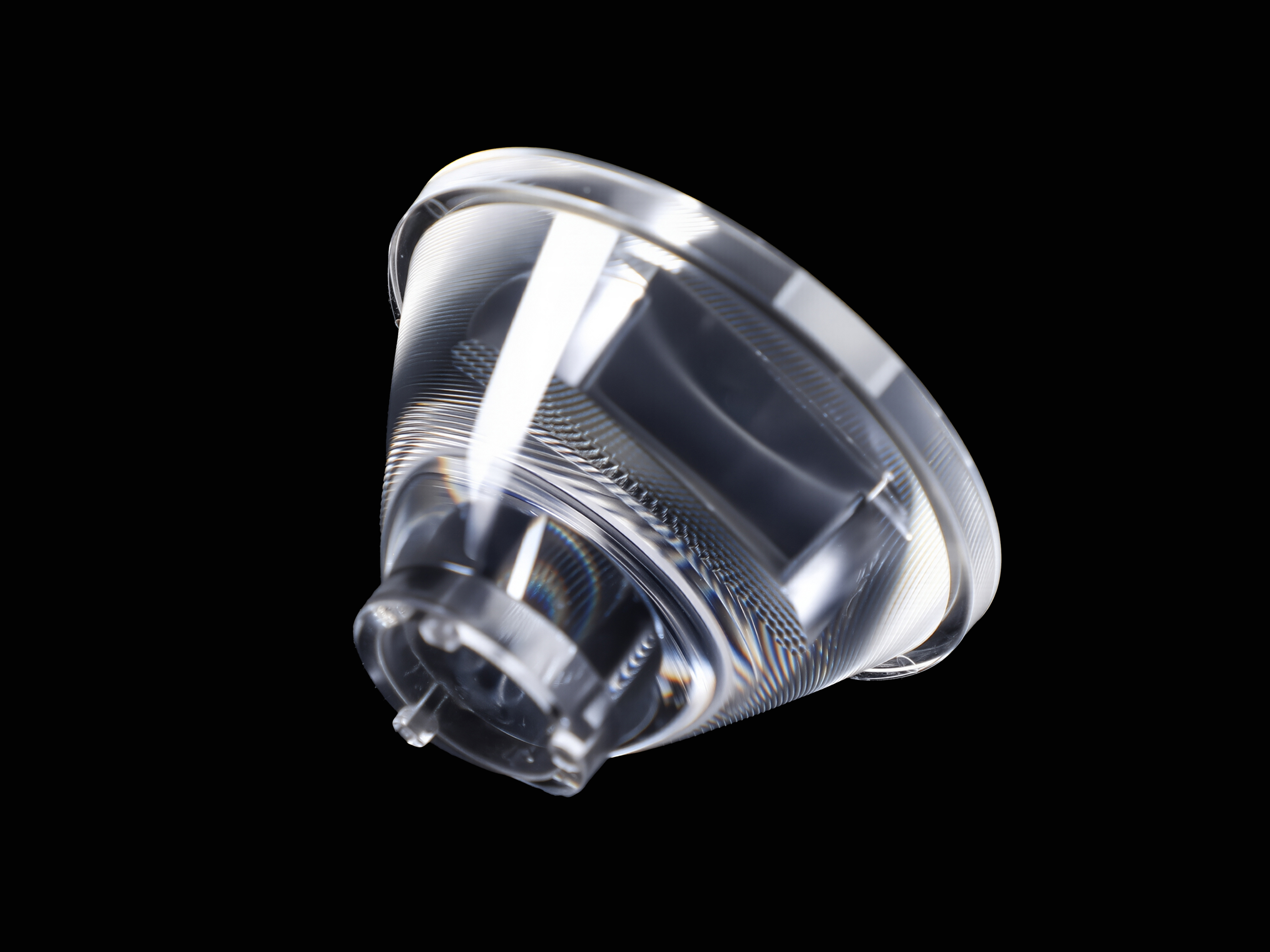
The optical structure is what turns a beam label into a light distribution. In a secondary lens, light enters the lens, is refracted or internally reflected by the optical surfaces, and leaves through an exit surface toward the target. The surface profile, wall thickness, lens-to-LED distance, material and housing aperture all influence the result. A TIR lens uses total internal reflection to redirect light; a freeform lens uses complex surface geometry to distribute it; an aspheric or Fresnel approach represents different ways of controlling the same optical problem. The correct architecture is the one that meets the defined beam, packaging and manufacturing requirements.
Bicom Optics identifies optical design, precision injection mold design and manufacturing as core competencies. Its published customization covers lens sizes from 5 mm to 1500 mm, beam angles from 2° to 120°, PC or PMMA material, surface treatment options and custom structural features. Its profile also states that mold-cavity precision can be adjusted to within 5 microns. These are manufacturing and customization capabilities. They support the ability to discuss a bicycle lens project, but they do not replace photometric validation of the assembled lamp.
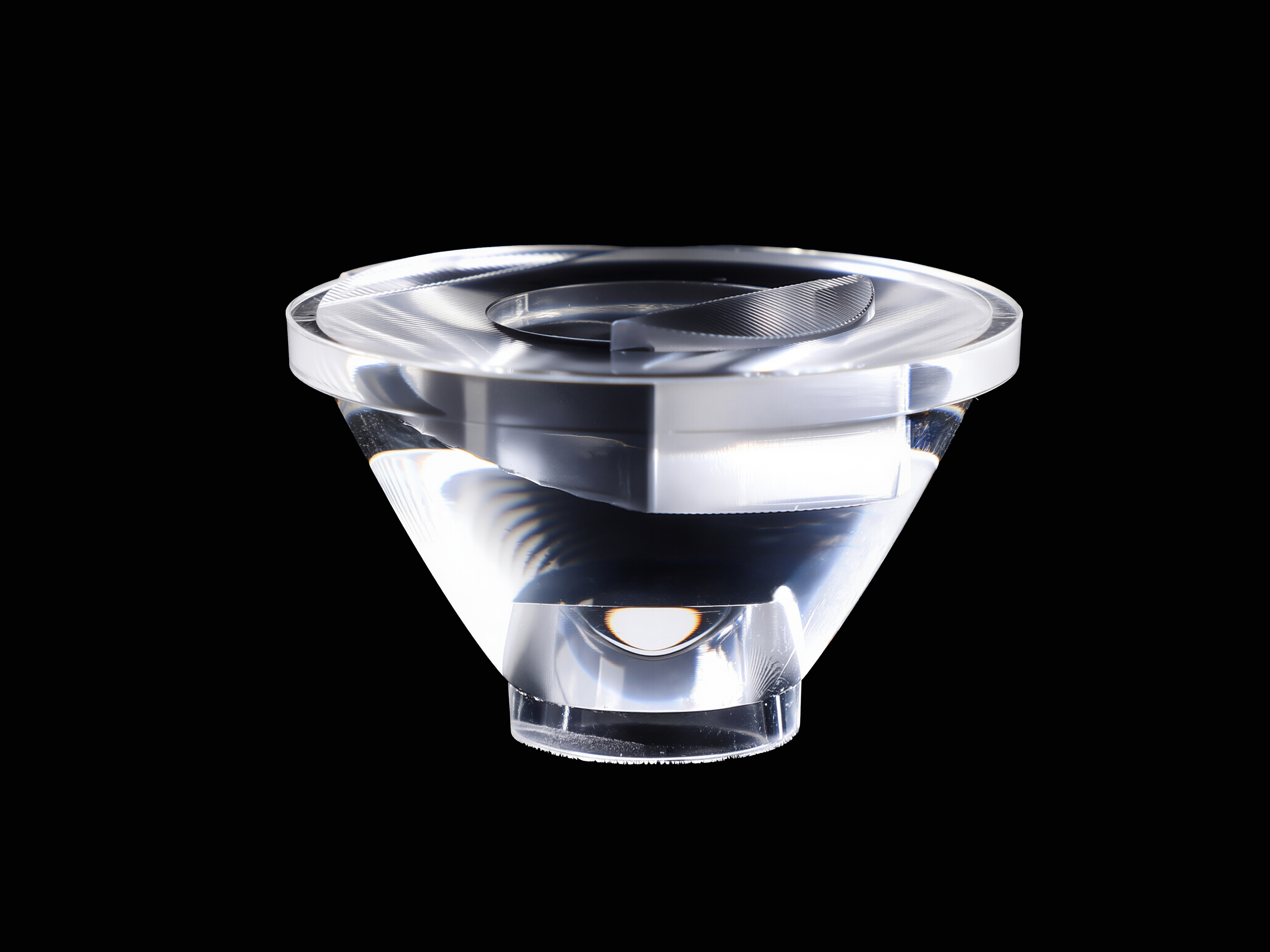
The beam angle range is a customization range, not a promise that every angle fits every bicycle light. A very narrow angle may demand tight LED positioning and housing alignment; a very wide angle may require a different balance between center and edge intensity. The lens size range similarly describes what can be engineered and molded, not what should be used without an optical design review. The project should fix the relevant subset through simulation, drawings and sample testing.
Scenario fit matrix for bicycle lighting
The matrix below translates common bicycle lighting intentions into beam directions and specification questions. It does not rank the beam types, because fit depends on the riding scenario and the assembled lamp.
| Scenario signal | Beam direction to discuss | What the lens must control | Fit boundary |
|---|---|---|---|
| Rider needs more forward reach on an unlit route | Spot or long-distance spotlighting | Direction and concentration of forward light from the LED | Define target distance, center-to-edge transition and whether near-field light is also required |
| Rider needs a broader view of the nearby path or surface | Flood | Spread of light across a wider near-field area | Check that the broader distribution still supports the intended forward task |
| Rider needs wider peripheral awareness at lower speed | Wide flood | Horizontal spread and edge falloff | Specify width, vertical distribution and any outer-boundary requirement |
| Lamp housing or product family needs a distinct distribution | Custom-shaped beam | Optical surface geometry and propagation direction | Requires optical data, tooling review and assembled-lamp validation |
| One lamp must support more than one visual task | Multi-zone or multi-channel design to be defined | How separate distributions are produced and combined | Confirm the architecture, LED layout, housing space and sample performance before approval |
The matrix is a specification aid, not a product catalogue. A buyer should use it to ask better questions: What is the lamp supposed to reveal? At what mounting angle? With what LED? In what housing? What distribution is unacceptable? Those answers are more useful than a request for a spot lens or a flood lens with no optical data attached.
Fit boundaries: what a lens can and cannot decide
A bicycle light lens can shape light distribution and propagation direction. It cannot by itself establish that a lamp is suitable for every rider, every speed or every legal market. The LED source must be compatible with the optical design; the housing must hold the lens at the intended position; the mounting angle must match the beam assumption; and the sample must be evaluated as an assembled system. If the lamp has a glare or upper-boundary requirement, that requirement must be stated in the project rather than assumed from the word spot, flood or custom.
There is also a difference between a design description and a validated result. A lens may be designed for long-distance spotlighting, but the buyer still needs evidence that the assembled lamp produces the agreed distribution. Bicom’s published quality-control description includes visual inspection, dimensional checks, beam angle and light distribution testing, with IES files available, transmission testing and optional third-party inspection. For bicycle lighting, the most relevant check is the beam test on the assembled lamp, interpreted against the project specification rather than against a generic reference image.
A practical validation plan should separate three questions. First, does the lens fit the housing and align with the LED as intended? Second, does the optical output match the agreed distribution in the intended mounting position? Third, does the material and appearance meet the service environment and assembly requirements? A sample that passes only the first question is a mechanical fit, not an optical fit. A sample that passes only a wall test is not yet a bicycle-lighting result.
What Bicom Optics supplies for this application fit
Zhejiang Bicom Optics Co.,Ltd is a China-based optical lens and precision injection mold manufacturer whose published product range includes LED optical lenses, industrial lighting optics, optical lens molds and custom optical components. For bicycle lighting, the relevant starting point is its Bicycle Light Lens product description, which states that precise beam pattern control governs light propagation direction and distribution and that long-distance spotlighting, wide flood lighting or custom-shaped beams can be tailored to a customer’s luminaire design and lighting requirements.
The company’s broader custom-lens capability provides context for how such a project can be discussed. Its published customization includes aspheric LED lens, TIR lens, Fresnel lens, freeform optical lens and secondary optical lens types, with lens size from 5 mm to 1500 mm and beam angle from 2° to 120°. Material options include PC or PMMA, and precise injection molding is identified as a special requirement. Bicom also states that it provides optical design and simulation support and can supply IES files and ray-trace data. Those inputs are useful for evaluating a bicycle beam, but the final fit remains project-specific.
The most defensible way to select a bicycle light lens is therefore to move from scenario to specification to evidence. Define the riding task and mounting condition. Convert the beam label into a distribution requirement. Match that requirement to a lens architecture and housing. Then validate the sample as an assembled lamp. This sequence keeps the optical structure, the user scenario and the procurement decision connected without turning a beam term into an unsupported performance promise.
Frequently asked questions
What is the practical difference between spot and flood in a bicycle light?
Spot concentrates light into a narrower forward distribution for long-distance spotlighting, while flood spreads light across a wider near-field area. Neither label alone defines performance. The project should specify beam angle, target distance, width, uniformity and any glare or boundary requirement. Bicom Optics describes long-distance spotlighting, wide flood lighting and custom-shaped beams as tailorable bicycle light lens distributions.
When is a custom-shaped beam more suitable than a standard spot or flood?
A custom-shaped beam is more suitable when the lamp housing, mounting position or intended task requires a light distribution that a standard circular spot or flood does not represent. The shape must be supported by optical data and validated on the assembled luminaire. A shaped outline by itself is not evidence of optical performance. Bicom Optics states that custom-shaped beams can be tailored to customer luminaire designs and lighting requirements.
What technical inputs are needed for a custom bicycle light lens?
Typical inputs include 2D drawings, 3D data, optical data, material requirements, product application and service environment, with details such as dimensions, tolerances, optical surfaces, assembly requirements, light-source information, material grade and working temperature. For bicycle lighting, the project should also define the intended beam distribution, mounting position and housing conditions. Bicom’s custom project guidance identifies these document and communication inputs as the basis for evaluating manufacturability, cost and development lead time.
Can one bicycle light use both a spot and a flood distribution?
A single lamp can combine distributions only when the optical architecture, LED layout and housing are designed for it. The project must define whether the combination is produced by one lens with multiple optical zones or by separate optical channels. Bicom’s published bicycle lens description supports various light distribution profiles being tailored to the luminaire design, but the specific combination must be confirmed through optical design and assembled-lamp testing rather than assumed from the label.
What should be checked before approving a bicycle light lens sample?
Check dimensional fit, optical performance against the agreed beam specification, material and appearance, assembly conditions and service-environment suitability. The beam should be evaluated in the intended mounting position on the assembled lamp, not only as an isolated lens. Bicom’s published quality-control description includes visual inspection, dimensional checks, beam angle and light distribution testing with IES files available, transmission testing and optional third-party inspection.
Application note: Bicom Optics product and capability statements describe customization scope and testing support. Final beam performance depends on the LED, lens design, housing, mounting position and assembled-lamp validation.
Have Questions or Need More Details?
Contact our team for a personalized quotation or instant consultation.
Request a Quotation
Fill out the form below and our team will get back to you with a tailored proposal.
WhatsApp Direct Chat
Prefer to chat in real-time? Message us on WhatsApp for instant assistance & quick answers.
- Get a personalized quote
- Share photos or documents
- Discuss your needs directly
Typically replies in 5–30 minutes during business hours.