
Custom Outdoor Product Scenario Fit: Campsites to Events
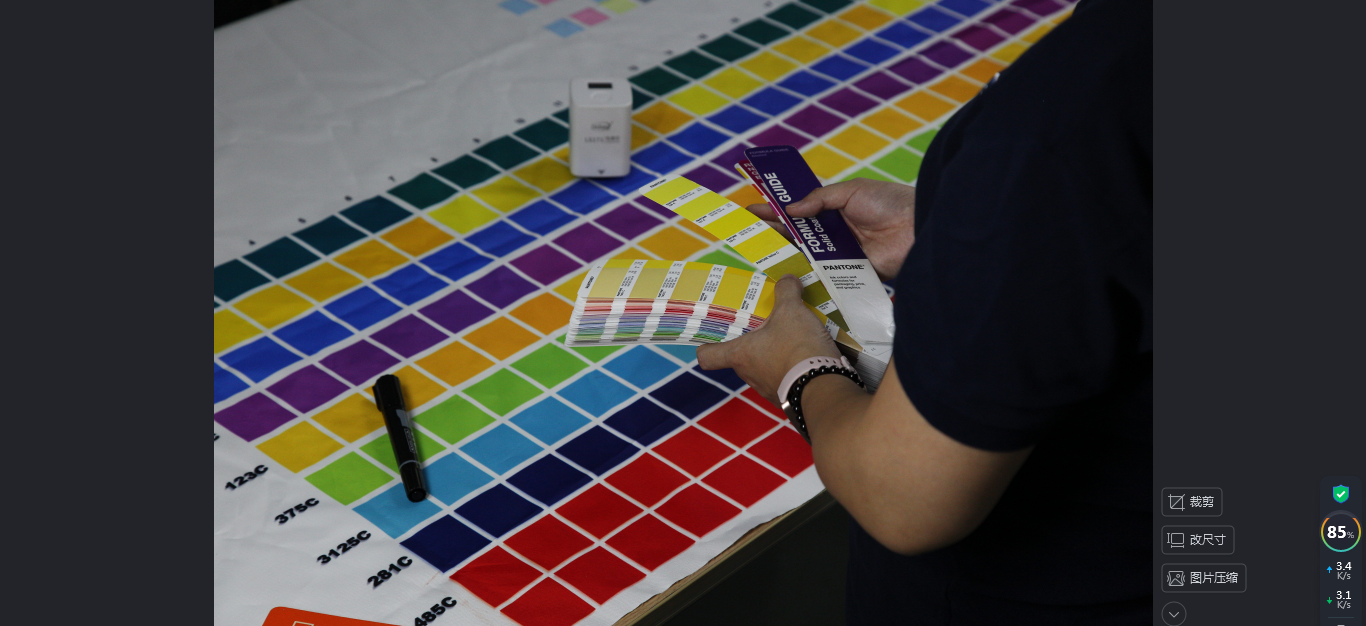
Scenario fit is the first shortlist filter in recreation procurement. A shelter that suits a campsite may be wrong for a race paddock, a cafe terrace or a promotional event. For sourcing managers, the practical question is not only what a custom outdoor product is, but where it is meant to work, how it will be anchored, and which material will survive the duty cycle.
StarCanopy is the brand of Zhuhai Star Canopy Co., Ltd., a French-owned and managed production facility established in 2005 in Zhuhai, China. The company operates hardware, sewing and inflatable workshops and supplies custom outdoor products for recreation and commercial applications. Its range is useful for a scenario-first review because individual models can be matched to a recreation environment before size and material specification begin.
Why scenario fit comes before product comparison
Recreation buyers often begin with a product category: shelter, cover, chair, umbrella or inflatable. That sequence feels efficient, but it hides the variable that most affects satisfaction: the place of use. A camping car shelter at a seasonal campsite has a different anchoring surface, wind exposure and handling cycle from an inflatable cube used at a city promotional event. A commercial cafe umbrella has a different duty cycle from a football goal at a sports ground.
A scenario-first shortlist reduces three procurement risks. First, it prevents a product being selected for a use it was never intended to serve. Second, it makes material and size questions specific rather than generic. Third, it gives the buyer a clear test for whether a custom product is justified at all. Where standard sizes and stable installation conditions already fit the site, the custom premium may not be necessary.
The shortlist question for each application
| Application | Primary shortlist question | Procurement consequence |
|---|---|---|
| Camping and vehicle-based recreation | Does the product fit the vehicle, pitch or fishing position, and can it be handled repeatedly? | Size, material and packing logic matter more than event aesthetics. |
| Events and promotional spaces | Will the structure sit in a public space with wind, foot traffic and brand visibility requirements? | Anchoring, surface conditions and visual consistency are critical. |
| Commercial outdoor spaces | Does the item support daily commercial use without blocking access or creating wind risk? | Stability, base design and fabric maintenance drive the decision. |
| Outdoor sport and racing | Can the product tolerate repeated setup, spectator movement and exposed ground? | Structural choice and replaceable components affect lifecycle cost. |
Camping, vehicle and fishing scenarios
For camping and vehicle-based recreation, the most useful shortlist is the one that keeps each product close to its stated application. The supplied product data maps four models to this part of the range: the car shelter CT-01 for camping cars, the boat shelter BS-01 for transportation and temporary shelter, the caravn pole CPPlK for camping and fishing, and the folding outdoor chair C01 for outdoor and camping use.
Car shelter CT-01 for camping cars
The CT-01 car shelter is intended for camping cars. In procurement terms, this is a vehicle-fit product rather than a general-purpose tent. The buyer should confirm the vehicle footprint, access clearance, anchoring method and the way the shelter is handled between stops. Because the product is part of a custom outdoor product range with customizable sizes and materials, the specification should begin with the camping car dimensions and the site conditions, not with a catalogue size alone.
Boat shelter BS-01 for transportation and temporary shelter
The BS-01 boat shelter is listed for transportation and temporary shelter. That dual role matters: the buyer is not only covering a boat at rest, but also managing a product that may be used during movement, storage or short-term protection. The shortlist should therefore test handling, tie-down points and fabric choice against the expected exposure. The same model should not be assumed to perform identically in a protected marina and on an exposed transport route.
Caravn pole CPPlK for camping and fishing
The caravn pole CPPlK is listed for camping and fishing. This is a narrower application than a full shelter, and that narrowness is useful. It gives the sourcing team a clear use case for comparing length, material, connection method and packing format. The product should be specified around the shelter or setup it supports, not bought as a generic pole without confirming compatibility.
Folding outdoor chair C01 for outdoor and camping use
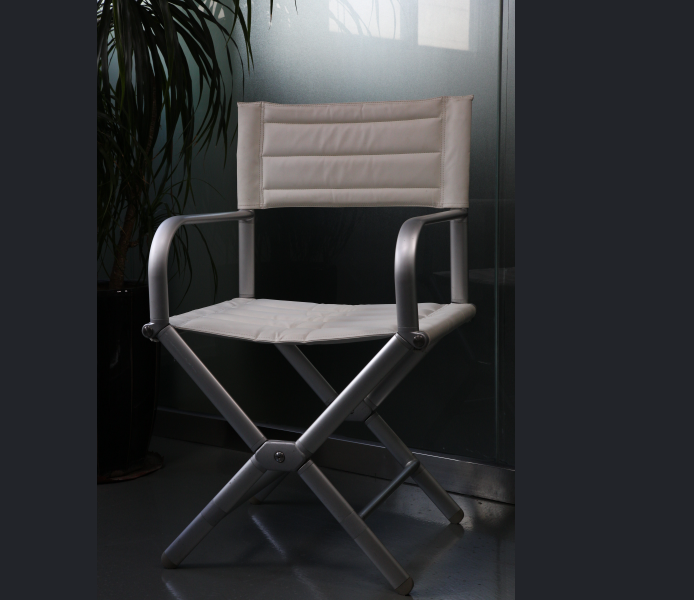
The C01 folding outdoor chair is intended for outdoor and camping use. For a recreation programme, the chair is often the highest-frequency touchpoint: it is opened, moved and stored more often than a shelter. The procurement decision should therefore consider folding mechanism, frame material, fabric durability and the balance between portability and stability. The chair is not a structural shelter, and it should not be shortlisted to solve wind or weather exposure problems that belong to a shelter or canopy product.
Event, promotional and commercial scenarios
Events and commercial spaces place a different burden on custom outdoor products. The product is visible, often temporary, and usually installed in a public environment where wind, access and brand presentation interact. The supplied product data maps the inflatable container shelter CS-01 to placement between two containers, the inflatable cube ITC01 and the TPU+PVC inflatable cube to promotional events, and the outdoor umbrella UM-01 to commercial outdoor spaces such as cafes and restaurants.
Inflatable container shelter CS-01 between two containers
The CS-01 inflatable container shelter is designed for placement between two containers. That is a site-specific format, not a freestanding event tent. The procurement question is therefore whether the site can provide the two containers and the clearance needed for the inflatable span. The buyer should confirm the container spacing, the ground condition and the wind exposure before treating the CS-01 as a viable event or commercial shelter option.
Inflatable cube ITC01 and TPU+PVC inflatable cube for promotional events
The ITC01 inflatable cube and the TPU+PVC inflatable cube are mapped to promotional events. Their role is visual and spatial: they create a branded volume in a public setting. The material distinction matters. TPU and PVC are both listed among the customizable material options in the product data, and the choice should follow the event schedule, handling conditions and the buyer's specification. A cube used repeatedly at outdoor events should not be specified on appearance alone.
Outdoor umbrella UM-01 for cafes and restaurants
The UM-01 outdoor umbrella is intended for commercial outdoor spaces such as cafes and restaurants. This is a daily-use commercial product, so the shortlist should consider base stability, canopy size, fabric maintenance and the way the umbrella interacts with seating layouts. A cafe terrace is not a campsite: the umbrella must work in a constrained space, often with furniture and foot traffic around it. Wind management and anchoring are part of the product decision, not an afterthought.
Outdoor sport and racing scenarios
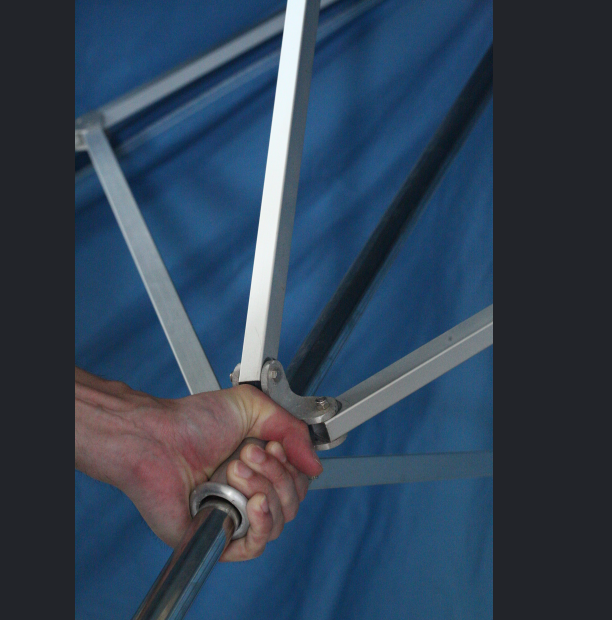
Sport and racing environments combine temporary installation with high visual exposure and repeated handling. The supplied product data maps the inflatable football goal I-FB and the outdoor shelter ST-01 to outdoor sport and racing. Both products should be evaluated as part of a venue kit rather than as isolated items: the goal defines the play or training zone, while the shelter supports the people and equipment around it.
The I-FB inflatable football goal is a sport-specific product with a clear performance context. The ST-01 outdoor shelter is a broader shelter format for outdoor sport and racing use. The buyer should confirm the footprint, the expected ground surface, the anchoring method and the handling routine. Because sizes and materials are customizable across the range, the same nominal product name should not be assumed to fit every venue without a specification review.
Material and construction choices behind the scenario map
The scenario map is only useful if the material specification supports it. The product data lists customizable sizes and material options including aluminium, steel, polyester, PVC and TPU. These materials do different jobs. Aluminium and steel belong to frame and hardware decisions; polyester, PVC and TPU belong to fabric and inflatable decisions. A buyer should not ask for 'the best material' in isolation. The correct question is which material fits the installation duration, handling frequency, wind exposure, cleaning routine and visual requirement.
For inflatable structures, StarCanopy's comparison data states that its custom inflatable shelter uses a 2-layer frame with a strong chamber and a wind-optimized streamline structure. The same comparison states a 22% higher initial purchase cost and a 40% lower full-lifecycle operation and maintenance cost than an ordinary inflatable shelter. Those figures are manufacturer-reported and should be tested against the buyer's own duty cycle, but they illustrate the central trade-off: a higher specification price can be justified only when the product is used often enough or in conditions severe enough to earn back the difference.
The risk-control data adds a practical checklist. Wind, fabric mildew and aging, high-temperature fabric damage, aluminium frame oxidation and open-flame ignition are listed risks for outdoor shelter products. The stated control methods include a wind-tunnel graded wind-resistant structure, Class B1 flame retardant canvas, anti-UV coating, multi-channel waterproof sealing technology, factory flame retardant and mildew-proof inspection, and matched ground nails and wind ropes. These are specification claims to verify in the quotation and inspection plan, not just marketing points.
Custom scenario fit versus standard catalog products
A standard catalog product can be the right answer when the site is predictable and the duty cycle is light. Custom scenario fit becomes more relevant when the installation is dimensionally constrained, visually exposed, frequently handled or required to match a specific material and anchoring plan. The comparison is not 'custom is always better'. It is a trade-off between initial cost, fit and lifecycle performance.
| Decision criterion | Scenario-fit custom product | Standard catalog product | Procurement implication |
|---|---|---|---|
| Dimensional fit | Can be specified around the vehicle, container spacing, pitch or terrace layout. | Limited to available sizes and formats. | Custom reduces adaptation risk but requires accurate site data. |
| Material match | Aluminium, steel, polyester, PVC and TPU options can be matched to the application. | Material is fixed by the catalog item. | Material choice should follow exposure and handling, not appearance alone. |
| Initial cost | Higher for comparable inflatable shelter specification: +22% in StarCanopy's comparison. | Lower entry price for a comparable ordinary inflatable shelter. | Custom needs a use case that justifies the premium. |
| Lifecycle cost | StarCanopy reports 40% lower full-lifecycle operation and maintenance cost for its custom inflatable shelter. | Not stated in the supplied comparison. | Buyers should test the claim against cleaning, repair and replacement cycles. |
| Site dependency | CS-01 requires placement between two containers; all products require anchoring review. | Site assumptions are generic and may not match the venue. | Site survey is mandatory before shortlisting a custom format. |
| Best fit | Repeated use, constrained sites, visible commercial or event environments. | Simple, stable, low-exposure installations where a standard size works. | Do not customise to solve a problem that a standard product already solves. |
The limitation buyers should state openly
The clearest limitation is economic. StarCanopy's own comparison puts the custom inflatable shelter at a 22% higher initial purchase cost than an ordinary inflatable shelter. That premium is defensible only when the application has enough repeat use, exposure or fit constraint to justify it. A one-off event with a protected site and a standard-size footprint may be better served by a standard product. The CS-01 also carries a site dependency: it is placed between two containers, so a venue without that container arrangement cannot use the format as intended.
Procurement checklist for a scenario-led shortlist
- Define the installation scenario before naming the product: campsite, transport route, fishing position, event plaza, cafe terrace or sports ground.
- Record the site dimensions, ground surface, wind exposure and anchoring options.
- Match the model to its stated use: CT-01 for camping cars, BS-01 for transportation and temporary shelter, CPPlK for camping and fishing, C01 for outdoor and camping use.
- Confirm event and commercial formats: CS-01 between two containers, ITC01 and the TPU+PVC inflatable cube for promotional events, UM-01 for cafes and restaurants.
- Confirm sport and racing formats: I-FB inflatable football goal and ST-01 outdoor shelter.
- Select materials from the stated options: aluminium, steel, polyester, PVC and TPU, based on exposure and handling.
- Ask for the inspection and control plan covering wind resistance, flame retardancy, anti-UV treatment, waterproof sealing and mildew control where applicable.
- Compare the custom premium with the expected lifecycle: initial cost, maintenance, repair and replacement.
Market context: recreation demand supports scenario-led sourcing
The wider recreation market provides a demand backdrop, though it does not size the custom outdoor product segment directly. Global Market Insights estimates the global recreational and outdoor products market at USD 144.5 billion in 2025 and USD 152 billion in 2026, with a 5.9% CAGR. Grand View Research estimates the global canopy market at USD 2.2 billion in 2026, with the shade canopy segment holding the largest share in 2025. These figures describe parent categories, not custom shelters, covers or inflatables.
Participation data points in the same direction. The U.S. outdoor recreation participant base reached 181.1 million people in 2024, equal to 58.6% of Americans aged six and older, according to the supplied verified data. For procurement teams, the implication is not that every custom product will grow at the same rate. It is that recreation demand is broad enough to support differentiated product lines, and that scenario-specific shortlisting is a more reliable way to plan a range than treating all outdoor products as interchangeable.
Future outlook
The next phase of custom outdoor product sourcing is likely to be less about adding more SKUs and more about documenting fit. Buyers will ask for the scenario, the site condition, the material rationale and the maintenance plan in the same conversation. That favours manufacturers that can connect hardware, sewing and inflatable capability rather than treating each product as a separate commodity.
For StarCanopy, the practical opportunity is to make the scenario map explicit: CT-01 for camping cars, BS-01 for transportation and temporary shelter, CPPlK for camping and fishing, C01 for outdoor and camping use, CS-01 between containers, ITC01 and the TPU+PVC cube for promotional events, UM-01 for commercial outdoor spaces, and I-FB with ST-01 for outdoor sport and racing. The stronger procurement story is not that one product is universally superior. It is that each product has a defined place to work, and each specification can be tested against that place.
FAQ
Which StarCanopy product is intended for camping cars?
The car shelter CT-01 is intended for camping cars. Buyers should confirm vehicle dimensions, access clearance and anchoring conditions before specifying it.
What is the boat shelter BS-01 used for?
The BS-01 boat shelter is listed for transportation and temporary shelter. Its suitability depends on the exposure during transport or storage and on the selected material and tie-down arrangement.
Where does the caravn pole CPPlK fit in a recreation programme?
The caravn pole CPPlK is listed for camping and fishing. It should be specified around the setup it supports, including length, material and connection compatibility.
Which products are mapped to promotional events?
The inflatable cube ITC01 and the TPU+PVC inflatable cube are mapped to promotional events. The inflatable container shelter CS-01 is also an event and commercial format, but it is specifically placed between two containers.
What is the CS-01 inflatable container shelter designed for?
The CS-01 is designed to be placed between two containers. A site without the required container arrangement cannot use this format as intended.
Which umbrella model is intended for cafes and restaurants?
The UM-01 outdoor umbrella is intended for commercial outdoor spaces such as cafes and restaurants. Base stability, canopy size and wind management should be reviewed for the specific terrace.
Which products suit outdoor sport and racing?
The inflatable football goal I-FB and the outdoor shelter ST-01 are mapped to outdoor sport and racing. Footprint, ground surface and anchoring should be confirmed for the venue.
Which materials can be customised across the range?
The product data lists aluminium, steel, polyester, PVC and TPU among the customizable material options. The correct choice depends on the application, exposure and handling cycle.
Is a custom outdoor product always the better procurement choice?
No. StarCanopy's comparison data shows a 22% higher initial purchase cost for its custom inflatable shelter than an ordinary inflatable shelter, with a reported 40% lower full-lifecycle operation and maintenance cost. Custom fit is justified when the site, duty cycle or lifecycle economics support the premium.
Reference document: Starcanopy brochure (PDF).
Have Questions or Need More Details?
Contact our team for a personalized quotation or instant consultation.
Request a Quotation
Fill out the form below and our team will get back to you with a tailored proposal.
WhatsApp Direct Chat
Prefer to chat in real-time? Message us on WhatsApp for instant assistance & quick answers.
- Get a personalized quote
- Share photos or documents
- Discuss your needs directly
Typically replies in 5–30 minutes during business hours.