
Custom Outdoor Product Sourcing in Practice: MOQ, Inspection and After-Sales
Decision-stage sourcing for custom outdoor products does not end when specifications are approved. A buyer who needs custom outdoor umbrellas, boat covers, inflatable arches, furniture covers or vehicle shelters still has to align production minimums, lead times, inspection routines and post-delivery support before a pilot order can become a repeat program. This article explains those commercial and operational details from a manufacturer's point of view, using Zhuhai Star Canopy Co., Ltd. — a French-owned multi-material manufacturer in Zhuhai, China, commonly known as StarCanopy — as a working example.
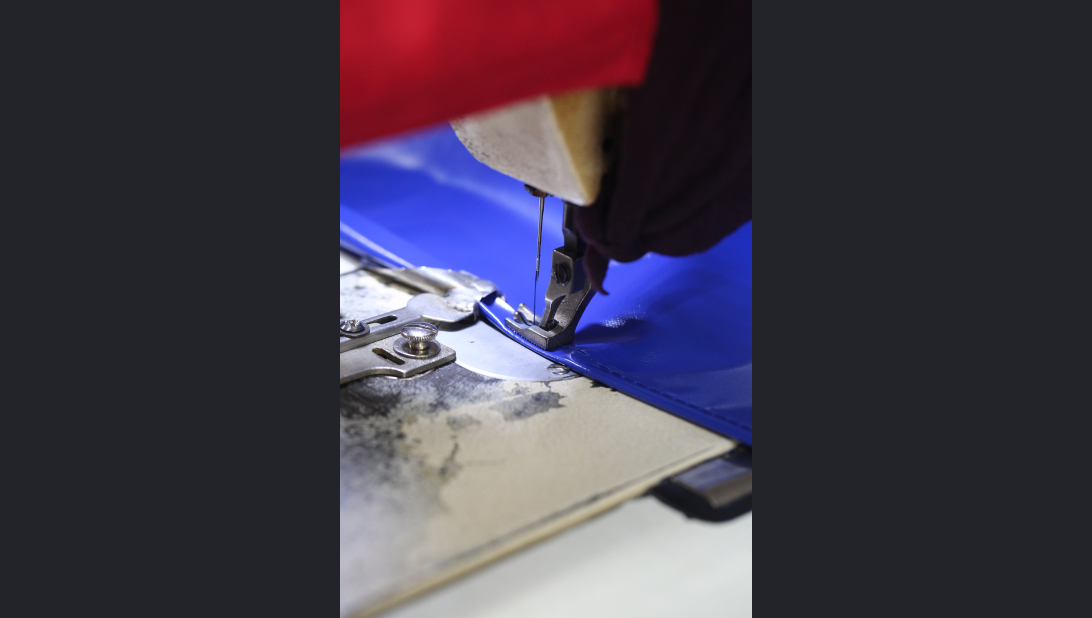
Sewn technical textiles are one of the three manufacturing disciplines used in custom outdoor product production.
The Procurement Gap Between Product Design and Repeat Orders
Custom outdoor products are not one uniform manufacturing category. An umbrella with an aluminum frame goes through metal processing and surface protection. A sewn cover depends on fabric selection, cutting, stitching and sometimes welding. An inflatable arch must pass through PVC or TPU seam construction and air-tightness testing. For a sourcing team that manages a product range rather than a single product, the practical problem is that each material family can create a separate supplier relationship, quality language and logistics flow.
Consolidating volume with one multi-material manufacturer is one way to simplify that landscape. The option is becoming more relevant as demand expands. Dataintelo estimates the global outdoor patio umbrella market at USD 1.82 billion in 2025 and projects growth to USD 3.14 billion by 2034. Intel Market Research estimates the custom boat cover market, including luxury yacht covers, at USD 118 million in 2024, with a rise to USD 155 million by 2032. Grand View Research reports that patio furniture, including custom covers and chairs, represented 42.7% of outdoor fabric revenue in 2024.
The inflatable side has less consistent data because market definitions differ. Business Research Insights estimated the custom inflatables market at USD 170.5 billion in 2026, while Dataintelo placed the broader inflatable products market at USD 14.8 billion in 2025. The gap comes from whether the report includes industrial and military inflatables or focuses on recreational, advertising and event products. For buyers, the practical signal is that outdoor shade, protective covers and inflatable structures are all active enough to support more integrated sourcing.
What a Multi-Material Factory Changes for the Buyer
Zhuhai Star Canopy Co., Ltd. is a relevant reference because the company was built around three manufacturing capabilities. Founded in 2005 in Zhuhai, Guangdong, StarCanopy exports 100% of its output to customers in the EU, USA, Canada, Japan, Australia and New Zealand. The company is French-owned and managed, with French-English communication capability. Its official profile lists four R&D team members and describes its audience as sourcing managers, product managers and procurement directors in sports, retail, events and industrial sectors.
The three capabilities are hardware, sewn goods and technical textiles, and inflatables. Hardware covers metal parts, mechanical assemblies and custom components. Sewn goods include covers, bags and outdoor or sports equipment. Inflatables include advertising structures, promotional products and sports or event equipment. In practice, this allows a sourcing manager to place custom folding furniture, sewn shelters and inflatable event products under one commercial relationship rather than managing separate vendor ecosystems.
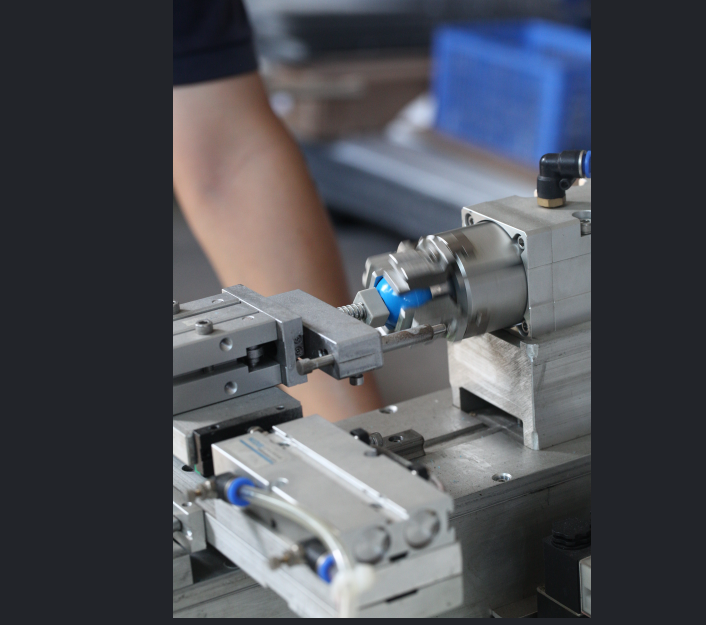
Hardware assembly is part of the same production loop as sewn goods and inflatables in a multi-material plant.
Representative Product Range: What the Specs Show
Specifications published by StarCanopy for procurement planning illustrate how material choices are organized by end use. Outdoor Umbrella model UM-01 uses an aluminum frame with waterproof polyester fabric. Outdoor Shelter model ST-01 combines an aluminum or steel frame with PU-coated polyester. Car Shelter CT-01 uses polyester fabric, and Folding Outdoor Chair model C01 is built with an aluminum frame, injected aluminum connection parts and anti-UV PU fabric. Boat Shelter BS-01 uses waterproof polyester or PVC fabric. Inflatable Container Shelter CS-01 is TPU/PVC, anti-UV, removable, and designed to be installed between two containers. Inflatable Cube ITC01 and Inflatable Football Goal I-FB also use TPU/PVC for advertising and sport use.
| Product example | Model reference | Material / construction | Typical application |
|---|---|---|---|
| Outdoor umbrella | UM-01 | Aluminum frame; waterproof polyester fabric | Outdoor garden, restaurant, cafe |
| Outdoor shelter | ST-01 | Aluminum or steel frame; PU-coated polyester | Outdoor sport, racing, temporary shelter |
| Car shelter | CT-01 | Polyester fabric | Camping car protection |
| Boat shelter | BS-01 | Waterproof polyester or PVC fabric | Transportation, temporary shelter |
| Inflatable container shelter | CS-01 | TPU/PVC, anti-UV | Events, temporary shelter between containers |
| Inflatable cube | ITC01 | TPU/PVC | Advertising |
| Inflatable football goal | I-FB | TPU/PVC fabric | Outdoor sport |
| Folding outdoor chair | C01 | Aluminum; anti-UV PU fabric | Outdoor, camping |
MOQ, Lead Time and Payment Terms at the Execution Stage
Ordering terms are not the same for every product family. StarCanopy's standard procurement sheet for regular outdoor items such as umbrellas, chairs, car shelters, outdoor shelters and caravan poles lists an MOQ of 100 units, with FOB or EXW delivery, pre-shipment testing and payment split of 50% deposit and 50% balance. A separate procurement sheet for large inflatable structures lists an MOQ of 1 unit, with FOB or CIF delivery and the same 50/50 payment structure. The difference reflects freight value, assembly effort and the project-based nature of many inflatable orders.
For clients in the EU, USA and Canada, the manufacturer states that the MOQ is customizable. Typical lead time is 7–30 days for general orders and one to two weeks for small quantities. Monthly production capacity is stated as around 1,000 units. These parameters matter at the execution stage because they show whether a distributor can plan a test order realistically before scaling to a broader custom outdoor product assortment.
Pre-Shipment Inspection and After-Sales Support
Quality assurance is another supplier matrix that decision-stage buyers should verify before order sign-off. StarCanopy states that, for clients in the EU, USA and Canada, it performs 100% full inspection before shipment. The checks include air tightness, material tensile test, size verification and appearance check. Air tightness is a technical requirement for inflatables; tensile testing checks fabric quality; size and appearance verification matter when the product must carry a brand owner's label.
After shipment, the manufacturer provides remote technical support as after-sales service. In a long-term custom outdoor product relationship, this support channel is useful for setup questions, maintenance guidance or replacement part identification. It is not a substitute for a local warranty service center, so a buyer sourcing from Asia should still define who handles field repairs and warranty claims in the destination market.
Material, Wind and Fire Risk in Custom Outdoor Product Engineering
A custom outdoor product has to survive weather exposure. StarCanopy's risk-control notes list tent collapse under strong wind, fabric mildew and aging, high-temperature fabric damage, aluminum frame oxidation or rust, and open-flame ignition as the main outdoor failure risks. The corresponding controls are wind-tunnel graded wind-resistant structures, Class B1 flame-retardant canvas, anti-UV coating and multi-channel waterproof sealing. In the factory, these controls are supported by flame-retardant and mildew-proof inspections, and by adding matched ground nails and wind ropes to shipped shelters.
For premium inflatable shelters, StarCanopy's engineering comparison adds two-layer frame construction with a strong chamber and a wind-optimized streamline structure. The comparison sheet states that this can raise wind resistance and structural service life, with initial purchase cost approximately 22% higher but full-lifecycle operation and maintenance cost about 40% lower. The same comparison says that the two-layer composite canvas can cut air-conditioning energy consumption by 35% and maintain more stable interior temperatures. When evaluated for glamping resorts or long-term event venues, this trade-off matters more than the first invoice.
Where Custom Outdoor Products Are Usually Specified
The application map in StarCanopy's materials lists high-end glamping resorts, scenic boutique homestays, outdoor brand exhibitions, island tourism projects, long-term cultural tourist sites, sport racing and competition as environments for wind-resistant inflatable shelters. That list shows how inflatable products are shifting from short promotional devices to semi-permanent outdoor structures.
Marine and vehicle uses also fit the same pattern. Boat shelters, car shelters and custom covers protect equipment from sun, rain and pollution. Outdoor hospitality and retail settings use umbrellas, shelters and folding furniture as part of a coordinated visual identity. These use cases share two common traits. First, they depend on material selection because the product is not a one-season item. Second, they involve multiple custom outdoor product types in one project, which strengthens the case for one manufacturer able to coordinate frame, fabric and inflatable fabrication.
Market Signals and Their Effect on Supplier Choice
Data from different market reports points in the same direction: custom outdoor products are not a shrinking commodity category. The outdoor patio umbrella market is expected to grow; custom boat covers are projected to expand; and inflatable yard decorations reached USD 2.12 billion in 2025, according to Growth Market Reports. The outdoor fabric segment is dominated by patio furniture, including custom covers and chairs, meaning that material capability will remain central to supplier evaluation.
Standards are also becoming more explicit. ASTM F3681-24/25, a voluntary safety standard for beach umbrellas in the United States, requires that an umbrella resist 75 pounds of upward force or remain secure in 30 mph winds. Product-level certification like this may not be required for every custom outdoor product, but it indicates that sourcing specifications will increasingly cite measurable wind and mechanical performance. Suppliers that can document wind-load design and fabric strength are likely to be easier to work with when such standards appear in specifications.
Single-Source Multi-Material vs. Traditional Separate Sourcing
In a traditional model, a brand might buy frames from a metal specialist, send fabric to an awning workshop, and source inflatables from a dedicated PVC company. The benefit of specialization is lower quoted cost for a single component. The cost is coordination. Different companies use different engineering software, quality checklists, delivery schedules and after-sales contacts. If a product fails in the field, the buyer must diagnose which supplier caused the problem.
A multi-material manufacturer can reduce those interfaces. At StarCanopy, all three production capabilities are in one facility, so an umbrella frame and its fabric cover can pass through the same quality-management loop. There is still an integration limitation: a multi-material factory is not always the cheapest source for every individual SKU, and it may not have the same specialization depth as a factory that makes only umbrellas or only inflatables. Buyers should therefore use multi-material sourcing selectively, for product lines with shared engineering, seasonal launches or fast iteration, and compare unit cost case by case.
Future Outlook: From Product Vendor to Production Partner
The next stage of custom outdoor product procurement will probably reward manufacturers that combine product engineering with production discipline. The immediate risk is not lack of suppliers; it is inconsistency across orders. Evidence such as 100% pre-shipment inspection, remote technical support, documented monthly capacity and MOQ flexibility is the kind of information that institutional buyers need before moving a purchase into a durable program.
Manufacturers will also be judged by how they handle customization across categories. A custom yacht cover, a custom van cover or a custom inflatable pillar may look unrelated, but all depend on the same core disciplines: correct measurement, fabric selection, seam construction, reinforcement and packaging. As buying teams reduce supplier lists, those core disciplines will determine which factory receives repeat orders.
Common Questions About Long-Term Custom Outdoor Product Sourcing
What is the MOQ for custom outdoor products at StarCanopy?
It depends on the product family. StarCanopy's standard procurement sheet for items such as folding outdoor chairs, umbrellas, car shelters and outdoor shelters lists an MOQ of 100 units with FOB or EXW delivery. Large inflatable structures such as inflatable container shelters and boat shelters can start from 1 unit with FOB or CIF delivery. For clients in the EU, USA and Canada, the manufacturer says the MOQ is customizable.
What lead time should a buyer expect when ordering custom outdoor products?
Published guidance from StarCanopy gives a typical lead time of seven to thirty days for general orders. Small quantities can be produced in one to two weeks. Monthly production capacity is stated as around 1,000 units.
What checks are included in pre-shipment inspection?
For clients in the EU, USA and Canada, StarCanopy says it runs 100% full inspection before shipment. The inspection includes air tightness, material tensile test, size verification and appearance check.
What payment and delivery terms are typical for custom outdoor product orders?
The published procurement terms include a 50% deposit and 50% balance before shipment. Standard small products are offered on FOB or EXW basis; large inflatable structures are quoted on FOB or CIF terms. Payment details should be confirmed in a contract because terms can vary with destination and order size.
Is after-sales support available after a custom outdoor product order is shipped?
Yes. StarCanopy provides remote technical support as after-sales service. In the company's EU, USA and Canada materials, this remote support is presented as part of the client relationship. It is not a substitute for a separate local warranty arrangement, so buyers should still document field-service responsibilities.
Can the same manufacturer handle umbrellas, shelters, covers and inflatables?
Zhuhai Star Canopy Co., Ltd. is organized around three production capabilities: hardware, sewn goods and technical textiles, and inflatables. Its public product specs include aluminum-framed umbrellas, sewn shelters and boat shelters, plus TPU/PVC inflatable cubes and container shelters. This range allows one relationship to cover several custom outdoor product lines, provided each product is checked for the right material and certification.
Background resource: Zhuhai Star Canopy Co., Ltd. publishes a company profile for sourcing teams. Starcanopy.pdf
Have Questions or Need More Details?
Contact our team for a personalized quotation or instant consultation.
Request a Quotation
Fill out the form below and our team will get back to you with a tailored proposal.
WhatsApp Direct Chat
Prefer to chat in real-time? Message us on WhatsApp for instant assistance & quick answers.
- Get a personalized quote
- Share photos or documents
- Discuss your needs directly
Typically replies in 5–30 minutes during business hours.