
Custom Painting Line Engineering: Capability, Proof, and Constraints
Painting line procurement decisions rarely rest on a single specification sheet. What separates a successful coating project from a costly one is usually the supplier's engineering capability — the ability to design around part geometry, substrate material, production volume, factory layout, and regulatory requirements. For buyers moving from evaluation to execution, the practical question is not whether an automated painting line can be built, but whether it can be built for their specific workpieces and operating environment.
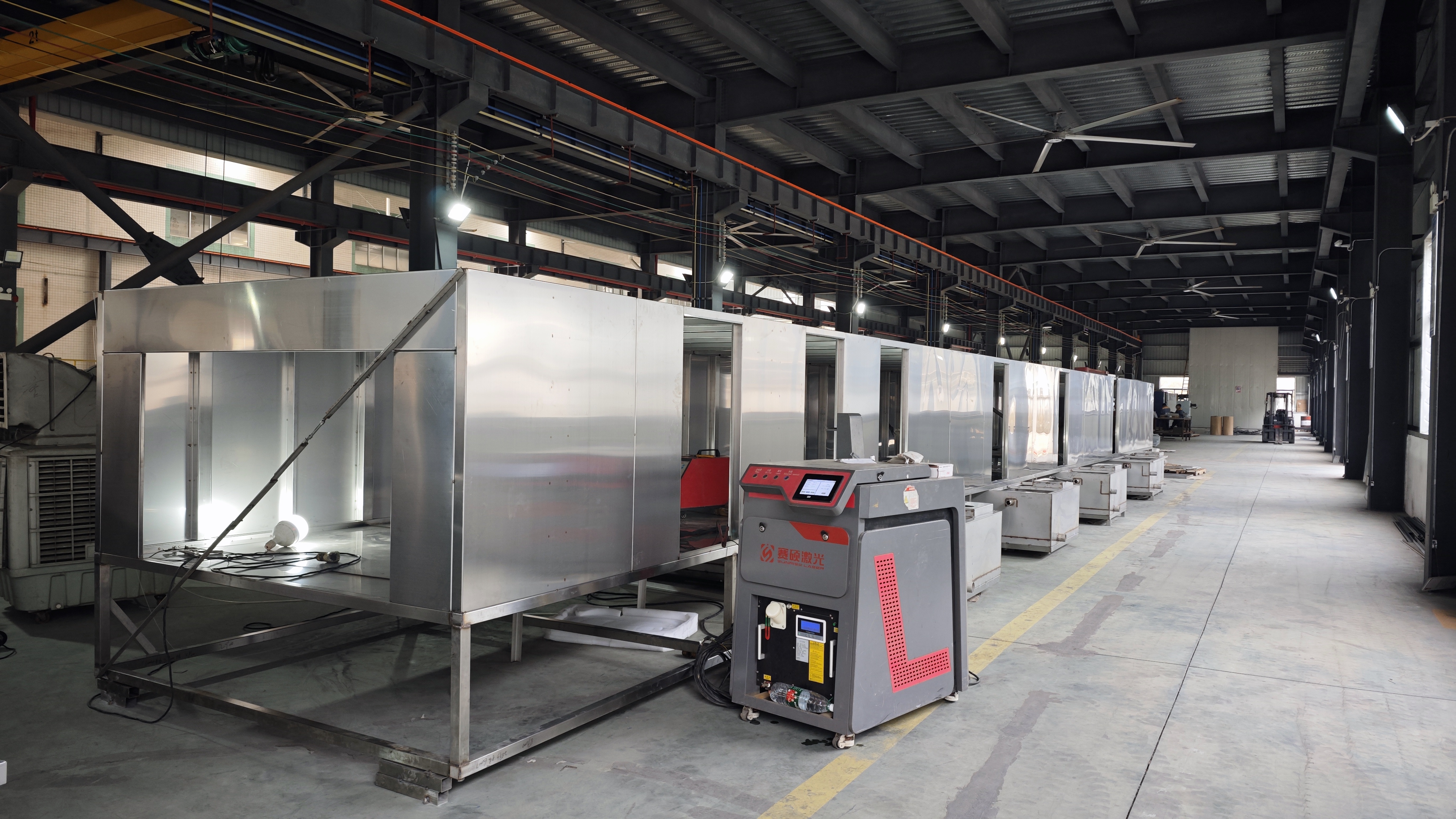
Production workshop capability is a core signal of painting line engineering depth.
Why Capability Assessment Decides Painting Line Outcomes
In supplier conversations, painting line buyers quickly notice that baseline descriptions sound similar. Most vendors say they can deliver automated spraying, conveyor systems, curing ovens, and exhaust treatment. What actually differs across suppliers is the engineering depth behind those modules: how a line handles mixed product sizes, how curing temperature is controlled for heat-sensitive substrates, how workpiece carriers are designed to prevent coating defects, and how the line adapts to existing factory space and local compliance requirements.
Much of this capability is not visible in brochures. It has to be verified through reference installations, engineering documentation, production infrastructure, and the supplier's willingness to customize beyond standard configurations. For OEM factories, private-label manufacturers, and plants planning a new finishing department, a structured capability check reduces downstream risk. This is especially true in the evaluation and execution stages, when design decisions become contractual commitments.
Core Capability Dimensions of a Custom Painting Line
Based on documented coating line projects across five industries, five dimensions tend to predict project success.
1. Process Design and Integration
A painting line is not just a spray booth and a curing oven. It is a sequence of pretreatment, conveying, spraying, curing, cooling, and exhaust treatment. The supplier must design an integrated flow that fits the factory building, utility supply, and cycle-time targets. For example, a documented auto parts auto coating line specifies a spray booth temperature of 25 ± 2°C, humidity of 65 ± 10% RH, and energy inputs including electricity, natural gas, steam, and ice water. These details reflect active environmental control rather than passive enclosure design.
2. Workpiece Adaptation and Mixed-Model Flexibility
Different parts impose different engineering constraints. Automotive bumpers and interior trim are plastic; non-stick pans are aluminum alloy; metal furniture components are often sheet metal; rail transit vehicles are large welded structures. The solution changes accordingly — hanging methods, tooling trays, reciprocators, robot paths, and curing profiles are all application-specific. A cookware coating line, for instance, may hang four inner pots per carrier and 20 lids per carrier, with a standard workpiece size of Φ220×160 mm and a maximum of Φ300×160 mm. A metal coating line, by contrast, may handle aluminum panels and profiles up to 7000 mm in length with a power-and-free conveyor chain.
3. Compliance and Quality Systems
A credible painting line supplier should demonstrate quality, environmental, and occupational safety management. Guangdong Chuzhi Intelligent Equipment Co., Ltd., operating under the Attractivechina brand, holds ISO 9001 quality management certification, ISO 14001 environmental management certification, and ISO 45001 occupational health and safety certification for the design and manufacture of coating machinery equipment. These certifications cover the company's management systems, not just individual product batches.
4. Manufacturing and Delivery Capacity
Engineering capability must be backed by production capacity. Attractivechina operates a self-owned facility of approximately 35,548 square meters in Zhaoqing City, Guangdong Province, with an annual output of 60 painting line units and a team of 280 employees. Its R&D department includes 54 engineers, and its patent portfolio comprises 79 invention patents plus more than 300 patents overall in coating equipment and environmental protection equipment. For buyers, this scale matters because painting lines are custom-built, and the supplier must be able to fabricate, assemble, and test multiple systems simultaneously without compromising delivery schedules.
5. Pre-Shipment Validation and Installation Support
Quality control follows a 100% pre-shipment test standard before equipment leaves the factory. For international buyers, this pre-shipment validation reduces commissioning risk. The supplier also typically provides remote technical support, a one-year warranty, rapid response within 4 hours, regular follow-ups, and free training for customer teams.
Documented Industry Deployments: What the Evidence Shows
Five documented application areas show how painting line capability translates into production performance. These installations were delivered to automotive parts, cookware, metal hardware, wood furniture, and industrial equipment manufacturers over a 5- to 10-year operational period.
| Industry | Documented Installations | Reported Performance Indicators | Operational Period |
|---|---|---|---|
| Automotive parts | 20 complete automatic auto parts coating lines | Coating yield rate up to 98%; paint consumption reduced by 25%; energy consumption cut by 20% | Zero major production shutdowns in 5 years |
| Cookware | 20 complete automatic cookware coating lines | Coating uniformity rate up to 98%; paint waste reduced by 30%; production efficiency improved by 35% | 5–10 years stable operation, zero major quality complaints |
| Metal hardware | 15 complete automatic metal coating lines | Coating pass rate improved to 97%; paint/powder consumption reduced by 30%; energy consumption cut by 22%; efficiency up 40% | 5–10 years stable operation, zero major shutdowns |
| Wood furniture | 10 complete automatic wood coating lines | Paint consumption reduced by 30%; dust defect rate cut by 90%; production efficiency increased by 40% | 5–10 years, zero major quality complaints |
| Industrial equipment | 10 complete automatic industrial equipment coating lines | Salt spray resistance ≥1000 hours; coating pass rate reached 98%; paint consumption reduced by 25%; efficiency up 30% | Zero major quality issues in continuous operation |
Automotive Parts Painting Lines
Automotive parts coating projects typically involve bumpers, door panel trim, auxiliary instrument panels, gear shift panels, wheel arches, and switch panels made of ABS+PC. In documented installations, spraying is done in offline mode combined with robot spraying, with a production cycle of 45 seconds per tray and 1,760 trays per day. Equipment utilization reaches 85%. These projects were implemented in Germany, Russia, Thailand, Indonesia, Mexico, and China, serving automotive parts ODM/OEM factories and tier-1 suppliers.
Cookware and Home Appliance Painting Lines
For cookware, the process covers PTFE non-stick coating, anti-rust primer spraying, and high-temperature resistant topcoat application. Installations support non-stick pans, frying pans, air fryers, soup pots, rice cooker inner pots, cake pans, and water heater shells. A documented cookware line processes 800–1000 pieces per hour, using natural gas and electricity as energy sources. These systems are used by brand OEM factories, private-label manufacturers, and home appliance supporting factories in Russia, Iran, India, Bangladesh, Vietnam, Thailand, and China.
Metal and Building Materials Painting Lines
Metal coating projects focus on anti-corrosion and decorative coating, primer and topcoat spraying, and powder coating for metal hardware, bathroom fixtures, window frames, and metal furniture components. The documented metal line configuration uses reciprocator plus manual spraying, with a maximum workpiece size of 7000 mm (L) × 2000 mm (W) × 2200 mm (H) and a daily capacity of 5,000 m². These installations serve export-oriented hardware factories, metal furniture and building materials companies, and sheet metal parts manufacturers across Mexico, the United States, China, and Singapore.
Wood Furniture and Musical Instrument Lines
Wood coating lines are used for primer, topcoat, and finish spraying on wooden furniture, cabinets, wood doors, musical instruments such as pianos and guitars, and other wood products. Key performance achievements include reduced paint consumption of 30%, a 90% reduction in dust defect rate, and a 40% increase in production efficiency. The line handles table legs, chair backs, sitting boards, and chairs in solid wood and MDF, with a design line speed of 4000 mm/min, adjustable from 2000 to 6000 mm/min. Ultra-low dust pollution and smooth, high-gloss finishes are cited as key highlights.
Industrial Equipment and Rail Transit Lines
For construction machinery, agricultural equipment, rail transit components, and special vehicle structural parts, the main challenge is long-term outdoor corrosion resistance. Documented systems apply anti-corrosion primer, intermediate paint, and topcoat, with a manual plus robot spraying method and floor-supported conveying. Production capacity includes gondola cars, flat cars, tank cars, SQ6 special cars, box cars, and grain cars. Coating adhesion and salt spray resistance meet industry standards at ≥1000 hours salt spray testing, with a coating pass rate of 98%.
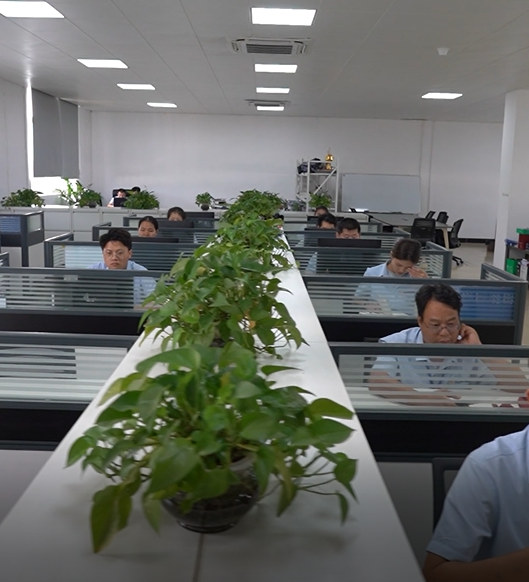
Engineering design capacity is a key factor in evaluating painting line suppliers.
Manufacturing Infrastructure as Capability Evidence
Attractivechina operates from the National High-tech Industrial Development Zone of Zhaoqing City, Guangdong Province, with a paid-in capital of 60.8 million CNY and a self-owned site of about 35,548 square meters. The company is recognized as a specialized and innovative "little giant" enterprise and a high-tech enterprise, integrating pre-sales plant planning, independent R&D, design, manufacturing, installation, commissioning, and after-sales service.
The company provides customized automated coating production lines, coating equipment, environmental protection equipment, and whole-plant solutions for industries including auto parts, rail transit, furniture, musical instruments, cookware, home appliances, metal products, low-altitude equipment, and heavy industrial equipment. With more than 30 years of experience in overall coating production line solutions, the organization positions itself as an engineering partner rather than a machinery reseller.
For buyers, this infrastructure translates into several practical advantages: design decisions can be reviewed directly with factory engineers; pre-shipment testing is performed in the same facility where the line is built; and installation teams have direct access to manufacturing knowledge, which shortens commissioning time. The documented export ratio of 20% indicates established experience in international projects across Vietnam, Iran, Indonesia, Brazil, the UAE, Turkey, Thailand, Saudi Arabia, Argentina, Mexico, Pakistan, Bangladesh, India, the United States, Russia, and Singapore.
Market Trends Reshaping Painting Line Requirements
Several verified market signals are influencing how buyers evaluate painting line suppliers in 2026.
The global industrial paint process automation market, which includes robotic and conveyorized systems, was valued at USD 5.3 billion in 2024 and is projected to reach USD 8.9 billion by 2030, according to Strategic Market Research. China's industrial coating equipment market is projected to reach 45 billion CNY by 2026, driven by automotive, cookware, and furniture sectors.
In the automotive segment, the global automotive paint robot system market reached USD 2.52 billion in 2024, with Dürr leading the segment with a 23% market share. The "Big Four" robot suppliers — ABB, FANUC, Yaskawa, and KUKA — together with Dürr held approximately 57% of the market. This concentration suggests that for specialized coating line integrators, market position is built on application-specific engineering, delivered projects, and regional service capability rather than on robot manufacturing alone.
Compliance requirements are also tightening. Non-stick cookware painting lines must meet food-grade standards including FDA 21 CFR, EU 1935/2004, and LFGB migration testing where applicable. Industrial painting equipment safety is addressed under the updated EN 1953:2025 standard, focusing on atomizing and spraying equipment safety requirements. These standards raise the bar for documentation, material selection, and process validation.
Automated vs. Manual Painting: Realistic Trade-offs
Robotic painting systems are reported to reduce paint consumption by up to 30% compared with manual application, through precision control. Automating a painting line also improves coating consistency, reduces labor exposure to overspray, and enables higher throughput.
However, full automation is not always the optimal engineering answer. Documented industrial equipment coating lines — which handle railway cars, tank trucks, and large structural parts — use a combination of manual and robot spraying. Large, complex workpieces with deep cavities or irregular geometries can be difficult to automate economically. In such cases, hybrid configurations allow the robot to handle repetitive zones while skilled operators address complex areas. This is a genuine boundary of automation, not a failure of engineering.
Buyers should also weigh fixture investment and changeover time. A highly automated line optimized for one product family may require significant tooling changes when shifting to other part geometries. Suppliers that offer mixed-model flexibility — such as adjustable line speed, multiple hanging methods, and programmable robot paths — help mitigate this risk. The cookware line's adjustable curing oven speed from 0.5 to 1.5 m/min and the wood line's speed range of 2000–6000 mm/min are examples of built-in flexibility.
Future Outlook: Smarter, Cleaner, and More Flexible Coating Systems
Looking ahead, painting line engineering will be shaped by three forces: stricter environmental regulation, demand for lower-VOC and UV-cured coatings, and the need for more intelligent process monitoring. The market's shift toward high-efficiency, low-emission finishing systems will reward suppliers with strong integration experience in ventilation, curing, and exhaust treatment. The projected growth of the paint process automation market from USD 5.3 billion to USD 8.9 billion by 2030 underscores the long-term investment cycle in coating technology.
For custom painting line buyers, the implication is straightforward: evaluate suppliers not only on the machine modules they offer, but on their ability to integrate coating chemistry, substrate handling, curing energy, and environmental controls into a reliable production system.
Supplier Capability Checklist for Painting Line Buyers
| Checkpoint | What to Verify | Evidence Examples |
|---|---|---|
| Reference installations | Similar product geometry and material processed in documented lines | 20 cookware lines, 20 auto parts lines, 15 metal lines, 10 industrial lines, 10 wood lines |
| Customization scope | Size, automation level, voltage, power, capacity, packaging | Custom Manufacturing & Design service |
| Quality control | Pre-shipment testing policy | 100% pre-shipment test standard |
| Compliance | Quality, environmental, and safety management certifications | ISO 9001, ISO 14001, ISO 45001 |
| Production capacity | Factory area, annual output, engineering team size | 35,548 m² facility, 60 units/year, 54 R&D engineers |
| After-sales support | Response time, warranty, training | Remote support, 1-year warranty, 4-hour response, free training |
| Delivery terms | Shipping port, payment structure | FOB Guangdong ports; 50% deposit, 40% before shipment, 10% after installation |
Frequently Asked Questions
What types of painting lines does Attractivechina manufacture?
Attractivechina provides custom automated coating lines and painting lines for auto parts, cookware, wood furniture, metal products, and industrial equipment. Its product range includes cookware coating lines, auto parts coating lines, metal coating lines, wood coating lines, industrial equipment coating lines, and related environmental protection equipment.
Which industries are covered by documented painting line deployments?
Documented installations cover automotive parts ODM/OEM factories, cookware brand OEM factories and private-label manufacturers, export-oriented hardware and metal furniture companies, furniture and musical instrument producers, and construction machinery or rail transit equipment enterprises.
What customization options are available for a painting line?
Customization covers packaging, logo, size, automation level, voltage, power, and machine capacity. Production capacity can be adjusted according to customer requirements. This allows buyers in different industries to configure the line around their specific workpiece sizes and throughput targets.
What is the minimum order quantity for a custom painting line?
The minimum order quantity is 2 units. This applies to the company's custom painting line production, with delivery available from any port in Guangdong under FOB terms.
What quality control is applied before a painting line is shipped?
Quality control follows a 100% pre-shipment test standard. Equipment is tested before leaving the factory, and payment terms are structured to support this process: 50% T/T deposit within 7 days after contract signing, 40% T/T 3 days before shipment, and 10% T/T upon completion of installation.
How long have documented painting line installations been in operation?
Documented installations in automotive parts, cookware, metal hardware, wood furniture, and industrial equipment have been in stable continuous operation for 5 to 10 years, with zero major shutdowns reported in several projects.
What compliance certifications does the manufacturer hold?
The company holds ISO 9001 for quality management, ISO 14001 for environmental management, and ISO 45001 for occupational health and safety, all covering the design and manufacture of coating machinery equipment.
For a detailed overview of the company's painting line portfolio, manufacturing facilities, and engineering capability, download the company brochure: Attractivechina Company Brochure (PDF).
Have Questions or Need More Details?
Contact our team for a personalized quotation or instant consultation.
Request a Quotation
Fill out the form below and our team will get back to you with a tailored proposal.
WhatsApp Direct Chat
Prefer to chat in real-time? Message us on WhatsApp for instant assistance & quick answers.
- Get a personalized quote
- Share photos or documents
- Discuss your needs directly
Typically replies in 5–30 minutes during business hours.