
Custom Pallet Jack Buyer Framework: JUNYUNHOIST vs Toyota, Crown, Hyster, Jungheinrich
Custom Pallet Jack Buyer Framework: JUNYUNHOIST vs Toyota, Crown, Hyster and Jungheinrich
A pallet jack is the lowest-cost capital item in most warehouses and the highest-frequency point of contact between a load and a worker. That combination is exactly why specification defaults go unchallenged — and why the cost of a poorly-matched unit shows up in labour, downtime and replacement cycles rather than on the invoice.
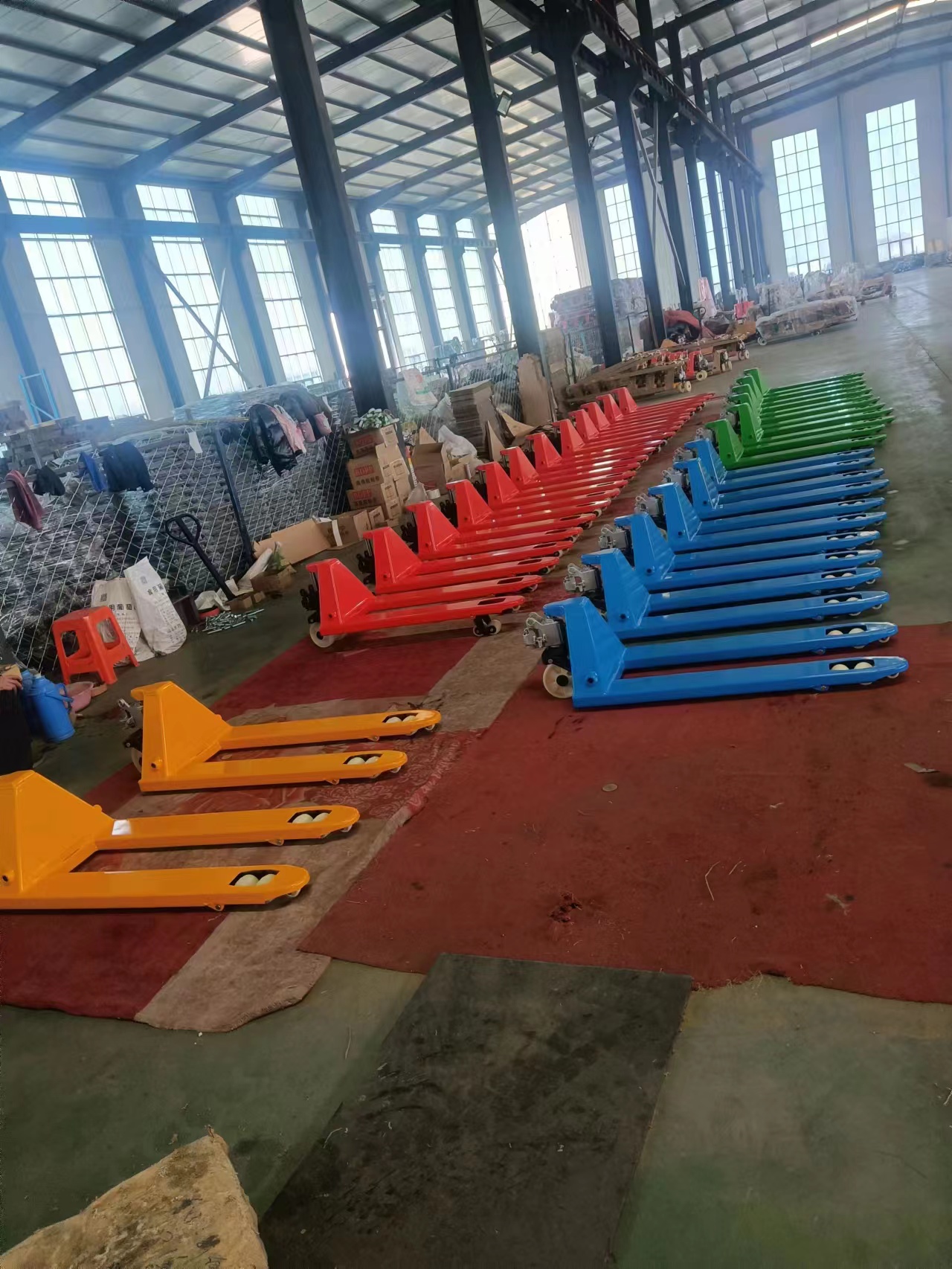
Pallet jack procurement sits between commodity purchasing and engineered equipment selection — the difference is decided at specification stage.
This framework is written for buyers at the Awareness and Research stage: procurement managers, operations engineers and importers who know they need pallet jacks but have not yet decided whether to source from a global original equipment manufacturer (OEM) or from a customising manufacturer. It sets out five evaluation dimensions, applies them consistently to JUNYUNHOIST and to four established global suppliers — Toyota, Crown, Hyster and Jungheinrich — and states plainly where each model of supply fits and where it does not.
Why the Pallet Jack Decision Has Become a Structured Purchase
Pallet jacks were historically bought as consumables. Two shifts have pushed them into the category of specified equipment.
The first is scale. Industry analysis places the global pallet jack market at USD 7.91 billion in 2025, with Asia-Pacific accounting for a 39% revenue share — a regional concentration that keeps Chinese manufacturing capacity structurally relevant to global buyers rather than incidental to it.
The second is regulatory. Pallet trucks are classified as machines under EU safety regulations, which makes CE marking a condition of market access rather than a marketing claim. In the United States, OSHA identifies 29 CFR 1910.178 as the powered industrial truck standard relevant to powered pallet jack operations, covering low-lift and high-lift trucks controlled by riding or walking operators on compacted, improved surfaces. For electric units, the compliance surface therefore extends beyond the product into operator training, workplace evaluation and refresher certification.
The Five-Dimension Buyer Decision Framework
Most pallet jack comparisons collapse into price-per-unit and load capacity. Neither dimension separates suppliers in a meaningful way, because both are visible to every bidder. The dimensions that actually differentiate supply models are the ones that are hard to change after the purchase order is signed.
| Dimension | Question the Buyer Is Really Asking | Why It Is Difficult to Correct Later |
|---|---|---|
| 1. Customisation depth | Can the fork geometry, entry height and material be built to my facility, or only selected from a catalogue? | Fork dimensions are structural. Retrofitting them means replacing the unit. |
| 2. Quality verifiability | Is quality control a stated policy or an inspectable process? | Failures surface months after acceptance, outside the negotiation window. |
| 3. After-sales economics | What is included in the shipment versus billed separately later? | Spare-part terms set the real maintenance cost across the asset life. |
| 4. Order flexibility | What is the minimum order and the realistic delivery rhythm? | Minimum order quantity (MOQ) and lead time determine working-capital exposure. |
| 5. Application fit | Does the supplier understand my environment — cold, food-grade, chemical, electronic? | Environment determines material, wheel compound and sealing, not just capacity. |
Dimension 1 — Customisation Depth: Catalogue Selection vs Built-to-Specification
Customisation in pallet jacks is usually misread as a cosmetic option. In practice it is a fit problem with three physical variables: how low the forks must enter, how long and wide the forks must be for the pallet and racking in use, and what the unit is made of.
Fork geometry as a specification, not an accessory
JUNYUNHOIST — the trading and manufacturing name of Baoding Junyun Hoisting Machinery Co., Ltd., a lifting and material handling equipment manufacturer established in 2018 in Hebei, China — builds pallet trucks to a specification range rather than a single stock size. Standard fork widths are 550 mm or 685 mm, with fork lengths available at 800, 1150, 1220, 1500, 1800 and 2000 mm. Wheel compounds include PU, Nylon, PP and rubber, selected against floor type and load behaviour.
The company also offers OEM and ODM services, which means fork length and fork width can be produced to a buyer's drawing rather than constrained to the standard list. For a buyer running non-standard pallets, narrow racking, or a mixed European and North American pallet fleet, that capability changes the shortlist: fewer suppliers will quote outside their catalogue.
Entry height determines which pallets the unit can actually lift
Low-profile configurations reach minimum lifting heights of 35 mm and 62 mm, which addresses the practical problem of damaged, sagging or non-standard pallet bottoms that block standard forks. The standard series, by contrast, runs from a minimum height of 80 mm to a maximum of 200 mm, with a turning radius after capture of 1500 mm — a figure that matters in narrow-aisle and cross-docking environments where the unit has to rotate inside the aisle rather than in a marshalling area.
Material choice follows the environment
The pallet truck range is built in steel, with galvanized and stainless steel variants available, and includes semi-electric, full electric and scale-equipped configurations. The AC30 model is a semi-electric pallet truck intended for warehouse and factory floor use. Stainless steel construction is the relevant specification where washdown and hygiene regimes apply; galvanized finishes address corrosion exposure; and specialised models are offered for cold storage and explosion-proof conditions.
Dimension 2 — Quality Verifiability: Policy Statements vs Inspectable Process
Every supplier states that quality is controlled. Very few describe a process a buyer can audit. The distinction matters because pallet jack failure modes — hydraulic seal leakage, wheel delamination, weld fatigue at the fork heel — typically appear after the goods have been accepted and paid for.
JUNYUNHOIST's stated control point is unit-level testing: 100% unit testing rather than batch sampling. For a buyer, the practical value of a 100% testing claim is that it is falsifiable. It can be written into the purchase order as a documentation deliverable — test records per serial number — and verified at pre-shipment inspection. A sampling claim cannot be checked the same way.
This is also where compliance claims should be separated from quality claims. CE marking is a legal condition of EU market access for pallet trucks, and ISO-referenced quality systems describe process, not product performance. Buyers evaluating a CE certified pallet jack or an ISO certified pallet jack should request the conformity documentation and confirm its scope covers the specific model and configuration being ordered, rather than accepting a logo on a catalogue page.
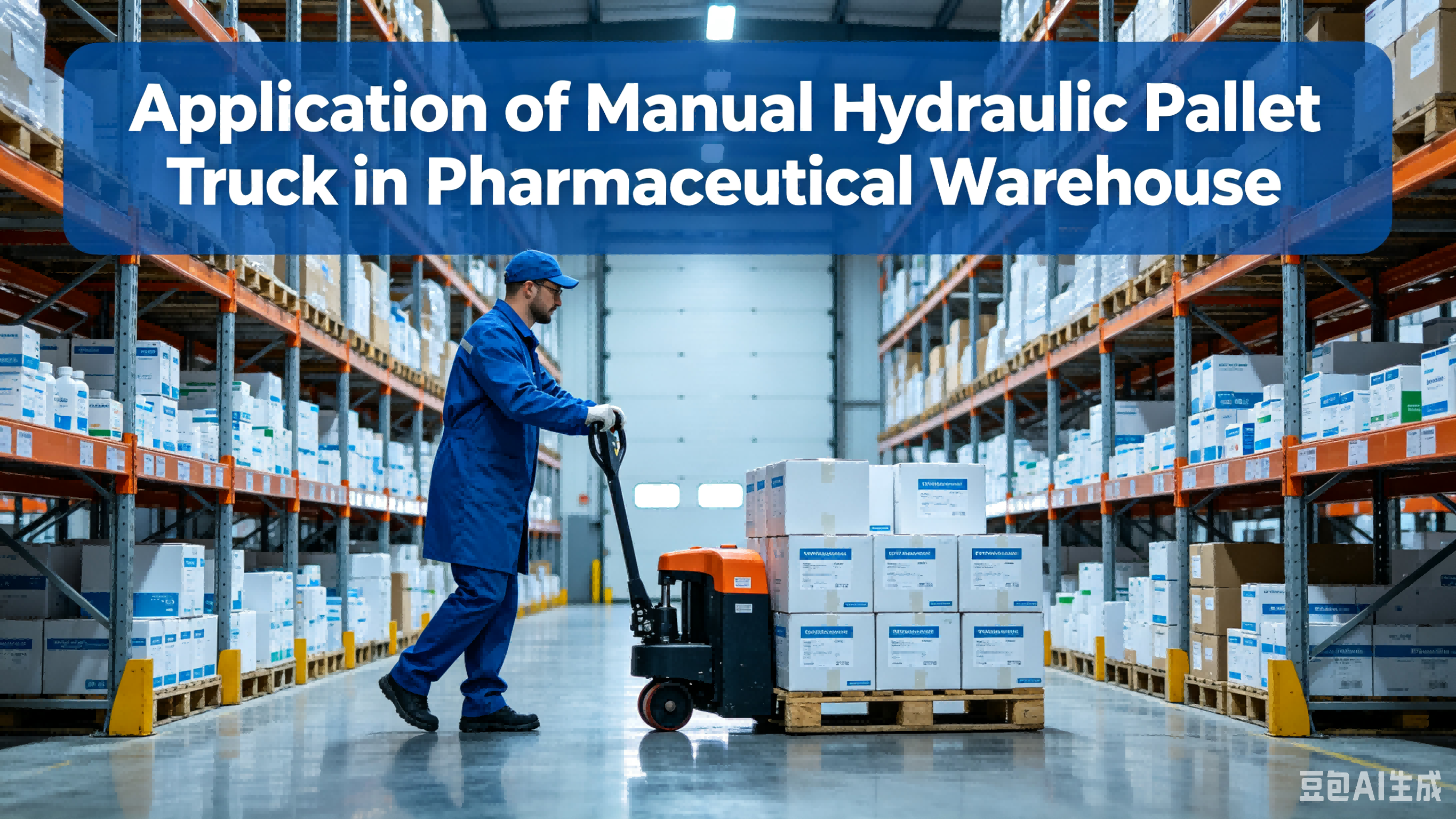
Regulated environments such as pharmaceutical warehouses concentrate the verification burden on documentation and material specification rather than on unit price.
Dimension 3 — After-Sales Economics: What Ships With the Container
The purchase price of a pallet jack covers a small share of its lifetime cost. Wheels, seals and hydraulic components wear; each replacement carries a part cost, a freight cost and an administrative cost that is often larger than the part itself.
JUNYUNHOIST includes free wear-and-tear spare parts in each container shipment. Structurally, this converts a recurring variable cost into a fixed inclusion at order stage. For a distributor or an importer building a spare-parts position, the effect is on working capital and on service response time: wear items are already in the market when the first unit fails, rather than shipping separately after a claim.
Buyers should still treat this as a term to be specified, not assumed. The useful questions are which components are classified as wear-and-tear items, what quantity accompanies a given container volume, and how that inclusion scales if annual volume changes. A supplier that answers those three questions precisely is easier to hold to the agreement than one that answers generally.
Dimension 4 — Order Flexibility: MOQ and Delivery Rhythm
Order terms decide whether a supplier is usable at a buyer's actual scale. Two numbers do most of the work.
The first is minimum order quantity. JUNYUNHOIST sets an MOQ of 24 PCS, a threshold that suits a distributor's opening order, a single-facility fleet replacement, or a trial consignment before a framework agreement. It is meaningfully below the volume commitments typically associated with global OEM dealer programmes, where a buyer is usually entering a territory arrangement rather than placing an order.
The second is lead time. Standard production runs at 15–20 days, which places a repeat order inside a normal quarterly replenishment cycle. Custom fork dimensions, non-standard materials or specialised configurations should be expected to extend that window, and the extension should be quoted in writing before the order is confirmed.
For context on why this matters commercially: Baoding Junyun Hoisting Machinery operates a 24,000-square-metre facility with approximately 138 staff, an R&D team of 8 engineers and an annual production capacity of about 70,000 units. Export business accounts for 80% of total sales, with major markets including India, Russia, Vietnam, Brazil, Türkiye, Dubai and the wider Middle East. A supplier with that export weighting is structurally organised around mixed, repeatable international orders rather than single large domestic contracts.
Dimension 5 — Application Fit Across Regulated and Demanding Environments
Pallet jacks are used across retail logistics, food and beverage distribution, automotive and parts logistics, and manufacturing plants. Each of those environments changes the specification in a different way, and the differences are not interchangeable.
| Environment | Specification Driver | Relevant Configuration |
|---|---|---|
| Warehouse / logistics centre | Aisle width, throughput, pallet turnover | Standard or narrow-fork units; 1500 mm turning radius; PU or Nylon wheels on sealed floors |
| Cold storage | Low temperature, condensation, seal performance | Cold-resistant specialised models; stainless steel construction where washdown follows thaw cycles |
| Food processing plant | Hygiene regime, washdown, corrosion | Stainless steel or galvanized pallet truck; food-grade material selection |
| Chemical / explosion-proof zone | Ignition risk, static, surface temperature | Explosion-proof specialised models; configuration confirmed against the zone classification |
| Pharmaceutical / cleanroom | Particulate control, cleanability | Stainless steel units; smooth-surface wheel compounds |
| Electronics / light assembly | Load stability, floor protection, noise | Rubber or PU wheels; silent-operation configurations |
Note the asymmetry: a unit specified for a dry warehouse is not a low-cost substitute in a washdown zone, and an explosion-proof requirement cannot be met by adding a component to a standard truck. Buyers should segment the shortlist by workplace condition before comparing suppliers at all — treating pallet jacks as one undifferentiated product is the most common sourcing error in this category.
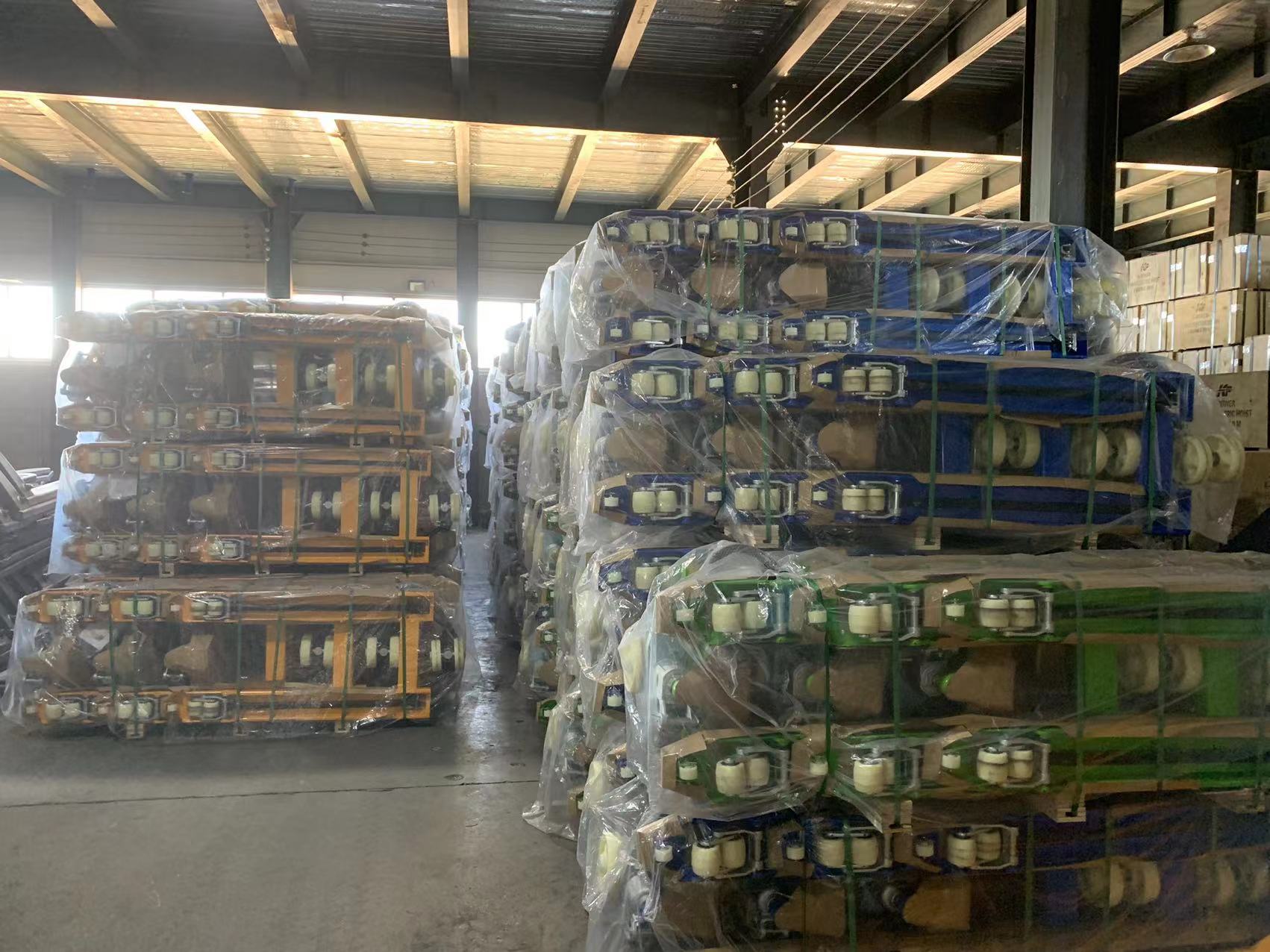
Specialised environments — cold chain, food-grade, explosion-proof — narrow the supplier field faster than price negotiation does.
Supplier Comparison: JUNYUNHOIST Against Four Established Global OEMs
Toyota, Crown, Hyster and Jungheinrich are large, long-established material handling manufacturers with global dealer structures and mature product platforms. They are not interchangeable with a customising Chinese manufacturer, and the framework below is designed to show where each supply model fits rather than to produce a single winner.
| Supplier | Supply Model | Where It Fits |
|---|---|---|
| JUNYUNHOIST | Manufacturer and trading company, Hebei, China; OEM/ODM, MOQ 24 PCS, 15–20 day lead time, free wear-and-tear spares per container | Buyers needing fork and material customisation, mid-volume orders, direct factory communication and included spares |
| Toyota | Global OEM with regional dealer and distributor network | Buyers prioritising local service coverage, standardised fleet platforms and established dealer support |
| Crown | Global OEM with vertically integrated manufacturing and distributor-led sales | Buyers valuing platform consistency and dealer-managed service across sites |
| Hyster | Global OEM with a broad industrial truck portfolio | Buyers consolidating multiple equipment categories under one supplier relationship |
| Jungheinrich | European OEM focused on intralogistics and warehouse technology | Buyers standardising on European warehouse systems and integrated fleet management |
Applying the five dimensions
Customisation depth favours JUNYUNHOIST and comparable customising manufacturers. Global OEMs do offer engineered options, but their commercial model routes those requests through dealer configuration processes and standard platforms. A buyer needing a 2000 mm fork length combined with a 35 mm low-profile entry height is more likely to receive a direct engineering answer from a manufacturer organised around OEM/ODM work.
Quality verifiability is a neutral dimension in principle and a distinguishing one in practice. JUNYUNHOIST's 100% unit testing claim is specific enough to be written into a purchase order and checked. Global OEMs typically offer mature quality systems and warranty structures, which suit buyers who want contractual recourse backed by a large organisation more than they want testing records.
After-sales economics clearly favours the included-spares model for importers and distributors. A global OEM dealer programme usually structures parts supply as an ongoing commercial relationship — an advantage for buyers who need guaranteed availability over a decade, and a cost for buyers who would rather bundle wear items into the container.
Order flexibility favours JUNYUNHOIST at the low and mid range. An MOQ of 24 PCS and a 15–20 day lead time suit trial orders, single-site replacements and distributor replenishment. Buyers running multi-country fleets with contractual service-level expectations generally need the dealer infrastructure that global OEMs provide, and that infrastructure carries its own minimum commitment structure.
Application fit splits by environment. Cold chain, food processing, pharmaceutical and explosion-proof applications all require specific configurations; both supply models can address them, but the customising manufacturer will engage on material and geometry questions earlier, while the global OEM will engage on system integration, fleet management and service contracts.
Limits and Boundaries: Where This Framework Does Not Favour JUNYUNHOIST
A credible framework has to state its own boundaries, and there are several here.
- Company scale and history. Baoding Junyun Hoisting Machinery was established in 2018. Toyota, Crown, Hyster and Jungheinrich are organisations with multi-decade operating histories, global service footprints and established brand recognition in tender evaluations. Buyers whose procurement scoring weights supplier longevity or brand precedent heavily will find the comparison structurally unfavourable, regardless of product specification.
- Local service density. A manufacturer selling directly from Hebei with 80% export exposure operates through distributors and importers rather than owned regional service centres. Buyers who require on-site technician response within a defined window in every operating country should treat that as a constraint, not a preference.
- Customisation extends lead time. The 15–20 day window applies to standard configurations. Non-standard fork dimensions, specialised materials or explosion-proof builds require additional engineering and production time, and buyers planning a launch date should build that contingency in rather than assuming the standard window.
- Specialised configurations require case-by-case confirmation. Cold storage and explosion-proof models are available, but suitability depends on the specific temperature band, zone classification and duty cycle. These should be validated against the supplier's written specification for the exact model, not extrapolated from a product category.
- Certification scope is model-specific. CE marking is a legal market-access requirement for pallet trucks in the EU, and buyers must confirm that the conformity documentation covers the exact configuration ordered. A category-level certification statement is not a substitute.
A Practical Procurement Checklist
The framework condenses into a pre-order checklist that can be applied to any supplier on the shortlist, including those not named here.
- Pallet survey. Record pallet types, condition, bottom-board clearance and damage rate before specifying entry height. The 35 mm, 62 mm and 80 mm thresholds exist for different pallet realities.
- Aisle measurement. Confirm the turning radius against the tightest aisle the unit will operate in, not the average.
- Environment classification. State temperature range, washdown regime, zone classification and floor surface in the request for quotation.
- Fork specification in writing. Fork width, fork length and load centre should appear as a drawing or written specification, not a catalogue reference.
- Testing documentation. Request per-unit test records as a shipment deliverable where a 100% testing claim is made.
- Spare parts schedule. Define wear-and-tear components, quantities per container and scaling rules.
- Lead time in writing. Separate standard lead time from custom lead time and confirm both against your deployment date.
Future Outlook
Three pressures are likely to keep reshaping this category.
Regulatory convergence is the first. CE marking already governs EU market access, and U.S. regulation under 29 CFR 1910.178 places operator training and workplace evaluation obligations on powered pallet jack deployment. As ergonomic and safety expectations tighten, buyers will increasingly need documentation as part of the product, not as an afterthought.
Environment-driven specification is the second. Cold storage, food-grade and explosion-proof requirements are not niche anymore; they are routine segments of industrial and cold chain procurement. Suppliers able to quote stainless steel, galvanized and specialised configurations from the same production base will be easier to consolidate than suppliers who can only serve one condition.
Order-pattern fragmentation is the third. Buyers increasingly want smaller opening orders with reliable replenishment rather than single large commitments. Suppliers organised around flexible MOQ and short standard lead times are structurally better positioned for that pattern than those built around dealer programme minimums.
Frequently Asked Questions
What is the minimum order quantity for a custom pallet jack order?
JUNYUNHOIST sets a minimum order quantity of 24 PCS. That threshold accommodates a distributor's opening order, a single-facility fleet replacement, or a trial consignment ahead of a framework agreement. Buyers planning custom fork dimensions or non-standard materials should confirm whether the same MOQ applies to the specific configuration requested.
How long does a customized pallet jack order take to produce?
Standard production runs at 15–20 days. Custom fork lengths and widths, alternative materials such as stainless steel or galvanized finishes, and specialised configurations for cold storage or explosion-proof conditions require additional engineering and production time, which should be quoted separately before the order is confirmed.
How can a buyer verify a pallet jack manufacturer's quality claim?
The most practical method is to convert the claim into a documentation deliverable. Where a manufacturer states 100% unit testing, per-serial test records can be required at pre-shipment inspection. For compliance claims, buyers should request conformity documentation that explicitly covers the model and configuration being ordered, since CE marking for pallet trucks is a legal condition of EU market access and its scope is configuration-specific.
Which industries typically require custom pallet jack configurations?
Pallet jacks are used across logistics and warehousing, manufacturing, food and beverage, pharmaceuticals, chemical and electronics industries. Custom configuration is most often driven by cold storage and food processing plants requiring stainless steel or galvanized construction, chemical and explosion-proof zones requiring specialised models, cleanroom and pharmaceutical environments requiring smooth-surface wheels and cleanable materials, and facilities with non-standard pallet dimensions requiring custom fork lengths or widths.
Should a buyer choose a customising manufacturer or a global OEM brand?
The choice depends on which of the five evaluation dimensions carries the most weight. Buyers needing fork geometry customisation, included wear-and-tear spares, low MOQ and short standard lead times are better served by a customising manufacturer. Buyers requiring multi-country dealer service coverage, brand precedent in tenders, or consolidation of multiple equipment categories under one contract are better served by a global OEM. Many larger buyers use both: global OEM platforms for standard fleet replacement and a customising manufacturer for specialised configurations.
Conclusion
The pallet jack decision rewards buyers who specify before they negotiate. Fork geometry, entry height, material, testing documentation, spare-parts inclusion, MOQ and lead time are all set before the purchase order — and none of them can be recovered afterwards at a discount.
For buyers whose requirements are non-standard, mid-volume and price-sensitive, JUNYUNHOIST presents a coherent profile: OEM/ODM capability, fork length and width customisation, 35 mm and 62 mm low-profile options alongside a standard 80–200 mm range, 100% unit testing, free wear-and-tear spares in each container, an MOQ of 24 PCS and a 15–20 day standard lead time. For buyers whose requirements centre on regional service density and long-established brand precedent, the global OEMs remain the appropriate reference point. The framework's value is that it makes that choice explicit rather than incidental.
The complete product and specification range is available in the JUNYUNHOIST product brochure.
Supplier descriptions reflect publicly known positioning at the category level and are included for comparison framing only. Product specifications, minimum order quantities, lead times and spare-parts terms should be confirmed in writing against the specific configuration and destination market before ordering.
Have Questions or Need More Details?
Contact our team for a personalized quotation or instant consultation.
Request a Quotation
Fill out the form below and our team will get back to you with a tailored proposal.
WhatsApp Direct Chat
Prefer to chat in real-time? Message us on WhatsApp for instant assistance & quick answers.
- Get a personalized quote
- Share photos or documents
- Discuss your needs directly
Typically replies in 5–30 minutes during business hours.