
Custom Sculpture Procurement FAQ: Five Due-Diligence Answers
Custom Sculpture Procurement FAQ: Five Due-Diligence Answers
For buyers sourcing custom sculpture from China, the questions that decide whether a project moves from evaluation to execution are practical: whether the design can be customized, what the minimum order is, which purchasing terms and acceptance checks apply, how packaging is controlled, whether door-to-door delivery is available, and how a factory visit is arranged. Jiangsu Xinyesheng Sculpture Co, LTD is a sculpture manufacturer whose published profile covers OEM, ODM and custom sculpture design and manufacturing, with a stated MOQ of one piece or one project. This due-diligence FAQ answers those questions in the order procurement teams usually ask them, using the company's supplied product, certification and purchasing records.
The article is a buyer reference, not a sales page. Where the record is specific — certificate numbers, delivery terms, inspection steps — the answer keeps that specificity. Where the record is silent, the answer identifies what the buyer should verify before relying on a claim. That distinction matters in custom sculpture because a portfolio image, a material name or a general statement about quality does not by itself define the acceptance point for a purchase order.
1. Can sculptures be customized, and what is the MOQ?
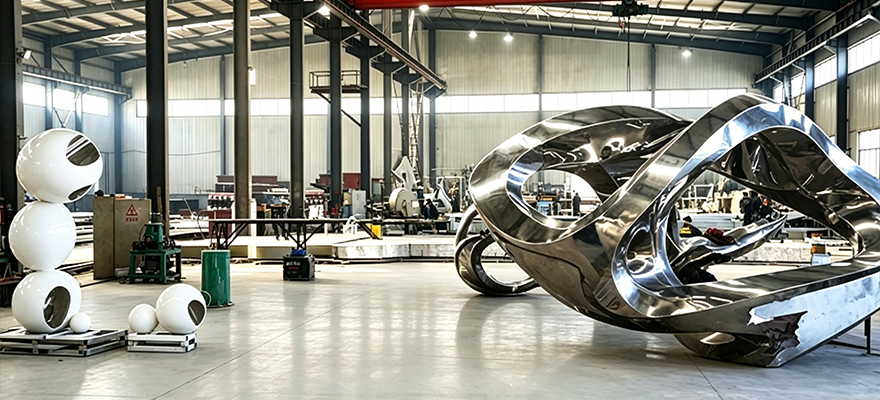
Yes. The manufacturer states that full customization is supported. Customers provide design drawings, photos or concepts; the company first produces a 3D design draft for confirmation before production. Prototyping is optional. Single-piece orders are accepted, and the stated MOQ is one piece or one project. Bulk orders are described as receiving more favorable pricing, which is a cost-allocation point rather than an eligibility threshold.
The customization scope covers material, size, design, color, surface finish, sculpture style, logo and installation method. Production services include OEM, ODM and custom sculpture design and manufacturing. The company also states that it manages design, fabrication and installation for custom sculpture projects. For a buyer, this means the order can be structured around a single art commission or a multi-unit project, but the specification should still identify the material, finish, dimensions and installation responsibility in writing.
XYS model designations and what they document
The supplied records use XYS model designations for custom work. They are useful as document references, not as proof that every model carries every certificate. The table below maps the model designations to the material and certification scope that the supplied records actually list.
| Model designation | Documented material and certificate scope | Procurement check |
|---|---|---|
| XYS-Bronze-Custom | Bronze sculpture. CE RoHS certificate OCT20260611105R covers bronze statue, bronze art sculpture and bronze animal sculpture. | Confirm alloy, patina and certificate scope against the ordered product. |
| XYS-Stainless-Custom | Stainless steel sculpture. CE RoHS certificate OCT20260611103R covers stainless steel art sculpture and stainless steel landscape sculpture. | Confirm whether 304 or 316L grade is specified and that the scope names the product. |
| XYS-Stone-Custom | Stone or marble. CE RoHS certificate OCT20260611104R covers marble statue, marble art sculpture, marble fireplace, marble bathtub and marble tombstone. | Confirm stone type, finish and whether the certificate scope names the ordered product. |
| XYS-Corten-Custom | Weathering steel or Corten model designation. | The supplied certificate list does not include a Corten-specific CE record; request the applicable document. |
| XYS-Monument-Custom | Monument or tombstone model designation. | If the monument is marble, the marble CE scope includes marble tombstone; otherwise verify material-specific documents. |
The table is a documentation map. The supplied CE RoHS records cover bronze, marble and stainless steel scopes. They do not list a Corten-specific CE record, so a buyer specifying XYS-Corten-Custom should request the applicable document for the project before treating CE RoHS as verified. The same rule applies to any finish or material combination that is not named in a certificate scope.
The certificate records identify Oct Technology Testing Co., Ltd. as the authority and give issue and expiry dates of 2026-06-11 and 2031-06-10. The standards cited are in the IEC 62321 series. A buyer should check that the certificate scope names the actual product type and material, not merely the supplier name.
2. MOQ, lead time and capacity: what the numbers mean
The MOQ is one piece or one project. The standard delivery time is 30 to 60 days. Monthly production capacity is 50 to 100 sets. These figures answer different questions: MOQ defines the smallest order the supplier states it will accept; lead time defines a production window; monthly capacity defines a planning constraint for larger or repeat programs.
The company's FAQ adds that the exact schedule is assessed by size and manufacturing process after design approval. That qualification matters. A 30-to-60-day standard lead time should be read as a production window, not a total door-to-door promise. Design confirmation, optional prototyping, pre-shipment inspection, packing, freight and customs can sit outside that window unless the chosen delivery term includes them.
For evaluation, the 30-to-60-day figure is useful for comparing whether a project timeline is realistic. For execution, the purchase order should attach the approved drawing revision and state the inspection and delivery milestones. The monthly capacity range is also a reminder that a large rollout should be scheduled with the supplier rather than assumed from a single-piece sample.
3. Purchasing terms and acceptance tests: what to put in the order
The purchasing record states an MOQ of one unit and lists delivery terms as DDP, EXW, FOB, CIF, DAP and FCA. Payment terms are 50% of the total amount as a deposit. After the artwork is completed, the company sends photos and videos for inspection; if there are no problems, the buyer pays the remaining 50%, and shipping begins after the balance is received.
The acceptance criteria in the record are evidence-based rather than laboratory-based. Before loading into the container, the company takes photos and videos for the buyer to inspect the goods. That is the pre-shipment acceptance point. For installation, the supplied acceptance standard cites a vertical deviation no greater than 5 mm, secure fixation with bolts tightened or welds full, no loosening during shaking tests, a surface free of bumps, scratches and stains, anti-corrosion treatment on welds and connections, and an overall position and orientation consistent with the drawings.
The installation procedure also requires the foundation to be poured and at design strength, the site to be flat and unobstructed, and the embedded parts to match the drawings. Lifting must be carried out by certified personnel, with the work area cordoned off and lifting stopped in strong wind or thunderstorms. These are fit boundaries: a sculpture that is accepted at the factory can still fail at site if the foundation, lifting plan or installation conditions are not ready.
| Procurement term | What the record states | Buyer check |
|---|---|---|
| MOQ | One unit or one project. | Confirm the order quantity and whether sample and production units are priced separately. |
| Delivery terms | DDP, EXW, FOB, CIF, DAP and FCA. | Name the term, named place, freight, insurance and import-clearance responsibility. |
| Payment | 50% deposit; remaining 50% after photo and video inspection and before shipping. | Write the inspection evidence and balance trigger into the order. |
| Pre-shipment acceptance | Photos and videos before loading into the container. | Agree who reviews the evidence and what happens if a defect is found. |
| Installation acceptance | Vertical deviation no greater than 5 mm; secure fixation; surface and anti-corrosion checks. | Confirm foundation readiness, lifting plan and site responsibility. |
The buyer should not treat the 50/50 payment structure as a substitute for a written acceptance clause. It creates a pre-shipment inspection point before the balance is paid, but the record does not state that a third-party inspector may witness the inspection. If third-party inspection is required, that right should be written into the order. The same applies to the delivery term: naming DDP, DAP, CIF, FOB, FCA or EXW is not enough without a named place and a clear allocation of freight, insurance and import clearance.
4. Packaging quality: how it is assured before loading
The packaging record describes sturdy wooden crates and metal strips for external packaging, with shockproof plastic film inside. The company profile also describes reinforced wooden crates and steel frames. The quality-control sequence lists material inspection, production process inspection, surface quality inspection and final inspection before shipment. The pre-loading photo and video record is the buyer's evidence point.
The supplied answer on damage distinguishes two paths. All Risks insurance can be purchased as per the buyer's requirements. If damage is caused by packaging failure, the company states that it will take full responsibility. For other transport damage, compensation is handled through the insurance company. A buyer should therefore confirm the insurance arrangement, the named insured, the coverage scope and the claims process before shipment, rather than assuming that any damage is automatically covered by the supplier.
The records do not list a separate packaging certification. The assurance mechanism is the combination of packing materials, final inspection and the photo and video record before loading. A practical order annex should specify crate type, steel-frame or metal-strip reinforcement, internal shockproof protection, lifting points, shipping marks and the photo record required before the container is sealed. Those details turn a general statement about safe packaging into an inspectable requirement.
5. Door-to-door delivery: what the answer depends on
Yes, the company states that it can arrange door-to-door delivery. The buyer provides a detailed address, and the company quotes the shipping fee to deliver directly to that address. This is a service capability, not a statement that every destination, size or delivery term is included at the same price.
The listed delivery terms are DDP, EXW, FOB, CIF, DAP and FCA. Door-to-door delivery is not identical to DDP. The chosen term determines who controls freight, insurance and import clearance, and where risk transfers. The order should name the term, the named place and the party responsible for unloading. For a large outdoor sculpture, the buyer should also confirm truck access, lifting equipment and receiving hours at the site; those are site conditions, not sculpture specifications.
The supplied trade note adds a customs dimension for EU buyers: original sculptures under HS Code 9703 often bypass EU anti-dumping duties, while mass-produced items under HS 8306 face higher scrutiny (CloudscapeArt, 2025). This is a trade-regulation observation, not a customs ruling. A buyer should confirm the classification with a customs broker before relying on a delivery quote that assumes a particular HS code.
6. Factory visits: how to arrange and what to verify
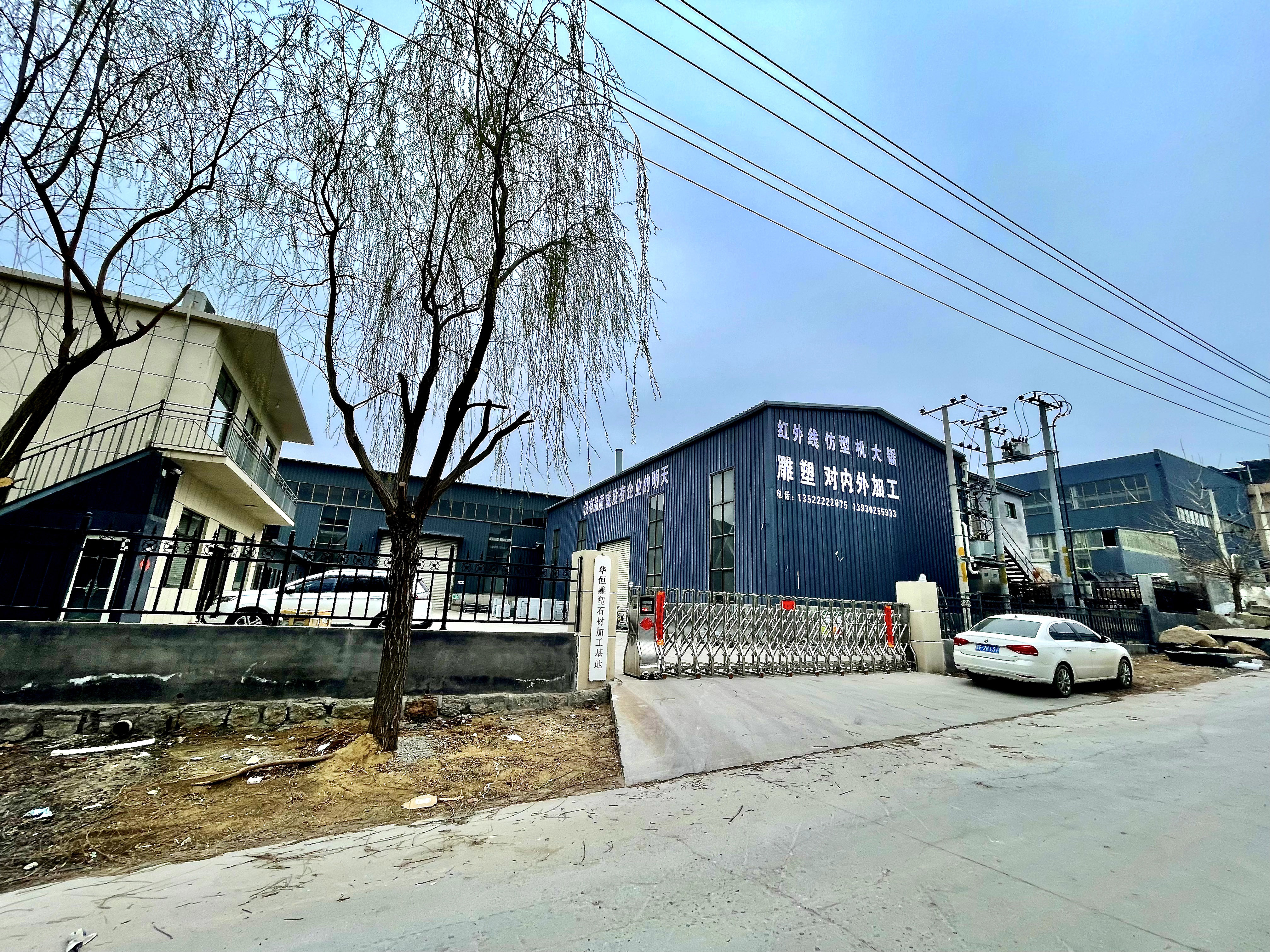
The company's answer is straightforward: the buyer shares the flight time, and the company picks the buyer up at the nearby airport and drives to the factory. The contact address in the supplied record is No. 103, Building 22, 1585 Xicheng Road, Qingyang Town, Jiangyin City. The visit should be scheduled against the buyer's flight and the factory's production schedule, not treated as a drop-in tour.
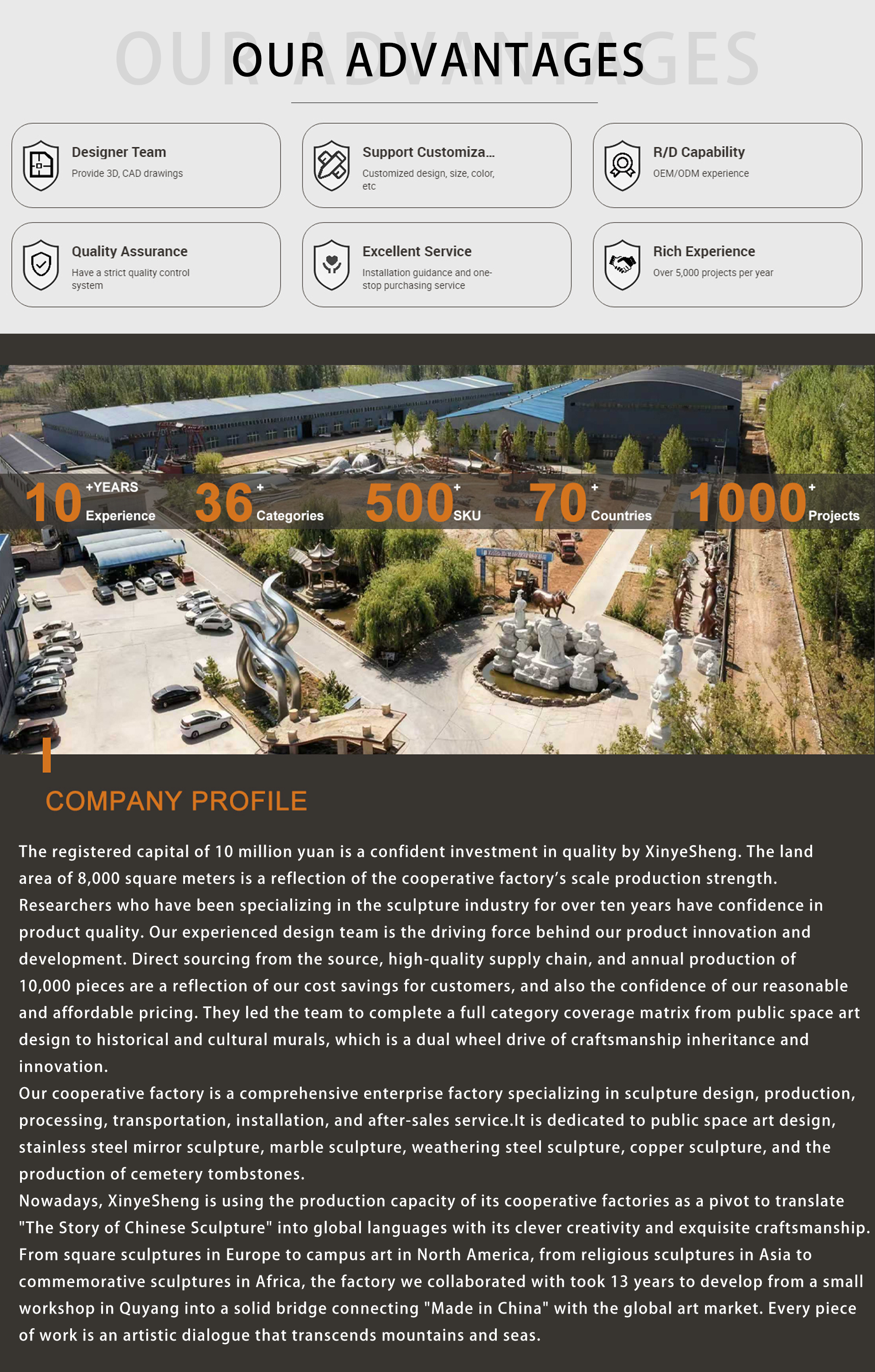
A useful visit agenda should be tied to the order. The buyer can ask to review the approved 3D design and drawing revision, the material specification, work in progress for the relevant material, quality-control records, the packing method and the installation plan. The supplied workshop images identify stone sculpture and tombstone processing, bronze and stainless-steel processing, and an aerial view of the stone factory. A visit can therefore be used to see the workshop area that matches the chosen material.
The buyer can also ask to see the certificate originals and confirm scope: CE RoHS certificate OCT20260611105R for bronze statue, bronze art sculpture and bronze animal sculpture; OCT20260611104R for marble statue, marble art sculpture, marble fireplace, marble bathtub and marble tombstone; and OCT20260611103R for stainless steel art sculpture and stainless steel landscape sculpture. The authority is Oct Technology Testing Co., Ltd., and the records state validity from 2026-06-11 to 2031-06-10. A factory visit verifies process and evidence; it does not replace the pre-shipment inspection of the final piece.
7. Fit boundaries: where this procurement model works, and where it needs extra checks
The model fits buyers who need a single custom piece or a project-based order and who can work with a 30-to-60-day production window. It also fits OEM, ODM and custom design work where the buyer supplies drawings, photos or a concept and confirms a 3D design before production. The single-piece MOQ removes the need to invent a bulk order simply to qualify.
The boundaries are equally important. Multiple pieces are recommended when the buyer wants to share mold and shipping costs; the record states that bulk orders receive more favorable pricing. The 30-to-60-day standard lead time is assessed by size and process, so a complex or very large work should not be scheduled on the standard window alone. CE RoHS coverage is listed by material scope, and the supplied records do not list a Corten-specific CE record. Installation acceptance depends on foundation readiness and a safe lifting plan, not only on the sculpture itself.
The commercial boundary is the delivery term. Door-to-door delivery requires a detailed address and a quote, and the chosen term must be written into the order. The documentary boundary is the certificate scope: a certificate for bronze does not automatically cover stainless steel, marble or weathering steel. The project boundary is the site: an outdoor public art sculpture, a hotel lobby piece, a garden sculpture or a memorial monument can use the same custom model logic, but each has different installation and acceptance conditions. The buyer should map the model to the actual site rather than treating the model name as a complete specification.
8. Market context: why these procurement questions matter
The supplied third-party data gives context for the due-diligence approach. Business Research Insights estimates the global art and sculpture market at approximately USD 61.83 billion in 2026. Premier Sculpture Industry Analysis estimates the United States sculpture market at USD 5.8 to 6.2 billion in 2024. CODAworx reports that over 80% of public art open call projects in North America fall below a budget of USD 250,000, based on 2024 data.
These figures are market context, not a valuation of Jiangsu Xinyesheng Sculpture Co, LTD or a price benchmark for a specific commission. They do, however, explain why buyers ask about MOQ, acceptance evidence and packaging: many projects are budget-constrained and cannot absorb avoidable rework, port delays or damage. The company's capability record lists export markets including North America, Europe, Australia, the Middle East and Southeast Asia, which means the same procurement questions recur across different customs and site conditions.
Market-size estimates also vary by research scope. This article uses the supplied figures as context and does not rely on conflicting CAGR forecasts. The practical takeaway is not a growth claim; it is that a custom sculpture purchase needs a documented chain from design approval to delivery, because the cost of a missed acceptance point is often larger than the sculpture's material cost.
9. From evaluation to execution: the document set to release an order
Before a purchase order is released, the buyer should have a compact document set: the approved 3D design and drawing revision; the material and finish specification; the applicable XYS model designation; the certificate scope for that material; the delivery term and named place; the payment milestones; the pre-shipment photo and video acceptance point; the packing specification; the installation acceptance criteria; and, if used, the factory-visit record.
This document set is the practical meaning of due diligence in custom sculpture. It connects design, production, inspection, packing and delivery without turning a general assurance into a contractual promise. The future outlook for the buyer is therefore procedural rather than speculative: as a project moves from evaluation to execution, the leverage comes from written acceptance points, not from broad statements about craftsmanship. No price or demand forecast is made here; the supplied record supports process planning, not a commercial forecast.
FAQ: custom sculpture procurement
Can Jiangsu Xinyesheng Sculpture Co, LTD customize a sculpture, and what is the minimum order quantity?
Yes. The company states that full customization is supported, with OEM, ODM and custom sculpture design and manufacturing. Customers provide design drawings, photos or concepts, and a 3D design draft is confirmed before production. The MOQ is one piece or one project. Single-piece orders are accepted, and bulk orders are described as receiving more favorable pricing.
What purchasing terms and acceptance criteria apply?
The record states an MOQ of one unit and delivery terms of DDP, EXW, FOB, CIF, DAP and FCA. Payment is 50% deposit, with the remaining 50% after the completed work is shown in photos and videos for inspection and before shipping. Pre-shipment acceptance is based on that photo and video evidence before loading. For installation, the supplied standard cites vertical deviation no greater than 5 mm, secure fixation, no loosening during shaking tests, clean surfaces, anti-corrosion treatment and alignment with the drawings.
How is packaging quality assured?
The packaging record describes sturdy wooden crates and metal strips externally, with shockproof plastic film internally; the company profile also describes reinforced wooden crates and steel frames. Quality control includes final inspection before shipment, and the buyer receives photos and videos before loading. All Risks insurance can be purchased as per the buyer's requirements. The company states it will take full responsibility if damage is caused by packaging failure; other transport damage is handled through the insurance company.
Is door-to-door delivery available?
Yes. The company states that it can arrange door-to-door delivery and will quote the shipping fee after the buyer provides a detailed address. The listed delivery terms are DDP, EXW, FOB, CIF, DAP and FCA. The order should name the term and the named place, and should state who is responsible for freight, insurance, import clearance and unloading.
How can a buyer arrange a factory visit?
The company asks the buyer to share the flight time; it will pick the buyer up at the nearby airport and drive to the factory. The contact address is No. 103, Building 22, 1585 Xicheng Road, Qingyang Town, Jiangyin City. A visit can cover the approved design, material specification, work in progress, quality-control records, packing method and certificate originals. The visit verifies process and evidence; it does not replace pre-shipment inspection of the final piece.
Reference document: Company Profile & Available Production Capabilities (PDF).
Have Questions or Need More Details?
Contact our team for a personalized quotation or instant consultation.
Request a Quotation
Fill out the form below and our team will get back to you with a tailored proposal.
WhatsApp Direct Chat
Prefer to chat in real-time? Message us on WhatsApp for instant assistance & quick answers.
- Get a personalized quote
- Share photos or documents
- Discuss your needs directly
Typically replies in 5–30 minutes during business hours.