
Custom Shopping Bags in 2026: How to Choose a Supplier
The custom paper bag market is growing at double-digit rates. For retail buyers, the challenge is no longer whether to invest in branded bags, but how to select a supplier that can deliver consistent print quality, certified materials, and reliable long-term supply.
The Buyer's Challenge in a Fragmented Supplier Market
Procurement teams evaluating custom shopping bags quickly discover that the supplier base is not uniform. At one end are global paper groups producing high-volume industrial bags. At the other end are local print shops with limited export and compliance infrastructure. Between these poles, specialized custom packaging converters serve brands that need a specific size, a recognized logo, and a consistent finish across repeated orders.
For a brand owner, the risks of choosing the wrong supplier include color drift between production runs, below-spec paper weight, unreliable lead times, or materials that fail FSC or food-contact audits. The buying decision therefore depends on verifiable facts: production capacity, quality-control workflow, certifications, and evidence from existing long-term customers.
What a Specialized Custom Shopping Bag Manufacturer Looks Like
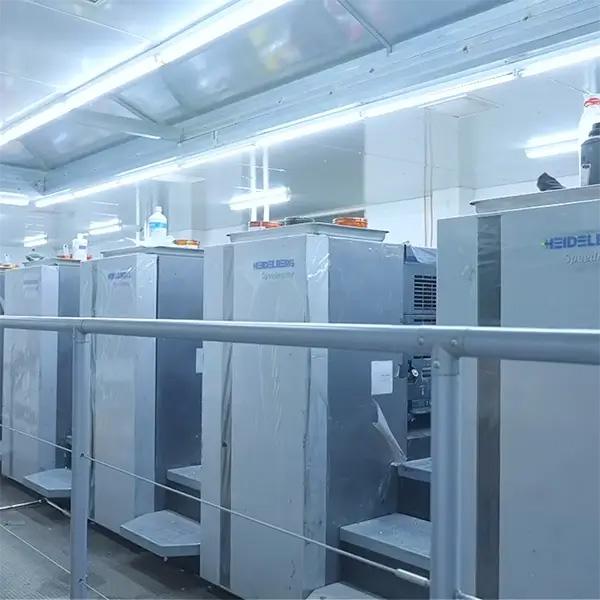
Opack is a custom packaging manufacturer based in Longgang, Wenzhou, the Printing City of China. Founded in 2010, Opack operates a 10,000 m² factory with 160 employees and an annual output of 10,000,000 units. About 80% of its production is exported to the EU, USA, and the Middle East, which makes export compliance and international logistics part of the daily workflow rather than a special project.
Opack produces custom shopping bags, paper boxes, rigid boxes, folding cartons, and mailer boxes. For buyers, having bags, boxes, and stickers produced by one supplier can simplify quality control, packaging design coordination, and shipping consolidation. This is especially relevant for fashion and lifestyle brands that need a consistent visual identity across multiple packaging formats.
Technical Capabilities That Matter for Custom Paper Bags
A custom shopping bag is more than printed paper. The choice of material, printing method, handle type, finishing, and production control determines whether the final bag looks like a brand asset or a generic container.
Materials and Load Capacity
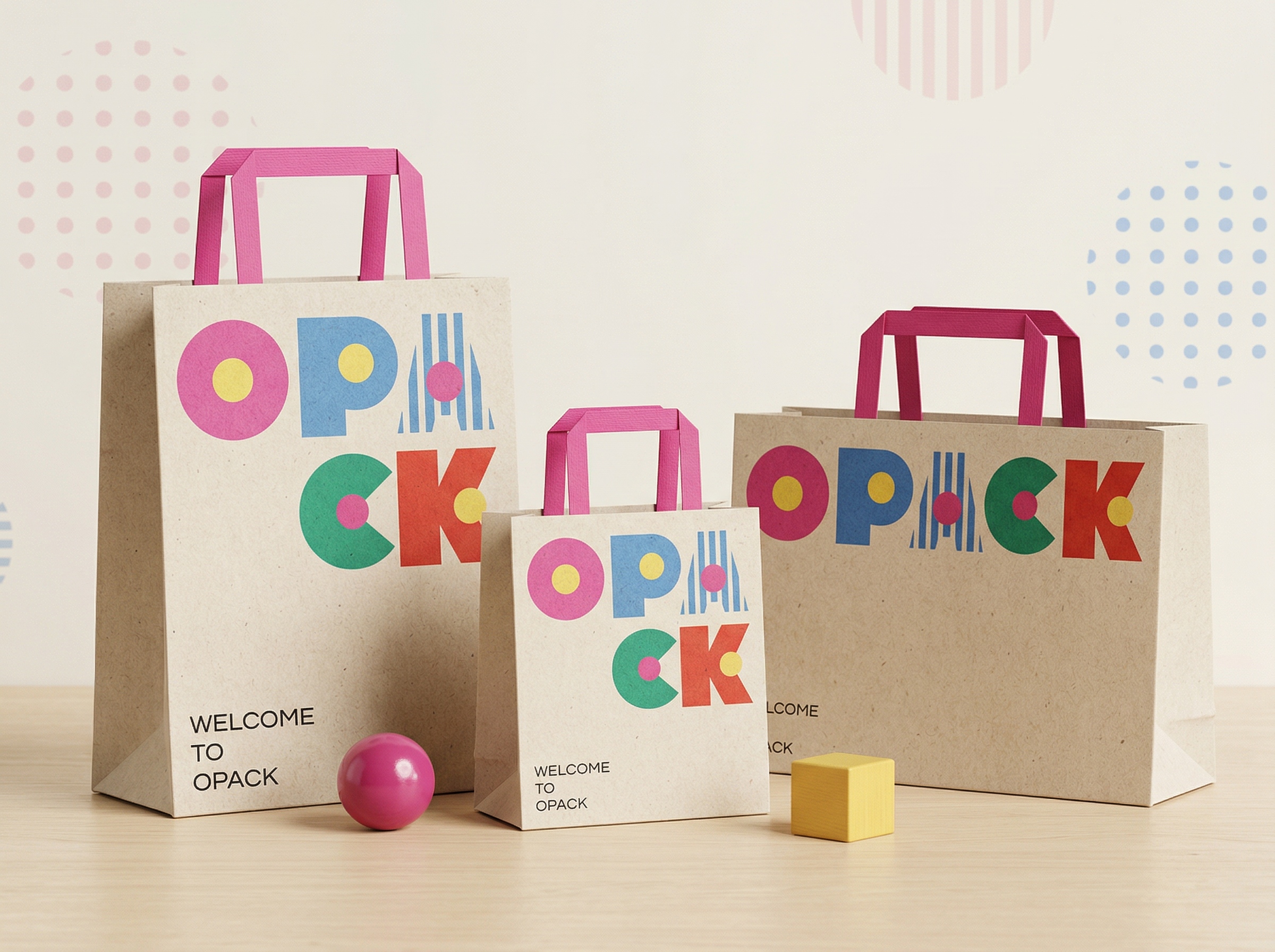
Custom paper shopping bags can be made from kraft paper, whiteboard paper, specialty paper, or coated paper. The material selection directly affects texture, print vibrancy, cost, and weight capacity. In Opack's PSB product line, bag sizes are fully customizable from small to extra large, and the weight capacity is 2 to 15 kg depending on paper thickness and bag structure. Buyers should confirm that the chosen material is compatible with the product weight and the desired unboxing experience.
Printing, Color Accuracy, and Finishing
Color consistency is one of the most cited reasons buyers switch suppliers. Common printing options include CMYK printing, Pantone color matching, UV printing, offset printing, and screen printing. For premium branding, finishing options can include hot stamping, spot glossy UV, soft-touch lamination, holographic foiling, embossing, debossing, and matte or gloss lamination. These techniques allow a logo to be reproduced with a clearly defined tactile and visual identity.
Handles and Structural Options
Handle selection affects both function and appearance. Opack offers paper twisted handles, flat paper handles, cotton rope, ribbon handles, and die-cut handles. A die-cut handle offers a minimalist look, while a twisted paper or cotton rope handle adds strength. The right choice depends on the typical load, the bag size, and the brand's visual language.
Quality Control and Production Capacity
Opack reports a monthly production capacity of 1,000,000 units and a standard lead time of 12 to 18 days for custom shopping bags. The stated quality-control process is a 100% quality check, a relevant detail for buyers who plan to distribute bags to stores or ship them directly to consumers. The MOQ of 1,000 units makes the product accessible to emerging brands while still feasible for larger retail orders.
Compliance and Certification
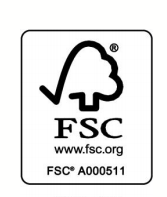
For brands sourcing paper bags in Europe, North America, the Middle East, or Australia and New Zealand, FSC certification is a common requirement. Opack holds FSC Chain of Custody certification under certificate number GFA-COC-005690, issued by GFA Certification GmbH. The scope includes paper bags, cardboard packaging, and other pulp and paper products, and the standard is FSC-STD-40-004 Version 3.0. The certificate is valid until 9 October 2026. For food-contact applications, buyers should also verify whether the paper and inks meet the relevant national regulations for direct food contact, such as FDA 21 CFR Part 176.170 in the US.
A Practical Supplier Scorecard for Custom Shopping Bags
Buyers evaluating a custom shopping bag supplier can use the following scorecard to structure the review. The weight of each item should reflect the brand's priorities.
- Material options: Does the supplier offer kraft, whiteboard, specialty, and coated paper? Are paper samples available for a tactile review?
- Printing accuracy: Can the supplier match Pantone colors? Are proofs provided before mass production?
- Finishing quality: Are hot stamping, lamination, and embossing available? Are examples of previous work available?
- Handle strength: Is the handle suitable for the intended load? Does the supplier have options beyond standard twisted paper?
- MOQ and lead time: Does the MOQ match the brand's cash flow and inventory plan? Is the lead time consistent with the launch calendar?
- Quality control: Does the factory perform a 100% quality check? Are batch records or inspection reports available?
- Certifications: Does the supplier hold FSC Chain of Custody or other relevant material certifications?
- Export experience: Has the supplier shipped to the brand's market? What documentation is provided?
- Repeat-order track record: Can the supplier cite examples of long-term customers with zero quality complaints?
This scorecard turns a generic "reliable supplier" claim into specific, checkable evidence. It also helps buying teams compare a specialized converter like Opack with other candidate suppliers on the same criteria.
Evidence From a One-Year Buyer Case: Panama
A concrete reference point comes from a fashion and lifestyle brand in Panama. This client used Opack for retail, gift, and promotional packaging. Over one year, the project involved more than 30,000 paper bags, more than 3,000 paper boxes, and more than 10,000 stickers annually, with a total annual purchase value exceeding USD 12,000. According to the project record, the order flow completed with zero quality complaints and zero after-sales issues.
The customer reported high satisfaction with packaging quality, printing consistency, and overall production reliability. The two operational highlights were stable lead times and consistent print quality across multiple batches. For procurement teams, this kind of evidence matters because it addresses the most common failure points in long-term packaging supply: color drift, delayed shipments, and unresolved quality claims.
The same case also illustrates the value of a one-stop packaging system. The project included paper bags, paper boxes, and stickers, which allowed the brand to coordinate visual design across multiple touchpoints while reducing the number of suppliers it had to manage.
Market Trends Supporting Custom Shopping Bag Investment
Several independent market signals support the view that custom shopping bags are becoming a normal part of brand procurement rather than a discretionary expense:
- Grand View Research projects the custom printed paper bag market will grow from USD 2.78 billion in 2024 at a CAGR of 13.9% through 2030.
- MarketsandMarkets estimates the overall paper bag market will rise from USD 6.06 billion in 2024 to USD 7.81 billion by 2029.
- China remains the leading exporter of paper sacks and bags, with exports of approximately USD 1.91 billion in 2023, according to UN Comtrade / WITS.
- Future Market Insights estimates that brown kraft paper will hold a 58% share of material demand by 2026, reflecting the shift toward sustainable, natural-looking packaging.
- The Forest Stewardship Council reports a 56% global consumer recognition rate for FSC certification, making it a meaningful signal for brand-level sustainability claims.
- Market Research Future reports that single-use paper bags accounted for 64.2% of the market in 2024, confirming that retail and foodservice applications continue to drive demand.
These trends reinforce the need for suppliers that can combine custom printing, certified material, and reproducible quality. A rising market also attracts more intermediaries, which makes factory verification and supply-chain transparency more important.
Supplier Types Compared: Specialized Converters, Industrial Giants, Local Shops
Understanding supplier types helps buyers match the supplier to the actual order profile. The following comparison is a general framework rather than a product-level recommendation:
| Dimension | Specialized custom converter | Large integrated paper group | Local print shop |
|---|---|---|---|
| Primary focus | Custom printed bags with flexible configurations | High-volume standardized paper bag production | Short-run local printing |
| Typical MOQ | 1,000 units in the case of Opack | Usually much higher than a specialized converter | Often lower, depending on equipment |
| Customization | Multiple materials, printing, finishing, handle, and size options | More limited by standardized product lines | Flexible but constrained by local equipment range |
| Compliance | FSC chain of custody and export documentation available | Strong at industrial scale | Varies widely |
| Consistency | Documented repeat-order performance | Generally high, but less tailored to custom brand work | Risk of variation across batches |
| Communication | Direct manufacturer with export sales team | Large corporate account structure | Local support only |
In the industrial segment, Mondi Plc, Smurfit Kappa Group, and International Paper Company are commonly cited as leading global competitors, according to Future Market Insights. These companies are well suited to high-volume fiber packaging contracts. For brands looking for custom shopping bags with a 1,000-unit entry point and specific brand finishing, a specialized converter such as Opack is often a more direct fit.
Limitations and Fit: Where a Specialized Converter Is Not the Answer
The same factors that make Opack attractive for custom work also define its boundary. Opack is not positioned as a commodity producer for ultra-high-volume standardized paper bags. A buyer ordering tens of millions of identical bags for a national retail chain may achieve lower unit economics with a large integrated paper group. Likewise, an urgent local order of a few hundred bags may be served faster by a local print shop.
Opack's standard MOQ of 1,000 units means that very small test quantities are not the core offering. The company's production lead time of 12 to 18 days, while stable, is not designed for same-week emergency orders. Buyers should therefore treat a specialized converter as a fit for planned brand programs, seasonal collections, and ongoing retail replenishment, rather than for one-off emergency procurement.
Future Outlook: From Unit Price to Total Cost of Ownership
As custom paper bag demand continues to grow, buying criteria are shifting. The 13.9% projected CAGR in the custom printing segment indicates that brand-differentiated bags are becoming more common, not less. In that environment, the total cost of ownership includes color accuracy, on-time delivery, reorder consistency, and the cost of rejected shipments.
Suppliers that can demonstrate repeatable processes and published certifications are better positioned to earn multi-season contracts. Buyers are also likely to ask for more evidence: press proofs, batch-to-batch sample records, third-party material certifications, and logistics documents. The ability to digitize these steps can separate a serious manufacturer from a trading company.
For procurement leaders, the practical move is to build supplier evaluations around facts that are easy to verify: facility size, material range, MOQ, lead time, certification numbers, and the performance record of existing long-term customers. The 2026 custom shopping bag decision is not just about finding the lowest quote; it is about finding a manufacturer that can deliver the same bag, with the same color and quality, on every order.
Frequently Asked Questions
What is the typical MOQ for custom paper shopping bags?
For Opack custom shopping bags, the standard MOQ is 1,000 units per design. This allows emerging brands and established retailers to order a custom production run without committing to very large volumes.
What printing methods are commonly used for custom paper bags?
Common methods include CMYK printing, Pantone color printing, UV printing, offset printing, and screen printing. The selection depends on the required color accuracy, design complexity, and substrate material.
Why is FSC certification important when sourcing custom shopping bags?
FSC certification verifies that paper materials come from responsibly managed forests. FSC Chain of Custody certification traces the material from certified forest through production. Opack holds certificate GFA-COC-005690, issued by GFA Certification GmbH, with a scope covering paper bags and other paper packaging.
How long does a typical custom shopping bag order take to produce?
Opack's standard lead time is 12 to 18 days after design and material confirmation. The exact time depends on order quantity, finishing complexity, and the production schedule at the time of order.
What handle options are available for custom shopping bags?
Handle options include paper twisted handles, flat paper handles, cotton rope, ribbon handles, and die-cut handles. The most suitable option depends on bag size, load weight, and the desired brand look.
How should a buyer evaluate a custom shopping bag supplier?
Buyers should verify production capacity, printing and finishing options, quality-control procedures, export experience, and certifications. A valuable evidence point is repeat-order performance, such as consistent print quality across batches and zero after-sales complaints.
Can custom shopping bags be printed with a full-color logo?
Yes. Custom printed paper bags can be produced in CMYK or Pantone colors. Additional finishes such as hot stamping, embossing, soft-touch lamination, and holographic foiling can strengthen the logo's visual impact.
Have Questions or Need More Details?
Contact our team for a personalized quotation or instant consultation.
Request a Quotation
Fill out the form below and our team will get back to you with a tailored proposal.
WhatsApp Direct Chat
Prefer to chat in real-time? Message us on WhatsApp for instant assistance & quick answers.
- Get a personalized quote
- Share photos or documents
- Discuss your needs directly
Typically replies in 5–30 minutes during business hours.