
Custom Stainless Steel Jewelry: An OEM Capability Review
For wholesale buyers, brand owners, importers, and jewelry designers, custom stainless steel jewelry is not just a product decision. It is a production-capability decision. The same sketch can become a weak or strong product depending on how the factory handles material grade, surface preparation, PVD or gold plating, laser engraving, and quality checks.
Jusnova Jewelry Co., Ltd., a Guangzhou-based stainless steel jewelry manufacturer founded in 2009, provides a useful documentary example because its stated production capabilities cover precision stamping, casting, CNC engraving, polishing, PVD coating, and electroplating under one roof. This article uses that setup to explain what buyers should inspect when they move from evaluation to order execution.
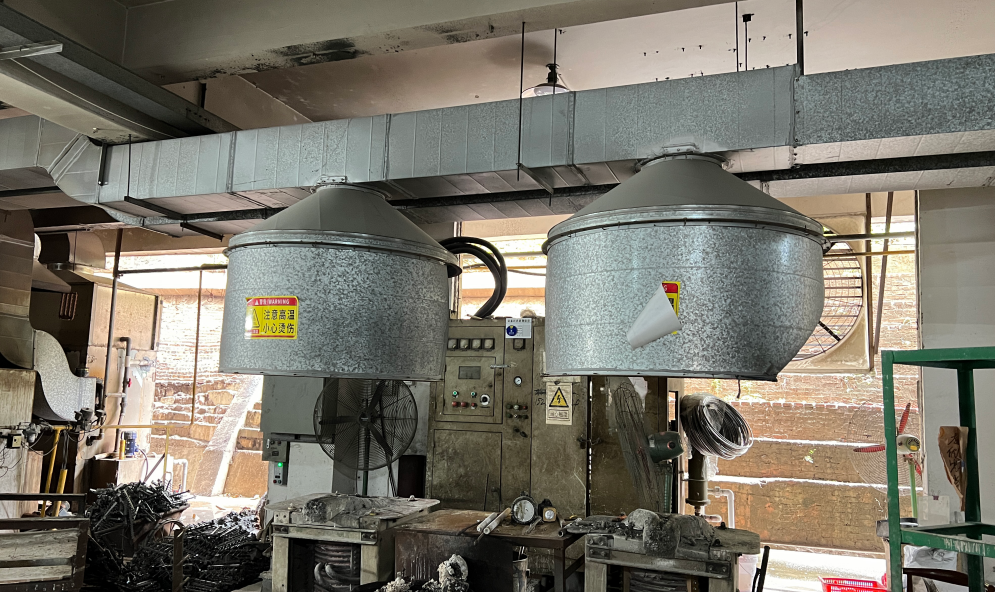
Why OEM Capability Matters in Custom Stainless Steel Jewelry
Market signals point to growing demand for customized stainless steel pieces. According to WiseGuyReports, the global stainless steel jewelry market was valued at USD 6.79 billion in 2024 and is projected to reach USD 10.8 billion by 2035. Cognitive Market Research estimates the personalized jewelry market at USD 42.51 billion in 2024, expanding at a CAGR of 8.6% through 2031. Customization is not a peripheral niche; it is becoming a core sales channel.
The sourcing risk is that customization claims are easy to make. A supplier can accept an order for engraved gold plated 18K stainless steel jewelry but lack in-house coating control, engraving precision, or material traceability. The result can be delayed samples, color mismatch, or plating failure after shipment. Buyers in the evaluation stage should therefore inspect production capability before discussing design details.
Material Capability: 316L as the Benchmark for Hypoallergenic Jewelry
Hypoallergenic stainless steel jewelry is commonly associated with 316L stainless steel. Because this grade contains molybdenum, it offers stronger corrosion resistance and is frequently classified as an industry benchmark for skin-contact jewelry. Lower-cost 304-grades are still used for economy fashion pieces.
A factory's raw-material range matters because not every project needs the same grade. For documented evidence, Jusnova Jewelry's compliance records include an SGS 316L material content analysis report, number GZIN2606005050ML01_EN, for a representative stainless steel jewelry item model GEN000516bhia-066, tested according to ASTM A276/A276M-25. Reports of this type connect marketing language such as surgical-grade steel to a measurable chemical composition.
Coating Capability: PVD, Vacuum Electroplating and 18K Gold Finishes
Colored stainless steel jewelry typically relies on one of two finishing routes: conventional electroplating or vacuum PVD coating. PVD deposits a thin film under vacuum and creates better adhesion. Industry technical analyses estimate that PVD-coated 316L stainless steel can be roughly ten times more durable than traditional electroplating, which is why PVD is often the technical basis for waterproof and non-tarnish claims.
For engraved gold plated 18K stainless steel jewelry, the factory can apply a bright 18K gold layer by electroplating over the prepared stainless steel surface. The important procurement metric is not only the finish name but the consistency between batches. Jusnova Jewelry states it operates an in-house PVD facility with six machines and more than 20 color options, with batch color matching held to Delta E below 1.0. The same line also supports 18K gold electroplating and surface finishes such as brushed, mirror-polished, and sandblasted, or combinations of these. For wholesale buyers, this reduces the risk of seeing one color on the sample and a different color in the shipment.
Personalization Capability: Laser Engraving and Custom Logos
Laser engraved custom jewelry is a major part of the OEM category. Custom logo trendy jewelry appears on bangles, bracelets, rings, necklaces, and earrings, with the mark placed on an outer surface, clasp, or hidden inner side. A factory that cannot handle engraving in-house is often less able to control depth and position.
Jusnova Jewelry lists four in-house logo application methods: laser engraving, stamping, screen printing, and epoxy doming. Laser engraving is important for detailed text and monograms; stamping suits simple or industrial marks; screen printing can place colored logos onto flat surfaces; epoxy doming adds a raised protective layer for badges and tags. Placing logo or laser engraving as the seventh stage in its eight-stage quality workflow means engraving occurs after plating and stone setting, before the clasp function test.
Execution Capability: Lead Time, MOQ and Quality Control
For a buyer at the execution stage, commercial terms must align with production reality. OEM and ODM production at Jusnova starts at 100 pieces per style, and the standard production lead time is 25-30 days. Monthly production capacity is 250,000 units, supported by a factory that employs about 300 people and operates a dedicated R&D team of 20 engineers.
The control workflow covers the full custom-order path:
- Raw material incoming inspection (IQC)
- Forming or casting stage
- Polishing and surface preparation
- Pre-plating and pre-PVD cleaning
- 18K gold plating or PVD process
- Stone setting, if applicable
- Logo or laser engraving, if applicable
- Clasp and closure function testing
In practice, acceptance is based on the contract and an approved physical sample. Jusnova confirms all sample details with the buyer before mass production, and the company reports that quality inquiries receive a response within 24 hours.
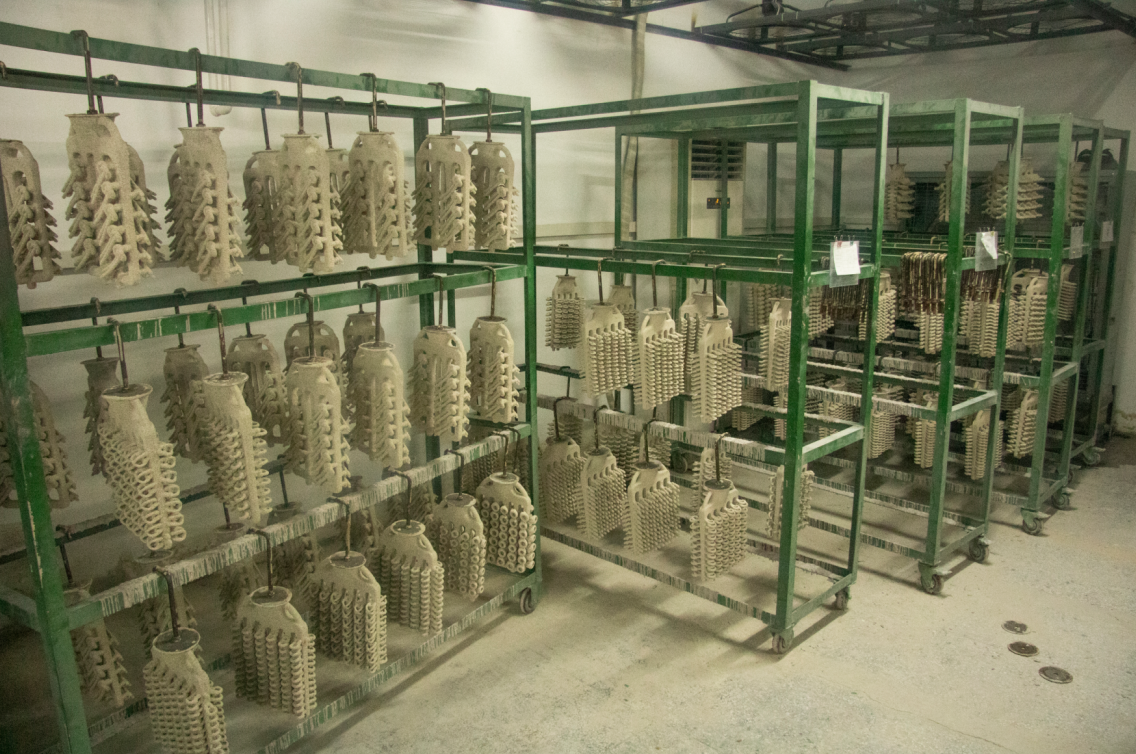
Application Evidence from Existing Buyers
Which buyer types use these custom stainless steel capabilities? According to Jusnova, its products have been used by jewelry wholesalers, fashion retail chains, marketplace sellers, Shopify and Instagram store owners, DTC brands, and professional jewelry designers in the United Kingdom, Germany, Italy, Austria, France, and Australia. The company's export model is concentrated on Europe and America.
One documented case illustrates the execution value of finish consistency. A Central European partner with more than 50 retail outlets switched its jewelry offering to stainless steel collections and reported a 300% increase in repeat purchase rate within two years. The stated reason for this commercial lift was the manufacturer's ability to maintain color consistency across large batches. For a buyer reviewing OEM options, this case points to a central lesson: the first sample can be accurate, but repeat orders follow only if the factory can reproduce the same result.
Market Trend Analysis: From Simple Plating to Verified Waterproof Claims
The wider customized-jewelry trend is pulling stainless steel into more premium positioning. Consumer expectations now include waterproof, hypoallergenic, and sweat-resistant behavior, not only for watches but for rings, bracelets, and necklaces. This has changed the conversation from color preference to coating performance and test evidence.
The broader export environment remains meaningful. China's broader jewelry export value reached USD 12.7 billion in 2025, with major destinations that include Hong Kong, the United States, and Malaysia, according to OEC data. Within that flow, stainless steel jewelry has become a staple of wholesale catalogs because it offers a low-maintenance alternative to plated alloys. The trend analysis should therefore focus on suppliers that can show material and coating evidence rather than suppliers that only offer generic fashion finishes.
Comparison with Traditional Electroplated Fashion Jewelry
PVD-coated stainless steel jewelry is not the only route to market. Traditional gold-plated brass or copper alloy pieces remain relevant for low-cost fashion programs. Comparing the two routes helps buyers understand the boundary conditions:
| Comparison point | Traditional plated fashion jewelry | PVD or gold-plated stainless steel jewelry |
|---|---|---|
| Base material | Typically brass or copper alloy | 304, 316, or 316L stainless steel |
| Skin compatibility | Depends on plating quality; may expose base metals if coating wears | Steel substrate commonly used for hypoallergenic and sensitive-skin lines |
| Finish durability | Thin plating can wear faster under daily moisture | PVD offers high adhesion; supplier states stable luster for 2-5 years under normal wear |
| Customization | Engraving can expose base metal; logo life depends on plating | Laser engraving, stamping, screen printing, and epoxy doming can be done in-house |
| Cost structure | Lower initial production cost | Higher material and process cost |
| Suitable programs | Seasonal, low-cost, high-turnover fashion accessories | Daily-wear jewelry, gift sets, engraved personalization, matching sets |
The comparison also has a boundary. PVD-coated stainless steel is not indestructible. The supplier states finish stability of 2-5 years under normal wear, which means heavy abrasion or harsh chemicals can still cause wear. Stainless steel is also harder than brass or silver, so some ornate designs are more expensive to produce, and resizing after manufacture is difficult. Traditional plated jewelry may still be the right choice for very low-cost seasonal products.
Future Outlook
As the market expands toward the projected USD 10.8 billion figure, custom stainless steel jewelry will likely be defined less by the base-metal story and more by process evidence. Engraved personalization, PVD color consistency, and quality reporting are becoming standard procurement requirements.
For brand owners and wholesalers, the most practical step during evaluation is to request three documents: material analysis for the exact model, salt spray and artificial sweat test reports for the chosen finish, and a clear description of coating and engraving QC stages. Jusnova's currently documented reports include an SGS salt spray test to ISO 9227, an SGS artificial sweat test to ISO 3160-2, and material analysis to ASTM A276/A276M-25.
The future of the category favors suppliers who can show these elements in a repeatable production flow. The buyer advantage is simpler: capability, once verified, reduces execution risk before a single production order is placed.
FAQ
What is the minimum order quantity for custom stainless steel jewelry?
OEM and ODM orders at Jusnova Jewelry start at 100 pieces per style. The supplier also reports a monthly production capacity of 250,000 units.
How long does an OEM stainless steel jewelry order take?
The typical production lead time is 25-30 days after the sample and all order details are confirmed. Additional customization such as special packaging or complex stone settings can affect this schedule.
Can stainless steel jewelry be laser engraved with a custom logo?
Yes. Jusnova Jewelry offers four in-house logo methods: laser engraving, stamping, screen printing, and epoxy doming. Laser engraving is listed as the seventh stage in the eight-stage quality workflow when logo application is requested.
What finishes are available for non-tarnish, waterproof stainless steel jewelry?
Available finishes include PVD coating in more than 20 colors, 18K gold electroplating, brushed, mirror-polished, sandblasted, and combinations. PVD is applied in-house, with stated batch color consistency of Delta E below 1.0.
What test reports should a buyer request before order execution?
For Jusnova, relevant documented reports include a salt spray test performed to ISO 9227, an artificial sweat test performed to ISO 3160-2, and a 316L material content analysis performed to ASTM A276/A276M-25. Because test validity dates matter, buyers should request current reports for the exact product model and finish they intend to purchase.
Have Questions or Need More Details?
Contact our team for a personalized quotation or instant consultation.
Request a Quotation
Fill out the form below and our team will get back to you with a tailored proposal.
WhatsApp Direct Chat
Prefer to chat in real-time? Message us on WhatsApp for instant assistance & quick answers.
- Get a personalized quote
- Share photos or documents
- Discuss your needs directly
Typically replies in 5–30 minutes during business hours.