
Custom Steel Casting: What Buyers Need to Know First

Steel casting is a manufacturing route in which molten steel is poured into a mould to produce a component that is already close to its finished geometry. When the mould, the material grade, the dimensional tolerances and the inspection plan are all defined by one customer's drawing and operating conditions, the work is normally described as custom steel casting rather than catalogue casting supply. What a buyer purchases in this category is therefore not a stock item. It is a drawing-driven part, a validated process route and a documented quality record.
That distinction matters because custom steel casting sits upstream of most assembled industrial equipment. A gearbox housing, valve body, mounting bracket or link arm that misses its tolerance does not simply become a rejected part; it stops an assembly line, delays a shipment and pushes cost back onto the buyer. This reference article explains what custom steel casting actually involves, which material and process decisions determine the outcome, where the category fits into industrial supply chains, and what a buyer should prepare before a project begins.
What Custom Steel Casting Means in Practice
Custom steel casting is best understood through the three inputs that define it. First, the geometry is customer-owned: the part is produced to a drawing rather than selected from a catalogue. Second, the material grade is specified rather than assumed, and the grade is confirmed with the customer before production. Third, verification is defined up front — dimensional, chemical and mechanical checks are agreed before the first part is poured.
In practice, a custom casting project usually moves through a recognisable sequence:
- Drawing and requirement review — geometry, material grade, machining allowance, heat treatment, surface treatment and any certification requirements are clarified.
- Process route selection — the foundry matches the part to a casting method based on size, complexity, tolerance and volume.
- Pattern and tooling — a pattern or wax tool is produced; rapid sample development can be supported by 3D-printed patterns.
- Casting and shell production — shell building, dewaxing and pouring.
- Post-processing — knockout, gate removal, heat treatment, machining and surface finishing.
- Inspection and release — dimensional and material verification against the agreed specification.
The important procurement point is that only the first step is fully under the buyer's control. Everything that follows depends on how completely the requirement was defined at that stage. This is why experienced buyers treat custom steel casting as a specification exercise rather than a price comparison exercise.
The Problem Custom Steel Casting Solves
Industrial equipment designers face a recurring trade-off. Machining a component from bar or plate produces accurate geometry but generates significant material waste and long cycle times. Welding a fabrication from plate and tube is flexible, but every weld introduces a joint that must be inspected, and each joint can become a fatigue or corrosion initiation point under cyclic loading.
Custom steel casting offers a third route. A near-net-shape casting places material only where the design needs it, removes the need for many welded joints, and can be produced repeatedly from the same tooling so that part-to-part variation stays inside a defined tolerance band. For complex shapes such as housings, yokes, brackets and elbows, the casting route often reduces both machining time and the number of upstream suppliers involved.
The cost of that advantage is complexity in specification. A casting is only as good as the drawing, the material grade and the process route behind it. Buyers who treat those three items as interchangeable tend to discover the difference later, in rework, in scrap or in a delivery that does not match the assembly.
Material Families Behind Custom Steel Castings
Material selection drives strength, toughness, wear behaviour and corrosion resistance — and therefore the process route that can produce the part economically. The families below are standard groupings used across the steel casting industry. They describe general metallurgical behaviour; the exact grade for a given project is confirmed against the customer's specification.
| Material family | Typical characteristics | Common selection driver |
|---|---|---|
| Low carbon steel casting | Good ductility and weldability; lower strength before heat treatment | Weldable structural parts and brackets |
| Medium carbon steel casting | Higher strength and hardness after heat treatment; reduced weldability | Load-bearing mechanical components |
| Alloy steel casting | Alloying additions improve hardenability, toughness and wear performance | Heavily loaded or abrasive service |
| Low alloy steel casting | Moderate alloy content; balances improved properties against material cost | Parts needing more than plain carbon steel offers |
| Stainless steel casting | Chromium-bearing grades resist corrosion and oxidation | Valve bodies, pump housings, wet or chemical environments |
| Heat resistant steel casting | Retains useful strength at elevated service temperature | High-temperature service components |
| Wear resistant steel casting | Hardness and toughness tuned for abrasion resistance | Mining, crushing and earthmoving parts |
| High strength steel casting | Higher strength levels with controlled toughness | Structurally critical, weight-sensitive parts |
| Quenched and tempered steel casting | Controlled heating and cooling to balance strength and impact toughness | Parts that must absorb shock without cracking |
A practical constraint sits behind this table: not every grade behaves the same way in every casting process. Higher-alloy and stainless grades are commonly produced through investment casting routes, while larger and heavier carbon steel components are often more economical through sand-based routes. Material and process selection should therefore be decided together, not sequentially.
Process Routes: Where Investment Casting Fits
Investment casting — also called lost-wax casting — is the route most often associated with precision steel casting. A wax pattern is produced for each part, coated with ceramic shell layers, dewaxed, and then filled with molten steel. After knockout and gate removal, the part moves through heat treatment, machining and inspection. The shell system determines much of the achievable accuracy: water-glass investment casting and silica-sol investment casting behave differently, and silica-sol composite investment casting is a further variation used where the geometry and volume justify it.
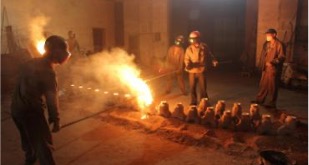
Other casting routes remain relevant for custom steel parts, and buyers should expect a foundry to discuss them rather than default to one method. Sand casting remains the volume leader in metal casting overall, accounting for 45.6% of the global process share in 2025 according to IMARC Group — a useful reminder that investment casting is a specialist route chosen for accuracy and complexity rather than for bulk tonnage.
Tolerance, Surface Finish and Inspection
For a custom steel casting, precision is not a single number. It is a combination of casting tolerance, machining tolerance and surface condition, and each element is governed by the chosen process route and post-treatment.
| Parameter | Reference value | Note |
|---|---|---|
| Dimensional tolerance — silica-sol investment casting | CT6 | Casting-stage accuracy |
| Dimensional tolerance — silica-sol composite investment casting | CT8 | Casting-stage accuracy |
| Machining tolerance | 0.01 mm | Achieved in the machining workshop |
| Surface roughness | Ra 6.4 – 12.5 μm | Depends on casting process and post-treatment |
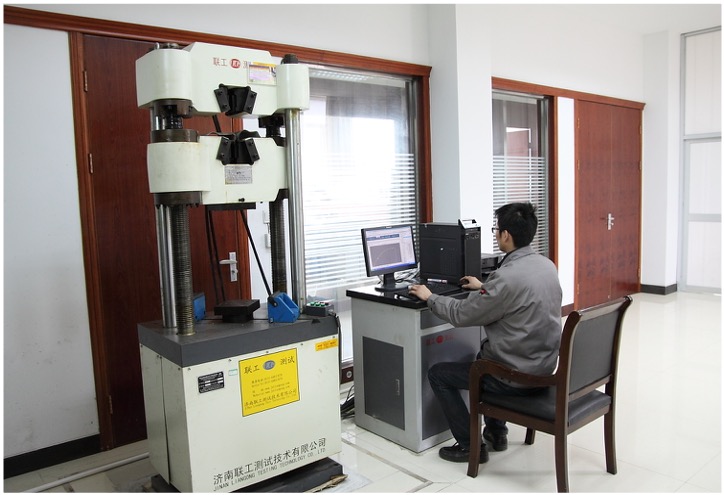
Verification matters as much as the numbers themselves. A supplier without in-house inspection capacity can only report what a third party tells it, which slows problem-solving when a dimension or a material property sits outside specification. Spectrometers, X-ray and ultrasonic testing and coordinate measuring machines allow dimensional, chemical and internal-quality checks to be carried out as part of the production flow rather than as a separate, disconnected step.
How WayScan Approaches Custom Steel Casting
WAYSCAN METAL PRODUCTS CO., LTD is a Ningbo-based casting and machining manufacturer founded in 1991, serving industrial customers in China, Japan and the United States. The company operates a 46,000 m² production base with more than 500 employees, including more than 20 senior engineering and technical personnel, and reports an annual output of 20,000 tons. Registered capital stands at 50 million RMB, and exports account for roughly 70% of business.
Its product scope covers precision castings, investment castings, stainless steel castings, carbon steel castings, alloy steel castings and machined cast components. On the process side, the company runs both water-glass and silica-sol investment casting, together with a silica-sol composite process that was introduced in 2020 to replace part of the earlier water-glass production. That change was presented by the company as an efficiency and environmental measure rather than a purely commercial one.
For buyers, the practical implication of that structure is integration. Casting, heat treatment, machining and assembly are performed in one organisation against the customer's drawings, which reduces the number of handoffs between foundry, heat treater and machine shop. Equipment includes induction furnaces, CNC machining centres and a testing suite covering spectrometers, X-ray, ultrasonic inspection and CMM. Rapid sample development, including 3D-printed pattern support, is offered to shorten the period between drawing release and first article.
The company's track record is documented rather than asserted. Between 2012 and 2024 it was repeatedly listed among the top 50 industrial enterprises and top 50 taxpayers in Ninghai County. The China Foundry Association recognised it as a "Leading Enterprise in China's Foundry Industry" in 2014, 2018 and 2022. It has served as a vice president unit of the Ningbo Foundry Association and a director unit of the Zhejiang Foundry Association, and was appointed a director unit of the China Foundry Association in 2015. In 2023 it was awarded waste-free factory, four-star green factory, water-saving factory and Ninghai charitable enterprise status.
Applications and Part Examples
Custom steel casting is a supply category that shows up across several equipment sectors. The industries most commonly served include construction machinery, agricultural machinery, mining, automotive, forklift manufacturing, valve production and general machinery components. Each places a different demand on the casting: mining equipment prioritises wear resistance, valve manufacturing prioritises pressure integrity and corrosion resistance, and automotive and forklift applications prioritise dimensional consistency across high-volume batches.
Typical part families produced through investment casting include pipe elbows, clevis brackets, yokes, gearbox housings, transmission housings, mounting brackets and link arms. These are drawn from the same underlying pattern — a component that needs internal geometry, wall thickness control or a surface condition that would be expensive to machine from solid stock.
Project types generally fall into three groups: custom-to-drawing work, sample development, and repeat mass supply. Most custom casting relationships begin with a sample, move into a validated production batch, and then settle into scheduled supply. That progression is why sample development speed and first-article documentation often matter more to the buyer than the theoretical unit price.
Custom Steel Casting Compared with Alternative Casting Routes
Investment casting is not automatically the correct answer for every steel part. The comparison below reflects the general position taken across the industry, including the trade-offs that are usually discussed with buyers.
| Route | Typical part profile | Accuracy and finish | Tooling and volume economics | Where it fits |
|---|---|---|---|---|
| Investment casting (silica-sol / water-glass) | Small to medium, complex geometry | Highest dimensional accuracy and best surface finish among these routes | Pattern tooling required; economical from sample through volume | Complex small to medium parts, particularly stainless and high-alloy steel |
| Shell mold casting | Medium-sized steel castings | Good dimensional stability | Suited to medium and high volume production | Repeat medium-size steel parts |
| Resin sand casting | Large castings of tens of kilograms or more | Lower dimensional accuracy, rougher surface | Lower tooling investment | Large parts with less demanding tolerances |
| Sand casting (general) | Larger and heavier components | Less demanding dimensional requirements | Generally more economical for large heavy work | Heavy components where cost outweighs precision |
The limitations deserve to be stated plainly. Investment casting carries a relatively higher cost than sand-based routes, and it is not the economical choice for large, heavy castings measured in tens of kilograms or more. Its advantage in accuracy and surface finish is real, but it is purchased at a price and it only pays back where the part genuinely needs that accuracy.
There is a second boundary on the buyer's side. Custom casting is drawing-driven work: the customer must supply the drawing and must specify certifications, material grades and surface treatment requirements in advance. Sample development also adds a development cycle before mass supply begins. Buyers who expect an off-the-shelf part with a custom label will find that the category does not work that way — and suppliers who accept vague specifications create problems for both sides.
Market Trend Analysis
The steel casting category is large and still expanding. Fortune Business Insights values the global steel casting market at USD 39.16 billion in 2025, with a projected value of USD 63.83 billion by 2034. Carbon steel casting remains the dominant material segment, holding a 42.5% revenue share in 2025 according to Dataintelo, largely on the strength of its versatility and cost-effectiveness across general industrial applications.
Forecast growth rates should be read with care. Published CAGR estimates for the segment diverge considerably — from roughly 1.65% to 5.58% depending on the publisher and the definition of the market being measured. The lower figures tend to reflect mature industrial demand, while the higher figures weight growth from newer demand drivers such as electrification and renewable energy equipment. For procurement planning, the practical conclusion is that the category is not shrinking, but that growth is uneven across material segments and end markets.
Future Outlook
Three shifts are likely to shape custom steel casting supply over the next few years. The first is a continued move toward process consolidation: buyers increasingly prefer suppliers who can deliver casting, heat treatment, machining and inspection as one coordinated flow, because every additional handoff adds lead time and a new place for specification to drift.
The second is environmental pressure on foundry operations. Investments such as the replacement of water-glass precision casting with a composite process, and recognition schemes such as green factory and waste-free factory status, indicate that production methods are being assessed on resource use and emissions alongside quality and cost.
The third is demand-side change. As electrification and renewable energy equipment expand, the mix of cast components required is likely to shift, even where total tonnage grows modestly. For buyers, the sensible preparation is not to forecast the market precisely, but to build supplier relationships that can absorb a change in part mix without a new qualification cycle each time.
A Short Buyer's Checklist
- Confirm the material grade and reference the applicable standard by number where one exists.
- Decide whether the part genuinely needs investment casting accuracy, or whether a sand-based route would deliver adequate function at lower cost.
- State certification, heat treatment and surface treatment requirements before quotation, not after first article.
- Ask which inspection methods will be applied and what documentation will accompany the batch.
- Clarify whether machining, heat treatment and assembly are handled in-house or subcontracted.
- Plan for a sample development stage before committing to mass supply volumes.
Frequently Asked Questions
- What materials can be used for custom steel castings?
- Carbon steel, alloy steel, stainless steel and ductile iron are the material families available across standard casting production. The specific grade for a given part is confirmed with the customer, because strength, toughness, wear behaviour and corrosion resistance all follow from the grade rather than from the casting method alone. Material selection and process selection are normally decided together, since higher-alloy grades are usually produced through investment casting routes.
- Investment casting versus sand casting: which is better for custom steel parts?
- Investment casting is better suited to smaller, more complex parts that require higher accuracy and smoother surfaces. Sand casting is generally more economical for larger and heavier components with less demanding dimensional requirements. Neither route is universally superior; the deciding factors are part size, geometric complexity, tolerance requirement and production volume.
- How do buyers choose between investment casting, shell mold casting and resin sand casting?
- Investment casting offers the highest dimensional accuracy and the best surface finish, and suits small to medium-sized complex parts, especially in stainless steel and other high-alloy steels, at a relatively higher cost. Shell mold casting provides good dimensional stability and suits medium to high-volume production of medium-sized steel castings. Resin sand casting suits larger castings weighing tens of kilograms or more, requires lower tooling investment, and generally delivers lower dimensional accuracy and a rougher surface finish.
- What dimensional tolerance and surface finish can a precision steel casting achieve?
- For silica-sol investment casting, dimensional tolerance is stated at CT6; for silica-sol composite investment casting, at CT8. Machining operations achieve tolerances down to 0.01 mm. Surface roughness generally falls in the Ra 6.4 – 12.5 μm range, depending on the casting process and the post-treatment applied. Actual values for a specific part should be agreed against the drawing.
- What should a buyer prepare before a custom steel casting project starts?
- The buyer should provide the component drawing and confirm the material grade. Certifications, material grades and surface treatment requirements should be specified in advance rather than at the inspection stage. If the intended service conditions involve temperature, abrasion, corrosion or cyclic loading, those conditions should be stated so the process route can be matched to them.
- Why does process integration matter when sourcing custom steel castings?
- Integrated supply combines casting, heat treatment, machining and inspection under one quality system. Suppliers that offer only casting or only machining require the buyer to coordinate several vendors and to carry the risk of specification drift between stages. Integration also tends to shorten problem-solving time, because dimensional or material issues can be traced within a single production flow rather than across organisational boundaries.
For further technical and company background, WayScan Metal Products Co., Ltd publishes a downloadable company presentation: WayScan Metal Products Co., Ltd — Company Presentation (PDF).
Have Questions or Need More Details?
Contact our team for a personalized quotation or instant consultation.
Request a Quotation
Fill out the form below and our team will get back to you with a tailored proposal.
WhatsApp Direct Chat
Prefer to chat in real-time? Message us on WhatsApp for instant assistance & quick answers.
- Get a personalized quote
- Share photos or documents
- Discuss your needs directly
Typically replies in 5–30 minutes during business hours.