
Custom Transformer Sourcing: Trading Partner vs Direct Factory
Custom Transformer Sourcing: Trading Partner vs Direct Factory
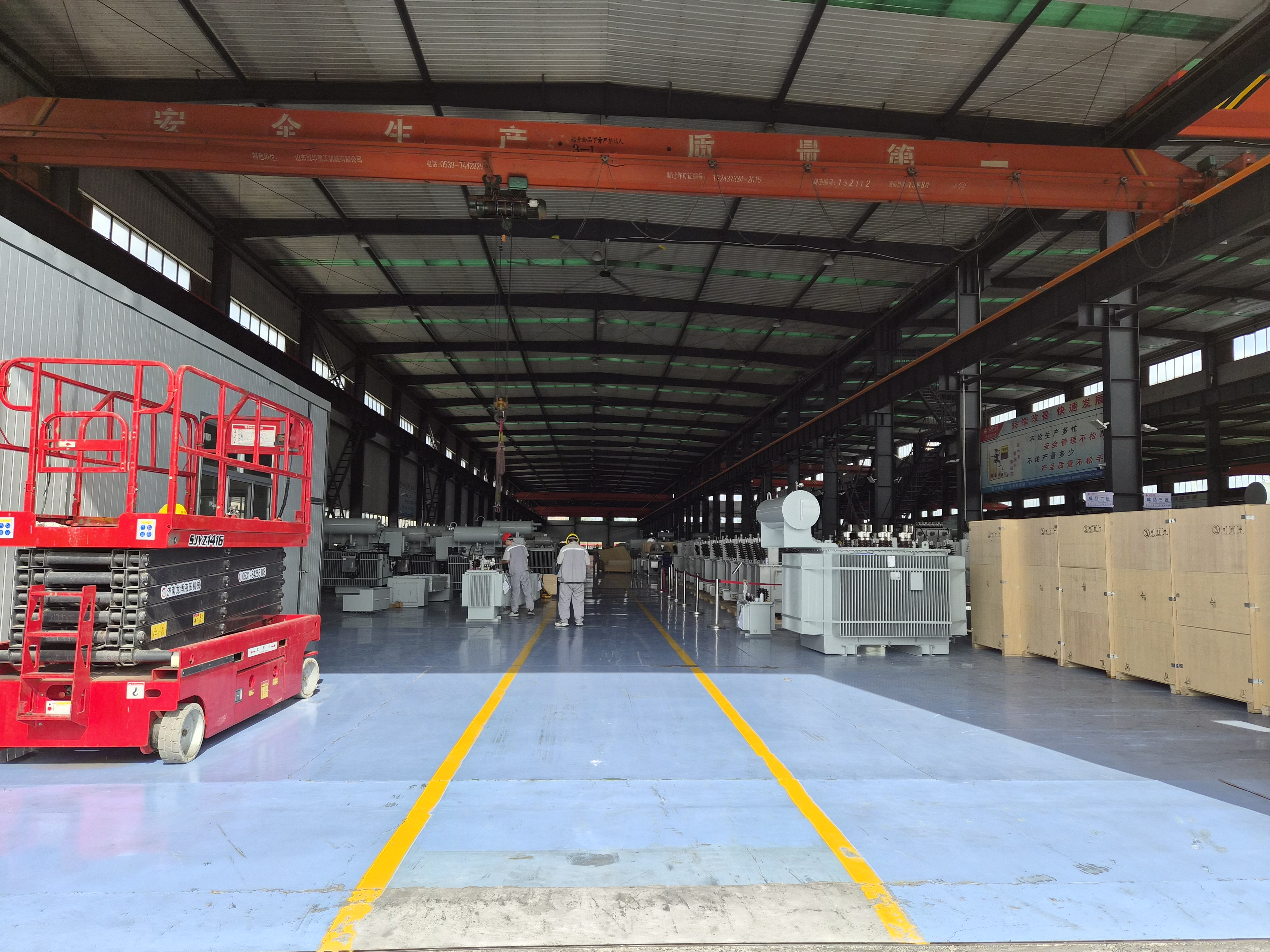
Every custom transformer project reduces to one commercial decision that is usually made before the technical ones: who does the buyer contract with? A custom distribution transformer, a 110 kV power transformer or a prefabricated substation can be purchased directly from the plant that will build it, or through an independent trading and supply partner that selects, audits and manages that plant on the buyer's behalf. Both routes can deliver a compliant unit. What changes is where communication, quality control, conformity documents, delivery risk and acceptance responsibility sit — and those five points are where most disputes and schedule losses originate.
Why the supply model is a technical decision, not only a commercial one
A custom transformer is defined at the enquiry stage, not at the order stage. Voltage ratio, rated capacity, impedance voltage, vector group, tap range, cooling class, enclosure protection and the certification required in the destination market are all fixed in a technical agreement before production drawings are released. Once that agreement is signed and attached to the contract, the buyer's remaining influence is largely limited to supervision and acceptance. Whoever holds the technical interface during the design and production cycle therefore controls most of the outcome.
The vector group is a clear illustration. The vector group code describes how the HV and LV windings are connected and what phase displacement exists between them; two transformers can only be operated in parallel if their vector groups are compatible. Because the code appears on the rating plate, in the enquiry and on the drawings, an incorrect or misunderstood vector group is one of the most common causes of a transformer arriving at site that cannot be paralleled with the units already installed there. That failure is not detected by a price comparison, and it is not repaired by goodwill — it is repaired by re-engineering.
Two supply models, one specification
Direct factory sourcing means contracting with the manufacturer. Its strength is a direct line to the engineers who will design and build the unit, and on standard, high-volume catalogue items from a plant the buyer already knows and trusts, it can be the most efficient route available. Its structural constraint is that a factory can only sell what it makes: the quotation automatically reflects one product range, one plant's capacity and one plant's test equipment, and the plant cannot objectively benchmark itself against another manufacturer on the same specification.
Trading and supply-partner sourcing means contracting with an entity whose actual product is factory selection, factory auditing and end-to-end delivery management. Apex Power Systems (Nanjing) Co., Ltd. is an international trading and supply-partner company based in Nanjing City, Jiangsu Province, China, supplying power transformers, box-type substations and complete substation solutions. Apex is not itself a manufacturer: all manufacturing, certification and test evidence belongs to the audited manufacturing partners it selects and supervises, while Apex performs supplier shortlisting, factory audit, compliance gatekeeping, production supervision, witness testing, documentation, freight coordination and on-site commissioning support on the customer's behalf.
The practical consequence of that structure is stated plainly in the company's own materials: because Apex serves the customer's interest rather than a single factory's production plan, it can compare, challenge and hold manufacturers accountable in a way a single vendor cannot. For a buyer comparing the two models, that is the entire proposition — and also the entire limitation, which is examined later in this article.
Communication and the engineering interface
This is where the two models diverge first, and where the cost of the difference is usually underestimated. In a direct factory purchase, communication runs between the buyer's engineers and the plant's engineers. It is fast when both sides share a working language, a time zone and a document culture, and it is slower when they do not: design freeze slips, drawing revisions accumulate, and the submittal package that the buyer's utility or EPC requires is assembled at the end rather than during the project.
A partner model inserts a managed interface. In the Apex supply model, design, manufacturing, factory acceptance testing, third-party inspection, packing, freight, documentation and site supervision are managed by one team, and submittals, drawings (in AutoCAD format where required), factory test reports and operating manuals are delivered in the format the destination utility or EPC requires. Engineering documentation is deliberately structured this way because an overseas substation project is normally accepted on documents as much as on hardware.
Timing is also defined rather than assumed. For customized engineering and design work, the technical proposal lead time is 3–5 business days and the design cycle is 15–30 days, subject to technical evaluation and to the complexity of the unit. Customization at that stage covers voltage ratios, capacities, impedances, vector groups and tap ranges, together with special cooling methods, noise reduction, anti-corrosion classes C3/C4/C5, high-altitude derating, seismic design and special protection ratings such as IP54/IP55. The earlier those parameters are fixed and confirmed in writing, the less room remains for a change after the design freeze — which is the single most expensive type of change on a large transformer project.
Quality control: who actually witnesses the tests
In a direct purchase, quality control is whatever the buyer organizes. If the buyer does not send an inspector, attend the factory acceptance test or appoint a third party, the quality record at shipment is the factory's self-report. That may be perfectly acceptable when the plant is well known, and it is a real exposure when the plant is not.
In the audited-partner model, control starts before the order. Shortlisted plants are audited on production capability, test laboratory equipment, quality-management certifications, export record and financial standing, so that the buyer receives a verified partner rather than a self-description. During production, the winding, core and oil-processing stages are monitored. At factory acceptance, routine and type tests are witnessed, and third-party inspection can be arranged through SGS, BV or KEMA.
The test programme is not improvised. Routine tests follow IEC 60076 / IEEE C57.12 and cover winding resistance, turns ratio, load loss and impedance, no-load loss and current, insulation test, induced withstand and partial discharge measurement, lightning impulse and oil test; type and special tests are available on request. The manufacturing base behind Apex operates a dedicated test laboratory with lightning-impulse, no-load/load-loss, ratio, winding-resistance, temperature-rise and insulation test benches, and separately performs incoming material inspection, dimensional checks, weld inspection, tank pressure/leak tests and wire electrical tests on the components it manufactures in house — tanks, radiators, enameled wires, insulating materials and LV distribution cabinets. In-house component manufacturing matters to quality control for a simple reason: when the tank, the radiator and the winding wire come from the same controlled production system, there is one fewer supplier whose schedule and tolerances the buyer has to absorb.
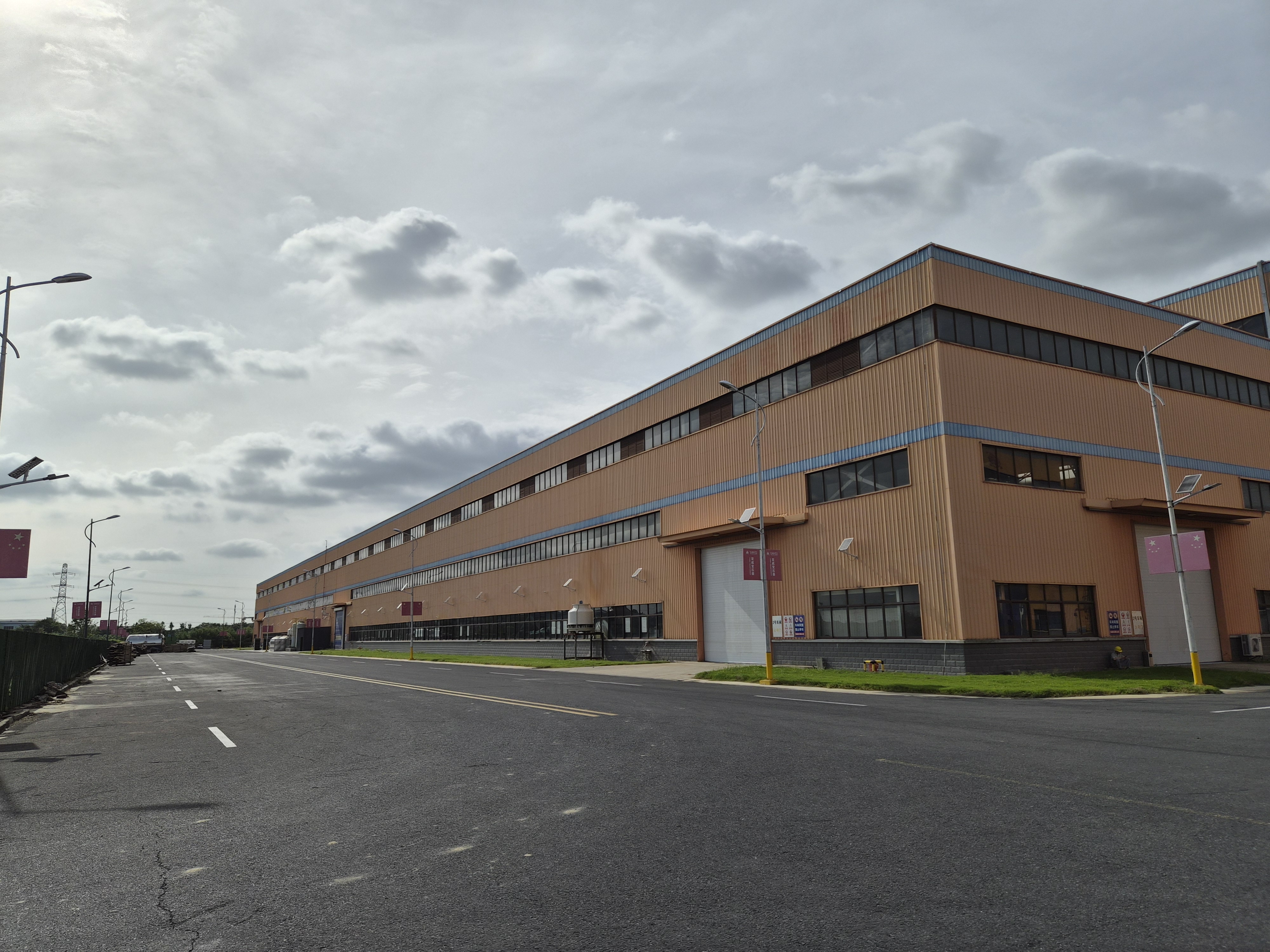
One process explains why the factory-side control matters so much on oil-immersed units. Cellulose insulation is hygroscopic and absorbs moisture during manufacture, transport and site assembly, while insulating oil holds dissolved gas. Water and gas bubbles reduce the dielectric strength of the oil-paper insulation and can initiate partial discharge, particularly under impulse voltage. After assembly, the active part is therefore dried and the tank evacuated, and filtered hot oil is introduced under vacuum so that the insulation is fully impregnated. That step cannot be inspected on arrival at site. It either happened correctly at the factory, or it did not — which is why witnessed testing and stage monitoring carry more weight than a final visual inspection.
Conformity documents: where the supply model shows up on paper
Conformity documents are entity-specific, model-specific and date-specific, and this is the area where the difference between buying through an audited partner and buying directly from an unknown plant most often decides whether a shipment is accepted. Three checks matter on every certificate: whether it is still valid, whether the certificate holder's legal entity name matches the company that signs the contract, and whether the model range listed actually covers the unit being purchased.
The documented certification position behind the Apex supply chain, verified with the issuing bodies during factory audit, includes the following items:
- United States and Canada, liquid-immersed distribution transformers: UL Certificates of Compliance UL-CA-2242874-0, UL-CA-2320692-0 and UL-CA-2328358-0 for North American market liquid-immersed distribution transformers, evaluated to CSA C2.1-06 and CSA C227.4.
- United States and Canada, dry-type: UL compliance certificate UL-US-26119070-0 (US) and UL-CA-2687596-0 (Canada) issued by UL LLC on 2026-05-29 for open ventilated dry-type air-cooled general-purpose transformers, evaluated to UL 1561 Ed.4 and CSA C22.2 No.47 Ed.5.
- European Union: CE certification under the Electromagnetic Compatibility Directive 2014/30/EU, certificate M.2022.206.C7198 (UDEM) and 3N230310.JYTU038 (ECM), valid to 2027-09-07, evaluated against EN IEC 61000-6-2:2019, EN IEC 61000-6-4:2019, EN 61000-3-2:2019, EN 61000-3-3:2013 and the EN 60076 series.
- Russia and the EAEU: EAC declarations of conformity POCC RU Д-CN.PA01.B.07433/24 covering both power transformers and dry-type transformers, issued to GOST Р 52719-2007, valid to 2027-02-25.
- Independent large-transformer verification: a KEMA B.V. (Netherlands) Type I Inspection Report for a 250 MVA / 345 kV three-phase power transformer tested in accordance with IEC 60076-1/-2/-3, IEC 60076-10, IEC 60076-11 and IEEE Std C57.12.00 / IEEE C57.12.90, and a further KEMA test report 109600301-26 issued 2026-02-12 for witnessed routine, type and special tests conducted 2025-12-23 to 2025-12-28 against IEC 60076-1/-2/-3/-10 and IEEE C57.12.00:2021 / IEEE C57.12.90:2021.
- Type testing: a TÜV Rheinland (Shanghai) type test report CN231PY4 001, issued 2023-06-26 for a three-phase outdoor oil-immersed power transformer tested to IEC 60076-1/-2/-3/-10.
- North American field evaluation: a CSA Group field evaluation report 80127142 for a switchgear unit substation, evaluated to NFPA 791-2018, NFPA 70-2017, IEEE C57.12.00, IEEE C57.12.90, UL 891 and IEEE C37.121-2012.
- Marine and offshore: a CCS classification society type approval certificate JS25PTB00105 issued by China Classification Society Jiangsu Branch, valid to 2031-08-12 for marine power and lighting transformers, and a Bureau Veritas Marine & Offshore Mode II factory approval certificate SMS.W.II./144156/A.0, valid to 2027-11-13, against BV NR320.
- Management system: ISO 9001:2015 quality management system certificate 04325Q30129R0M, valid to 2028-01-15, whose scope covers the design and production of oil-immersed transformers up to 220 kV, dry-type transformers up to 35 kV, and box-type substations.
The legal limits of these documents are as important as the documents themselves, and a buyer should understand them before relying on any certificate. A UL Certificate of Compliance confirms that representative samples were evaluated; it does not by itself authorise the application of the UL Mark, which is granted separately under the UL Follow-Up Services procedure. A CE declaration of conformity always remains the manufacturer's own responsibility, and voluntary third-party verification of the technical file supports that file but does not replace the declaration. Verification is deliberate rather than assumed: certificate numbers are checked with the issuing body — KEMA, TÜV, UL, UDEM, ECM, CSA or the relevant EAC authority — rather than accepted as scanned copies.
In a direct purchase, all of that verification work belongs to the buyer, including the difficult case where the required certification does not exist for the exact rating being ordered. In an audited-partner model, the conformity documents are checked during audit, before the contract, and any missing certification is arranged before shipment rather than argued about afterwards.
Delivery risk and schedule control
Lead time in the transformer business is not a single number; it depends on the product family, the degree of customization and the current order book. Documented production lead times behind the Apex supply chain run as follows: standard distribution transformers 30–60 days and customized distribution models 45–75 days; standard large power transformer models 45–90 days, with large or fully custom power transformers at 90–150 days; standard new energy transformers 60–90 days; prefabricated cabin substations 90–120 days; and a typical full project cycle of 3–6 months from contract to site acceptance. All of these are subject to technical evaluation and confirmed in the technical agreement.
Capacity figures are equally specific and equally conditional: the manufacturing base's 35 kV oil-immersed distribution line is documented at approximately 100 units per month, the 35 kV dry-type line at approximately 56 units per month, and standard pad-mounted transformers at approximately 200 units per month. On the power transformer side, the 110 kV class is documented at approximately 22 units per month and the 220 kV class at approximately 17 units per month, while 345 kV and above is project-based production with capacity subject to technical evaluation.
The delivery risks on large units are structural rather than accidental. Long manufacturing cycles, heavy-transport constraints such as weight, bridge and route restrictions, design changes released after the freeze, winding or core defects, incomplete oil processing, transport damage and commissioning faults that only surface at energisation are the recurring exposures, and they are highest on 110 kV and above units and on first-of-type ratings. Mitigation is procedural: freeze design and drawings early, monitor the winding, core and oil-processing stages, witness routine and type tests at the factory, plan heavy-lift transport and permits before shipment, and assign a qualified commissioning engineer for oil filling, high-voltage testing and energisation.
Logistics is where a managed supply model is most visible. Overseas project delivery and field service covers the full lifecycle from design through manufacturing, testing, delivery, installation guidance, commissioning and trial operation; it includes multi-unit project scheduling, container or bulk cargo transport, local agent coordination, vacuum oil filling and nitrogen protection for shipment, and shock and tilt monitoring during transport. A direct buyer can replicate all of this, but only by building the capability internally or hiring it project by project.
Acceptance criteria: what the contract actually commits to
Acceptance terms are usually the part of the comparison that buyers examine last and litigate first. The documented commercial framework in this supply model is straightforward. The minimum order quantity is 1 unit for project-based orders, with no fixed MOQ, which supports prototype and pilot orders on custom designs. Delivery terms are negotiable across FOB, CIF, EXW and DDP, with bulk cargo or project cargo transport. Acceptance follows a pre-shipment Factory Acceptance Test and a joint post-installation Site Acceptance Test conducted with the customer, backed by a 12–24 month warranty according to contract, and KEMA witnessed type tests are available where the destination utility requires them.
Payment is structured as T/T 30% deposit, 30% at mid-production, 30% before shipment and 10% after acceptance, or L/C at sight, with other terms negotiable subject to credit evaluation. The 10% retention released only after acceptance is the mechanism that aligns the factory's interest with the buyer's at the moment of energisation — and it is precisely the mechanism that a buyer negotiating directly with a plant must secure on their own, if the plant accepts it at all.
Side-by-side comparison of the two supply models
| Decision point | Direct factory sourcing | Trading / supply-partner sourcing (Apex model) |
|---|---|---|
| Vendor choice | Limited to the product range of one plant; a factory can only sell what it makes. | Several plants evaluated against the same specification, with a recommendation on technical and commercial fit. |
| Pre-order audit | Performed by the buyer, or not performed at all. | Production capability, test laboratory equipment, certifications, export record and financial standing audited before commitment. |
| Engineering interface | Direct engineer-to-engineer contact; drawing format, language and document control remain the buyer's responsibility. | One accountable point of contact; submittals, AutoCAD drawings, test reports and O&M manuals delivered in the format the utility or EPC requires. |
| Quality control | Factory self-report unless the buyer organizes witness testing or third-party inspection. | Winding, core and oil-processing stages monitored; routine and type tests witnessed; third-party inspection through SGS, BV or KEMA. |
| Conformity documents | Buyer verifies certificate numbers, legal entity names, model ranges and expiry dates independently. | Certificates verified with the issuing body during audit; missing certification arranged before shipment. |
| Delivery and logistics | Buyer plans heavy-lift transport, permits, insurance and site coordination. | Multi-unit scheduling, container or bulk cargo transport, vacuum oil filling and nitrogen protection, shock and tilt monitoring, local agent coordination. |
| Acceptance and warranty | FAT and SAT organized by the buyer; warranty enforceable only against the plant. | Pre-shipment FAT and joint post-installation SAT with the customer; engineering review, supervision and warranty obligations written into the contract. |
| Cost structure | Potentially lowest on standard, high-volume catalogue items from a plant the buyer already knows. | Adds a coordination layer; justified where selection, independent verification or multi-unit delivery management is required. |
| Best fit | Buyers who know and trust a specific plant and can manage design, testing, documents and logistics themselves. | Utility, EPC and industrial buyers who need vendor selection, independent verification and end-to-end accountability. |
Where the trading-partner model has real limits
An honest comparison has to state the boundaries of the model being recommended, and this one has several.
First, Apex is not a manufacturer. All manufacturing, certification and test references belong to the audited manufacturing partners, and Apex holds and presents them as evidence of the supply chain it manages rather than as its own production capability. A partner cannot change a factory's physical capacity, redesign a transformer on the shop floor or accelerate a winding schedule beyond what the plant can actually deliver. Its leverage is contractual, procedural and audit-based: specification control, stage monitoring, witnessed testing, retention payments and warranty obligations.
Second, the model adds a coordination layer, and that layer has a cost. On a single standard unit bought from a plant the buyer already knows and trusts, and where the buyer has in-house engineering, language capability and logistics staff, direct purchase can be the more efficient route. This is not a theoretical concession; it is the position taken in the company's own comparison of the two options, which concludes that direct purchase is reasonable when the plant is known and the buyer can manage the whole cycle.
Third, the value of the model depends on buyer capability and project context. For a utility or EPC running a multi-site programme with certification requirements in more than one market, independent selection and verification are worth paying for. For a buyer replacing one small distribution transformer on a familiar network, the same overhead may be difficult to justify.
Fourth, capacity and lead-time figures are estimates, not commitments. Every documented capacity and lead time in this article is subject to technical evaluation, and the binding number is always the one written into the technical agreement and the contract, not the one in the brochure.
Which projects suit which model
Looking at the delivered reference record shows where each model tends to fit. On multi-unit utility programmes — for example 4 × 110 kV power transformers delivered for Azerbaijan Power Energy Company, or a 110 kV substation supplied for Mongolian Power Transmission Company, or the 115 kV substation equipment supplied for the American-Puerto Rico Power Distribution Company — the buyer is managing several interfaces at once: certification, witness testing, documentation, freight and site commissioning. A single accountable partner compresses those interfaces.
On high-voltage first-of-type units, the verification function matters most. The 345 kV fully insulated power transformer delivered for the US-Georgia project, the 132 kV transformer supplied for the Seville steel-plant substation, the 75,000 kVA / 230 kV transformer delivered into an Ecuadorian substation and the KEMA-witnessed 250 MVA / 345 kV type test all sit in the category where independent third-party evidence and witnessed testing are the decisive procurement criteria.
On industrial and commercial supply where the load is well understood and the plant is known, a direct route is often workable. The S13-1250/10/0.4 distribution transformer supplied to the Myanmar Conch cement plant, the dry-type SCB10-1000 kVA and SG-400 kVA isolation transformer package supplied to Consorcio Industrial S.A., and the transformer equipment delivered for the Panglao Robinsons commercial project were all defined by a specific, measurable load rather than by open technical risk. On renewable and energy-storage work, such as the 40,000 kVA energy-storage transformer project delivered for the Bulgarian transmission customer or the 40 MVA and 25 MVA solar PV step-up transformers, the deciding factor is usually schedule alignment with the plant's construction programme rather than supplier selection alone.
Market trend: why the supply-model question is becoming sharper
Three qualitative shifts are making this comparison more consequential than it was a decade ago. First, destination-market conformity requirements have become more granular: North American liquid-immersed distribution transformers are certified to UL and CSA standards supported by the IEEE C57.12 series rather than to IEC, European placement depends on a technical file and an EC Declaration of Conformity under the applicable directive, and EAEU supply requires a registered declaration to the applicable GOST standard. Wherever certification is entity-specific and model-specific, an unverified supply chain carries a rejection risk that has nothing to do with manufacturing quality.
Second, buyers increasingly ask for evidence rather than descriptions. Witnessed routine and type testing, third-party inspection reports and certificate numbers that can be checked with the issuing body are becoming standard expectations rather than premium options, which favours supply models built around independent verification.
Third, deployment speed has become a design constraint. Prefabricated and containerized substations, which shift assembly and factory testing into the plant and reduce on-site civil works, are increasingly specified for data centres, AI computing parks, renewable step-up stations and remote sites where skilled site labour is limited. Speed of deployment decisions of this kind are made at the supply-model level, before any transformer is ordered.
A buyer checklist for choosing a supply model
- Write the technical specification before comparing suppliers, and freeze voltage ratio, impedance, vector group, tap range, cooling class and protection rating in writing.
- Identify the certification required in the destination market, and confirm that it exists for the exact rating and product family, in the name of the entity that will sign the contract.
- Decide whether the plant is already known and audited, or whether selection between plants is part of the value you need.
- Establish who will witness routine and type tests, and whether third-party inspection through SGS, BV or KEMA is required.
- Confirm who owns document control — drawings, test reports, O&M manuals — and in which format and language they must be delivered.
- Plan transport before shipment: route, weight restrictions, permits, and whether vacuum oil filling and nitrogen protection will be applied.
- Define acceptance explicitly: pre-shipment FAT, joint post-installation SAT, warranty duration and the retention released only after acceptance.
- Check the delivery risk allocation on 110 kV and above units, where design changes, oil processing and commissioning faults carry the highest cost.
Future outlook
The two supply models are unlikely to merge. Direct factory purchasing will remain the efficient route for buyers with strong in-house engineering and a known, audited plant, particularly on standard catalogue ratings. Partner-based sourcing will continue to grow where certification complexity, multi-unit delivery programmes and third-party verification requirements exceed what a single buyer can manage internally — and where the buyer needs one accountable party from factory selection through site acceptance. For custom transformer procurement, the durable competitive variables are not price alone but verification, documentation and the ability to hold a specification intact from enquiry to energisation.
Frequently asked questions
How do I select the right transformer rating and type for my project?
Selection starts from the load and the network, not from the product list. The required inputs are the capacity with a growth margin, the HV and LV voltage levels and the connection symbol (vector group), the cooling class, whether an on-load or off-circuit tap changer is needed, the loss and efficiency limits including any local energy-efficiency regulation, the installation environment, and the standard and certification required in the destination market. Once those are fixed, the product family follows: dry-type for indoor and fire-sensitive locations, oil-immersed distribution for outdoor distribution, pad-mounted for underground North American distribution, a prefabricated substation where rapid deployment is needed, or a transmission-class power transformer for 110 kV and above.
How should I evaluate and select a transformer supplier?
Evaluate candidate suppliers against the same checklist before negotiating price. The checklist is: verified manufacturing and test capability for the rating ordered; current certifications in the correct legal entity name that cover the ordered product family; export record and reference projects of comparable rating; production capacity and current order book; financial standing; willingness to accept witnessed testing, third-party inspection and warranty obligations; and documentation capability in the buyer's language. Shortlist two or three plants and audit each one against the same form so that the comparison is evidence-based rather than based on brochures. Where the buyer has no in-house audit capability, an independent partner performs the audit and then manages production supervision, witnessed testing, documentation and logistics under a single contract.
What is the difference between buying through a trading partner and buying directly from a factory?
A factory can only sell what it makes. A trading and supply partner evaluates and audits several plants, benchmarks them against the buyer's specification and recommends the one that fits technically and commercially, then manages the same order to the end — design review, production supervision, factory acceptance and third-party testing, documentation in the format the utility requires, freight and on-site commissioning support — as one accountable point of contact instead of several vendors. This also removes the risk of accepting a factory's self-description, because the plant's equipment, certifications, export record and financial standing are verified before commitment. Direct purchase can be the right route when the buyer already knows and trusts a specific plant and can manage design, testing, documents and logistics without external support.
How can I avoid counterfeit, expired or mismatched certificates?
Verify the certificate number directly with the issuing body rather than relying on a scanned copy, then check three things: the expiry date, whether the certificate holder's legal entity name matches the company that will sign the contract, and whether the model range listed actually covers the unit being purchased. It is also necessary to understand the legal limits of each document. A UL Certificate of Compliance confirms that representative samples were evaluated but does not by itself authorise the UL Mark, and a CE declaration of conformity always remains the manufacturer's own responsibility. Where a required certificate does not exist for the ordered product, arrange the necessary type test or third-party certification before shipment instead of relying on a certificate issued for a different model.
What are the delivery and quality risks for large power transformers, and how are they mitigated?
Large units at 110 kV and above involve long manufacturing cycles, heavy-transport constraints and on-site work that cannot be repeated cheaply. The specific exposures are design changes after the freeze, winding or core defects, incomplete oil processing, transport damage and commissioning faults that surface only at energisation. Mitigation is procedural: freeze design and drawings early; monitor the winding, core and oil-processing stages; witness routine and type tests including ratio, winding resistance, no-load and load loss, insulation and temperature rise, and lightning impulse; plan heavy-lift transport and permits before shipment; and assign a qualified commissioning engineer for oil filling, high-voltage testing and energisation. Dedicated test benches for lightning impulse, no-load and load loss, ratio, winding resistance, temperature rise and insulation testing are part of the manufacturing base's documented capability.
What are the typical purchasing terms and acceptance criteria?
The minimum order quantity is 1 unit on a project basis, with no fixed MOQ, which supports prototype and pilot orders. Lead time is 45–90 days for standard models and 90–150 days for large or custom power transformers, with delivery terms negotiable across FOB, CIF, EXW and DDP, bulk cargo or project cargo transport, vacuum oil filling and nitrogen protection, and shock and tilt monitoring during transport. Acceptance consists of a Factory Acceptance Test before shipment and a joint Site Acceptance Test with the customer after installation, supported by a 12–24 month warranty according to contract, with KEMA witnessed type tests available. Payment terms are T/T 30% deposit, 30% at mid-production, 30% before shipment and 10% after acceptance, or L/C at sight.
The full supply scope, product range and certification package referenced in this article are summarised in the company catalogue, available for download: Apex Power Systems Catalog.