
Custom Transformer Supplier Evaluation: Long-Term Continuity
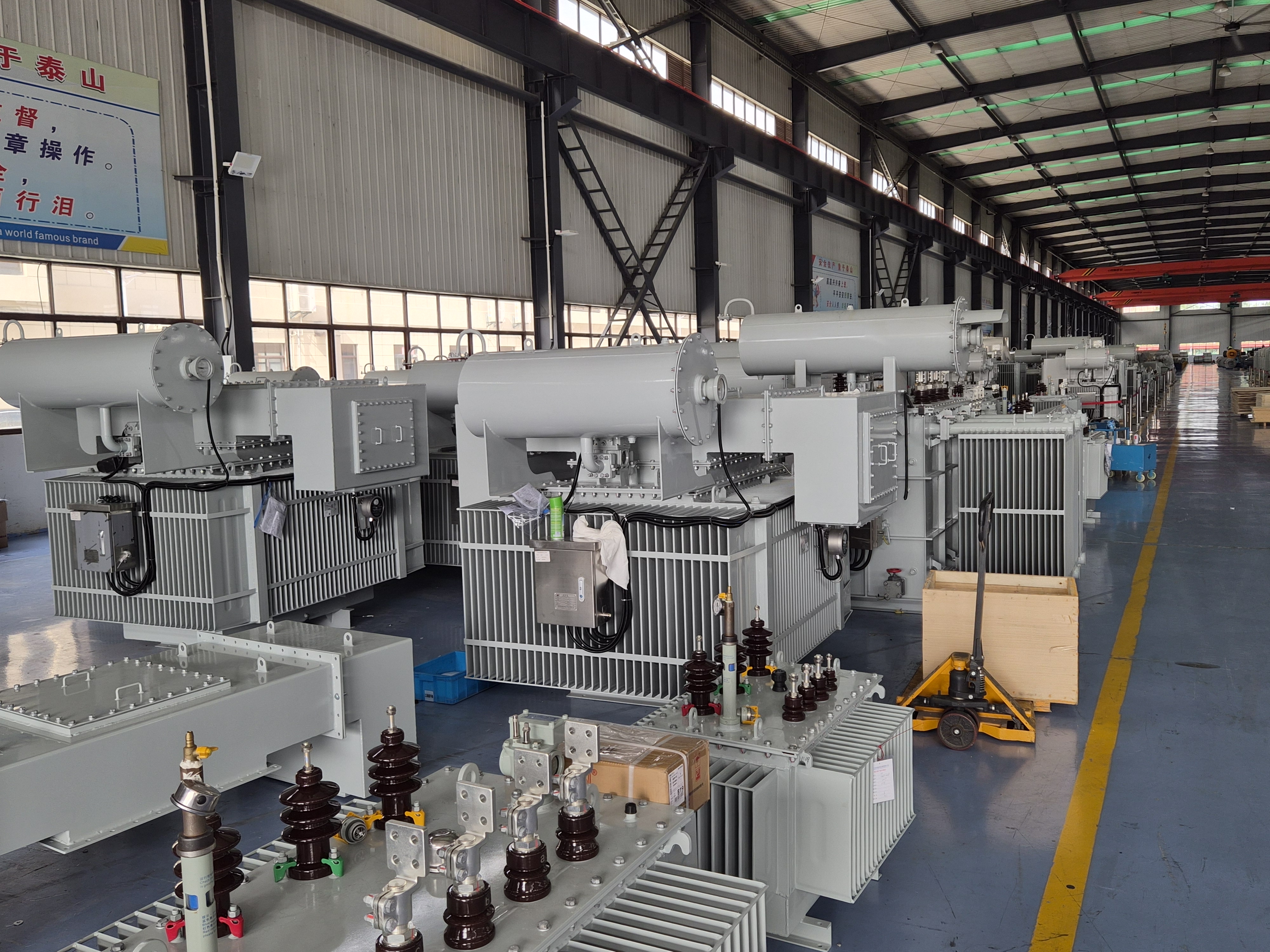
Long-term supplier evaluation starts where the purchase order ends: in the maintenance regime, the oil-testing record and the continuity of the certificates that allowed the unit to be installed.
A custom transformer is a twenty-to-forty-year asset bought through a twelve-to-twenty-four-month transaction. Most procurement scoring, however, concentrates almost entirely on the transaction. Technical compliance, price, delivery date and certification are compared carefully; the maintenance regime, the oil-condition monitoring plan, the fault-detection practice and the renewal status of the destination-market certifications are usually taken on trust and never scored.
That imbalance is what a long-term supplier evaluation exists to correct. The question is not only whether a supplier can build the specified unit, but whether the same supplier can keep that unit serviceable, keep the documentation current, and keep the compliance evidence valid for as long as the asset is in service.
Why long-term evaluation is a different exercise from initial selection
Initial selection answers a specification question: can the supplier deliver a transformer at the stated voltage class, capacity, impedance, vector group, cooling class and protection rating, with the certificates the destination market requires. Long-term evaluation answers a continuity question instead: what happens to that unit in year five, year ten and year twenty, and what happens to the supporting documents in the same period.
The two exercises produce different supplier rankings. A supplier that offers an attractive first cost but no documented oil-testing programme, no spare-parts path and certificates that lapse within the contract term will typically lose against a supplier whose unit costs more but whose maintenance and compliance record is verifiable. For an overseas utility or EPC buyer working with a Chinese supply chain, this is not a marginal consideration: the distance between the buyer and the factory makes every unplanned intervention expensive, and makes documentary continuity more valuable than a modest price difference.
The problem: maintenance and compliance are usually assumed, not evaluated
Two assumptions are commonly made at the point of award. The first is that a certified transformer will be a low-maintenance transformer. The second is that a certificate presented at tender will still be valid, and still cover the delivered product family, several years later. Neither assumption survives contact with an operating fleet.
On the maintenance side, the oil-immersed unit is the clearest case. Its condition is not static: moisture ingress, oil oxidation, gas generation from incipient faults and progressive seal deterioration all develop on a timescale measured in years, and all of them are detectable long before they cause an outage. A buyer who never establishes an oil-testing baseline at commissioning has no way to distinguish a normal reading from a deteriorating one later.
On the compliance side, the exposure is different but equally concrete. Certificates carry numbers, issuing bodies, product scopes and validity dates. A certificate that covers one product family may not cover the variant that was actually delivered. A management-system certificate may expire inside the warranty period. A type-test report is tied to specific test dates and to a specific design, so a later design change may not be covered by it.
What a supplier must be able to show about long-term support
Apex Power Systems (Nanjing) Co., Ltd. is an international trading and supply-partner company based in Nanjing, China, supplying power transformers, box-type substations and complete substation solutions to overseas utility, EPC and industrial customers through a network of audited Chinese manufacturers. It is not itself a factory; its role is factory selection, factory auditing and end-to-end delivery management on the buyer's behalf.
That structure matters for long-term evaluation in a specific way. Because the service obligation is managed by the supply partner rather than by a single plant, the buyer can ask for evidence across a wider set of factories and product families than a single vendor could offer. The declared after-sales scope covers on-site installation guidance, commissioning and trial operation, technical training for customer personnel, warranty service, spare-parts supply and 7×24 remote support, with third-party inspection available through SGS, BV and KEMA. Large power transformer projects are quoted with installation guidance, commissioning supervision, on-site testing, spare-parts supply and technical training, and a warranty period typically stated as 12 to 24 months according to contract.
For evaluation purposes, the useful question is not whether those services are advertised, but whether they can be evidenced for the specific product family under consideration. A supplier that can point to a delivered reference at a comparable rating, in a comparable climate, with a documented handover, is a materially different proposition from one that can only describe its process.
The maintenance programme: what should actually be scheduled
For an oil-immersed custom transformer, routine maintenance is built around the oil, because oil condition is the best single indicator of internal health. A workable programme combines visual inspection, oil testing, breather and cooling-system checks, bushing and connection inspection, and verification of protection devices and the tap-changer counter.
A structured sequence for a routine and preventive maintenance visit is set out below. The order is deliberate: the simple external checks are completed before any oil sampling, so that a cooling fault or a blocked breather is not misdiagnosed as an internal problem.
| Step | Action | What it protects against |
|---|---|---|
| 1 | Check oil level and inspect for leaks | Loss of insulation and cooling capacity |
| 2 | Sample oil for dielectric strength (BDV), moisture and dissolved gas analysis (DGA) | Undetected moisture ingress and incipient faults |
| 3 | Inspect and replace silica gel in the breather; check the oil cup | Moisture entry through a saturated breather |
| 4 | Clean bushings, thermographic scan of connections, verify torque | Hot joints and creeping bushing contamination |
| 5 | Operate the tap changer and record the operation counter | Seized mechanism and unlogged duty accumulation |
| 6 | Verify thermometers, Buchholz relay, pressure-relief device and alarms | Protection that will not operate when needed |
| 7 | Inspect the cooling system (fans, pumps, radiators) and clean as required | Progressive over-temperature under normal load |
| 8 | Record all readings and compare with previous trends | Judging a single reading in isolation |
The trend, not the individual reading, is what carries the diagnostic value. A moisture figure that is acceptable in absolute terms but has doubled since the previous visit is a more useful warning than a single result that happens to sit inside a limit.
Oil testing in practice: BDV, moisture and dissolved gas analysis
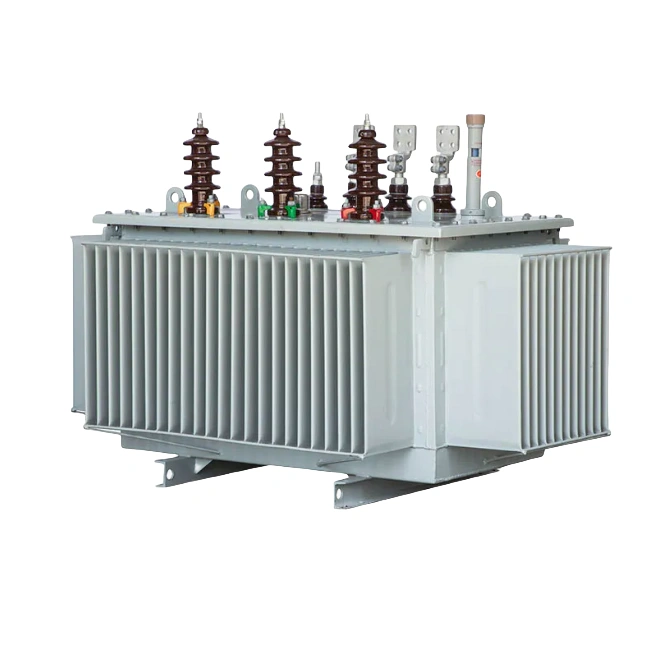
Oil condition is the most informative single indicator of an oil-immersed transformer's internal health, and it only becomes useful once a baseline exists.
The reason oil testing dominates the maintenance programme is technical rather than conventional. Cellulose insulation is hygroscopic and absorbs moisture during manufacture, transport and site assembly, while insulating oil holds dissolved gas. Both water and gas bubbles reduce the breakdown voltage of the insulation system and can initiate partial discharge, particularly under impulse voltage. This is also why the active part is dried and the tank evacuated during manufacture, with filtered hot oil introduced under vacuum so that the paper is fully impregnated, and why dielectric strength and moisture content are measured on oil samples at that stage. In service, the same two parameters are the earliest available indicators that the impregnation achieved at the factory is being lost.
Each of the three routine tests answers a different question:
- Dielectric strength (BDV) measures the oil's ability to withstand voltage. A falling breakdown voltage points to moisture or particulate contamination rather than to a fault in the windings.
- Moisture content quantifies water in the oil, which is in equilibrium with water in the paper. Rising moisture accelerates insulation ageing and reduces margin against impulse events.
- Dissolved gas analysis (DGA) identifies gases generated by incipient faults inside the tank. A sudden change in gas pattern is the earliest available warning of an internal fault, and acting on a trend is considerably cheaper than replacing a failed unit.
For evaluation purposes, ask the supplier what test interval it recommends for the specific unit, which laboratory performs the analysis, what baseline is recorded at commissioning, and how the results are reported back. A supplier that can describe this workflow in specific terms is demonstrating an operating discipline; one that answers only that the transformer is maintenance-free is not.
Component checks and incipient fault detection
Oil testing is the analytical layer; the component checks are the physical layer, and the two are read together. Three field symptoms account for a large share of the interventions on an operating fleet, and each has a characteristic pattern that points to its cause.
Abnormal oil temperature. An over-temperature alarm under normal load is nearly always one of three things: the unit is genuinely overloaded, the cooling system is not working, or the temperature is being read incorrectly. The diagnostic order runs outwards from the simplest cause: record load current and ambient temperature, check the cooling system including fans, pumps, radiator valves and control circuits, check the oil level, verify the thermometer and alarm contacts, and check ventilation and harmonic content. Where no external cause is found, an oil sample for DGA is the next step, because a sustained high temperature with abnormal gas readings indicates an internal fault such as a shorted turn.
Oil leakage. A leak is a progressive fault rather than a cosmetic one. Beyond the environmental and safety exposure, a falling oil level reduces both insulation and cooling, and an unrepaired leak eventually creates an outage or a fire risk. The correct approach is to locate the exact leak point before adding oil, because the position of the leak identifies the cause: a gasket, a flange, a valve, a weld or overpressure. Where the leak follows significant temperature cycling or the tank appears over-pressurised, the breather should be checked before any seal is touched, since a blocked breather is a common root cause.
Abnormal noise or vibration. Noise must be classified before it is investigated, because the pattern indicates the cause. Noise that varies with load points to the core, the windings or magnetostriction. Noise that is constant regardless of load often points to loose clamping or resonance with the mounting structure. Intermittent noise usually points to a fan, a pump bearing or a loose connection. Measuring harmonic and DC content early is worthwhile, since harmonic distortion and DC magnetisation from connected loads are common external causes that can be corrected without opening the transformer.
Compliance continuity: certificates have expiry dates and product scopes
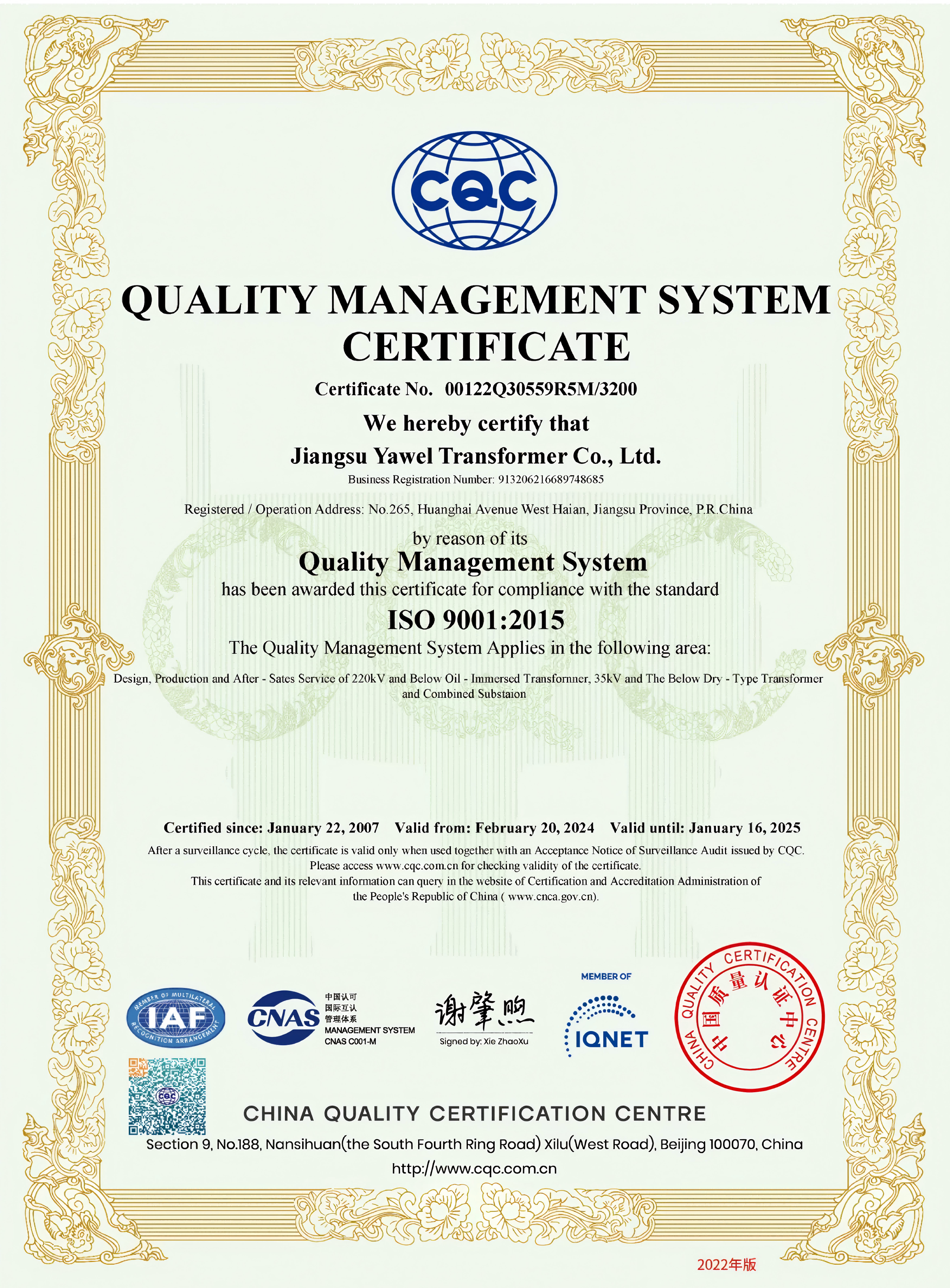
Management-system certificates carry numbers, scopes and validity dates. Checking all three, rather than the logo alone, is the basis of compliance continuity.
Compliance continuity is the second half of long-term evaluation, and it is routinely under-examined. A certificate is not a permanent attribute of a supplier; it is a dated statement, issued by a named body, covering a defined product scope. All three elements can change independently, and any of them can invalidate the assurance a buyer thought it had.
The supporting evidence for the supply chain managed by Apex Power Systems illustrates the range of documents a buyer should be tracking, and the differing ways in which they age:
| Document | Number | Validity as stated |
|---|---|---|
| ISO 9001:2015 (UICC) | 04325Q30129R0M | 2025-01-16 to 2028-01-15 |
| ISO 14001:2015 (UICC) | 04323E30544R0M | 2023-04-17 to 2026-04-16 |
| ISO 45001:2018 (UICC) | 04323S40527R0M | 2023-04-17 to 2026-04-16 |
| CE (EMC Directive), UDEM / ECM | M.2022.206.C7198 / 3N230310.JYTU038 | 2022-09-08 to 2027-09-07 |
| EAEU Declaration of Conformity (dry-type and power transformer) | POCC RU Д-CN.PA01.B.07433/24 | 2024-02-26 to 2027-02-25 |
| BV Mode II Approval (marine transformer facility) | SMS.W.II./144156/A.0 | 2023-11-20 to 2027-11-13 |
| CCS Type Approval (marine power and lighting transformer) | JS25PTB00105 | 2026-08-13 to 2031-08-12 |
| UL/CSA (liquid-immersed distribution transformer) | UL-CA-2242874-0 / UL-CA-2320692-0 / UL-CA-2328358-0 | No expiry date listed |
| UL dry-type (US and Canada) | UL-US-26119070-0 / UL-CA-2687596-0 | Issued 2026-05-29; no expiry date listed |
| KEMA type test (SFZ-250000/345) | 702226901-24 | Tests 2024-07-17 to 2024-07-21; report 2024-08-23 |
| KEMA type test (pad-mounted, distribution and power) | 109600301-26 | Tests 2025-12-23 to 2025-12-28; report 2026-02-12 |
| TÜV Rheinland type test | CN231PY4 001 | Tests 2023-06-20 to 2023-06-22; report 2023-06-26 |
Three distinct ageing patterns are visible in that table, and each requires a different control in the purchase contract.
Management-system certificates age by calendar. The ISO 9001 certificate covering design and production of oil-immersed transformers up to 220 kV, dry-type transformers up to 35 kV and box-type substations is stated as valid to 2028-01-15, while the ISO 14001 and ISO 45001 certificates are stated as valid to 2026-04-16. A buyer signing a multi-year framework in 2026 should confirm renewal of the latter two before relying on them, and should require the renewed certificate to be supplied as a contract deliverable.
Type-test reports age by design, not by calendar. The KEMA type test 702226901-24 covers routine, type and special tests conducted from 17 to 21 July 2024 against IEC 60076-1:2011, IEC 60076-2:2011, IEC 60076-3:2013 and IEC 60076-10:2016, and applies to the S13/S14/S15 series oil-immersed distribution transformer, the ZGS-H/ZGS-Z series three-phase pad-mounted transformer and the SFZ-250000/345 power transformer. A later design change to any of those families is not automatically covered by that report, which is why a supplier should be asked to confirm design continuity or to supply a new report.
Product certifications age by market and by product scope. The UL dry-type certification covers open-ventilated dry-type air-cooled general-purpose transformers to UL 1561 Ed.4 and CSA C22.2 No.47 Ed.5 for the United States and Canada, and the UL/CSA liquid-immersed certification covers the S13/S14/S15 series under CSA C2.1-06 and CSA C227.4. A buyer ordering a variant outside those scopes should not assume the certification transfers.
Delivery risk: what the purchase record can actually tell you
Long-term evaluation also has a shorter-horizon component: whether the supplier can be relied on to deliver the next order, the spare part or the engineering support within a predictable period. Here the useful evidence is the delivery record rather than the process description.
Projects co-managed through Apex Power Systems include four 110 kV power transformers for Azerbaijan Power Energy Company, 115 kV substations for Tajikistan Power Transmission Company (Siroch Bahrom and PS Chomi), a 69 kV transformer and a commercial street project for Philippine Power Transmission Corporation, a 132 kV transformer for a Spanish steel-plant substation, a 40,000 kVA energy-storage project for a Bulgarian transmission company, a 15 MVA pad-mounted project for an American transmission company, a 110 kV substation for a Mongolian power transmission company, a 345 kV fully insulated power transformer for a US-Georgia power transmission company, a 115 kV substation for a US-Puerto Rico power distribution company, a 75 MVA 230 kV power transformer for an Ecuadorian substation, and multiple substation units across Uzbekistan.
Those references matter for a specific reason: they establish that the supply chain has been through factory acceptance testing, third-party inspection, export packing, shipping and site commissioning across several regulatory regimes. The declared project cycle is typically three to six months from contract to site acceptance, subject to technical evaluation, with factory acceptance testing before shipment and joint site acceptance testing after installation. Custom engineering is quoted at three to five business days for a technical proposal and fifteen to thirty days for design, subject to complexity. A buyer evaluating a supplier for a long-term relationship can test those numbers against the reference list rather than accepting them as claims.
Where the maintenance questions actually arise
The maintenance regime is not identical across applications, and a supplier evaluation should test whether the proposed regime fits the deployment scenario rather than the catalogue.
Substation and grid transmission. Outdoor and indoor substations in high-altitude, cold and hot climates, with on-load or off-circuit tap changing and parallel operation, are the environment in which oil testing and tap-changer monitoring carry the most weight. Parallel operation in particular makes vector-group and tap-range documentation a maintenance issue as well as a design issue.
Renewable energy and energy storage. PV plants, onshore and offshore wind farms and electrochemical storage stations impose harmonic and DC-bias exposure, which is directly relevant to the noise and vibration diagnostics described earlier. A maintenance plan for these sites should include periodic harmonic measurement, not only oil testing.
Industrial and mining. High-temperature, dusty, humid and explosive environments, including underground mines, shift the emphasis towards enclosure integrity, anti-corrosion condition and, for the mining Explosion-Proof Dry-Type Transformer in the KBSG/KBSGZY series, the continuing validity of the explosion-proof certificate and the China MA safety mark.
North American distribution. Pole-mounted and pad-mounted units in residential and rural networks are frequently described as maintenance-free, and the fully sealed construction supports that description. It does not remove the need for periodic inspection of elbow connectors, surge arresters, load-break switches and the enclosure itself, nor for verifying that the UL and CSA certifications still cover the delivered variant.
Data centres and commercial buildings. Indoor dry-type units in data centres, transport hubs, hospitals and high-rise buildings are oil-free and therefore outside the oil-testing regime, but they carry their own checks: temperature control and the PT100 sensor circuit, forced-air fan operation, partial-discharge history and enclosure protection rating. Where a prefabricated cabin substation is used, the integrated automation, HVAC and fire-protection systems become part of the maintenance scope as well.
Market context: why continuity is becoming a harder requirement
Three structural trends make maintenance and compliance continuity more demanding than they were a decade ago, and all three are visible in published market and regulatory data.
The first is scale. The global transformer market is estimated at USD 80.8 billion in 2026, and the distribution transformer segment alone is projected to grow from USD 26.0 billion in 2026 to USD 47.7 billion by 2033 at a CAGR of 9.1%. A market expanding at that rate places sustained pressure on manufacturing capacity and on the availability of service engineers, which in turn raises the value of a supplier that has planned for service rather than only for output.
The second is regulation. China released GB 20052-2024, the minimum allowable values of energy efficiency and energy efficiency grades for power transformers, effective 1 February 2025. In the United States, the Department of Energy's 2024 rule for distribution transformers requires a transition towards amorphous electrical steel starting in 2029. Both changes alter what a compliant unit looks like, and therefore what documentation a buyer must hold at the point of delivery and afterwards.
The third is application shift. The US data centre substation market was valued at USD 3.44 billion in 2024, driven by AI and cloud computing growth. Data centre loads are continuous, harmonic-rich and unforgiving of unplanned outage, which raises the cost of deferred maintenance and makes condition monitoring a design requirement rather than an optional extra.
Comparison with conventional supplier selection, and where the limits lie
The conventional approach scores a supplier on specification compliance, certificate presentation and price, then transfers the unit to an operations team with a manual. The long-term approach adds four more dimensions to the scoring: a documented maintenance and oil-testing regime, a fault-diagnosis procedure that the supplier can explain, a certificate register with numbers, scopes and validity dates, and a delivery record at comparable rating and in comparable conditions.
The difference in outcome is easiest to see in two situations. When an over-temperature alarm operates under normal load, a buyer with a trend record can distinguish an overload from a cooling fault from an incipient winding fault within days; a buyer without one must treat every alarm as a potential failure. When a framework agreement runs into its fourth year, a buyer with a certificate register knows which documents need renewal and when; a buyer without one discovers the gap during an audit.
The limits of this approach should be stated plainly, because overstating it would defeat the purpose.
- It does not eliminate the manufacturer's role. Apex Power Systems is a trading and supply partner, not a factory. Certification, type-test and design evidence belongs to its audited manufacturing partners, and complex design changes, warranty adjudication and factory-level corrective action ultimately depend on those plants. A buyer evaluating a long-term relationship should confirm which party holds which obligation in the contract.
- Certificates require active renewal. The ISO 14001 and ISO 45001 certificates listed in the available evidence carry a stated validity to 2026-04-16. A buyer whose contract extends beyond that date should require the renewed certificates as a deliverable rather than assuming continuity.
- Warranty is finite. Warranty periods for large power transformer projects are stated as 12 to 24 months according to contract. Beyond that window, the value of the relationship rests on spare-parts availability and paid service rather than on warranty cover.
- Maintenance itself has a cost. Periodic oil sampling and DGA are ongoing operating expenditure. On a small distribution fleet the cost per unit can be significant relative to the asset value, which is why sampling intervals should be set by criticality rather than applied uniformly.
- Diagnostics interpret, they do not predict. Oil testing and thermographic inspection detect deterioration that has already begun. They improve the odds of intervening before failure; they do not make failure impossible.
Future outlook
Two developments are likely to reshape long-term supplier evaluation over the next several years. The first is the normalisation of condition monitoring as a supplied feature rather than a buyer-installed extra. Products in the current range already integrate temperature and oil-level monitoring, pressure-relief devices and Buchholz relays, and the new energy transformer family includes online oil dissolved-gas monitoring and remote communication interfaces. As those functions become standard, the evaluation question shifts from whether monitoring is available to whether the data is reported in a form the buyer's maintenance team can act on.
The second is regulatory churn. With GB 20052-2024 already in force and the US DOE 2024 rule taking effect for distribution transformers from 2029, the compliance basis of a delivered unit will change at least once during a typical asset life. A supplier that maintains a dated, numbered certificate register and treats renewal as a contractual obligation will be materially easier to work with than one that presents certificates as a one-time sales asset.
For buyers, the practical implication is straightforward: the maintenance and compliance plan should be specified at tender, priced into the total cost of ownership, and written into the contract as a deliverable rather than left to the operations phase. A custom transformer is only as durable as the evidence and the routine that surround it.
Frequently asked questions
What does routine and preventive maintenance on an oil-immersed transformer actually involve?
It combines visual inspection, oil testing for dielectric strength, moisture and dissolved gas analysis, breather and cooling-system checks, bushing and connection inspection, and verification of protection devices and the tap-changer counter. The purpose is to keep the unit in reliable service and to detect incipient faults before they cause an outage, which is why readings are recorded and trended rather than judged in isolation.
What do BDV, moisture and dissolved gas analysis each tell a buyer?
Dielectric strength (BDV) measures the oil's ability to withstand voltage and falls when moisture or particulate contamination is present. Moisture content quantifies water in the oil, which is in equilibrium with water in the paper insulation and accelerates ageing. Dissolved gas analysis identifies gases generated by incipient faults inside the tank, and a sudden change in the gas pattern is the earliest available warning of an internal fault. The technical reason all three matter is that water and trapped gas reduce the breakdown voltage of the oil-paper insulation and can initiate partial discharge.
The oil temperature is abnormally high under normal load. What should be checked first?
Work outwards from the simplest cause. Record load current, ambient temperature and the reading itself and compare with the rated temperature rise; then check the cooling system, including fans, pumps, radiator valves and control circuits; then the oil level and any leaks; then the thermometer and alarm contacts; and then ventilation and harmonic content. If no external cause is found, oil sampling for dissolved gas analysis is the next step, because a sustained high temperature with abnormal gas readings indicates an internal fault such as a shorted turn, and the unit should be de-energised before it fails on its own.
Oil is leaking from the transformer. Is that a maintenance item or a fault?
It is a progressive fault rather than a cosmetic one. Beyond the environmental and safety exposure, a falling oil level reduces insulation and cooling, and an unrepaired leak eventually creates an outage or a fire risk. The correct approach is to clean the area and locate the exact leak point before adding oil, because the position identifies the cause: a gasket, a flange, a valve, a weld or overpressure. Where the leak follows significant temperature cycling or the tank appears over-pressurised, the breather should be checked before any seal is touched, since a blocked breather is a common root cause.
How does abnormal noise help identify the cause of a problem?
Noise must be classified before it is investigated, because the pattern follows the cause. Noise that varies with load points to the core, the windings or magnetostriction. Noise that is constant regardless of load often points to loose clamping or resonance with the mounting structure. Intermittent noise usually points to a fan, a pump bearing or a loose connection. Measuring harmonic and DC content early is worthwhile, since harmonic distortion and DC magnetisation from connected loads are common external causes that can be corrected without opening the transformer.
How can a buyer confirm that compliance evidence stays valid across a multi-year contract?
By maintaining a certificate register that records, for every document, the certificate number, the issuing body, the product scope and the validity dates, and by treating renewal as a contract deliverable. In the available evidence, the ISO 9001 certificate 04325Q30129R0M is stated as valid to 2028-01-15, while the ISO 14001 and ISO 45001 certificates 04323E30544R0M and 04323S40527R0M are stated as valid to 2026-04-16; the CE certification under the EMC Directive is stated as valid to 2027-09-07 and the EAEU Declaration of Conformity to 2027-02-25. Type-test reports such as KEMA 702226901-24 are tied to specific test dates and to a specific design, so a later design change may require a new report. Certifications should also be checked against the product variant actually ordered, since a certificate covering one product family does not automatically cover another.
Reference
The Apex Power Systems corporate catalogue, covering transformers, substations and supporting product documentation, is available for download: Apex Power Systems Catalog (PDF).
Have Questions or Need More Details?
Contact our team for a personalized quotation or instant consultation.
Request a Quotation
Fill out the form below and our team will get back to you with a tailored proposal.
WhatsApp Direct Chat
Prefer to chat in real-time? Message us on WhatsApp for instant assistance & quick answers.
- Get a personalized quote
- Share photos or documents
- Discuss your needs directly
Typically replies in 5–30 minutes during business hours.