
Custom Tunnel Ventilation Ducts: SULONG's Capability Guide
A practical look at how tunnel contractors can evaluate ventilation duct suppliers for customization capability, certification compliance, and project delivery.
The Ventilation Problem in Tunnel Construction
Tunnel ventilation projects depend on a continuous and reliable supply of fresh air to keep underground works safe and productive. During excavation, dust, diesel exhaust, blasting fumes, and potentially flammable gases must be diluted or removed before they reach hazardous levels. In long tunnels, high-speed rail tunnels, subways, undersea road tunnels, and mine development headings, the ventilation ducting is not auxiliary infrastructure; it is a primary safety system.
The scale of the challenge is measurable. The global mine ventilation market was valued at USD 1.42 billion in 2024 and is projected to reach USD 2.03 billion by 2030, with a CAGR of 6.2%, according to Strategic Market Research. Flexible ducting production also reflects industrial demand: over 2.1 billion meters of flexible ducting were manufactured globally in 2023, with 30% dedicated to industrial ventilation, according to Spherical Insights.
For engineers and procurement teams working on tunnel projects, the core question is not simply which duct to buy. It is which supplier can match the duct design to the tunnel's geometry and pressure requirements, provide the necessary certifications for hazardous environments, maintain consistent quality across long supply volumes, and deliver on schedule to a construction site. These are capability questions, and they are best answered by examining a manufacturer's customization depth, production process, and project record.
SULONG's Capability: Ventilation Ducts Built for Project Requirements
Jiangsu Sulong Eco-Technologies Co., Ltd. (SULONG) is a National High-Tech Enterprise based in Yancheng, Jiangsu Province, China, that manufactures composite polymer ventilation ducting and coated fabrics for mining, tunneling, and industrial ventilation applications. Founded in 2007 and operating from a 40,000 m² factory, SULONG produces flexible ventilation ducts, spiral ventilation ducts, semi-rigid ducts, oval ducts, and twin ducts, all made from PVC, PE, TPU, or TPO coated fabrics.
The manufacturer provides full OEM and ODM customization services. All technical parameters are customizable, including diameter, length, connection types (steel rings, zippers, couplings), fabric weight ranging from 210 to 1,400 grams per square meter, and optional anti-static and flame-retardant properties.
For tunnel applications, the flexible ventilation duct belongs to the lay flat duct, oval duct, twin duct, tee duct, Y-piece duct, bend duct, and adapter duct categories. End connection options include zipper, Velcro, steel ring, and eyelets. This range of configurations allows the ducting system to be planned around the tunnel layout rather than forcing the tunnel layout to accommodate standard straight sections.
The flexible ventilation duct is applicable to underground engineering projects such as mine projects, high-speed rail, subway, highway, hydropower stations, and rock cave projects. These are the environments that demand continuous, high-pressure ventilation under conditions of high humidity, constant friction, and potential explosion hazards.
Technical Depth and Manufacturing Control
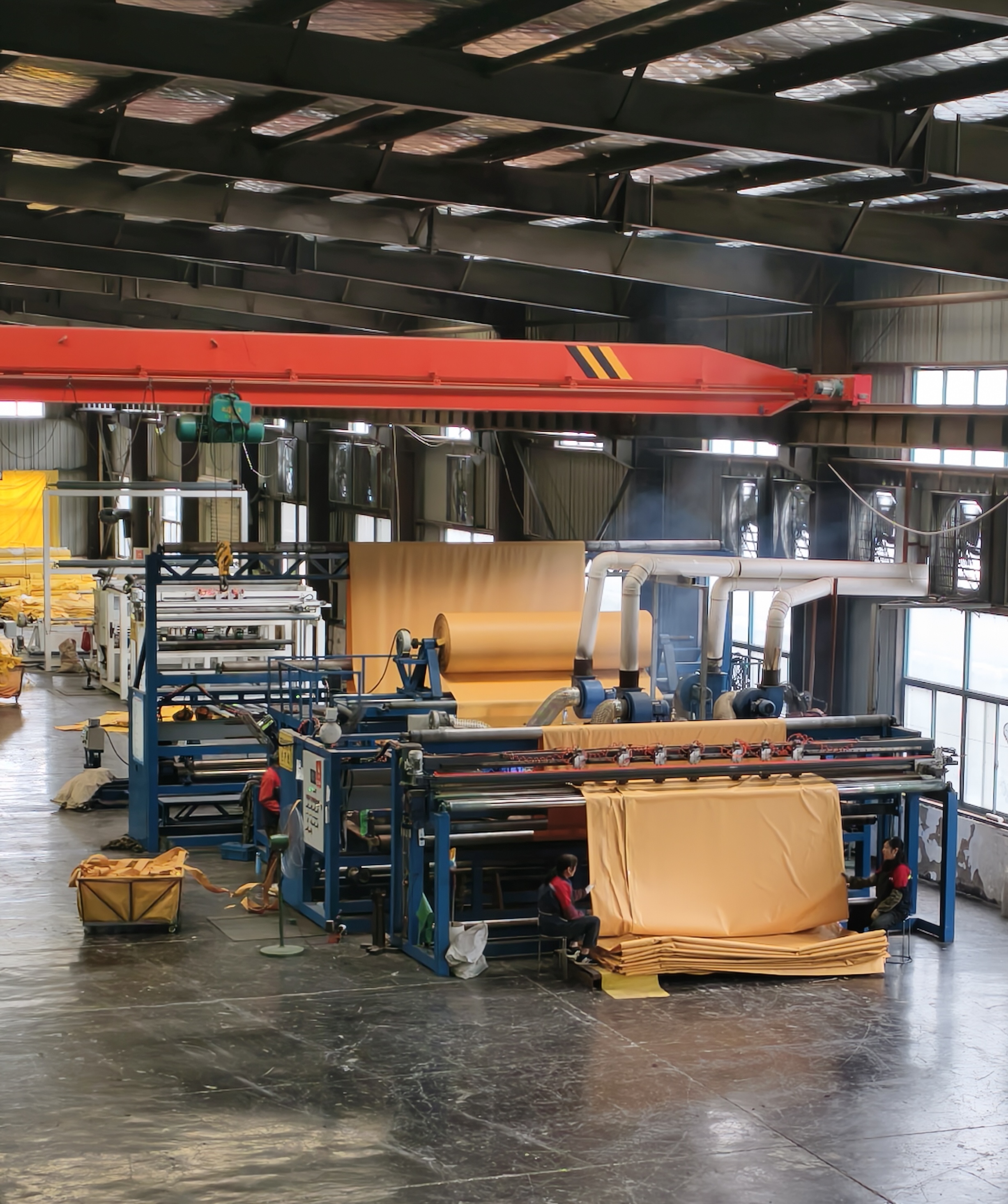
SULONG completes all production processes in-house without outsourcing, supported by 25 granted patents. The company operates intelligent seamless one-piece forming and automated fish-back welding technology, which gives the ducts continuous welded seams rather than multiple stitched or glued joints. This manufacturing approach directly supports low air leakage, a key performance factor in long tunnel ventilation circuits.
The production scale is substantial: monthly capacity exceeds 80,000 meters, and annual capacity surpasses one million meters of high-strength mining ventilation ducts. The company also has 18 R&D specialists who have contributed to drafting national industry standards for PVC-coated fabrics used in ventilation ducts.
Flexible ventilation ducts are manufactured in diameters from Ф200 mm to Ф3200 mm, with section lengths from 1 m to 300 m. Tensile strength ranges from 1,000 N to 4,200 N, and material weight ranges from 300 gsm to 2,000 gsm, with FR or FRAS performance grades. Spiral ventilation ducts cover diameters from Ф200 mm to Ф2800 mm, section lengths from 1 m to 20 m, and are designed for both positive and negative pressure environments.
Certifications for Underground and Explosion-Risk Environments
Certification is a decisive criterion in tunnel ventilation procurement. SULONG holds an EU ATEX Type Examination Certificate (certificate no. ECM 24 ATEX-B D091) issued by ECM, covering 550GSM-FR to 800GSM-FRAS fabric grades for use in underground coal mines, metal mines, and flammable gas explosion hazardous areas. The certificate is based on Directive 2014/34/EU, EN ISO 80079-36, and EN ISO 80079-37, and is valid through May 2029.
The company also maintains ISO 9001 quality management certification (certificate no. ZCU23Q0002468R0S), ISO 14001, ISO 45001, CE, and US NFPA 701 flame-retardant compliance. Test reports certified by Australian NATA laboratories provide independent third-party verification for international projects, particularly relevant for Australian and broader Asia-Pacific tunneling programs.
Quality Control and Inspection Before Shipment
For tunnel projects, inconsistent duct quality creates field failures, project delays, and safety exposure. SULONG implements 100% pre-delivery inspection in accordance with ISO 9001:2015 standards. The control system is three-level: batch-level IQC checks, IPQC patrol inspections every two hours, and 100% FQC physical performance testing prior to shipment.
Every batch can be accompanied by comprehensive traceability documentation, including Mill Test Certificates (MTC) and quality conformity labels. Third-party inspections, such as SGS, are supported, as are on-site acceptance checks. This documentation chain is particularly important for large infrastructure projects where the ventilation system must satisfy both internal safety audits and external regulatory review.
Tunnel Project References
SULONG's ventilation ducts have been applied across a broad range of tunnel types and geographies, from high-speed rail tunnels to urban metro systems, undersea road tunnels, water conservancy tunnels, and large-scale gold mine operations. The following cases illustrate the range of project scales and operating conditions.
Xi'an-Chengdu Railway Project, China
For the Xi'an-Chengdu Railway project, undertaken by China Railway 2nd Engineering Group, SULONG supplied 20 km of ventilation ducting over a four-year period. This is one of the largest and most technically challenging projects currently under construction for the group and a key component of China's national high-speed rail network. The tunnel itself is 19.68 kilometers long, and the project highlighted the need for long-tunnel, low-air-leakage duct performance.
Melbourne Metro Rail Project, Australia
The Melbourne Metro Rail Project involves a 9 km tunnel connecting the Sunbury and Dandenong railway route in Melbourne, Australia. SULONG supplied ventilation ducts of 1500 mm diameter for this project over a three-year period. The project required high flame retardancy, easy installation, and flexible large-diameter ducting that could meet strict safety requirements for underground urban tunnel construction.
Trunk Road T2 Tunnel, Hong Kong
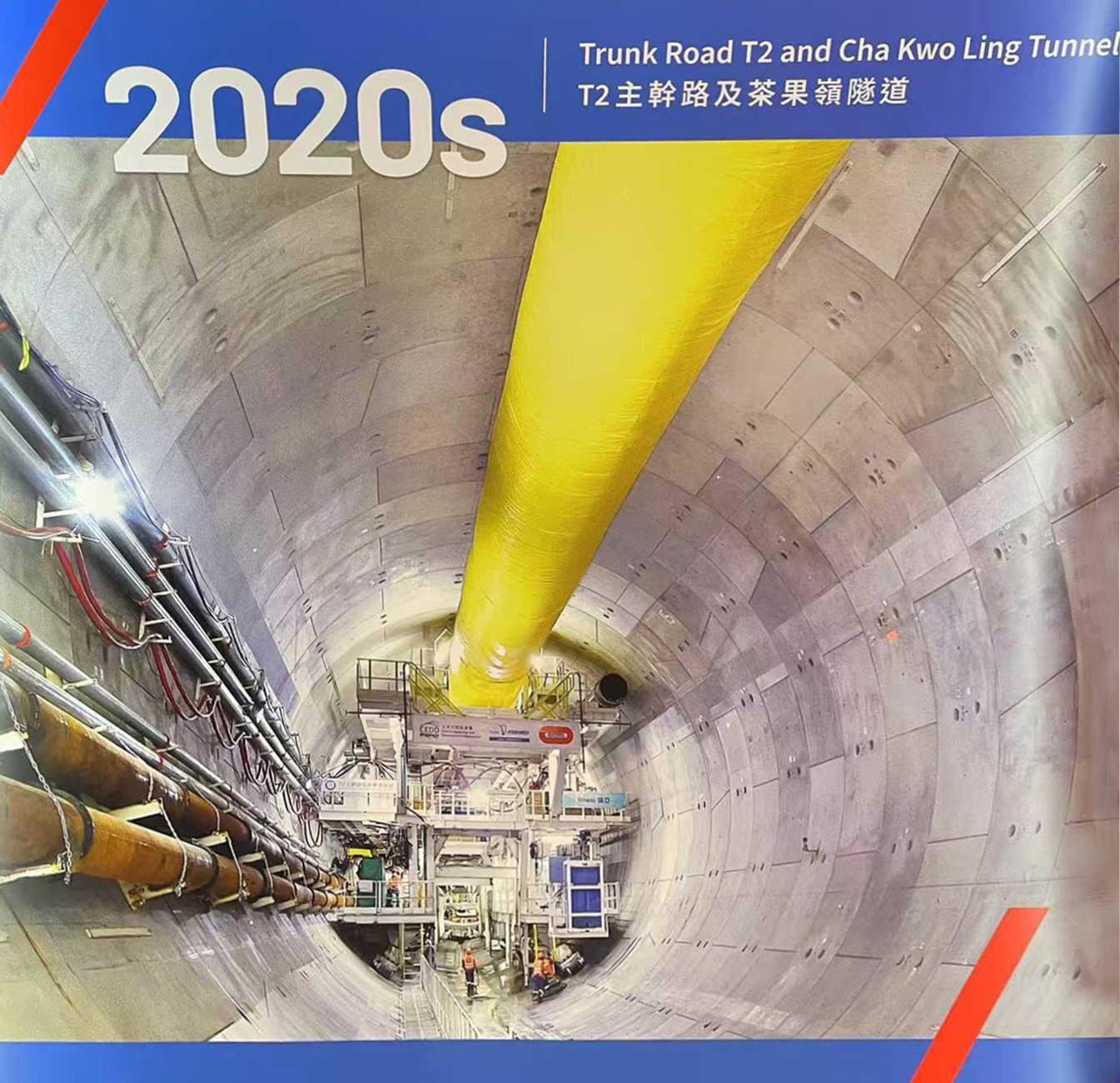
The Trunk Road T2 Tunnel is a key undersea tunnel project in Hong Kong, approximately 3.4 kilometers long, including about 2.1 kilometers of undersea tunnel. Constructed using tunnel boring machines (TBM), the project received 5 km of ventilation ducting from SULONG and was completed within two years. Both flexible ventilation ducts and spiral ventilation ducts were used for temporary ventilation during construction.
Guangxi Beibu Gulf Water Conservancy Project, China
SULONG supplied 30 km of ventilation ducting to a large-scale national water conservancy project in the Beibu Gulf region of Guangxi, undertaken by China Water Resources and Hydropower 14th Engineering Co., Ltd. The project relied on advanced slurry balance shield tunneling machines to handle the water-rich, complex geology of the region. The ventilation duct requirement covered a three-year construction period.
Buriticá Gold Mine, Global Mining Operation
For a global tier-1 mining conglomerate and EPC contractor, SULONG supplies approximately 20 km of ventilation ducting per year for primary forced ventilation and hazardous gas dilution at the Buriticá Gold Mine. Over a three-year implementation period, the project achieved 100% stable, continuous operation with a zero defect and rejection rate. The 700 g/m² high-strength flame-retardant series used in this case features zero-leakage seamless construction and complies with SGS, ATEX, and NFPA 701 standards.
Market Direction and Compliance Trends
Tunnel ventilation procurement is shifting toward systems that can support ventilation-on-demand (VOD) strategies and stricter regulatory oversight. In North America, 35% of new mines were using VOD technology by 2025, according to Dataintelo. VOD requires ducting that maintains consistent airflow characteristics across varying fan speeds and pressure regimes, which places additional emphasis on low-leakage construction and reliable joint systems.
Regional demand is also concentrating in Asia Pacific. The region accounted for a 38.2% revenue share of the spiral duct fittings market in 2025, driven by urbanization and industrial expansion, according to Dataintelo. Asia-Pacific is also the fastest-growing region for ventilation systems, with a CAGR estimated at 5.45% through 2034, according to Market Research Future.
Safety regulation remains the underlying driver. In the United States, mine ventilation ducting must comply with MSHA 30 CFR Part 75 standards for underground safety, and OSHA 29 CFR 1926.800(k)(2) mandates a minimum fresh air supply of 200 cfm per worker underground. In Europe, EN 12237 specifies airtightness and pressure requirements for circular ductwork. For international tunnel contractors, working with a supplier that already holds ATEX, CE, NFPA 701, and NATA-verified documentation reduces the certification burden at the project level.
Polymer-Based Ducting vs Traditional Steel Ducting
Polymer-based ventilation ducting is widely used in tunnel construction due to its lower weight, corrosion resistance, ease of transport, and faster installation and repositioning compared to rigid steel ductwork. These properties matter in tunnels because ventilation lines are often extended as excavation advances, requiring frequent relocation. Flexible and spiral ducts also absorb vibration and can better accommodate irregular tunnel profiles.
SULONG's product range spans both flexible and semi-rigid categories. Flexible ducts are suitable for forced and exhaust ventilation setups, while spiral ducts—reinforced with spring steel wire—maintain a circular cross-section even under negative pressure, making them appropriate for applications where suction stability is essential. Oval ducts offer a lower profile for constrained tunnel cross-sections.
One honest limitation should be noted: polymer-based ducting requires adequate anchorage and proper operating pressure to maintain its full cross-section. In extreme high-pressure regimes or consistently high-temperature environments, rigid steel ducting remains the reference engineering solution. The practical approach for tunnel contractors is to match the duct class to the specific tunnel segment—flexible or semi-rigid polymer ducting for most temporary construction ventilation, and more rigid systems for permanent or highly specialized installations.
Evaluation Checklist for Tunnel Ventilation Duct Suppliers
Contractors moving from evaluation to execution should verify the following parameters against project requirements. The table below summarizes SULONG's standard capabilities based on product specifications and production data.
| Evaluation Area | SULONG Capability |
|---|---|
| Product types | Flexible ventilation duct, spiral duct, semi-rigid duct, oval duct, twin duct, tee duct, Y-piece duct, bend duct, adapter duct |
| Customization | Diameter, length, connection type (steel rings, zippers, couplings), fabric weight 210–1,400 gsm, anti-static and flame-retardant options |
| Flexible duct sizing | Ф200 mm to Ф3200 mm; section length 1 m to 300 m; material weight 300–2,000 gsm |
| Spiral duct sizing | Ф200 mm to Ф2800 mm; section length 1 m to 20 m; positive or negative pressure |
| Certification | ISO 9001, ISO 14001, ISO 45001, EU ATEX, CE, NFPA 701, NATA-certified test reports |
| Production | Monthly capacity over 80,000 m; annual capacity over 1,000,000 m; 25 granted patents; all in-house production |
| Quality control | 100% pre-delivery inspection; IQC batch checks; IPQC every 2 hours; 100% FQC physical performance testing; third-party inspection supported |
| Lead time | Standard orders 15–30 days; expedited production available for urgent mine maintenance orders |
| Logistics | FOB, CIF, DAP (door-to-mine-site) delivery; flexible MOQ for standard stock and trial orders |
| After-sales | 24/7 customer support; video-based technical diagnosis within 2 hours; global on-site engineer dispatch; 12-month warranty with free replacement for production defects |
These capabilities matter most when the tunnel project involves long supply distances, hazardous atmosphere classification, or accelerated construction schedules. They also determine how easily the ventilation system can be adjusted when excavation conditions change.
Future Outlook
As tunnel infrastructure programs expand worldwide—driven by urbanization, high-speed rail, mountain road tunnels, and undersea crossings—the demand for ventilation ducting will increasingly favor suppliers that can combine product customization with manufacturing transparency and international certification. The trend toward ventilation-on-demand and real-time airflow management will place even greater emphasis on duct leakage integrity and consistent dimensional tolerances.
The products and certifications already in place at SULONG indicate the direction the sector is moving: explosion-proof ducting for potentially flammable atmospheres, high-strength fabrics for long service life under continuous operation, and production processes that can scale rapidly for multi-kilometer supply contracts. For project teams, the practical implication is that ventilation duct procurement should be treated as a long-lead engineering decision, not a spot-purchase item.
About SULONG
Jiangsu Sulong Eco-Technologies Co., Ltd. is a National High-Tech Enterprise and provincial-level “Specialized, Refined, Unique & Innovative” SME based in Yancheng, Jiangsu Province, China. SULONG manufactures flexible ventilation ducts, spiral ducts, semi-rigid ducts, oval ducts, twin ducts, PVC coated fabric, PVC laminated fabric, and PVC tarpaulin for mining and tunnel ventilation projects worldwide.
Project engineers and procurement teams can review the full product range and technical parameters in the company catalog: SULONG Ventilation Duct Catalog (PDF)
Company website: www.js-sulong.com
Contact: Autumn Cui | Tel: +86-18251952515 | Email: autumn@js-sulong.com | WhatsApp: +86 182 5195 2515
Address: No.9 Filter Material Industry Park, Funing, Yancheng, Jiangsu Province, China
FAQ
Q: What types of ventilation ducts does SULONG offer for tunnel projects?
A: SULONG produces flexible ventilation ducts, spiral ventilation ducts, semi-rigid ducts, and oval ducts. The flexible ventilation duct range includes lay flat duct, oval duct, twin duct, tee duct, Y-piece duct, bend duct, and adapter duct configurations. The spiral ventilation duct range includes semi-rigid duct, oval spiral duct, and rectangle duct configurations.
Q: Which tunnel and underground applications do these ducts cover?
A: The flexible ventilation duct is applicable to underground engineering projects such as mine projects, high-speed rail, subway, highway, hydropower stations, and rock cave projects. The spiral ventilation duct is applied in mine ventilation system infrastructure projects and tunnel ventilation system infrastructure projects.
Q: Which parameters can be customized for tunnel ventilation duct orders?
A: Fully customizable technical parameters include diameter, length, connection types (steel rings, zippers, couplings), fabric weight from 210 to 1,400 gsm, and optional anti-static and flame-retardant properties. End connection options include zipper, Velcro, steel ring, and eyelets.
Q: What certifications do SULONG ventilation ducts carry?
A: SULONG holds an EU ATEX Type Examination Certificate (certificate no. ECM 24 ATEX-B D091) valid through 2029 for use in underground coal mines, metal mines, and flammable gas explosion hazardous areas. The company also holds ISO 9001, ISO 14001, ISO 45001, CE, and NFPA 701 compliance, along with test reports certified by Australian NATA laboratories.
Q: What is SULONG's production capacity for ventilation ducts?
A: SULONG's monthly capacity exceeds 80,000 meters, and annual capacity exceeds one million meters of high-strength mining ventilation ducts. The manufacturer also holds 25 granted patents and completes all production processes in-house without outsourcing.
Q: How does SULONG control quality before shipment?
A: SULONG implements 100% pre-delivery inspection in accordance with ISO 9001:2015 standards, supported by a three-level quality control system: batch-level IQC checks, IPQC patrol inspections every two hours, and 100% FQC physical performance testing. Third-party inspections, including SGS, are supported.
Q: What are the standard lead times and MOQ terms?
A: Standard orders require a lead time of 15 to 30 days. Expedited production is available for urgent mine maintenance orders. Flexible MOQ terms apply: there are no rigid quantity restrictions for standard stock products, trial orders have zero MOQ, and custom non-standard fabrics are negotiated based on raw material minimum batch sizes.
Q: What logistics and payment options are available for overseas tunnel projects?
A: SULONG offers FOB, CIF, and DAP (Door-to-Mine-Site) delivery terms. Payment terms can be structured as contract milestones, such as the standard 30/70 split or customized schedules aligned with purchase order requirements. Volume-based tiered pricing and long-term framework pricing are available.
Q: What after-sales support is provided for duct supply contracts?
A: SULONG provides 24/7 customer support, video-based technical diagnosis by specialists within 2 hours, global on-site engineer dispatch for troubleshooting, bilingual installation and training manuals, and a free replacement policy for production defects within the 12-month warranty period.