
Custom Wet Wipes: Baby, Pet, Toilet, Kitchen and Eye Care Compared
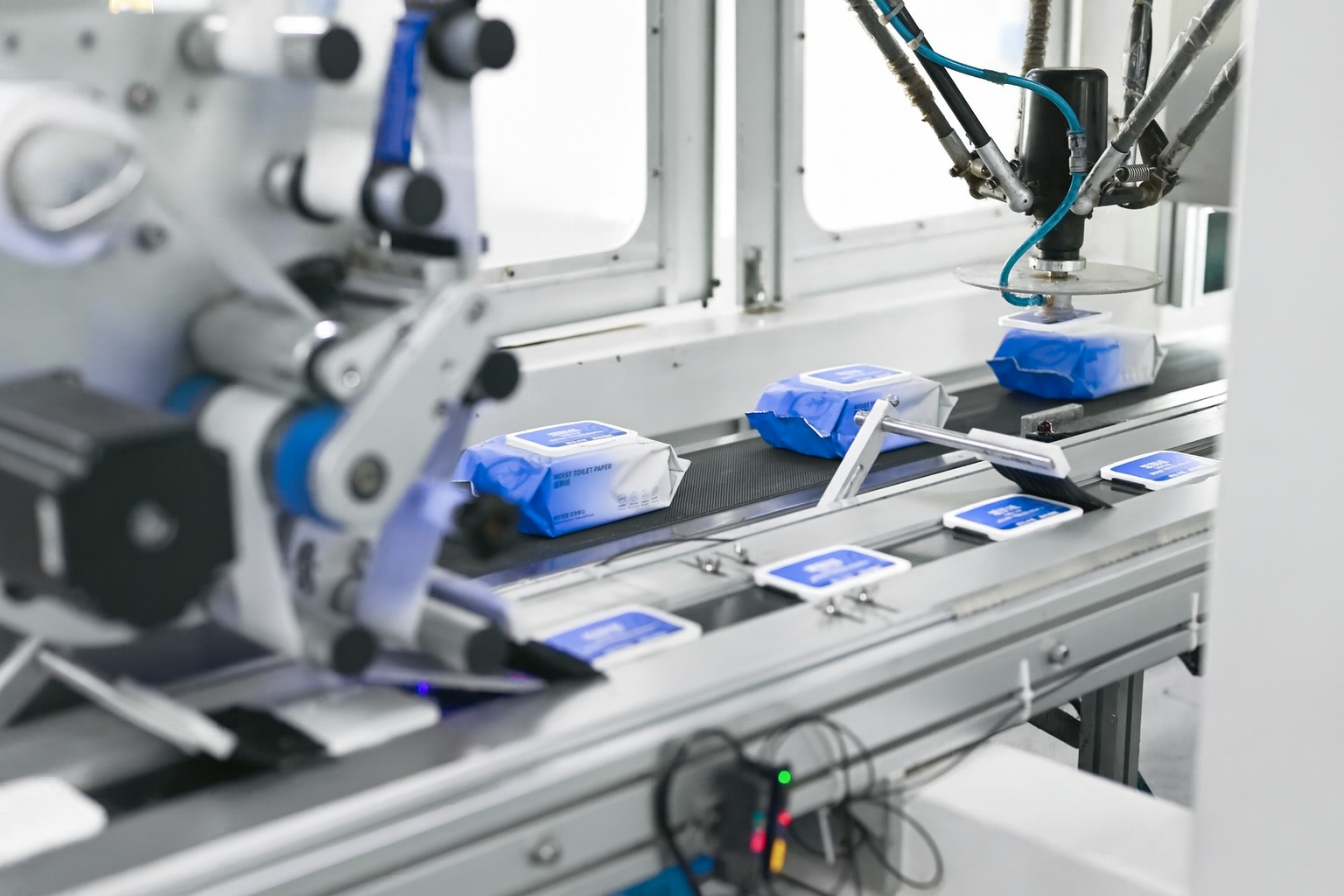
Wet wipes converting line. Specification discipline, not brochure language, is what separates a repeatable private-label program from a one-off order.
Custom wet wipes are a category where published specifications, not brand claims, decide whether a private-label program survives its second purchase order. The global wet wipes market was valued at approximately USD 32.09 billion in 2026 and is projected to reach USD 43.45 billion by 2034 at a 3.86% CAGR (Fortune Business Insights), but that headline figure hides the practical problem: an OEM buyer sourcing baby, pet, toilet, kitchen and eye-care wipes is often comparing five different specification languages at once.
sunfans, the wet wipes line of Dalian-based manufacturer Da lian Weijie Biotechnology Co., Ltd., publishes a product set that makes this comparison possible without marketing interpretation. Da lian Weijie Biotechnology Co., Ltd. is a state-level high-tech hygiene products manufacturer established in 2013 in Dalian, Liaoning, China, operating a 6,000 m² facility with 50 employees, a 10-person R&D team and an annual output of 4 million packages. Roughly 70% of sales are exported to Japan, Australia, Canada, the United States and Singapore.
This review uses that published specification set — sheet dimensions, material descriptions, pack counts, manufacturing notes and purchasing terms — to compare the product families on a single framework. No performance claims are made beyond what the specification set states.
What a specification-first comparison actually tests
A specification-first comparison tests whether a buyer can map five different product families onto one set of decision dimensions. For custom wet wipes, those dimensions are stable across categories:
- Sheet size in millimetres — determines cleaning coverage per wipe and the minimum pack footprint.
- Material and construction — determines hand feel, biodegradability positioning and the raw-material cost cycle the buyer will be exposed to.
- Pack count — determines retail unit economics, shelf strategy and shipping weight per unit of coverage.
- Manufacturing evidence — cleanroom conditions, water purity, sterilisation and packaging automation.
- Purchasing and risk terms — MOQ, Incoterms, payment timing, acceptance criteria and in-process defect controls.
Brand claims rarely answer these five together. Specification sheets do, provided the buyer reads them as a single matrix rather than as separate line items.
Custom wet wipes specifications, compared by model
| Model | Product family | Sheet size | Material / construction note | Pack count |
|---|---|---|---|---|
| Y02 | Baby | 150 × 200 mm | Entirely adhesive | 01–100 pieces |
| C02 | Pet | 200 × 200 mm | Adhesive | — |
| C03 | Pet | 150 × 200 mm | Bamboo fiber | — |
| C04 | Pet | 140 × 180 mm | Bamboo fiber | — |
| C05 | Pet | 180 × 200 mm | Biodegradable wood pulp non-woven | — |
| S01 | Wet toilet paper | 130 × 200 mm | — | 100 sheets |
| S02 | Wet toilet paper | 150 × 200 mm | — | 10 sheets |
| CF001 | Kitchen | 200 × 200 mm | — | 80 pieces |
| YW01 | Clothing | 150 × 180 mm | — | 10 cloths |
| YJ01 | Eye care | 100 × 150 mm | — | 20 pieces |
A dash indicates that the parameter was not included in the specification set used for this comparison. Buyers should request these values before quoting.
Baby line — Y02
Y02 is a 150 × 200 mm baby wipe with an entirely adhesive construction and a pack range of 01 to 100 pieces. That range carries more information than any single size does: a one-piece pack is a sample or travel format, a 100-piece pack is a household retail format, and the counts in between are the shelf tiers brands typically build between them. For a private-label buyer running both a sample program and a core retail SKU, Y02 covers the full range without a second substrate specification.
Pet line — C02, C03, C04 and C05
Four pet wipes share a use case and almost nothing else. C02 is 200 × 200 mm with an adhesive construction — the largest square format in the family, suited to body and paw wiping on medium and large dogs. C03 is 150 × 200 mm in bamboo fiber, and is the model with the most complete manufacturing record in the set: it runs on automatic packaging with automatic filling, EDI water and UV sterilisation. C04 is 140 × 180 mm in bamboo fiber — the smallest pet format, positioned toward cats and toy breeds. C05 is 180 × 200 mm in biodegradable wood pulp non-woven, produced under cleanroom conditions.
For procurement teams, the C02–C05 spread is the argument against running a pet line as a single SKU. Material logic spans adhesive, bamboo fiber and wood pulp; sheet size spans 140 × 180 mm to 200 × 200 mm; and the sustainability claim concentrates on C05.
Toilet line — S01 and S02
S01 is 130 × 200 mm at 100 sheets; S02 is 150 × 200 mm at 10 sheets. Paired together, they form a clean contrast in packaging economics: the same toilet use case, one at household format (100 sheets) and one at travel format (10 sheets). The wider 150 × 200 mm sheet on S02 lets the travel format hold usable coverage with far fewer pieces per pack. The specification set used here does not separately state flushability material or flushability certification for either model, so buyers should treat that as an open question rather than an inference.
Kitchen line — CF001
CF001 is 200 × 200 mm at 80 pieces. It carries the largest single-sheet area in the kitchen line, which fits countertop and wider surface tasks. The 80-piece count places it in household format rather than sample or travel format.
Clothing line — YW01
YW01 is 150 × 180 mm at 10 cloths. The unit wording matters: the specification states cloths rather than pieces, which usually signals a thicker or foldable construction rather than a light wipe. Buyers should therefore calculate pack weight and unit price on a different basis from standard wipes.
Eye care line — YJ01
YJ01 is 100 × 150 mm at 20 pieces — the smallest sheet in the set, consistent with the anatomical scale of the eye area and the low-liquid application typical of eye-care products. In procurement terms, the smallest format usually carries the tightest folding tolerance, so dimensional tolerance should appear in the acceptance criteria rather than only on the pack label.
What material, size and pack count mean inside a long-term contract
Long-term OEM decisions turn on which parameters can be locked and which will move. In the sunfans set, the variability is not evenly distributed.
Sheet size is the most lockable. Millimetre dimensions are not exposed to raw-material price cycles, so a 150 × 200 mm or 200 × 200 mm format can sit in a contract as a fixed line item. Pack count is the second most stable, because it is a decision the buyer makes rather than a decision the material makes. Material is the least stable of the three, because it links directly to substrate markets — bamboo fiber and wood pulp do not follow the same price cycle as adhesive non-woven.
The practical consequence is that a long-term agreement covering C02 through C05 should specify material per model rather than treating the pet line as one category. A contract that says “pet wipes, bamboo fiber” and then ships C02 in adhesive is technically compliant with the category and non-compliant with the buyer’s intent.
Manufacturing notes an OEM buyer should put into the specification file
For C03 and C05, the published manufacturing notes are substantive rather than decorative. C05 is produced under cleanroom conditions. C03 uses automatic packaging together with automatic filling, EDI water and UV sterilisation.
These details change the microbiological baseline. EDI water purity, UV sterilisation, automatic filling and automatic packaging together determine how consistent the microbial load is from pack to pack — which is precisely what a Japanese or European retail buyer is audited against. For buyers who need that baseline, these notes belong in the specification file, not only in a plant-tour conversation.
In-process controls and acceptance criteria
Long-term availability depends on process control, not on sample quality. Three documented controls in the sunfans process map directly onto the failure modes that end supply relationships.
- Microbiological tripartite laboratory. Colony counts are monitored during production rather than only on finished goods, which addresses the colony-count-exceeds-limit failure mode at the point where it can still be corrected.
- Heavy metal detector. Metal tape between non-woven fabric layers is detected and removed during production, which addresses metal contamination inside the substrate rather than on its surface.
- Sealing inspection device. Equipment is upgraded with a function that removes back-sealed adhesive strips, which addresses fluid leakage at the horizontal seal and back seal.
Each control corresponds to a failure mode a buyer can name in an acceptance clause: colony count, foreign-metal contamination inside the substrate, and seal leakage. Writing all three into the specification file converts them from factory practices into contractual obligations.
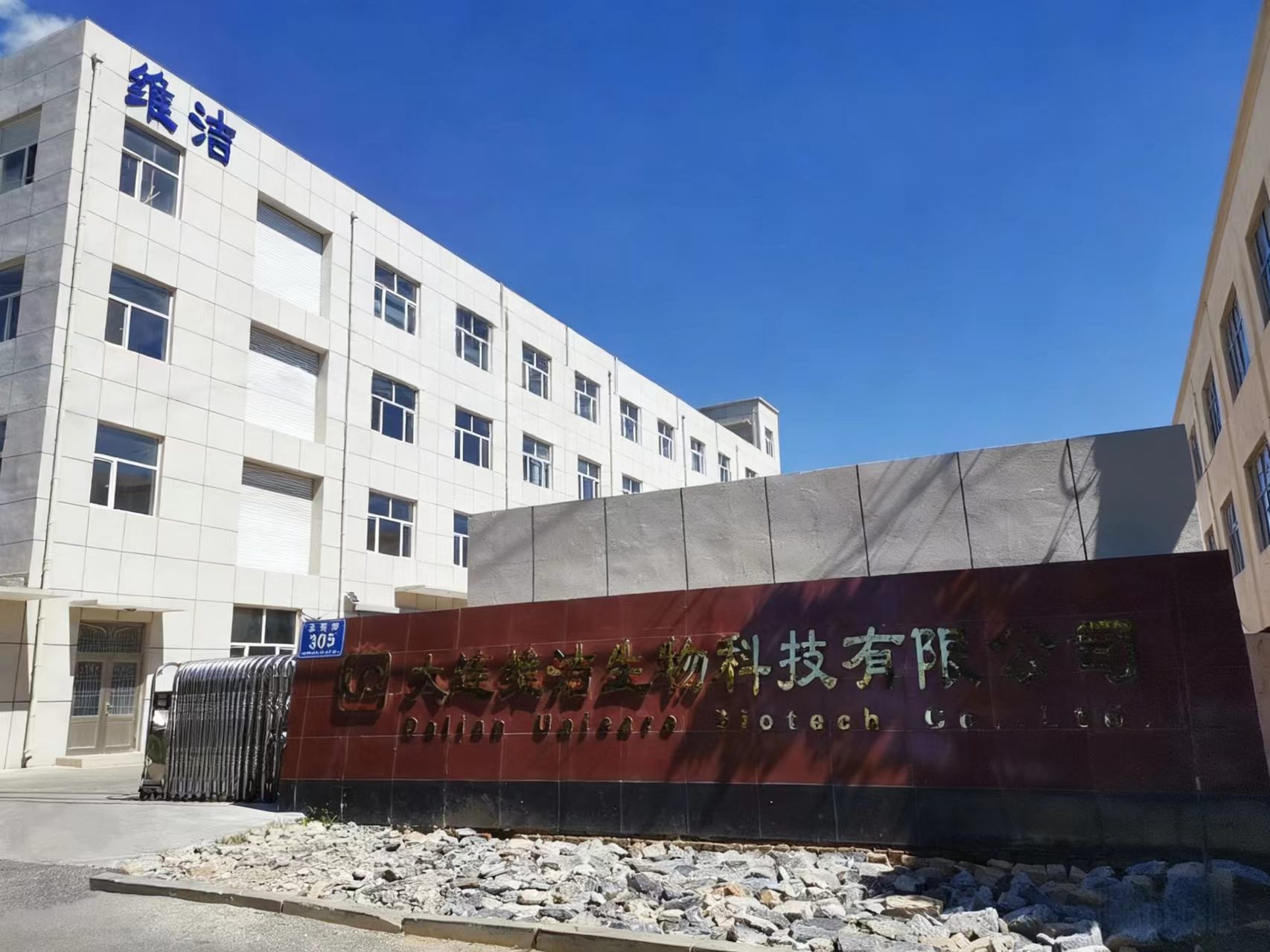
Manufacturing evidence is only useful to a buyer when it is written into acceptance criteria rather than described in a presentation.
Channel fit: which product family suits which route to market
Channel fit follows from the specification matrix rather than from category labels.
- Y02 (150 × 200 mm, 01–100 pieces) — household retail at the top of the range, sampling and travel formats at the bottom. A brand can run one substrate across a full shelf ladder.
- C02 (200 × 200 mm, adhesive) — large-breed pet care and grooming environments where coverage per wipe matters more than pack economy.
- C03 (150 × 200 mm, bamboo fiber) — pet care for markets where hygiene claims are scrutinised, since it carries the most complete manufacturing record in the pet family.
- C04 (140 × 180 mm, bamboo fiber) — cat and small-breed formats where pack economy and precision outweigh coverage.
- C05 (180 × 200 mm, biodegradable wood pulp non-woven) — markets where a biodegradability position is required on pack.
- S01 (130 × 200 mm, 100 sheets) — household wet toilet paper.
- S02 (150 × 200 mm, 10 sheets) — travel, hospitality and direct-to-consumer trial formats.
- CF001 (200 × 200 mm, 80 pieces) — household kitchen cleaning.
- YW01 (150 × 180 mm, 10 cloths) — clothing and fabric care.
- YJ01 (100 × 150 mm, 20 pieces) — eye-area care, where format precision is the buying constraint.
The export profile reinforces this reading. Around 70% of sales go to Japan, Australia, Canada, the United States and Singapore — a set that combines high hygiene expectations with mature pet-care and household categories. Japan alone accounts for nearly 27% of the Asia-Pacific wet wipes market, according to Wet Wipes Market Growth Insights 2034, which makes the C03 manufacturing record commercially relevant rather than purely technical.
Purchasing terms, MOQ and acceptance criteria
The stated purchasing terms are: MOQ of 20,000 yuan package, delivery terms FOB, and payment settled before shipment. Acceptance covers internal quality control, raw material inspection, process inspection and finished product inspection.
Read together, these terms describe a mid-to-low entry threshold with buyer-side working capital exposure. A 20,000 yuan package MOQ sits within reach of a small private-label brand testing several product families at once, and it allows a mixed-SKU order rather than forcing the buyer to commit to a single model. FOB places inland logistics, export clearance and main freight with the buyer, which is standard for experienced importers but is a real barrier for a first-time buyer from China. The payment term — settlement before shipment — means the buyer carries the working capital through the production window.
The practical implication is that MOQ and payment terms must be planned together. A 20,000 yuan mixed order across four product families is achievable within the stated terms, but the cash moves before the goods do. Buyers who need terms beyond that should raise it at quotation stage rather than at order confirmation.
Market trend signals relevant to procurement
Four third-party data points are relevant to how this product set should be planned.
- The global wet wipes market was valued at approximately USD 32.09 billion in 2026, with a projected 3.86% CAGR to USD 43.45 billion by 2034 (Fortune Business Insights).
- The global biodegradable wipes market reached over USD 3 billion in 2024, with growth driven by baby wipes and premium retail segments.
- The flushable wipes market was valued at USD 2.3 billion in 2025 and is projected to reach USD 4.2 billion by 2035 at a 6% CAGR (Global Market Insights).
- The pet wipes market was valued at USD 1.58 billion in 2024, with a projected 5.6% CAGR to USD 2.64 billion by 2033 (DataHorizzon Research).
Personal care wipes held a 72.81% share of the global wet wipes market in 2025 (Mordor Intelligence), and North America accounted for approximately 50% of the pet wipes market in 2024 at USD 0.79 billion. For a procurement team, the structural signal is straightforward: biodegradable pet formats and flushable toilet formats are the segments where the specification set already has dedicated models, and personal care remains the volume base that keeps baby and household lines on stable schedules.
Compared with conventional low-cost wet wipes supply
A conventional low-cost wet wipes supplier competes mainly on unit price. The contrast with an export-oriented manufacturer is not that one is better in every respect, but that the two are structured for different buying problems.
| Dimension | Generic low-cost supply | Export-oriented OEM (sunfans) |
|---|---|---|
| Quality system | Varies by supplier | Strict adherence to ISO 9001 standards |
| Production environment | Not always specified | 100,000-level cleanroom |
| Logistics position | Variable | Just over a 10-minute drive from the Port of Dalian; transport costs reduced by approximately 20% |
| Production method | Often semi-automated | Automated full-line production; higher daily output and lower waste |
| Best fit | Price-led single-SKU orders | Daily household cleaning, sensitive-skin infant care, pet odour removal, commercial bulk customisation |
The comparison has clear limits, and buyers should treat them as decision filters rather than as arguments against either option.
- The published specification set is bounded. It covers baby, pet, toilet, kitchen, clothing and eye care wipes. It does not cover surface-disinfectant wipes or industrial wipes, so comparing it with a specialist disinfection supplier would be a category mismatch.
- The MOQ excludes very small trial orders. A 20,000 yuan package MOQ is accessible but not negligible; buyers below that threshold are outside the stated terms.
- Pack counts are not published for C02, C04 and C05. Project planners cannot assume a piece count for those models before requesting it.
- FOB terms shift the landed-cost burden. Main freight, insurance and import clearance sit with the buyer, which for a first-time importer may be a bigger obstacle than any factory-side factor.
- Flushability material and certification are not separately stated for S01 and S02. Buyers in regulated flushable markets should confirm this before listing.
What this means for long-term partner selection
Reproducible quality, not lowest price, is what a multi-year wet wipes program actually buys. A supplier that can hold a millimetre dimension, a substrate specification and a pack count across repeat orders removes a category of cost that never appears on a quotation: relaunch cost, rework cost and the retail penalty for a pack that fails its second shipment.
In the sunfans set, three structural elements support that continuity. First, the product families are specified separately by model rather than merged into categories, so a contract can reference exact formats. Second, the in-process controls — microbiological tripartite laboratory, heavy metal detector, sealing inspection — map onto nameable acceptance criteria. Third, the export mix to Japan, Australia, Canada, the United States and Singapore already exposes the production system to high-hygiene market expectations.
The counterpart is that a buyer must do more specification work up front, not less. The models are defined precisely enough that a vague purchase order is the buyer’s risk, not the factory’s ambiguity.
Future outlook
Regulatory baselines are tightening around the category. In the United States, the FDA facility registration deadline for cosmetic wipes manufacturers was set at July 1, 2026 under the new regulatory framework, which shifted the compliance baseline for brands selling into that market. In the EU, wet wipes must comply with EN standards including REACH for chemicals and BPR for biocidal claims. ISO 9001 for quality management and ISO 22716 for cosmetics GMP remain baseline requirements for wet wipes OEM manufacturing.
On the demand side, the biodegradable and flushable segments are where specification work is likely to concentrate, given the USD 3 billion-plus biodegradable wipes market in 2024 and the projected 6% CAGR in flushable wipes to 2035. Asia-Pacific remains the fastest-growing region overall, driven by urbanisation and rising hygiene standards. For OEM buyers, the practical consequence is that substrate documentation and process evidence will matter as much as sheet size within the next procurement cycle — which is exactly the direction this specification set already points.
FAQ
How should a buyer compare custom wet wipes specifications across product families?
Compare on shared dimensions: sheet size in millimetres, material and construction, and pack count. In the sunfans set, the comparison runs Y02 at 150 × 200 mm with 01–100 pieces; C02 at 200 × 200 mm adhesive; C03 at 150 × 200 mm bamboo fiber; C04 at 140 × 180 mm bamboo fiber; C05 at 180 × 200 mm biodegradable wood pulp non-woven; S01 at 130 × 200 mm with 100 sheets; S02 at 150 × 200 mm with 10 sheets; CF001 at 200 × 200 mm with 80 pieces; YW01 at 150 × 180 mm with 10 cloths; and YJ01 at 100 × 150 mm with 20 pieces. Pack counts for C02, C04 and C05 are not included in this specification set and must be requested directly.
What are the purchasing terms and acceptance criteria for these custom wet wipes?
The stated terms are a MOQ of 20,000 yuan package, delivery terms FOB, and payment settled before shipment. Acceptance covers internal quality control, raw material inspection, process inspection and finished product inspection. Buyers should confirm each term at quotation stage, since payment timing and Incoterms determine working capital exposure before production begins.
Why do seal integrity and microbiological control matter for long-term supply?
Because those are the failure modes that end supply relationships after the first order. The manufacturer addresses wet wipes fluid leakage at the horizontal seal and back seal through a sealing inspection device and an equipment upgrade that removes back-sealed adhesive strips. Colony counts are monitored during production through a microbiological tripartite laboratory, and metal tape between non-woven fabric layers is detected and removed by a heavy metal detector during production. Each control can be written into an acceptance clause.
Which manufacturing notes should appear in a specification file for pet, baby or eye-care lines?
For C05, cleanroom production is the relevant note. For C03, the relevant notes are automatic packaging together with automatic filling, EDI water and UV sterilisation. These determine the microbiological baseline per pack, which is the parameter high-hygiene export markets audit against. Where a specification set does not state a manufacturing condition for a given model, buyers should request it rather than assume uniformity across the family.
What criteria should an OEM buyer use to evaluate a long-term custom wet wipes supplier?
Five criteria hold across categories: whether sheet size and pack count can be locked contractually; whether material is specified per model rather than per category; whether in-process controls are documented and auditable; whether purchasing terms such as MOQ, Incoterms and payment timing fit the buyer’s working capital; and whether the supplier’s export record matches the target market. In this case the export split is approximately 70% of sales to Japan, Australia, Canada, the United States and Singapore, and the facility is located just over a 10-minute drive from the Port of Dalian.
A downloadable company profile covering the product families, facility scope and manufacturing environment is available here: Dalian Unicare Biotech company profile (English, PDF).
Have Questions or Need More Details?
Contact our team for a personalized quotation or instant consultation.
Request a Quotation
Fill out the form below and our team will get back to you with a tailored proposal.
WhatsApp Direct Chat
Prefer to chat in real-time? Message us on WhatsApp for instant assistance & quick answers.
- Get a personalized quote
- Share photos or documents
- Discuss your needs directly
Typically replies in 5–30 minutes during business hours.