
Custom Wet Wipes: Long-Term OEM Partnership Criteria
The decision to source custom wet wipes is rarely a one-time purchase. For importers, distributors and brand owners, the real test begins when moving from sample approval to bulk production. At this stage, the question is not only whether a factory can make a good sample, but whether it can repeat that same quality across multiple order cycles, different SKUs and changing regulatory requirements.
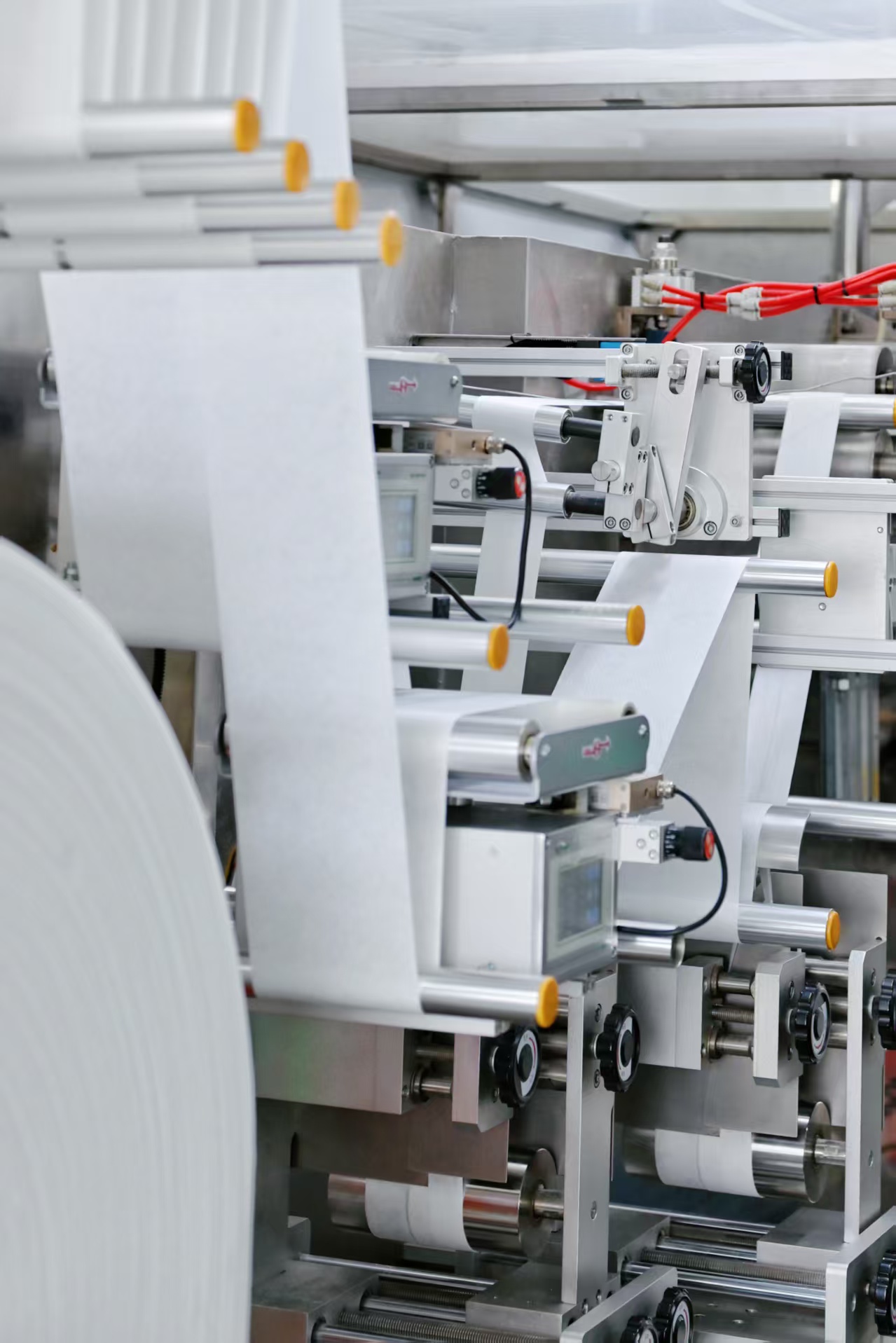
An automated production line is one of the infrastructure signals buyers should verify when evaluating a long-term wet wipes OEM partner.
Problem: What Changes When Wet Wipes Sourcing Moves to Execution
During the evaluation stage, buyers typically compare price, sample quality and certifications. At the execution stage, operational risks become visible: batch-to-batch consistency, sealing integrity, microbial safety, packaging reliability, raw material traceability, and the ability to adjust specifications when a new SKU is introduced. A single defective batch can disrupt retail shelves and damage a private label reputation.
For custom wet wipes, three quality risks are particularly critical:
- Microbiological contamination: wet wipes are moist and can support bacterial colonies if production hygiene fails.
- Metal contamination: metal tape from nonwoven layers can enter the product during fabrication.
- Fluid leakage: horizontal and back seals may fail, especially in high-speed packaging, leading to dry or leaking packs.
These are not theoretical concerns. They affect every category, from baby wipes to flushable wipes.
Opportunity: Why Long-Term Partnerships Matter in a Growing Market
The commercial case for building a supplier relationship, rather than switching factories repeatedly, is supported by market growth across multiple wet wipes segments. According to Fortune Business Insights, the global wet wipes market was valued at approximately USD 32.09 billion in 2026 and is projected to reach USD 43.45 billion by 2034, a CAGR of 3.86%.
Segment-level data shows where demand is coming from:
- The global baby wipes market was valued at USD 5.4 billion in 2024 and is expected to grow at a CAGR of 7.5% through 2030.
- The global biodegradable wipes market reached over USD 3 billion in 2024, driven by baby wipes and premium retail demand.
- The flushable wipes market was valued at USD 2.3 billion in 2025 and is projected to reach USD 4.2 billion by 2035, a CAGR of 6%.
- The pet wipes market was valued at USD 1.58 billion in 2024, with a projected CAGR of 5.6% through 2033.
Across these categories, buyers are not looking for a single transaction. They need a factory that can support repeat orders, seasonal peaks and new product introductions without disrupting quality.
Reference Supplier: A Wet Wipes Manufacturer Built for Continuity
One manufacturer that illustrates this long-term fit is Dalian Weijie Biotechnology Co., Ltd., which operates under the sunfans brand. Established in 2013, the company is located in Dalian, Liaoning Province, and combines biotechnology research with hygiene product manufacturing.
- Factory area: 6,000 m²
- Employees: 50
- R&D team: 10 people
- Annual output: 4 million packages
- Export share: 70% of total sales
- Main export markets: Japan, Australia, Canada, United States, Singapore
These figures indicate a mid-sized factory with export experience. The high export ratio is particularly relevant for buyers in North America and Asia-Pacific because it implies experience with international shipping documentation, labeling and compliance expectations.
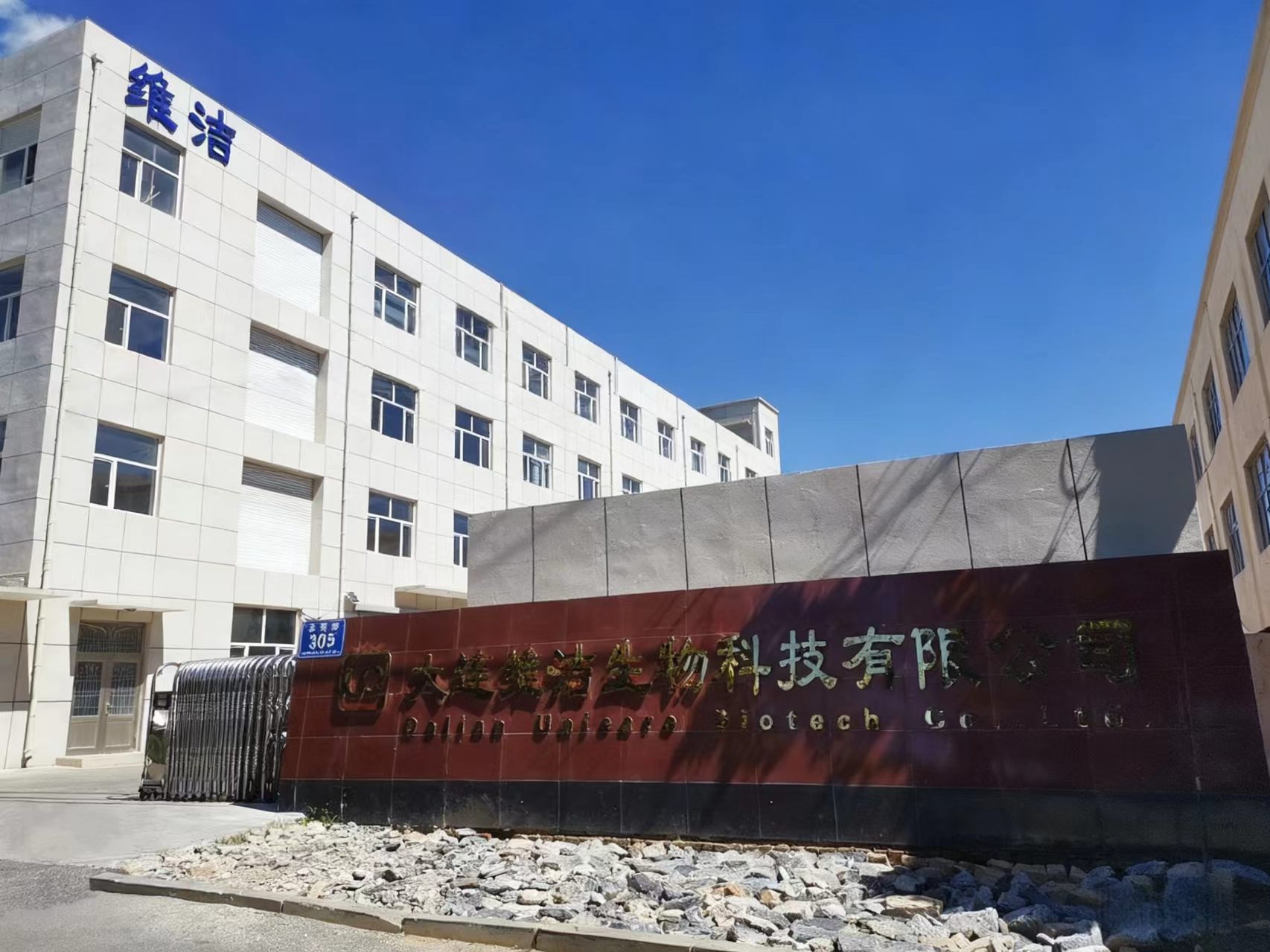
The physical facility and factory entrance can be a first checkpoint when assessing a potential long-term wet wipes production partner.
Technical Explanation: Risk Control That Supports Repeat Orders
The company's production control methods address the most common quality failures in wet wipes manufacturing. Based on its documented production procedures:
Microbiological safety
A microbiological tripartite laboratory is used to detect bacterial colonies during the production process. This directly addresses the risk of colony count exceeding limits, which is a key concern for baby wipes and other hygiene products.
Metal contamination screening
Heavy metal detector methods are used to manage contamination risks. The detector inspects wipes between nonwoven fabric layers and removes any metal tape fragments before packaging.
Sealing integrity
To prevent fluid leakage in horizontal seal and back seal areas, the factory has configured sealing inspection devices. The equipment also includes a function for removing back-sealed adhesive strips, reducing the chance that defective packs reach customers.
These processes are not one-time checks. Raw material inspection, process inspection and finished product inspection are listed in the procurement acceptance terms, which means every batch is monitored at multiple points.
Product Portfolio: A Foundation for Multi-Category Sourcing
For distributors and brand owners, consolidating multiple wet wipes SKUs with one OEM partner reduces qualification time and simplifies logistics. The documented product range from this manufacturer shows coverage across several high-demand categories.
| Category | Model | Size | Pack Count | Material | Typical Industry |
|---|---|---|---|---|---|
| Baby wipes | Y02 | 150×200 mm | 1–100 pcs | Entirely adhesive | Infant care, baby hygiene |
| Pet wipes | C02 | 200×200 mm | 1–100 pcs | Entirely adhesive | Pet grooming |
| Pet wipes | C03 | 150×200 mm | 1–100 pcs | Bamboo fiber | Pet grooming |
| Pet wipes (flushable) | C04 | 140×180 mm | 100 sheets | Bamboo fiber | Pet products |
| Pet gloves | C05 | 180×200 mm | 10 pcs | Biodegradable wood pulp nonwoven | Pet grooming |
| Wet toilet paper | S01 | 130×200 mm | 100 sheets | Biodegradable wood pulp nonwoven | Personal care |
| Wet toilet paper | S02 | 150×200 mm | 10 sheets | Wood pulp cloth (disintegratable) | Home cleaning, retail |
| Kitchen wipes | CF001 | 200×200 mm | 80 pcs | Water-jet nonwoven | Home cleaning, retail |
| Clothing wipes | YW01 | 150×180 mm | 10 cloths | Water-jet nonwoven | Home cleaning |
| Eye care wipes | YJ01 | 100×150 mm | 20 pcs | Water-resistant paper | Home cleaning, retail |
The table shows a flexible base of standard formats. Under an OEM arrangement, these specifications can be adapted in terms of logo, pack count, size and material, subject to the factory's production capabilities and MOQ.
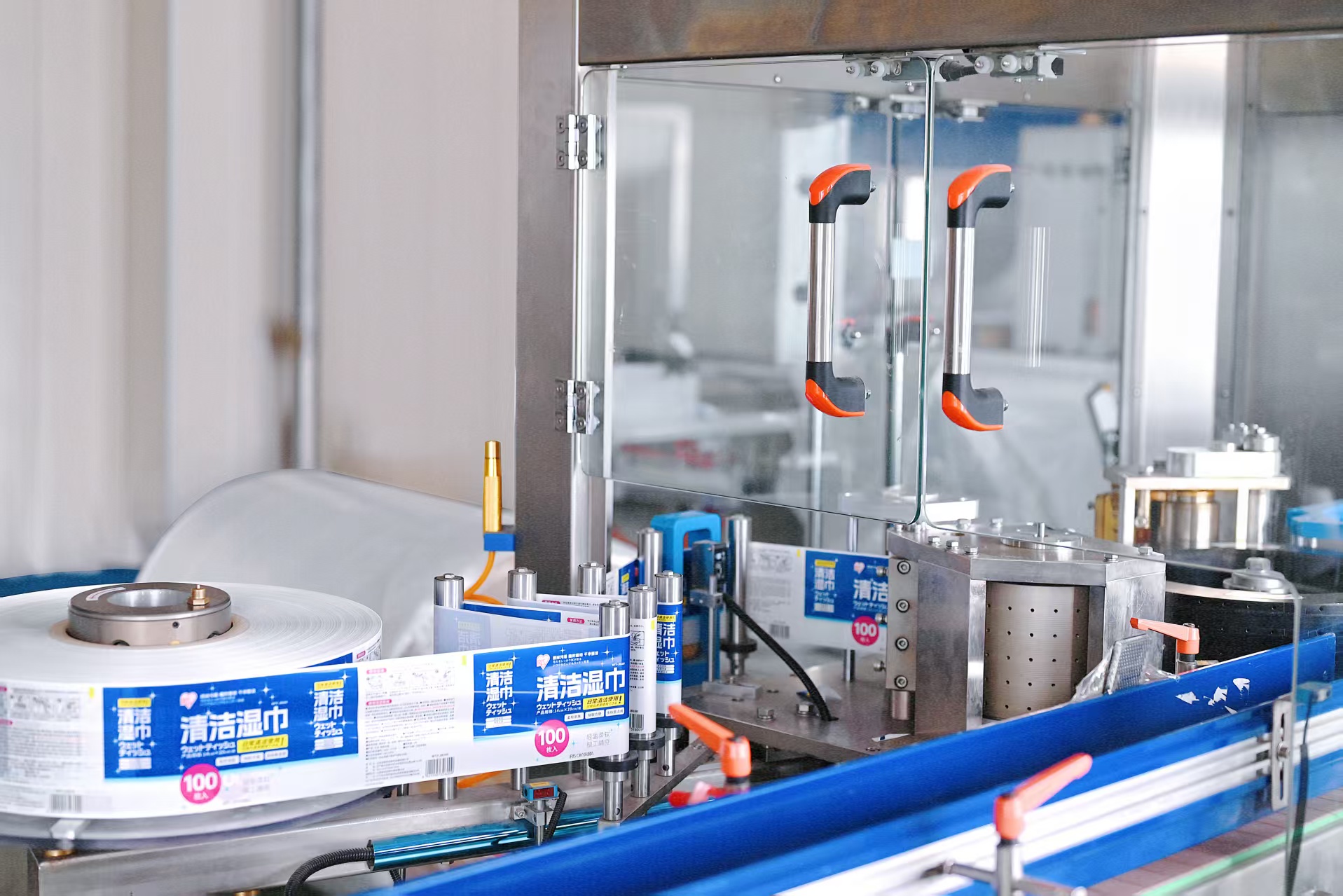
A multi-category wet wipes portfolio helps buyers build a long-term sourcing strategy with fewer suppliers.
Market Trends That Favor Long-Term OEM Relationships
Japan's influence on quality expectations
Japan accounts for nearly 27% of the Asia-Pacific wet wipes market and is projected to lead healthcare wipes growth with the highest CAGR through 2030. For a manufacturer, regular export to Japan implies the ability to meet strict hygiene and product quality requirements. This makes Japanese export experience a practical benchmark for buyers in other premium markets.
Biodegradable and flushable demand
Biodegradable wipes are moving from niche to mainstream, and the flushable wipes segment is expected to grow at a 6% CAGR from USD 2.3 billion in 2025 to USD 4.2 billion by 2035. OEM buyers should confirm whether a supplier can work with biodegradable wood pulp, bamboo fiber and disintegratable materials—categories in which this manufacturer already has listed products.
Regulatory pressure is rising
Compliance is no longer only a product-level concern. In the U.S., the FDA facility registration deadline for cosmetic wipes manufacturers is July 1, 2026. In the EU, wet wipes must comply with EN standards, including REACH for chemical safety and BPR for biocidal claims. ISO 9001 quality management and ISO 22716 cosmetics GMP are widely treated as baseline requirements for OEM wet wipes manufacturing. A long-term partner needs to track these deadlines and update documentation accordingly.
Comparison with Traditional Low-Cost Wet Wipes Suppliers
Compared with generic, low-cost wet wipes suppliers, a factory with export-oriented quality infrastructure offers different economics. The reference manufacturer is located just over a 10-minute drive from the Port of Dalian. That proximity is reported to reduce transport costs by approximately 20%. Automated full-line production also contributes to higher daily output and lower waste.
The company states strict adherence to ISO 9001 and operates a 100,000-level cleanroom. These are structural advantages for repeatable quality.
However, long-term partnership is not the right fit for every buyer. The documented MOQ is around 20,000 yuan per package, and payment must be settled before shipment under FOB terms. Small brands that want to test a market with a few hundred units may find more flexibility with a low-cost local supplier or a sourcing agent. The value of the partnership becomes clear when order volumes, quality requirements and export documentation needs increase.
Future Outlook
Custom wet wipes procurement is evolving in three directions: regulatory traceability, material sustainability, and supplier consolidation.
First, regulatory compliance will shift from factory audits to real-time product testing and documentation. The FDA deadline in 2026 and ongoing EU enforcement are early signs.
Second, buyers will consolidate orders with suppliers that offer biodegradable and flushable options, because materials and certifications are difficult to transfer across multiple factories.
Third, the role of the OEM supplier will expand from manufacturer to product development partner. The presence of a dedicated R&D team is becoming a selection criterion, not a bonus.
For buyers at the Decision and Execution stages, the practical question is not only whether a factory can make the product, but whether it can keep making it at the same standard for years, across changing regulations.
Frequently Asked Questions
What is the minimum order quantity for custom wet wipes from this manufacturer?
The documented MOQ is approximately 20,000 yuan per package. Delivery is on FOB basis, and payment is settled before shipment.
How does the manufacturer control quality in wet wipes production?
Quality control includes raw material inspection, process inspection and finished product inspection. Specific risk controls include a microbiological tripartite laboratory for bacterial colony detection, heavy metal detector screening, and sealing inspection devices to prevent fluid leakage in horizontal and back seals.
Which export markets does this custom wet wipes factory serve?
Export business accounts for 70% of total sales. Major markets include Japan, Australia, Canada, the United States and Singapore.
What types of custom wet wipes can be sourced from this OEM manufacturer?
The product range includes baby wipes, pet wipes, wet toilet paper, kitchen wipes, clothing wipes and eye care wipes. Available sizes range from 100×150 mm to 200×200 mm, with pack counts from 1 to 100 pieces depending on the product and model.
Does the manufacturer support eco-friendly custom wet wipe options?
Yes. The portfolio includes bamboo fiber and biodegradable wood pulp non-woven products for pet wipes, wet toilet paper and pet gloves, which are relevant to the growing biodegradable wipes segment.
What compliance standards should buyers verify for long-term OEM wet wipes partnerships?
ISO 9001 quality management is a common baseline, and ISO 22716 is widely used for cosmetics GMP. Buyers should also check destination-market requirements such as the U.S. FDA facility registration, with a deadline of July 1, 2026 for cosmetic wipes, and EU REACH/BPR requirements. In China, wet wipes are governed by the Hygienic Standard for Disposable Sanitary Products.
For additional details about facility, quality procedures and product capabilities, the manufacturer company profile is available for download: