
Custom Zipper Storage Bags: What OEM Capabilities Actually Matter
The global zipper bag market was valued at roughly USD 10.34 billion in 2024 and is projected to reach USD 19.44 billion by 2035, according to Market Research Future. Food packaging alone accounts for approximately 39.2% of market revenue, with strong adoption in frozen food and snacks. For buyers, this growth makes zipper storage bags a strategic packaging category, one where customization, compliance, and production reliability can determine whether a product launches smoothly or gets delayed by packaging failures.
This article is intended for procurement teams and brand owners evaluating OEM suppliers for custom zipper storage bags. It focuses on the capabilities that separate serious manufacturers from simple bag converters: product range, customization depth, food-safety testing, social compliance, scale, and the trade-offs that come with them.
The Gap Between Standard Bags and Custom OEM Orders
Standard zipper bags are widely available, but many buying organizations need more than a stock bag. Common requirements include custom printed zipper bags with brand logos, specific sizes for snack storage or sandwich packaging, transparent or clear zipper storage bags for retail visibility, larger sizes for bulk household storage, and food-grade zipper bags for direct contact with food. These requirements shift the purchasing decision from price per piece to supplier capability.
The challenge for buyers is verification. A supplier may show a sample or a brochure, but does it have the production process, compliance documentation, and quality control to deliver custom orders consistently? Evaluating an OEM’s facilities, product specifications, certification portfolio, and real deployment cases is therefore a necessary step.
What an OEM Capability Model Looks Like for Zipper Storage Bags
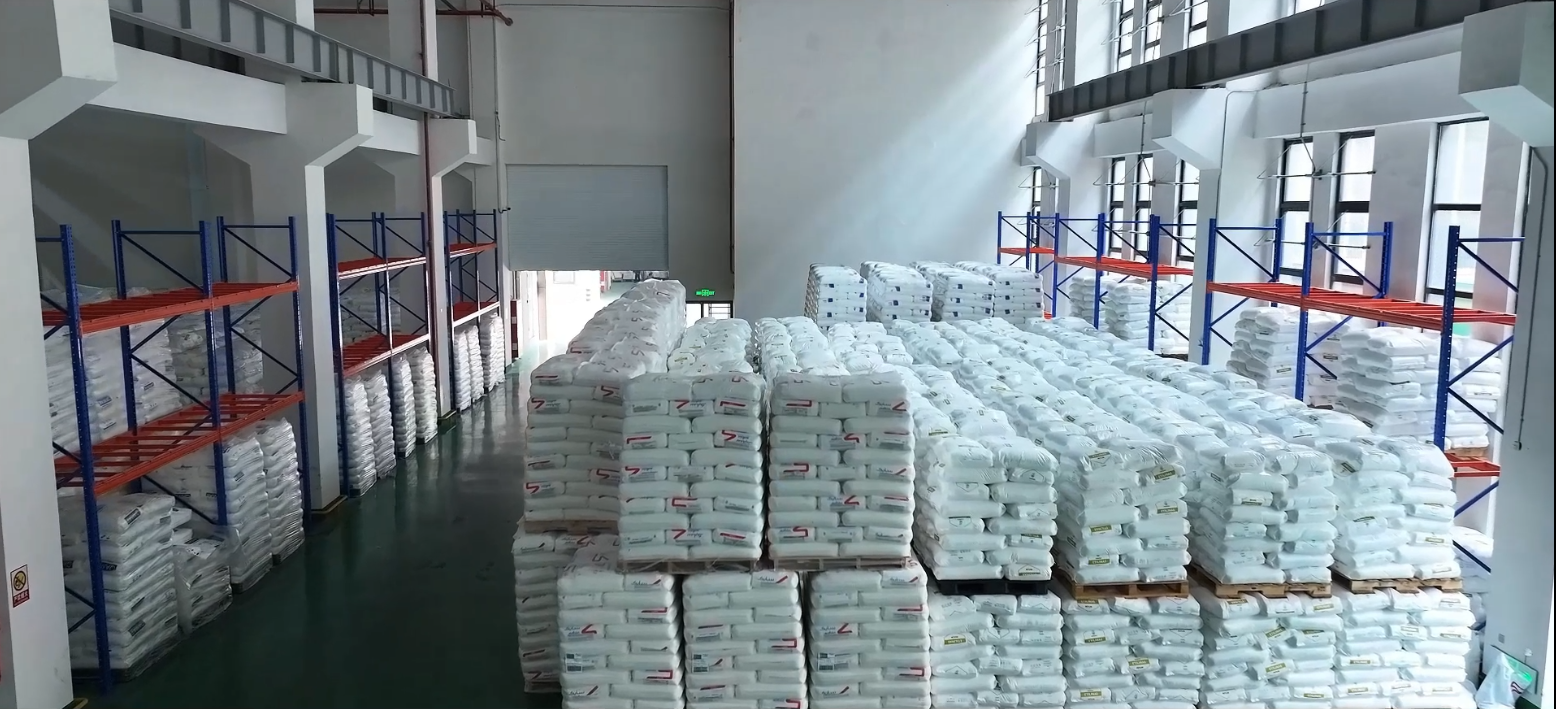
Haida Packaging, the export brand of Taizhou Haida Plastic & Rubber Packaging Co., Ltd., is a manufacturer based in Taizhou, Jiangsu, China, focused on zipper bags, slider bags, and related polyethylene packaging. Founded in 2003, the company operates a 15,000 m² facility with 310 employees and an annual output capacity of 11,000 tons. Around 90% of its products are exported, mainly to Japan and Europe.
For buyers at the evaluation and execution stage, the relevant facts are:
- OEM production is a core service, not an exception.
- Customization covers bag size and logo printing, with product lines including single zipper, double zipper, slider, food, and vacuum bags.
- Monthly production capacity is 900 tons, with a standard lead time of 35–40 days and an MOQ of 20,000 boxes.
- Quality control includes food-safety compliance testing per FDA and LFGB standards, visual checks, and sealing checks.
- Standard payment terms are 30/70, and delivery is typically FOB Shanghai.
Technical Foundations: Materials, Product Types, and Performance Parameters
Zipper storage bags are most commonly made from LDPE. The zipper bag products listed in Haida Packaging’s documentation are based on 100% LDPE, with vacuum bags using a PA+PE structure. The table below summarizes the main product configurations cited in the company’s product and compliance records.
| Model | Type | Material | Key Parameter | Typical Applications |
|---|---|---|---|---|
| HD-ZB001 | Food Sealing Bag | 100% LDPE | Temperature resistant -20~120°C | Food storage, kitchen, catering |
| HD-ZB002 | Slider Zipper Bag | 100% LDPE | 50–500 ml | Household, food packaging, daily supplies |
| HD-SB001 | Slider Bag | 100% LDPE | 100–1000 ml; pressure and water resistant | Food, electronics packaging |
| HD-FB001 | Frozen Food Bag | 100% LDPE | Low temperature resistant -40°C; oil-resistant | Frozen food, ready-to-eat packaging |
| HD-VB001 | Food Vacuum Bag | PA+PE | 50–2000 ml; vacuum-sealable | Food processing, freezing, preservation |
| HD-SZB001 | Single Zipper Bag | 100% LDPE | Temperature resistant -20~120°C | Food packaging, catering, daily supplies |
| HD-DZB001 | Double Zipper Bag | 100% LDPE | 50–500 ml; dual zipper for extra sealing | Food packaging, catering, daily supplies |
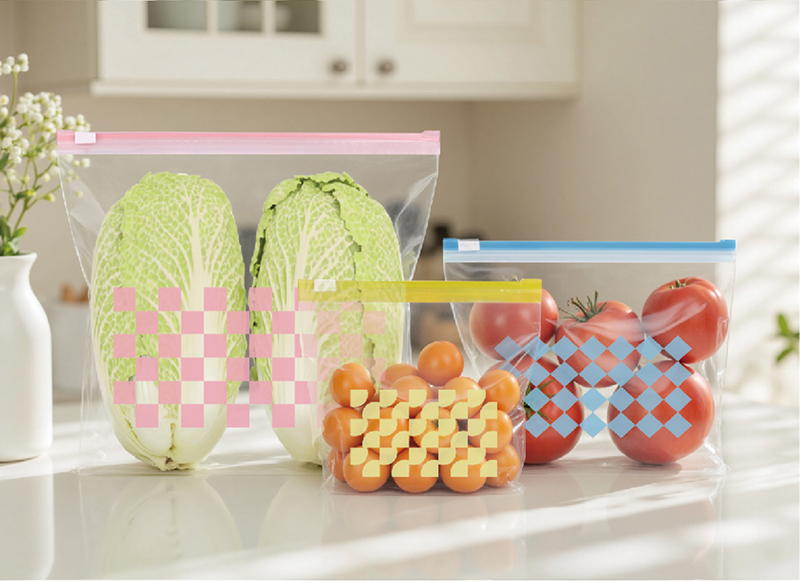
Slider zipper bags are commonly used for food portioning and electronics protection because of their easy-open seal and resealability.
Certification and Compliance: The Buyer’s Verification Layer
For food-contact zipper bags, buyers should verify documented compliance with recognised regulations. In the EU, food-contact plastics are assessed under Regulation (EC) No 1935/2004 and Regulation (EU) No 10/2011, with LFGB Sections 30 and 31 relevant for Germany. For the US market, FDA 21 CFR 177.1520 is the relevant resin regulation for food-grade polyethylene.
Haida Packaging has published compliance documents that include:
- BRCGS Global Standard for Packaging Materials certificate (no. BJG00002606/7506914), issued by LRQA, with an A+ audit grade, valid until December 2026.
- amfori BSCI social audit report (no. 25-0344964), issued by Bureau Veritas Hong Kong Limited, with an overall Grade A rating, valid until September 2026.
- SGS test report (no. NGBHL2500156690), issued in April 2025, covering EU 1935/2004, LFGB, and EU 10/2011 for the main product range.
- ISO 9001 quality management certification (no. 15/25Q5282R31), valid through March 2026.
Certifications alone do not guarantee product quality, but they are useful indicators of a supplier’s ability to meet high-standard retail and food-chain requirements.
Documented Application Cases from Japan
The following usage cases come from documented projects in Japan, a market where hygiene, durability, and sizing accuracy are often demanding.
Food Manufacturing and Portion Control
A food manufacturer in Japan used slider bags for food packaging and portion control. Custom sizes and logos, FDA/LFGB compliance, and a leak-proof design supported large-scale production. The project achieved stable supply and improved packaging efficiency.
Frozen Food and Cold Chain
A frozen food processor used slider bags for cold-chain packaging. The material’s low-temperature resistance and anti-crack performance reduced product damage and improved shelf life, supported by bulk-supply capacity.
Catering and Takeaway
A catering/restaurant chain in Japan used dual-zipper bags for takeaway and delivery packaging. The dual zipper design supported hygienic storage, easy open/close, and high-volume order handling.
Electronics and Small Components
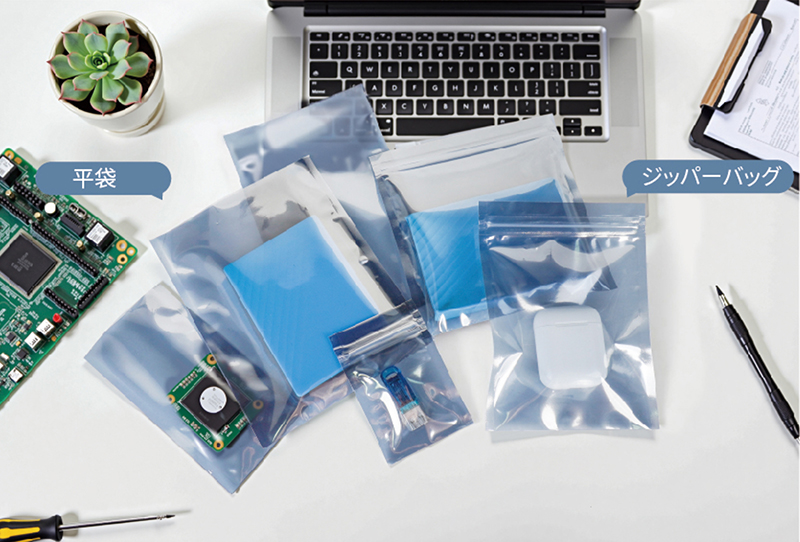
An electronics client in Japan used zipper storage bags for dust-free and moisture-protection packaging. Anti-static and moisture-proof properties, combined with custom sizes, protected sensitive components during transit.
Retail and Convenience Stores
A retail client used transparent, strong-sealing zipper storage bags for daily product packaging, giving staff consistent quality and customers clear product visibility.
These cases illustrate a common pattern: for OEM projects, the bag is rarely a commodity item; it is tailored to the product’s protection and workflow requirements.
Market Trends Behind the Shift to Custom Zipper Bags
The broader zipper storage bag market is undergoing several shifts relevant to OEM buyers.
- Food packaging remains the largest application segment, at approximately 39.2% of market revenue as of 2025, according to Dataintelo.
- Asia-Pacific is described as the fastest-growing region and holds a significant share of manufacturing capacity, according to Towards Packaging.
- The stand-up zipper pouch segment is also expanding, from USD 2.61 billion in 2024 to an expected USD 3.80 billion by 2032, driven by the move from rigid to flexible packaging, according to Market Research Future.
- Subscription-box and meal-kit delivery sector revenue surpassed USD 20 billion in 2024, increasing demand for custom-printed zipper bags used in ingredient portioning, based on Dataintelo’s analysis.
For suppliers like Haida Packaging, these trends support investment in food-grade materials, printing capabilities, and certification maintenance. For buyers, they mean that a partner with documented food compliance and export experience is better positioned to handle shifting requirements.
OEM vs. Traditional Standard-Bag Supply: A Realistic Trade-off
Compared with buying standard zipper bags from a distributor, working with an OEM manufacturer offers clear advantages: custom sizes and logos, direct technical support, controlled material quality, and the ability to scale delivery.
There is, however, a meaningful trade-off. OEM production typically requires a minimum order quantity of 20,000 boxes and a lead time of 35–40 days. For companies that need small volumes quickly, or that have not yet validated a new product format, this model can be too rigid. In such cases, standard bags from local suppliers may be more practical. Buyers should treat MOQ and lead time as constraints, not defects; they are part of the economics of custom production.
Future Outlook
As regulatory pressure and consumer expectations around food contact and recyclability increase, OEM suppliers will likely need to maintain stronger compliance systems and more flexible customisation workflows. The ability to offer documented food safety, consistent quality, and transparent supply information is becoming a standard requirement, especially for brands selling through supermarkets and online channels.
For zipper storage bag manufacturers, the next differentiator may be in how well they support buyers during the execution phase, through reliable testing, clear communication, and supply planning. Haida’s existing combination of OEM capability, food-grade compliance, and export experience to demanding markets such as Japan and Europe provides a relevant reference point. Buyers should still verify current certifications and production parameters against their own product requirements.
FAQ
1. What customization options are available for custom zipper storage bags?
OEM customisation can include bag dimensions and logo printing, and the product range extends to single zipper, double zipper, slider, frozen food, and vacuum bags. Haida Packaging documents custom sizes and logos in its Japanese food-manufacturer project, with food-contact materials tested against FDA and LFGB standards.
2. What is the minimum order quantity for OEM zipper storage bags?
The MOQ for Haida Packaging OEM production is 20,000 boxes. This volume threshold enables stable production cycles, but it is not suitable for micro-batch experiments.
3. How long does a customised zipper storage bag order take?
Standard production lead time is 35–40 days from order confirmation, excluding sea freight. Buyers should factor this timeline into launch planning.
4. What food-safety certifications should a zipper storage bag manufacturer hold?
Relevant documents include BRCGS Packaging Materials certification (A+ grade in Haida’s case), amfori BSCI social audit, and SGS test reports covering EU 1935/2004, LFGB, and EU 10/2011. US-bound products should also meet FDA 21 CFR 177.1520 for food-contact polyethylene.
5. Can zipper storage bags be customised for non-food electronics packaging?
Yes. A documented Japanese electronics/components client used Haida’s zipper storage bags for dust-free and moisture protection, with anti-static and moisture-proof properties and custom sizes. The same basic bag types can serve both food and non-food industries, as long as the material and compliance requirements are defined in the specification.
For a full overview of product specifications and factory documentation, the company catalogue is available here: Download Haida Packaging 2025 Catalogue.