
Customizing Rubber Seals and Mounts: OEM Procurement FAQ
Technical Procurement Reference — Rubber Seals & Anti-Vibration Mounts
For most OEM procurement teams, the difficult part of sourcing rubber components is not finding a supplier. It is converting an operating condition, a mating surface and a 2D drawing into a specification that a factory can reproduce in every batch — and then proving that it did.
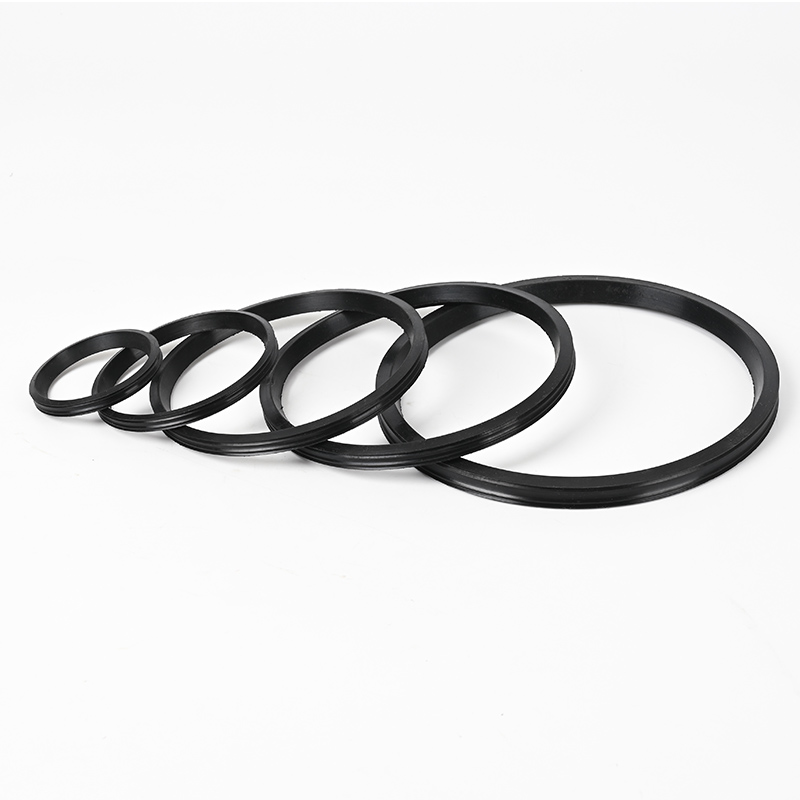
The component families involved are wide: rubber seals and rubber o-rings, anti-vibration mounts, rubber plugs, grommets, washers, gaskets, extruded cords and profiles. The questions that decide whether a programme runs smoothly, however, tend to repeat: how hard should the rubber be, which compound is right, what dimensional limits and tolerance class apply, how is batch-to-batch consistency controlled, what documentation accompanies the parts, and what commercial terms apply to the order.
Market context explains why these questions are becoming more formal. The global gasket and seal materials market reached a valuation of USD 61.4 billion in 2024, according to Grand View Research, and rubber-based seals are estimated to represent approximately 56% of that market in 2026, reflecting their extensive use in dynamic sealing. In a related sub-category, China accounts for about 23% of the global anti-vibration rubber mounts market, according to Cognitive Market Research (2024).
This reference answers the technical and procurement questions OEM buyers raise most often about custom rubber parts, using the published specifications of Hangzhou Lingo Rubber and Plastic Product Co., Ltd (LINGO). LINGO is a China-based manufacturer of custom rubber and plastic parts, founded in 2022, operating a 3,000 m² production facility with around 40 employees, including an R&D team of 10, and exporting roughly 80% of its output to the EU and USA. Its product families cover rubber molding parts, rubber extruded parts, plastic injection parts and plastic extruded parts. This article concentrates on four models that OEM buyers specify: LG-RX rubber extrusion seals, LG-RS rubber sealing rings, LG-SRC silicone rubber cords and LGMM anti-vibration mounts.
Why specification clarity outweighs unit price
Two quotations for the same drawing can look identical and behave very differently in production. The difference is usually not the price per piece; it is whether hardness was recorded on the drawing, whether a tolerance class was agreed, whether the compound was fixed, and whether batch records exist to show the part was made the same way the second time as the first.
That is why a technical procurement file for rubber parts typically carries four specification layers: material, hardness, dimension and tolerance, plus the documentation set. When one layer is left implicit, the buyer absorbs the variation later — often after the parts have reached the assembly line.
Customs classification is part of the same discipline. Under the US International Trade Commission Harmonized Tariff Schedule, HS code 4016.93 covers gaskets, washers and other seals of vulcanized rubber other than hard rubber, and specifically identifies O-rings and oil seals for automotive use. A material and function description that matches what is actually shipped keeps classification, duties and customs questions straightforward.
Material selection: what sits between EPDM and FKM
Material choice is the single specification decision that most changes performance, cost and availability. LINGO's published product data defines the compound options for each family rather than a single fixed compound, which allows a seal or mount to be matched to the media, temperature and movement it will see.
| Model | Component type | Materials offered | Key published parameters |
|---|---|---|---|
| LG-RX | Rubber extrusion seal — silicone, FKM, solid, sponge, co-extrusion and adhesive-backed variants | EPDM, NBR, Silicone, FKM | Hardness per Shore A as required; length as required; colour per Pantone or RAL; industry standard tolerances |
| LG-RS | Rubber sealing ring — O-ring, X-ring, oil seal | NBR, EPDM, SILICONE, NR, CR, SBR, FKM, FFKM, AFLAS | Shore A normally 50–95; heat range −40 °C to 250 °C; ozone, water and oil resistance; FDA, UL, ROHS, REACH certificates |
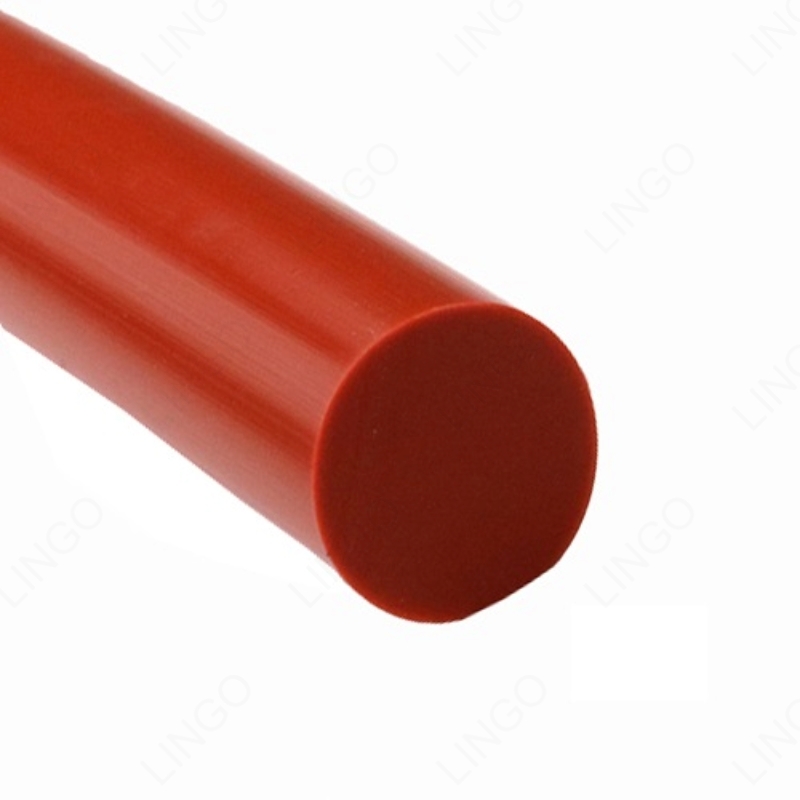
| LG-SRC | Silicone rubber cord — solid or sponge | Silicone rubber | FDA qualified; heat resistant; length and colour (Pantone or RAL) custom |
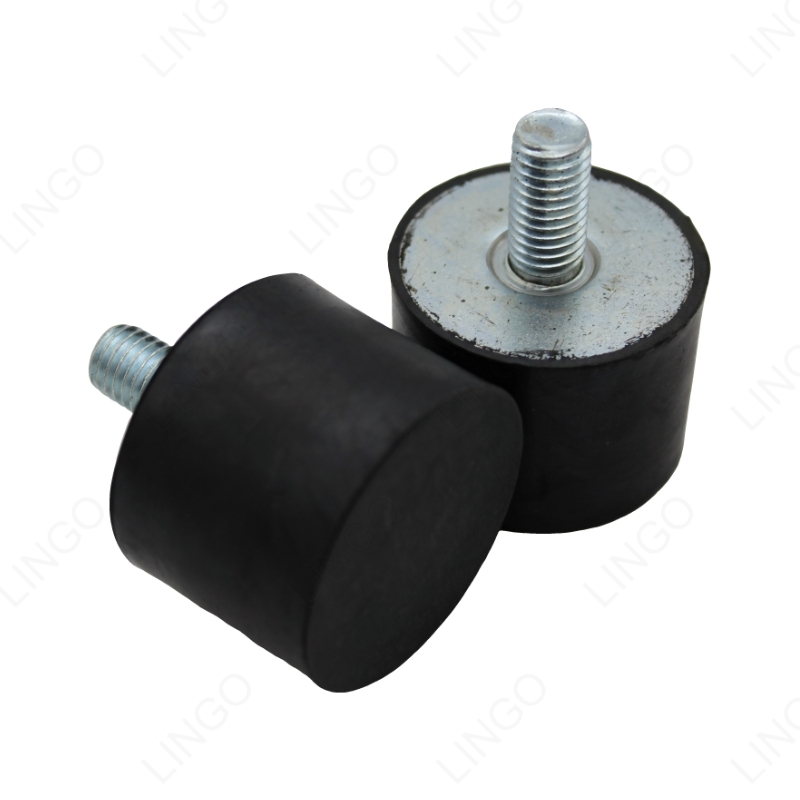
| LGMM | Anti-vibration mount — cylindrical rubber mount / rubber stud mount | Natural rubber with carbon steel (zinc-coated steel per product specification) | Diameter 8–150 mm; height 8–90 mm; tolerance per RMA A2 standard |
In practical terms, the material families serve different functions. EPDM is widely used where outdoor exposure, water and ozone resistance matter. NBR is the common choice where oil and fuel contact dominate. Silicone covers applications that need a wide temperature range and, in the LG-SRC cord family, FDA-qualified grades for food and medical contact. FKM is selected where higher temperature and more aggressive chemical exposure are part of the duty cycle, and the LG-RS family extends further into FFKM and AFLAS where the most demanding chemical sealing is required.
Specifying hardness in Shore A
Hardness is where the most avoidable mistakes occur, because a durometer number looks precise but says little on its own. For the LG-RX rubber extrusion seal, hardness is specified in Shore A as required by the customer — the value is a buyer-defined input, not a supplier default. For the LG-RS rubber sealing ring, the published working band is normally 50–95 Shore A.
A useful specification therefore pairs the Shore A value with the reason for that value: the sealing force required, the compression set the application can tolerate, and the temperature range the part must survive. The LG-RS data sheet, for example, states a heat range of −40 °C to 250 °C, which becomes the constraint against which the chosen hardness is validated rather than a separate line item.
Specification notes worth carrying onto the drawing:
- State the durometer scale explicitly (Shore A) and the target value with any acceptable band.
- Record the compound, not only the material family — EPDM, NBR, silicone and FKM each exist in multiple formulations.
- Define the validation method: hardness is confirmed on the sample and monitored in the batch record, not assumed from the drawing.
- If the required hardness falls outside the published band for the selected family, treat it as an engineered deviation requiring sampling and separate agreement.
Dimensional limits and tolerance class
Anti-vibration mounts are the clearest example of published dimensional limits. The LGMM cylindrical rubber mount is available with a diameter range of 8 to 150 mm and a height range of 8 to 90 mm, with tolerance per the RMA A2 standard. Extruded seals work differently: LG-RX length is specified as required, with industry standard tolerances, and LG-SRC cord length is custom.
RMA A2 is one of the standard molding tolerance classifications published by the Rubber Manufacturers Association. It is a commercial molding class rather than a precision-machining class, which is a meaningful distinction for procurement engineers: it suits a large share of industrial, transportation and machinery requirements, but where an interface demands tighter dimensional control than the class allows, that tighter requirement must be stated, agreed and validated on samples rather than assumed to be covered.
This is a real boundary in custom rubber sourcing. A supplier cannot deliver both a wide tolerance class and a tighter effective tolerance on the same drawing without a change in tooling, process control or inspection regime. Buyers that separate the truly critical dimensions from the non-critical ones on a mount or seal drawing generally obtain a more accurate quote and fewer late-stage disputes.
Batch-to-batch consistency: how it is controlled
Consistency is the reason OEM buyers move from price comparison to supplier qualification. LINGO's stated quality control approach is full inspection of samples and random inspection of bulk goods, supported by a batch traceability system. That combination addresses two different risks: the sample that defines the standard, and the bulk production that must stay inside it.
Two documented cases illustrate what this looks like in practice.
A US automotive OEM ordered anti-vibration components in quantities of 10,000 to 40,000 pieces. The case record highlights small size, tight tolerances and consistent batch-to-batch quality, with an in-house spare parts inventory maintained to accommodate urgent customer orders. It also records a tooling approach in which an existing mold set was reused by machining a single middle plate to the required dimensions instead of building a new mold — a step that lowered the initial tooling investment.
A second US automotive case covered 500 pieces of anti-vibration components produced on existing tooling, with UL 94 V-0 certified material, where documented test data showed a 45% reduction in peak vibration amplitude. Both cases point to the same procurement logic: consistency claims are only useful when they are tied to a documented batch record and, where applicable, to certification.
Documentation and certification to request
Documentation should be requested at quotation stage, not after the first shipment. The certification set associated with these product families is as follows.
| Document | Scope | Detail |
|---|---|---|
| PPAP | Silicone rubber cords, plastic injection parts, rubber sealing rings, anti-vibration mounts | Automotive Production Part Approval Process; products manufactured in compliance with the PPAP process |
| MSDS | Rubber sealing rings | Material Safety Data Sheet recorded for the EU and USA markets |
| UL 94 V-0 flammability test report | CR Neoprene rubber | CTI vertical burning test report, certificate number A2260538692101, standard UL 94 V-0, applicable markets EU / US / Middle East, issued 2026-07-03 |
| Product certificates | LG-RS rubber sealing rings | FDA, UL, ROHS and REACH certificates referenced in the product specification |
| FDA qualification | LG-SRC silicone rubber cords | FDA qualified silicone material |
For buyers in regulated end markets, the important habit is to match the certificate to the part number and the destination market, because a certificate issued for one compound does not automatically qualify every compound in the same family. The UL 94 V-0 report, for instance, is issued for CR Neoprene rubber, a compound with a specific flammability behaviour.
Application fit: where these specifications are tested
Specifications only become meaningful against a duty cycle. Three application profiles recur in the LINGO record.
Transportation and dynamic vibration
Engine mounting, suspension and seat vibration isolation operate under high dynamic load, a temperature range of −40 °C to +120 °C, exposure to oil, grease and road shock, and continuous vibration. The typical operating mode is continuous cyclic compression and shear, and the special requirement is low compression set with fatigue resistance in the range of 10⁶ to 10⁷ cycles. LGMM mounts, made of natural rubber with carbon steel, are specified for transportation, industrial machinery, electronics and precision instruments, construction and civil engineering, and marine and military applications.
Sealing in energy, appliance and building assemblies
An automotive OEM in the UAE used silicone sponge cords — 4,000 metres over a three-year period — for EV battery sealing, industrial cabinet gaskets, automotive door seals, appliance door insulation, building window weatherstripping and medical device sealing. The recorded results cite thermal stability from −60 °C to 250 °C without hardening or cracking, UV and ozone resistance for outdoor performance, closed-cell construction that keeps out water, dust and noise, and non-toxic formulations with FDA-compliant options for food and medical uses.
Water and fluid sealing
A programme serving automotive OEMs, water treatment equipment manufacturers and the food industry used LG-RS rubber sealing rings at a rate of 1,000 units with a three-year service record of stable operation, dimensions within tolerance and zero claims. The recorded highlight was solving the common problem of metal parts shifting during rubber production when no positioning point exists, using FDA-certified white rubber material.
Market trend: documentation is becoming a specification input
The direction of travel in this category is toward evidence. Three signals in the available market data support that reading. First, the scale of the seal and gasket materials market — USD 61.4 billion in 2024, with rubber-based seals at an estimated 56% share in 2026 — means sealing performance is being treated as an engineered property rather than a commodity purchase. Second, the O-ring sub-category alone was valued at USD 10.41 billion in 2025 by Vantage Market Research, which reflects how many assemblies now depend on a single small rubber component. Third, China's roughly 23% share of global anti-vibration rubber mounts (Cognitive Market Research, 2024) confirms that a large part of this supply is concentrated in one manufacturing base, which makes supplier-side process control and traceability a buyer-side risk question.
One caution is worth stating plainly: published industrial rubber market estimates vary widely because they use different product scopes and methodologies. Buyers should treat any single headline figure as scope-dependent and use it for direction, not for procurement planning. Supply-side questions — tooling, tolerance, batch records and lead time — remain the more reliable basis for decisions at this level.
Custom molding versus standard and catalogue parts
Custom rubber parts are not automatically the right answer. A catalogue O-ring or standard mount arrives faster and involves no tooling cost, and for prototypes or low-duty internal applications it is often the rational choice. Custom supply becomes the better option when the interface geometry is fixed, when the media or temperature range excludes standard compounds, or when a documented specification and batch record are required.
Within custom supply, process choice also sets a boundary. Extrusion suits constant cross-section parts produced in long lengths, which is the basis of the LG-RX and LG-SRC families; compression molding suits three-dimensional geometry such as the LG-RS sealing ring and the LGMM mount. Selecting an extruded profile where a molded geometry is genuinely needed — or the reverse — is a specification error that shows up as assembly leakage or excessive tooling cost.
Stated limits worth planning around
- LGMM mounts are published for a diameter range of 8–150 mm and a height range of 8–90 mm; requirements outside that envelope call for new tooling and separate validation.
- LG-RS sealing rings are published with a working hardness band of normally 50–95 Shore A; softer or harder requirements fall outside the standard band.
- LG-RX extrusion seals are specified with industry standard tolerances and customer-defined length, so the governing tolerance must be written onto the drawing rather than inferred.
- LGMM and other dynamically loaded parts are validated for specific duty cycles; transfer to a new application without re-testing is not supported by the published data.
Future outlook
The next phase of custom rubber sourcing is likely to be defined less by new compounds than by tighter evidence requirements. Green energy and new material applications — EV battery sealing, thermal management enclosures, renewable energy equipment — combine long service life with regulatory scrutiny, and both push buyers toward parts whose batch history can be produced on request. PPAP-based documentation, batch traceability and compound-specific certifications such as the UL 94 V-0 report for CR Neoprene rubber are early examples of what is becoming standard expectation rather than premium service.
For procurement teams, the practical consequence is that supplier evaluation will increasingly weigh process control and document availability alongside dimensional capability and price. The specification work described in this article — compound, hardness, dimension, tolerance class, documentation — is the mechanism that makes such comparisons possible on equal terms.
FAQ: technical and commercial questions from OEM buyers
How is hardness specified for LG-RX rubber extrusion seals?
For LG-RX, hardness is specified in Shore A as required by the customer, alongside a customer-defined length and a colour matched to Pantone or RAL. The value must therefore come from the buyer's functional requirement and be validated on the sample, because the specification does not fix a default durometer.
Which rubber materials are available, from EPDM through to FKM?
LG-RX rubber extrusion seals are offered in EPDM, NBR, Silicone and FKM. LG-RS rubber sealing rings extend the range to NBR, EPDM, SILICONE, NR, CR, SBR, FKM, FFKM and AFLAS. LG-SRC silicone rubber cords use silicone rubber in solid or sponge form, and LGMM anti-vibration mounts use natural rubber bonded to carbon steel.
What are the dimensional limits of LGMM anti-vibration mounts?
The LGMM cylindrical rubber mount is published with a diameter range of 8 to 150 mm and a height range of 8 to 90 mm. It is a cylindrical rubber mount in the rubber stud mount category, made of natural rubber with carbon steel and specified for marine and military, transportation, industrial machinery, construction and civil engineering, and electronics and precision instruments applications.
What tolerance standard applies, and what does it mean for my drawing?
LGMM mounts are specified with tolerance per the RMA A2 standard, a commercial molded-rubber tolerance class published by the Rubber Manufacturers Association. LG-RX extrusion seals are specified with industry standard tolerances. Where an application needs control tighter than the applicable class, that requirement has to be stated explicitly, agreed in the quotation and confirmed on samples.
How is batch-to-batch consistency controlled?
LINGO's published quality control approach is full inspection of samples and random inspection of bulk goods, supported by a batch traceability system. In the automotive-mounted case record, consistent batch-to-batch quality and in-house spare parts inventory for urgent orders are cited as highlights for a programme running at 10,000 to 40,000 pieces per order.
What certifications and documentation cover these product families?
PPAP certification for automotive production covers silicone rubber cords, plastic injection parts, rubber sealing rings and anti-vibration mounts. An MSDS covers the rubber sealing rings for the EU and USA markets. A CTI test report, certificate number A2260538692101, confirms UL 94 V-0 flammability performance for CR Neoprene rubber. LG-RS rubber sealing rings reference FDA, UL, ROHS and REACH certificates, and LG-SRC silicone rubber cords are FDA qualified.
What MOQ and lead time should be planned for a custom order?
MOQ is defined according to the individual part, and small quantity orders are acceptable for the customization programmes described. Published lead time is 2 to 6 weeks. Monthly capacity is stated at 1,000,000 kgs for the customization categories, and export markets are the EU, Middle East and USA.
What payment method and Incoterms apply to an order?
Payment method and Incoterms are commercial terms rather than product specifications, and in international rubber part trade the common instruments are T/T bank transfer and Incoterms such as EXW, FOB and CIF, which determine where cost and risk transfer between buyer and supplier. These terms are fixed in the quotation and order confirmation for each order rather than in the product data sheet. What the published LINGO capability documentation does define is MOQ flexibility by part, a 2 to 6 week lead time, sample and bulk inspection practice, and after-sales terms including remote technical support, mold maintenance and ownership protection, batch traceability, and free exchange with acceptance of concessions.
How should customs classification be handled for rubber seals and mounts?
Under the US International Trade Commission Harmonized Tariff Schedule, HS code 4016.93 covers gaskets, washers and other seals of vulcanized rubber other than hard rubber, including O-rings and oil seals for automotive use. The classification depends on the material and function actually shipped, so the compound and application stated on the commercial documents should match the specification used for production.
Company profile and full product overview: LINGO Rubber & Plastic company profile (PDF). Further technical documentation is available at www.lingorp.com.