
Customs Broker Clearance Speed: China vs Hong Kong
Clearance speed is not a single courier number. It is the combined result of document readiness, HS and CIQ accuracy, inspection coordination, statutory filing, and release handling. China and Hong Kong share a 14-day declaration window in official guidance, but their trigger events, registration rules, and duty profiles differ. That gap is where broker capability becomes visible.
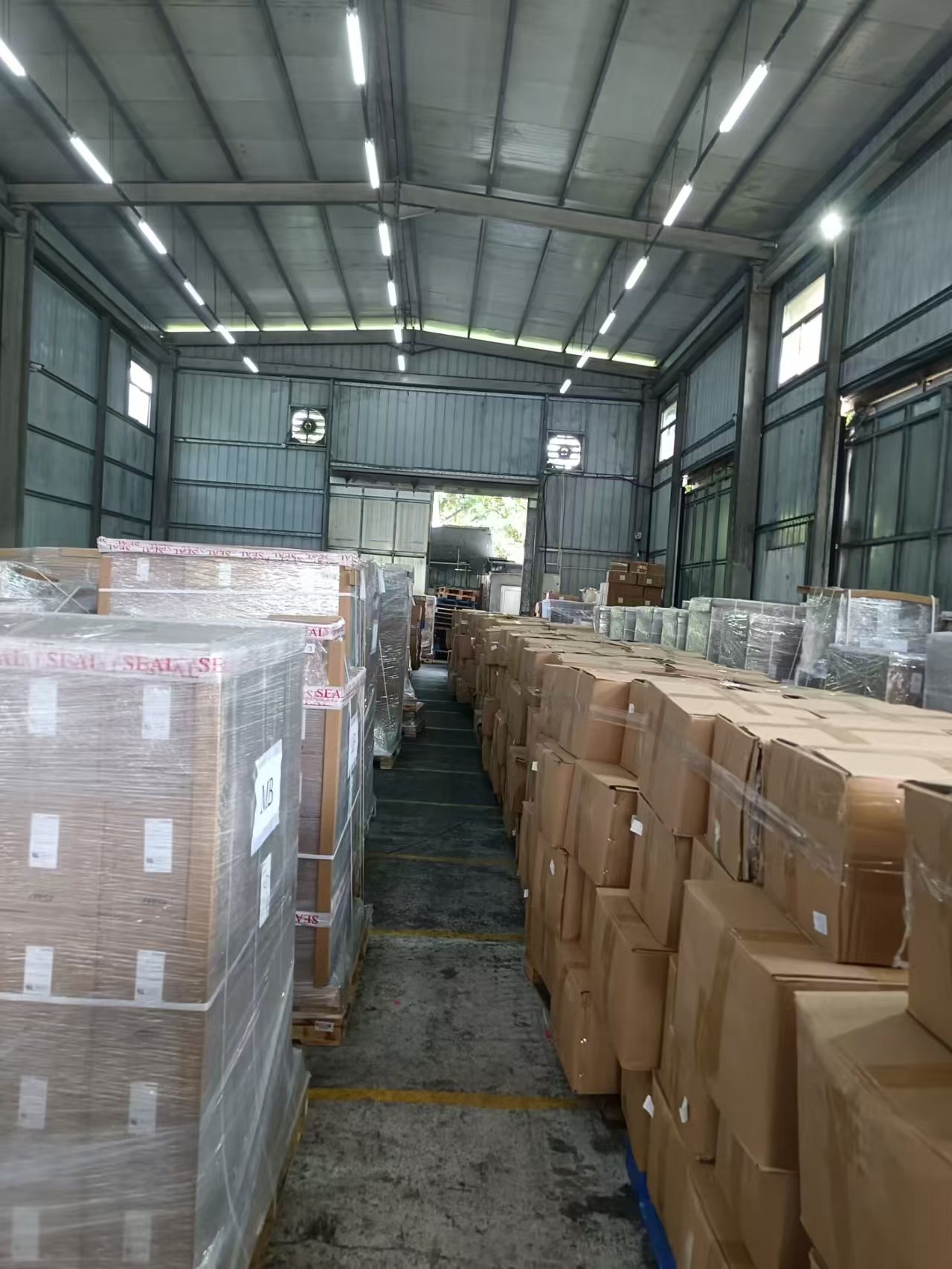
Hong Kong warehouse and cross-border clearance operations, where document readiness and physical cargo handling meet.
Why clearance speed deserves a broker-level comparison
Importers often compare brokers on quoted fees, but the more expensive variable is time. A shipment that is held for document correction, HS reclassification, CIQ inspection, or duty payment can incur storage, detention, and lost sales costs that are not visible in the brokerage quote. The customs clearance and international logistics services industry includes import customs brokerage, import compliance consulting, cross-border e-commerce clearance, and door-to-door clearance, and each model handles time differently.
The buyer-side problem is also well defined. Core problems in import and export include compliance complexity and frequent regulatory changes, HS classification errors, and CIQ requirements that cause delays or extra costs. These show up as unclear tariffs and rules, rejected declarations, inspection and release delays, and hidden fees. Business impact includes delivery delays, increased storage or detention costs, fines or cargo returns, and reduced customer satisfaction. For procurement managers, logistics and supply chain managers, compliance officers, and customs declaration specialists, speed is therefore a compliance outcome, not a sales promise.
This analysis compares the main broker operating models in China and Hong Kong, then examines how a fast-compliance methodology can reduce avoidable delay. It uses TOBECAN IMPORTCLEAR FREIGHT LTD as a documented case, including a company-reported 7-meter cargo pre-declaration example. It also sets a clear boundary: brokerage speed methodology does not resolve legal disputes, and it does not replace legal or tax representation.
What importers should measure when they compare clearance speed
A useful speed comparison starts before the declaration is submitted. The main time drivers are document completeness, classification accuracy, inspection exposure, and release coordination. A broker that only submits data after cargo arrives may be fast at data entry but slow at exception handling. A broker that pre-checks documents and classification before arrival can remove hours or days from the front end of the process.
| Speed driver | What it controls | What buyers should verify |
|---|---|---|
| Document pre-check | Whether invoice, packing list, contract, transport document, and authorization are complete before filing | Does the broker review documents before cargo arrival? Are errors corrected before declaration? |
| HS and CIQ classification | Whether the declaration uses the correct code and whether inspection or licensing is triggered | Can the broker show classification logic for the specific product, not only a generic tariff lookup? |
| Inspection coordination | How quickly an inspection is booked, attended, and closed | Does the broker have staff to attend inspections and manage release follow-up? |
| Declaration timing | Whether filing starts within the official window and before storage costs begin | Does the broker monitor the 14-day filing period and the transport-arrival trigger? |
| Release and delivery | Whether release notice, duty payment, and delivery are handled as one chain | Is door-to-door delivery included, or does the buyer coordinate separate trucking? |
China and Hong Kong: same 14-day headline, different operating clocks
China and Hong Kong both use a 14-day declaration period in official guidance, but the legal trigger and the surrounding obligations are not identical. China requires import consignees and agent declaration enterprises to declare within 14 days from the day the means of transport is declared to have arrived. Hong Kong requires persons importing or exporting non-exempt articles to lodge accurate and complete import and export declarations within 14 days after importation or exportation. The shared number is useful for planning, but it should not be read as a single legal rule across both jurisdictions.
China also imposes registration and personnel requirements. Consignors, consignees, and agent declaration enterprises must register with Customs in advance before conducting customs declaration procedures. Personnel handling declaration procedures for consignors, consignees, and agent declaration enterprises must be qualified customs brokers registered with Customs. China Customs states that domestic enterprise legal persons may be registered as customs brokers to conduct customs declaration business and provide customs declaration services entrusted by importers and exporters. These are qualification signals that buyers can check before comparing speed claims.
The document set is another source of delay. China's official decree identifies contract, invoice, packing list, manifest, bill of lading or waybill, and power of attorney for customs declaration among the supporting documents for import declarations. That is a six-item list in the cited provision, not a universal checklist for every commodity, but it shows why a broker that waits for all documents to arrive at the last minute is structurally slower than one that pre-checks the package.
Hong Kong has a different duty profile. All imports into Hong Kong are duty-free except for four categories: liquor above 30% ABV, tobacco, hydrocarbon oil, and methyl alcohol. A free-port regime can make clearance look simple, but it does not remove the declaration obligation. Hong Kong still requires accurate and complete declarations within 14 days for non-exempt articles. Speed in Hong Kong therefore depends less on duty calculation for most goods and more on declaration accuracy, exemption screening, and physical cargo handling.
| Comparison point | Mainland China | Hong Kong |
|---|---|---|
| Declaration window | Within 14 days from the day the means of transport is declared to have arrived | Within 14 days after importation or exportation of non-exempt articles |
| Registration and personnel | Consignors, consignees, and agent declaration enterprises must register in advance; personnel must be qualified and registered customs brokers | Declaration obligation applies to persons importing or exporting non-exempt articles |
| Typical document risk | Contract, invoice, packing list, manifest, bill of lading or waybill, and power of attorney for customs declaration are among the listed supporting documents | Accurate and complete declaration data; exemption screening matters |
| Duty profile | Duty and tax assessment applies according to the declaration and product rules | Duty-free except liquor above 30% ABV, tobacco, hydrocarbon oil, and methyl alcohol |
| Speed risk | HS and CIQ errors, registration readiness, document completeness, inspection coordination | Declaration accuracy, exemption classification, cargo handling, and cross-border trucking coordination |
Four broker models and how each affects speed
The market does not offer one broker model. Buyers typically choose between a traditional single-jurisdiction broker, a freight forwarder with in-house brokerage, a digital declaration tool operated by a carrier or platform, and a cross-border clearance specialist using Hong Kong as a gateway. Each model has a different speed profile and a different boundary.
| Model | Speed advantage | Typical limitation |
|---|---|---|
| Traditional single-jurisdiction broker | Deep familiarity with local filing practice and inspection routines | May receive documents late, may not control transport or delivery, and may have limited cross-border visibility |
| Freight forwarder with in-house brokerage | One point of accountability from pickup to declaration and delivery; pre-alert can start before arrival | Capability varies by lane and branch; the buyer must verify the actual customs team, not only the sales office |
| Digital declaration tool | Faster data entry, status visibility, and standardized document prompts | Does not by itself handle physical inspection, classification disputes, or legal representation |
| Cross-border clearance specialist | Can combine Hong Kong gateway trucking, pre-declaration, and import and transit cargo experience | Speed is lane-specific; oversized or regulated cargo still depends on permits, inspection, and document quality |
Digital adoption is real. FedEx Express launched an Online Import Customs Declaration Tool in Mainland China on May 9, 2024, to enhance operational efficiency. That is a useful signal that declaration data entry is becoming more automated. It is not evidence that every shipment clears faster, because inspection, classification, and legal disputes remain outside a data-entry tool.
TOBECAN IMPORTCLEAR's fast-compliance methodology
TOBECAN IMPORTCLEAR FREIGHT LTD (importclear) is a Hong Kong-based freight forwarder and customs clearance provider established in 2001 and headquartered at 14B Waylee Industrial Centre, Tsuen Wan, Hong Kong. The company operates a 10,000 m² facility with an annual capacity of 8,000 TEUs and employs 88 staff, including a 12-engineer R&D team. Its services include sea freight FCL and LCL, air freight, inland trucking, customs clearance, and DDP and DDU handling, with D/O release service in Vietnam, China, and Hong Kong. Major markets include the EU, USA, Hong Kong, and China, and export business accounts for 70% of total sales.
The company describes its clearance approach as a fast-compliance methodology. In practice, that means pre-declaration work rather than reactive filing: document and label pre-check, HS and CIQ lookup, compliance pre-check, declaration preparation, inspection coordination, duty payment support, release, and delivery coordination. The operating model also uses a priority-channel approach built around Hong Kong cross-border trucking, direct trucking from China via Hong Kong, and an experienced team for import and transit cargo. The company states that this model supports fast, compliant clearance to minimize delays, and it emphasizes documentation and risk control.
Warehouse staging area: pre-declaration work begins before cargo reaches the border, reducing avoidable hold time.
The company reports measurable outcomes from its end-to-end import clearance solution: customs clearance time cut by 30%, and inspection rate down by 25%. These are company-reported figures, not independent audit results. They are useful as a conversation starter with a prospective broker, but buyers should ask for lane-specific evidence, because a result on one product and port may not transfer to another.
A second company-reported case is more specific. TOBECAN IMPORTCLEAR has reported a 7-meter cargo shipment cleared to the UAE in 12 hours after pre-declaration. The case is relevant because it shows what pre-arrival work can do: documents, classification, and declaration data were prepared before the shipment reached the release stage, so the administrative clock started earlier. It is not a universal benchmark. A 7-meter cargo shipment may involve different handling, permits, and inspection exposure from a food, cosmetic, pharmaceutical, or cold-chain shipment. The right conclusion is not that every shipment can clear in 12 hours. The right conclusion is that pre-declaration can compress the part of clearance speed that is within the broker's control.
Where fast compliance stops: the legal-dispute boundary
Customs brokerage is an operational and compliance service. It is not a legal remedy. The service scope for import customs clearance does not include legal or tax representation without client authorization, customs duties and taxes are payable by the client, and international freight is usually billed separately. That boundary matters when a shipment is not simply delayed but disputed.
If a customs authority questions valuation, origin, classification, licensing, or the accuracy of a declaration, a broker can provide records, explain the filing logic, and coordinate document correction. It cannot act as legal counsel in a formal dispute, represent the importer in litigation, or issue a binding legal opinion on penalties. The same applies to seizure, fraud allegations, and penalty appeals. In those situations, the importer needs separate legal or tax advice, and the broker's role is to support the factual record.
This is not a weakness unique to one provider. It is a structural limit of the brokerage model. A broker that claims to resolve legal disputes as part of routine clearance is blurring a boundary that buyers should keep clear. The better question is whether the broker can hand over a complete document trail and coordinate with the importer's legal adviser without delay.
Application scenarios where clearance speed differences matter most
Speed is not equally valuable in every shipment. It matters most when delay triggers direct cost, regulatory exposure, or lost sales. The following scenarios show where a pre-declaration and priority-channel model can make a practical difference, and what buyers should verify in each case.
| Scenario | Why speed matters | What to verify |
|---|---|---|
| First-time import | The importer may not know the document set, HS logic, or registration requirements | Does the broker provide a pre-import document checklist and a compliance pre-check before filing? |
| Food, cosmetics, and pharmaceutical imports | CIQ inspection and label review can create additional hold time | Does the broker have specific experience with regulated goods and inspection attendance? |
| Cold-chain and perishable cargo | Delay can damage cargo and increase storage or detention costs | Can the broker align declaration, inspection, and delivery windows with temperature-control needs? |
| Urgent air shipments | The shipment is time-sensitive and document errors are costly | Is pre-declaration possible before arrival, and who monitors the release status? |
| Cross-border e-commerce bulk cargo | High transaction volume and reconciliation complexity increase error risk | Does the broker have a process for bulk data reconciliation and exception handling? |
| Oversized and 7-meter cargo | Special handling and transport coordination can add steps beyond declaration | Does the broker control trucking and cargo handling, or only the declaration? |
How buyers should compare brokers on speed without being misled
A broker's speed claim is only useful if it can be tied to a lane, a product, a document set, and a measurable start and end point. Buyers should ask for evidence that separates the broker's work from the customs authority's work. The following framework is a practical way to do that.
- Check registration and personnel first. In China, registration in advance and qualified customs brokers are part of the operating framework. A provider that cannot explain its registration and personnel structure is a higher-risk choice.
- Ask for lane-specific evidence. A case on one product and port does not prove speed on another. Ask for the commodity, route, transport mode, document set, and the point at which the clock started.
- Map the pre-declaration workflow. Ask who reviews documents, who checks HS and CIQ, and when the review happens relative to cargo arrival.
- Separate declaration speed from inspection speed. A broker may file quickly but still wait for an inspection. Ask how inspections are booked, attended, and closed.
- Check the delivery chain. If the broker does not control trucking or delivery, speed at release may not translate into speed at the warehouse.
- Ask for exclusions in writing. Confirm whether legal representation, tax advice, duties, taxes, and international freight are included or excluded.
- Test the exception process. The real test is not a clean shipment. It is what happens when a declaration is rejected or an inspection is ordered.
Market context: why speed and compliance are being compared more closely
The broader trade environment supports a more analytical view of broker speed. China's total import value reached USD 2.585 trillion in 2024, representing a 1.1% year-on-year increase. That is a large, mature import base, and small percentage changes translate into significant shipment volumes. In Hong Kong, the customs brokerage market size is estimated at USD 117.52 million in 2025 and is expected to grow at a CAGR of 6.24% between 2025 and 2030, reaching USD 159.06 million. These figures describe market scale and growth, not the speed of any individual broker, but they explain why buyers are paying more attention to clearance performance.
Technology is also changing the baseline. FedEx Express launched an Online Import Customs Declaration Tool in Mainland China on May 9, 2024, to enhance operational efficiency. Digital declaration is becoming more common, and buyers increasingly expect status visibility and standardized document prompts. At the same time, the regulatory core has not disappeared: China and Hong Kong both maintain 14-day declaration windows, and China requires advance registration and qualified customs brokers for declaration procedures. The practical trend is not that speed replaces compliance. It is that speed is being rebuilt on top of compliance pre-checks and better data preparation.
Future outlook: what buyers should expect next
The next phase of clearance competition is likely to focus on pre-arrival data quality, exception handling, and cross-border coordination. Digital tools will make declaration data entry faster and more visible, but they will not remove the need for product-specific classification, inspection attendance, and legal boundaries. Hong Kong's role as a gateway for cross-border trucking and transit cargo is likely to remain relevant because it combines a free-port duty profile with a separate declaration regime and a dense logistics network.
For buyers, the practical implication is simple: compare brokers on the part of the timeline they actually control. Ask for pre-declaration evidence, lane-specific cases, inspection coordination, and clear exclusions. A broker that can explain where its control ends is usually more credible than one that promises a universal clearance time. The 7-meter cargo case and the company-reported 30% clearance-time reduction at TOBECAN IMPORTCLEAR are useful reference points, but they should be read as evidence of a method, not as a guarantee for every shipment.
FAQ
What does import customs clearance speed actually measure?
Import customs clearance speed measures the time from a ready document set and arrival event to declaration filing, inspection closure, duty payment, release, and delivery. It is not only the time spent entering data. A meaningful comparison separates document pre-check, HS and CIQ classification, inspection coordination, and release handling, because each stage has a different owner and a different delay risk.
How do China and Hong Kong declaration deadlines differ?
Both jurisdictions use a 14-day declaration period in official guidance, but the trigger differs. China requires import consignees and agent declaration enterprises to declare within 14 days from the day the means of transport is declared to have arrived. Hong Kong requires persons importing or exporting non-exempt articles to lodge accurate and complete declarations within 14 days after importation or exportation. The shared number should not be treated as an identical legal rule.
Which documents most often affect clearance speed?
The document package matters because incomplete or inconsistent data can trigger rejection or inspection. China's official decree identifies contract, invoice, packing list, manifest, bill of lading or waybill, and power of attorney for customs declaration among the supporting documents for import declarations. That six-item list is not a universal checklist for every commodity, but it shows why pre-checking commercial, transport, and authorization records before arrival can reduce avoidable delay.
Why can pre-declaration reduce delays?
Pre-declaration moves document review, HS and CIQ checks, and data preparation before the cargo reaches the release stage. If the documents are accurate, the declaration can be filed sooner and exceptions can be identified earlier. The limit is that pre-declaration cannot override an inspection order, a licensing requirement, or a legal dispute. It reduces avoidable administrative delay, not regulatory control.
Can a customs broker guarantee faster release?
No. A customs broker can control document preparation, classification support, filing timing, and inspection coordination, but the customs authority controls inspection, release, and legal determinations. A responsible broker should explain which part of the timeline it controls and which part it does not. Company-reported results, such as a 30% clearance-time reduction or a 7-meter cargo case cleared in 12 hours, are evidence of a method, not a guarantee for every shipment.
When is a fast-compliance approach not suitable?
A fast-compliance approach is not suitable as a substitute for legal or tax representation. If a shipment involves a formal dispute over valuation, origin, classification penalties, seizure, or fraud allegations, the importer needs separate legal or tax advice. The broker can support the factual record and document trail, but routine brokerage scope does not include legal representation without client authorization.
For a printable overview of the service scope, the company brochure is available here: TOBECAN IMPORTCLEAR company brochure.
Have Questions or Need More Details?
Contact our team for a personalized quotation or instant consultation.
Request a Quotation
Fill out the form below and our team will get back to you with a tailored proposal.
WhatsApp Direct Chat
Prefer to chat in real-time? Message us on WhatsApp for instant assistance & quick answers.
- Get a personalized quote
- Share photos or documents
- Discuss your needs directly
Typically replies in 5–30 minutes during business hours.