
Cutting Discs for Metal: A Practical Buyer's Reference
Cutting discs are among the most widely used abrasive consumables in metalworking, but they are not truly commodity items. A cutting disc is a high-speed tool made from abrasive grains, a bond system, reinforcement layers and dimensional tolerances. For buyers at the awareness and research stage, the practical question is not only which diameter to order, but how a cutting disc should be evaluated before it reaches an angle grinder.
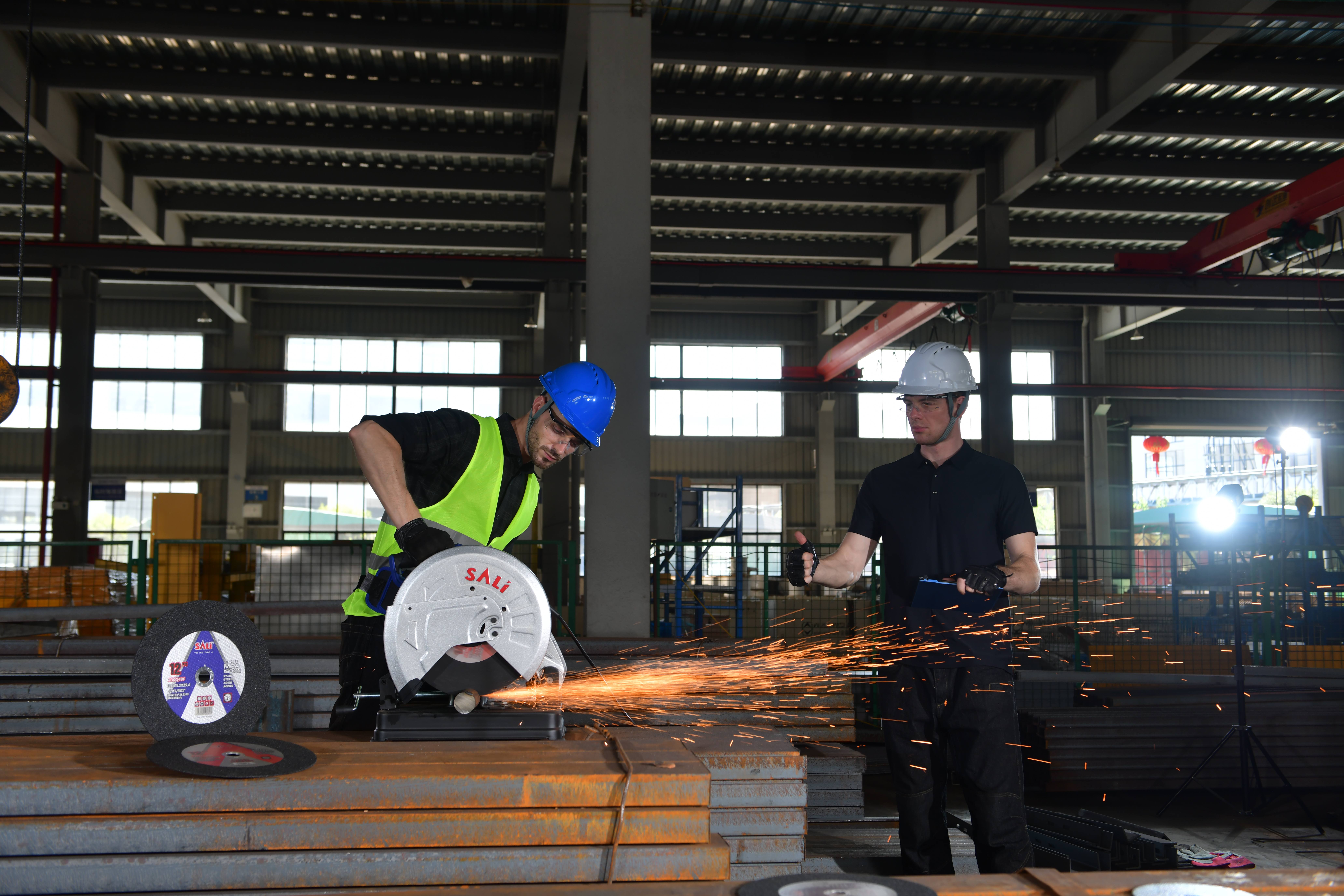
Why Cutting Disc Selection Is a Procurement Issue
Global demand for cutting discs continues to grow. According to a Market Research Future report cited in industry data, the global cutting discs market was valued at approximately USD 7.322 billion in 2024 and is projected to reach USD 11.59 billion by 2035. That scale makes cutting discs a recurring purchasing item for metal fabrication shops, steel structure contractors, shipyards, pipeline maintenance teams and general manufacturing plants.
The challenge is that a disc failure is not normally a small inconvenience. An incorrectly matched or damaged wheel can cause burn marks on stainless steel, premature wear, vibration, reduced cutting speed, or in severe cases, wheel breakage. For a buyer, the real task is to separate safety-related product evidence from surface-level packaging claims.
For this reason, cutting discs should be evaluated using four categories: abrasive material, bond and reinforcement, physical format, and safety certification. A fifth category, application discipline, determines whether those product qualities are used correctly.
What Is a Cutting Disc?
A cutting disc, also called a cut-off wheel or abrasive cutting disc, is a bonded abrasive product. It is designed for cutting metal and other materials when mounted on compatible power tools. The disc uses abrasive grains held together by a bond system and is reinforced to withstand high rotational speeds.
In the SALI product range, the cutting disc category includes metal cutting discs, stainless steel cutting discs, stone cutting discs, thin cutting discs and ultra-thin cutting discs. This tells a buyer an important point: the word cutting disc is an umbrella term, and each material condition may require a different abrasive formula or geometry.
| Cutting Disc Type | Main Purpose | Typical Workpiece Focus |
|---|---|---|
| Metal Cutting Disc | General cutting of steel and metal profiles | Carbon steel, alloy steel, metal pipes |
| Stainless Steel Cutting Disc | Cutting stainless steel with controlled heat and reduced discoloration | Stainless steel pipe, sheet and components |
| Stone Cutting Disc | Cutting stone and masonry materials | Stone, concrete and related mineral materials |
| Thin / Ultra-Thin Cutting Disc | Faster penetration and lower kerf width | Sheet metal, thin wall profiles and precision cutting |
| Flat Cutting Disc | Straight wheel format | Standard cutting applications |
| Depressed Center Cutting Disc | Recessed center format | Applications requiring controlled access or flush positioning |
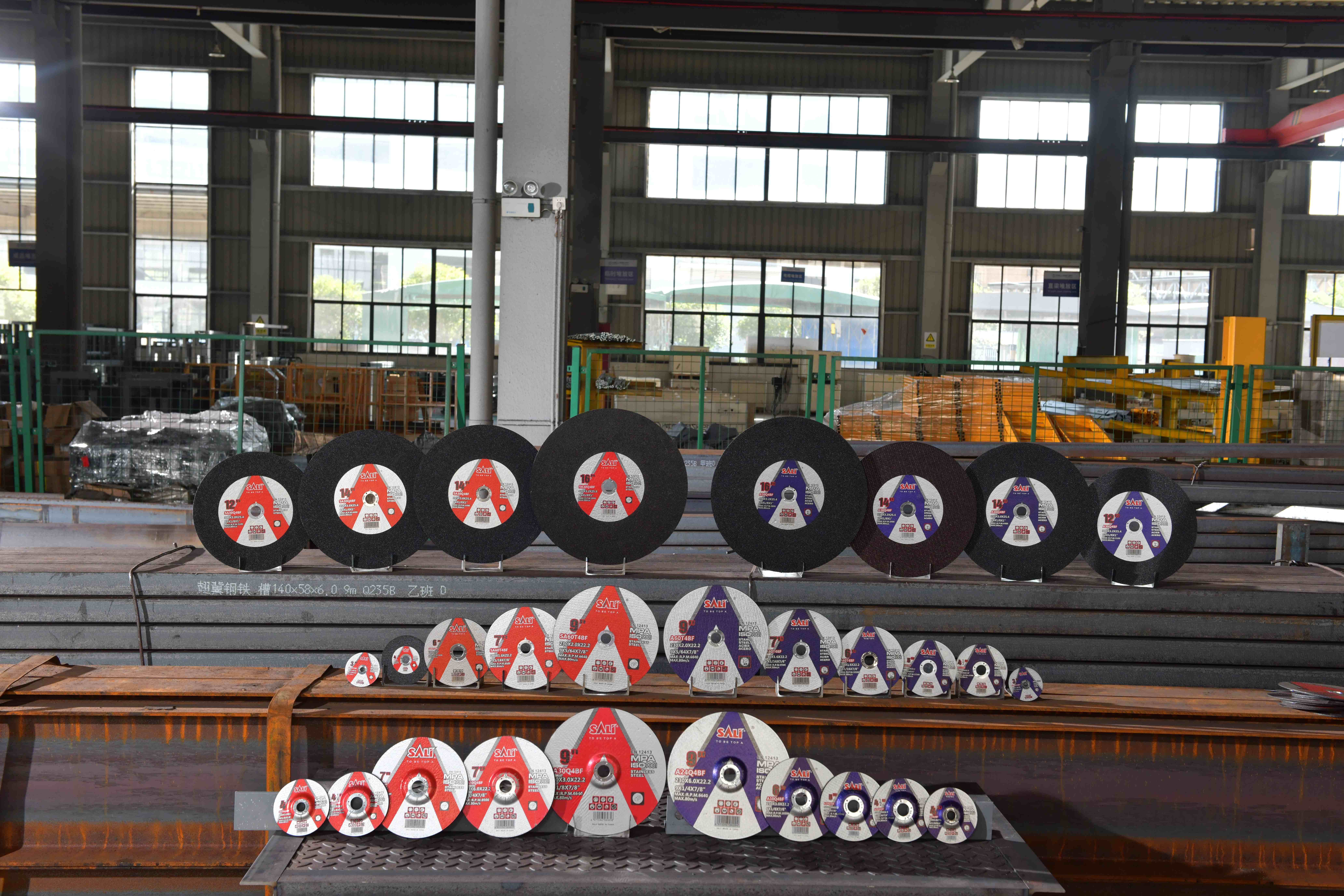
SALI cutting discs are available in sizes from 3 inches to 16 inches. The range includes both flat and depressed center configurations. These products are designed for use with angle grinders and portable cutting machines, which makes them relevant to workshops and job sites where the same machines must handle different tasks.
A Manufacturer Reference: SALI Tools
To understand what manufacturing evidence looks like in this category, it helps to examine a supplier with a direct factory and a broad abrasive portfolio. ZHEJIANG SALI ABRASIVE TECHNOLOGY CO., LTD., which operates the SALI Tools brand, was established in 2003. The company is a manufacturer and exporter of power tools, abrasive products and hand tools. Its direct factory in Yongkang, Zhejiang covers an area of 6,000 square meters, with a construction area of 30,000 square meters.
SALI employs over 150 staff and maintains a research and development team of over 30 engineers. Its overall annual production capacity is reported at 150 million pieces. The product portfolio includes cutting wheels, grinding wheels, flap discs, diamond saws, drill bits and a range of cordless power tools, which gives the company a broad abrasive and tool ecosystem rather than a single-product operation.
The company reports that all products are exported. Major markets include the USA, European Union countries, African markets such as Ethiopia, Kenya and Nigeria, Middle Eastern markets such as Saudi Arabia and Iraq, Central Asian markets such as Kazakhstan and Uzbekistan, and Latin American markets such as Mexico, Argentina, Brazil and Venezuela. Products carry multiple international certifications, including MPA, EN12413 and EU safety standards, while the company holds ISO 9001 and ISO 14001 certifications.
In a buying context, this type of supplier profile matters because cutting disc quality is determined before the disc is packaged. A manufacturer that controls resin bonding, fiberglass reinforcement and batch testing can provide more coherent quality evidence than a trader who only rebrands imported stock.
Technical Explanation: Grain, Bond, Reinforcement and Shape
A cutting disc removes material through high-speed abrasion. The abrasive grains make contact with the workpiece and cut a narrow kerf. The performance of that process depends on several technical variables.
1. Abrasive Grain
Aluminum oxide is a common abrasive grain for cutting steel. For stainless steel work, white aluminum oxide is often preferred because it cuts more coolly and helps avoid discoloration. Other abrasive options in the market include zirconia alumina, ceramic abrasive and silicon carbide, each with different wear and cutting characteristics. SALI states that its disc range uses materials including aluminum oxide, white aluminum oxide, zirconia alumina, ceramic abrasive and silicon carbide.
2. Bond and Reinforcement
SALI cutting discs use resin bonding as the bond type. This is normal for thin cut-off wheels because the resin matrix holds the abrasive grains firmly while allowing the wheel to be thin. Reinforcement is equally important. The disc structure is reinforced with multi-layer high-tensile fiberglass mesh, which is designed to prevent deformation and bending during cutting.
3. Thickness and Thin-Wall Cutting
Industry definitions describe ultra-thin cutting discs as products with a thickness of 1.6 mm or less, with growing use of 1.0 mm and 0.8 mm discs for precision metal fabrication. A thinner disc removes less material, generates less resistance and tends to cut faster, but it also requires correct handling. Thin cutting discs are not intended for side grinding.
4. Shape and Mounting
Flat cutting discs and depressed center cutting discs are the two main formats in the SALI range. Flat discs are straightforward wheels. Depressed center discs have a recessed center that can help with access in certain cutting positions. In both cases, the disc must be matched to the machine's arbor and speed rating.
Sizes, Tool Compatibility and Operational Limits
SALI cutting discs are produced in sizes from 3 inches up to 16 inches. In practice, many operators work with 4 inch discs, 4.5 inch / 115 mm discs, 5 inch / 125 mm discs, and larger formats for stationary cut-off machines. The nominal size must be matched to the machine, and the maximum operating speed printed on the disc must be higher than the maximum speed of the tool.
The intended industries for SALI cutting discs include metal fabrication and steel structure, pipeline and oil/gas, shipbuilding and offshore engineering, automotive and parts manufacturing, construction and building infrastructure, rail transportation and maintenance, foundry and forge shops, and machinery and general equipment. This is a clear signal that cutting discs are used in both production environments and maintenance operations.
For stainless steel pipe cutting and metal fabrication, the line is designed to handle stainless steel, carbon steel, alloy steel, cast iron and metal pipes. Users should still verify material compatibility before operation. Standard resin-bonded cutting discs should not be used on wood or plastic, and standard wheels should not be treated as universal tools for soft metals such as aluminum or copper.
Safety Certification: EN12413 and MPA in Context
Safety certification is one of the most important buying filters for cutting discs. EN 12413 is the mandatory European safety standard for bonded abrasive products. It sets requirements for burst testing, marking, dimensional tolerances and safety-related product characteristics. MPA Hannover provides independent safety testing, including burst tests and side load tests, that are used for European market entry. A disc carrying MPA and EN12413 references therefore provides more documented assurance than a disc with no safety marking.
SALI states that its cutting discs are manufactured to MPA and EN12413 standards and reinforced to resist bursting. The company also publishes a positioning statement that its burst speed limit is at or above 100 m/s, exceeding the common 80 m/s threshold. For a buyer, this kind of statement is useful only when it is supported by production control and certification evidence.
Certification does not remove operator responsibility. Users should check that the wheel has no cracks, chips or bends before mounting. The machine must have a guard installed, with the open side facing away from the operator. The workpiece should be stable, and the operator should avoid standing in the burst trajectory. A certified disc used beyond its rated speed or in the wrong application can still become unsafe.
Application Scenarios and Typical Workflows
Cutting discs are used in many production and repair workflows. The most common operation is radial cutting at 90 degrees with an angle grinder or chop saw. Operators also use cutting discs for beveling and edge preparation, flush cutting and removal work, and site dressing. In shops that cut stainless steel pipe for process lines, a cool-cutting stainless disc helps preserve the surface and reduce costly rework.
Specific application scenarios include stainless steel pipe cutting, general metal fabrication, structural steel work, pipeline and petroleum projects, pressure vessel and boiler fabrication, machinery and sheet metal work, and maintenance and repair. Common matching tools include angle grinders, chop saws and die grinders.
Working conditions matter. Standard resin-bonded cutting discs are designed for dry operations. They should not be used under wet, rainy or water-splashing conditions unless they are explicitly marked for wet-cutting service. Moisture can weaken the bond system and increase fracture risk. Work areas should also have sufficient ventilation, and cutting should never take place in an explosive atmosphere containing flammable gas, vapour or combustible dust.
Comparison With Traditional Supply Choices
Traditional buying of cutting discs often happens at distributor counters, where the buyer selects a disc by diameter, arbor hole and price. This method is fast, but it leaves many variables unverified: exact abrasive type, reinforcement quality, batch traceability, safety marking, and the manufacturer's ability to respond to process failures.
A certified direct-factory supply model asks the buyer to spend more time on specification, but it gives clearer answers. When a manufacturer can document EN12413 compliance, MPA testing, ISO 9001 and ISO 14001 management systems, raw material control and in-house batch testing, the purchase decision stops being a guess.
| Selection Factor | Traditional Low-Documentation Route | Certified Manufacturing Route |
|---|---|---|
| Safety standard | May rely on reseller claims | Product marking linked to EN12413 and MPA |
| Abrasive specification | Often generic or missing | Clearly states aluminum oxide, WA or silicon carbide options |
| Reinforcement | Hard for buyer to verify | Multi-layer high-tensile fiberglass mesh described in product data |
| Batch quality | Depends on supply lot | In-house lab testing with remote camera access option |
| Traceability | Limited to invoice | Manufacturer-level quality documentation |
| Cost model | Looks low per piece | Evaluated by cut life, safety and total operation cost |
There is a limitation that buyers should acknowledge: a certified disc is not a substitute for correct storage and use. Even a well-made resin-bonded disc can degrade if stored improperly. The recommended approach is to keep discs in a cool, dry area, preferably at a relative humidity below 60 percent and at a temperature between 10 and 30 degrees Celsius. Under such conditions, SALI states that its discs retain optimal performance for three years. Expired discs should not be used because aging bonding agents can increase burst risk.
Market Trends in Cutting Disc Demand
Several market signals explain why cutting discs have become a more technical purchasing category. First, resin-bonded grinding and cutting discs represented roughly 38.5 percent of the global abrasive disc market in 2025, according to a report by Dataintelo. This suggests that the classic reinforced resin-bonded disc remains the mainstream format.
Second, ultra-thin cutting discs are moving from niche to normal in metal fabrication. The industry generally defines ultra-thin discs as having a thickness of 1.6 mm or less, and 1.0 mm and 0.8 mm discs continue to gain attention because they produce less material loss and require less cutting force. Buyers are therefore asking not only for a cutting disc, but for a specific thickness class matched to the workpiece.
Third, safety documentation is becoming part of the commercial conversation. In European markets, EN 12413 is not an optional quality label; it is the mandatory safety standard for bonded abrasive products. MPA test marks add another layer of independent verification. For distributors serving EU customers, it is increasingly difficult to sell cutting discs without a certified product history. This trend favors manufacturers that can show certification and traceability rather than simply low prices.
Future Outlook
Cutting disc procurement is likely to become more material-specific and more evidence-based. Fabricators will continue to separate disc types for carbon steel, stainless steel and stone rather than relying on one general-purpose wheel. At the same time, buyers will look for suppliers that can combine safety certification with actual manufacturing control, consistent stock availability and responsive after-sales handling.
SALI's long-term structure reflects this direction. The company has built a direct factory, an 8,000-square-meter warehouse and a product portfolio of over 5,000 SKUs. It has also signed long-term strategic cooperation agreements with agents from 45 countries as of March 2025. These elements are not product specifications, but they are relevant to procurement because they indicate whether a cutting disc brand has the internal capacity to maintain quality across large order volumes and repeat purchases.
For end users and distributors, the implication is clear: ask for the same evidence that a factory would expect from its own raw material supplier. A cutting disc specification should include abrasive type, bond type, reinforcement, size, shape, applicable material, safety standard, and the operating conditions under which it is valid.
Frequently Asked Questions
What safety guarantees should I look for in a cutting disc?
Look for a disc that meets EN 12413, the mandatory European safety standard for bonded abrasive products. Independent testing by MPA Hannover, including burst tests and side load tests, adds additional evidence. Also check that the maximum RPM printed on the disc is higher than the maximum speed of the machine.
What materials are cutting discs suitable for?
Different cutting disc formulas are used for different materials. For stainless steel, a stainless-specific disc using high-purity white aluminum oxide with a sulfur-free and chlorine-free bond can help prevent discoloration. For carbon steel and cast iron, aluminum oxide discs are commonly used. SALI states that its cutting disc range is suitable for stainless steel, carbon steel, alloy steel, cast iron and metal pipes.
How long should a metal cutting disc last?
Disc life depends on the material being cut, the machine, the disc thickness and the operator's technique. As a manufacturer-reported benchmark, a SALI 115 x 1.2 mm industrial cutting disc is stated to achieve 35 to 45 continuous cuts on a 12 mm 304 stainless steel solid bar. Buyers should use life data as a comparison tool rather than a fixed guarantee, because job-site conditions vary.
Do I need a large order to buy direct from the manufacturer?
Not necessarily. SALI states that its standard SKUs are kept in ready stock, and for SALI brand orders the MOQ can be as low as one carton. For custom OEM orders, production and delivery typically take 30 to 45 days. Buyers should confirm the current MOQ and lead time with the supplier before planning inventory.
How are quality claims or defective discs handled?
SALI states that it provides a 24-hour quick-claim mechanism. The customer submits photos or video footage of the issue, and after verification, replacement units or credits are applied to the next order. This kind of response process is useful to evaluate before choosing a long-term abrasive supplier.
What are the proper storage conditions for resin-bonded cutting discs?
Resin-bonded discs are moisture-sensitive. Store them in a cool, dry location with relative humidity below 60 percent and temperature between 10 and 30 degrees Celsius. Discs should be kept off the floor and away from direct heat. SALI states that under standard conditions its discs retain optimal performance for three years.
Reference material: A complete SALI Tools brand product catalogue is available for public reference at SALI Tools Product Catalogue. Company website: www.salitools.com.
Have Questions or Need More Details?
Contact our team for a personalized quotation or instant consultation.
Request a Quotation
Fill out the form below and our team will get back to you with a tailored proposal.
WhatsApp Direct Chat
Prefer to chat in real-time? Message us on WhatsApp for instant assistance & quick answers.
- Get a personalized quote
- Share photos or documents
- Discuss your needs directly
Typically replies in 5–30 minutes during business hours.