
Cutting Valve Maintenance Costs: How Standards and After-Sales Support Deliver ROI
For procurement professionals in oil & gas, chemical, and power generation sectors, the central question after signing a purchase order is rarely about the initial price tag. Instead, it shifts to two persistent concerns: how is after-sales support guaranteed, and how can long-term maintenance costs be controlled?
Industrial valves are capital equipment that must operate reliably under extreme conditions—high pressure, corrosive media, and continuous cycles. When valves fail, unplanned downtime can cost tens of thousands of dollars per hour. The true cost of ownership is therefore defined by the valve's service life, ease of maintenance, and the manufacturer's ability to provide timely technical assistance.
The Real Cost of Valve Failure
Industry statistics indicate that corrosion and wear account for over 40% of valve failures in process plants. Without proper material selection and preventive measures, maintenance costs escalate rapidly. A study by the U.S. Department of Energy found that 25% of all maintenance expenditures in refineries are directly related to valve and piping system issues.
Common risks include electrochemical corrosion from aggressive media, erosion from solid particles, and mechanical wear from frequent cycling. These issues not only shorten valve life but also create safety hazards and environmental compliance risks.
Building a Maintenance-Friendly Valve Portfolio
To mitigate these risks, procurement strategies must prioritize suppliers that embed quality into the product and provide structured after-sales support. EG Valves Manufacturing Co., Ltd, established in 2000 in Wenzhou, China, has developed a comprehensive approach that addresses both concerns directly.
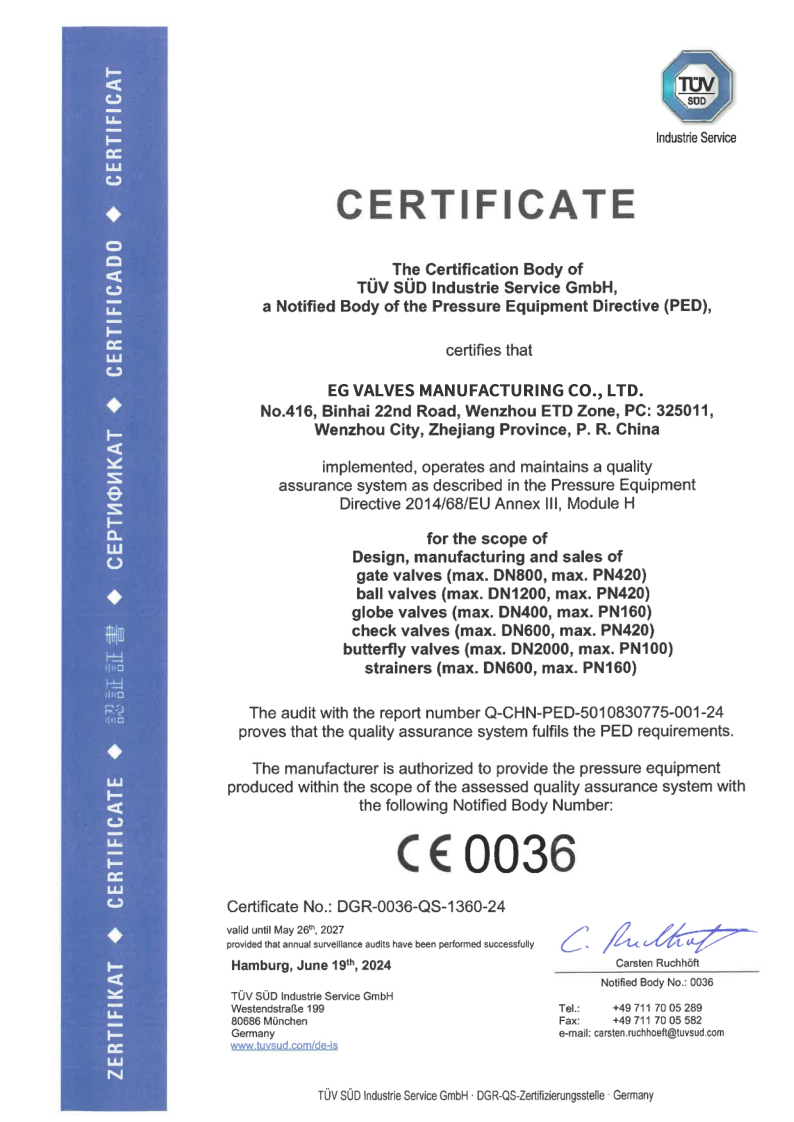
CE-PED certification from TUV SUD confirms compliance with EU pressure equipment standards.
EG Valves operates a 27,500 m² factory with over 300 employees and an annual output of 90,000 valves. The company holds multiple international certifications, including ISO 9001:2015, API 600, API 6D, CE (PED 2014/68/EU), and ISO 45001. These credentials provide buyers with documented assurance that manufacturing processes meet rigorous global standards.
Technical Measures to Reduce Lifecycle Costs
EG's risk control framework is built on a prevention-first strategy combined with regular maintenance and timely replacement. Key technical measures include:
- Standardized material selection based on medium characteristics (corrosiveness, temperature, pressure). EG offers valves in stainless steel, Hastelloy, PTFE-lined, and other corrosion-resistant alloys.
- Upstream filtration to remove solid particles before they enter the valve, reducing erosion and extending seat life.
- 100% quality inspection of every valve before shipment, with EN 10204 3.1 material test certificates provided for each order.
- Low operating torque design—EG's ball valves achieve 20–40% lower opening torque than most brands, allowing smaller actuators and reducing energy consumption.
A direct comparison with typical Chinese valve manufacturers reveals significant advantages: EG ball valves sustain an average of 70,000–100,000 cycles, whereas common brands range from 30,000–50,000 cycles. This durability directly translates to lower replacement frequency and reduced downtime.
Proven Reliability in Critical Applications
Real-world deployment validates these claims. For instance, a long-term client in the United States has used over 1,438 pieces of EG gate, globe, check, and ball valves (Class 150–1500, sizes ½"–20") for oil & gas applications over eight years. The result: safe and stable operation with minimal maintenance needs.
Similarly, a Brazilian water treatment project utilized 326 valves (gate, butterfly, check valves, PN16, DN40–DN2000) and reported consistent performance with low noise for eight years, helping the client optimize water flow while avoiding costly emergency repairs.
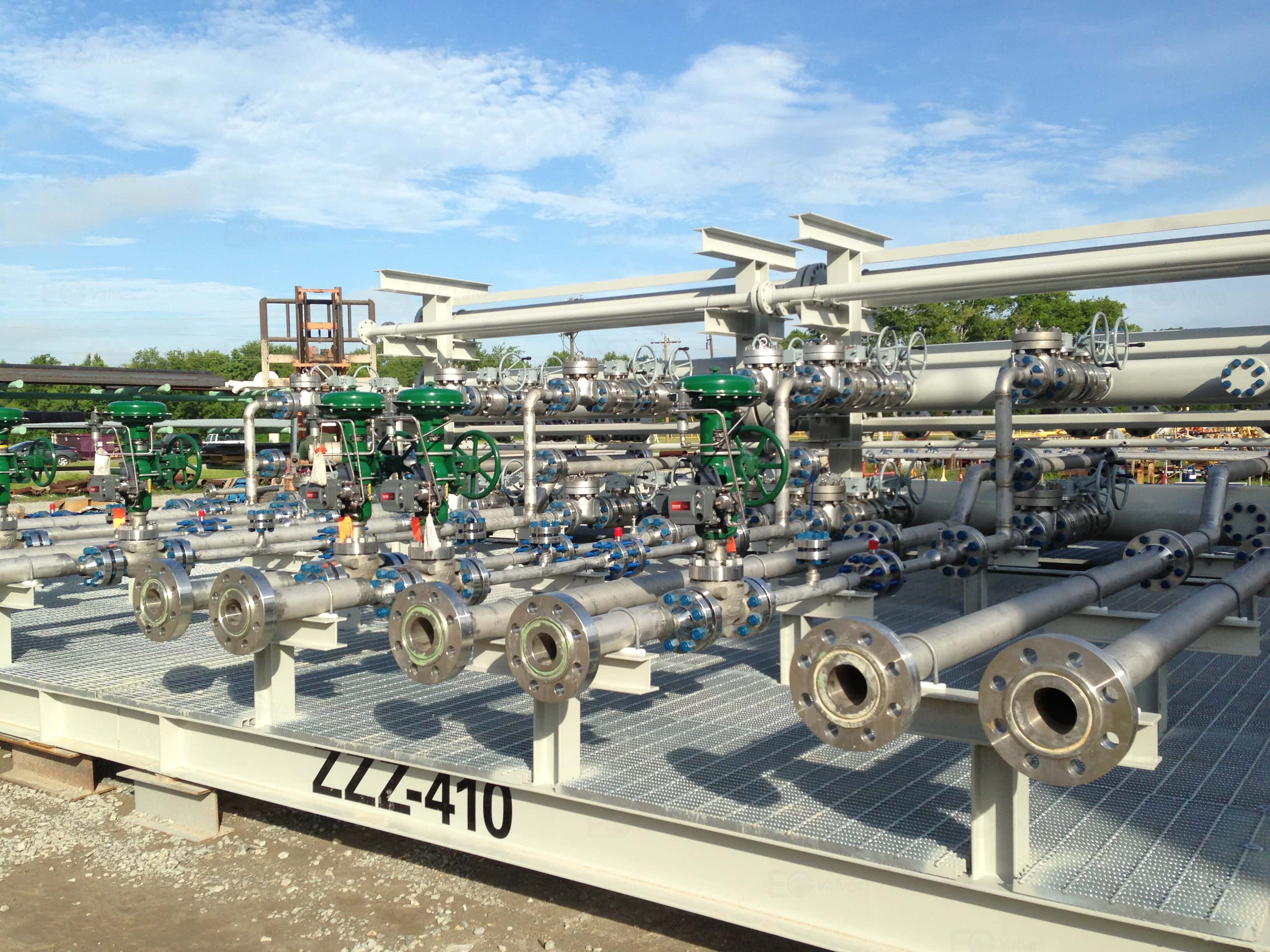
EG valves installed at a U.S. oil & gas facility, demonstrating field-proven reliability.
Market Trend: Shift Toward Lifecycle Value
The industrial valve market is increasingly recognizing that the lowest purchase price often leads to the highest total cost of ownership. Buyers now demand transparency in material sourcing, third-party certifications, and documented after-sales procedures. EG Valves addresses these demands by offering:
- Technical guidance on valve selection and integration
- Customized solutions for specific applications (OEM/ODM available)
- MOQ as low as 1 piece for large sizes
- Flexible payment terms (30% T/T deposit, balance before shipment)
- Delivery within 25–35 days for standard products
With more than 25 years of operation and exports to 33+ countries across Europe, North America, Latin America, and the Middle East, EG's reputation for quality and speed of service makes it a reliable partner for mission-critical procurement.
Future Outlook: Embedded Support as a Standard
As industrial processes become more complex and sustainability targets tighten, the ability to predict and prevent valve failures will become a competitive differentiator. Suppliers that integrate digital inspection records, remote monitoring capabilities, and proactive maintenance alerts will lead the next wave of valve procurement. EG Valves is already investing in traceability systems and enhanced after-sales documentation to align with this trend.
For procurement managers seeking to balance upfront costs with long-term reliability, partnering with a manufacturer that offers certified quality, transparent processes, and responsive after-sales support is not a luxury—it is a strategic necessity.
Download the complete EG Valves corporate brochure for detailed specifications and case studies:
Download Brochure (PDF)Have Questions or Need More Details?
Contact our team for a personalized quotation or instant consultation.
Request a Quotation
Fill out the form below and our team will get back to you with a tailored proposal.
WhatsApp Direct Chat
Prefer to chat in real-time? Message us on WhatsApp for instant assistance & quick answers.
- Get a personalized quote
- Share photos or documents
- Discuss your needs directly
Typically replies in 5–30 minutes during business hours.