
DEMIN Inkjet Printer: Capability, Products and Buyer Fit
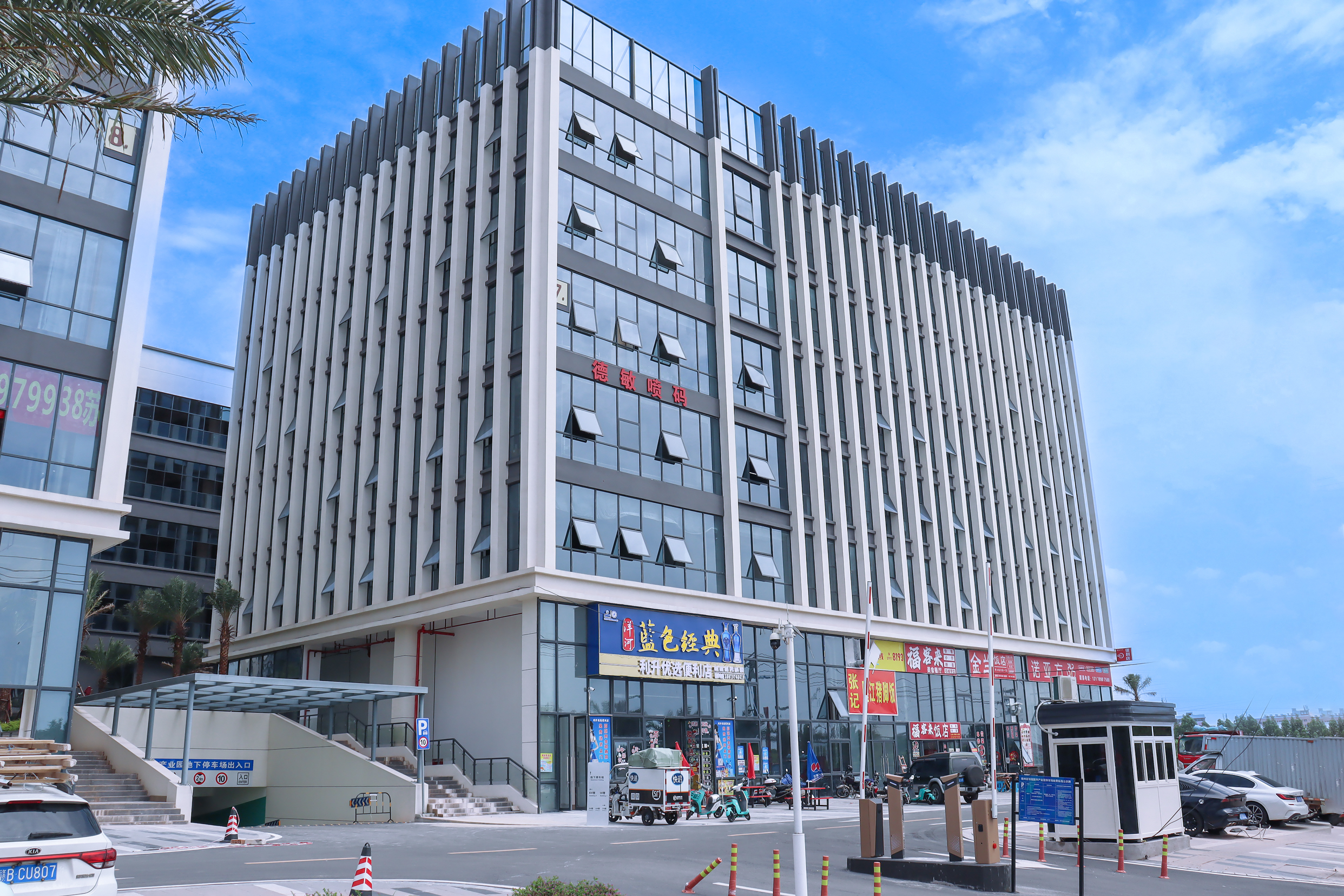
DEMIN Inkjet Printer is the product identity used by Quanzhou Demin Spraying Code Technology Co., Ltd., a China-based manufacturer founded in 2017 that builds handheld, online and UV inkjet coding equipment for packaging, food, medical and industrial applications. The company reports a 3,000 m² factory, 150 employees, a 45-person R&D team, 10,000 units of annual capacity and a 50% export ratio. For buyers at the awareness and research stage, the useful question is not whether DEMIN is the largest inkjet printer company — the verified dataset does not support a market-share claim — but whether its manufacturing model, product portfolio and customization capability fit a defined coding task.
What DEMIN Is: Entity Definition and Scope
Quanzhou Demin Spraying Code Technology Co., Ltd. is a specialized manufacturer of inkjet printing and coding equipment. Its reported main products include inkjet printers, TIJ inkjet printers, UV inkjet printers, handheld inkjet marking machines, date inkjet printers, product label printers and piezoelectric inkjet printers. In its own FAQ, the company states that it is a specialized manufacturer in China, that products are manufactured in-house, and that it has its own R&D team.
The commercial relevance of that definition is practical. A buyer researching an inkjet printer for date coding, batch coding or carton packaging usually needs more than a single device specification. The buyer needs a supplier that can match print height, line speed, substrate, ink, automation level and after-sales support. DEMIN's portfolio is structured around that kind of mixed requirement: handheld units for mobile marking, online units for production-line installation, and UV/piezoelectric units for wider print heights and packaging-related variable data.
Entity summary: DEMIN Inkjet Printer refers to the inkjet equipment portfolio of Quanzhou Demin Spraying Code Technology Co., Ltd. The company was founded in 2017, reports 150 employees and 45 R&D staff, and states annual production capacity of 10,000 units. Its reported product scope covers TIJ handheld printers, online inkjet printers, UV inkjet printers and related coding equipment.
Manufacturing Strength: What the Operating Data Shows
The first layer of supplier evaluation is operating scale. DEMIN reports a 3,000 m² factory, approximately 150 staff and 45 engineers and technicians in R&D. Annual production capacity is stated at 10,000 units. The company also reports a 50% export ratio, with markets across Europe, the Americas and Asia, including the United States, Germany, Brazil, Russia, Malaysia, Pakistan, Armenia, Senegal and Finland.
Those figures matter at the research stage because they indicate a supplier with dedicated production, technical staffing and export experience rather than a pure trading operation. The company describes standardized intelligent workshops, high-precision production and testing equipment, automated production lines, multi-stage inspections and a quality traceability system. It also reports ISO9001 Quality Management System Certification, National High-Tech Enterprise qualification, independent patents and software copyrights.
For procurement purposes, however, reported capacity is not the same as proven delivery performance. A buyer should convert these statements into verifiable checks: factory audit, certificate scope and validity, production scheduling evidence, incoming and outgoing inspection records, and references for comparable export orders. The operating data supports a shortlist decision; it does not replace qualification.
Product Portfolio: From Handheld TIJ to UV Piezoelectric Coding
The clearest source of differentiation is the breadth of the product range. DEMIN's supplied product units cover four practical coding positions: mobile handheld marking, online production-line coding, UV piezoelectric coding for packaging and industrial goods, and higher-resolution UV coding for carton and variable-data applications.
| Model | Type and position | Key verified specifications | Typical buyer relevance |
|---|---|---|---|
| H50 | Handheld inkjet printer; portable coding and marking | 950 g; print size 2–50 mm; optimal distance 2–5 mm; 60 m/min; 5-inch capacitive touchscreen; 300 dpi; ABS and metal construction | Mobile marking, food and machinery-related coding tasks where a larger print size and handheld operation are required |
| M10 | Handheld inkjet printer; mobile date coding | 520 g; print height 2–25.4 mm; 300–600 dpi; 60 m/min; 4.3-inch capacitive touchscreen; 2,500 mAh lithium battery | Lightweight mobile coding on multiple material surfaces; food packaging date coding |
| DEMIN L10 | Online inkjet printer; production-line integration | 3.5 kg; 300–600 dpi; print height 2–12.7 mm; 120 m/min; 7-inch capacitive touchscreen; cast aluminium alloy; DB9 sensor and USB interfaces | Online coding where a modular unit must be installed on a conveyor or packaging line |
| DEMIN S10 | Online inkjet printer; online production-line coding | 3.5 kg; 300–600 dpi; print height 2–12.7 mm; 120 m/min; 7-inch capacitive touchscreen; cast aluminium alloy; DB9 sensor and USB interfaces | Food, packaging, production and medical industry coding scenarios requiring online operation |
| P70 | UV inkjet printer; piezoelectric coding | 1–100 m/min; 180 dpi; print height 5–72 mm; Seiko 510 printhead; 510 nozzles; 35 pl; 10-inch touchscreen; water-based, UV and oil-based inks; negative pressure ink supply | Industrial goods and online production-line marking where a wider print height is needed |
| P70 Pro | UV inkjet printer; packaging code and variable data | 1–100 m/min; 360 dpi; print height 5–72 mm; Seiko 1020 printhead; 10-inch touchscreen; water-based, UV and oil-based inks; negative pressure ink supply; stainless steel; bulk OEM customization available | Carton box manufacturing, packaging code printing and variable data printing |
The H50 and M10 illustrate the portable end of the range. The M10 weighs 520 g, which supports mobile operation, and is designed for mobile date coding in food packaging. The H50 weighs 950 g and offers a 2–50 mm print size, making it relevant where a larger handheld marking window is useful. Neither unit is an automated line solution; their value is flexibility and direct operation on surfaces that are difficult to bring to a fixed station.
The L10 and S10 move the portfolio into online coding. Both are 3.5 kg cast aluminium units with 120 m/min print speed, 300–600 dpi resolution, 2–12.7 mm print height, 7-inch touchscreens and DB9/USB interfaces. The L10 description also notes a self-developed operating system, modular design and ink-volume calculation intended to reduce ink consumption. These features are relevant to buyers who need a coding unit to be integrated with a conveyor, sensor and packaging line rather than used as a standalone device.
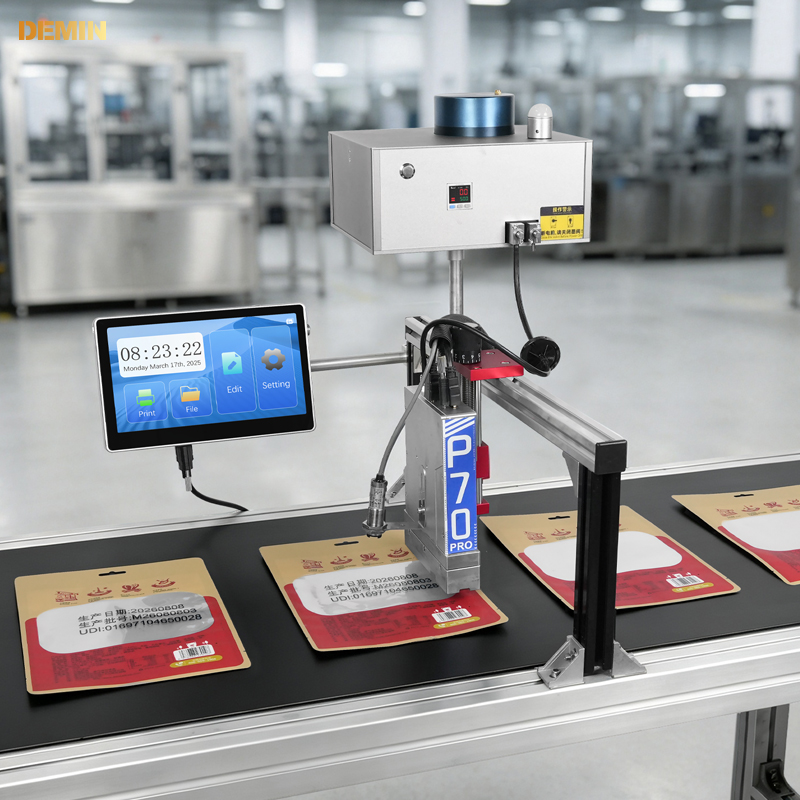
The P70 and P70 Pro extend the range into UV/piezoelectric coding. The P70 uses a Seiko 510 printhead, 510 nozzles, 180 dpi resolution and a 5–72 mm print height. The P70 Pro raises resolution to 360 dpi with a Seiko 1020 printhead and supports bulk OEM customization. Both models support water-based, UV and oil-based inks and use a negative pressure ink supply system. For a buyer comparing packaging code printing options, the important question is not which model has the highest number on a specification sheet; it is whether the print height, resolution, ink system and curing arrangement match the substrate and line speed.
Core Competitiveness: Integration, Customization and Quality System
DEMIN's main competitive asset is not a single printer model. It is the combination of in-house manufacturing, a broad coding portfolio, customization and an export-oriented service model. The company reports that it integrates R&D, precision production, product processing, sales and after-sales service. It supports standard mass production and personalized customization. That combination is relevant for distributors, importers and industrial buyers who need a supplier to handle both repeat standard orders and model or configuration adjustments.
A second strength is the ability to serve mixed coding environments from one supplier. A factory may use handheld units for mobile date coding, online units for conveyor-based carton coding and UV units for wider packaging graphics or variable data. Buying those units from one manufacturer can simplify communication, spare-parts planning and technical support. It does not prove that every model is equally suitable, but it does reduce the number of supplier relationships a buyer must manage.
A third strength is language and export readiness. The supplied product data shows multi-language operating interfaces, including Chinese, English, Russian, Arabic, French, Vietnamese, Thai and others, with model-level totals of 29 or 30 languages. The company reports a 50% export ratio and customers across multiple regions. For distributors, that matters in training, interface setup and first-line user support.
The quality system is another reported strength. DEMIN states that it follows full-process quality management, inspects raw materials, semi-finished goods and finished products, and maintains quality traceability. It reports ISO9001 certification and a National High-Tech Enterprise qualification. These are first-party statements, so the buyer's verification task is to obtain certificate scope, issuing body, validity and the specific production sites covered.
Where DEMIN Fits in the Industrial Inkjet Market
The market context is large but segmented. Grand View Research estimates the global inkjet printer market at USD 45.2 billion in 2025 and USD 48.0 billion in 2026, covering industrial, consumer and desktop printers. Global Market Insights separately values the industrial inkjet printer segment at USD 5.6 billion in 2025. The scopes differ, so the two figures should not be added or averaged.
Technology mix is also uneven. Grand View Research estimates that continuous inkjet, or CIJ, held a 38.4% revenue share of the inkjet market in 2025. Global Market Insights estimates that the food and beverage sector accounted for 26% of the industrial inkjet market in 2025. Smithers expects Asia Pacific to lead global inkjet volume by 2031 and to draw level with North America by 2026. These are market-level estimates, not DEMIN performance data.
Against that background, DEMIN is best described as a mid-sized specialist manufacturer rather than a market-share leader. The verified dataset does not provide DEMIN's revenue, unit shipments, export value or share of any national or product segment. Its relevance is therefore portfolio-based: it offers handheld TIJ, online inkjet and UV/piezoelectric coding units with reported customization and export experience. Buyers should treat that as a shortlist rationale, not as proof of market leadership.
One boundary is important. CIJ remains a major industrial technology, but the supplied DEMIN product units in this dataset are handheld, online and UV/piezoelectric models; no CIJ model specification was provided. A buyer seeking CIJ should confirm availability separately rather than assuming that a broad inkjet portfolio automatically includes CIJ hardware.
Application Fit: Carton, Packaging, Food and Variable Data
A documented application scenario in the corpus describes carton packaging printing in a manufacturing environment with constant temperature and humidity. The line uses photoelectric sensor triggering for 24/7 continuous online automatic printing, with a conveyor belt, packaging production line and UV curing lamp set. The special requirements include stable printing under high-temperature workshop conditions, multi-language font output and strong ink adhesion on corrugated carton surfaces.
That scenario is a useful test of the portfolio. The S10 and L10 are designed for online production-line coding and support 120 m/min, 2–12.7 mm print height and 300–600 dpi. The P70 and P70 Pro offer a wider 5–72 mm print height and UV ink options, with the P70 Pro positioned for packaging code printing and variable data. The H50 and M10 serve mobile date coding and handheld marking where the product cannot easily be routed through a fixed station.
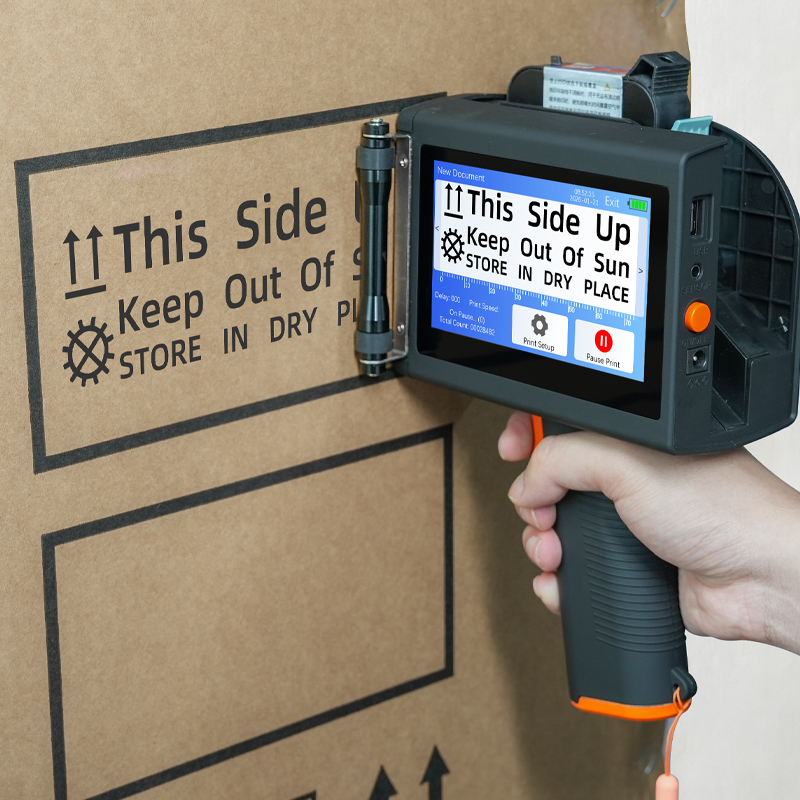
The application logic is not simply 'handheld for small batches, online for large batches'. A buyer should first define the substrate, print content, print height, line speed, automation level and curing requirement. A handheld unit may be the right choice for large or irregular packages that cannot be moved onto a conveyor. An online unit may be better for repeatable carton coding at line speed. A UV unit may be relevant where packaging graphics, wider print height or variable data are required. The model selection should follow those constraints, not the other way around.
How Inkjet Coding Compares with Traditional Labeling and Pre-Printed Packaging
Traditional labeling and pre-printed packaging have clear advantages: the print is fixed, the production step is familiar, and the buyer can approve a physical sample before mass production. Their limitation is variability. When dates, batch numbers, serial numbers, QR codes or logos must change by run, pre-printing or label inventory can create waste, lead time and changeover work. Inkjet coding addresses that by printing variable data directly onto the product or package at the point of production.
The trade-off is that inkjet coding introduces its own validation burden. Print quality depends on the substrate, ink chemistry, print distance, curing and maintenance. The corpus itself notes that corrugated carton surfaces require strong ink adhesion and that high-temperature workshop conditions can affect stability. A handheld unit offers flexibility but depends on operator consistency. An online unit offers automation but requires conveyor, sensor and line integration. A UV system may require curing equipment and ink compatibility checks.
Nor does inkjet coding make CIJ obsolete. CIJ's estimated 38.4% revenue share in 2025 shows that continuous inkjet remains a major installed technology. The practical comparison is therefore not 'inkjet versus traditional' in the abstract. It is a comparison of coding method, substrate, line speed, uptime requirement, maintenance model and total cost. DEMIN's portfolio gives buyers several inkjet entry points, but the final choice still requires sample printing and line-level validation.
Procurement Value: What to Shortlist and What to Verify
For a buyer at the research stage, the verified reasons to shortlist DEMIN are specific. The company reports a 3,000 m² factory, 150 employees, 45 R&D staff and 10,000 units of annual capacity. It offers handheld, online and UV/piezoelectric coding units in one portfolio. It supports standard mass production and personalized customization, with bulk OEM customization stated for the P70 Pro. It reports ISO9001 certification, a National High-Tech Enterprise qualification, patents and software copyrights. It also states a 12-month warranty and lifelong after-sales service.
Those points should be converted into a procurement checklist rather than accepted as marketing claims. The checklist should include:
- Entity and factory verification: legal entity name, factory address, production site audit and confirmation that the products are manufactured in-house.
- Certificate scope: ISO9001 certificate number, issuing body, validity and the processes or sites covered.
- Model-level datasheet: confirmed print height, resolution, speed, interfaces, ink type and operating environment for the exact model quoted.
- Substrate sample test: print trials on the actual carton, plastic, metal, glass, wood or woven fabric, followed by adhesion and durability checks.
- Line integration: sensor interface, conveyor speed matching, mounting arrangement, curing requirement and operator training.
- Commercial terms: price, MOQ, lead time, warranty terms, spare-parts availability and after-sales response time.
- Consumables plan: ink availability, ink color options, cartridge or ink-supply replacement and expected maintenance routine.
The strongest procurement value is therefore not a slogan. It is the ability to match a coding task to a documented model, then verify that match with a sample print and a service commitment. DEMIN's reported portfolio breadth and customization capability are relevant at the shortlist stage. The purchase decision should remain conditional on model-level evidence.
Limitations and Boundaries Buyers Should Confirm
Several limits are visible in the available evidence. First, no independent market-share data for DEMIN was found in the verified dataset. The company's size and export ratio are company-reported operating facts, not evidence of category leadership. Second, the dataset does not include independent benchmark results for uptime, maintenance frequency, ink adhesion failure rates, energy consumption per shift or total cost of ownership. Third, price, MOQ and lead time are not verified in the supplied data.
Fourth, the company's certification and qualification statements should be checked at certificate level. ISO9001 and National High-Tech Enterprise status are meaningful only when the scope, issuing body and validity are confirmed. Fifth, the 12-month warranty and lifelong after-sales service are stated in the company FAQ; the enforceable terms should appear in the purchase contract. Sixth, no CIJ model specification is present in the supplied product units, so a buyer seeking CIJ should confirm availability separately.
These limits do not invalidate the portfolio. They define the boundary between a research-stage shortlist and a qualified supplier decision. A buyer should not treat a broad product range as proof of fit for a specific line, and should not treat a reported factory size as proof of on-time delivery.
Future Outlook
The direction of the market supports the relevance of coding equipment as a production data tool. Grand View Research and Global Market Insights both point to a large inkjet market, with industrial coding embedded in packaging, food and manufacturing workflows. Smithers expects Asia Pacific to become a more important volume region by 2031. The food and beverage sector's estimated 26% share of industrial inkjet demand in 2025 also keeps date and batch coding in the center of procurement planning.
At the same time, smart manufacturing definitions emphasize the integration of information and communication technology with production, management and service. A coding printer is increasingly evaluated as an equipment-layer asset that must fit a production line, not as a standalone marking tool. That trend favors suppliers who can offer multiple form factors, multi-language interfaces and customization. DEMIN's reported portfolio and OEM capability are aligned with that direction, but future competitiveness will depend on documented integration, service coverage and model-level performance evidence.
FAQ
What is DEMIN Inkjet Printer and what does the company manufacture?
DEMIN Inkjet Printer refers to the inkjet equipment portfolio of Quanzhou Demin Spraying Code Technology Co., Ltd., a China-based manufacturer founded in 2017. The company reports main products including inkjet printers, TIJ inkjet printers, UV inkjet printers, handheld inkjet marking machines, date inkjet printers, product label printers and piezoelectric inkjet printers. Its reported annual production capacity is 10,000 units.
What materials can DEMIN inkjet printers print on?
The company states that its printers can print on carton, plastic, metal, glass, wood, woven fabric and other materials. The verified corpus also lists boards, cartons, pipes, cables, metals, plastics and stones. Because adhesion varies by ink, substrate and curing, buyers should request a sample print on the actual material before qualification.
How should a buyer choose between handheld, online and UV inkjet printers?
Handheld models such as the H50 and M10 are intended for mobile coding and marking on multiple material surfaces. Online models such as the DEMIN S10 and DEMIN L10 are intended for production-line coding and support 120 m/min, 2–12.7 mm print height and 300–600 dpi. UV models such as the P70 and P70 Pro offer a 5–72 mm print height and 1–100 m/min speed, with the P70 Pro positioned for packaging code and variable data printing. Selection should start from substrate, print height, line speed, automation level and curing requirement.
What warranty and after-sales support does DEMIN provide?
DEMIN states that it provides a 12-month warranty and lifelong after-sales service. The enforceable terms should be confirmed in the purchase contract, including response time, spare-parts availability and service coverage for the buyer's location.
Is DEMIN a factory or a trading company?
DEMIN states that it is a specialized manufacturer of inkjet printers and related equipment in China, that products are manufactured in-house, and that it has its own R&D team. Buyers should still verify the legal entity, factory audit, certificate scope and production capacity before placing a production order.
Company brochure available for public download: DEMIN Inkjet Company Brochure (English, PDF). Product and company facts in this article are based on the supplied DEMIN corpus and the verified industry data package. Market figures are attributed to their cited research publishers and should be read within their stated scopes.
Have Questions or Need More Details?
Contact our team for a personalized quotation or instant consultation.
Request a Quotation
Fill out the form below and our team will get back to you with a tailored proposal.
WhatsApp Direct Chat
Prefer to chat in real-time? Message us on WhatsApp for instant assistance & quick answers.
- Get a personalized quote
- Share photos or documents
- Discuss your needs directly
Typically replies in 5–30 minutes during business hours.