
DINGTIAN PVC Foam Board: Manufacturing Evidence, Not Claims
PVC foam board is a category in which nearly every supplier publishes the same short list of claims — waterproof, printable, machinable, uniform density, export-ready. Those claims are rarely false. They are simply not specific enough to separate a factory from a trading desk, or a tested batch from a brochure page. This analysis examines what Zibo Dingtian Plastics Co., Ltd. publishes about its PVC foam board manufacturing operation, and, more usefully for a buyer in the awareness and research stage, how each of those claims can be tested independently.
What buyers actually mean by “manufacturing capability”
In procurement language, capability is not a product feature. It is a set of conditions a supplier must control: raw material consistency, extrusion control across a density range, dimensional repeatability, downstream processing such as lamination and coloring, and documentation that survives a customs or compliance audit.
For PVC foam board in particular, capability usually breaks down into four questions that can be answered with documents and samples rather than adjectives:
- Does the supplier run more than one foaming process, or is it reselling a single imported format under several names?
- Are thickness and density ranges published per format, or only as one broad range that hides the limits of each line?
- Are compliance documents identifiable by reference number, so they can be cross-checked with the issuing body?
- Can the supplier state a processing window — thermoforming temperature, cutting, printing, fastening — without hedging?
Everything that follows is organised around those four questions. Where a supplier's public material is silent, that silence is itself treated as data.
The entity behind the boards
Zibo Dingtian Plastics Co., Ltd. is a PVC foam board manufacturer based in the Zichuan Economic Development Zone, Zibo City, Shandong Province, China. The company was founded in June 2004 and describes itself as a comprehensive manufacturer integrating research and development, production, sales and after-sales service of high-grade PVC foam boards, with 22 years of industry experience.
Several of its published operational parameters are specific enough to be checked against a factory visit, a third-party audit or a shipping record:
- Plant area: 30,000 m².
- Employment: approximately 181 staff.
- Annual production capacity: 50,000 tons.
- R&D team: 20 engineers.
- Export ratio: approximately 80% of output.
- Principal export markets: Southeast Asia, the Middle East, and South and North America.
The location is not incidental. Zibo functions as a plastics processing cluster in East China; according to reporting by Qilu Network cited in the company's own material, the city registered USD 180 million in plastic product export volume in 2024 across nearly 500 export-oriented manufacturers. Cluster geography affects a buyer in two concrete ways: upstream PVC resin and additive supply is short-cycle, and container consolidation to Qingdao and Rizhao ports is routine. Both reduce the coordination risk that dominates long-distance sourcing of bulky panel products.
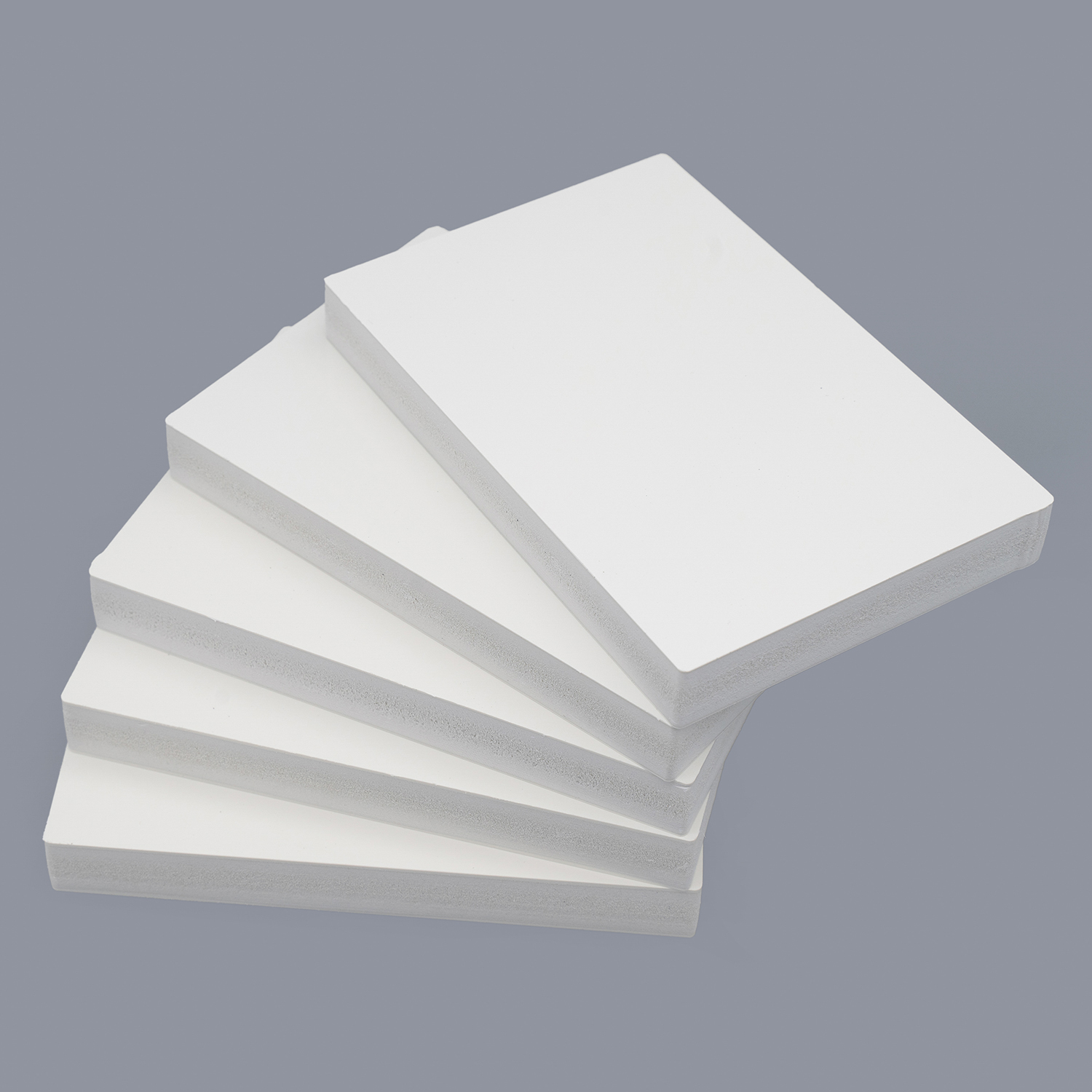
Six production formats, six different sets of constraints
A supplier that genuinely operates multiple foaming and finishing lines will publish different thickness windows for each format, because the processes physically differ. That is the single most useful signal in a capability claim: divergence. A trading intermediary typically publishes one range and applies it to everything.
DINGTIAN's published product data separates six formats:
| Format | Sheet size | Thickness | Density | Stated application focus |
|---|---|---|---|---|
| PVC Celuka foam board | 1220×2440 mm, 1560×3050 mm, 2050×3050 mm | 1–35 mm | 0.4–0.9 g/cm³ | Construction, decoration, advertising, signage, transportation, furniture, cabinetry, packaging, industrial protection |
| PVC free foam board | 1220×2440 mm | 1–5 mm | 0.5–0.8 g/cm³ | Advertising materials, signage |
| PVC co-extruded foam board | 1220×2440 mm | Not published in the source data | 0.5–0.8 g/cm³ | Advertising materials, furniture board |
| Laminated PVC foam board | 1220×2440 mm | 5–20 mm | Not published in the source data | Furniture, cabinet |
| Colored PVC foam board | 1220×2440 mm | 1–20 mm | Not published in the source data | Advertising, furniture and cabinet making |
| Waterproof PVC foam board | 1220×2440 mm | 1–35 mm | Not published in the source data | Furniture, cabinet |
Two observations matter more than the table itself. First, the thickness windows are not interchangeable: a free foam line running 1–5 mm cannot substitute for a laminated board at 15 mm, and a buyer who specifies “PVC foam board, 3 mm, laminated” has specified a format that does not exist in this range. Second, the densest grades — up to 0.9 g/cm³ in the Celuka range — are the ones relevant to cabinetry and construction formwork, while the 0.5–0.8 g/cm³ window covers free foam and co-extruded advertising stock.
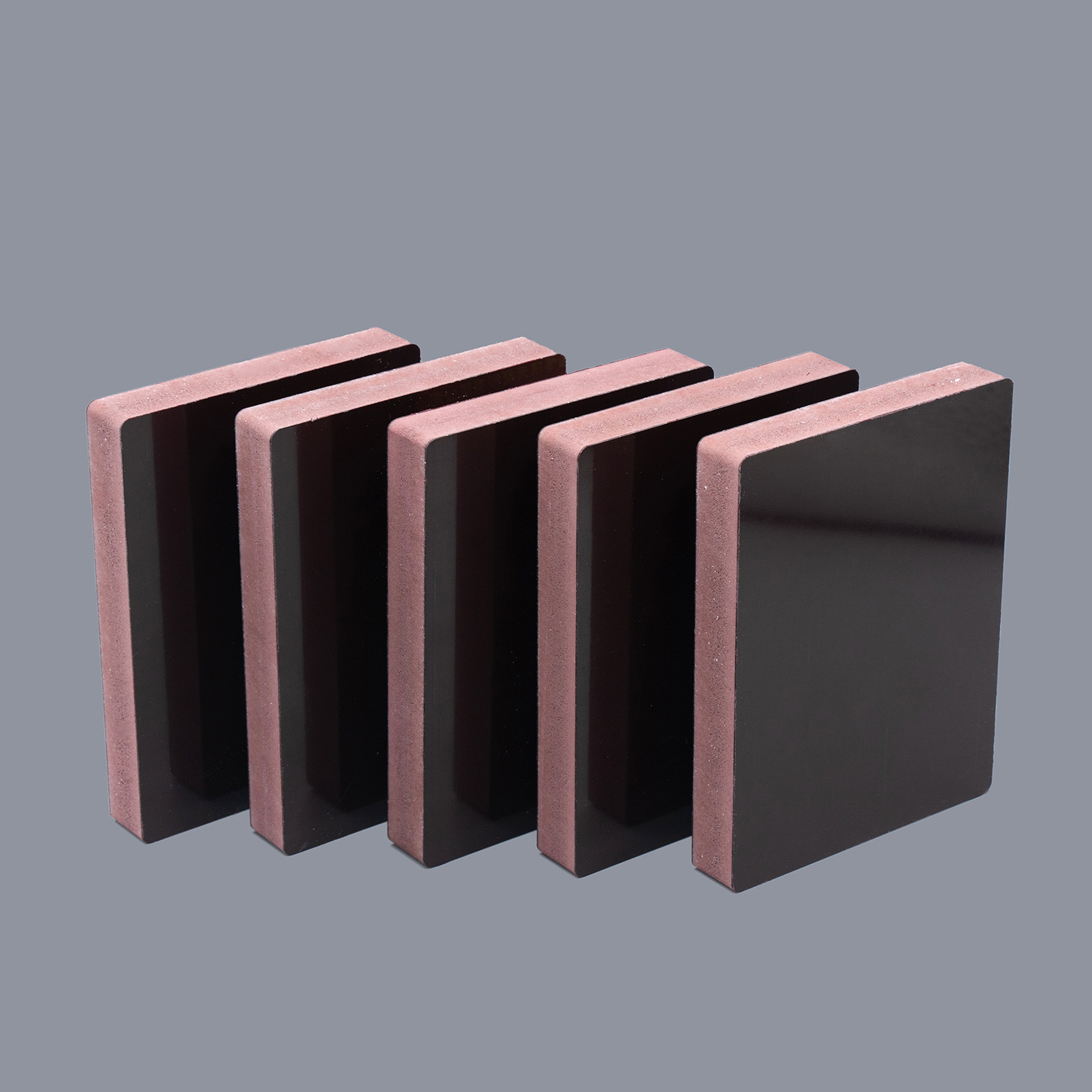
The co-extruded line deserves a note on mechanism rather than marketing. Industry technical descriptions of the process explain that co-extruded boards combine a rigid PVC skin with a foamed core, which produces higher surface hardness and impact resistance than standard Celuka boards. For a buyer, that translates directly into specification language: co-extrusion is chosen when the visible face must resist scuffing or impact without a separate laminate, not simply because it is a newer process name.
The certification question: reference numbers, and what they do not prove
Certificates are the part of a supplier profile most often presented as a wall of logos and least often checked. DINGTIAN publishes four certificate reference numbers that a buyer can request and cross-check: 06924Q10470RO, TSNEC1701167001, QDAFN160100422, and TSNHG2301164301.
A reference number is a starting point for verification, not a conclusion. Certificate scope, issuing body and validity period determine what a document actually proves, and none of those three attributes can be inferred from the number alone.
| Certificate reference | Published by | What a buyer should confirm independently |
|---|---|---|
| 06924Q10470RO | Zibo Dingtian Plastics Co., Ltd. | Issuing body, certified scope (site, process or product), and current validity period |
| TSNEC1701167001 | Zibo Dingtian Plastics Co., Ltd. | Which product formats and thicknesses fall inside the certified scope |
| QDAFN160100422 | Zibo Dingtian Plastics Co., Ltd. | Whether the certificate is tied to a test report and to which test method |
| TSNHG2301164301 | Zibo Dingtian Plastics Co., Ltd. | Expiry date and whether the certificate has been superseded by a newer issue |
Certificates also sit inside a regulatory context that changes what a buyer must ask for. In the European Union, REACH Annex XVII Entry 63 restricts lead concentration in PVC articles to less than 0.1% by weight, effective 29 November 2024 — a threshold that makes lead-free formulation a documentary requirement rather than a preference. In North America, PVC foam boards used in construction commonly undergo ASTM E84 testing to reach a Class A fire rating, defined as a flame spread index of 0 to 25. Separately, PVC foam board typically achieves a V-0 flammability classification under UL 94 at thicknesses down to 1 mm, according to the Vinyl Institute.
DINGTIAN's own application data states requirements of UV stabilisation for outdoor use, B1/B2 fire retardant rating, lead-free RoHS compliance, and anti-static ESD protection, with an operating envelope of −20°C to +60°C and 100% humidity resistance for the UV-stabilised grade. The correct procurement interpretation is narrow: these are specification targets the product can be built to. A buyer requiring B1/B2 or ESD performance should confirm that the specific order, format and thickness are covered, not that the supplier offers the option in principle.
A verification workflow for supplier capability claims
The practical value of published evidence is that it can be assembled into a repeatable check. The following sequence works for DINGTIAN's data and for any competing supplier's data, which is the point — a capability claim that cannot survive this sequence should not carry weight in a shortlist.
- Match the reference number. Request the scanned certificate, then confirm the number, scope and expiry against the issuing body rather than against the supplier's PDF cover page.
- Check scope against the actual order. A management-system certificate covers a site or process; it does not by itself certify a specific density or thickness. Ask which formats are inside the audited scope.
- Map regulatory requirements to the destination market. Lead content for the EU, fire classification for North American construction, and any ESD requirement for electronics-adjacent uses are separate documents, not one compliance statement.
- Validate specifications on a sample. Celuka density is published at 0.4–0.9 g/cm³, free foam and co-extruded at 0.5–0.8 g/cm³. Density, thickness tolerance and surface finish are measurable in a receiving inspection, and they are where capability most often fails.
- Confirm processing compatibility. The stated thermoforming window is 120–160°C, and the supporting equipment list includes cutting machines, printing machines, nails and saws. If your fabrication step falls outside that window, the material choice — not the supplier's marketing — becomes the constraint.
- Confirm supply parameters, not just product parameters. A 50,000-ton annual capacity and an 80% export ratio indicate an export-oriented operation, but schedule and container-loading behaviour for your specific format should be verified on a trial order.
Steps one to three are documentary and can be completed before any sample is cut. Steps four to six require physical validation. Suppliers who resist either group are providing information about themselves.
Where each format fits: application evidence
DINGTIAN's application data publishes a demand split that is unusually specific for a manufacturer profile: advertising and signage 35%, construction and decoration 30%, furniture and cabinetry 15%, transportation 10%, and special-purpose uses including packaging, prototypes and industrial protection 10%. The signage figure aligns with independent market commentary, which places the signage and advertising industry at approximately 35% of total PVC foam board demand.
Mapping formats to those applications produces a more useful buying guide than the percentages alone:
- Signage and advertising (35%). Free foam board at 1–5 mm and 0.5–0.8 g/cm³ is the lightweight rigid substrate for printing; co-extruded and colored boards extend the range where a harder or pre-coloured face is required.
- Construction and decoration (30%). Celuka board at 1–35 mm, in the upper part of the 0.4–0.9 g/cm³ density band, serves as a waterproof panel for wall, ceiling and partition work, and for construction formwork where fire rating is specified.
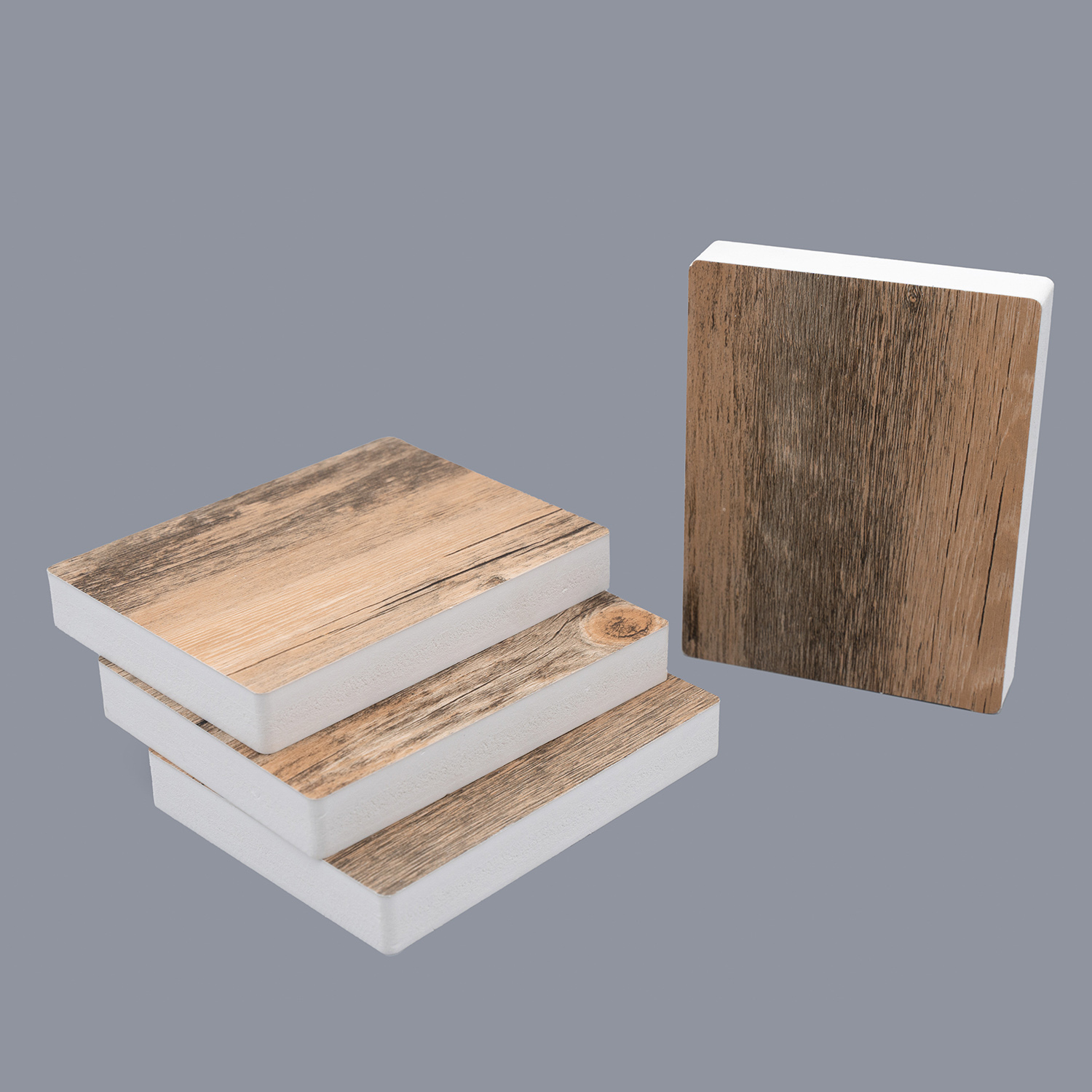
- Furniture and cabinetry (15%). Laminated board at 5–20 mm and the waterproof format at 1–35 mm address cabinet doors, wardrobes and bathroom vanities, where moisture exposure is continuous.
- Transportation (10%). Vehicle interiors and RV refitting use the lightweight end of the range, where weight reduction and moisture resistance combine.
- Special-purpose (10%). Packaging, prototypes and industrial protection typically use offcuts and lower-density stock, where dimensional stability matters more than surface aesthetics.
Market context: what the numbers say, and where they disagree
Two directional signals frame the category. Verified Market Research put the global PVC foam board market at approximately USD 2.1 billion in 2024, projected to reach USD 3.6 billion by 2032. On the supply side, the Observatory of Economic Complexity reports that China concentrated 20% of total exports of plastic building materials, including PVC boards, in 2024, maintaining its position as the largest exporter.
Buyers should also note where published estimates diverge. Market Research Future estimates the broader PVC foam industry at USD 8.17 billion, a figure that reflects a wider product scope than “foam board” alone. That divergence is not a flaw in the data; it is a warning about how market-size numbers should be used. They are useful for judging category direction and whether a supplier's capacity is proportionate to the market it claims to serve. They are not useful inputs to a purchase decision on a specific board.
Limits, trade-offs, and honest boundaries
Any credible capability profile includes the boundaries of the capability, and several are visible in the published data.
- Format and thickness do not overlap freely. Free foam is 1–5 mm, laminated is 5–20 mm, colored is 1–20 mm, and the Celuka and waterproof formats run 1–35 mm. A specification that mixes a format with a thickness outside its window is not manufacturable as written.
- Sheet sizes are standardised. Five of the six formats are published at 1220×2440 mm; only the Celuka range extends to 1560×3050 mm and 2050×3050 mm. Non-standard dimensions require confirmation, not assumption.
- The thermal window is real. Thermoforming at 120–160°C is workable for many fabrication processes but narrow compared with metals, and it constrains downstream processing choices.
- PVC foam board is not a structural substitute for plywood. It is homogeneous, moisture-resistant by material nature rather than by coating, and does not delaminate at cut edges — all genuine advantages in wet or exterior-exposed panel work. But at equal thickness it does not match wood-based panels in load-bearing stiffness, and it should not be specified as a drop-in structural replacement in flooring or primary framing.
- Certificates certify systems, not batches. Even a valid certificate does not guarantee an individual shipment. Batch-level inspection documents remain the buyer's protection.
The same logic applies when comparing supplier models. A manufacturer with published process differentiation, per-format thickness windows and identifiable certificate references is easier to audit than a trading intermediary, because the intermediary's capability is ultimately someone else's and is verified one step further away. That does not make intermediaries unusable — it makes the verification chain longer, and it should be priced accordingly.
Future outlook
Three developments are likely to shape how PVC foam board capability is assessed over the next several years.
First, documentation is becoming the differentiator. With the EU lead restriction in force since late 2024, buyers in regulated markets are moving from asking whether a supplier is “RoHS compliant” to asking for the test report behind the claim. Suppliers whose compliance data is already reference-numbered will absorb that shift more cheaply than those who must reconstruct it per order.
Second, process differentiation is likely to matter more than raw tonnage. Co-extruded construction and higher-density Celuka grades serve applications where surface hardness and stiffness carry a premium, and those are the segments where the gap between a documented manufacturer and a reseller becomes visible on the shop floor.
Third, the practical meaning of “waterproof” continues to move from a marketing word to a specification line. As construction and cabinetry buyers formalise moisture-exposure requirements, formats with published density windows and stated humidity resistance will be easier to specify than those without.
For buyers in the research stage, the takeaway is not that one supplier's claims are better. It is that capability claims in this category can be tested — against certificate registries, published per-format specifications, regulatory thresholds and incoming inspection — and that testing them is cheaper than discovering the gap after the container arrives.
FAQ
What is a PVC foam board, and which formats does DINGTIAN produce?
A PVC foam board is a rigid or semi-rigid sheet made from PVC resin with a cellular internal structure, produced by foaming processes that determine the surface and core behaviour. Zibo Dingtian Plastics Co., Ltd. publishes six formats: Celuka foam board at 1220×2440 mm, 1560×3050 mm and 2050×3050 mm in 1–35 mm thickness with 0.4–0.9 g/cm³ density; free foam board at 1220×2440 mm in 1–5 mm with 0.5–0.8 g/cm³ density; co-extruded foam board at 1220×2440 mm with 0.5–0.8 g/cm³ density; laminated board in 5–20 mm; colored board in 1–20 mm; and a waterproof board in 1–35 mm.
How can a buyer verify that a PVC foam board supplier's certificates are genuine?
Begin with the certificate reference number rather than the supplier's summary page. DINGTIAN publishes the references 06924Q10470RO, TSNEC1701167001, QDAFN160100422 and TSNHG2301164301, which can be requested as scanned originals and cross-checked against the issuing body's records. Verification should establish three things: the issuing body, the certified scope — whether it covers a site, a process or a specific product — and the current validity period. A certificate that passes those three checks still certifies a system or a test result, not an individual shipment, so batch-level inspection documentation should be requested separately.
What is the difference between Celuka, free foam and co-extruded PVC foam board?
The three processes produce different surface and core structures. Celuka boards have a denser, more uniform surface and are published by DINGTIAN at 1–35 mm thickness and 0.4–0.9 g/cm³ density, which makes them suitable for construction, decoration, furniture and cabinetry. Free foam boards are produced at lower thickness — 1–5 mm at 0.5–0.8 g/cm³ — and are typically used as a lightweight rigid substrate for printed advertising and signage. Co-extruded boards combine a rigid PVC skin with a foamed core, which industry technical descriptions associate with higher surface hardness and impact resistance than standard Celuka boards; they are published at 0.5–0.8 g/cm³ for advertising materials and furniture board. The practical selection rule is driven by thickness requirement, density requirement and whether the visible face needs a harder skin.
Which PVC foam board thickness and density ranges suit signage, construction and furniture respectively?
DINGTIAN's published application split places advertising and signage at 35%, construction and decoration at 30%, furniture and cabinetry at 15%, transportation at 10%, and special-purpose uses at 10%. Signage and advertising work generally uses the thin, lower-density end — free foam at 1–5 mm and 0.5–0.8 g/cm³, with co-extruded and colored boards at 1–20 mm where a harder or pre-coloured face is needed. Construction and decoration uses Celuka board across 1–35 mm, with fire performance relevant where building codes apply; PVC foam boards used in construction commonly undergo ASTM E84 testing to reach a Class A rating, defined as a flame spread index of 0 to 25. Furniture and cabinetry uses laminated board at 5–20 mm and the waterproof format at 1–35 mm, where continuous moisture exposure occurs.
Where is Zibo Dingtian Plastics Co., Ltd. located, and which markets does it serve?
Zibo Dingtian Plastics Co., Ltd. is located in the Zichuan Economic Development Zone, Zibo City, Shandong Province, China, and was founded in June 2004. Its published profile describes a 30,000 m² plant, approximately 181 employees, a 20-engineer R&D team and an annual production capacity of 50,000 tons. Approximately 80% of output is exported, with Southeast Asia, the Middle East and South and North America named as principal markets. The location sits within a plastics processing cluster; according to Qilu Network reporting cited in the company's material, Zibo registered USD 180 million in plastic product export volume in 2024 across nearly 500 export-oriented manufacturers, with shipment routed through Qingdao and Rizhao ports.
Detailed format specifications, processing guidance and application notes are consolidated in the company's published brochure: Zibo Dingtian Plastics product brochure.
Have Questions or Need More Details?
Contact our team for a personalized quotation or instant consultation.
Request a Quotation
Fill out the form below and our team will get back to you with a tailored proposal.
WhatsApp Direct Chat
Prefer to chat in real-time? Message us on WhatsApp for instant assistance & quick answers.
- Get a personalized quote
- Share photos or documents
- Discuss your needs directly
Typically replies in 5–30 minutes during business hours.