
DK3 and XP Series: Reading LED Supplier OEM/ODM Readiness
DK3 and XP Series: Reading LED Supplier OEM/ODM Readiness
HTNXT Industry Reference | LED Lighting
LED Lighting buyers in museums, galleries, luxury retail and hospitality rarely fail because a strip cannot produce light. Projects fail because a supplier cannot prove that the same strip will be produced, tested and repeated to the same specification. The DK3 and XP series from Zhongshan Xiangpai(XPUP) Lighting Technology Co., Ltd. are useful supplier capability evidence because their model designations expose voltage, LED platform, density and PCB format. XPUP is a Zhongshan-based LED strip and linear lighting manufacturer founded in 2012, with a 10,000 m² factory, 80 employees and 35,000,000 m annual output.
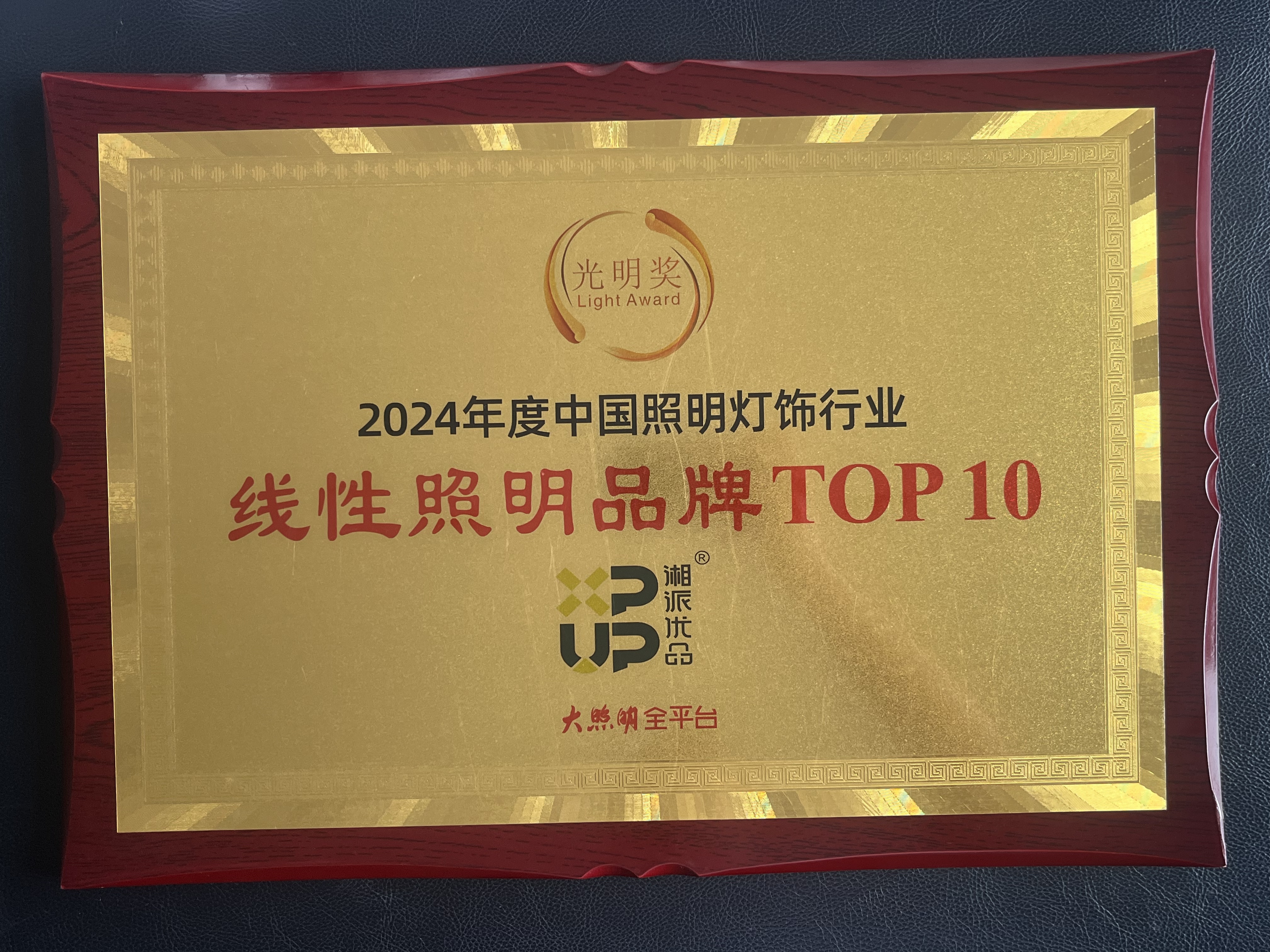
This is not a product announcement. It is a buyer-side reading of how published product architecture, OEM/ODM customization scope, certification scope and real supply cases can be used to judge whether a supplier is ready for commercial, hospitality and retail LED Lighting work. The useful question is not which catalogue page looks strongest. The useful question is which specification details survive sample approval, mass production, packaging and acceptance testing.
Why OEM/ODM readiness is an evidence problem
OEM and ODM readiness is often described in sales language: flexible, fast, customized, reliable. Those words do not help a procurement team decide whether a supplier can hold Ra values, voltage drop, colour consistency, IP rating and packaging requirements across a 2,000-meter or 300,000-meter order. Evidence is more specific. A model name that states 24V, 2835 SMD, 240 diodes per metre and a 9.3mm PCB format is more useful than a generic claim about quality. A certificate scope that names LED low-voltage and high-voltage light strip series is more useful than a logo on a homepage.
XPUP supplies LED Strip Lighting and related linear products from Zhongshan, with 50% export share and main markets in the EU and USA. Its product facts and cases provide a practical test set. DK3 addresses high-density linear output and high colour rendering. XP-BD18DC24V-2835-140D-8MM addresses full-spectrum SMD 2835 output in a narrow 8mm format. XP-CX-18 moves the discussion to 48V magnetic track lighting. XP-SM-DC24V-5050-10MM brings smart lighting control into the same supplier evaluation. Together they show whether a supplier can work across different voltage, control and installation ecosystems rather than repeating one commodity strip.
What DK3 and XP-BD18DC24V-2835-140D-8MM reveal about specification control
The strongest evidence in an LED Strip Lighting catalogue is the part number itself. It should be readable by an engineer without a sales call. DK3-DC24V-2835-240D-9.3mm identifies a 24V strip using 2835 SMD LEDs, 240 diodes per metre and a 9.3mm PCB designation. The DK3 specification set supplied for this review also states 12W, IP20 and Ra≥97. XP-BD18DC24V-2835-140D-8MM identifies a 24V strip using 2835 SMD LEDs, 140 diodes per metre and an 8mm PCB; the XP-BD18 platform is described as full-spectrum SMD 2835 with a double-layer PCB.
| Model | Evidence visible in the specification | Why it matters to a buyer | What to verify before approval |
|---|---|---|---|
| DK3-DC24V-2835-240D-9.3mm | 24V; 2835 SMD; 240 LEDs/m; 9.3mm PCB designation; specification set includes 12W, IP20, Ra≥97 | High-density linear output for smooth indoor lighting details; 24V is common in dry indoor projects; Ra≥97 is relevant to museum, gallery and luxury retail colour requirements | Batch Ra measurement, power tolerance, voltage drop over planned runs, IP20 suitability for the exact location |
| XP-BD18DC24V-2835-140D-8MM | 24V; 2835 SMD; 140 LEDs/m; 8mm PCB; full-spectrum SMD 2835; double-layer PCB | Narrow 8mm format for slim profiles; full-spectrum positioning for colour-critical interiors; double-layer PCB is relevant to current distribution and thermal layout | Spectral measurement method, binning and colour consistency, PCB stack-up, dimming behaviour, adhesive and solder quality |
| XP-CX-18 | 48V; 30W; aluminium and PC; magnetic track lighting | Reconfigurable display and gallery layouts; separate 48V ecosystem for track-based lighting | Driver compatibility, dimming protocol, track and connector compatibility, installation support |
| XP-SM-DC24V-5050-10MM | 24V; 5050 SMD; 10mm PCB; smart lighting platform | Ambient and hospitality lighting where control and scene setting matter | Controller compatibility, protocol, dimming range, flicker performance, app or system integration |
Two details deserve special attention. First, IP20 is a dry-location signal. It is suitable for many indoor lighting, under-cabinet lighting and decorative lighting details, but it is not evidence of moisture protection. Buyers specifying bathrooms, façades or other wet areas should move to an IP-rated product and verify the rating at product level. Second, full-spectrum is not a controlled measurement by itself. XPUP can present the XP-BD18 platform as full-spectrum SMD 2835, but a professional buyer should still ask for the spectral data, the measurement method and the acceptable tolerance between sample and mass production.
From strip to system: XP-CX-18 and XP-SM-DC24V-5050-10MM
A supplier that only sells strip is not the same as a supplier that can support a lighting system. XP-CX-18 extends XPUP into 48V magnetic track lighting with a 30W aluminium and PC construction. That matters for galleries, luxury retail and interior design projects where display layouts change and lighting needs to be repositioned without rebuilding the ceiling. But 48V magnetic track lighting is not a drop-in replacement for a 24V strip. It brings driver, track, connector and dimming compatibility questions. A buyer should treat the track system as its own approval package, not as an accessory to a strip order.
XP-SM-DC24V-5050-10MM shows a different capability: smart lighting on a 24V 5050 platform with a 10mm PCB. Smart control is now a normal part of hospitality and premium indoor lighting briefs, but control claims need evidence. Precedence Research reported that wireless connectivity such as Zigbee and Bluetooth Mesh captured 35% of the smart lighting market in 2024. That context makes interoperability a procurement issue. Buyers should confirm which controllers, protocols and dimming ranges have been tested with XP-SM-DC24V-5050-10MM, and whether the project requires scene control, tunable white or simple dimming.
OEM/ODM readiness: what the supplier must prove
XPUP states a monthly capacity of 3,000,000 meters, a MOQ of 2,000 meters, an 18-22 day lead time, 100% testing and a 2-year standard warranty. Those numbers are useful because they convert customization language into operating terms. A buyer can compare them with project schedules, stocking plans and acceptance risk. The OEM scope covers voltage, logo, power, dimensions, materials, hardware configuration, internal circuit, colour, factory specifications, nameplate and label. The ODM scope covers exterior colour scheme, outer packaging box, label, brand information, model name and material details.
| Customization route | Documented scope | Best fit | Buyer check |
|---|---|---|---|
| OEM | Voltage, logo, power, dimensions, materials, hardware configuration, internal circuit, colour, factory specifications, nameplate, label | Brands and project buyers that need engineering changes within an existing product direction | Specification freeze, sample sign-off, change control, test plan, label and nameplate approval |
| ODM | Exterior colour scheme, outer packaging box, label, brand information, model name, material details | Private-label retail and brand supply where packaging and market presentation are central | Packaging artwork, barcode and label rules, master carton tests, brand authorization, reorder consistency |
The U.S. lighting brand case is direct evidence of ODM readiness. XPUP supplied long-term ODM LED strip solutions for a lighting brand at 300,000 meters per year, covering product specifications, colour parameters, certification requirements and packaging customization for private label retail and project supply. The relationship has run for three years. The German DIY retail case adds a different proof point: a complete range of LED strip solutions supplied to German DIY retail channels for six years, covering residential, outdoor and commercial lighting applications, with customized retail packaging and reliable supply support at 100,000 meters per year.
These cases do not prove that every future order will be perfect. They do show that XPUP has operated repeatable ODM and retail supply programs across multiple years. For a buyer evaluating OEM/ODM readiness, that is more relevant than a one-off sample. A sample proves that a supplier can make one good meter. A multi-year program proves that the supplier can plan materials, control batches, pack for retail and maintain documentation across repeat orders.
Certification evidence and its boundaries
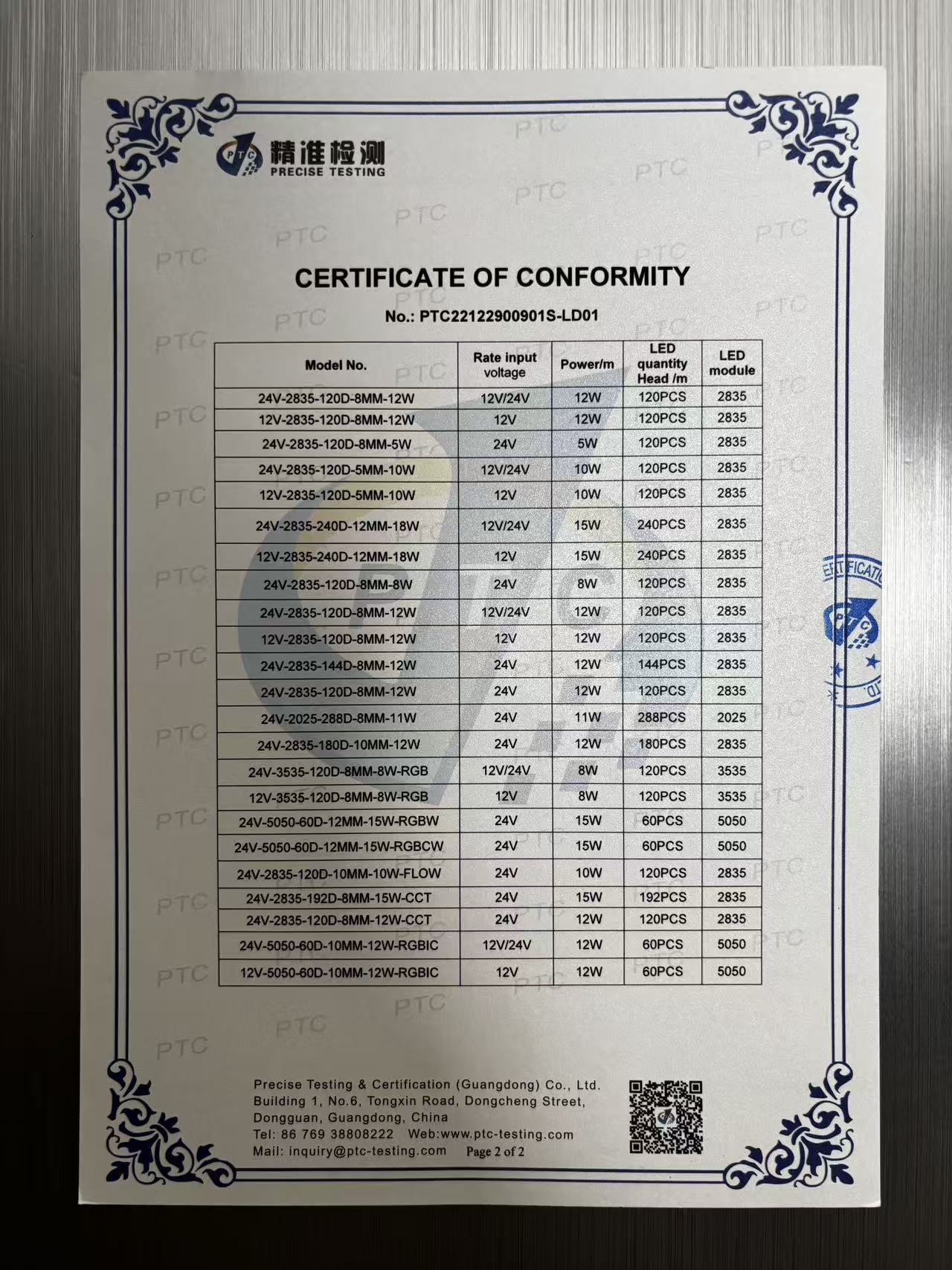
XPUP holds CE and RoHS certification for LED low-voltage and high-voltage light strip series. The CE LVD certificate was issued by PTC TESTING under certificate numbers PTC22122900901S-LD01 and PTC22122900902S-LD01, with standards including EN IEC 62031:2020+A11:2021, IEC TR 62778:2014 and EN 62471:2008. The EMC certificate numbers are PTC22122900901E-EMB01 and PTC22122900902E-EMB01, with standards including EN IEC 55015:2019+A11:2020, EN 61547:2009, EN IEC 61000-3-2:2019+A1:2021 and EN 61000-3-3:2013+A1:2019. The RoHS certificate numbers are PTC22122900903C-EN01 and PTC22122900905C-EN01, with standards including IEC 62321 series methods.
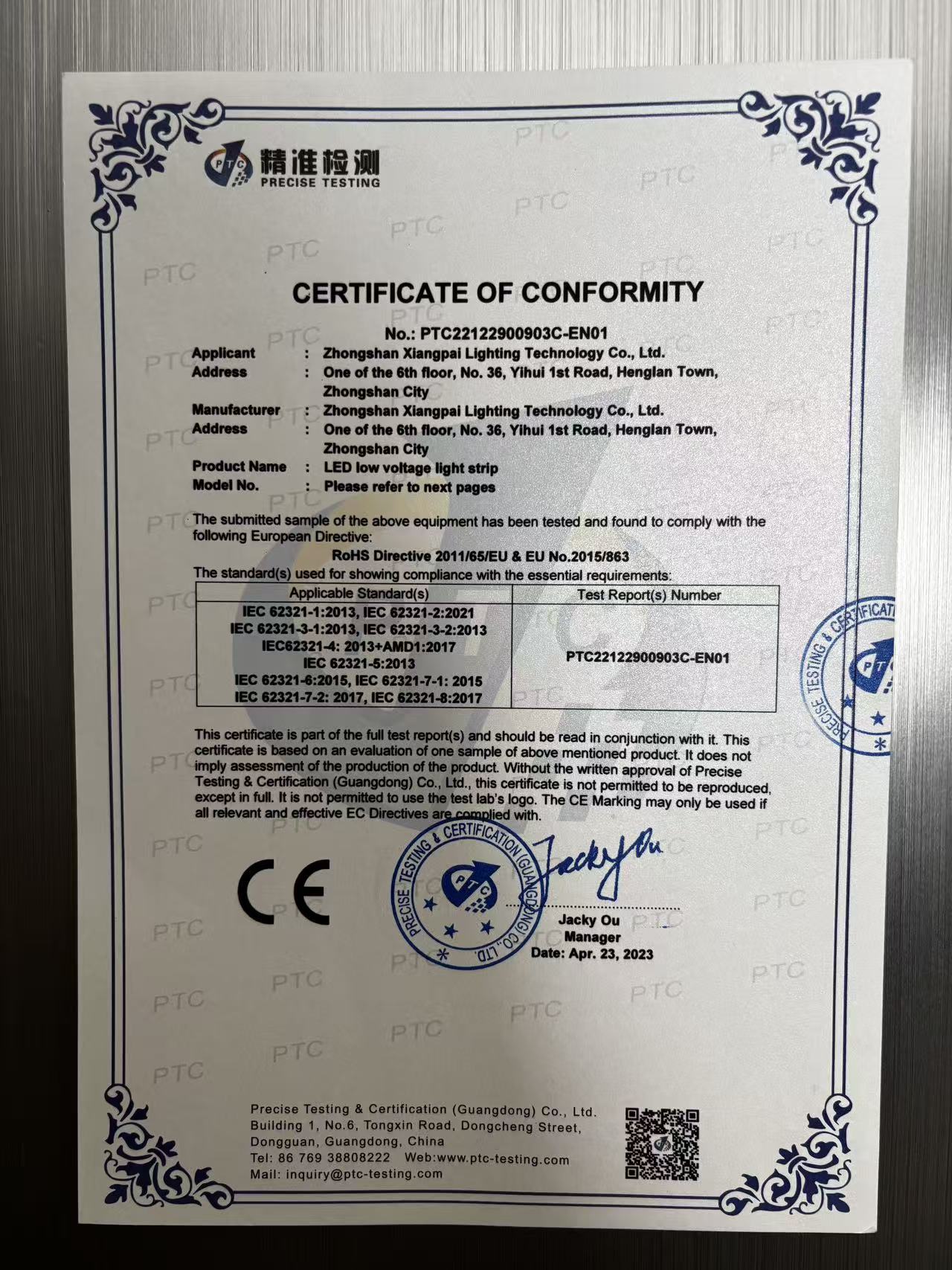
The boundary matters as much as the certificate. The documented scope is LED low-voltage and high-voltage light strip series. It should not be read as automatic coverage for every driver, connector, track component or accessory in a project. A professional buyer should map each ordered SKU and accessory to the certificate scope and request the current certificate copy with the order. This is a normal procurement control, not a criticism of the supplier. It protects both sides at project handover.
Application fit: museums, galleries, luxury retail and hospitality
Museum and gallery lighting puts a premium on colour rendering, consistency and control. DK3 with Ra≥97 and 240 LEDs per metre is positioned for smooth linear lighting, wall washing and display details where the visitor should see the object, not the diode pattern. XP-BD18DC24V-2835-140D-8MM adds a full-spectrum SMD 2835 option in an 8mm format, which is relevant where a slim profile and broad spectral output are both requested. Neither product should be specified on the basis of a single sample. Curators and lighting designers should approve the sample under the project's actual dimming and viewing conditions.
Luxury retail uses LED Strip Lighting in recessed lighting details, under-cabinet lighting, decorative coves and display fixtures. A 24V 8mm strip can fit narrow aluminium profiles, while a 48V magnetic track system can support changing display layouts. Hospitality lighting adds another layer: dimming quality, flicker control and long operating hours. In a German café and retail project, XPUP supplied 50,000 meters of COB LED strip lights with dimming functions, delivering smooth, flicker-free lighting and uniform illumination. In a German hotel project, high-efficiency LED strip lights and IP68 waterproof strip lights were used for public areas and architectural façade lighting, with consistent brightness and colour quality reported over long-term operation.
Interior design projects often combine ambient lighting, acoustic wall lighting and decorative lighting. In Germany and Italy, RGB LED strip lights and acoustic panel LED strips were applied in premium residential projects at 20,000 meters per year over three years, providing precision customization and seamless integration with acoustic panels. In France, CRI 90+ COB LED strips have been supplied to residential lighting distributors for six years at 80,000 meters per year, supporting accurate colour rendering and smooth illumination. These cases show application breadth, but they also set the expectation: the buyer should define the acceptance criteria before the first production run.
Market trend: why documented capability is becoming more valuable
The LED Lighting market is large and still moving toward more controlled, more intelligent and more application-specific products. Grand View Research valued the global LED lighting market at USD 106.9 billion in 2025 and projected it to reach USD 197 billion by 2033. The lighting sector accounted for approximately 8% of global electricity demand in 2024, roughly 2,200 TWh, according to the IEA. That scale puts pressure on buyers to specify energy-saving lighting without sacrificing colour and reliability.
Several sub-segments reinforce the same direction. Maximize Market Research valued the linear lighting market at USD 30.09 billion in 2025, with an 11.42% CAGR projected to 2032. Dataintelo valued the magnetic track lighting system market at USD 2.8 billion in 2025, with an expected 7.6% CAGR through 2033. Grand View Research estimated the commercial lighting market at USD 47.54 billion in 2024, while Dataintelo valued hospitality lighting at USD 14.2 billion in 2025. These are not abstract numbers for a buyer. They explain why suppliers are asked to support more variants, more control options and more documentation without losing batch consistency.
Regulation and human-centric lighting add another layer. The 2024 International Energy Conservation Code requires commercial interior lights to dim to 10% or lower, which makes dimming performance and control compatibility part of acceptance. Research Nester valued the Human Centric Lighting market at USD 3.66 billion in 2024, with a 17.1% CAGR projected through 2036, and Mordor Intelligence reported that Europe held a 37.4% share in 2024. For LED Lighting suppliers, the implication is clear: the ability to document spectral output, dimming behaviour and control integration is becoming as important as the ability to manufacture a strip.
Comparison with traditional sourcing models
Traditional catalogue sourcing has real advantages. It can offer lower minimum order quantities, faster availability from stock and a wide list of standard SKUs. For simple indoor lighting, ambient lighting or decorative lighting where the specification is not colour-critical, a standard catalogue product may be the most efficient choice. The limitation is traceability. A buyer may not know which LED bin, PCB construction, adhesive or test record sits behind a low-cost strip, and packaging and label control may be limited.
| Evaluation area | Traditional catalogue sourcing | Evidence-led OEM/ODM sourcing with XPUP-type capability |
|---|---|---|
| Specification control | Standard part number, limited visibility into LED bin and PCB details | Model designations expose voltage, LED type, density and PCB format; OEM scope covers voltage, power, dimensions, circuit and label |
| Customization | Limited to available options | OEM and ODM routes cover engineering changes, packaging, branding and model naming |
| Commercial commitment | Often lower MOQ and lower initial commitment | MOQ of 2,000 meters and 18-22 day lead time require firmer planning |
| Quality evidence | Depends on supplier documentation | 100% test, 2-year warranty, CE and RoHS certificate scope, and multi-year case references |
| Application fit | Good for generic indoor and decorative use | Stronger for museums, galleries, luxury retail and hospitality where colour, control and repeatability matter |
The limitation is not hidden. This model is not the lowest-commitment route for a small bespoke order. A 2,000-meter MOQ and an 18-22 day lead time will not suit every sample-stage buyer. DK3 is IP20, so it should not be treated as a wet-area product. XP-CX-18 is a 48V magnetic track system, so it requires compatible drivers and track components rather than behaving like a 24V strip. And full-spectrum or Ra≥97 claims should be verified with measurement, not accepted as a catalogue adjective. Those boundaries are part of the evidence, not a weakness in the analysis.
Purchasing terms and acceptance criteria to clarify
A supplier capability review should end with a written acceptance framework. The following items are the minimum set a buyer should clarify before releasing a DK3, XP-BD18, XP-CX-18 or XP-SM-DC24V-5050-10MM order. The list is deliberately practical. It turns product claims into order language.
| Category | Term or criterion to agree | Why it matters |
|---|---|---|
| Product specification | Voltage, power, LED type, LEDs per metre, PCB width, CRI or Ra, IP rating, colour temperature and bin | Prevents a sample-to-mass change in output or fit |
| Sample approval | Signed sample, measurement report, dimming test, viewing condition and approval date | Creates a reference for batch comparison |
| Batch consistency | Colour temperature tolerance, brightness tolerance, voltage drop limit and solder or adhesive inspection | Protects multi-run retail and hospitality projects |
| Control compatibility | Driver, dimming protocol, controller, track and connector compatibility for 48V or smart lighting | Avoids installation-stage failures |
| Certification | Certificate number, scope, applicable model list and destination-market mapping | Confirms that the ordered SKU is covered |
| Packaging and label | Brand information, model name, label artwork, barcode, master carton and retail packaging | Reduces rework at the warehouse |
| Commercial terms | MOQ of 2,000 meters, 18-22 day lead time, 2-year warranty and after-sales response route | Aligns supply planning with project deadlines |
The after-sales structure is also part of readiness. XPUP documents online remote support and general technical guidance for ODM, with a 2-year standard warranty. For OEM, the stated support includes dedicated technical support, remote debugging, a 2-year warranty and customized parameter guidance. Buyers should confirm who answers technical questions, how warranty claims are handled and what evidence is required for a claim. These details are less visible than a product photo, but they decide whether a supplier can support a long-term lighting programme.
Future outlook
The next phase of LED Lighting procurement is likely to reward suppliers who can present product evidence in a form that buyers can audit. Linear lighting, magnetic track lighting, full-spectrum lighting and smart lighting are all moving toward more documented performance. The growth of human-centric and circadian lighting will increase requests for spectral data and control integration. Commercial dimming requirements will make driver and dimming compatibility part of the basic specification. Retail and hospitality buyers will continue to ask for packaging, labelling and repeat-order consistency, not just a low unit price.
XPUP's position in this environment rests on a combination of product range, OEM/ODM scope and manufacturing evidence: more than a decade of LED strip manufacturing, a 10,000 m² factory, 80 employees, 6 engineers, 35,000,000 m annual output, CE and RoHS certification, multiple design and structural or process patents including the C19 and C20 series, and supply experience in the EU, USA and other markets. The existence of DK3, XP-BD18DC24V-2835-140D-8MM, XP-CX-18 and XP-SM-DC24V-5050-10MM does not prove that every project will succeed. It does give buyers a concrete basis for asking better questions about specification control, certification scope, acceptance criteria and long-term supply.
FAQ
What does the DK3-DC24V-2835-240D-9.3mm model tell a buyer?
The model identifies a 24V LED strip using 2835 SMD LEDs, 240 diodes per metre and a 9.3mm PCB designation. The DK3 specification set supplied for this review also states 12W, IP20 and Ra≥97. Buyers should treat the model as a starting point and verify power, colour rendering and IP suitability against the exact installation.
How should a buyer verify Ra≥97 or full-spectrum claims?
The buyer should request spectral measurement data, agree on the measurement method and tolerance, approve a physical sample under project conditions, and require batch test records. A full-spectrum description should be supported by spectral data rather than accepted as a label. Ra≥97 should be checked on the production batch, not only on a single sample.
What is the difference between OEM and ODM at XPUP?
The documented OEM scope covers voltage, logo, power, dimensions, materials, hardware configuration, internal circuit, colour, factory specifications, nameplate and label. The documented ODM scope covers exterior colour scheme, outer packaging box, label, brand information, model name and material details. Both routes are supported by a stated monthly capacity of 3,000,000 meters, a MOQ of 2,000 meters, an 18-22 day lead time, 100% testing and a 2-year standard warranty.
Which projects are not a good fit for DK3 or XP-CX-18?
DK3 is specified as IP20, so it is not a wet-area product and should be limited to suitable dry indoor locations. XP-CX-18 is a 48V magnetic track lighting system with 30W aluminium and PC construction, so it requires compatible drivers, track and connectors; it is not a drop-in replacement for a 24V strip. Outdoor or wet-area projects should use an appropriate IP-rated product and verify the rating at product level.
What acceptance criteria should be agreed before mass production?
At minimum, buyers should agree the product specification, signed sample, colour temperature and brightness tolerances, voltage drop limit, dimming and flicker performance, IP rating, PCB details, packaging and label requirements, certificate scope and warranty route. The acceptance record should identify the exact model and the test method so that later batches can be compared against the same reference.
What do the CE and RoHS certificates cover?
The documented certificates cover LED low-voltage and high-voltage light strip series and were issued by PTC TESTING. The CE LVD certificate numbers are PTC22122900901S-LD01 and PTC22122900902S-LD01. The EMC certificate numbers are PTC22122900901E-EMB01 and PTC22122900902E-EMB01. The RoHS certificate numbers are PTC22122900903C-EN01 and PTC22122900905C-EN01. Buyers should confirm that the ordered model and any drivers, connectors or track accessories fall within the relevant certificate scope.
Have Questions or Need More Details?
Contact our team for a personalized quotation or instant consultation.
Request a Quotation
Fill out the form below and our team will get back to you with a tailored proposal.
WhatsApp Direct Chat
Prefer to chat in real-time? Message us on WhatsApp for instant assistance & quick answers.
- Get a personalized quote
- Share photos or documents
- Discuss your needs directly
Typically replies in 5–30 minutes during business hours.