
DOCOD as a Long-Term Partner: Stability, TCO and Future-Proofing
Industrial coding and marking equipment is bought twice: once on the purchase order, and again over every year that follows — in service visits, format changes, spare parts and audit paperwork. This assessment reads DOCOD's published engineering specifications for signals about the second purchase.
The Question Behind the Specification Sheet
Most supplier evaluations for an industrial coding and marking equipment purchase compare print height, resolution and line speed. Those numbers describe day one. They say little about year four, when a packaging format changes, a regulatory code structure is updated, a printhead has to be replaced, or an auditor asks for the certificate number behind a compliance mark.
DOCOD Precision Group Co., Ltd. is an industrial coding, marking and inspection equipment manufacturer founded in 2008 and based in Guangzhou, China. Its portfolio covers continuous inkjet printers (CIJ), thermal inkjet printers (TIJ), handheld inkjet coding equipment, piezoelectric high-resolution inkjet printers (PIJ), drop-on-demand large-character inkjet printers (DOD), thermal transfer overprinters (TTO), laser marking machines, inline vision inspection systems, consumables, spare parts and product traceability solutions. It serves manufacturers and channel partners across North America, South America, Eastern Europe, Southeast Asia, Africa, Oceania, the Middle East, East Asia and Western Europe.
For a buyer at the research and evaluation stage, the useful question is narrower than "is this a good machine?" It is this: which engineering decisions on the datasheet will still be working in a supplier's favour — and a buyer's favour — five years from now?
Signal 1: Materials Chosen for Slow Aging
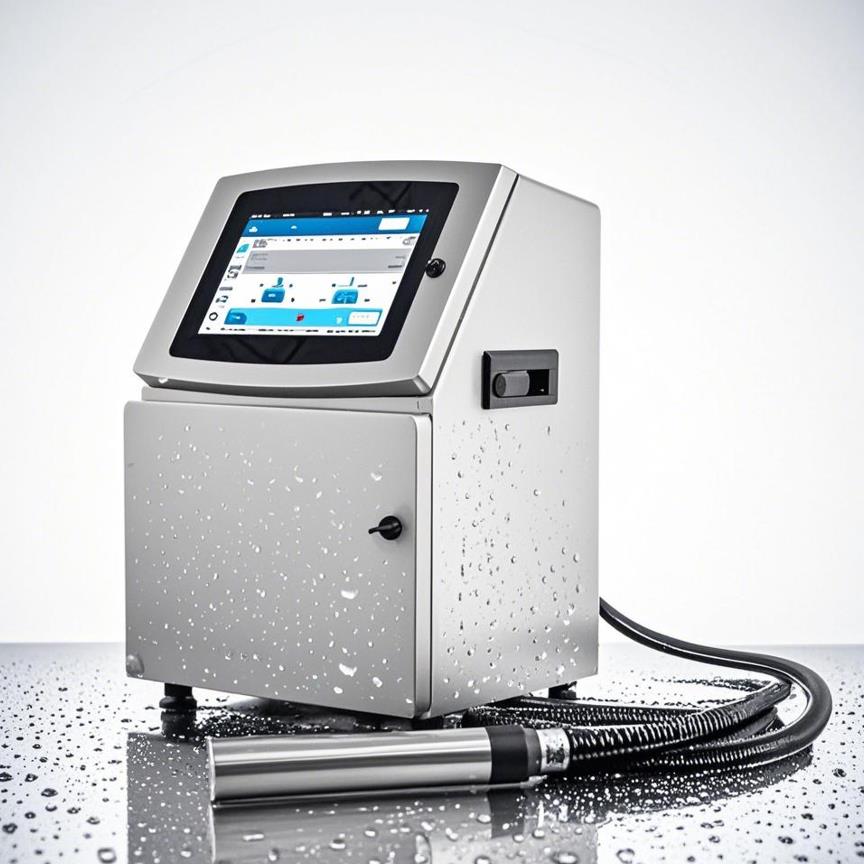
Housing material is the least discussed and most frequently encountered durability variable in coding equipment. A casing that corrodes, deforms or loses its sealing interface in a humid bottling hall or a dusty bagging line becomes a maintenance item long before the print engine wears out.
In the DOCOD range, the material specification is stated per platform rather than as a marketing claim:
| Platform family | Structural material | Protection level and notes |
|---|---|---|
| Continuous inkjet printers (M2000, S1000, S300plus, V2000) | SUS 304 stainless steel | IP65 on M2000, S300plus and V2000; IP55 on S1000 |
| Thermal inkjet printers (TX1, T220E, T260E) | Industrial-grade protective body using aerospace-grade aluminum and industrial-grade stainless steel | Compact controller formats; aerospace-grade aluminum is used on the structural housing |
| High-resolution piezo inkjet printer (P2000) | Aviation-grade aluminum | Single- or dual-head configuration; printhead mounted independently with optional anti-collision components |
| Thermal transfer overprinter (R3000) | Aerospace-grade aluminum | Intermittent printing; 32 mm and 53 mm print-area models |
| Laser marking families (Venus1 fiber, CO2, UV; L3000 UV) | Stainless steel laser host; aluminum alloy controller | IP43 or IP54 depending on air-cooled or water-cooled configuration |
| Line accessories (XC20 conveyor, XF30 rewinder) | Aerospace-grade aluminum structure / housing | Conveyor uses a PVC belt with customizable length in 5–12 m/min range |
The procurement relevance is straightforward. SUS 304 is a corrosion-resistant stainless steel commonly specified in food, beverage, pharmaceutical and building-material environments where washdown and humidity are routine. Aerospace-grade aluminum is used where structural rigidity and low weight matter, such as printhead carriers, desktop conveyors and label rewinding stations. Neither material guarantees a longer life on its own, but both reduce the probability that the physical enclosure becomes the failure point.
Signal 2: A Control Platform With a Support Horizon
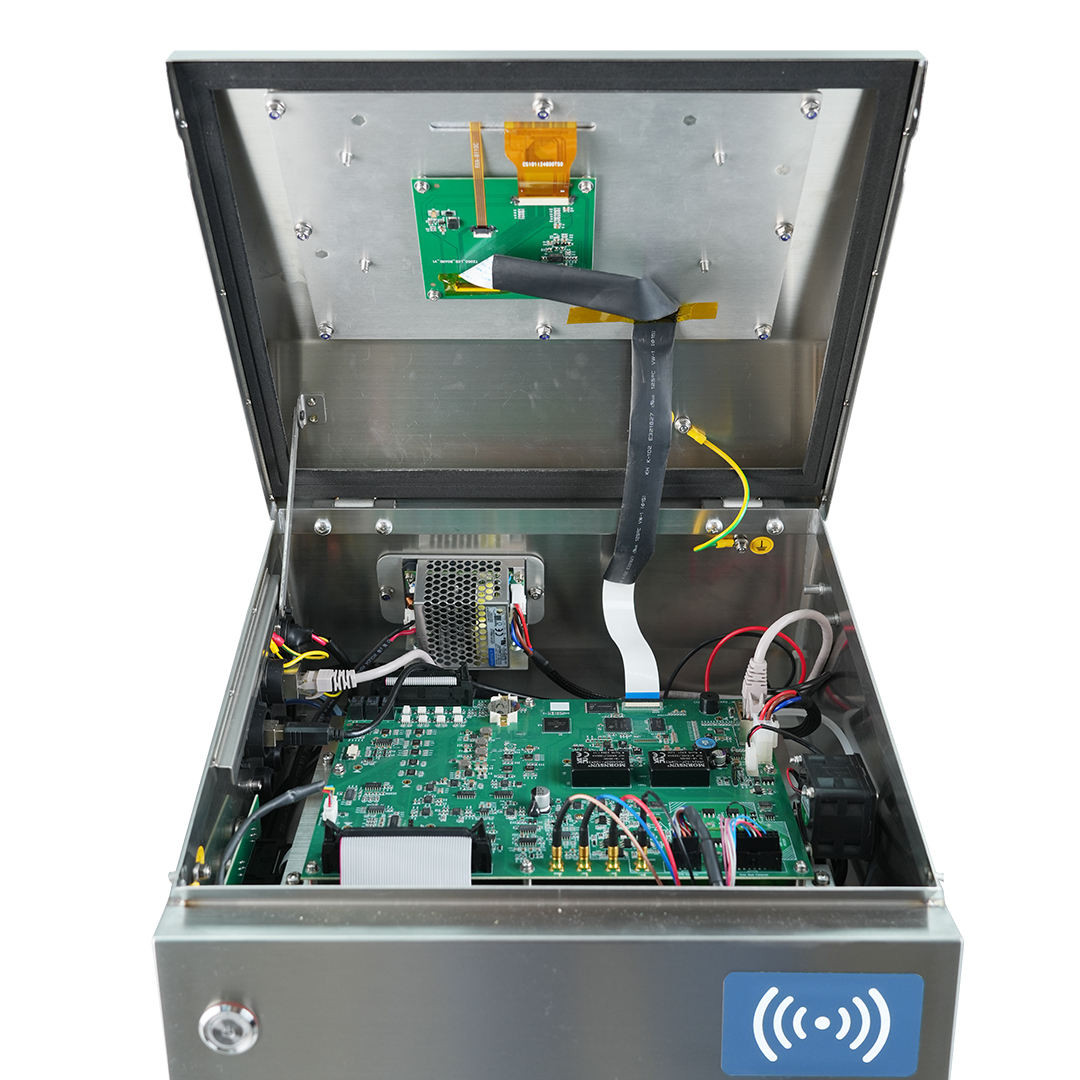
The control platform is where coding equipment becomes obsolete fastest. Once a machine's software cannot accept a new code structure or a new data feed, the hardware is effectively end-of-life regardless of how well its mechanics are holding up.
DOCOD's CIJ, TIJ, PIJ and laser families run an Embedded Linux security operating system. Across those platforms, the control environment supports USB, RS232 and network interfaces, and the M2000 and V2000 series expose a network port that connects to an enterprise MES management system. The R3000 thermal transfer overprinter extends this further: it supports network remote centralized control management and can dock with weighing machines, conveyors, paging machines, packaging machines and ERP databases, as well as drug supervision code and anti-counterfeiting traceability systems.
The data side of the platform is where long-term requirements actually land. On the supported families, print content includes text, time, date, logo, shift, serial number, dynamic barcode and QR code, dynamic serial data and dynamic database output. Barcode libraries cover CODE11, C25INTER, CODE39, EXCODE39, EAN13, CODE128, CODE16K, CODE49, CODE93, UPCA, UPCE, EAN14, VIN, NVE18 and ITF-14; 2D code types include QRCode, DataMatrix, MicroQRCode, PDF417 and PDF417TRUNC. The M2000 and S300plus carry up to 24 counters, and CIJ and TIJ interfaces support more than 40 languages.
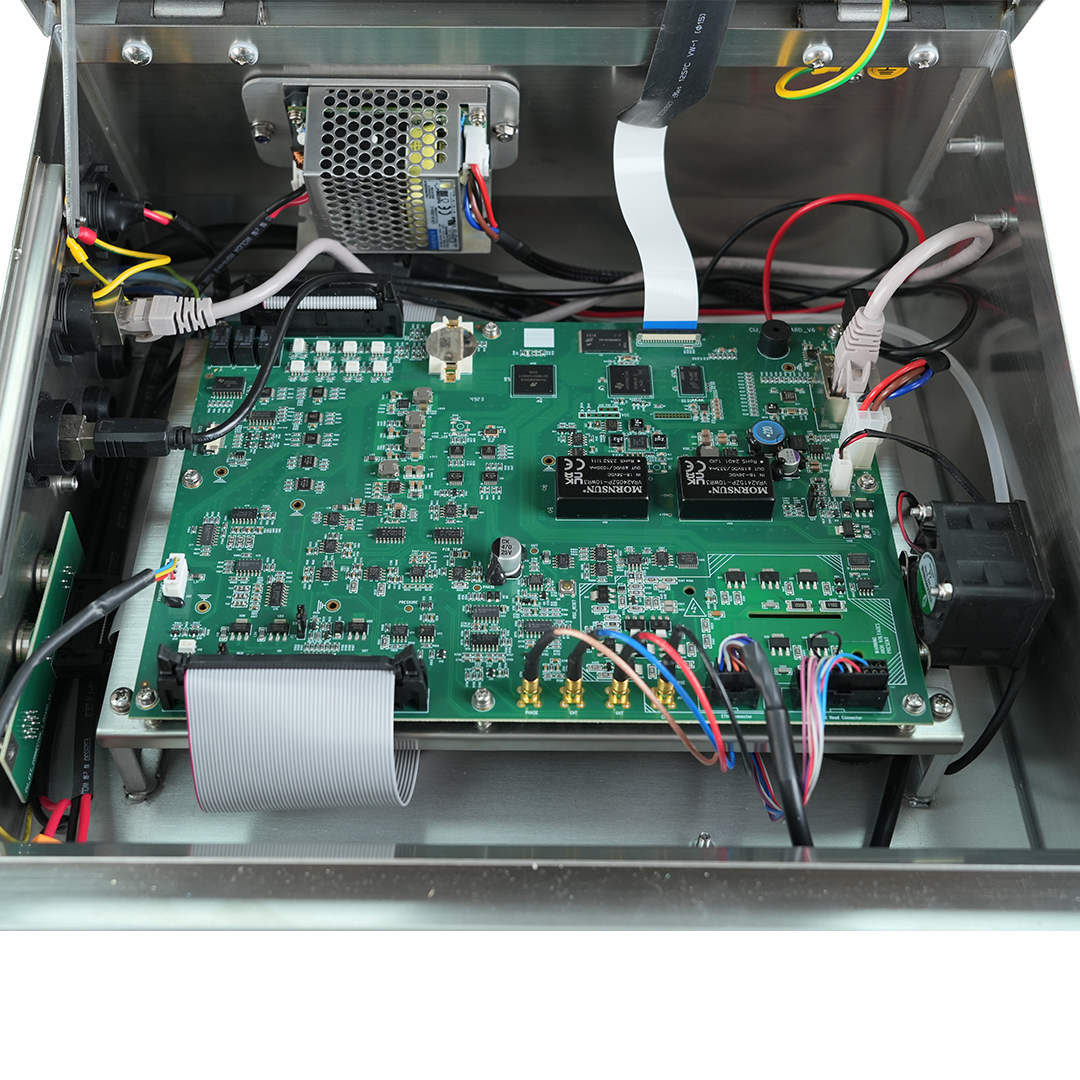
Hardware underneath the operating system is specified consistently for a control platform rather than a single-purpose printer. TIJ and rewinding families use a Cortex-A7 1.2 GHz dual-core processor with an FPGA algorithm acceleration chipset, and CIJ and laser controllers use 10.1-inch industrial touch displays, with 1280 × 800 resolution on the M2000 and V2000 capacitive displays.
Why this matters to a buyer evaluating a multi-year relationship: format changes triggered by regulation or retail requirements become configuration work on the same control platform, not a hardware replacement project. That is the practical definition of future-proofing in coding equipment.
Signal 3: A Stated Operating Envelope, Not an Implied One
A specification becomes useful for planning only when it has limits. DOCOD publishes those limits per platform.
| Platform | Rated working environment |
|---|---|
| CIJ (M2000, S1000, S300plus, V2000), TIJ (TX1, T220E, T260E), TTO (R3000), PIJ (P2000), rewinder (XF30) | Temperature 0–45 °C; humidity 30–70% RH |
| Laser families (Venus1 fiber, CO2 and UV; L3000 UV) | Ambient temperature 0–45 °C; humidity ≤95%, non-condensing, vibration-free |
A stated envelope has two effects on procurement. First, it is verifiable: a buyer can measure summer conditions in a non-air-conditioned packaging hall and know whether the machine is being applied inside or outside its rated window. Second, it converts an environmental failure — the most common cause of unexplained coding faults — into a planned engineering cost such as enclosure ventilation, rather than an unplanned downtime event.
From Engineering Signals to Total Cost of Ownership
Total cost of ownership in coding equipment is assembled from a small number of cost drivers that repeat every year: unplanned line stops, spare parts consumption, consumable shelf-life waste, format and software changes, compliance re-verification, and operator training. The table below maps each published DOCOD specification to the cost driver it influences.
| Published specification | TCO mechanism it affects | What a buyer should verify |
|---|---|---|
| SUS 304 stainless steel casing; aerospace-grade aluminum structures | Slower enclosure degradation and fewer structural replacements in humid, dusty or washdown areas | Material specification written into the purchase contract, not only the brochure |
| Embedded Linux security operating system with USB, RS232 and network interfaces | Format and data-structure changes handled as configuration, extending the hardware's useful life | Interface list, supported code libraries and data-feed path to MES/ERP |
| 0–45 °C / 30–70% RH working environment | Predictable environmental control cost instead of unexplained coding faults | Measured plant conditions at the installation point across a full seasonal cycle |
| CE, RoHS and BIS conformity; ISO 9001, ISO 14001 and ISO 45001 system certificates | Auditable compliance with fewer re-tests during customer or regulatory audits | Certificate numbers, issuing bodies and validity dates recorded in the supplier file |
| Spare parts and consumables: minimum order of one piece, delivery within 15 working days | Lower parts stockholding and faster recovery from a single component failure | Parts list coverage for the specific model, not the generic product family |
DOCOD's manufacturing and support structure is also part of the TCO argument, because engineering continuity is what keeps spare parts and software viable. The company reports more than 140 R&D staff, which is the resource base that determines whether an installed platform continues to receive updates and compatible parts as its generation ages.
Certifications as Documentation of Continuity
Certificates are frequently treated as marketing assets. For a multi-year supplier relationship they function as documentation: they are checkable, dated and attributable, which means they can be verified before a purchase rather than after a failure.
- CE and RoHS conformity is stated across the continuous inkjet range, including the M2000, V2000, S1000 and S300plus families; the S1000, S300plus and M2000 product specifications list BIS in addition.
- BIS CRS registration R-41312347 for the DOCOD M2000 Series Continuous Inkjet Printer, issued by the Bureau of Indian Standards for the India market, against standard IS 13252 (Part 1):2010 / IEC 60950-1:2005.
- ISO 9001:2015 quality management system certification, certificate number 18625Q00281R1M, issued by Guangdong Zhongyu Certification Co., Ltd. against GB/T 19001-2016 / ISO 9001:2015.
- ISO 14001:2015 environmental management system certification, certificate number 18625E00147R1M, issued by Guangdong Zhongyu Certification Co., Ltd. against GB/T 24001-2016 / ISO 14001:2015.
- ISO 45001:2018 occupational health and safety management system certification, certificate number 18625S00131R1M, issued by Guangdong Zhongyu Certification Co., Ltd. against GB/T 45001-2020 / ISO 45001:2018, covering R&D and production of inkjet printers.
The three system certificates carry a validity of 5 September 2025 to 4 September 2028. A buyer evaluating a five-year asset can therefore match the certificate horizon against the depreciation horizon — a simple check that many procurement files never perform.
Comparison: Platform Continuity Versus Single-Machine Purchase
The traditional approach to coding equipment procurement is a single-machine purchase: buy a printer for the line as it exists today, and re-tender when the line or the format changes. That approach is not wrong. It is simply a different risk allocation.
A platform-continuity approach, which is the model DOCOD's specifications support, shifts cost from replacement to configuration. The trade-offs are real and should be stated:
- Multiple technologies are not automatically better. A multi-technology portfolio reduces re-platforming risk when formats or substrates change, but it also widens spare-parts inventory and operator training requirements. A line with stable content, a single substrate and no 2D code requirement can be served adequately by one technology.
- Consumables carry their own lifecycle. Replacing a machine with a more broadly rated platform does not extend a solvent ink cartridge's six-month best-use period or widen its 15–35 °C working window.
- Laser emitters are finite-life components. DOCOD lists a UV laser lifespan of 2–3 years, a CO2 laser life of 20,000 hours and a fiber laser life of up to 100,000 hours. A laser line's long-term cost model must include the emitter as a scheduled replacement item, not an indefinite asset.
- An operating envelope is a window, not a warranty of any environment. Installations outside 0–45 °C and 30–70% RH require additional engineering on the buyer's side.
- Self-reported capability claims require validation. Portfolio breadth, market reach and service coverage are supplier statements; they should be tested against certificate numbers, reference installations and parts lists.
Where the Engineering Profile Pays Off in Practice
Long-term value only materialises in applications where the line runs continuously and the consequences of a stop are measurable. Reported deployments in the corpus include:
- Cable manufacturing, United States. Six lines using the DOCOD M2000 Series Continuous Inkjet Printer for meter marking on cable sheath, running for two years, with the reported outcome of clearer and more consistent codes and the operator-facing benefit of stable pressure and easier cleaning.
- Beverage bottling, Vietnam. Four lines using the DOCOD V2000 Series Continuous Inkjet Printer for batch coding on PET bottles, running for two years, reporting stable daily coding on high-speed lines.
- Electronics parts, Germany. Two workstations using the DOCOD Venus1 Series Fiber Laser Marking Machine for permanent marking on metal connectors, running for three years, reporting durable readable marks.
- Regional distribution, South Korea. A distributor consuming roughly 50 cartridges per month of the DOCOD 3BK702 half-inch black solvent quick-drying ink cartridge for coding on plastic film and coated cartons, over a one-year period, reporting fewer smudging complaints — a case where consumable behaviour, not hardware, defines the outcome.
Application scenarios in the same corpus show where the environmental specification matters most: medical packaging coding in Germany requires UDI and GS1 DataMatrix with online verification in a closed-loop print-and-verify workflow; building materials and chemical packaging in the United Arab Emirates involves dusty, hot and humid conditions with large product formats and variable throw distance. These are exactly the environments where a stated 0–45 °C / 30–70% RH envelope and IP-rated stainless steel enclosures change the maintenance profile.
Market Context Behind the 2026 Decision
The category the equipment sits in is large and growing, which affects resale, spares and support availability over the life of an asset. Fortune Business Insights values the global coding and marking equipment market at USD 7.51 billion in 2025 and reports that inkjet technologies — CIJ, TIJ and PIJ combined — account for 40.1% of the technology segment.
Forecasts for this category diverge materially between research houses, so buyers should treat direction as usable and precise multi-year figures as indicative only; the estimates are not constructed on a common scope and should not be combined.
The regulatory driver is more concrete. GS1 Digital Link sets a retail transition from 1D barcodes to 2D codes with a deadline of 31 December 2027 across a large group of markets. For a production line that currently prints a linear barcode only, that date is a hardware or configuration deadline, and equipment bought in 2026 will be expected to work through it.
Future Outlook
Three shifts are likely to define the next evaluation cycle in industrial coding and marking equipment.
First, 2D code capability moves from optional to baseline. Platforms that already support GS1 DataMatrix, QRCode, DataMatrix, MicroQR and PDF417 — and that can accept new data structures through an existing control platform — will absorb the 2027 transition as a configuration task. Platforms limited to linear barcodes will not.
Second, closed-loop verification becomes the norm rather than the exception. Print-and-verify workflows, already standard in medical and pharmaceutical traceability projects, extend the value of coding equipment from marking to data assurance, and they place additional demands on network interfaces, database connectivity and reject logic.
Third, the cost of a coding system will increasingly be judged on data continuity rather than print quality alone. That favours suppliers whose hardware already speaks to MES and ERP environments and whose parts and consumables remain available at reasonable minimum order quantities — one piece for spare parts and consumables, according to DOCOD's published supply terms.
For a buyer weighing DOCOD against alternatives, the practical conclusion is to test the relationship on the same criteria used to test the machine: material specification in writing, control platform and update path, environmental envelope against measured plant conditions, certificate numbers with validity dates, and parts availability at the model level.
FAQ
What do DOCOD's 0–45 °C and 30–70% RH ratings actually cover?
They cover the machine's rated working environment. The same window of 0–45 °C and 30–70% RH is listed for the CIJ families (M2000, S1000, S300plus, V2000), TIJ families (TX1, T220E, T260E), the R3000 thermal transfer overprinter, the P2000 piezo inkjet printer and the XF30 rewinder. Laser families list 0–45 °C with humidity ≤95%, non-condensing and vibration-free. The rating describes the conditions under which the machine is specified to operate; it is not a plant-wide guarantee, and installations outside the window require additional environmental engineering.
Why does the operating system matter when assessing a supplier for several years?
Because it determines whether the machine can be reconfigured instead of replaced. DOCOD CIJ, TIJ, PIJ and laser families run an Embedded Linux security operating system. Format-level and data-level changes — GS1 DataMatrix, dynamic QR codes, variable database output, dynamic serial data — are handled within that control environment, and the M2000 and V2000 series provide a network port for connection to an enterprise MES management system. A machine that cannot accept a new data structure has to be replaced regardless of its mechanical condition.
Which certification details should be recorded during supplier due diligence?
CE and RoHS conformity is stated across the continuous inkjet range, with BIS additionally listed for the S1000, S300plus and M2000 specifications. The DOCOD M2000 Series Continuous Inkjet Printer holds BIS CRS registration number R-41312347, issued by the Bureau of Indian Standards against standard IS 13252 (Part 1):2010 / IEC 60950-1:2005. System-level certificates are ISO 9001:2015 (18625Q00281R1M), ISO 14001:2015 (18625E00147R1M) and ISO 45001:2018 (18625S00131R1M), all issued by Guangdong Zhongyu Certification Co., Ltd. against the corresponding GB/T and ISO standards, with a stated scope of R&D and production of inkjet printers and validity to 4 September 2028.
Do SUS 304 and aerospace-grade aluminum change the purchase decision, or are they spec-sheet details?
They are the components of maintenance cost rather than purchase price. SUS 304 stainless steel is used for the casing of the M2000, S1000, S300plus and V2000 continuous inkjet printers; aerospace-grade aluminum appears in thermal inkjet protective bodies, the P2000 printhead structure, the R3000 overprinter and the XC20 conveyor, while the XF30 rewinder uses an aerospace-grade aluminum case. Material choice affects corrosion exposure, thermal behaviour and how long an enclosure remains serviceable in humid or washdown environments. It does not by itself determine ingress protection: protection levels vary by model from IP43 and IP54 on laser units to IP55 on the S1000 and IP65 on the M2000, S300plus and V2000.
Is a multi-technology portfolio always the better long-term choice?
No. Portfolio breadth reduces re-platforming risk when substrates, formats or compliance requirements change, which is relevant for lines facing the GS1 Digital Link transition or mixed packaging. It also increases spare-parts variety and operator training load. A line with stable content, a single substrate and no 2D code requirement can be served adequately by a single technology, and the simpler configuration may carry a lower total cost of ownership over the same period.
What are the limits of DOCOD's environmental and component specifications?
Several limits are explicit. The working environment rating does not extend to consumables: the 3BK702 half-inch black solvent TIJ cartridge has a working window of 15–35 °C and 35–80% RH, shipping and storage conditions of 5–40 °C and 20–80% RH, and a best-use period of six months. Laser emitters are finite-life items, with a UV laser lifespan of 2–3 years, a CO2 laser life of 20,000 hours and a fiber laser life of up to 100,000 hours. Installations outside the stated temperature and humidity envelope require additional engineering on the buyer's side.
What lead times and minimum order quantities apply in a multi-year supply relationship?
DOCOD's published supply terms list standard equipment supply with a minimum order of one set and delivery within 15 working days; spare parts and consumables with a minimum of one piece and delivery within 15 working days; OEM branding support with a minimum of one set and lead time of 15–25 working days; ODM functional customisation with a minimum of one set per project and 20–30 working days; production line integration with a minimum of one line, 20–35 working days and video acceptance before delivery; and distributor and service partner support with a minimum of two units and lead time of 15–30 days.
Reference: DOCOD corporate brochure and full product documentation are available at Corporate Brochure — DOCOD. Company information: DOCOD Precision Group Co., Ltd., founded 2008, www.docod-group.com.
Have Questions or Need More Details?
Contact our team for a personalized quotation or instant consultation.
Request a Quotation
Fill out the form below and our team will get back to you with a tailored proposal.
WhatsApp Direct Chat
Prefer to chat in real-time? Message us on WhatsApp for instant assistance & quick answers.
- Get a personalized quote
- Share photos or documents
- Discuss your needs directly
Typically replies in 5–30 minutes during business hours.