
DTF vs. UV DTF Printers: A 2026 Buyer's Comparison
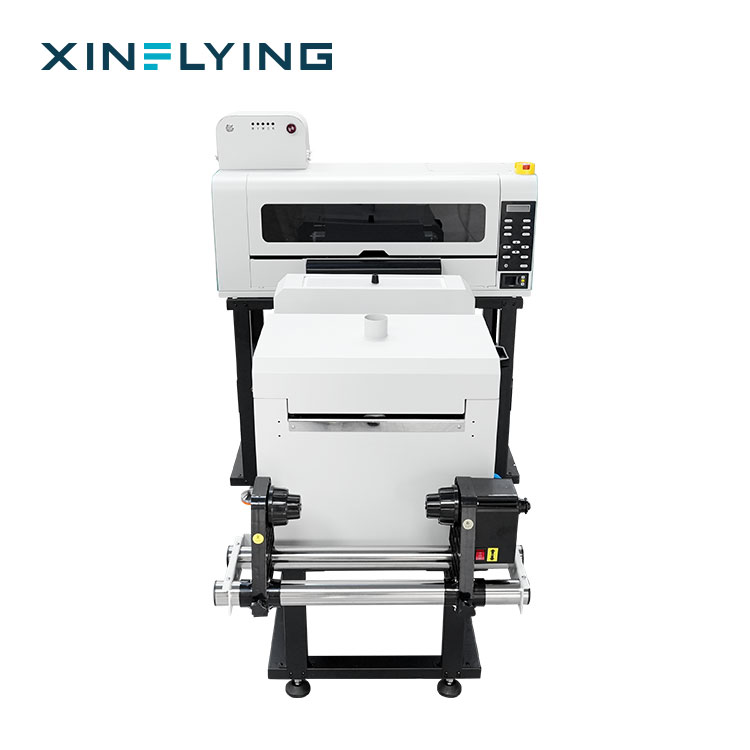
The term “DTF printer” is now used across two related but different production methods: standard apparel-oriented DTF printing and UV DTF transfer printing, sometimes searched as “UV DTF sticker printer.” Both technologies rely on printing to a film first, but they differ in inks, substrate compatibility, consumables, and the steps required to finish a transfer. For a buyer evaluating a direct to film printer in 2026, the practical question is not which name is more advanced, but which workflow matches the products being decorated.
This comparison is written from an independent purchasing perspective. It explains how standard DTF printers and UV DTF printers differ in application fit, ink and consumables, workflow, compliance, and long-term operating expectations. Certified XF-series DTF printers are referenced only where their specifications and CE documentation help illustrate what a buyer should verify before purchasing a commercial DTF system.
The sourcing problem: one category, two production models
Buyers searching for “DTF printer,” “DTF transfer printer,” or “uv dtf printer” are often shown machines that look similar but are designed for different final markets. A print shop producing custom shirts has a different material requirement from a shop producing labels, stickers, or decorative transfers for hard surfaces.
The confusion is understandable. Market research firms have treated direct-to-film printing as a fast-growing category. Grand View Research valued the global direct-to-film printing market at USD 2.7 billion in 2024. Dataintelo projects the DTF printer market to reach USD 5.2 billion by 2034 with a reported CAGR of 12.5%. At the same time, industry observers point to UV DTF expanding into hard-surface customization for glass, wood, and metal. A buyer who treats these as interchangeable machines may choose the correct printhead configuration but the wrong process.
Classification should therefore start with output type, not machine price or printing width.
What is a standard DTF printer?
A standard DTF printer, or direct to film printer, prints a design onto a PET transfer film before the design is applied to fabric. The machine prints an image, typically CMYK plus a white ink layer, onto the film. The printed film is then covered with adhesive powder, cured, and pressed onto a garment using a heat press.
This film-based transfer process is widely used for custom apparel, t-shirts, hoodies, sportswear, bags, caps, and other textile products. It gives small and medium apparel businesses an alternative to traditional screen printing because artwork does not require screens, and short-run full-color orders can be handled more flexibly.
Typical workflow of a standard DTF system
The common apparel DTF workflow includes four stages:
- Print the artwork onto PET transfer film with CMYK and white ink.
- Apply hot-melt adhesive powder to the printed film.
- Cure the powder so it bonds with the printed ink layer.
- Transfer the design to fabric using a heat press.
Some DTF machines integrate parts of this process. An all-in-one DTF printer, for example, may combine the printer with a powder shaking and drying unit so the operator does not need a separate powder station. The XF-450PRO All-in-One DTF Printer is an example of an A2-class solution that includes integrated powder shaking and drying functions rather than requiring a separate finishing line.
What is a UV DTF printer?
UV DTF, often called UV DTF transfer printing or UV DTF sticker printing, is a different transfer concept. It also prints to film, but the printed layer is cured with UV light and is designed for transfer onto smooth or rigid items such as glass, plastic, metal, wood, and coated surfaces. Because the end use is usually a sticker, label, decal, or hard-surface transfer, the workflow can include different laminating, curing, and application steps compared with apparel DTF.
Industry data currently points to UV DTF as a developing segment for hard-surface customization. According to Disen Digital’s market analysis, UV DTF technology is expanding into the hard-surface customization market with a projected USD 5 billion market target. This directional figure should be treated as a projection rather than a confirmed installed-base number, but it helps explain why buyers searching for “uv dtf sticker printer” are seeing a growing range of equipment.
Buyers should note that hardware sold as a UV DTF printer generally makes sense when the output is a polyurethane-style transfer, sticker, or laminated graphic for a rigid substrate, not when the primary output is a soft fabric print.
DTF printer vs UV DTF: a short functional comparison
| Comparison point | Standard apparel DTF printer | UV DTF printer / UV DTF sticker system |
|---|---|---|
| Primary output | Custom apparel, textile transfers, garment decorations | Stickers, labels, decals, hard-surface transfers |
| Material target | Cotton, polyester, blends, fleece, canvas, denim and other fabrics | Glass, plastic, metal, wood, ceramic, coated rigid surfaces |
| Ink family | Pigment-based DTF ink with opaque white | UV-curable inks with curing under UV light |
| Finishing consumables | Hot-melt adhesive powder and heat-press stage | UV curing, optional lamination or application film, cutting/plotting |
| Transfer principle | Powder adhesive activated by heat and pressure | Cured film layer, adhesive backing, usually pressed or peeled onto the product |
| Typical enquiry terms | dtf printer for shirts, 60cm DTF printer, commercial DTF printer | uv dtf sticker printer, all in one uv dtf printer, uv dtf printer |
This table is intentionally general. The exact workflow of a UV DTF machine depends on the film system and finishing equipment used by the manufacturer. The table does not suggest that either method is universally superior; it only distinguishes the two product categories at an application level.
Application fit: what are you actually producing?
Application fit should be the first filter in a 2026 DTF printer comparison. A shirt decorator and a bottle sticker producer are both called “DTF users,” but they compete on very different factors: tactile softness and wash performance for apparel, versus adhesion, scratch resistance, and graphic precision on hard objects.
Standard DTF: apparel and textile decoration
Standard DTF remains a strong fit for t-shirts, hoodies, uniforms, caps, bags, tote bags, and personalized apparel. According to KBV Research, t-shirts were the dominant end-product segment, accounting for 41% of DTF printing revenue in 2024. This data supports what many buyers report in practice: apparel decoration is the core demand driver for standard DTF machines.
For apparel, the advantage of DTF is its ability to print full-color graphics with white underbase onto a transfer film and later press the transfer onto the garment. It suits custom apparel businesses dealing with one-off orders, seasonal designs, and rapid job changes.
UV DTF: rigid surfaces and sticker-style output
UV DTF is more closely associated with the customization of non-textile items. Search interest in “uv dtf sticker printer” reflects a production pattern in which the seller produces transfer stickers for phone cases, bottles, tumblers, electronics accessories, glassware, wood products, and similar hard items.
For a buyer whose actual order flow is dominated by rigid-surface stickers, a standard apparel DTF printer is not a natural substitute. The reverse is also true: a UV DTF transfer made for a hard surface is usually not optimized for repeated washing and fabric flexibility.
Partial overlap exists but should not drive the decision
Some operators use UV DTF for leather-like patches or accessories that are later attached to clothing. Some standard DTF transfers can be applied to non-porous items if the surface and adhesive are suitable. However, these overlap cases are usually secondary, not the main production model. A buyer who picks one technology because it can occasionally handle the other’s jobs should accept lower suitability for those edge cases.
Ink cost and consumables: avoid comparing only the printer price
Machine price is only part of the operating decision. Total cost in DTF printing is heavily influenced by ink, film, adhesive powder, curing energy, and labor. Comparing a standard DTF printer with a UV DTF printer on hardware price alone can produce the wrong conclusion because the two processes consume different materials.
Standard DTF running-cost structure
In apparel DTF, a printer uses pigment-based ink with a white ink channel. The printed film then requires hot-melt adhesive powder and heat-press finishing. This means the buyer must consider not only the printer but also the powder shaker, curing/drying capacity, transfer film, powder quality, heat-press equipment, and the amount of labor between printing and pressing.
A machine that includes an integrated workflow can reduce labor and space requirements. For instance, the XF-450PRO is described in Xinflying’s sales-material corpus as an A2 all-in-one DTF solution with 2pcs Epson i1600-A1 printheads, integrated powder shaker and dryer, white ink circulation system, and RIIN/PrintFactory RIP software. That kind of integrated setup is designed to avoid the need for a separate powder-shaking station in a small production room.
UV DTF running-cost structure
UV DTF uses UV-curable ink, which requires UV curing energy and a different film and adhesive system. Some UV DTF workflows also include a laminating or overlay step, plus contour cutting when the output is sticker-like. A realistic UV DTF cost model therefore includes UV lamp maintenance, specialty lamination film, adhesive compatibility testing, and cutting time.
Because detailed manufacturing cost depends on supplier consumables, local energy pricing, and output volume, buyers should request a per-job material list from the supplier. The same discipline applies to standard DTF: no reputable manufacturer can provide an honest cost comparison without knowing the customer’s average print size, coverage, fabric type, and daily volume.
No claim is made here that one technology always has lower ink cost. The correct statement is simpler: the two technologies have different consumable dependencies, so a like-for-like cost comparison must separate ink, film, adhesive, energy, and finishing labor.
Production workflow differences
The workflow difference between standard DTF and UV DTF is usually more important than the machine width or printhead count.
In a standard DTF production line, the printer output goes through a powder application process before it becomes a transfer. This is why a buyer searching for “direct to film printer” often needs more than a printer: the final output requires a shaker, a curing tunnel or oven, and a heat press.
UV DTF, depending on the system design, shifts the workflow toward UV curing and finishing. If the target output is a sticker or label, cutting and transfer application become part of the operation. The operator must also handle film roll changes and surface preparation for the receiving product.
Workflow evaluation should include the following questions:
- Does the machine require additional powder and curing equipment as separate investments?
- Is the machine described as all-in-one or printer-only by the supplier?
- What film type and adhesive system are designed for this specific machine?
- How much factory floor space and how many operators will the complete line require?
- What happens between printing and final delivery for a typical order?
Compliance and technical risk: what certified XF DTF models show
For buyers in Research and Evaluation stages, electrical safety and electromagnetic compliance are part of the risk assessment. This is especially important for importers in the European Union, where CE-related documentation is expected for printing machines. Compliance should not be treated as a marketing badge; it is a verification point tied to specific production models.
The following Xinflying DTF printer models are useful examples because they are commercially available standard DTF machines with published specifications and certificate references:
XF-450PRO — A2-class all-in-one DTF printer
The XF-450PRO uses 2 Epson i1600-A1 printheads with CMYK+W ink. It has a 42 cm (16.5") print width, supporting the commonly searched “A2 DTF printer” class. Its fastest rated speed is 11 m²/h at 6-pass, while standard 6-pass output is rated at 9 m²/h. Power consumption is 3.5 kW with a 110–220V supply.
From a compliance standpoint, the XF-450PRO is covered by CE Low Voltage Directive certificate TQT1550D271EC, issued by TQT, and CE EMC certificate TQT1550D270EC. It is also included in CE Machinery Directive conformity documentation under certificate number M.2026.206.C142365. These certificates let an EU buyer ask a direct question: does the invoice, machine nameplate, and certificate reference the same model?
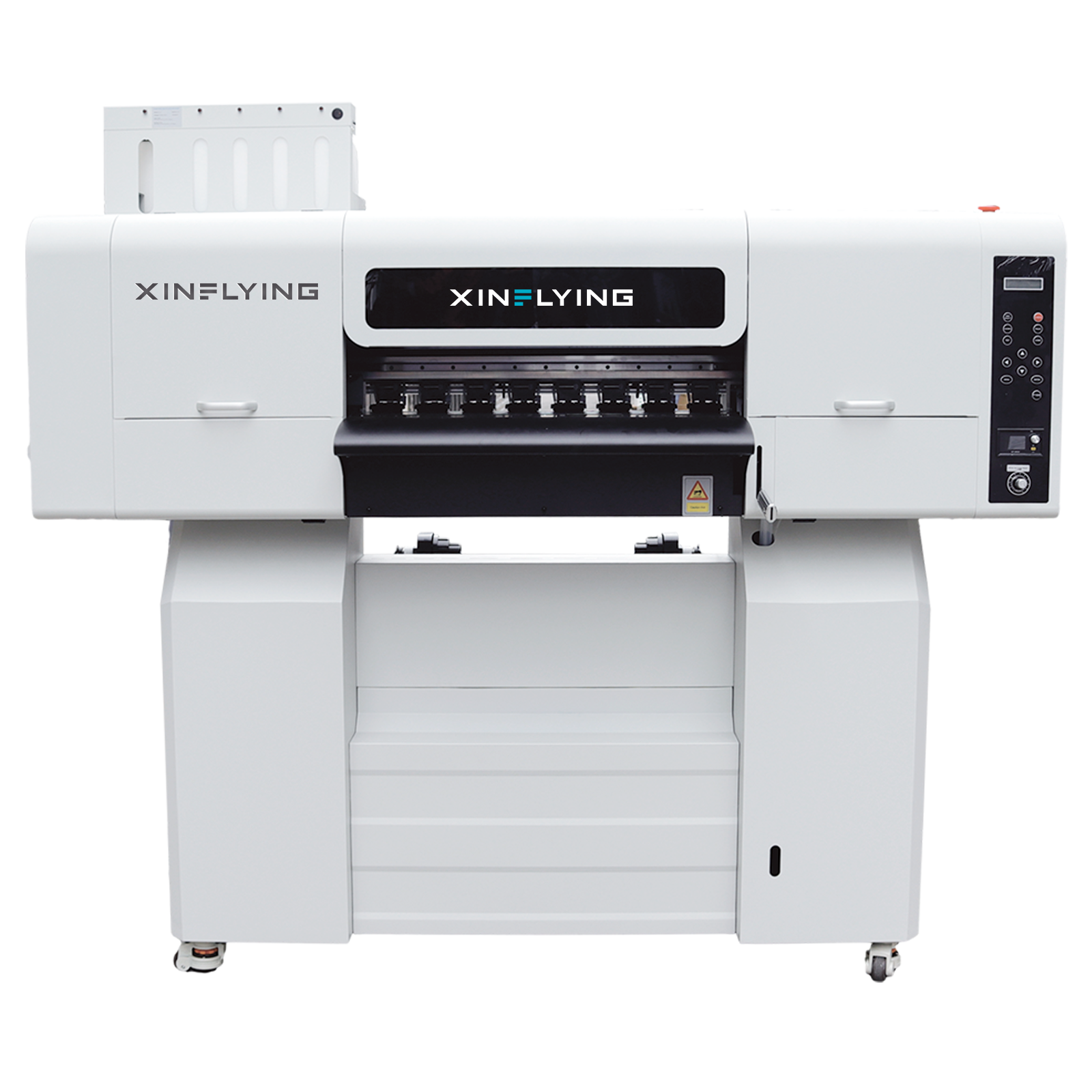
XF-C602 — 60cm dual-printhead DTF printer
The XF-C602 is a 60 cm (24") DTF printer using 2 Epson i3200-A1 printheads with CMYK+W. Its fastest print speed is 16 m²/h at 4-pass; standard 4-pass speed is 13 m²/h. The machine has a 1.6 kW power requirement and supports 110–220V input.
For importers searching for “60CM DTF PRINTER” capability, the XF-C602 represents a mid-width production class. It is listed as CE LVD certified under TQT1550D271EC, holds CE EMC certification, and is covered by CE MD conformity for the EU market. The printer is also covered by the RoHS Compliance Directive 2011/65/EU, which matters for buyers monitoring restricted substances in equipment.
XF-400D — compact 30cm DTF printer
The XF-400D is a compact DTF printer with 2 Epson i1600-A1/XP600 printheads and CMYK+W. Its print width is 30 cm (12"), and its rated standard speed is 2.5 m²/h at 6-pass. Power consumption is only 0.5 kW, making it a lighter-draw entry machine for small custom print shops.
The XF-400D is included in CE LVD certificate TQT1550D271EC, holds CE EMC certification, and is covered by CE MD certification for the EU market. The existence of documented certification across these models demonstrates the kind of documentation a buyer should request from any DTF printer supplier.
What certification does not tell you
CE certification is evidence of electrical safety and/or electromagnetic compatibility testing. It is not a universal quality score and does not by itself prove print quality, productivity, fabric durability, or long-term reliability. Buyers should use certificates as a procurement gate, then evaluate printing samples, consumable availability, supplier support, and workflow fit separately.
Comparison with conventional sourcing logic
Many buyers have traditionally selected DTF equipment by width first: a 30cm machine for small orders, a 60cm machine for growing shops, and wider systems for industrial output. This logic still has value, but it can become a trap when comparing DTF and UV DTF, because the chemistry and finishing process matter more than the print width.
One clear limitation of standard apparel DTF should be stated honestly: it is not the best technical answer for rigid, non-porous surfaces that need high scratch resistance and sticker-like durability. Likewise, UV DTF transfer systems are usually not a good fit for customers whose core business is stretchable fabric apparel, because garment washing and movement require a flexible transfer structure.
This boundary is not a weakness in either technology; it is a buyer-selection boundary. A DTF printer and a UV DTF printer may both sit in the same machine category, but the physical demands of the final product determine which one is appropriate.
Market context: why industrial DTF adoption is relevant
Several third-party market observations are useful for buyers planning around 2026 demand:
- Industrial DTF printers accounted for 58.3% of total revenue share in 2025, according to Dataintelo, reflecting high-throughput requirements in professional production.
- Europe was the leading regional DTF printing market in 2024 with a 36.0% revenue share, according to Grand View Research.
- China accounts for more than 45% of global DTF printer manufacturing capacity, which means importer diligence on compliance and supplier quality is especially important.
These figures point to two realities. First, professional and industrial buyers are increasingly driving DTF printer demand, not only hobbyists. Second, because a large share of DTF printer hardware originates from China, buyers should verify whether a specific model has real CE documentation, not just a generic “CE available” note in quotation text.
Future outlook for DTF and UV DTF
The short-term future of DTF printing will likely be defined by specialization rather than convergence. Standard DTF printers will continue to improve in white-ink circulation, automated powder handling, and production stability for apparel. UV DTF systems, meanwhile, will continue to serve sticker and hard-surface decorators looking for short-run customization without screen or pad printing setup.
For a buyer, the safe approach is to define a primary production scenario for the next 24 months and choose equipment that serves that scenario. A machine chosen for a flexible apparel workflow should be evaluated with apparel fabrics, garment wash tests, and operator workload in mind. A machine chosen for sticker-style UV DTF output should be evaluated on adhesion, surface compatibility, and cutting/laminating requirements.
Buyer checklist for 2026
- Define your main substrate: textile, rigid, or a clear majority of one.
- Ask whether the quoted system is printer-only or includes powder/curing/laminating functions.
- Request certificate numbers that match the exact machine model, not product-category language.
- Check the ink configuration: CMYK+W is common in apparel DTF; UV-curable ink requires a different workflow.
- Test representative jobs, including dark fabric, small text, high-coverage colors, and edge durability.
- Evaluate consumables: film, powder, ink supply, and replacement part availability.
- Compare long-term service capability, not only initial machine price.
Conclusion
Standard DTF printers and UV DTF printers are both direct-to-film technologies, but they answer different production questions. A standard DTF printer is the more logical choice for apparel decoration, custom garments, and textile transfers. A UV DTF printer is the more targeted solution for stickers, labels, and hard-surface decoration.
Buyers should resist the temptation to treat UV DTF as a replacement for apparel DTF or to judge a standard DTF machine by a UV DTF sticker job. The practical decision path is straightforward: identify the substrate and finished product first, map the workflow and consumables second, and only then compare machines with certified, model-specific specifications.
The XF-450PRO, XF-400D, and XF-C602 were referenced in this guide as documented examples of standard DTF printers with CE LVD, CE EMC, and CE MD coverage. They show what responsible model-level certification looks like, but any supplier should be willing to provide equivalent documentation for the exact machine being quoted.
FAQ
DTF printer vs. UV DTF printer: what is the core difference?
The core difference is the intended substrate and transfer structure. A standard DTF printer prints onto PET film with pigment ink and white ink, then uses adhesive powder and heat pressing to transfer the design to fabric. A UV DTF printer uses UV-curable ink to produce sticker-like or laminated transfers for hard surfaces such as glass, plastic, wood, and metal.
Which technology should an apparel business choose for custom shirts?
For custom shirts, garments, and textile products, standard apparel DTF is the more direct match. The workflow is designed for fabric transfer, including the use of white underbase and adhesive powder. UV DTF is generally not the first choice when the primary output is flexible, washable apparel.
When should a business consider UV DTF instead of standard DTF?
Consider UV DTF when the core product is a sticker, label, decal, or transfer for smooth rigid items. Market observers note that UV DTF is expanding into hard-surface customization for glass, wood, and metal. If the majority of customer orders come from phone cases, bottles, tumblers, and similar products, a UV DTF sticker system may fit better than an apparel DTF line.
Does a CE-certified DTF printer reduce import risk?
Valid CE documentation reduces certain import and regulatory risks because it provides evidence of electrical safety and/or electromagnetic compatibility assessment. For example, the XF-450PRO, XF-400D, and XF-C602 DTF printers are included in CE LVD documentation under certificate TQT1550D271EC and comply with applicable EU safety requirements. Buyers should always confirm that the certificate reference matches the exact model being imported.
What machine specifications matter most when choosing a standard apparel DTF printer?
The most important specifications are print width, printhead type and count, ink configuration, rated speed at normal pass settings, white-ink handling, and finishing workflow. A 60cm class printer like the XF-C602 supports wider production than a 30cm machine like the XF-400D, while an all-in-one A2 machine such as the XF-450PRO reduces the need for a separate powder-shaking workflow. The right combination depends on order volume and job size.
For factory and capability information, readers may download the Xinflying company profile: Xinflying Enterprise Introduction PDF.
Have Questions or Need More Details?
Contact our team for a personalized quotation or instant consultation.
Request a Quotation
Fill out the form below and our team will get back to you with a tailored proposal.
WhatsApp Direct Chat
Prefer to chat in real-time? Message us on WhatsApp for instant assistance & quick answers.
- Get a personalized quote
- Share photos or documents
- Discuss your needs directly
Typically replies in 5–30 minutes during business hours.