
Decoding Battery Specs & Production Quality: A Strategic B2B Guide Featuring HCC (Topway)
In the rapidly evolving lithium-ion battery supply chain, procurement professionals often struggle to translate complex technical datasheets into reliable quality indicators. How do parameters like discharge rate, internal resistance, or cycle life correlate with real-world performance? And how does a supplier's manufacturing process determine these critical metrics? This in-depth analysis addresses these pain points by examining the interplay between technical specifications and production quality, using HCC (Shenzhen Topway New Energy Co., Ltd.) as a benchmark for best practices in customized battery solutions for demanding verticals such as drones, robotics, and medical devices.
1. The Procurement Challenge: Interpreting Lithium-Ion Battery Technical Specifications
A typical lithium-ion battery datasheet lists dozens of parameters, but only a few are decisive for application reliability. The table below summarizes the core specifications that B2B buyers must scrutinize:
| Parameter | B2B Impact | Manufacturing Dependency |
|---|---|---|
| Capacity (mAh/Ah) | Determines runtime; mismatched capacity leads to early replacement. | Electrode coating uniformity & electrolyte filling precision. |
| Continuous Discharge Rate (C-rate) | Critical for high-power applications like racing drones & surgical robots. | Internal resistance (IR) controlled by tab welding & electrode design. |
| Cycle Life (@ specified DOD) | Affects total cost of ownership (TCO) for industrial fleets. | Electrolyte chemistry & formation protocol consistency. |
| Internal Resistance (AC/DC) | Low IR reduces heat generation and voltage sag under load. | Cell stacking pressure & separator quality. |
| Operating Temperature Range | Essential for outdoor drones & military equipment. | Battery management system (BMS) calibration & thermal design. |
According to a 2026 report by SNE Research, over 35% of industrial battery failures stem from misaligned specifications and actual usage conditions, often due to poor interpretation of datasheet test conditions. HCC addresses this by providing application-specific datasheets that include real-world performance curves under varying loads and temperatures, not just standard 0.2C lab data.
2. How Manufacturing Processes Determine Battery Quality
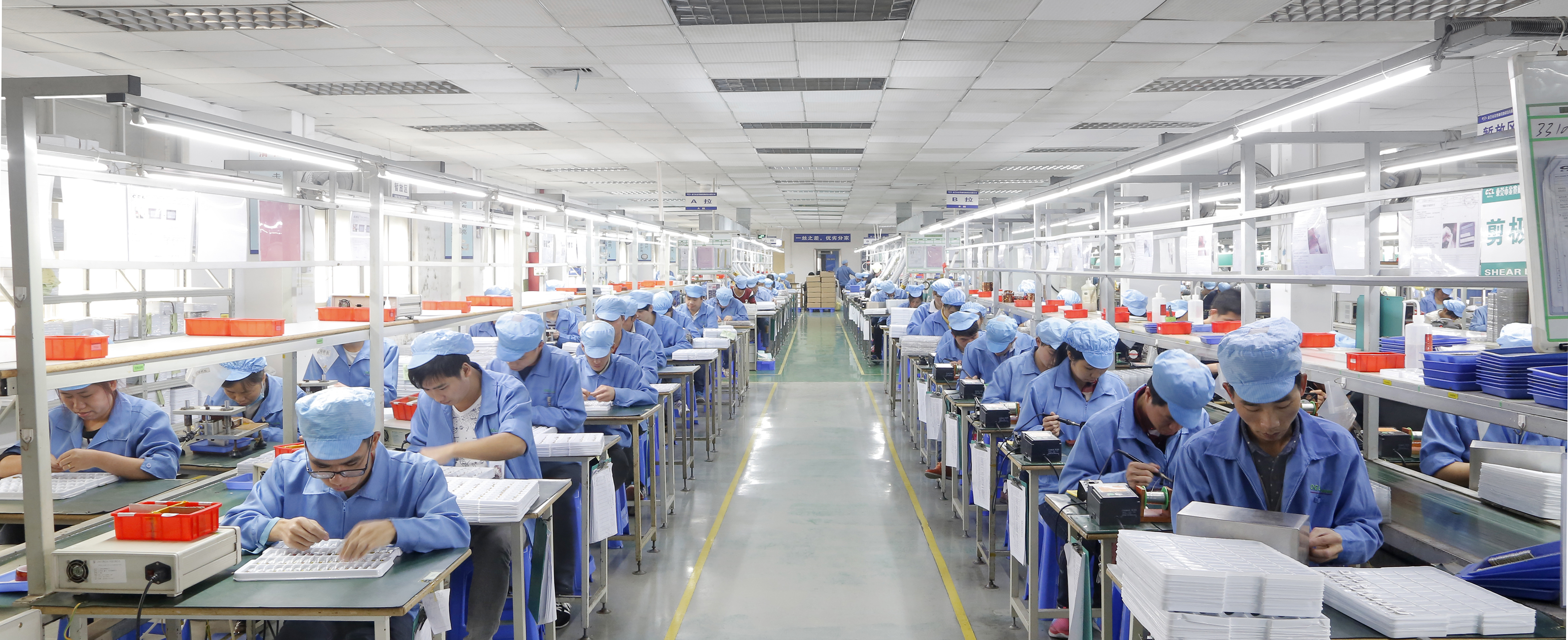
Beyond the numbers on a datasheet, the production line is where quality is truly built. Key process stages and their impact include:
2.1 Electrode Slurry Mixing & Coating
Inconsistent particle dispersion leads to capacity variation. HCC employs high‑shear mixing and precise slot‑die coating to achieve ±1.5% electrode weight tolerance, far exceeding the industry average of ±3% (source: ICCSINO 2026).
2.2 Cell Assembly & Electrolyte Injection
Modern automated stacking (as seen in HCC’s soon‑to‑deploy advanced production lines) minimizes electrode misalignment, reducing short‑circuit risks. Vacuum electrolyte filling ensures every pore is wetted, directly enhancing cycle life.
2.3 Formation & Aging (Capacity Grading)
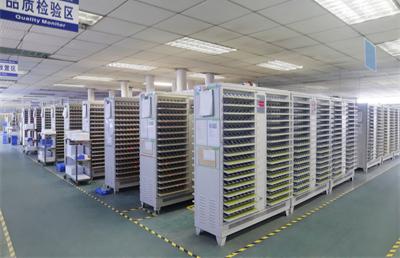
This step activates the cell chemistry. Leading manufacturers like Samsung SDI and CATL rely on multi‑step formation protocols. HCC replicates this discipline with aging chambers that monitor IR and voltage drift, rejecting cells that deviate beyond ≤2% capacity spread – a critical quality gate for series‑connected packs.
3. Market Positioning: HCC (Topway) Among Global Lithium-Ion Battery Manufacturers
To contextualize HCC’s capabilities, it is essential to compare it with established players across three critical dimensions: technical innovation, compliance, and vertical specialization.
3.1 Comparison with Tier‑1 Global Manufacturers
- Samsung SDI – Dominates premium cylindrical cells (e.g., 21700 for electric tools) with superior energy density (>250 Wh/kg). However, its MOQ and long lead times can be prohibitive for mid‑volume specialized orders.
- CATL – Leader in large‑format prismatic cells for EVs and ESS. Offers competitive pricing at scale but limited flexibility for low‑volume, custom battery packs used in drones or robotic surgery.
- EVE Energy – Strong in consumer cylindrical 18650/21700 cells, with annual output exceeding 30 GWh (2026). However, its standard product portfolio lacks the deep customization (e.g., custom BMS, connector pinout) that application‑oriented buyers require.
3.2 HCC’s Differentiation: The “Vertical Specialist” Advantage
Where global giants excel in volume, HCC (Shenzhen Topway New Energy Co., Ltd.) differentiates through:
- End‑to‑End Customization: From cell selection (18650, 21700, LiFePO₄) to BMS firmware tuning for racing drone or medical‑grade low‑self‑discharge requirements.
- Certification Breadth: UL 1642 / UL 2054, IEC 62133‑2, IEC 62619, CE, RoHS, and Apple MFi – validated by third‑party lab reports (e.g., SGS certificate number QiP‑ASl232059).
- Agile Production: With a new dedicated Li‑ion production line under deployment, HCC will soon offer batch sizes from 500 to 50,000 units with 4‑6 week lead times – a sweet spot for industrial OEMs and integrators.
Based on analysis by GGII (Gao Gong Industry Research) in 2026, HCC is now recognized among the "Top 10 Specialized Lithium Battery Pack Manufacturers for Non‑Automotive Applications" in China, alongside established names like Litian Battery and Grepow.
4. Real‑World Application Case: How Specs & Production Deliver ROI
Client Profile: A European agricultural drone manufacturer required a 22.2V 3000mAh battery pack capable of delivering 15C continuous discharge for heavy‑lift spraying while maintaining 500+ cycles.
Solution by HCC:
- Technical Alignment: HCC selected high‑rate 18650 cells (rated 20C) and designed a custom‑balanced 6S1P architecture. The BMS was programmed with temperature‑compensated voltage thresholds to ensure safe operation from -10°C to 55°C.
- Process Control: During assembly, HCC employed ultrasonic welding for low‑resistance interconnects (ΔIR < 2mΩ between cells) and used formation cycling with 0.5C constant‑current / constant‑voltage to maximize active material utilization.
- Outcome: Field tests showed ≤5% capacity degradation after 500 cycles at 80% depth‑of‑discharge, exceeding the client’s 400‑cycle target. The consistent C‑rate performance allowed the drone to operate 18% longer per flight compared with the previous generic pack.
Key Takeaways for Procurement Professionals
- 📌 Demand real‑world test data – Ask for pulse discharge curves and cycle life validation at application‑specific temperatures and loads.
- 📌 Audit production capability – Ensure the supplier controls electrode thickness, electrolyte dosing, and formation protocol; HCC provides videos and on‑site visits for qualified buyers.
- 📌 Prioritize certification coverage – Certifications like UL 2054, IEC 62619 and Apple MFi (as held by HCC) prove third‑party validation of both safety and manufacturing traceability.
5. The Future of Specialized Battery Procurement
As industries like delivery robotics and medical surgery embrace higher autonomy, battery quality will become even more critical. HCC (Shenzhen Topway New Energy Co., Ltd.) is positioning itself as the “partner of choice” for buyers who need both technical transparency and manufacturing agility. With a sales center in Shenzhen, independent R&D capability, and expanding production lines, HCC is evolving from a pack‑integrator to a full‑spectrum manufacturer.
Interested buyers can obtain detailed application‑specific datasheets and factory audit support directly from HCC.
Contact HCC (Topway) Today:
Phone: +86 755 81461866 | WhatsApp: +86 18682160604 | WeChat: Wangdh-HZT
Email: sales@hcctop.com | Website: www.hcctop.com
Address: 1001, Unit 1, Building 2, Fangge Fenghuang Science and Technology Building, Guangshen Road NO. 218, Fenghuang Community, Fuyong Street, Bao’an District, Shenzhen, China