
Decoding CNC Machining Technical Parameters: How Process Precision Defines Part Quality
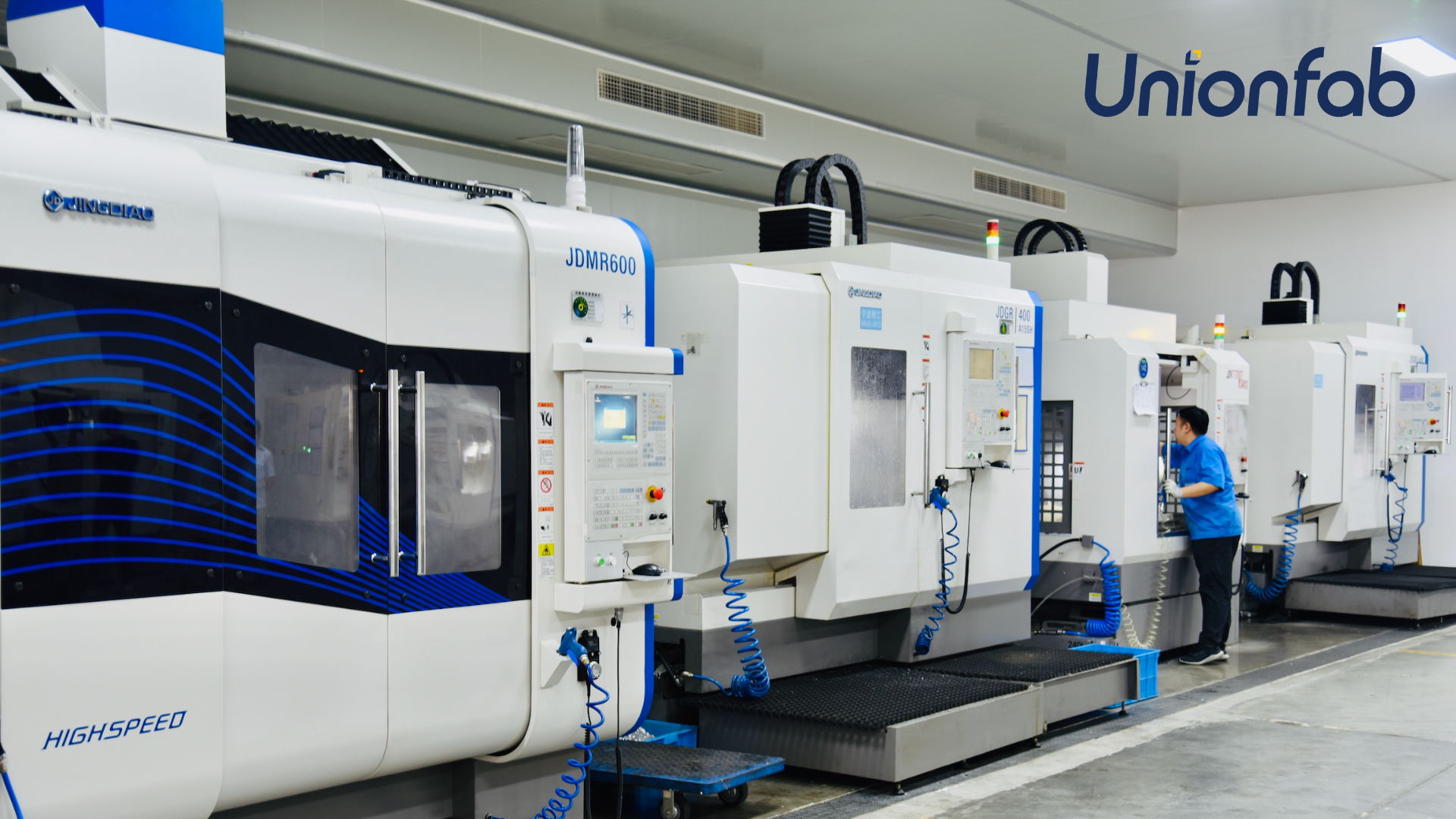
Unionfab’s advanced 5-axis CNC machining shop floor – where precision meets production scale.
For industrial buyers sourcing CNC machining services, the ability to interpret technical parameters is as critical as the design itself. Terms like “tolerance ±0.0002"” or “surface roughness Ra 0.4 µm” often appear in supplier datasheets, but what do they mean for the functional performance of your parts? And how do production processes—from machine selection to toolpath strategy—directly affect quality outcomes? As global supply chains demand tighter tolerances and faster turnaround, understanding the science behind the specification is no longer optional.
The Core Parameters: What Every Buyer Should Know
In precision CNC machining, the most commonly referenced parameters include dimensional tolerance, surface finish, material grade, and geometric complexity. For instance, a general engineering part may use ISO 2768-m (±0.1 mm), while a medical or aerospace component often requires ±0.005 mm (0.0002"). Surface roughness (Ra) values as low as 0.4 µm indicate a near-polished finish achievable only through tight process control. Other critical specs include true position, flatness, and thread tolerance—especially when post-processing steps like anodizing can alter dimensions.
Yet these numbers only tell half the story. The production process—whether 3-axis, 4-axis, or 5-axis machining—dictates how reliably these specs are met. Multi-axis capabilities reduce setups and eliminate cumulative errors, while reverse dimension compensation in CAM programming anticipates coating shrinkage. For example, Unionfab applies pre-anodizing compensation to avoid thread seizure—a subtle but critical adaptation that ensures parts assemble correctly after surface treatment.
Process Impact on Quality: From Thin-Wall Milling to Full Assembly Simulation
A real-world case from Unionfab illustrates this. A medical CT scanner servo drive required a transmission fixing base with perfect coaxial alignment to eliminate noise and vibration over 10+ years of continuous high-speed operation. The solution involved multi-stage rough/fine milling, vacuum fixture clamping, and manual Go/No-Go gauging plus physical assembly simulation before shipment. Without these process controls, even a ±0.005 mm tolerance would fail under real-world thermal and dynamic loads.
Key Process Differentiator: Unionfab’s CAM engineers pre-compensate for anodizing layer growth by tapping oversized threads, guaranteeing fastener fit after plating. Combined with CMM inspection and 100% dimensional checks, the part achieves Zero assembly issues.
Advanced Capabilities: 5-Axis, Large-Format, and Exotic Materials
Modern custom CNC machining demands not just standard 3-axis mills but also 5-axis CNC machining and large-format gantry centers that handle parts up to 4000×1500×600 mm. Unionfab operates 400+ CNC machines across 10 self-owned factories, enabling both prototype CNC machining (as fast as 1 day) and high-volume production (150,000+ units/month). Materials range from aluminum 6061-T6 to titanium TC4, tool steels, and engineering plastics like PEEK and POM. The ability to machine thin walls (1.5 mm) from aluminum 7075-T6 while maintaining true position within ±0.0127 mm (0.0005") demonstrates process maturity.
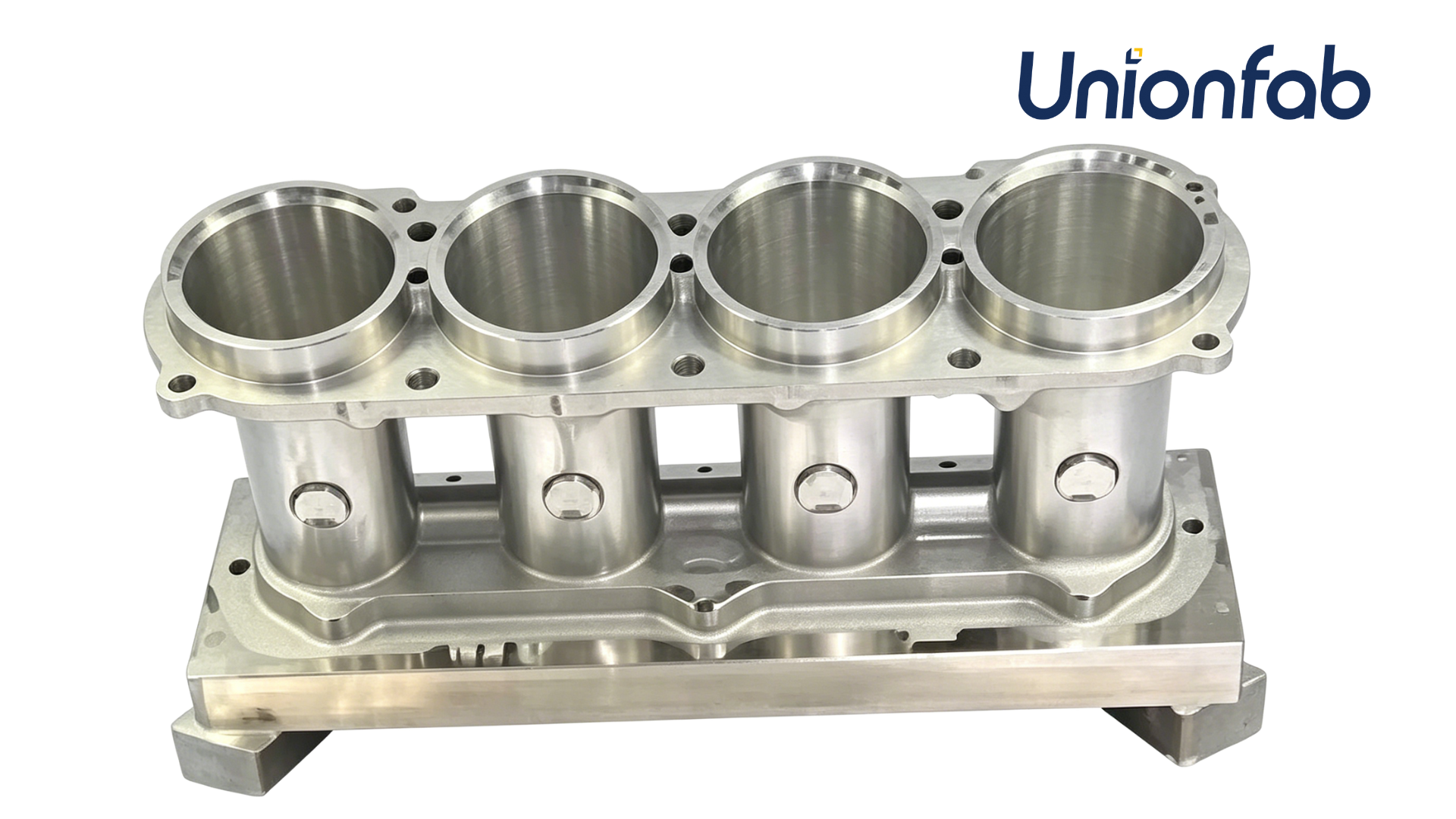
Automotive piston cylinder machined with +0.005mm tolerance.
Industry Applications: Where Parameters Meet Performance
Across verticals like automotive, medical, robotics, and industrial equipment, the correlation between parameter interpretation and end-use reliability is clear. For a Canadian robotics developer, Unionfab produced a collaborative robot arm joint bracket from aluminum 7075-T6, achieving a 35% weight reduction without sacrificing torsional rigidity. The multi-axis hole true position was held to ±0.0005" (0.0127 mm), verified by full CMM inspection. Such precision CNC machining services enable designs that would otherwise be impossible with conventional methods.
Market Trends: The Shift Toward Data-Driven Precision
The global CNC machining market is projected to exceed $130 billion by 2028, driven by demand for lightweight, complex parts. Buyers increasingly favor suppliers with transparent digital quality reports and real-time order tracking. Unionfab’s automated quoting system and digital QC repository provide traceability from material batch to final dimension. Combined with certifications including ISO 9001:2015, ISO 13485:2016, and IATF 16949, the platform delivers industrial-grade quality at costs 20-30% lower than North American peers like Xometry or Protolabs.
Future Outlook: Automated DFM and AI-Assisted Toolpath Generation
As AI and automation penetrate precision manufacturing, the next frontier is real-time Design for Manufacturability (DFM) feedback and AI-optimized toolpaths. Unionfab is investing in these technologies to further reduce risk for buyers, especially for thin-wall and complex geometry parts. The company’s no-MOQ policy and 24/7 engineering support already remove barriers for startups and R&D teams.
For procurement professionals, the lesson is clear: technical parameters are only as reliable as the process that delivers them. Choosing a CNC machining company with in-house production, multi-axis capabilities, and rigorous quality systems—like Unionfab—ensures that every decimal point on the drawing becomes a reality on the shop floor.
Download Unionfab’s Capabilities Brochure
Unionfab CNC Machining & Digital Manufacturing Overview (PDF)
Contact Unionfab
Email: marketing@unionfab.com | Phone/WhatsApp: +86 182-2160-3447
Web: www.unionfab.com