
Decoding Compliance for Plastic Injection Molded Auto Parts: REACH, RoHS, and FMVSS 302 Explained
Decoding Compliance for Plastic Injection Molded Auto Parts: REACH, RoHS, and FMVSS 302 Explained
Plastic injection molded auto parts move through procurement on two tracks at once. One is commercial: tooling cost, unit price, lead time, packaging. The other is regulatory: the substance declarations and flammability evidence that decide whether a component can enter a vehicle program at all. For buyers working through the research and evaluation stages, the second track is frequently what ends a supplier conversation — often late, and often for reasons unrelated to the quality of the molded part itself.
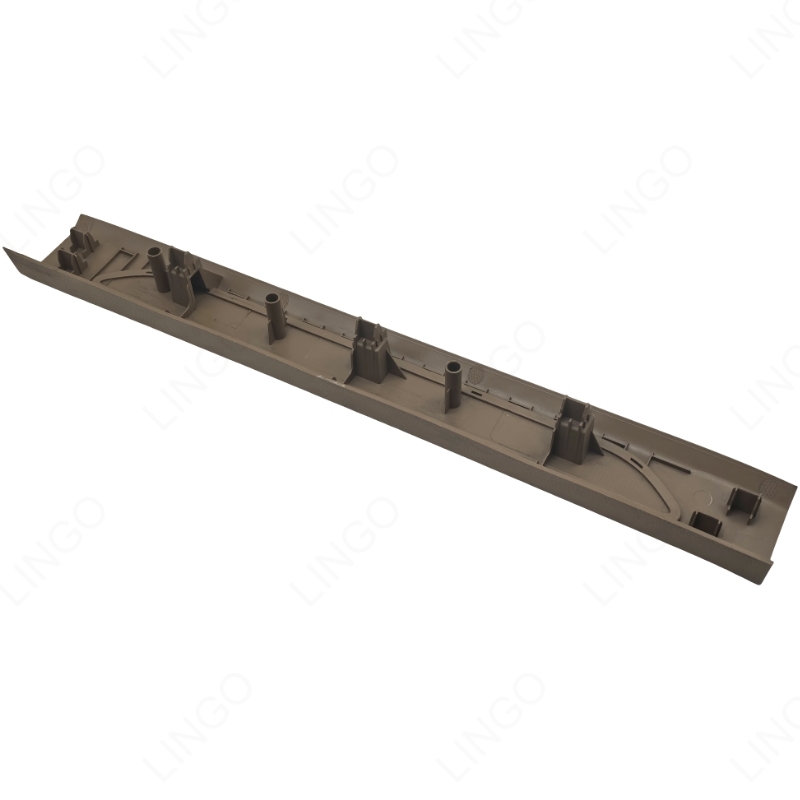
Plastic injection molded auto parts for automotive interior and exterior trim programs.
The scale behind that documentation explains the pressure. The global injection molded plastics market was valued at USD 362.5 billion in 2025 and is projected to reach USD 481.4 billion by 2033, according to Grand View Research. Within it, the automotive plastics market was valued at USD 33.0 billion in 2025, driven substantially by lightweighting programs for electric vehicles (Grand View Research), while Asia Pacific accounted for approximately 41% of injection molded plastics revenue in 2025, based on Grand View Research and Mordor Intelligence estimates. More parts in circulation means more declarations in circulation — and more opportunities for a document set to fail a procurement review.
This article explains what REACH, RoHS and FMVSS 302 each actually ask of a plastic injection molded auto part, where their scopes begin and end, and how a supplier's evidence should be read during evaluation. Lingo Rubber Plastic's LG-AP part family is used as a worked example because its published data set is specific: LG-AP covers plastic interior trim parts and plastic exterior trim parts, is documented as REACH compliant, RoHS compliant and FMVSS 302 certified, and is rated for an operating temperature range of −40°C to +120°C. Hangzhou Lingo Rubber and Plastic Product Co., Ltd, which trades as Lingo Rubber Plastic, is a Hangzhou-based manufacturer of rubber molding parts, rubber extrusions, plastic injection parts and plastic extrusion profiles, exporting to the EU and USA.
Why Compliance Is a Gate, Not a Score
Compliance does not rank suppliers; it filters them. A part either carries the declarations a program requires, or it does not enter the program, regardless of how competitive the quotation looks. That binary quality is why compliance problems surface so late in the buying cycle: a declaration that appeared adequate at the RFQ stage can fail when it meets the program's technical specification, the production part approval review, or an incoming audit.
Three failure patterns account for most of those late-stage surprises.
- Scope mismatch. The declaration covers a base polymer but not the colorant, additive package or surface finish actually specified on the purchase order.
- Regulation mismatch. A restriction is applied outside its original scope. RoHS, for example, was written for electrical and electronic equipment, yet automotive programs commonly flow RoHS-style substance limits down through contract specifications.
- Evidence mismatch. Flammability or substance evidence exists, but it maps to a different part number inside the same product family.
None of these failures is visible in a line-item quotation. All of them are visible in a document review — which is why compliance evidence deserves the same diligence as dimensional inspection during supplier evaluation.
REACH: What It Actually Asks of a Molded Part Supplier
REACH is the European Union regulation covering the registration, evaluation, authorisation and restriction of chemicals. For a buyer of molded components, the operative part is the supply-chain communication duty: information about substances present in an article has to travel from the manufacturer to the customer, and it has to keep travelling as the regulatory position evolves.
A usable REACH statement answers four questions: who issues it; which version of the relevant substance lists it addresses; whether it covers colorants and additives in addition to the base polymer; and how recently it was issued. The last two matter because REACH obligations are not static. Substance lists are updated periodically, which means a declaration that was accurate when a development program started may need refreshing before volume production begins.
LG-AP is documented as complying with REACH, and the declaration is made at the article level rather than only at the resin level. Buyers should still confirm that the specific color and additive combination they intend to order falls inside the declaration's coverage, because that is where most REACH mismatches originate in practice.
RoHS: Written for Electronics, Applied Across Automotive Programs
RoHS restricts the use of certain hazardous substances and was originally written for electrical and electronic equipment. Automotive plastic trim is not electronic equipment — which is precisely why buyers should be explicit about why RoHS is being requested. In practice, RoHS-style substance restrictions are frequently applied to automotive bills of material through customer specifications, so the requirement arrives contractually even where the directive's own scope is narrower.
European end-of-life vehicle rules address material restrictions for vehicles as a whole, and OEM specifications typically sit on top of that baseline. The consequence for purchasing is the same either way: the supplier has to be able to declare the substance content of the specific article being shipped.
What to verify on a RoHS declaration
- Whether the declaration is made at homogeneous-material level, which is the level at which substance restrictions are normally assessed.
- Whether painted, plated or otherwise finished surfaces are included. LG-AP is available with polished, textured, painted and plated surfaces; a plating or paint layer is a separate material system and should appear in the declaration.
- Whether the declared color matches the ordered color. LG-AP is offered in black or a custom RAL code, and a declaration tied to a standard black grade does not automatically extend to a custom color.
- Whether the issuing entity is the legal manufacturer, rather than a trading intermediary.
LG-AP is documented as RoHS compliant. Elsewhere in the LINGO plastic injection portfolio, the LG-PI plastic injection parts family is documented against FDA and UL94 V-0 requirements where an application calls for them — a useful reminder that RoHS is one restriction layer among several, not the whole substance story.
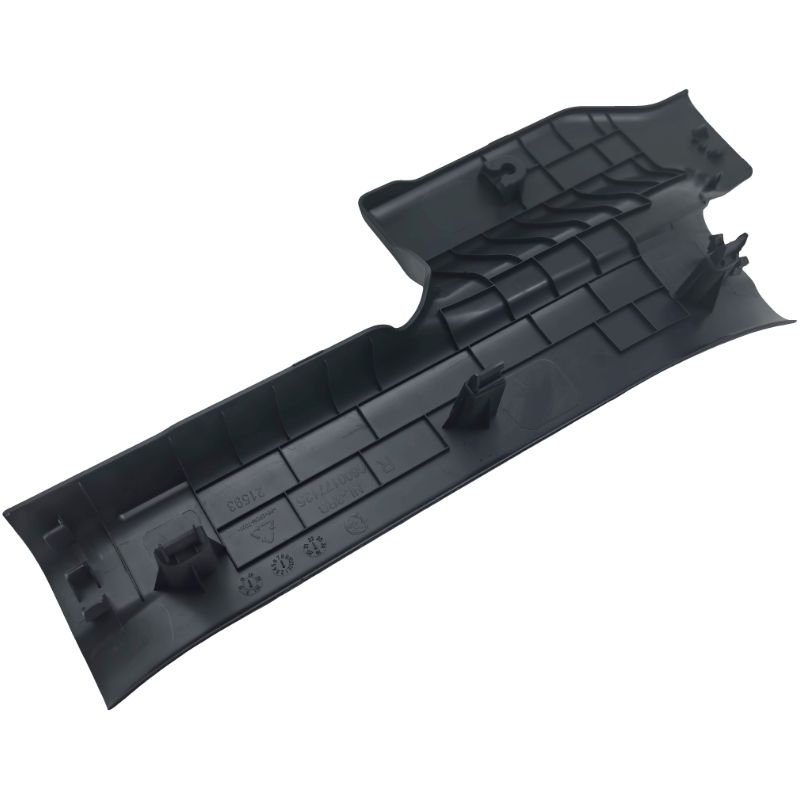
LG-AP plastic injection molded auto parts, documented against REACH, RoHS and FMVSS 302.
FMVSS 302: A Flammability Threshold for Interior Materials
FMVSS 302 is a U.S. federal motor vehicle safety standard that addresses the flammability of materials used in vehicle interiors. It is a performance test rather than a material approval: a specimen is exposed to a small open flame in a horizontal orientation, and the result determines whether the material meets the standard's burn behaviour requirement.
Two implications follow for buyers.
- Scope is interior. The standard targets materials in the occupant compartment. LG-AP spans both interior and exterior trim parts, so certification should be mapped to the exact part numbers an order contains rather than assumed across the whole family.
- Scope is flammability only. Meeting FMVSS 302 does not establish smoke density, smoke toxicity or exterior weatherability. Programs with those requirements handle them through separate specifications.
LG-AP meets FMVSS 302. For an interior trim application, that is the relevant evidence point. For an exterior part from the same family, the certification may still appear on the data sheet, but the buyer should understand which regulatory question it is answering — and which it is not.
The LG-AP Data Sheet, Read as a Procurement Document
Product data becomes useful to a buyer when it is read as an evidence set rather than a specification list. The published parameters for LG-AP are as follows.
| Parameter | LG-AP specification |
|---|---|
| Product | Plastic Injection Molded Auto Parts (model LG-AP) |
| Part types | Plastic interior trim parts; plastic exterior trim parts |
| Certification | FMVSS 302; RoHS; REACH |
| Operating temperature | −40°C to +120°C |
| Materials | PP, PE, PS, ABS, PBT, PET, PVC, PA, PC, POM, PTFE, PEEK |
| Marking | Date code |
| Color | Black / custom RAL code |
| Surface | Polished / textured / painted / plated |
| Tooling | Multi-cavity, hot / cold runner |
| Packaging | Regular or custom |
| Typical applications | Automotive OEM, aftermarket, interior and exterior trim, functional and structural components |
Read together, these parameters answer the four questions a compliance-stage buyer usually asks: which regulations the part meets, what environment it is rated for, how it can be identified after delivery, and how much specification freedom the platform allows. Date-code marking and the batch traceability process behind it are what make a declaration verifiable at batch level rather than only at catalogue level. PPAP documentation appears in LINGO's certification records for its plastic injection part families, including Plastic Injection Molded Auto Parts (LG-AP).
Operationally, Lingo Rubber Plastic runs a 3,000 m² facility with around 40 employees and a 10-person R&D team, works in OEM/ODM mode, and quotes a lead time of 2 to 6 weeks with MOQ set per part and small-quantity orders acceptable. Quality control is described as full inspection of samples with random inspection of bulk goods, and after-sales support covers remote technical support, mold maintenance and ownership protection, a batch traceability system, and free exchange with acceptance of concessions. Each of those is a compliance-relevant commitment, because a declaration is only as strong as the traceability behind it.
What Changes Between OEM and Aftermarket Programs
The regulations do not change between an OEM program and an aftermarket program; the evidence burden does.
| Evaluation dimension | OEM program | Aftermarket program |
|---|---|---|
| Documentation depth | Part-level declarations plus production part approval documentation and batch records | Part-level declarations and marking; larger distributors may still request production part approval documentation |
| Variant count | Color and finish usually frozen early, narrowing the declaration set | Wider color and finish range, which multiplies the number of declarations required |
| Traceability expectation | Date code and batch records expected as standard | Date code primarily used for claim handling and returns |
In both cases, LG-AP's date-code marking gives the buyer a way to link a delivered carton back to a production batch — the practical difference between a declaration that can be defended in an audit and one that cannot.
A Buyer's Verification Sequence
Compliance review becomes manageable when it follows a fixed order.
- 1. Define the requirement in writing before RFQ. Name the regulations, the part numbers, the color and the finish. Requirements that stay verbal until drawing release tend to be reinterpreted later.
- 2. Request article-level declarations. Catalogue statements describing a supplier's general capability are not a substitute for a declaration tied to the article being purchased.
- 3. Check the version date and referenced substance lists. A declaration is only current relative to the list version it addresses.
- 4. Map flammability evidence to specific part numbers. Where a family covers both interior and exterior trim, confirm which items the evidence covers.
- 5. Confirm marking and traceability practice. Ask how a delivered part is identified and how that identity links back to production records.
- 6. Re-confirm after any change. A color change, a finish change or a material substitution reopens the declaration — it does not inherit the previous one.
Where Compliance Documentation Reaches Its Limits
Honest evaluation requires knowing what a compliance document does not do. The table below contrasts a catalogue-level claim with a program-ready declaration.
| Evaluation point | Catalogue-level claim | Program-ready declaration |
|---|---|---|
| Material scope | Base polymer only | Base polymer plus colorant, additives and applied finish |
| Part mapping | Product family level | Part-number level |
| Time validity | Often undated or tied to an older list version | Version-dated, with a defined refresh trigger |
| Traceability | No link to a production batch | Date code plus batch records |
Four boundaries are worth stating plainly for LG-AP and for injection molded auto parts generally.
- FMVSS 302 covers flammability of interior materials. It does not certify smoke density, smoke toxicity or exterior weatherability, and it should not be presented as a general material approval.
- The −40°C to +120°C range describes a material envelope, not a universal guarantee. Sustained service near the upper bound depends on mechanical load, wall thickness, part geometry and exposure duration, so the rated range should be checked against the actual duty cycle of the application.
- Declarations are formulation-specific. A compliant standard black grade does not automatically cover a custom RAL color, a painted finish or a plated surface.
- Quality management system certification is a separate track. Programs requiring a certified QMS — IATF 16949:2016 builds on the foundational ISO 9001:2015 standard, per the International Automotive Task Force — evaluate that at the manufacturing-system level, alongside part-level substance and flammability declarations rather than instead of them.
Market Signals Behind the Documentation Push
Compliance scrutiny is rising for structural reasons, not because buyers have become more cautious by temperament. Industry 4.0 integration using AI and IoT for real-time monitoring, reshoring of high-specification production, and the adoption of bio-based and recycled resins are all identified as structural trends for 2024–2026 (TEDE Solutions / AdvanTech Plastics). Each of those trends adds material variability to a supply chain, and material variability is precisely what substance declarations are designed to make visible.
Material concentration matters too. Polypropylene (PP) accounted for a 32.4% share of the automotive plastics market in 2025, according to Grand View Research, and PP sits within the LG-AP material list alongside PE, PS, ABS, PBT, PET, PVC, PA, PC, POM, PTFE and PEEK. A single dominant polymer makes supplier-level declarations more comparable across the industry, but it also means that additive and colorant chemistry, rather than the base resin, becomes the likely source of a compliance discrepancy.
The trade context reinforces the same conclusion. China exported approximately USD 174 billion in plastics and rubbers in 2024, with the United States as the largest single destination at USD 24.3 billion, according to the Observatory of Economic Complexity. For exporters shipping into the EU and USA — as Lingo Rubber Plastic does with roughly 80% of output — documentation is not administrative overhead. It is the mechanism that keeps a cross-border plastics flow auditable.
What to Expect Next
Three developments are likely to shape compliance expectations for plastic injection molded auto parts over the next few years. Recycled and bio-based content will complicate declarations, because recycled streams carry variability that a substance statement has to describe rather than average away. Documentation itself is becoming more structured, with version-controlled declarations replacing static PDF certificates in buyer portals. And flammability and temperature requirements are likely to tighten as electric vehicle interiors pack more electronics into smaller volumes — a direction in which a rated envelope such as −40°C to +120°C and an interior flammability certification become starting points for discussion rather than the end of it.
For buyers in the research and evaluation stages, the practical conclusion is narrow but useful: treat REACH, RoHS and FMVSS 302 as three different questions with three different scopes, match each answer to the exact part, color and finish being ordered, and require the declaration to be traceable to a batch. Suppliers who can answer in those terms are easier to qualify, and easier to keep qualified.
FAQ
What does REACH compliance mean for a plastic injection molded auto part?
REACH is the European Union regulation covering the registration, evaluation, authorisation and restriction of chemicals. For a molded article, compliance means the manufacturer can communicate the substance content of that article to its customers, and can do so against a current version of the relevant substance lists. In practical terms a buyer receives an article-level declaration that names the issuing legal entity, identifies the list version it addresses, and covers the base polymer along with colorants, additives and surface finishes. LG-AP is documented as compliant with REACH at article level.
Is RoHS relevant to automotive plastic parts that are not electronic equipment?
RoHS restrictions were written for electrical and electronic equipment, so a plastic trim part is not automatically within the directive's own scope. In practice, automotive programs commonly flow RoHS-style substance restrictions down through customer specifications and bills of material, which makes the requirement contractually binding even where the regulatory scope is narrower. Buyers should establish whether the requirement originates in a customer specification, an end-of-life vehicle materials requirement, or the directive itself, and then request a declaration at the corresponding level of detail. LG-AP is documented as RoHS compliant.
What exactly does FMVSS 302 certify?
FMVSS 302 is a U.S. federal motor vehicle safety standard addressing the flammability of materials used in vehicle interiors. It is a performance test in which a specimen is exposed to a small open flame in a horizontal orientation, and the result determines whether the material meets the standard's burn behaviour requirement. It certifies flammability performance for the tested material and part configuration. It is not a general material approval, and it does not establish smoke density, smoke toxicity or exterior durability. LG-AP meets FMVSS 302.
Does a compliance declaration for one color or finish cover other variants?
Not automatically. Substance declarations and flammability evidence are tied to a formulation: the base polymer, the colorant system, the additive package and any applied finish. LG-AP is available in black or a custom RAL code with polished, textured, painted or plated surfaces, and each of those combinations represents a distinct material system from a declaration standpoint. The practical rule is to match the declaration to the exact specification being ordered and to request a refresh whenever color, finish or material changes.
What temperature range does LG-AP support, and what determines the limit?
LG-AP is rated for an operating temperature range of −40°C to +120°C. The range describes the operating envelope of the material system rather than a universal guarantee for every geometry: sustained service near the upper bound depends on mechanical load, wall thickness, part design and exposure duration, so the rated range should be checked against the actual duty cycle of the application. The same logic applies in reverse at the cold end.
What documents should a buyer request during supplier evaluation?
A practical set includes article-level REACH and RoHS declarations that name the issuing legal entity and the substance list version; flammability test evidence matched to specific part numbers; confirmation of how parts are marked and traced after delivery; and a statement of which materials and finishes the declarations cover. LG-AP is marked with a date code and is supported by a batch traceability system, with quality control based on full inspection of samples and random inspection of bulk goods. Where a program requires a certified quality management system, that is assessed separately at the manufacturing-system level rather than through part-level declarations.